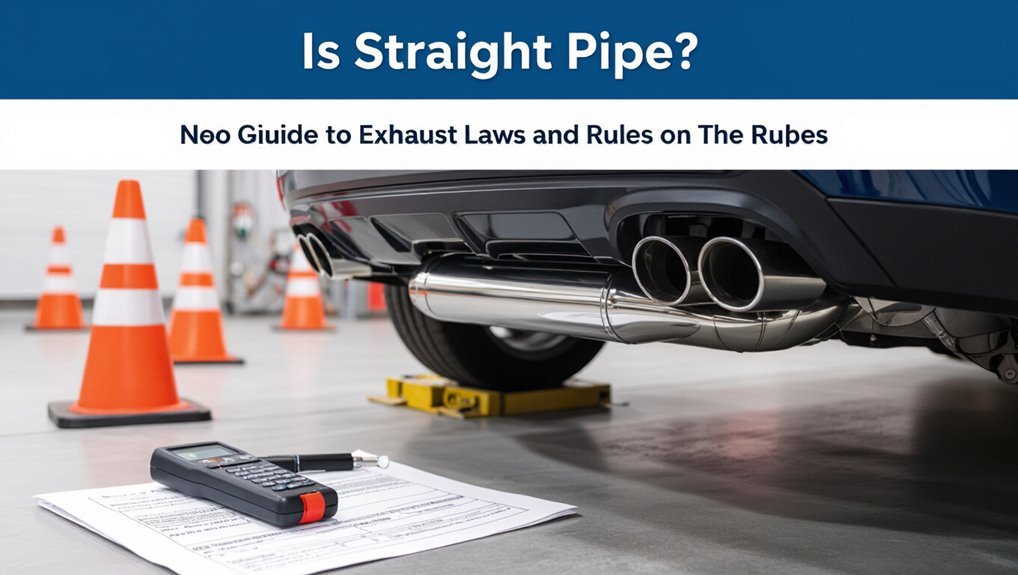
Is Straight Pipe Legal? Quick Guide to Exhaust Laws and Rules
Straight-piping a vehicle is generally illegal on public roads as it often involves removing essential components like catalytic converters and mufflers, which are crucial for meeting emissions and noise regulations. Laws vary by country, state, and city; some areas may allow for race-only or off-road exemptions if properly registered. Violations can lead to fines, failed vehicle inspections, impoundment, and potential issues with insurance coverage. Authorities can identify modifications through OBD codes, visual inspections, and decibel measurements. For a clear understanding of the risks, applicable rules, and next steps, continue reading.
How to Use This Guide: Quick Answer, Risks, and Next Steps
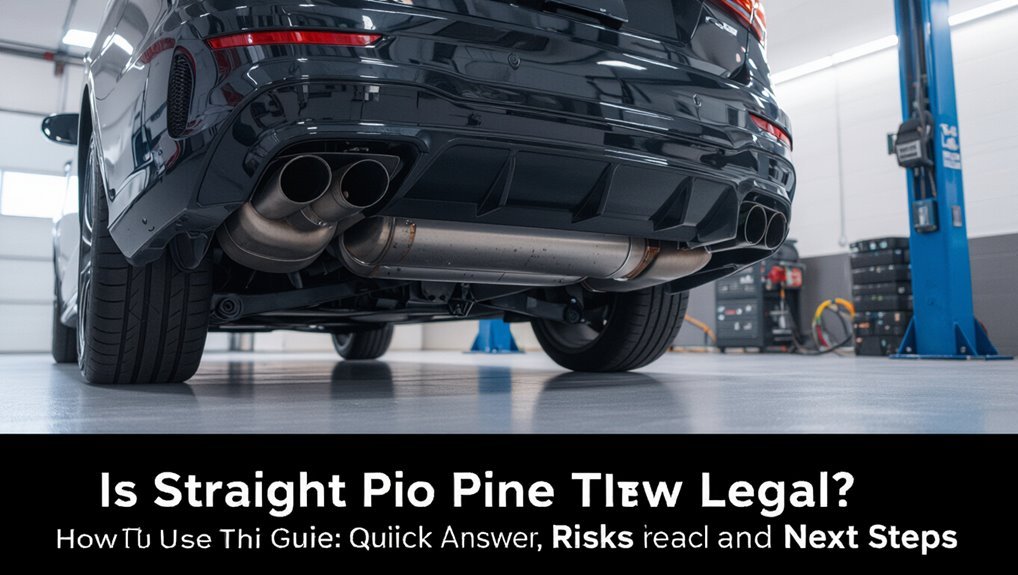
How should a reader approach this guide? The reader is advised to treat it as an overview: quick answer, common risks, and suggested next steps.
It outlines typical legal, safety, and enforcement considerations without replacing local statutes or professional advice.
The section summarizes potential penalties, inspection issues, and insurance implications, and flags noise, emissions, and vehicle modification concerns.
Recommended next steps include checking local laws, consulting authorized inspectors or mechanics, and documenting current exhaust condition before changes.
The tone is factual and cautionary; readers should verify specifics with official sources prior to altering an exhaust system.
Quick Answer: Is Straight Pipe Legal Where You Live?
Curious whether a straight-pipe exhaust is legal in a given area? Laws vary by country, state, and municipality; enforcement depends on emissions, noise, and vehicle inspection rules.
In many jurisdictions straight-pipe systems that remove catalytic converters or mufflers violate emissions and noise standards, risking fines, failed inspections, and impoundment.
Some places allow straight piping for off-road or race-only vehicles with specific registration. Others permit aftermarket exhausts meeting defined decibel and emissions limits.
Vehicle owners should check local motor vehicle codes, inspection requirements, and noise ordinances or consult authorities to confirm legality before modifying exhaust systems.
What “Straight Pipe” Means for Exhaust Systems
What does “straight pipe” signify in exhaust terminology? It denotes an exhaust layout where catalytic converters, mufflers, and resonators are removed or bypassed, creating an unimpeded path from header to tailpipe.
The result is minimal backpressure and a louder, rawer exhaust note. Mechanically, sensors and joints may be relocated or eliminated; emissions control is reduced or absent. Legal and performance implications vary by jurisdiction and vehicle type. Visual and auditory cues often reveal straight-piped systems without inspection.
- A bare metal tube running visibly under the car
- A thunderous, unfiltered exhaust bark at idle
- Absence of muffler body or catalytic housings
Why Drivers Choose Straight-Piped Exhausts
Many drivers opt for straight-piped exhausts for the louder, more aggressive engine sound that results from removing mufflers and resonators.
This modification also creates a strong perception of improved performance, even when measurable gains are modest or situation-dependent.
The combination of auditory feedback and perceived power often motivates enthusiasts despite legal and practical trade-offs.
Increased Engine Sound
Often drivers opt for straight-piped exhausts specifically to amplify engine sound, valuing a louder, more aggressive note that signals performance or personal style. The altered tone is immediate: crisper revs, deeper rumble at idle, and sharp pops on throttle changes.
Enthusiasts cite an emotional connection to auditory feedback, while critics point to neighborhood disturbance. The change is deliberate and conspicuous, drawing attention and altering presence on the road. Sound becomes a chosen statement as much as a mechanical outcome, shaping perceptions without necessarily improving measured power.
- A throaty rumble rolling through streets
- Sharp crackles during downshifts
- Idle that commands notice
Performance Perception
Choose a straight-piped exhaust often signals a desire for perceived performance rather than strictly measurable gains: drivers equate louder, freer-flowing exhaust note and visible modifications with increased power, responsiveness, and racing intent.
Observers and owners interpret aggressive sound and exposed piping as indicators of tuning and commitment to speed. This association influences purchase and modification choices despite modest or situational performance benefits.
Social signaling, identity within car communities, and the aesthetic of race-derived components amplify appeal. Regulatory and practical downsides are often discounted in favor of image and sensation, making perception a primary motivator behind many straight-pipe conversions.
Main Legal Risks of Straight-Piping Your Car
Removing a vehicle’s muffler and catalytic converter to straight-pipe the exhaust creates several concrete legal risks that owners should understand before modifying their cars.
Owners may face fines for violating noise ordinances, fail emissions inspections, or trigger enforcement under anti-tampering laws. Insurance claims can be denied if a modified exhaust contributed to an incident.
Law enforcement action, including vehicle impoundment, is possible where equipment laws are strict. Liability exposure increases if a modification leads to a collision or property damage.
- A patrol officer measuring decibel levels at a traffic stop
- A failed emissions sticker on renewal day
- A tow truck hauling a cited vehicle
Federal vs. State Rules for Exhausts
Federal emissions standards set baseline limits on pollutants that all exhaust systems must meet, affecting whether straight-piping is legally permissible.
State authorities, however, often impose additional noise regulations that can prohibit excessively loud exhausts even if emissions comply.
Vehicle inspection requirements vary by jurisdiction and may detect or reject modifications that circumvent federal or state rules.
Federal Emissions Standards
Regulation distinguishes national emissions baselines from state-specific requirements, creating a layered legal framework for vehicle exhausts.
Federal standards set allowable pollutant limits, mandate catalytic converters and onboard diagnostics, and prohibit tampering that increases emissions.
Compliance is enforced via certifications and penalties; modifications that remove or disable emissions controls can render a vehicle noncompliant for interstate travel and sale.
Manufacturers design to meet EPA rules, while aftermarket parts must not defeat emissions systems.
Awareness of federal scope helps owners evaluate legal risk before altering exhausts.
- A stamped certification label on a muffler
- A catalytic converter glowing faintly
- An OBD port with diagnostic codes
State Noise Regulations
While federal emissions standards set baseline limits and prohibit tampering with emissions controls, states retain authority over noise produced by vehicle exhausts and often impose stricter or differently framed requirements.
State laws vary: some specify decibel limits measured at set distances and RPMs, others ban muffler removal or require factory-original noise suppression. Local ordinances can tighten restrictions further.
Enforcement ranges from roadside citations to fines and equipment seizure. Exemptions exist for historic or off-road vehicles in certain jurisdictions.
Operators must consult state statutes and regulations to guarantee compliance, since noise rules operate independently of federal emissions enforcement.
Vehicle Inspection Requirements
In comparing inspection regimes across jurisdictions, vehicle inspection requirements for exhaust systems reflect a split responsibilities: the Environmental Protection Agency sets federal standards focused on emissions controls and anti-tampering, while states administer periodic safety and emissions inspections that can include noise and equipment checks.
Inspection outcomes hinge on muffler condition, catalytic converter presence, and visible tampering; federal rules prohibit removal of emissions devices, while state checks vary from visual inspection to dynamometer testing. Owners face differing repair mandates and certification processes depending on state law and inspection type.
- A mechanic lifting a car, inspecting connections
- A technician testing tailpipe emissions
- A failed inspection sticker on a windshield
Emissions Standards That Affect Straight-Pipe Legality
Across jurisdictions, emissions standards determine whether removing catalytic converters or other emissions-control devices for a straight-pipe exhaust is lawful by specifying required pollutant limits, mandated components, and inspection criteria. Agencies set tailpipe limits for CO, NOx, and HC; on-road testing and OBD checks often verify compliance. Tampering prohibitions and certification rules restrict alterations. Some locales allow race-only exemptions with registration conditions; many prohibit any device removal that increases emissions beyond standards. Enforcement ties to fines, failed inspections, and registration denial. The table summarizes common regulatory elements and their enforcement outcomes.
| Element | Purpose | Typical Outcome |
|---|---|---|
| Limits | Pollutant caps | Fail if exceeded |
| Components | Required devices | Prohibited removal |
| Testing | Verification method | Pass/fail inspections |
| Penalties | Enforcement | Fines, denial |
Noise Laws That Apply to Straight-Pipe Systems
Local jurisdictions frequently regulate exhaust noise through decibel limits, zoning-based restrictions, and equipment standards that directly affect the legality of straight-pipe systems.
Laws target excessive sound, time-of-day disturbances, and amplified systems; enforcement may involve fines, impoundment, or mandatory silencing devices.
Compliance depends on measured dB at specified distances, muffler integrity, and whether modifications create a public nuisance.
Owners should consult local ordinances and test procedures before altering exhausts.
- A midnight street with throaty, booming pulses drawing complaints.
- A traffic stop where a police dB meter reads over the limit.
- A quiet residential block disrupted by a chain of modified cars.
Vehicle Inspection Hurdles for Straight-Piped Cars
Straight-piped vehicles often face a higher risk of failing routine vehicle inspections due to noncompliant exhaust noise and missing factory components.
They may also encounter problems during emissions testing if catalytic converters or required sensors have been removed or altered.
Owners should be aware that these inspection hurdles can lead to failed certificates, fines, or required repairs to regain road legality.
Inspection Failure Risk
How likely is a vehicle with a modified exhaust to fail a mandatory inspection? A straight-piped car faces elevated failure risk when inspectors check for required components, noise limits, or visible tampering. Failure probability depends on local law, inspector discretion, and documentation of permitted modifications. Owners often encounter rejection for missing catalytic converters, altered mufflers, or noncompliant fittings regardless of engine performance. Consequences include repair orders, fines, or denial of registration renewal. Visual cues frequently trigger further testing.
- inspector pointing at absent catalytic housing
- noise meter display spiking during revving
- stickered repair order stapled to paperwork
Emissions Test Problems
After inspection failures for visible tampering or missing parts, emissions testing poses the next major hurdle for vehicles fitted with straight pipes. Inspectors measure tailpipe gases and check for required catalytic converters and oxygen sensors; absence or bypass of these components typically triggers automatic failure. Some jurisdictions allow alternate testing methods or waivers for vintage vehicles, but most require restoration to compliant exhaust systems before registration.
Owners may face fines, repair mandates, and repeated testing. Documentation of factory equipment and certified retrofit parts can aid compliance. Ultimately, straight-piped cars often cannot meet emissions standards without reinstating proper control devices.
How Catalytic Converter Removal Changes Legality
Removing a catalytic converter alters a vehicle’s emissions profile and often shifts the exhaust system from a repair or modification issue into a clear legal violation.
Laws typically prohibit removal because converters reduce harmful pollutants; absence can trigger fines, failed inspections, and potential impoundment.
Civil and criminal penalties vary by jurisdiction, with stricter rules where air quality is regulated.
Insurance claims may be affected if illegal alterations contributed to a loss.
Enforcement focuses on detectable tampering and missing parts during inspections or roadside stops.
- A shiny gap where a can once sat, exhaust louder and raw
- Failed inspection sticker on the windshield
- A citation handed over at a checkpoint
OBD-II and Sensor Issues Caused by Straight Piping
Triggering error codes and check-engine lights, straight piping often disrupts the OBD-II system by altering exhaust pressure, flow, and the signals from downstream sensors. This can cause misreported fuel trims, failed readiness monitors, and persistent diagnostic trouble codes that complicate inspections and repairs.
| Issue | Sensor Affected | Likely Outcome |
|---|---|---|
| Reduced backpressure | O2/AFR sensors | Rich/lean false readings |
| Turbulent flow | MAF/temperature sensors | Erratic input signals |
| Missing catalyst | downstream O2 | Catalyst efficiency codes |
| Exhaust leaks | all downstream sensors | Intermittent faults, CEL illumination |
How States Measure and Enforce Exhaust Noise
States typically set decibel-based limits for vehicle exhausts, specifying maximum sound levels often measured at fixed distances and engine speeds.
Enforcement varies by jurisdiction and can include stationary microphones, roadside decibel meters, or inspection-station tests conducted by law enforcement or certified technicians.
Penalties for exceedances range from warnings and fines to required repairs or vehicle impoundment depending on the enforcement method and local statute.
Decibel-Based Limits
Many jurisdictions set decibel-based limits to regulate exhaust noise, specifying maximum sound levels measured at defined distances and engine speeds. Authorities publish numeric caps (often 80–95 dB) tied to vehicle class and operating condition; measurements use calibrated meters at specified angles and RPM. Limits aim to balance performance, safety, and community quiet.
Compliance requires factory or aftermarket mufflers that attenuate spikes. Variances may apply for historic or off-road vehicles. Owners use onsite checks to avoid violations. Clear labeling on parts and published tables help interpret legal thresholds without subjective judgment.
- A parked sports car at 50 cm, meter reading.
- A motorcycle revving at 75% RPM.
- A pickup rolling by at 7.5 m.
Enforcement Methods
Agencies enforce exhaust-noise rules through a mix of roadside measurements, stationary testing, and complaint-driven investigations, using standardized procedures and calibrated equipment to guarantee consistency.
Officers use handheld sound meters during drive‑bys, often following speed and distance protocols, while inspection stations employ microphone arrays and chassis dynamometers for static or loaded tests.
Some jurisdictions apply SAE or ISO methods and require certified calibration records. Enforcement may hinge on single readings, averages, or octave-band analysis.
Evidence collection includes time‑stamped recordings, photographs, and officer notes. Penalties range from warnings to fines, repair orders, and vehicle impoundment, depending on severity and repeat offenses.
Typical Fines and Penalties for Illegal Exhausts
Penalties for illegal straight-pipe exhausts typically include fines, vehicle inspection failures, and orders to restore compliant mufflers within a set timeframe. Authorities may levy graduated fines based on offense severity, seize registration until compliance, or impose court costs.
Repeat violations often trigger higher penalties or temporary vehicle impoundment. Commercial operators can face business license sanctions. Compliance deadlines are usually explicit; failure to meet them leads to additional fines or immobilization. Documentation of repairs and reinspection receipts is commonly required to clear a violation.
- A citation stapled to a loud motorcycle after a traffic stop
- A vehicle parked at an inspection station with a tow notice
- An owner signing repair invoices to lift registration holds
Police Stops for Illegal Exhausts: When and Why?
Police officers routinely stop vehicles for loud or modified exhausts when the noise level, visible modifications, or related driving behavior draws attention; such stops are typically justified by probable cause that a vehicle violates noise or equipment regulations.
During stops officers assess compliance with local statutes: measured decibel exceedances, missing mufflers, illegal cutouts, or excessive exhaust smoke.
Observed infractions can lead to citations, vehicle equipment orders, or on-the-spot repairs.
Officers also cite unsafe driving tied to modifications.
Documentation and sobriety checks may follow.
Drivers should remain calm, provide requested documents, and avoid admitting intent; disputing citations is handled later in court.
Street Vehicles vs. Off-Road Vehicles: Rule Differences
The distinction between street vehicle regulations and off-road vehicle exemptions shapes how straight pipe exhausts are treated under the law.
Street vehicles generally face stricter noise and emissions standards and clearer enforcement mechanisms, while off-road vehicles often qualify for limited exemptions tied to use and location.
Differences in enforcement and penalties can affect compliance incentives and legal exposure for owners.
Street Vehicle Regulations
In many jurisdictions, regulations distinguish street vehicles from off-road vehicles by purpose, equipment, and permitted operating environments, which directly affects allowable exhaust modifications such as straight pipes.
Street vehicle rules typically focus on noise limits, emissions controls, and visible equipment like catalytic converters and mufflers.
Compliance often requires certification, inspections, and penalties for violations.
Owners considering modifications must consult local statutes and test procedures; aftermarket parts may be legal only if they meet specific standards.
Enforcement can include fines, repair orders, or registration denial.
- A sedan idling near a noise meter
- A technician checking a catalytic converter
- A citation placed on a windshield
Off-Road Vehicle Exemptions
Among regulatory distinctions, off-road vehicle exemptions carve out specific allowances for equipment and operation that would be prohibited on public roads, including relaxed rules for exhaust modifications such as straight pipes when the vehicle is confined to private property or designated off-highway areas.
Jurisdictions typically limit exemptions to vehicles operated exclusively off-road, used in competition, agriculture, or authorized events.
Manufacturers’ and local statutes may still impose noise, emissions, or land-use limits.
Owners must document location and intended/expected use to qualify.
Exemptions do not permit public-road use with noncompliant exhausts; separate registration, inspection, or modification requirements apply before road operation.
Enforcement And Penalties
Off-road exemptions influence how authorities approach compliance, but enforcement and penalties differ markedly when vehicles move from private land to public streets. Agencies prioritize public-safety violations: street-driven vehicles with straight pipes face citations, fines, potential impoundment, and mandated retrofits. Off-road machines may escape immediate penalties yet remain subject to landowner rules and competition/event standards.
Evidence collection, witness reports, and noise readings guide enforcement; repeat or commercial violations trigger harsher sanctions. Compliance incentives and amnesty programs vary by jurisdiction.
- A patrol officer writing a ticket after a roadside idling test
- An ATV cleared for trail use but barred from highways
- A tow truck hauling a noncompliant car
Racing, Track, and Event Rules for Straight Piping
When competing at sanctioned tracks and organized motorsport events, straight pipe exhausts are governed by specific rules addressing noise limits, safety, and environmental compliance.
Promoters and sanctioning bodies typically set decibel caps, require noise testing, and may mandate mufflers or restrict locations where straight piping is allowed.
Safety regulations cover heat shielding, secure mounting, and avoidance of exhaust positioning that endangers crew or spectators.
Environmental provisions can include spill containment for fuel systems and limitations during public-track days.
Noncompliance can result in disqualification, fines, or required modifications before participation, enforced by tech inspectors and event officials.
Historic, Classic, and Show Cars: Special Exemptions
In many jurisdictions, historic, classic, and show vehicles receive limited exemptions from straight pipe prohibitions to preserve authenticity and support cultural events. Authorities often require registration as an antique, adherence to event-specific permits, and restrictions on public road use.
Exemptions balance heritage interests with noise and emissions concerns; inspections or temporary plates may accompany allowances. Owners should document vehicle age and planned use to qualify. Noncompliance can revoke privileges and incur fines.
- A polished 1960s roadster idling at a concours lawn
- A parade of restored trucks with chrome stacks
- A museum exhibit car started for demonstrations
Dealer and Manufacturer Warranties After Aftermarket Piping
How do dealer and manufacturer warranties interact with aftermarket straight piping installations? Warranties often cover original components but can be voided if aftermarket exhaust causes damage. Dealerships may refuse coverage for related failures; manufacturers cite modification clauses. Documentation of installation quality and certified parts can mitigate disputes. Vehicle owners should obtain written statements and retain receipts.
| Issue | Typical Outcome |
|---|---|
| Modification clause | Possible denial of related claims |
| Proof of installation | May preserve unrelated coverage |
| Dealer inspection | Determines causation and liability |
Consult official warranty terms and seek dealer clarification before modifying exhaust.
Insurance Implications of Running a Straight Pipe
For vehicle owners considering straight-pipe exhausts, insurance coverage can be affected in several ways: insurers may deem modifications that increase risk or deviate from factory specifications as grounds to adjust premiums, exclude coverage for related damage, or deny claims if the modification contributed to an incident.
Insurers typically require disclosure of significant modifications; failure to disclose can void coverage. Even disclosed changes might raise rates or require endorsements.
Documentation of professional installation and safety compliance can mitigate disputes. Owners should obtain written confirmation from their insurer about how a straight pipe affects policy terms before proceeding.
- A claims adjuster inspecting soot and welding
- A policy rider noting altered exhaust
- An assessor comparing stock and modified photos
How to Check Your Local Laws Quickly and Reliably
Where can a vehicle owner find accurate, up-to-date information on straight-pipe exhaust rules? Official government websites (state DMV, environmental protection agencies, and municipal code portals) provide statutes, regulations, and contact details.
State highway patrol or police department sites outline enforcement policies.
Local ordinances and county/city code databases clarify noise and modification limits.
Trade associations and certified inspection stations summarize requirements but should be cross-checked with primary sources.
Call or email relevant agencies for interpretations and recent updates. Document responses and save links or reference numbers.
When in doubt, consult a licensed attorney or certified vehicle inspector for definitive guidance.
Simple At-Home Tests to See If Your Exhaust Is Legal
A basic visual inspection can reveal obvious modifications, missing mufflers, or illegal tailpipe alterations.
A simple sound level check with a phone app or handheld meter helps determine if the exhaust exceeds local decibel limits.
A quick emissions smoke test — observing color and density at idle and revs — can indicate combustion or oil-burning issues that may violate regulations.
Visual Inspection Check
In the driveway, a quick visual inspection can reveal whether a straight pipe exhaust likely meets local regulations. The observer notes muffler absence, visible welds, and obvious modifications; rust, loose hangers, or gaps suggest noncompliance. Photographs document conditions for comparison with statutes or citations. Visual cues help decide if further testing or professional inspection is warranted.
- A bare pipe running from the headers with no silencing device.
- Bright welds, recent cuts, or mismatched pipe sections under the bumper.
- Hanging hardware failure, large holes, or visible bypass valves near the tailpipe.
Sound Level Measurement
After the driveway inspection identifies visual indicators of a straight pipe or other modifications, simple at-home sound checks offer a quick way to gauge whether the exhaust likely exceeds legal limits. One method uses a smartphone decibel app at a set distance and idle/rpm; another compares noise to comparable stock vehicles; a third relies on neighbor or passerby feedback. Record conditions: distance, gear, rpm, and surroundings. Use these results only as preliminary indicators; official enforcement uses calibrated meters and set procedures. Small table below summarizes quick checks and what they suggest.
| Test | Setup | Likely meaning |
|---|---|---|
| App read | 3 ft, idle/2k rpm | Possible over-limit |
| Compare | Same model nearby | Deviation noted |
| Witness | Neighbors pass | May attract enforcement |
Emissions Smoke Test
Perform a simple at-home emissions smoke test to spot visible exhaust issues that may violate local regulations: observe the tailpipe during cold start and steady idle for thick, persistent smoke (blue or black), rev the engine briefly while watching for excessive plumes, and check for strong oil or fuel odors indicating combustion problems.
A detached observer notes that persistent smoke often signals burning oil, rich mixture, or failed injectors and can breach emissions rules.
Record conditions, color, and duration; photographs help.
If abnormalities appear, seek diagnostic testing or repairs before inspection to avoid citations or failed smog checks.
- A blue-tinged puff at startup
- Thick black clouds on acceleration
- Acrid oil smell from exhaust
Legal Alternatives to Straight Pipe (Mufflers and Resonators)
Drivers seeking legal alternatives to straight pipe exhausts can choose from several muffler and resonator options designed to reduce noise while maintaining performance. Options include chambered, turbo, glasspack, and electronic mufflers plus resonators tuned to cancel frequencies; each balances decibel limits, backpressure, and space constraints. Installers should match components to vehicle class and local regulations to avoid violations. Properly selected mufflers and resonators can achieve compliance while preserving desired tone and power characteristics. Consultation with a certified shop and referencing municipal noise ordinances guarantees choices meet legal thresholds.
| Component | Effect |
|---|---|
| Chambered muffler | Broad attenuation |
| Glasspack | Aggressive tone |
| Turbo muffler | Low restriction |
| Resonator | Frequency tuning |
| Electronic valve | Adjustable volume |
How to Keep Emissions Controls While Sounding Aggressive
Keeping the catalytic converter in place preserves emissions compliance while allowing for a louder exhaust character.
Pairing the factory converter with a resonated mid-pipe can reduce rasp and target frequencies that create an aggressive tone. This combination balances legal requirements with a more pronounced sound without removing emissions controls.
Retain Catalytic Converter
Retaining the catalytic converter lets a vehicle meet emissions standards while still achieving a deeper, more assertive exhaust note by focusing modifications downstream of the catalytic body.
The approach preserves legal compliance and reduces emissions while allowing muffler, pipe diameter, and tip choices to influence tone. Candidates choose high‑flow cats designed to minimize restriction, paired with tuned mid and rear sections for desired character. Proper welding and heat shielding maintain durability and inspection readiness.
Professional installation guarantees sensor placement and fitment remain correct, avoiding check-engine issues and legal problems during emissions testing.
- A glowing high‑flow cat under the car
- A straight but sized rear section humming deeply
- A polished tip framing the sound
Use Resonated Mid-Pipe
After preserving the catalytic converter to meet emissions requirements, many builders turn to a resonated mid-pipe to sharpen exhaust character without disabling emissions controls.
A resonated mid-pipe adds a tuned chamber that cancels specific frequencies, reducing droning while allowing a louder, more aggressive tone. It maintains backpressure and emissions hardware placement, avoiding legal exposure tied to deleting catalysts or mufflers.
Installation should comply with local sound limits and vehicle inspection rules; quality components resist leaks and corrosion.
Parts and Certification to Look for (Epa, CARB, Etc.)
Which parts and labels should a buyer check before installing or selling a straight pipe exhaust? A buyer should verify certified components and visible markings to guarantee legal compliance and emissions conformity. Focus on labels from regulatory bodies and structural parts that affect emissions or fitment rather than noise mitigation details.
- EPA or CARB certification label on mufflers or components, with part number and model.
- OBD-compatible catalytic converter presence and stamped manufacturer information.
- Manufacturer’s installation instructions, warranty card, and compliance statement indicating vehicle applicability.
Document photos and receipts to prove provenance and certification during sale or inspection.
How to Pass Inspection With a Modified Exhaust
When preparing a modified exhaust for inspection, the vehicle owner must make certain emissions compliance checks are met by retaining required catalytic converters and any mandated emissions-control devices.
Noise level limits should be documented or proven within local decibel standards, and mufflers or resonators may need to remain or be replaced with compliant alternatives.
Inspectors will also look for visible equipment requirements such as intact emissions labels, tamper-evident fasteners, and unobstructed oxygen sensor ports.
Emissions Compliance Checks
In many jurisdictions, emissions inspections focus on functional control systems rather than the visible shape of an exhaust, so a modified pipe can still pass if catalytic converters, oxygen sensors, and other emissions equipment are present and operating correctly. Inspectors verify catalyst efficiency, check for stored fault codes, and test tailpipe emissions with analyzers.
A vehicle owner should maintain documented repairs, make certain sensors are new or cleaned, and clear codes only after confirming fixes. Pre-inspection scans, warmed-up testing, and addressing small leaks improve success rates. Properly retained emissions hardware and demonstrable function determine compliance more than aftermarket appearance.
- a glowing oxygen sensor being replaced
- a diagnostic tool displaying readiness monitors
- a technician measuring exhaust gases at the tailpipe
Noise Level Limits
Although local noise ordinances and inspection protocols vary, most regulatory frameworks measure exhaust sound either at a fixed distance and angle or by using decibel (dB) limits tied to vehicle class and model year. Inspectors compare measured dB against published limits; modifications must stay below those thresholds during idle and acceleration tests. Practical steps include fitting mufflers, resonators, or baffles, and testing with a handheld meter before inspection. Records of pre-inspection measurements and compliant parts help. Noncompliance risks fines, failed inspections, and required repairs. Examples of common limits:
| Vehicle Type | Idle dB Limit | Accel dB Limit |
|---|---|---|
| Passenger | 72 | 80 |
| Light Truck | 74 | 82 |
Visible Equipment Requirements
Regarding visible equipment requirements, inspectors focus on easily observable components that indicate whether an exhaust system is road-legal and safe. They check for required parts like a muffler, catalytic converter presence, secure mounting, and absence of obvious leaks or holes.
Visible aftermarket tips or modifications that obstruct visibility of emissions equipment can fail inspection. Corrosion, missing hangers, and exposed welds suggest unsafe installation. Owners should present a clean, intact underside and be ready to show documentation for approved components.
- A muffler with intact body and no large holes
- A catalytic converter attached and unblocked
- Secure hangers and clean welds
What Paperwork to Keep After Exhaust Modifications
After completing exhaust modifications, owners should retain a concise set of documents that proves legality and history of the work. Records help demonstrate compliance during inspections, resale, or enforcement. Keep invoices, parts receipts, emission test results, and any written approvals or stamps from local agencies. Photographs dated before and after installation provide visual proof. Store digital backups alongside originals.
| Document Type | Purpose | Retention Tip |
|---|---|---|
| Invoice/Receipt | Proof of work and parts | Keep for life of vehicle |
| Emission Test | Shows legal sound/emission levels | Scan and timestamp |
| Approval Letter | Local compliance proof | Keep originals |
| Photos | Visual installation history | Date-stamp files |
Working With Shops and Installers to Stay Compliant
When working with shops and installers on exhaust changes, vehicle owners should prioritize written confirmation of compliance, clear communication about local regulations, and selection of technicians experienced with emissions and noise laws. The installer should document parts, certifications, and any tuning that affects emissions; owners must request quotes that list compliance steps and ask about warranty coverage for legal issues. Shops familiar with state inspection procedures reduce risk.
Clear timelines and inspection appointments help guaranteeing passing emissions tests. Communication records protect both parties if enforcement occurs.
- A technician pointing to stamped catalytic converter data
- A printed inspection checklist
- A signed work order with legal notes
Practical Tips to Avoid Noise Complaints From Neighbors
Following clear documentation and agreements with installers, vehicle owners should also consider neighborhood impact to prevent noise complaints. Owners can schedule startup and revving during daytime hours and avoid early mornings or late nights.
Installing resonators, adjustable baffles, or choice mufflers reduces peak decibel levels while retaining performance. Regular maintenance prevents rattles and unintended amplification.
Communicating planned modifications with neighbors and sharing expected sound levels fosters goodwill. Test drives on varied routes identify sensitive areas.
Keeping records of measurements and adjustments demonstrates responsibility. These steps lower the chance of complaints without addressing citation disputes or legal contesting procedures.
Handling Citations: Contesting Versus Paying Fines
Deciding whether to contest a citation or pay a fine requires weighing the strength of the case, potential costs, and longer-term consequences such as points on the license or higher insurance rates.
The driver should review evidence: officer notes, photos, and local noise or emissions limits.
Contesting can clear a record but may incur court fees and time; paying is quicker but admits responsibility and may affect premiums.
Consulting a traffic attorney or local regulations helps gauge success odds. Keep documentation of vehicle condition and maintenance in case of appeals.
- A clipboard with dated inspection photos
- A courthouse calendar entry
- An insurance bill showing rate changes
When to Revert to a Stock Exhaust
In situations where noise complaints, failing emissions tests, or pending inspections create legal or financial risk, reverting to a stock exhaust becomes a practical necessity rather than an aesthetic choice.
Owners should prioritize compliance when citations, registration renewal, or safety inspections threaten vehicle use.
Reinstalling factory components before sale, lease return, or warranty service prevents disputes and preserves resale value.
Temporary or reversible modifications enable swift restoration; keep original parts and documented installation records.
When enforcement patterns show increased scrutiny or when operating in noise-sensitive zones, defaulting to a compliant exhaust reduces liability, avoids fines, and secures uninterrupted lawful operation.
State-by-State Quick Rules Snapshot for Straight Pipes
Often a brief, state-by-state snapshot helps owners quickly gauge where straight-piped exhausts are likely to trigger legal issues. The piece summarizes typical regional patterns: strict states enforce noise and emissions limits; mixed states allow modifications with conditions; permissive states focus on safety equipment rather than sound. Readers see where enforcement emphasis lies and what to check locally: noise ordinances, emissions testing, and inspection rules. Practical next steps include consulting DMV resources or local code.
Visual cues clarify risk levels:
- Urban enforcement: patrol car near a loud sports car
- Inspection bay: technician with decibel meter
- Highway patrol stop: officer reviewing papers
Common Myths About Straight-Pipe Legality Debunked
Common misconceptions about straight-pipe legality persist despite varied state regulations. Not all straight pipes are automatically illegal, and legality often depends on factors like emissions equipment removal and vehicle classification.
Noise is a common enforcement focus, but restrictions also address emissions, safety, and equipment tampering.
Myth: All Straight Pipes Illegal
Is it true that every straight-pipe exhaust setup is automatically illegal? The claim is overstated. Legality depends on jurisdiction, emissions requirements, and vehicle classification. Some straight pipes remain compliant when catalytic converters, required sensors, and noise standards are preserved. Others become illegal if they remove mandated emissions controls or violate local statutes. Inspection outcomes and enforcement vary, so a blanket statement is inaccurate. Vehicle owners should check specific codes and inspection criteria before assuming illegality.
- A roadster with intact emissions gear passing inspection
- A race-only car confined to private tracks
- An altered commuter failing an emissions test
Myth: Noise Is Only Issue
Although emissions compliance was highlighted previously, legality questions about straight-pipe exhausts extend beyond air pollution. Many assume noise is the sole legal concern, but regulations also address safety, vehicle inspection standards, and equipment requirements.
Straight pipes can affect backpressure, impair catalytic converter function, and trigger inspection failures. Local statutes may ban modifications that remove mandated emission controls or safety devices.
Insurance and warranty issues arise when alterations deviate from manufacturer specifications. Law enforcement may cite reckless operation if noise correlates with unsafe driving.
Consequently, legality hinges on multiple factors: emissions, equipment integrity, safety, and compliance with inspection and vehicle codes.
How EVs and Hybrids Change Exhaust and Noise Expectations
Increasing numbers of electric and hybrid vehicles are shifting expectations around exhaust presence and traffic noise, as these powertrains eliminate tailpipe emissions and often operate more quietly at low speeds.
Urban soundscapes and enforcement priorities adapt: regulators consider ambient noise baselines, complaints shift from constant rumble to sudden loud aftermarket modifications, and drivers expect quieter neighborhoods.
Lawmakers and inspectors reassess decibel thresholds, idling rules, and vehicle classification.
Visualizing these changes helps:
- Silent curbside pickups under streetlights, only tire whisper and footfalls
- A lone combustion car’s deep note breaking a quiet residential dawn
- Enforcement officers using handheld meters against a low-noise backdrop
Cost Comparison: Legal Upgrades Versus Risk of Fines
Cost-consciousness often drives the choice between installing a compliant exhaust and risking citations; a legal upgrade typically carries a clear upfront cost for parts and labor, while fines and mandated corrective orders can produce unpredictable cumulative expenses.
Maintenance, resale value, and insurance implications factor into total cost: a properly installed muffler or catalytic component may raise vehicle value and avoid penalties that escalate with repeated violations.
Administrative fees, towing, inspection costs, and court appearances add to noncompliance risk. Comparing installer quotes, warranty coverage, and local fine schedules enables an informed decision favoring predictable, documented expenditures over uncertain liabilities.
Pre-Install Checklist Before You Install a Straight Pipe
Before installing a straight pipe, the installer should verify legal permissibility, vehicle compatibility, and practical readiness: confirm local and state exhaust laws and emissions requirements, check the vehicle’s model-year and catalytic converter configuration, inspect mounting points and frame clearance, gather necessary tools and safety gear, and secure any required permits or documentation.
The installer then assesses sound levels, heat shielding needs, and sensor locations to avoid check-engine triggers.
A clear workspace, jack stands, and torque tools are arranged.
Visualize fitment, routing, and vibration paths before cutting or welding to minimize rework and legal exposure.
- A mechanic measuring clearances beneath a frame
- Heat shields and sensors labeled on a bench
- Tools organized around a supported vehicle
Official Resources and Links to Exhaust Law References
For authoritative guidance on straight pipe exhaust legality, consult federal and state agencies, vehicle manufacturers, and accredited testing labs that publish regulations, interpretations, and compliance procedures.
Key federal sources include the EPA, DOT, and CFR sections governing emissions and noise.
State departments of motor vehicles and environmental protection agencies provide regional statutes, waiver processes, and citation lookup tools.
Manufacturer service bulletins and warranty statements clarify equipment-specific limits.
Accredited labs and inspection stations supply testing protocols, certification criteria, and approved equipment lists.
Curated links to statutes, agency guidance, and testing bodies help vehicle owners verify compliance and document lawful modifications.
Conclusion
Coincidentally, the same street where a driver installed a straight pipe was also where local officers began a noise campaign—an apt reminder that legality often turns on place and timing. Readers should note that straight-piped exhausts carry predictable risks: fines, failed inspections, and safety issues. Before modifying, consult local rules, weigh costs versus benefits, and consider quieter legal alternatives. Doing so reduces surprises and keeps vehicles compliant when coincidence aligns with enforcement.