Where to Buy Exhaust Pipe Near Me: Local Shops & Best Online Picks
If you’re looking to buy an exhaust pipe, you have several local and online options. Locally, you can check auto parts chains like AutoZone, O’Reilly, Advance, and NAPA, as well as independent muffler and exhaust shops, dealership parts departments, and mobile exhaust services for convenience. For online purchases, explore major retailers, specialty performance shops, and used or salvage marketplaces that allow you to filter based on VIN or fitment. Before making a purchase, confirm your vehicle’s make, year, engine type, and specific flange and hanger requirements. It’s also wise to compare prices, warranties, and return policies, and to call ahead to ensure the item is in stock.
Find “Exhaust Pipe Near Me” Right Now (Quick Steps)
To locate an exhaust pipe nearby quickly, begin by using a maps app or search engine and entering “exhaust pipe near me” to display local shops, parts stores, and muffler specialists; filter results by ratings and distance, then call or check store websites for stock and fitment details before driving.
Next, note business hours and appointment requirements, and compare quoted prices for parts and labor.
Prioritize shops with clear return policies and warranty information.
Consider independent installers and national chains for availability.
Save contact info and directions, and ask about used or core-exchange options to reduce cost and wait time.
What Exhaust Pipe Fits Your Vehicle
After locating nearby suppliers and shops, the next step is determining which exhaust pipe matches a specific vehicle. Identification requires the vehicle’s make, model, year, engine size, and stock versus modified configuration. Factory-fit pipes differ by bolt pattern, diameter, and bend geometry; performance or universal options may need adapters or custom fabrication.
Inspect existing hangers, flange types and emission components (catalytic converters, oxygen sensors) to verify compatibility. Reference OEM part numbers, dealer catalogs, or verified online fitment tools before purchasing.
When in doubt, consult a trusted mechanic or shop to confirm fit and avoid costly returns or improper installation.
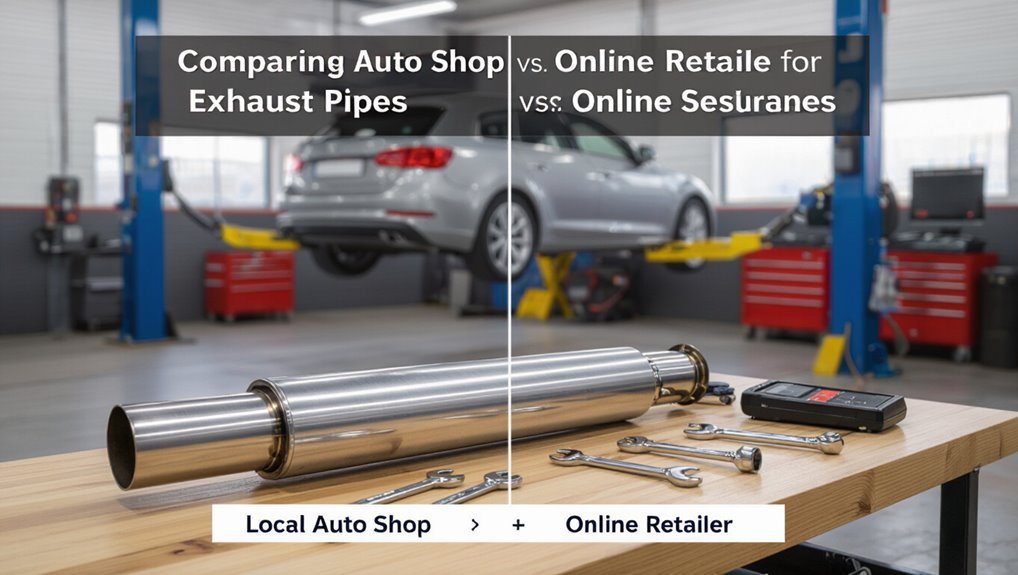
Buy Local vs. Order Online: Which Is Right?
When weighing whether to buy an exhaust pipe locally or order online, shoppers should compare factors like availability, fit assurance, price, and turnaround time.
Buying locally offers immediate inspection, in-person fit confirmation, same-day pickup or professional installation, and straightforward returns; it suits urgent repairs or complex custom needs.
Ordering online often provides wider selection, competitive pricing, detailed part listings, and home delivery, beneficial for rare or specific models.
Consider warranty terms, return policies, shipping cost and time, and confidence in measurements.
The best choice depends on urgency, technical comfort, and willingness to trade speed for selection and potential savings.
Check Local Auto Parts Stock & Prices
In checking local auto parts stock and prices, shoppers should start by calling nearby stores or using their online inventory tools to confirm availability and exact part numbers. Store staff can verify fitment, offer OEM or aftermarket options, and note compatible alternatives.
Compare quoted prices including taxes and any core charges; ask about price-matching policies and warranty terms. Check lead times for special-order items and whether pickup or local delivery is offered.
Record stock status from multiple stores to spot the best deal quickly. Maintaining part numbers and vehicle details streamlines rechecks and prevents ordering errors.
Find Independent Muffler & Exhaust Shops Nearby
For locating independent muffler and exhaust shops nearby, start by mapping small, specialized garages rather than general service chains. These shops often stock varied pipe options, provide custom bending and welding, and offer quicker estimates. Reputation, turnaround and parts sourcing matter most.
- Check online reviews and photos for previous exhaust work to gauge skill and cleanliness.
- Call to confirm parts availability, fabrication capability, and warranty specifics before visiting.
- Compare quotes, including labor and materials, and ask about used or aftermarket options to balance cost and fit.
A focused visit yields tailored solutions and clearer expectations.
Buy OEM Exhaust Pipes at Dealerships
Shifting focus from independent shops to dealerships highlights a different route: OEM exhaust pipes come directly from the vehicle maker and are matched to factory specifications, fitment, and emissions requirements.
Dealership parts departments provide certified components, VIN-checked compatibility, and warranty coverage, useful for owners seeking original equipment assurance.
Pricing can be higher than aftermarket alternatives, but installation by factory-trained technicians preserves warranty and service records.
Availability varies by model and may require ordering lead time. Buyers should compare dealer quotes with independent options for value, confirm warranty terms, and verify that emissions certifications meet local regulations before purchasing.
National Chains That Stock Exhaust Pipes
Listing major national auto parts chains reveals a convenient middle ground between dealerships and independent shops: stores such as AutoZone, O’Reilly Auto Parts, Advance Auto Parts, and NAPA carry a wide selection of OEM-replacement and aftermarket exhaust pipes, often searchable by make, model, and VIN online.
These outlets offer parts availability, return policies, and in-store pickup, plus basic advice from staff. Warranty and fitment vary by brand and location. Typical customer benefits include nationwide inventory, frequent promotions, and convenient locations.
- Inventory transparency and online lookup
- Warranty and return options
- Pickup, delivery, and basic fitting guidance
Top Online Retailers for Aftermarket Exhaust Pipes
Online marketplaces and specialty performance retailers each serve distinct roles for aftermarket exhaust shoppers.
Major platforms offer broad selection, competitive pricing, and user reviews that aid comparison shopping.
Specialty retailers focus on brand-specific parts, expert support, and performance-oriented options for enthusiasts.
Major Marketplace Platforms
Major marketplace platforms serve as centralized hubs where a wide range of aftermarket exhaust pipes—from budget replacement mufflers to high-performance, brand-name systems—can be compared and purchased.
They aggregate listings from many sellers, provide buyer reviews, filter by fitment and material, and often include easy return policies.
Pricing can be competitive but varies with seller reputation and shipping.
Buyers should verify part numbers and seller ratings before purchase.
Key advantages include selection, comparison tools, and convenience.
- Wide selection and compare-by-spec tools
- User reviews and seller ratings
- Shipping options and return policies
Specialty Performance Retailers
Beyond broad marketplace platforms, specialty performance retailers focus exclusively on exhaust systems and related performance parts, offering deeper product expertise, brand-specific inventories, and tuning support.
These retailers curate performance mufflers, headers, cat-back systems, and hardware from established makers like Borla, MagnaFlow, and Akrapovič, plus niche boutique brands.
Product pages typically include fitment guides, dyno data, sound clips, and installation notes.
Customer service teams often provide vehicle-specific advice and tuning recommendations, while warranty and return policies reflect performance applications.
Pricing can be premium but justified by specialized support, verified quality, and sometimes bundled installation or calibration services.
Used & Salvage Exhaust Pipes: Safe Sources
When sourcing used or salvage exhaust pipes, buyers should prioritize reputable sellers that provide clear documentation of part condition, vehicle compatibility, and any repairs performed. Salvage yards, certified recyclers, and specialty used-parts dealers each offer distinct advantages and potential risks. Inspect for rust, weld integrity, and flange condition; confirm fitment codes or VIN matches; request photos and test notes when possible.
- Inspect physically or ask for high-resolution images showing mounting points and internal corrosion.
- Verify compatibility via part numbers or VIN confirmation.
- Prefer sellers with transparent return terms and documented cleaning or repair history.
Compare Prices, Warranties, and Return Policies
Shoppers should compare prices across retailers and consider total cost including installation and shipping.
They must also check warranty coverage for duration, what components are covered, and any labor reimbursement.
Return policies vary widely, so understanding restocking fees, return windows, and condition requirements helps avoid unexpected costs.
Price Comparison Strategies
Frequently, buyers compare more than just sticker prices; they should evaluate warranties and return policies alongside cost to determine true value. Price comparison strategies prioritize total ownership cost, factoring installation, shipping, and expected lifespan. Shoppers use targeted tactics to reveal best deals without sacrificing reliability.
- Collect quotes from local shops and online retailers, noting taxes, labor, and expedited fees.
- Compare identical part numbers and material grades to avoid false savings on inferior components.
- Check return windows and restocking fees to make certain low-cost options remain refundable if fitment or defects appear.
Warranty Coverage Details
Typically, buyers should assess warranty scope alongside price to gauge real value: examine duration, coverage limits, and whether corrosion, welding, or workmanship defects are included.
Warranty terms vary by manufacturer and retailer; some offer limited lifetime coverage, others prorated or short-term guarantees.
Verify transferability, claim procedures, required proof of purchase, and whether installation by a certified shop is mandated.
Exclusions for misuse, road damage, or aftermarket modifications are common.
Check who handles claims — manufacturer or seller — and expected turnaround for replacements.
Comparing warranty responsiveness and documented claim experiences can reveal practical long-term value beyond sticker price.
Return Policy Differences
Comparing return policies is essential when weighing price and warranty differences, because a lenient return window and straightforward process can offset a higher upfront cost or limited warranty.
Retailers and online sellers vary in restocking fees, return shipping responsibility, and proof requirements.
Shoppers should verify eligibility for opened parts, time limits, and condition standards before purchase.
Clear return terms reduce risk when warranties exclude wear or improper fit.
The following checklist helps compare options:
- Return window length and start date.
- Fees, shipping costs, and restocking policies.
- Conditions for accepted returns, including opened or installed parts.
Installation Options: DIY, Shop, or Mobile Service
When choosing between DIY, a repair shop, or a mobile service, buyers should weigh cost, skill level, equipment needs, and time constraints.
DIY suits experienced individuals with tools and space; it offers lower labor cost and control but requires time and safety awareness.
Traditional repair shops provide professional installation, warranties, and diagnostic capabilities, often at higher labor rates.
Mobile services combine convenience and on-site work, useful for minor replacements or when vehicle transport is impractical, though availability and pricing vary.
Decision factors include complexity of the exhaust job, warranty requirements, scheduling flexibility, and willingness to handle potential complications.
Red Flags to Avoid When Buying an Exhaust Pipe
After weighing installation choices, buyers should also scan for warning signs that indicate poor value or risk. Attention to provenance, warranty, and fit prevents costly mistakes. Common red flags include misleading descriptions, inconsistent measurements, and absent return policies.
- Vague specifications: listings without material grade, diameter, or part numbers suggest uncertainty or misrepresentation.
- No warranty or return: sellers refusing returns or offering no coverage increase buyer exposure to defects or wrong fit.
- Too-good pricing: unusually low prices versus market rates often signal counterfeit, damaged, or salvaged components.
Careful vetting of listings and sellers reduces the chance of poor purchases.
Quick Buying Checklist: Pick the Right Pipe Today
For a fast, confident purchase, follow a short checklist that verifies fit, material, and seller reliability before checkout. Confirm vehicle make, model, year, and engine to guarantee compatibility; note pipe diameter, length, bends, and flange type. Prefer stainless or aluminized steel for corrosion resistance; weigh cost versus longevity.
Inspect seller ratings, return policy, warranty, and shipping speed; prioritize vendors with clear parts diagrams and customer support. Compare OEM versus aftermarket options and read recent reviews for recurring issues. Verify installation requirements and available hardware. Finalize the purchase only when specifications, protections, and delivery align with needs.
Conclusion
The shopper now has a clear map to locate an exhaust pipe nearby or online, weighing fit, cost, and service like a seasoned pro. With local parts stores, independent muffler shops, and major e-tailers compared, choices are plentiful—practically endless. By checking compatibility, warranties, return rules, and installation options, a confident purchase follows. Avoid obvious red flags, use the quick checklist, and the right pipe will be in hand without drama.