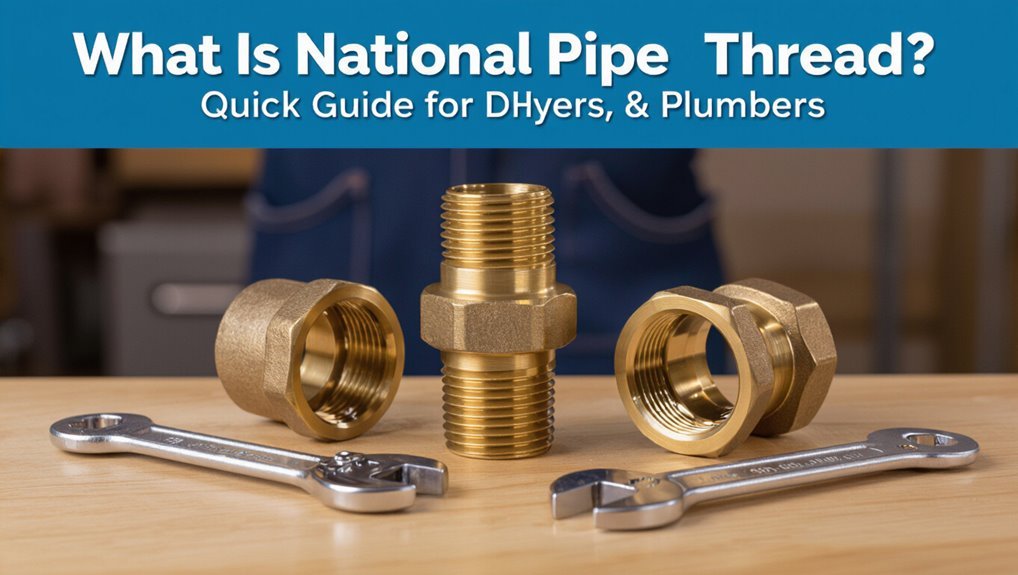
What Is National Pipe Thread? Quick Guide for DIYers & Plumbers
National Pipe Thread (NPT) is a tapered thread standard used in North America for joining and sealing pipes and fittings. It features a 60° thread angle, allowing for a secure metal-to-metal seal as male and female threads are tightened. This seal is often enhanced with PTFE tape or pipe dope. Unlike straight threads (NPS) that need gaskets or O-rings, NPT requires careful identification, proper torque application, and sealant to ensure leak-free joints. For effective use, follow these practical tips.
NPT in One Sentence : What It Is and Why It Matters
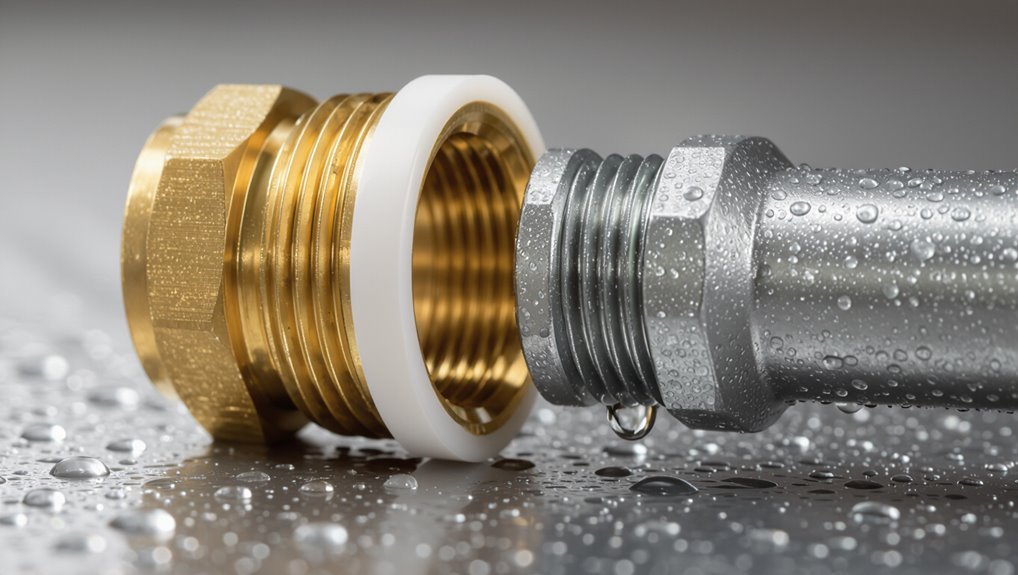
NPT, or National Pipe Thread, is a standardized tapered thread form used to join and seal pipes and fittings in plumbing and industrial systems. It guarantees a pressure-tight mechanical connection by creating interference as threads tighten, often augmented with sealant for reliability.
NPT’s taper, thread angle, and pitch are specified to maintain compatibility across manufacturers, reducing leaks and simplifying repairs. Proper selection of NPT sizes and materials matches system pressure, fluid type, and temperature.
Widely adopted in North America, NPT matters because it provides predictable performance, interchangeability, and a known baseline for designing, installing, and maintaining piping systems.
Quick Checklist: Working With NPT (Tools, Safety, Tips)
A concise checklist helps technicians prepare for working with National Pipe Thread by listing essential tools, safety precautions, and practical tips to guarantee leak-free, code-compliant joints.
Gather appropriate wrenches, thread gauges, pipe cutters, reamers, chamfer tools, thread sealant (PTFE tape or compound), and calibration fittings.
Inspect threads for damage; clean and de-burr cut ends.
Apply sealant correctly: direction, layers, and coverage.
Torque fittings to manufacturer or code limits; avoid overtightening.
Use PPE: gloves, eye protection, and respiratory protection when cutting or applying compounds.
Pressure-test assemblies per code, monitor for leaks, and document results before commissioning.
NPT vs NPS: What’s the Real Difference?
After preparing tools, inspecting threads, and applying sealant per the checklist, technicians must also distinguish thread types: NPT and NPS look similar but serve different functions and are not interchangeable. NPT (National Pipe Taper) has tapered threads that create a pressure-tight joint when torqued; NPS (National Pipe Straight) uses parallel threads that rely on a gasket or O-ring for sealing. Proper identification avoids leaks and damage. Use gauges to confirm profile and measure pitch. Match straight-to-straight or tapered-to-tapered fittings only; do not mix.
| Feature | Use case |
|---|---|
| Thread form | Seal method |
| Compatibility | Gasket required |
Why NPT Seals: Tapered Threads Explained
Because the threads taper inward, NPT fittings convert radial thread interference into axial compression that produces a pressure-tight metal-to-metal contact as they are torqued together. This geometry creates a progressively tighter fit along the engaged length, forcing mating surfaces to wedge and seal without relying solely on thread flank fit.
Proper torque aligns deformation and seating; insufficient torque leaves gaps, excessive torque risks galling or cracking. Pipe dope, PTFE tape, or sealants often complement the metal-to-metal seal by filling microscopic voids and lubricating threads for controlled assembly.
Correct thread engagement and surface condition determine sealing reliability under pressure and vibration.
Tapered vs Straight Threads : When to Use Each
Tapered threads are designed to form pressure-tight seals by wedging and compressing mating surfaces as they are tightened.
Straight threads provide alignment and mechanical holding for fittings that rely on separate seals such as O-rings or gaskets.
Selection depends on the application’s need for a direct metal-to-metal seal, ease of assembly, pressure requirements, and need for reusability.
Tapered Thread Purpose
In plumbing and piping systems, tapered threads are designed to create a pressure-tight seal as mating parts are torqued together, their decreasing diameter causing the threads to wedge and compress sealing material.
Tapered threads convert axial torque into radial deformation, enhancing contact between metal surfaces and thread sealant.
They suit fluid and gas lines where inherent thread interference reduces leak paths without relying solely on gasketing.
Proper engagement depth and compatible fittings are essential to avoid over-tightening, galling, or stress concentrations.
Thread standards and machining tolerances determine seal reliability, so correct thread form, sealant type, and installation technique guarantee durable, leak-resistant joints.
Straight Thread Purpose
For applications requiring alignment, mechanical retention, or a predictable, reusable joint, straight (parallel) threads provide a consistent axial engagement without relying on thread interference for sealing. Straight threads serve where fittings must align precisely, allow insertion of seals or O-rings, or permit frequent assembly and disassembly. They work with backup seals, retaining nuts, or locking devices. Common uses include panel connectors, hydraulic adapters with bonded seals, and fixtures where torque must not deform mating parts. Selection favors dimensional stability and serviceability over inherent leak-tightness, distinguishing straight threads from tapered types that form their own pressure seal.
| Feature | Benefit | Typical accessory |
|---|---|---|
| Alignment | Precise fit | O-ring |
| Reusability | Multiple assemblies | Locknut |
| Sealing method | External seal needed | Gasket |
Choosing By Application
When selecting between tapered and straight pipe threads, the deciding factors are the required leak-tightness, ease of assembly and disassembly, and the application’s pressure and vibration conditions.
Tapered threads seal by metal-to-metal interference and often require sealant; they suit high-pressure, permanent or semi-permanent fluid and gas connections where vibration is moderate.
Straight threads rely on a gasket, O-ring, or compression fitting for sealing and enable repeated disassembly without thread damage; they fit instruments, panels, and systems needing frequent maintenance or precise alignment.
Match thread type to service conditions, sealing method, and maintenance frequency to guarantee reliability and safety.
Common NPT Sizes and How Numbering Works
The section explains how NPT sizes are numbered, clarifying the relationship between nominal size, actual OD, and threads per inch.
It then presents a concise chart of common NPT sizes to show typical OD and TPI values.
Readers are guided to use the chart to match fittings and guarantee proper sealing and compatibility.
Understanding NPT Numbering
One common source of confusion with National Pipe Thread (NPT) is that the nominal size number (for example, 1/8″, 1/4″, 1/2″, 3/4″) does not equal any measured external diameter but instead refers to a standardized pipe size that determines the thread form and approximate flow capacity.
NPT numbering reflects pipe bore and wall thickness conventions rather than thread crest measurements. Threads per inch (TPI) vary with nominal size, and tapered pitch creates interference for sealing. Manufacturers and standards bodies assign numbers to correlate fittings, taps, and dies. Accurate selection requires matching nominal size, TPI, and thread type to guarantee compatibility.
Common Thread Size Chart
Following the explanation of NPT numbering, a concise chart of common sizes clarifies how nominal designations map to threads per inch (TPI), approximate outside diameters, and typical applications.
Common NPT sizes include 1/8″ (27 TPI, ~0.405″ OD) for instrumentation and small fittings; 1/4″ (18 TPI, ~0.540″ OD) for fuel lines and small plumbing; 3/8″ (18 TPI, ~0.675″ OD) for compact hydraulic lines; 1/2″ (14 TPI, ~0.840″ OD) for residential water lines; 3/4″ (14 TPI, ~1.050″ OD) and 1″ (11.5 TPI, ~1.315″ OD) for main plumbing branches.
Larger sizes follow similar naming with decreasing TPI and greater OD for industrial service.
Thread Pitch (TPI): How to Read and Match It
Several common measurements determine how pipe threads engage, but threads per inch (TPI) is the key number that defines spacing and mating compatibility. TPI counts full thread peaks per inch along the shank; matching TPI between male and female parts prevents leaks and cross-threading. Use a gauge or compare against known samples; coarse and fine TPI standards exist for different diameters. For NPT, pitch combines with taper to seal, so correct TPI is necessary though not the only factor.
| Tool | Action | Result |
|---|---|---|
| Gauge | Count threads/inch | Identify TPI |
| Sample | Fit pieces | Verify match |
| Chart | Cross-reference | Confirm standard |
Measure NPT Size in 3 Steps
When measuring NPT size, begin by identifying the pipe’s nominal diameter, then determine threads per inch (TPI), and finally verify the fit with a counterpart or gauge.
First, measure outside diameter for male or inside diameter for female parts; compare to nominal diameter charts to select the closest size.
Second, count threads across a one-inch span or use a thread pitch gauge to establish TPI; confirm whether it matches standard NPT series for that nominal diameter.
Third, test engagement with a matching fitting or calibrated NPT gauge to assure proper taper, thread form, and sealing potential before use.
Identify NPT by Eye and Feel on the Job
Technicians often begin by inspecting the visual thread angle, noting the tapered profile and characteristic 60° thread form to distinguish NPT from parallel or metric threads.
A quick tactile check follows, feeling for the tight, wedging fit as a male thread engages a female NPT taper.
Combined visual and tactile assessment on the job speeds identification without tools when conditions require immediate action.
Visual Thread Angle
How can one quickly distinguish National Pipe Thread (NPT) by sight and touch?
The visual thread angle of NPT is a 60-degree profile with tapered crests and roots; threads appear sharper and more acute than parallel pipe threads.
When inspected, the taper causes thread spacing to visually converge toward the smaller end.
Light grazing highlights the angled flanks, producing a characteristic triangular silhouette.
Compared with BSPT or ISO threads, NPT’s flank steepness and taper are noticeable at close range.
Photographs or a simple magnifier reveal the consistent 60° angle and taper, aiding rapid identification on the job without gauges.
Tactile Thread Fit
By running fingers along a mating NPT thread pair, a trained worker can quickly sense the taper and engagement pattern: the threads tighten progressively toward the smaller end, producing a distinct wedging feel rather than the uniform contact of parallel threads. A practitioner notes resistance increases smoothly as parts advance; seals compress near the root, and slight axial movement yields measurable change in torque. This tactile cue helps distinguish NPT from straight threads, aids hand-starting, and signals when to stop tightening to avoid overstress. Sensitivity develops with experience; clean, dry threads improve feedback and reduce misidentification.
| Cue | Meaning |
|---|---|
| Increasing resistance | Taper engagement |
| Smooth torque rise | Proper wedging |
| Abrupt catch | Damaged thread |
| Uniform feel | Likely parallel |
Tools Every DIYer and Plumber Need for NPT Work
For reliable National Pipe Thread (NPT) work, a compact set of specialized tools is essential: a quality pipe threader or die set, thread-cutting taps for internal threads, pipe wrenches and adjustable pliers for gripping, Teflon tape and thread sealant for leak prevention, and a thread gauge to verify pitch and taper.
Additional necessities include a deburring tool to remove burrs, a chamfering tool for clean starts, lubricating oil for cutting, and a vice or clamping system for secure alignment.
A flashlight or inspection mirror aids visual checks.
Proper safety gear—gloves and eye protection—completes the kit.
Choosing Sealants: Tape, Paste, or Thread Dope
The section compares common sealant types—PTFE tape, pipe paste, and traditional thread dope—highlighting their strengths and limitations for NPT joints.
It outlines typical uses for each product and practical tips for application to guarantee a reliable seal.
Finally, it covers removal and cleanup considerations so readers can choose the right material for maintenance and disassembly.
Tape Versus Paste
Choosing between thread-sealing tape and paste requires weighing application ease, joint type, and service conditions.
Tape (PTFE) is clean, fast, and suited to metal threads where minimal displacement is needed; it resists many chemicals and is non-hardening.
Paste (pipe dope) fills irregularities better, tolerates vibration, and often contains lubricants for tighter torque control.
For gas lines, follow code and use approved products; for high-temperature or plastic fittings, verify compatibility.
Apply tape in thread direction, avoid overwrapping, and smear paste evenly without excess.
Proper selection and correct technique prevent leaks and facilitate future disassembly.
Thread Dope Uses
Compare sealant options by matching their properties to the joint and service conditions. Thread dope (pipe joint compound) provides thicker, gap-filling coverage and often better long-term resistance to vibration, chemicals, and temperatures than tape. It suits metal pipe threads, aged fittings, and applications needing leak- and corrosion-resistant seals.
Some formulations include PTFE or anaerobic elements for enhanced performance; others are non-hardening for disassembly. Compatibility with service media (water, gas, oil, steam) and thread type (NPT, NPTF) dictates choice. Safety, cure time, and manufacturer ratings should guide selection rather than habit or convenience.
Application And Removal
When preparing a threaded joint for service, matching the sealant type to the assembly and anticipated maintenance often determines both ease of application and future removability. Selection balances sealing performance, disassembly needs, and media compatibility. PTFE tape suits water lines and frequent service; pipe paste (non-hardening) offers thicker fill and vibration resistance; anaerobic thread sealants cure for permanent, high-pressure seals. Removal requires appropriate solvent, heat, or mechanical action; cured compounds may need cutting. Clean threads before reassembly. Use manufacturer guidance for pressure-rated systems and gas. Choose reversible sealants where future maintenance is expected.
| Sealant | Best use |
|---|---|
| PTFE tape | Reserviceable |
| Paste | Vibration resistance |
| Thread dope (anaerobic) | Permanent high-pressure |
Install NPT Fittings (Step‑by‑Step)
Before beginning, gather the correct NPT fittings, appropriate sealant (thread sealant tape or pipe dope), a thread cleaner or brush, and suitable wrenches; verify pipe sizes and thread types to prevent mismatches.
Clean male and female threads, removing debris and old sealant.
Apply sealant: wrap PTFE tape clockwise or brush pipe dope onto male threads, keeping the lead end clear.
Hand-start the fitting to avoid cross-threading, then tighten with a wrench to the manufacturer’s recommended turns past hand-tight.
Check alignment and support piping to prevent stress.
Pressurize system slowly and inspect for leaks, retightening slightly if necessary.
Removing Stuck NPT Fittings Safely
Loosen seized NPT fittings methodically to prevent damage to threads, pipes, and surrounding equipment.
Begin by cutting water or gas supply and relieving pressure. Apply penetrating oil around the joint, allowing time to soak. Use proper-size pipe wrenches with jaw protection; secure the adjacent pipe to isolate force.
Alternate heat with a torch cautiously when appropriate, avoiding nearby flammables and plastic components. Tap the fitting gently with a hammer to break corrosion.
If resistance persists, back off and reassess to prevent overstressing the system. Replace damaged fittings and reseal threads with appropriate tape or compound before reassembly.
Materials and NPT: Brass, Steel, PVC – What Changes
Across common piping materials—brass, steel, and PVC—the principles of National Pipe Thread (NPT) remain consistent, but material properties change how threads are cut, sealed, tightened, and maintained.
Brass machines cleanly and resists corrosion; threads form well and tolerate moderate torque, often requiring PTFE tape or pipe dope.
Steel is harder, needs sharper tooling, higher torque, and attention to galvanic corrosion when paired with dissimilar metals; sealants must withstand higher temperatures and pressures.
PVC uses tapered threads but is softer and brittle—thread engagement length should be increased, torque limited, and thread compound compatible with plastics to avoid swelling or degradation.
Common NPT Leak Causes and Fixes
Diagnose leaks by identifying their source, distinguishing thread failures from flange, gasket, or material defects. Common causes include insufficient sealant, cross-threading, damaged taper, corrosion, and overtightening. Fixes range from rethreading and replacing damaged sections to proper PTFE tape or pipe dope application and controlled torque. Inspect fittings, clean threads, and test under low pressure before full service. Professional repair is advised for structural or corroded pipes.
| Cause | Emotional Cue |
|---|---|
| Cross-threading | Frustration |
| Corrosion | Anxiety |
| Missing sealant | Regret |
| Overtightening | Resignation |
| Damaged taper | Urgency |
Adapters: NPT to BSP, Flare, or Compression (How to Choose)
When connecting NPT fittings to BSP, flare, or compression systems, choosing the correct adapter requires matching thread form, sealing method, and pressure rating to the application.
Identify whether threads are parallel (BSPP) or tapered (BSPT/NPT) and use adapters that convert forms without forcing mismatched engagement.
For seal type, pick adapters that preserve thread-seal (tape/compound) or provide mechanical seals (flare faces, compression ferrules).
Verify materials compatibility with fluid and temperature.
Choose adapters rated for the system’s expected working pressure and avoid improvised seals.
Install with correct torque and alignment to prevent leaks or damage.
Codes & Pressure Limits: What to Check Before You Install
Typically, installers must verify applicable codes, pressure ratings, and documentation before assembling threaded connections to guarantee safety and compliance. Inspect local plumbing and mechanical codes, manufacturer pressure-temperature (P-T) charts, and material compatibility. Confirm thread type, class, and whether joint sealant or tape is permitted. Check maximum allowable working pressure (MAWP) at operating temperature and any special inspection or certification requirements. Record installation details for inspection. Use rated fittings and avoid mixing incompatible metals. Refer to code tables for system type (water, gas, steam) and maintain clear labeling.
| System | Max Pressure Source | Required Document |
|---|---|---|
| Water | Manufacturer P-T chart | Spec sheet |
| Gas | Code tables | Certificate |
| Steam | ASME limits | Inspection report |
Repair vs Replace: Troubleshooting and Quick Decision Checklist
The guide outlines clear criteria for deciding when a faulty threaded joint should be repaired versus replaced. It compares factors such as leak severity, material condition, age, and cost-effectiveness.
A concise checklist follows to help technicians make consistent, safe choices.
When To Repair
Faced with a leaking joint or worn fitting, a technician evaluates whether repair will restore reliable function without recurring problems. Criteria include thread condition, material compatibility, access, and cost. Simple leaks from loose joints, minor thread damage repairable with sealant or partial rethreading, and available OEM parts favor repair. Corrosion confined to fittings, intact mating surfaces, and predictable lifespan support fixing rather than replacing. The technician documents observations, applies appropriate thread sealant or repair sleeve, tests under pressure, and monitors. Use the checklist below to decide quickly and limit unnecessary replacement.
| Condition | Repairable? | Action |
|---|---|---|
| Minor thread nicks | Yes | Sealant/ream |
| Accessible joint | Yes | Tighten/test |
| Extensive corrosion | No | Evaluate replacement |
When To Replace
When corrosion, thread deformation, or repeated leaks indicate that a joint’s integrity cannot be reliably restored, replacement becomes the prudent choice.
Assess damage: fractured fittings, stripped threads, or metal fatigue require new components.
Consider material compatibility, pressure rating, and code compliance when selecting replacements.
For critical systems—gas, potable water, or high-pressure lines—favor replacement over temporary fixes.
Weigh costs: labor and downtime versus recurring repairs.
Use proper thread sealing methods and torque to manufacturer specs during installation.
Document replaced parts and inspect adjacent fittings for hidden wear to prevent future failures and make certain long-term reliability.
Conclusion
National Pipe Thread (NPT) remains central to plumbing: about 60% of U.S. pipe fittings use tapered NPT, underscoring its widespread adoption and importance for leak-tight joins. For DIYers and plumbers, understanding when to use tapered versus straight threads, how to seal threads, and when to repair or replace components reduces failures and downtime. Following code limits, using correct adapters, and basic safety tools prevents common leaks and extends system life.