What Type of Pipe Is Used for Natural Gas Lines? Guide & Options
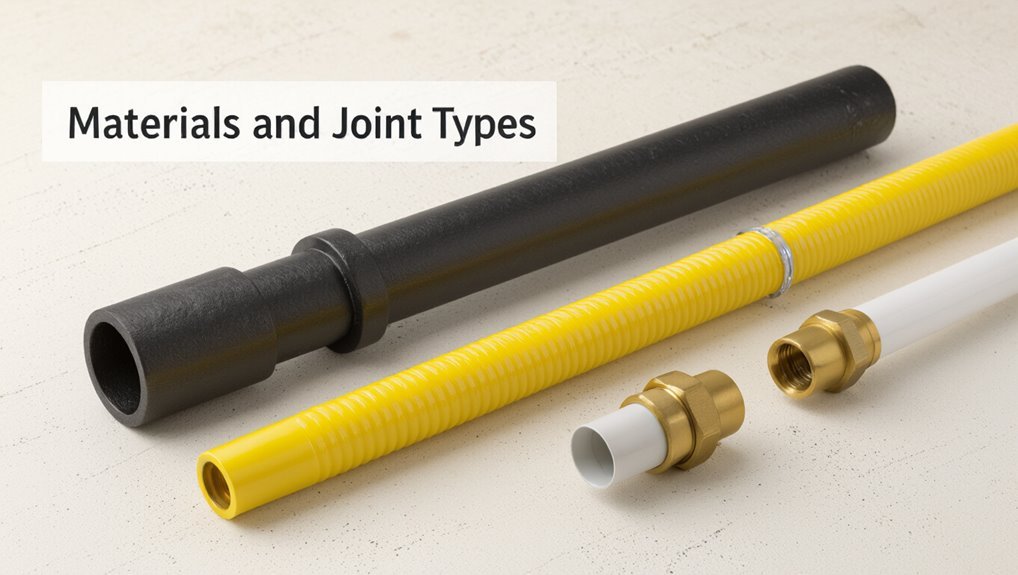
When it comes to natural gas lines, the most commonly used piping materials include black steel (threaded) for indoor rigid installations, PE/HDPE for buried mains and service laterals, and CSST for flexible interior branch lines, where permitted. The choice of material depends on various factors such as the pressure of the gas, whether the line is buried or exposed, and local building codes. For outdoor installations, it’s crucial to implement corrosion protection, bonding, and proper trenching techniques. Additionally, flexible connectors are typically reserved for appliance hookups. For more information on installation, code requirements, lifespan, costs, and the importance of hiring a qualified installer, continue reading.
Short Answer: Most Common Gas Pipe and Why
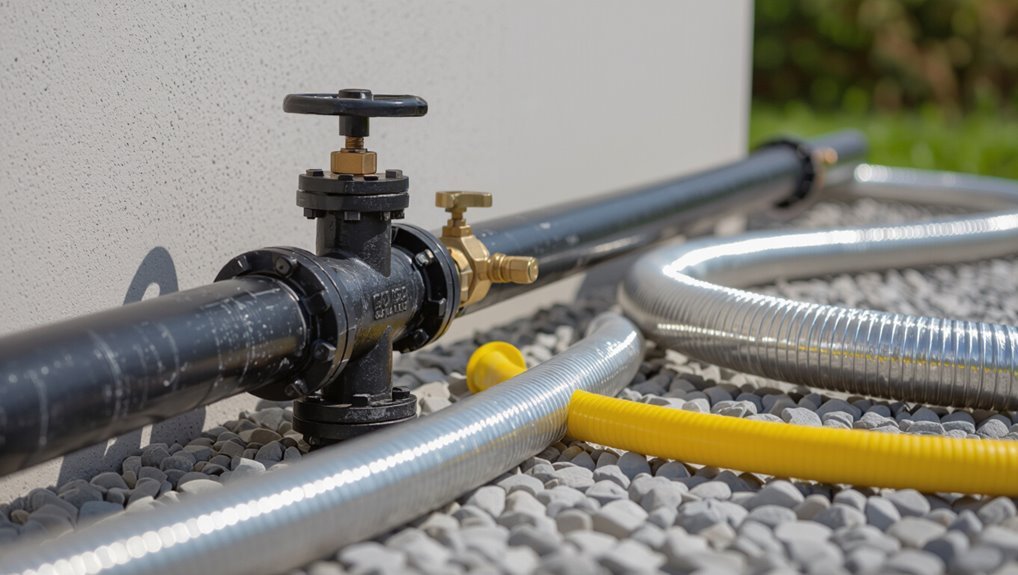
Steel pipe is the most common material used for natural gas distribution in buildings and mains because of its strength, durability, and long track record of safe service.
Steel, often black iron or threaded, handles higher pressures and provides rigid, stable runs for trunk and riser applications.
Copper tubing sees limited use for interior low-pressure lines where codes permit.
Corrugated stainless steel tubing (CSST) offers flexibility and quicker installation for branch lines but requires bonding and compatible fittings.
Polyethylene (PE) predominates for underground mains and service laterals due to corrosion resistance and ease of fusion joining.
Key Factors to Choose Gas Pipe (Pressure, Burial, Code, Corrosion)
Several critical factors determine the appropriate gas pipe: operating pressure, whether the line will be buried or exposed, applicable codes and inspections, and susceptibility to corrosion. Selection hinges on pressure class—low-pressure distribution vs. higher-pressure service require different materials and wall thicknesses.
Burial demands rated materials, protective coatings, tracer wire, and depth per code. Local and national codes dictate allowable materials, joining methods, testing, and required permits or inspections.
Corrosion risk from soil chemistry, moisture, and stray currents influences whether to use corrosion-resistant pipe or cathodic protection. Proper choice balances safety, durability, maintainability, and regulatory compliance.
Steel (Black Iron) for Natural Gas: Pros, Cons, Uses
Black iron pipe, a long-established choice for natural gas distribution, offers high strength, wide availability, and proven joining methods (threaded, welded) that suit both indoor and aboveground service. It resists mechanical damage, handles typical gas pressures, and aligns with many codes; drawbacks include susceptibility to corrosion if buried or exposed to moisture and heavier weight complicating installation. Typical uses are interior mains, appliance connectors, and visible runs where support is practical. Selection depends on environment, code, and accessibility.
| Advantage | Limitation |
|---|---|
| Durable, strong | Corrodes if unprotected |
| Widely accepted | Heavy, labor-intensive |
CSST for Natural Gas: Benefits, Limits, Installation Notes
Corrugated stainless steel tubing (CSST) offers flexibility and ease of routing but requires attention to safety practices specific to its construction.
Proper installation includes secure bonding and grounding to reduce lightning- and fault-related risks, along with adherence to manufacturer and code requirements.
Installers must follow clear bonding, connector, and routing guidelines to make certain reliable performance and minimize hazards.
CSST Safety Considerations
Offering flexibility and quicker installation than rigid pipe, corrugated stainless steel tubing (CSST) serves as a common alternative for indoor natural gas distribution, but it requires specific safety measures: proper bonding and grounding, avoidance of contact with sharp edges, and adherence to manufacturer and code installation practices to minimize lightning- and fault-induced damage.
CSST’s thin jacket and conductive core can be vulnerable where exposed to electrical arcing; inspections should verify intact jacketing, appropriate clearance from electrical conductors, and correct fittings.
Users should rely on certified installers, follow updated product instructions, and report damage or corrosion promptly to prevent leaks and hazards.
Installation And Bonding
In indoor gas systems, CSST installation and bonding require precise adherence to manufacturer instructions and local codes to guarantee safe operation and minimize lightning- or fault-related damage.
Installers must use approved fittings, maintain required clearances, and avoid physical damage or kinking during routing.
Bonding involves connecting CSST to the electrical grounding system with the specified conductor size and attachment point, typically at the service grounding electrode or panel.
Periodic inspection assures bonding continuity and identifies corrosion or loosened clamps.
Where local rules permit, protective sleeving and bonding jumpers across flexible sections further reduce risk and comply with warranty conditions.
Polyethylene (PE) Gas Pipe Outdoors: When It’s Right
Polyethylene (PE) piping is often chosen for outdoor gas lines because UV resistance, soil chemistry, and mechanical protection determine long-term durability.
Proper trench depth and bedding practices are critical to prevent freezing, external damage, and undue stress on joints.
Code and manufacturer specifications typically dictate minimum burial depths and backfill materials for safe PE gas installations.
Outdoor Durability Factors
When exposed to sunlight, soil chemicals, and temperature swings, polyethylene (PE) gas pipe requires evaluation for long-term outdoor performance; its resistance to corrosion and flexibility make it suitable in many buried or sheltered applications, but UV exposure, mechanical abrasion, and potential chemical contaminants can limit service life unless mitigated by proper material grade, ultraviolet stabilizers, protective coatings, or burial depth.
Consideration should include polyethylene formulation, UV inhibitors, and thickness to resist cracking.
Mechanical protection against rock and root intrusion, joint integrity under thermal cycling, and compatibility with backfill chemicals determine suitability.
Regular inspection and adherence to standards preserve functionality and safety.
Trench Depth Requirements
For outdoor installations, trench depth for polyethylene (PE) gas pipe is determined by load protection, frost lines, and regulatory minimums to guarantee mechanical safety and long-term performance.
Typical depths range from 18 inches to 36 inches depending on jurisdiction, traffic loading, and frost penetration.
Utilities, local codes, and standards such as ASTM or CSA specify minimum cover and marking requirements.
Additional cover or concrete encasement may be required beneath roadways or driveways.
Depth must also accommodate warning tape and provide sufficient clearance from other utilities.
Final trench depth decisions rely on site-specific engineering, permitting authorities, and documented inspection.
Why Galvanized Pipe Is Usually a Poor Choice for Gas
Galvanized steel, once common in residential plumbing, is generally a poor choice for natural gas because its zinc coating corrodes and flakes over time, creating internal obstructions and increasing the risk of leaks at joints.
Over time, the zinc layer reacts with moisture and sulfur compounds in soil and gas, producing pitting and loose corrosion products that hinder flow and clog regulators.
Threads and fittings can seize or deteriorate, compromising seal integrity.
Repair and inspection are more difficult compared with modern alternatives like black iron or CSST.
For longevity and safety, codes and professionals increasingly prefer materials designed for gas service.
Flexible Appliance Connectors vs Permanent Natural-Gas Piping
Flexible appliance connectors are short, flexible lines used to join gas appliances to the building’s permanent piping and come in materials like corrugated stainless steel or rubber with an outer braid.
Codes and safety guidance limit their use to specific lengths and applications, and they require periodic inspection or replacement when damaged, kinked, or past the manufacturer’s service life.
Installation and replacement practices differ from permanent gas piping, emphasizing proper fittings, accessible shutoff valves, and adherence to local code and manufacturer instructions.
Flexible Connector Basics
Distinguishes between short, corrugated appliance connectors and permanent buried or concealed piping, emphasizing that connectors are meant only for connecting movable appliances while permanent piping forms the fixed gas distribution system.
Flexible connectors are typically stainless steel or brass, corrugated for bendability, and supplied in limited lengths to minimize vibration transfer. They attach appliance inlet to building piping using approved fittings and should not be threaded into concealed runs.
Their design accommodates slight movement, thermal expansion, and settling without stressing rigid joints.
Selection depends on appliance type, inlet size, pressure rating, and connector end fittings to make certain compatibility.
Safety And Code
After outlining how connectors serve only as short, movable links between appliances and the fixed gas distribution, code and safety considerations specify where and how those connectors may be used.
Codes typically limit connector length and require listed, approved materials to reduce leak and fire risk.
Permanent piping must be used for concealed runs, long distances, or where mechanical protection is necessary.
Flexible connectors are acceptable only for attachments to appliances, not as substitutes for branch or supply lines.
Users must follow local building codes, manufacturer instructions, and inspection requirements; compliance guarantees safe operation and determines permissible connector types and installation locations.
Installation And Replacement
When connecting or replacing appliance gas lines, installers must choose between short, listed appliance connectors and permanent piping based on route, protection, and code limits. The choice affects flexibility, vibration isolation, and long-term durability. Flexible connectors suit appliances where movement or periodic replacement is expected; they are limited in length and require listed fittings.
Permanent piping (CSST, black steel, copper where allowed) provides fixed, protected runs and meets higher mechanical protection standards. Proper installation follows sizing, support, bonding, and testing requirements. Consideration of access, appliance type, and local code determines whether a connector or welded/ threaded run is appropriate.
- Flexible connectors: vibration damping, easy replacement
- Permanent piping: mechanical protection, longer runs
- Code limits: length, fittings, listing requirements
- Safety: bonding, leak testing, certified materials
Matching Pipe to Pressure, Temperature, and Gas Type
Because pressure, temperature, and gas composition each affect a pipe’s mechanical demands and corrosion risk, selecting the correct material and rating is essential to safe, reliable service.
Materials (steel, CSST, PE) carry specific pressure ratings and temperature limits; wall thickness and grade determine allowable working pressure.
Gas type—methane, propane, or mixed gases—affects compatibility and requires verification of elastomers, fittings, and joint methods.
High-pressure mains demand welded or threaded steel with appropriate certification; low-pressure service lines may use PE with pressure-class matching.
Engineers must consult codes, manufacturer data, and application-specific calculations to guarantee margin, longevity, and compliance.
Protecting Buried Gas Lines From Corrosion and Soil Damage
In buried installations, corrosion and aggressive soils pose the primary long-term threats to gas pipelines and their joints, so mitigation focuses on material selection, coatings, and cathodic protection to prevent metal loss and coating failure.
Selection favors polyethylene-sheathed steel, coated ductile iron, or nonmetallic PE/HDPE where suitable. Backfill and trenching techniques reduce mechanical damage and stray current sites. Regular monitoring verifies system integrity.
- Use factory-applied fusion-bonded epoxy or polyethylene coatings
- Install impressed current or sacrificial anode cathodic protection
- Specify clean, non-corrosive backfill and warning tape
- Perform periodic corrosion surveys and coating inspections
Typical Costs and Expected Lifespans by Pipe Type
Comparing typical costs and expected lifespans by pipe type requires balancing upfront material and installation expenses against long-term maintenance and replacement risks.
Steel pipe often incurs higher installation and material costs but can last 50+ years with proper corrosion protection; buried unprotected steel may fail sooner.
Black iron is common indoors, less costly, and durable for decades when maintained.
CSST has moderate material cost, flexible routing savings, and expected service life around 30–50 years depending on bonding and handling.
PE (polyethylene) used for underground mains is low-cost to install and can exceed 50 years under proper bedding and protection.
When to Hire a Licensed Pro : What to Ask Them
Call a licensed professional for any work that alters, extends, or reconnects a gas line, or whenever signs of leaks, corrosion, or damage appear.
A qualified contractor guarantees code compliance, correct pipe selection, proper fittings, and pressure testing.
Before hiring, verify credentials, insurance, and references.
Ask targeted questions to assess experience and scope of work.
- Are you licensed and insured for gas line work in this jurisdiction?
- What pipe types and fittings do you recommend for this installation?
- How will you test and certify the line after installation?
- Can you provide a written estimate and timeline?
Quick Decision Checklist: Pick the Right Gas Pipe for Your Project
After confirming a licensed pro will handle any major gas-line work, homeowners and contractors can use a short checklist to choose the correct pipe for a specific project.
Confirm gas type and operating pressure, evaluate indoor versus outdoor exposure, and note burial depth and soil conditions.
Match pipe material to code and appliance compatibility — CSST, black steel, galvanized, copper, or polyethylene — and verify required fittings and sealants.
Check required diameter for flow and future load, account for thermal expansion and support, and confirm corrosion protection and warranty.
Obtain permits, schedule inspections, and document installation details for maintenance.
Conclusion
Selecting the correct gas pipe blends code, site conditions and budget into a decision that matters more than anyone expects. Steel, CSST and PE each have clear strengths and limits: steel for indoor durability, CSST for flexible installs, PE for buried runs. Corrosion protection, proper fittings and licensed installation turn options into safe systems. Consult local code and a qualified pro to match pipe type to pressure, exposure and lifespan, avoiding costly mistakes.