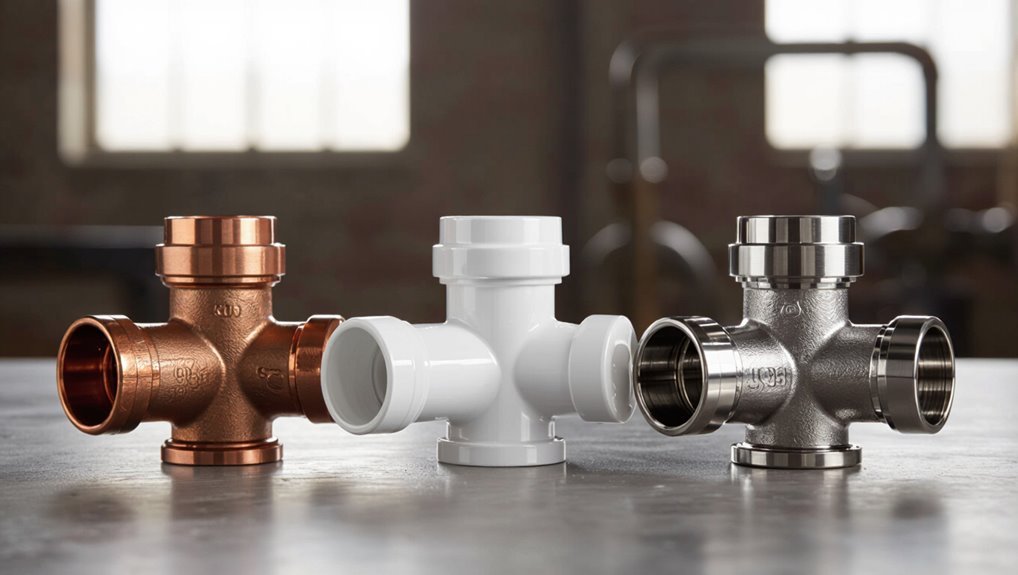
Pipe Fittings Guide: Types, Uses & How to Choose the Right One
This guide provides essential information on pipe fittings, including types, materials, and selection criteria to ensure safe and leak-free systems. It covers key fittings like couplings, unions, elbows, tees, reducers, and flanges, as well as specialty adapters. You’ll find guidance on material choices—such as carbon or stainless steel, copper, brass, and plastics—tailored to pressure, temperature, corrosion, and code requirements. Connection methods discussed include threaded, welded, brazed, solvent or fusion joints, along with gaskets and compression seals. Proper sizing, torque, supports, and inspections are highlighted to prevent failures. Additional practical advice and troubleshooting tips are included to assist in making informed selections.
Pipe Fittings: What They Are and Why They Matter

Pipe fittings connect, redirect, or terminate sections of piping to create functional fluid and gas systems. They enable changes in direction, diameter, and flow control while joining components securely. Proper selection guarantees leak-free joints, compatible pressure ratings, and service longevity.
Fittings accommodate installation constraints, maintenance access, and future modifications. Their design influences hydraulic performance, vulnerability to corrosion, and ease of assembly or disassembly. Incorrect choices increase failure, downtime, and repair costs.
Understanding fitting functions, connection methods, and sizing principles lets planners match system requirements to reliable components, optimizing safety, efficiency, and lifecycle cost without compromising operational integrity.
Pipe Fitting Materials and Where Each Is Used
The section outlines common metal materials such as steel, brass, and copper, followed by plastic and composite options like PVC, CPVC, and fiberglass-reinforced polymers.
It then compares strengths, corrosion resistance, temperature limits, and cost to show where each material is typically used.
Selection guidance ties material properties to applications in plumbing, HVAC, industrial, and corrosive-service systems.
Common Metal Materials
Several common metals—carbon steel, stainless steel, copper, brass, and galvanized iron—dominate pipe fitting applications due to their distinct strength, corrosion resistance, and cost profiles.
Carbon steel suits high-pressure, high-temperature systems and industrial lines where strength and affordability matter but requires protective coatings.
Stainless steel offers superior corrosion resistance and sanitary qualities, favored in food, pharmaceutical, and corrosive environments.
Copper provides thermal conductivity and biostatic properties, common in plumbing and HVAC.
Brass combines machinability and corrosion resistance for fittings and valves.
Galvanized iron serves outdoor and water distribution where sacrificial zinc coating delays rusting but has limited lifespan compared with stainless steel.
Plastic And Composite Options
Offering lightweight, corrosion-resistant alternatives to metals, plastic and composite fittings serve a wide range of low- to medium-pressure systems where chemical resistance, ease of installation, and cost-effectiveness are priorities.
Common plastics include PVC, CPVC, ABS, polyethylene (PE), and polypropylene (PP), each suited to water, drainage, chemical, or gas applications depending on temperature and pressure limits. Fiber-reinforced composites combine thermoplastics or thermosets with glass or carbon fibers for higher strength and thermal stability.
Joining methods span solvent welds, mechanical fittings, heat fusion, and adhesives. Consider UV exposure, solvent compatibility, and long-term creep when specifying plastic or composite fittings.
Material Selection By Application
For specific systems and environments, selecting pipe fitting materials requires matching mechanical properties, chemical compatibility, temperature range, and regulatory requirements to the application’s demands.
Industrial steam and high-pressure systems favor carbon steel or forged steel for strength and heat resistance; stainless steel suits corrosive, sanitary, and food-grade uses.
Copper and brass are common for plumbing and HVAC due to thermal conductivity and corrosion resistance.
PVC, CPVC, and HDPE serve low-pressure, chemical-resistant, and underground applications.
Exotic alloys and lined fittings address aggressive chemicals.
Selection balances cost, longevity, maintenance, and code compliance to guarantee safe, efficient service life.
Pipe Fitting Types: Couplings, Unions, and Nipples (Straight)
Couplings, unions, and straight nipples are fundamental inline connectors used to join, extend, or disconnect sections of pipe without changing direction.
Couplings provide permanent or semi-permanent connections, available as slip, compression, or threaded types, and suit repairs or length joins.
Unions facilitate assembly and disassembly where maintenance or replacement is required; they permit repeated separations without disturbing adjoining piping.
Straight nipples are short, threaded lengths used to bridge fittings or attach components, offering compact, low-resistance connections.
Selection hinges on thread type, pressure rating, material compatibility, seal method, and service conditions to guarantee leak-free, durable performance.
Pipe Fitting Types: Elbows, Tees, and Crosses (Directional)
While couplings, unions, and nipples join pipe in-line, directional fittings steer, split, or combine flow paths to configure a piping system.
Elbows change direction—commonly 45° or 90°—minimizing pressure loss and fitting within spatial constraints. Long-radius elbows reduce turbulence; short-radius save space.
Tees create branch lines, available as equal or reducing types, useful for distribution and instrumentation taps.
Crosses split flow into four directions but are used sparingly due to stress concentration and maintenance complexity.
Material, pressure rating, and flow characteristics determine selection.
Proper alignment, support, and orientation guarantee predictable flow behavior and system longevity.
Size & End-Type Fittings: Adapters, Reducers, and Flanges
Size and end-type fittings address shifts in diameter and connection method, with adapters providing straightforward joins between differing pipe standards or materials.
Reducers change flow area smoothly or abruptly to match system requirements, while flanges offer bolted, removable connections for maintenance and pressure retention.
The following section outlines common adapter types and their uses, then contrasts reducer forms and flange classifications for practical selection.
Adapter Types And Uses
Adapters, reducers, and flanges serve as the essential intermediary pieces that join pipes and components of differing sizes, materials, or end types.
Adapter types convert thread forms, join dissimilar materials, or change end connections without altering flow characteristics. Common adapter styles include threaded, socket, compression, and butt-weld variants, chosen for pressure rating, corrosion resistance, and installation method.
Selection emphasizes compatibility with pipe material, sealing method, and service conditions. Proper use minimizes leaks, simplifies maintenance, and preserves system integrity.
- Threaded, socket, and compression adapters
- Material-transition and dielectric adapters
- Quick-connect and specialty adapters
Reducers And Flanges
In piping systems, reducers and flanges control changes in diameter and provide secure, standardized connection points between components. Reducers shift between pipe sizes—concentric for vertical alignment, eccentric to prevent air pockets—maintaining flow characteristics and minimizing turbulence. Material selection must match pressure, temperature, and media compatibility; welded, threaded, and slip-on options affect strength and leak risk.
Flanges facilitate assembly, disassembly, and maintenance, with types like slip-on, weld-neck, blind, and lap-joint offering varied bolting patterns and stress distribution. Proper gasket choice and bolt torque guarantee sealing. Correct sizing, end-type compatibility, and installation practice optimize system integrity and performance.
Sealing & Joining Methods for Pipe Fittings
Because a secure connection determines system reliability, sealing and joining methods for pipe fittings encompass a range of mechanical and chemical techniques—threaded, soldered, welded, brazed, crimped, glued, and gasketed—each chosen based on material compatibility, pressure and temperature requirements, fluid type, and accessibility for maintenance.
Selection balances joint strength, leak prevention, corrosion resistance, repairability, and installation speed. Proper surface preparation and correct filler or sealant application are critical. Inspection methods verify integrity. Codes and standards often mandate specific techniques for safety-critical systems.
- Mechanical: threaded, flanged, crimped
- Fusion: welded, brazed, soldered
- Sealing: gaskets, adhesives, sealants
Choosing Pipe Fittings by System, Fluid, and Temp/Pressure
When selecting pipe fittings, engineers and installers must match the fitting material and connection type to the system’s service conditions—fluid chemistry, temperature range, and operating pressure—since mismatches can cause leaks, corrosion, deformation, or catastrophic failure.
Selection begins with identifying fluid corrosivity, abrasiveness, and cleanliness to choose compatible metals, alloys, plastics, or linings. Temperature dictates thermal expansion, material strength, and seal compatibility; pressure influences required wall thickness and joint integrity.
Consider transient conditions, chemical additives, and compatibility with seals and gaskets. Maintenance access, inspection frequency, and expected service life also influence choice to assure reliability and safety.
Sizing, Pressure Ratings, and Code Checks
Following material and connection selection based on fluid chemistry, temperature, and pressure, sizing and pressure-rating verification confirm the chosen fittings will perform safely under expected service conditions.
Calculations compare flow requirements, velocity limits, and pressure drop to fitting geometry; selected sizes must preserve system hydraulics and avoid erosion or noise.
Pressure ratings from manufacturers and applicable standards determine allowable working pressure at operating temperature.
Code compliance (ASME, ASTM, EN, local plumbing or gas codes) and certification marks are cross-checked to guarantee legality and insurance acceptance.
- Verify pressure-temperature ratings against operating envelope.
- Confirm dimensional compatibility and flow capacity.
- Document code references and manufacturer data sheets.
Installation Pitfalls and Simple Troubleshooting Tips
In practical installations, common pitfalls stem from improper sealing, incorrect alignment, and inadequate support, any of which can cause leaks, stress fractures, or accelerated wear. The section lists prevention and quick troubleshooting: verify thread sealant type, torque fittings to spec, align joints before final tightening, and add hangers or anchors to eliminate sag and vibration. For leaks, isolate, depressurize, and inspect seals; replace damaged components. For blockages, use flushed cleaning or mechanical clears. Record fixes and monitor.
| Issue | Likely Cause | Quick Fix |
|---|---|---|
| Leak | Bad sealant/overtorque | Reseat, reseal, retorque |
| Vibration | No support | Add clamps/anchors |
Conclusion
In closing, the guide gently reminds readers that piping choices are less about drama and more about discreet stewardship: selecting materials, shapes, and seals that quietly uphold systems. Where elbows summon direction and flanges broker connections, professionals prefer solutions that age without complaint. By embracing appropriate sizing, ratings, and mindful installation, teams sidestep avoidable surprises and preserve operational dignity—allowing fluid networks to perform their modest, indispensable work with as little fuss as possible.