What Is a Pipe Nipple? Quick Guide to Types, Sizes & Uses
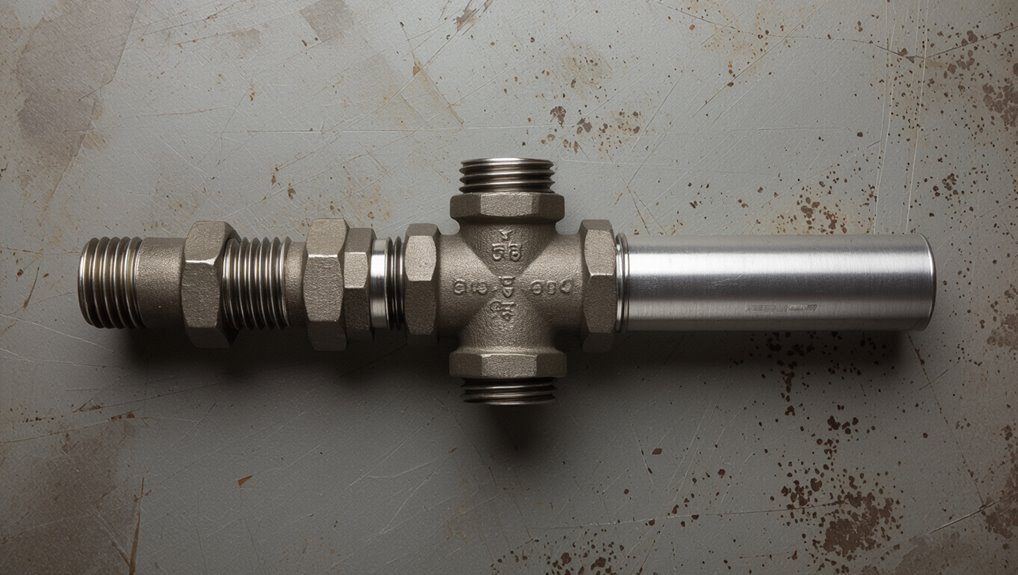
A pipe nipple is a short piece of pipe, typically with male threads on one or both ends, used to connect fittings, valves, or pipe runs in confined spaces. Unlike regular pipes, it is specifically designed for easier installation in tight areas. Pipe nipples come in various configurations—including close, short, long, and hex—and are made from materials like steel, brass, PVC, or stainless steel. They adhere to nominal pipe sizes and thread standards such as NPT or BSP. For practical guidance on selection, installation, and safety, continue reading.
What Is a Pipe Nipple?
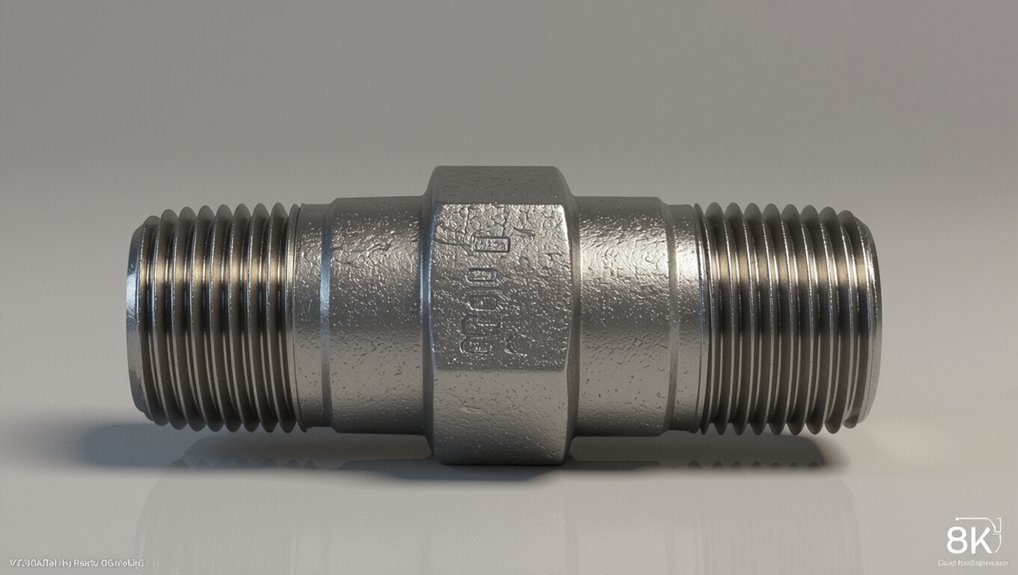
A pipe nipple is a short length of pipe with male threads on both ends used to connect two fittings or pipes in plumbing and piping systems. It serves as a simple joining component, available in various materials (steel, brass, PVC, stainless) and configurations (close, short, long, hex).
Sizes correspond to nominal pipe size and length; thread standards follow NPT, BSP, or metric forms. Applications include extending runs, joining valves or fittings, and adapting connections.
Selection depends on pressure rating, corrosion resistance, and compatibility with fluids. Proper installation uses thread sealant or tape to guarantee leak-free joints.
How Pipe Nipples Differ From Regular Pipe
The section compares pipe nipples and regular pipe by highlighting key functional differences. It notes that nipples typically have threaded ends while regular pipe may be plain or butt-welded, and that nipples are commonly shorter in length and offered in specific diameters for fittings.
It also points out that nipples are designed primarily for connecting fixtures and fittings, whereas regular pipe is purposed for extended runs and structural conveyance.
Threaded vs. Plain Ends
When comparing pipe nipples to regular pipe, the primary distinction lies in their end treatments: threaded nipples have male threads cut or rolled on one or both ends for direct connection to fittings, while plain-end nipples are smooth and require welding, soldering, or compression fittings to join.
Threaded ends enable quick assembly and disassembly in mechanical and plumbing systems; plain ends suit permanent joints or specialized couplings.
Selection depends on required joint type, pressure rating, and assembly method. Maintenance and replacement considerations differ accordingly, with threaded nipples facilitating component swaps and plain ends offering uninterrupted flow and structural continuity.
- Threaded: quick connect/disconnect
- Plain: welded or soldered joints
- Selection factors: joint type, pressure, maintenance
Length And Diameter Differences
Beyond end treatments, pipe nipples and regular pipe also differ in length and diameter, which affect fitting, flow, and application. Pipe nipples are short, standardized lengths for direct connections; regular pipe comes in long runs for distribution. Diameter choices follow nominal pipe sizing, but nipples often use smaller nominal lengths and may be available in closer fractional increments for fittings. Shorter length reduces pressure drop but limits support and alignment options. Installers choose based on connection spacing and required flow. Comparison summary:
| Feature | Pipe Nipple | Regular Pipe |
|---|---|---|
| Typical length | Short | Long |
| Use case | Connections | Runs and branches |
Intended Installation Purpose
Why choose a pipe nipple over a length of regular pipe? A pipe nipple serves specific installation roles where short, pre-threaded connectors simplify assembly, reduce fitting count, and fit confined spaces. It differs from regular pipe by purpose use rather than material: nipples are for joining, adapting, or terminating runs quickly and reliably.
- Rapid connections: threaded ends allow fast assembly without cutting or threading on site.
- Space constraints: short length suits tight coupling locations and offsets.
- Adaptation and termination: used to connect dissimilar fittings, install valves, or cap runs with minimal components.
Quick Guide: Choose the Right Nipple for Your Project
Select the correct pipe nipple by matching material, length, thread type, and pressure rating to the project’s fluid, temperature, and installation constraints; a quick, systematic check prevents leaks, corrosion, and fitting failures.
Assess fluid compatibility and operating temperature, then confirm required pressure class. Measure run length and choose a nipple with adequate engagement and minimal stress points. Verify thread standard (NPT, BSP, etc.) and taper versus straight requirements for seals or coupling use.
Consider end preparation—beveled, plain, or threaded—and any needed coatings or liners for added protection. Document selections and source certified parts for reliable performance.
Common Pipe Nipple Materials: Steel, Brass, PVC
The section compares steel and brass pipe nipples, highlighting strength, corrosion resistance, and cost trade-offs.
It also contrasts PVC with metal options, focusing on chemical compatibility, temperature limits, and ease of installation.
Readers are guided to match material properties to application requirements.
Steel Versus Brass
Comparing steel and brass pipe nipples highlights key differences in strength, corrosion resistance, and suitability for specific fluids and temperatures.
Steel offers greater tensile strength and higher temperature tolerance, making it suitable for industrial, high-pressure, and steam applications.
Brass provides superior corrosion resistance to water, better machinability, and is preferred for potable water, plumbing fixtures, and low-pressure fittings.
Cost, weight, and galvanic considerations influence selection; steel may require coatings to resist rust, while brass resists dezincification in many environments.
Compatibility with joining methods and service conditions should guide material choice.
- Strength and temperature: steel > brass
- Corrosion and water use: brass > steel
- Cost and weight: steel cheaper, heavier
PVC Versus Metal
Between PVC and metal pipe nipples lies a trade-off of durability, chemical compatibility, and installation cost that directs material choice by application.
PVC offers corrosion resistance, light weight, low cost, and easy cutting and solvent joining; it suits potable cold water, drainage, and many chemical lines but degrades with high heat, UV exposure, and some solvents.
Metal nipples—steel or brass—provide superior pressure tolerance, temperature resilience, and mechanical strength; steel suits industrial, high-temperature, and structural uses while brass resists corrosion and is common in fittings and potable systems.
Selection balances environment, pressure, temperature, and regulatory requirements.
Pipe Nipple Types Overview
Classifying pipe nipples by material, length, end type, and threading clarifies selection for specific piping needs. The overview distinguishes common materials (steel, stainless, brass, PVC), standard lengths, male-threaded ends, and specialty finishes or coatings for corrosion resistance.
It summarizes functional categories—general-purpose, high-pressure, and chemical-service—and notes compatibility with fittings and sealants. Selection depends on pressure rating, fluid type, temperature, and installation space.
Proper identification reduces leaks and maintenance. Brief examples and labels aid inventory management and ordering. Consideration of standards (ASTM, ANSI) and thread form guarantees correct mating and long-term performance.
- Materials and coatings
- End and thread types
- Application categories
Full‑Length vs Close Nipple Explained
A full‑length nipple is described as a straight threaded pipe piece with threads running nearly its entire length, offering easier handling and predictable threading.
A close nipple, by contrast, has minimal or no unthreaded shank, allowing two fittings to be drawn tightly together.
The following discussion compares their physical differences, typical uses, and installation considerations.
Full‑Length Nipple Overview
Full‑length nipples are threaded pipe fittings whose body equals the full nominal length of the pipe size, providing maximum threaded engagement and allowing the assembly to span the full distance between connectors without reducing effective length. They suit applications requiring full thread engagement, consistent internal flow, and predictable installed length.
Materials and coatings match system requirements; common options include galvanized steel, stainless steel, and brass. Selection considers pressure rating, thread type, and corrosion resistance.
Installation is straightforward but requires correct thread sealing and torque to avoid damage. Inventorying standard lengths simplifies procurement and maintenance planning.
- Full thread engagement advantages
- Material and pressure considerations
- Installation and inventory notes
Close Nipple Differences
While full‑length nipples provide maximum threaded engagement and predictable installed length, close nipples serve a different purpose by minimizing the gap between connected fittings.
Close nipples are cut so threads meet near the middle, yielding minimal exposed shank and the shortest possible union between two internally threaded components.
They save space in compact assemblies, reduce dead volume and turbulence, and can improve flow or alignment where clearance is limited.
Installation demands care to avoid damaging adjacent fittings because wrench access is limited.
Selection considers thread standards, material compatibility, pressure rating and whether sealing compound will add effective length.
When to Use a Close Nipple
In tight fittings where every fraction of an inch matters, a close nipple provides the shortest possible connection between two threaded fittings without adding additional length from coupling bodies.
It is chosen when space is limited, when a direct threaded joint is preferred for strength, or when minimizing exposed thread reduces leakage or interference.
Selection favors matching thread type and material to service conditions; installation requires care to avoid over-tightening and to guarantee proper sealing.
Common uses include compact manifolds, appliance hookups, and repairs where replacing longer pipe sections is impractical.
- Space-constrained assemblies
- Strength-focused joints
- Compact repair work
Hex, Reducing, and Lantern Nipples Explained
Hex, reducing, and lantern nipples serve distinct roles in threaded piping systems: hex nipples provide a wrenching surface for tightening and disassembly, reducing nipples join pipes of different diameters, and lantern nipples create a void for packing or enable fluid access to stuffing boxes.
Hex nipples, usually short with a central hex section, simplify installation in cramped spaces and permit torque application without damaging threads. Reducing nipples are available concentric or eccentric, easing shifts between fittings while maintaining flow. Lantern nipples accept a hollow space and often pair with sealing rings and seals for controlled leakage paths or lubrication access in mechanical seals.
Specialty Nipples: Transparent, Sanitary, and Flexible Uses
Beyond the standard hex, reducing, and lantern types, specialty nipples address niche requirements where visibility, hygiene, or flexibility dictate component choice.
Transparent nipples, typically acrylic or polycarbonate, allow visual inspection of flow and detect contamination or air pockets in laboratories and beverage lines.
Sanitary nipples use polished stainless steel, tri-clamp ends, and crevice-free design for food, pharmaceutical, and biotech systems requiring cleanability and CIP compatibility.
Flexible nipples, made from reinforced rubber or PTFE braid, accommodate vibration, misalignment, and thermal movement while maintaining pressure integrity.
Selection hinges on chemical compatibility, temperature limits, and regulatory or application-specific cleanliness standards.
- Transparent nipples
- Sanitary nipples
- Flexible nipples
How Pipe Nipple Sizes Are Measured (Nominal vs Actual)
Pipe nipple sizing uses a nominal designation that does not always match the actual outside diameter of the tube.
The actual outside diameter is the physical measurement that installers must confirm for fitment.
Wall thickness further alters internal diameter and pressure capacity, so both OD and wall gauge are important when selecting a nipple.
Nominal Size Meaning
In plumbing and piping, “nominal size” is a standardized label used to reference pipe and nipple dimensions rather than an exact measurement. Nominal size groups pipes by proposed flow capacity and fittings compatibility; it reflects a naming convention tied to internal dimensions for some materials and to a trade size for others.
Manufacturers and standards bodies assign nominal sizes to guarantee interchangeability across systems, even when wall thicknesses and actual diameters vary. Users rely on nominal size when selecting fittings, coupling parts, and specifying systems, while recognizing it is a reference, not a literal dimension.
- Indicates capacity and compatibility
- Standardized by codes
- Independent of precise diameter
Actual Outside Diameter
Nominal size provides a standardized label, but actual outside diameter (OD) is the physical measurement used when parts must mate precisely. OD defines the external circular dimension of a pipe nipple and is constant for a nominal pipe size regardless of wall thickness variations within a schedule.
It is critical for selecting fittings, valves, and couplings that slip over or clamp onto the pipe. Measurement is taken across the widest external points with calipers or micrometers.
Manufacturers list OD in specifications; installers verify it on-site to make certain compatibility. Confusion between nominal and actual dimensions causes misfits and installation delays.
Wall Thickness Impact
Several factors determine how wall thickness changes the relationship between nominal size labels and actual measurements. Wall thickness alters internal diameter, flow capacity, and strength while the nominal pipe size (NPS) often reflects an approximate inside dimension for certain schedules. Manufacturers use schedule numbers to indicate wall thickness; heavier schedules reduce ID while OD remains effectively constant for a given nominal size. Inspectors must reference both NPS and schedule to determine true dimensions and compatibility with fittings, threads, and pressure ratings. Misinterpreting nominal labels can lead to leaks, poor fit, or unsafe pressure margins.
- Schedule affects ID and pressure rating.
- OD stays nearly constant by NPS.
- Choose based on flow, fit, strength.
Reading Nipple Dimensions & Part Numbers
When examining pipe nipple dimensions and part numbers, a reader must first distinguish between nominal size, actual pipe diameter, and thread type to interpret specifications correctly.
Manufacturers encode length, material, schedule or wall thickness, and finish in part numbers; common separators include dashes and slashes.
Length may be overall or between threads—labels like “OAL” or “BTT” clarify this.
Material codes (e.g., SS, BRZ) and standards references (ASTM, ANSI) indicate suitability.
Thread standards (NPT, BSP) are often abbreviated.
Cross-reference charts and datasheets resolve ambiguities; purchase orders should list nominal size, length spec, material, and applicable standard.
Threaded vs Unthreaded Pipe Nipples
In comparing threaded and unthreaded pipe nipples, the primary distinction lies in whether the ends are cut with mating threads: threaded nipples have tapered or straight threads for mechanical and sealed connections, while unthreaded (plain) nipples present smooth, non-engaging ends used with compression fittings, flanges, or welded joints.
Selection depends on application requirements: pressure, required seal method, installation speed, and maintenance. Threaded nipples allow quick assembly and disassembly; unthreaded nipples suit permanent or welded runs and can reduce leak risk at higher temperatures.
Material compatibility and wall thickness influence choice.
- Threaded: removable, standard fittings
- Unthreaded: welded or flange connections
- Considerations: pressure, temperature, maintenance
Thread Standards: NPT, BSP, and ISO
Choosing between threaded and unthreaded nipples naturally leads to specifying which thread standard will be used on threaded connections, because compatibility and sealing depend on the thread form and pitch.
Common standards include NPT (National Pipe Thread), BSP (British Standard Pipe) and various ISO metric profiles. NPT uses tapered threads for a pressure-tight seal, BSP appears as BSPT (tapered) and BSPP (parallel), and ISO covers metric straight and tapered variants with defined tolerances.
Each standard differs in thread angle, pitch, and sealing method; mismatching standards risks leaks or mechanical failure.
Identification, marking, and verification prevent incorrect mating.
How to Pick the Right Thread Type for Your System?
Selecting the correct thread type begins with matching the thread standard used in the existing system to insure proper fit.
Attention should be given to seal requirements—tapered threads may need tape or compound while parallel threads often use gaskets or O-rings.
Finally, verify that the chosen thread and joint meet the system’s pressure rating to prevent leaks or failures.
Match Thread Standard
Match the thread standard to the piping system’s material, pressure rating, and fluid to guarantee proper fit and seal. Selection hinges on compatibility: metal pipes often use NPT or BSPT, stainless systems may favor parallel threads for fittings, and high-pressure lines require threads rated for that pressure class.
Consider thread angle, pitch, and taper to make certain mechanical strength and alignment. Matchmale and female types precisely to avoid leaks or cross-threading.
Use engineering specs or manufacturer data when uncertain; inspect threads for wear before installation and replace mismatched or damaged nipples to maintain system integrity.
- Verify material and pressure class
- Confirm thread form and pitch
- Match male/female types exactly
Consider Seal Requirements
Considering the seal requirements for a piping system begins with identifying the fluid type, operating pressure, and temperature range, since these factors determine whether a thread-only seal, a tapered thread with sealant, or a combination with mechanical seals is appropriate. The selection balances chemical compatibility, leak tolerance, serviceability, and code requirements. For corrosive or hazardous fluids, use taper threads plus appropriate sealant or mechanical seals. For clean, low-pressure lines, parallel threads with O-rings may suffice. Below is a quick comparison table.
| Thread Type | Typical Seal Method | Best Use |
|---|---|---|
| Parallel | O-ring/washer | Low pressure |
| Tapered | PTFE/sealant | General service |
| Mechanical | Gasket/packing | Hazardous fluids |
| Hybrid | Sealant + gasket | Mixed conditions |
Verify Pressure Compatibility
How should a thread type be chosen to guarantee the connection withstands system pressure? Selection depends on rated working pressure, thread engagement, and material compatibility. The chosen thread form must match pipe and fitting ratings; mismatched or undersized threads reduce load capacity.
Proper sealing methods (tape, compound, metal-to-metal) affect allowable pressure. Engineers consult pressure-temperature charts and applicable codes to confirm safety margins.
For high-pressure service, prefer parallel or tapered threads specified for that rating and ascertain full thread engagement without cross-threading. Inspect fittings for damage and verify manufacturer pressure listings before installation.
- Match thread form to pressure rating and material
- Ascertain full engagement and dimensional conformity
- Verify manufacturer and code pressure specifications
Sealing Pipe Nipples: Tape, Compound, and Sealants
When joining pipe nipples, a correct seal prevents leaks, protects threads from corrosion, and maintains system pressure.
Selection depends on material, media, and temperature: PTFE tape suits metal threads for water and gas when applied clockwise; anaerobic thread sealants cure in absence of air for metal-to-metal joints needing stronger bonds; pipe dope (thread sealing compound) offers lubrication and filling of imperfect threads and can be chosen for chemical compatibility.
Avoid using tape over damaged threads or combining incompatible sealants.
Clean, dry threads guarantee proper adhesion.
Follow manufacturer guidance for cure times and service limits to guarantee reliable, long-term seals.
Proper Torque & Hand‑Tightening Guidance
After sealing choices are applied and allowed to set, attention turns to proper torque and hand‑tightening to guarantee a leak-free, damage‑free joint.
Installers first finger‑start threads to seat fittings without cross‑threading. Controlled hand‑tightening prevents overcompression of tape or compound; final wrench turns follow manufacturer torque specs when available. When specs are absent, apply moderate wrench force—typically one to two full wrench turns beyond finger tight—while monitoring alignment.
Avoid excessive impact tools. Verify joint integrity after pressurization and retorque if local creep occurs. Proper technique extends service life and reduces failure risk.
- Finger‑start, seat threads
- One–two wrench turns beyond finger tight
- Check, pressure test, retorque if needed
Wall Thickness & Pipe Nipple Schedules
Several common schedules define pipe nipple wall thickness and consequently pressure capacity and application suitability.
Schedules such as 40, 80, and 160 correspond to standardized wall dimensions for nominal pipe sizes; higher schedule numbers indicate thicker walls.
Selection depends on required mechanical strength, internal pressure demands, and compatibility with joining methods.
Wall thickness influences weight, flow area, and thread engagement length, so installers balance durability against space and cost constraints.
Manufacturers publish schedule-to-thickness tables for each nominal diameter.
When replacing or specifying nipples, matching the original schedule guarantees fit and performance; changing schedules may require reassessment of connections and supports.
Pressure Ratings and Temperature Limits by Material
Considering operating pressures and temperatures together is essential for selecting pipe nipple materials, because each material’s allowable pressure decreases as temperature rises and some materials change ductility or corrosion resistance under heat.
Material charts define maximum working pressure at specified temperatures; carbon steel, alloy steels, copper, brass, and various plastics each have distinct curves.
Designers consult ASME, ASTM, or manufacturer tables to match service conditions.
Thermal expansion and long‑term creep also influence choice.
Safety factors and periodic inspection requirements further limit allowable service envelopes.
- Carbon steel: high pressure at ambient, reduced above ~400°F.
- Copper/brass: moderate pressure, better thermal conductivity.
- Plastics (PVC/CPVC): low pressure, limited to lower temperatures.
Corrosion Resistance: Coatings and Stainless Options
Corrosion resistance is a primary selection criterion for pipe nipples, since service fluids, environments, and exposure durations determine whether coatings, sacrificial layers, or corrosion-resistant alloys are required.
Protective coatings — galvanizing, epoxy, and polymer linings — extend life in mildly corrosive or wet environments while remaining cost-effective.
Sacrificial options like zinc coatings protect base metal until depleted.
For aggressive media or sanitary applications, stainless steels (304, 316, duplex) offer inherent resistance and longevity, with alloy choice driven by chloride content and temperature.
Maintenance, inspection intervals, and compatibility with joining methods influence final selection to balance performance and cost.
When to Use a Reducing Nipple for Mismatched Sizes
A reducing nipple is recommended when connecting pipes of different diameters after a size compatibility check confirms acceptable fit and pressure ratings.
The choice should account for potential flow restriction and any impact on system performance.
Thread type matching is essential to assure a leak-free, mechanically sound joint.
Size Compatibility Check
When pipe sizes differ and a direct coupling would cause leakage or flow restriction, a reducing nipple provides a secure, threaded connection between mismatched diameters.
The size compatibility check verifies thread type, diameter, and wall thickness to guarantee a leak-free joint. Inspect thread form (NPT, BSP, etc.), confirm nominal pipe size on both ends, and match material and pressure ratings to the system.
Proper sealing compound and correct thread engagement length complete the fit assessment.
- Verify thread standard and pitch.
- Confirm male/female nominal sizes.
- Check material, schedule, and pressure rating.
Flow Restriction Considerations
Evaluate flow impacts before choosing a reducing nipple for mismatched pipe sizes. A reducing nipple alters velocity, pressure drop and turbulence; these changes affect system performance, pump loading and noise. Use hydraulic calculations or manufacturer charts to confirm acceptable head loss when downsizing.
Favor gradual reductions or multiple staged steps when flow rates or fluid properties (viscosity, particulates) raise cavitation or clogging risk. For gas systems, consider compressibility effects; for slurry or viscous fluids, maintain larger openings to prevent settling.
When in doubt, consult an engineer and select a configuration that preserves required flow capacity and minimizes maintenance.
Thread Type Matching
Flow impacts and pressure changes inform not only size selection but also the choice of thread types when using a reducing nipple for mismatched pipes. The technician assesses compatibility: tapered versus parallel threads, sealing method, and torque limits. Material and service conditions determine whether adapters or thread sealants are acceptable. Correct matching prevents leaks, galling, and stress concentrations at the joint.
- Verify thread form and pitch match or use an approved adapter to bridge differences.
- Prefer tapered-to-parallel conversions with appropriate seals; avoid forcing incompatible threads.
- Confirm material, pressure rating, and corrosion allowances before final assembly.
Using Nipples in Plumbing vs Industrial Systems
Across residential plumbing and heavy industrial systems, nipples serve the same basic purpose—joining pipes or fittings—but differ sharply in material, sizing, thread type, pressure rating, and installation practices to meet each environment’s demands. The plumbing context favors corrosion-resistant materials (brass, CPVC), standard NPT threads, lower pressure classes, and accessible fittings for repair. Industrial use requires alloy steels, precision threads (BSPT, NPT with tighter tolerances), high-pressure ratings, and torque-controlled installation with seals. Selection emphasizes compatibility with media, temperature, and safety standards; inspection and documentation are routine in industrial settings but informal in residential repairs.
| Context | Key differences |
|---|---|
| Materials | Corrosion vs alloy strength |
| Installation | Accessible repair vs torque/inspection |
HVAC and Gas Uses for Pipe Nipples
Shifting from plumbing and industrial applications, HVAC and gas systems impose their own demands on pipe nipples related to pressure control, leak prevention, and compatibility with specific gases and refrigerants. Technicians select materials, thread types, and lengths to meet system pressures and to minimize leak paths; corrosion resistance and thermal expansion also influence choices.
Proper sealing methods and inspection reduce risk in enclosed spaces. Standards and codes guide allowable fittings, installation torque, and testing procedures to safeguard safety and performance.
- Material selection for pressure, corrosion, and temperature.
- Thread type and sealing for leak prevention.
- Compliance with HVAC/gas codes and testing.
Fuel and Hydraulic Compatibility Considerations
The compatibility of pipe nipple materials with specific fuels and hydraulic fluids determines corrosion resistance and swelling or degradation of the component.
Equally important are seal and thread integrity, since improper sealants or damaged threads can cause leaks, pressure loss, or contamination.
Evaluating material-fluid interactions and ensuring proper thread form and sealing practices are thus essential for safe, long-term service.
Material Compatibility With Fluids
When selecting pipe nipples for fuel or hydraulic systems, material compatibility with the specific fluid chemistry and operating conditions is critical to prevent degradation, leaks, or system failure.
Compatibility assessment evaluates fluid composition (fuels, synthetic or mineral oils, additives), temperature range, pressure, and exposure duration.
Metals, stainless grades, brass, and compatible polymers offer different resistance to swelling, embrittlement, corrosion, or permeation.
Selection favors materials proven against the fluid and environment, factoring galvanic interactions and maintenance frequency.
Verification via manufacturer compatibility charts, industry standards, and testing guarantees long-term integrity and safe operation.
- Consult fluid-specific compatibility charts.
- Consider temperature and pressure limits.
- Assess corrosion and galvanic risks.
Seal And Thread Integrity
Make certain seal and thread integrity is verified against fuel and hydraulic service conditions to prevent leaks, contamination, and component failure.
Selection of seal materials—PTFE, fluorocarbon, nitrile, or elastomers—must match fluid chemistry, temperature, and pressure.
Thread form, fit, and surface finish influence sealing; tapered threads often require compatible sealants or tape rated for the fluid.
Torque values and installation practices must be controlled to avoid galling or undercompression.
Regular inspection for corrosion, extrusion, or swelling informs replacement intervals.
Documentation of compatibility, certification of fittings, and adherence to system-specific standards guarantee reliable, leak-free operation in fuel and hydraulic systems.
Sanitary Nipples for Food & Beverage Systems
Serving as critical connectors in hygienic piping layouts, sanitary nipples enable secure, crevice-free joints between equipment and tubing in food and beverage systems. Constructed from polished stainless steel with precise tolerances, they minimize bacterial harborage and withstand repeated cleaning and sterilization cycles. Selection emphasizes surface finish, weldless shifts, and compatibility with tri-clamp, butt-weld, or threaded fittings to maintain product purity. Proper installation and routine inspection guarantee gasket integrity and leak-free operation without compromising sanitation protocols.
- Surface finish and material grade
- Connection type and sealing method
- Cleanability and maintenance procedures
Sizing Nipples for Potable Water Systems
In sizing nipples for potable water systems, engineers prioritize internal diameter, flow rate requirements, and pressure loss to guarantee adequate supply and regulatory compliance. Selection considers fixture units, peak demand, and velocity limits to prevent noise, erosion, and bacterial growth.
Material choice must meet potable-water certifications and resist corrosion; common options include copper, stainless steel, and approved plastics. Threaded versus sweat or compression ends affect sealing and maintainability.
Pressure ratings and temperature range inform wall thickness and schedule. Properly sized nipples minimize deadlegs and stagnation while matching system hydraulics and facilitating future maintenance and testing.
Welding, Brazing, and Joining Nipples
The section introduces common welding techniques used for joining pipe nipples, including TIG, MIG, and stick methods, and notes when each is appropriate.
It then contrasts brazing and soldering by temperature range, filler metals, and joint strength requirements.
Emphasis is placed on selecting the method that matches the nipple material and service conditions.
Welding Techniques Overview
Welding, brazing, and mechanical joining each provide distinct methods for connecting pipe nipples, chosen based on material, pressure rating, and service conditions.
This section focuses on welding techniques: fusion welding creates metallurgical continuity, ideal for high-pressure or corrosive systems; process selection (TIG, MIG, SMAW) depends on nipple material and access; joint preparation and qualified procedure guarantee strength and leak resistance.
Heat control prevents warping or weakening.
Post-weld inspection (visual, dye penetrant, or radiographic) verifies integrity.
Where welding is unsuitable, other joining methods remain options based on design constraints and code requirements.
- Fusion welding selection
- Joint preparation
- Inspection and testing
Brazing Vs Soldering
Following welding considerations, attention shifts to lower-temperature metallurgical joining methods that suit thinner materials or dissimilar metals: brazing and soldering.
Brazing uses a molten filler metal above 450°C that wets and flows into joints, producing strong, corrosion-resistant bonds with minimal base-metal distortion; it suits copper, brass, stainless, and mixed-metal assemblies often found with pipe nipples.
Soldering operates below 450°C, employing softer fillers like lead-free alloys for electrical continuity and leak-resistant plumbing on thin-walled tubes.
Selection depends on required joint strength, service temperature, compatibility, cleanliness, and flux needs.
Both demand proper fit, heat control, and post-cleaning for reliable service.
How to Install a Pipe Nipple: Step‑By‑Step
Before beginning any work, prepare the workspace and materials to guarantee a safe, efficient installation: gather the correct-size nipple, matching fittings, thread sealant or tape, a pipe wrench, and safety gear, then shut off and drain the system where the nipple will be installed.
The installer inspects threads, cleans mating surfaces, and applies an appropriate sealant or PTFE tape wrapped clockwise.
The nipple is hand-started to avoid cross-threading, then tightened with a wrench to manufacturer torque guidance.
After assembly, the system is slowly pressurized and checked for leaks; tighten slightly if minor seepage appears, then recheck.
- Align and hand-start
- Seal and wrench-tighten
- Pressure-test and inspect
How to Remove a Seized or Stuck Pipe Nipple
When a pipe nipple is seized, removal requires controlled force, proper tools, and corrosion-penetrating methods to avoid damaging surrounding fittings or the piping system.
Begin by applying penetrating oil and allowing dwell time to break rust or mineral bonds.
Use two wrenches—one to stabilize the mating fitting, one to turn the nipple—or employ a pipe wrench on a sacrificial coupling to avoid marring threads.
Gentle heat from a torch can expand metal but must be used cautiously near seals and combustibles.
If rotation fails, cut and extract the nipple segment, then rethread or replace affected fittings as needed.
Leak Troubleshooting for Threaded Nipples
After removing or loosening a seized nipple, attention turns to locating and fixing leaks in threaded nipples, since disturbed threads and disturbed pipe sealants often reveal or create leak paths. Inspection focuses on thread condition, sealant remnants, and mating surfaces. Pressure testing isolates leak location before disassembly. Cleaning and rethreading salvage slightly damaged threads; heavily damaged threads require replacement. Appropriate thread sealant—PTFE tape or pipe dope—must be reapplied correctly, wrapping clockwise and covering only the male threads. Tightening torque should match material and fitting size to avoid overcompression or stripping.
- Pressure-test and mark leaks.
- Clean, rethread, or replace threads.
- Reapply correct sealant and torque.
Troubleshooting: Common Nipple Failures & Fixes
Covering the most frequent nipple failures and their remedies, this section outlines observable symptoms, probable causes, and practical fixes for common problems such as thread damage, corrosion, fatigue cracking, sealant breakdown, and misalignment.
Thread damage: stripped or flattened threads cause leaks; rethread or replace nipple, use correct wrenches, apply thread tape sparingly.
Corrosion: pitting and thinning prompt leaks or breaks; clean lightly, use corrosion inhibitors, replace with resistant material.
Fatigue cracking: repeated stress shows hairline cracks; relieve loads, install supports, replace.
Sealant breakdown: recurrent leaks; remove old sealant, reseal with compatible compound.
Misalignment: stress and leaks; realign fittings or add couplings.
Inspecting Used Nipples for Reuse or Retirement
Following a review of common failures and their remedies, the next step is a systematic inspection to decide whether a used nipple can be returned to service or must be retired.
The inspector evaluates threads, body, and sealing surfaces for wear, corrosion, cracks, or deformation. Records of service history, exposure to chemicals, and pressure cycles inform risk assessment. Non-destructive tests or dye penetrant inspection can reveal subsurface flaws.
If defects exceed acceptable tolerances or compromise sealing, retirement is recommended.
- Visual and tactile thread inspection for galling or flattening.
- Surface integrity assessment: corrosion, pitting, cracks.
- Service-history review and non-destructive testing results.
Upgrading Systems: When to Replace Nipples With Fittings
When persistent leaks continue despite tightening or sealant, replacing nipples with more robust fittings becomes a practical option.
Changes in code requirements or higher system pressures may also mandate fittings rated for those conditions.
Additionally, retrofits or accessibility improvements often favor fittings that simplify future maintenance and provide clearer joint access.
When Leaks Persist
Frequently, persistent leaks signal that simply retightening or resealing pipe nipples will not suffice; replacing nipples with proper fittings can restore system integrity and prevent recurring failures.
Evaluation should identify thread damage, corrosion, misalignment, and vibration sources that undermine seals.
Selection of replacement fittings depends on pipe material, joint type, and accessibility.
Installation requires clean mating surfaces, correct thread sealant where appropriate, and torque to manufacturer specifications.
After replacement, inspect for new stress points and consider supports or flexible connectors to mitigate movement.
Document changes and monitor performance to confirm the leak is resolved.
- Inspect damage and causes
- Choose compatible fittings
- Install, support, verify
Code Or Pressure Limits
In evaluating whether pipe nipples should be replaced with fittings, code requirements and pressure ratings determine permissible materials, joint types, and maximum allowable working pressures for each segment of a system. The inspector compares nipple ratings to system design pressure, temperature, and applicable code (plumbing, gas, or mechanical). When nipples lack required ratings or proper joint types, replacement with rated fittings guarantees compliance and safety. Documentation and pressure testing confirm suitability. Consider corrosion allowance and thread integrity; if margins are inadequate, upgrade to certified fittings or flanged connections per code.
| Component | Limitation | Action |
|---|---|---|
| Nipple material | Spec rating | Replace if lower |
| Threaded joints | Class limit | Use approved fittings |
| Temperature | Rating exceed | Upgrade material |
| Corrosion | Allowance lost | Install certified fitting |
Retrofit Or Accessibility Needs
For retrofit or accessibility projects, inspectors evaluate whether existing nipples hinder installation, maintenance, or future upgrades and then decide if replacing them with fittings will improve access and serviceability.
The assessment weighs obstruction, ergonomics, and compatibility with modern fixtures. Short, rigid nipples may block valves or prevent installer access; threaded nipples in confined spaces complicate repairs.
Replacing with unions, elbows, or threaded adapters can reduce downtime and accommodate tooling.
Cost, downtime, and code compliance guide choices. Durable, serviceable fittings also support wheelchair-accessible layouts and frequent maintenance schedules, improving long-term operability and safety.
- Evaluate obstruction and access
- Compare retrofit cost vs benefit
- Select serviceable fitting types
Custom and Fabricated Nipple Options
When standard sizes or materials cannot meet project requirements, custom and fabricated nipples provide tailored solutions by altering length, diameter, thread type, or material composition to match specific system needs.
Manufacturers cut, machine, and thread nipples to precise dimensions, enabling nonstandard runs, special connectors, or integration with proprietary fittings.
Material choices include exotic alloys, corrosion-resistant coatings, or composite assemblies for chemical, high-temperature, or sanitary applications.
Welded or brazed assemblies combine multiple segments or incorporate flanges and bosses.
Quality control involves dimensional inspection and thread gauging; certifications and traceability are common for industrial and code-governed installations.
Cost Comparison: Materials and Manufacturing
Comparing costs across pipe nipple options requires evaluating both raw material prices and the manufacturing processes that turn stock into finished parts. Economic choices hinge on metal selection, size, and required tolerances.
Fabrication complexity and finishing add labor and machine time. Volume discounts and scrap rates influence per-unit figures. Lifecycle factors like corrosion resistance affect long-term value.
- Material: steel, stainless, brass, and plastic vary widely in unit cost and availability.
- Manufacturing: machining, threading, swaging, and heat treatment change labor and machine-hour expenses.
- Finishes & testing: galvanizing, plating, and pressure tests add predictable incremental costs.
Where to Buy Pipe Nipples: Distributors & Online Tips
Across supply channels, purchasers seeking pipe nipples must balance availability, lead time, and part traceability to match project needs.
Distributors supply broad inventories—local wholesalers for immediate pickup, regional suppliers for bulk orders, and national distributors for specialized alloys and certification support.
Online marketplaces and manufacturer e-shops offer convenience, comparison shopping, user reviews, and often clearer return policies.
Buyers should verify stock status, shipping terms, minimum order quantities, and warranty or certification availability before purchase.
Price quotes and delivery estimates are best confirmed in writing.
For critical or regulated applications, prioritize vendors with documented quality systems and responsive technical or customer service.
Reading Manufacturer Datasheets for Nipples
Having selected potential vendors, the next step is evaluating manufacturer datasheets to confirm that a chosen nipple meets project requirements. Datasheets supply essential details: material specification, pressure/temperature ratings, thread type and tolerances, dimensional drawings, and applicable standards or certifications.
Review compatibility with system fluids and verify corrosion allowances. Cross-check ordering codes to guarantee correct length, end connections, and finish.
Note inspection and testing records such as hydrostatic or PMI if provided. When uncertainties arise, request clarification or additional test reports before procurement to avoid mismatches or nonconforming deliveries.
- Material, ratings, standards
- Dimensions, threads, tolerances
- Test records, certifications
Storing and Handling Nipples on Site
When delivered to site, nipples must be stored and handled to preserve material integrity, maintain thread protection, and prevent dimensional distortion.
Items should remain in original packaging until use; stacked horizontally on pallets with cushioning; and separated by size and material.
Threads require caps or plugs and occasional light oiling for carbon steel.
Stainless and brass need dry, ventilated storage to avoid staining.
Lifting uses slings or padded hooks, avoiding direct contact with threads.
Inventory rotation follows first-in, first-out.
Inspection prior to installation checks for dents, corrosion, thread damage, and correct markings; damaged pieces are segregated for repair or disposal.
Regulatory & Plumbing Code Considerations
Typically governed by national and local codes, regulatory and plumbing requirements determine acceptable materials, thread types, pressure ratings, and installation practices for pipe nipples to guarantee safety and system integrity.
Compliance assures compatibility with potable water, gas, and high-pressure systems; specifies approved alloys, corrosion resistance, and thread standards (NPT, BSP where applicable).
Inspectors verify labeling, pressure-class markings, and proper joining methods.
Installers must follow code-prescribed clearances, support intervals, and testing procedures (pressure tests, leak checks).
Documentation and traceability aid maintenance and replacements.
- Material and thread standard compliance
- Pressure ratings and testing requirements
- Labeling, clearances, and documentation
Tools You Need When Working With Pipe Nipples
A concise set of tools is essential for installing and maintaining pipe nipples, starting with basic hand tools like wrenches, pipe pliers, and thread sealant.
For cutting and threading, threaders, pipe cutters, and reamers guarantee clean, accurate ends that fit properly.
Accurate measurement devices and safety gear such as calipers, tape measures, gloves, and eye protection complete the toolkit.
Basic Hand Tools
Several essential hand tools are required for installing, tightening, and maintaining pipe nipples safely and effectively. A concise set of tools allows efficient assembly, secure fittings, and routine maintenance without resorting to heavy equipment.
Typical tools emphasize grip, leverage, and measurement while protecting threads and finishes.
- Pipe wrench — provides strong, adjustable grip for tightening or loosening nipples; use properly sized jaws to avoid damage.
- Adjustable wrench or crescent wrench — offers controlled torque for delicate fittings and final adjustments.
- Channel-lock pliers (tongue-and-groove) — versatile for holding, turning, and aligning pipes in confined spaces.
Threading And Cutting
Cutting and threading pipe nipples requires a compact set of specialized tools that produce clean ends and accurate threads for leak-free joints. Essential equipment includes a tubing cutter for straight, burr-free cuts on copper and thin-walled steel, and a hacksaw or reciprocating saw with a fine-tooth blade for thicker materials.
A die head or adjustable pipe die cuts external threads; ratcheting die holders speed repetitive work. A pipe vise secures stock while a deburring tool or file removes burs. Threading lubricant prevents galling and improves die life. Portable power threading machines handle higher volumes and larger diameters efficiently.
Safety And Measurement
When preparing to work with pipe nipples, proper safety gear and accurate measurement tools are foundational to preventing injury and guaranteeing leak-free connections. Protective gloves, safety glasses, and hearing protection guard against cuts, metal shards, and noise. Measurement accuracy guarantees threads match fittings and seals perform properly.
Essential tools include calipers for outside/inside diameters, thread gauges for pitch and type, and pipe wrenches or torque tools to avoid over-tightening. Inspect tools before use, maintain clean threads, and follow manufacturer torque specs. Proper PPE and precise measurement reduce rework, leaks, and hazards in plumbing and mechanical assemblies.
- Calipers and thread gauges
- Protective PPE
- Torque wrenches and pipe wrenches
Safety: Cutting and Threading Nipples
Before beginning any work on a pipe nipple, the installer must assess the jobsite and tools to prevent injury and guarantee proper threads.
Personal protective equipment—gloves, eye protection, hearing protection—must be worn.
Secure the nipple in a vise with soft jaws to avoid deformation.
Use appropriate cutting tools and blades rated for the material; mark cut lines clearly and deburr both ends after cutting.
For threading, choose dies that match pipe schedule and thread standard; apply cutting oil to reduce heat and galling.
Inspect threads for burrs, correct pitch, and full engagement before assembly.
Follow torque limits to avoid stripping.
Environmental & Disposal Concerns for Metal Nipples
In consideration of lifecycle impacts, metal nipples pose both environmental benefits and disposal challenges that installers and facility managers must address.
Reuse and recycling of steel and brass reduce raw‑material demand and energy use, yet contaminated or plated pieces complicate processing.
Proper segregation, decontamination, and documentation optimize material recovery and regulatory compliance.
End‑of‑life management should prioritize reuse, donation, or certified recycling channels over landfill disposal.
- Assess contamination and remove hazardous residues before recycling.
- Prefer durable materials and coatings that extend service life.
- Track scrap through certified recyclers to ensure environmental and legal accountability.
Quick Checklist for Buying the Right Pipe Nipple
Practical procurement of pipe nipples begins with a concise checklist that ties material choices and end‑of‑life practices to immediate performance needs. Verify pressure and temperature ratings against system demands.
Match material (steel, stainless, brass, PVC) to fluid chemistry and corrosion risk. Confirm thread type and size for leak‑free connection.
Choose length and wall thickness for mechanical load and flow requirements. Prioritize certified and traceable suppliers for quality assurance.
Consider surface finish and coatings for longevity. Factor cost, availability, and lead time.
Plan for installation access and future maintenance or replacement to minimize downtime.
Glossary of Key Pipe Nipple Terms
The glossary defines common nipple terminology to ensure consistent understanding of size, material, and application.
It then explains thread standards and end types so readers can match fittings correctly.
Clear definitions reduce mistakes when specifying or ordering pipe nipples.
Common Nipple Terminology
As a concise reference for installers, buyers, and maintenance personnel, this glossary defines the key terms used when specifying and discussing pipe nipples, focusing on dimensions, end types, materials, and common fittings so readers can accurately interpret product listings and installation requirements.
It clarifies nominal size versus actual bore, schedule and wall thickness, and overall length versus threaded length.
Material classifications (steel, brass, stainless) and finish descriptions are included.
Common fitting terms such as coupling, adapter, and bushing are defined with application notes to aid selection and compatibility checks.
- Nominal size, schedule, OD
- Lengths, threaded length
- Material, finish, fittings
Thread And End Types
Following clarification of sizes, lengths, and materials, attention turns to the various thread forms and end configurations that determine nipple compatibility and sealing method. Thread types include NPT (tapered, creates seal with thread interference), BSPT/BSPP (British standards, tapered or parallel), and straight machine threads (require gasket or O-ring).
End styles vary: full-thread, close, hex, and reducer nipples, plus welded or beaded ends for specialty use. Choice affects pressure rating, ease of assembly, and leak prevention.
Proper selection matches thread standard, end finish, and sealing practice—tape, compound, or mechanical gasket—ensuring reliable joints.
Conclusion
To summarize, a pipe nipple serves as a short connector bridging fittings and fixtures, and selecting the right size, material and thread is key to job success. Careful cutting and threading keep workers safe, while proper disposal of metal nipples reduces environmental impact. When planning a project, weighing material, pressure rating and corrosion resistance separates the wheat from the chaff—choosing wisely prevents leaks and guarantees a durable, fit-for-purpose installation.