What Are Pipes Made Of? Common Materials for Home Plumbing
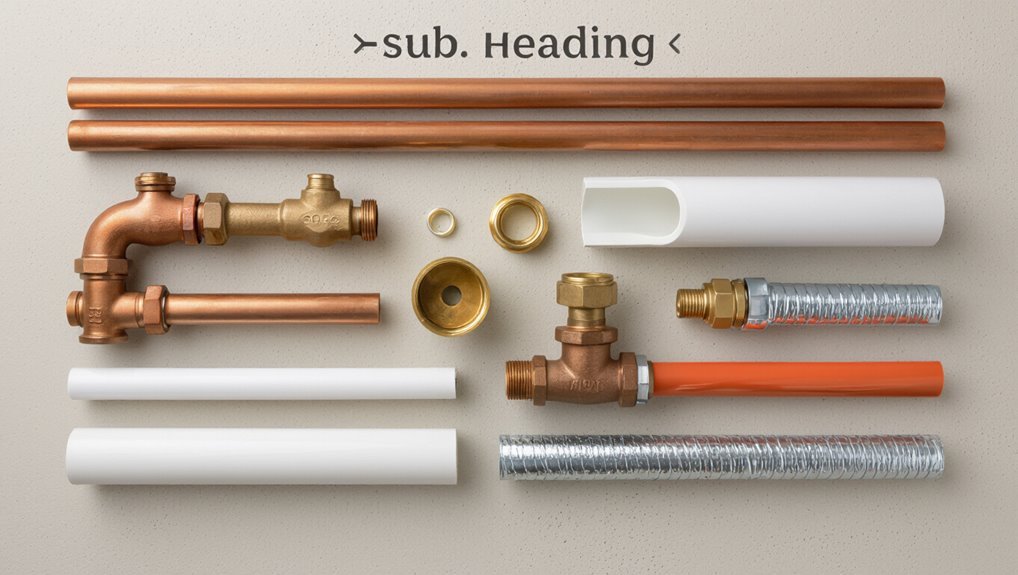
Home plumbing pipes are commonly made from materials like copper, PVC, ABS, CPVC, PEX, cast iron, and galvanized steel. Copper is typically used for hot and cold water supply, while PVC and ABS are used for drains and vents. CPVC and PEX are ideal for hot-water distribution due to their flexibility and higher temperature resistance. Older systems may still have cast iron or galvanized steel, but these are often replaced with stainless steel or plastic. The choice of material depends on factors such as building codes, durability, and the specific application of the plumbing system.
How to Choose the Right Pipe for Your Project
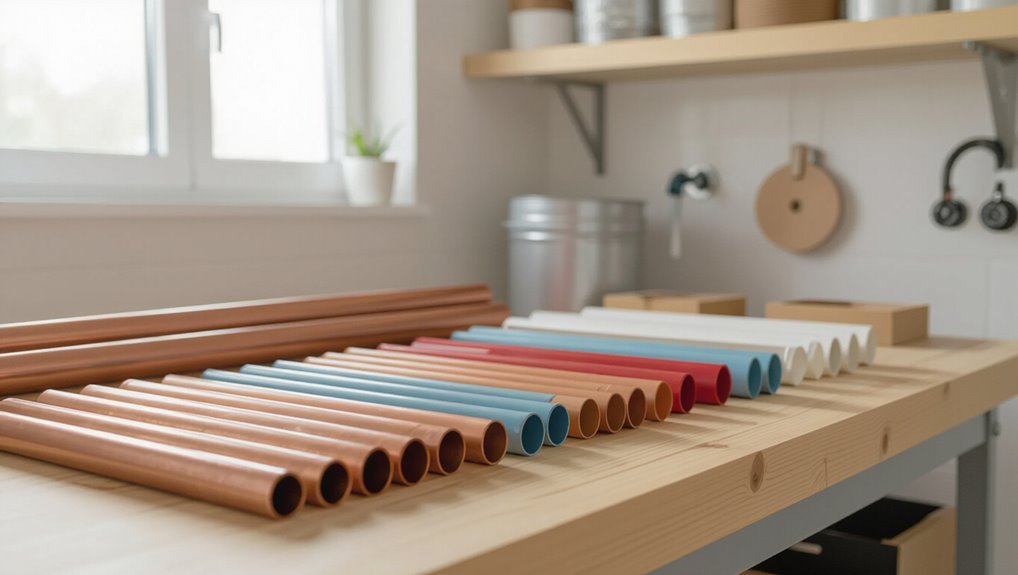
When selecting pipe for a home plumbing project, the decision should be guided by the application’s pressure and temperature requirements, the fluid being conveyed, installation constraints, and local code requirements.
The evaluator considers durability, corrosion resistance, and joint method compatibility.
Cost, availability, and ease of modification affect choice.
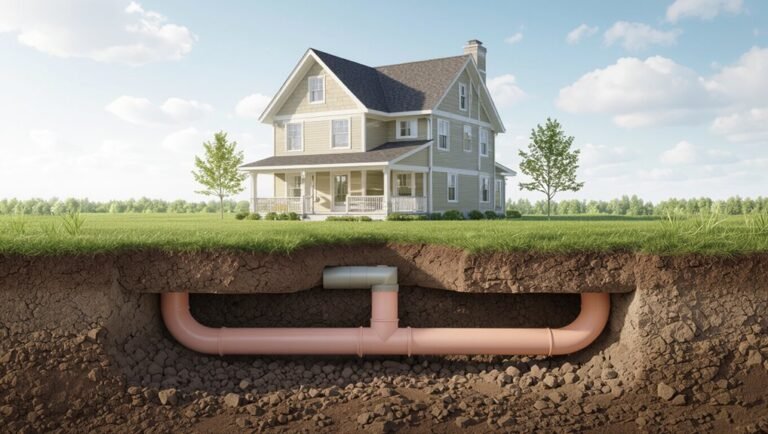
For exposed runs, aesthetic and UV resistance matter; for buried lines, abrasion and burial depth influence selection.
Lifespan expectations and maintenance access determine whether a robust or economical option is preferable.
Compatibility with existing systems and fittings prevents galvanic or mechanical failure.
Final selection balances performance, safety, and lifecycle cost.
Choosing Pipe Material: Supply vs Drain
Choosing between supply and drain pipes requires attention to pressure, temperature, and flow needs specific to supply lines.
Drain systems prioritize diameter, slope, and resistance to corrosion and clogging.
Material compatibility factors—chemical resistance, joining methods, and code requirements—govern appropriate selections for each application.
Supply Line Considerations
For supply lines, material selection hinges on durability, water quality, pressure ratings, and code compatibility; these factors differ from drain requirements because supply pipes must resist internal pressure, corrosion, and leaching while maintaining safe potable-water delivery.
The choice balances lifespan, installation complexity, and cost: copper offers longevity and heat resistance; PEX provides flexibility, freeze resistance, and ease of installation; CPVC is chemical-resistant for hot water.
Consider fittings, joint reliability, and manufacturer pressure-temperature limits.
Local plumbing codes and potable-water certifications dictate allowable materials.
Future serviceability, likelihood of water chemistry interaction, and warranty terms also influence final selection.
Drain Pipe Differences
Distinguishing drain piping from supply lines requires focusing on different stresses and performance priorities: drains handle gravity flow, solids and grease, occasional chemical exposure, and venting requirements rather than sustained internal pressure or potable-water safety. Drain selection emphasizes large diameters, smooth interiors to resist clogs, chemical and abrasion resistance, and ease of access for cleaning. Common drain materials include PVC, ABS, cast iron, and vitrified clay, chosen for toughness and sound dampening in multi-story buildings.
| Feature | Drain priority |
|---|---|
| Diameter | Larger for solids |
| Surface | Smooth for flow |
| Chemical resistance | Important |
| Noise control | Considered |
| Maintenance access | Required |
Material Compatibility Factors
After outlining how drain systems prioritize diameter, smooth interiors, chemical resistance, and sound control, attention shifts to material compatibility factors that determine whether a given pipe is better suited for supply or drain applications.
Materials differ in pressure tolerance, temperature resistance, corrosion susceptibility, and joint methods.
Supply lines require materials rated for potable water, high pressure, and thermal cycling—commonly copper, PEX, or CPVC.
Drains tolerate gravity flow, occasional heat, and chemical exposure, favoring PVC, ABS, or cast iron.
Compatibility with fittings, adhesives, and local code also guides selection.
Longevity, maintenance needs, and retrofit constraints complete the assessment.
Which Plumbing Jobs Require Specific Pipe Materials (Supply, Drain, Sewer, Vent)?
Different plumbing tasks call for specific pipe types based on pressure, temperature, and sanitary requirements.
Water supply lines typically use materials rated for potable water and pressure control, while drain and sewer systems require larger-diameter, corrosion- and root-resistant piping.
Vent pipes must allow airflow and resist condensation, so their material choices differ from both supply and waste lines.
Water Supply Pipes
Water supply pipes must meet specific requirements for pressure, potability, and corrosion resistance, so choosing the correct material is essential for each plumbing job. The selection hinges on local code, water chemistry, expected lifespan, and installation method.
Common choices balance durability, safety, and cost while minimizing leaching and galvanic reactions. Installers favor materials that resist scale, tolerate temperature swings, and maintain adequate flow under pressure.
Consideration of fittings, joining methods, and accessibility affects material suitability. Typical options include:
- Copper: long-lived, reliable, potable-safe
- PEX: flexible, quick to install
- CPVC: heat-resistant plastic
- Galvanized steel: older homes
- Stainless steel: corrosion-resistant
Drain, Sewer, Vent
For drain, sewer, and vent systems, material choices are driven by waste type, flow capacity, structural routing, and code requirements rather than potability concerns. The section outlines typical materials: PVC and ABS for drains, cast iron for noise reduction and longevity, and ABS or PVC for vents; underground sewers often use PVC or vitrified clay; repair choices depend on soil, load, and chemical exposure. Correct sizing and slope are essential. Compatibility between materials and approved connectors prevents leaks and corrosion. Local codes dictate acceptable materials and joint types, so inspections and permits guarantee proper selection and installation.
| System | Common Materials | Notes |
|---|---|---|
| Drain | PVC, ABS, Cast iron | Indoor fixtures |
| Sewer | PVC, Clay, Cast iron | Underground durability |
| Vent | PVC, ABS | Airflow, corrosion resistance |
| Repair | Couplings, Fernco, Lining | Adaptation options |
Quick Recommendation Cheat Sheet for Common Projects
When choosing pipe materials for common home projects, prioritize compatibility with the task, local code, and longevity: copper or PEX for potable supply, PVC or CPVC for cold and hot drains respectively, ABS or PVC for main sewer lines depending on jurisdiction, and galvanized or black iron only for specific legacy or gas applications.
The cheat sheet lists project-appropriate choices, brief rationale, and quick installation or replacement notes to guide homeowners and pros.
- Kitchen sink replacement: PVC/CPVC for drains, PEX for supply
- Bathroom remodel: CPVC for hot runs, PEX for cold
- Outdoor hose bib: frost‑rated PEX or copper
- Sewer main repair: ABS/PVC per code
- Gas line work: black iron with certified installer
Copper Pipes: Where They’re Used in Homes
Many homes rely on copper piping for durable, code‑approved potable water distribution. Copper commonly supplies branch lines to sinks, toilets, showers, and main service risers from the meter or pressure tank.
It appears in visible runs within basements, crawlspaces, and utility rooms where mechanical fastening and soldered joints are practical. Copper also serves hot‑water segments because it tolerates heat and repeated thermal cycles.
Installers use copper for short sections replacing corroded fittings and for retrofits where compatibility with existing systems matters. Its predictability and long service life make it a frequent choice for domestic water delivery and visible plumbing work.
Copper Types: K, L, and M Explained
Copper tubing comes in three standardized thicknesses—Types K, L, and M—each specified for different pressure and exposure conditions. They differ by wall thickness, common applications, and where they are permitted by code. Type K is thickest, often used for underground or high-pressure runs. Type L balances strength and cost for interior water and some HVAC uses. Type M is thinnest, used where pressures are lower and codes allow. Selection depends on location, expected stress, and local regulations.
- Type K: maximum wall thickness, underground use
- Type L: general interior plumbing, balanced option
- Type M: economical, lower-pressure situations
- Soldering and fittings vary by type
- Code determines acceptable use
Advantages of Copper for Water Supply
Having outlined the differences among Types K, L, and M, attention turns to why copper remains a preferred choice for potable water distribution.
Copper offers excellent corrosion resistance in a wide range of water chemistries, minimizing contamination and scaling.
It endures high temperatures and pressures, making it suitable for hot and cold lines.
The material is durable with a long service life and resists UV and microbial growth.
Copper is recyclable and widely accepted by building codes, easing inspections and resale value.
Skilled installers can solder or join copper reliably, producing leak-resistant connections that support system longevity and safety.
Drawbacks and Failure Modes of Copper Pipes
Copper pipes can suffer corrosion that leads to pinhole leaks, particularly in aggressive water conditions or where stray electrical currents are present.
Joint and solder failures are common sources of leaks when workmanship or materials are inadequate.
Mechanical damage and stress from improper support, freezing, or impact also compromise copper systems over time.
Corrosion And Pinhole Leaks
Exposure to certain water chemistries and stray electrical currents can initiate corrosion in copper plumbing, often progressing to localized thinning and eventual pinhole leaks. Copper pipes may develop small, perforating defects where aggressive water, oxygen, or galvanic action concentrates.
These failures commonly appear in older systems, soft water environments, or where dielectric isolation is absent. Detection often follows visible damp spots, staining, or unexplained water loss.
Repair typically requires section replacement or lining when widespread. Prevention focuses on water treatment, bonding and grounding, and material compatibility to limit electrochemical attack and extend service life.
- Localized corrosion concentrates at stressed areas
- Soft water increases dissolution
- Stray currents accelerate attack
- Early signs include staining and dampness
- Replacement or lining resolves perforations
Joint And Solder Failures
Joint and solder connections in copper plumbing can fail due to poor workmanship, contamination, thermal cycling, or incompatible materials, leading to leaks at fittings and joints.
Failures commonly arise from insufficient flux, inadequate heating during soldering, or failure to remove oxides, producing weak or porous joints. Galvanic interaction with dissimilar metals can corrode soldered areas.
Repeated temperature changes may stress solder fillets, causing hairline cracks.
Improper joint preparation or use of low-quality solder accelerates deterioration.
Detection often involves visible moisture, staining, or pressure loss.
Repair requires cutting out the defective joint and rejoining with proper technique and compatible materials.
Mechanical Damage And Stress
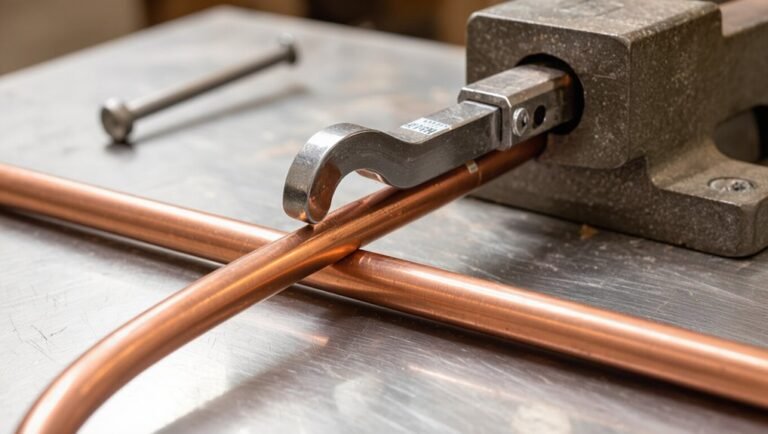
Suffers from denting, kinking, and abrasion when subjected to impact, excessive bending, or improper support, copper tubing can lose flow capacity and develop stress concentrations that precipitate cracks or leaks. Mechanical damage accelerates fatigue under cyclic pressure and thermal expansion, while improper fastening creates point loads that deform walls. Corrosion at stressed zones worsens failure risk. Repair often requires section replacement or reinforcement; detection can be challenging until leakage occurs. Awareness of handling, correct bending radius, adequate support spacing, and protection from abrasion extends service life and reduces unexpected failures.
- Impact dents reduce effective diameter and promote turbulence
- Kinks create localized thinning and stress risers
- Abrasion removes protective oxide and exposes base metal
- Improper supports concentrate loads and induce sagging
- Repeated thermal cycling compounds fatigue at damaged sites
Galvanized Steel: Historic Uses in Homes
In the early to mid-20th century, galvanized steel became a common choice for residential water and gas lines because its zinc coating reduced corrosion compared with bare steel and offered a durable, cost-effective option for builders.
Installations included supply lines, branch piping, and main feeds in many American homes through the 1960s and 1970s. Pipe sizes and threaded fittings matched prevailing standards, facilitating repairs and extensions.
Plumbers valued its strength for exposed runs and utility areas.
Over time, construction records and home inspections often note galvanized systems when evaluating vintage properties, informing maintenance and modernization planning.
When to Replace Galvanized Pipes and Why They Corrode
Frequently, homeowners and inspectors face decisions about replacing galvanized steel pipes when signs of degradation appear or when system performance declines.
Corrosion occurs as zinc coating wears, exposing iron to oxygen and water; rust reduces flow, causes staining, and increases leak risk. Replacement is recommended when pressure drops, discolored water persists, leaks recur, or after decades of service.
Consider whole-house replacement versus targeted fixes to prevent ongoing contamination and failures.
- Reduced water pressure and flow
- Brown or metallic-tasting water
- Visible rust or flaking inside fixtures
- Frequent leaks or pinhole corrosion
- Pipes older than 40–50 years
Cast Iron Pipes: Why They’re Still Found in Older Homes
Cast iron pipes remain common in older homes due to their proven durability and long service life.
Over time, however, they are prone to issues such as internal corrosion, rust buildup, and cracking that require targeted repairs or sections replaced. Evaluating their condition focuses on identifying these common failure modes to determine repair options and remaining useful life.
Durability And Longevity
Standing the test of time in many older residences, cast iron plumbing offers exceptional durability and sound-dampening qualities that keep it in service decades after installation.
Its heavy gauge and corrosion-resistant composition provide structural longevity under constant use. Long service life often exceeds that of early plastic alternatives, making replacement less frequent.
Properly supported runs resist deformation and maintain alignment, preserving flow characteristics.
Historical installations demonstrate resilience in varied soil conditions and temperature cycles.
- Thick walls resist mechanical damage
- Natural rust layer slows deeper corrosion
- Mass reduces vibration and noise
- Joints designed for longevity
- Proven performance over generations
Common Issues And Repairs
How do old iron lines fare after decades of service? Cast iron commonly endures many years but develops predictable problems: internal corrosion narrows bore, joints leak as lead or oakum deteriorates, and roots exploit cracks in buried sections.
Sound segments may function yet contribute to odors and slow drainage where tuberculation forms.
Repairs range from spot patching and relining to full replacement; choice depends on extent of corrosion, blockage frequency, and structural integrity. Relining restores flow without excavation; replacement uses modern PVC or ABS for longevity.
Professional inspection and targeted action balance cost, disruption, and long-term reliability.
Pros and Cons of Cast Iron for Drains and Sewers
In many older homes and commercial buildings, cast iron remains a common choice for drains and sewers due to its durability and sound-dampening qualities. It offers longevity and resists crushing loads, making it reliable in heavy-traffic or buried applications.
Corrosion can occur over decades, requiring section replacement or relining. Installation is labor-intensive and heavier than alternatives, increasing cost. Its rigid joints handle temperature shifts poorly compared with flexible materials.
- Long service life when maintained
- Excellent noise reduction for drains
- High weight and installation labor
- Susceptible to slow corrosion internally
- Better for structural loads than lightweight pipes
PVC (Polyvinyl Chloride): Uses in Cold-Water and Drains
PVC (polyvinyl chloride) is widely used for cold-water supply lines and residential drain systems because it is lightweight, corrosion-resistant, and inexpensive.
It commonly appears in rigid white or schedule 40 piping for plumbing fixtures, soil stacks, and branch drains.
Solvent-welded joints create secure seals for gravity-flow waste, while threaded or mechanically joined fittings accommodate accessories.
PVC resists chemical degradation from household cleaners and alkaline soils but is unsuitable for hot-water or high-temperature applications due to softening.
Installation is straightforward with basic tools, making it prevalent in new construction and remodels where durability and low maintenance are priorities.
Advantages of PVC for DIY Plumbing
PVC is favored by DIYers because it is easy to cut and join with basic tools, simplifying repairs and installations.
Its lightweight nature makes handling and alignment straightforward during projects.
Additionally, PVC resists corrosion, reducing long-term maintenance and material replacement.
Easy To Cut And Join
Many homeowners find PVC pipes unusually straightforward to cut and join, making them a popular choice for DIY plumbing.
The material accepts simple tools, predictable fittings, and quick adhesives, so basic repairs proceed with minimal fuss.
Clear steps reduce mistakes, and joints set rapidly for fast testing.
The following points summarize practical advantages for nonprofessionals:
- Cuts cleanly with a handsaw, PVC cutter, or utility knife.
- Fittings slip on and secure with primer and solvent cement.
- Angles and lengths adapt easily with off-the-shelf connectors.
- Minimal threading or welding eliminates specialized skills.
- Inspectable joints simplify verification and future maintenance.
Lightweight And Corrosion-Resistant
Often prized for its light weight, this plastic piping makes handling and installation noticeably easier for DIYers, reducing the effort needed to lift, position, and support runs compared with metal alternatives. PVC resists rust and chemical corrosion, extending service life and lowering maintenance. It suits wet environments, outdoor exposures, and potable systems where approved. Its durability pairs with affordability, and adhesives or solvent-weld fittings create reliable joints without specialized tools. Limitations include UV sensitivity and lower temperature tolerance; protection or alternatives may be needed. The balance of weight, cost, and corrosion resistance explains PVC’s popularity among homeowners and hobbyist plumbers.
| Benefit | Use | Note |
|---|---|---|
| Lightweight | Long runs | Easier support |
| Corrosion-resistant | Wet areas | Low maintenance |
| Affordable | Repairs | Cost-effective |
| Easy joining | DIY | Solvent weld |
| Durable | Indoor use | UV limit |
Limitations and Temperature Concerns With PVC
When exposed to sustained high temperatures or direct sunlight, PVC piping can soften, warp, or lose structural integrity, limiting its suitability for hot-water lines and outdoor runs without protective measures.
The material tolerates moderate temperatures but has defined limits; repeated thermal cycling accelerates aging and joint failure.
Chemical exposure and pressure at elevated temperatures increase rupture risk.
Installers and homeowners must consider insulation, shading, or alternative materials where heat exposure is likely.
Proper adhesives and fittings are critical because heat weakens bonds.
Building codes often restrict PVC in certain applications based on temperature rating and pressure.
- Limited heat tolerance compared to other plastics
- Susceptible to UV degradation
- Reduced pressure capacity when warm
- Faster aging under thermal cycling
- Requires protective measures or alternatives
CPVC (Chlorinated PVC): Hot-Water Supply Option
Given PVC’s limits with sustained heat and UV exposure, CPVC offers a modified formulation engineered for higher-temperature service, making it a common choice for domestic hot-water distribution.
It resists thermal softening and maintains pressure ratings at elevated temperatures better than standard PVC. CPVC is joined with solvent cement or threaded fittings and is compatible with many common valves and fixtures.
It is lightweight, corrosion-resistant, and nonreactive with potable water, reducing taste and contamination risks.
Installation requires attention to expansion, proper adhesive selection, and local code compliance; long-term performance depends on correct installation and avoidance of excessive sunlight exposure.
How CPVC Differs From PVC and Where to Use It
CPVC and PVC share a similar base polymer but differ chemically and in performance: CPVC is chlorinated for higher temperature tolerance and greater chemical resistance.
This makes CPVC suitable for hot-water distribution and some corrosive environments where PVC would soften or fail.
The discussion will compare their material properties, pressure and temperature ratings, and typical residential applications.
CPVC Versus PVC
How does CPVC differ from PVC, and why does that matter for home plumbing? CPVC and PVC are chemically similar polyvinyl chlorides but differ in chlorine content and heat-stability, affecting temperature ratings and permitted uses. CPVC tolerates hotter water, while PVC is common for cold-water supply and drainage.
Installation techniques and solvent cements vary, and fittings are often color-coded. Codes and manufacturer specs determine acceptability. Consider corrosion resistance, flexibility, and long-term durability when comparing.
Regulations and performance, not appearance, guide selection; installers must follow local codes and manufacturer instructions to guarantee safe, code-compliant plumbing.
- Higher temperature rating for CPVC
- Different solvent cements
- Color and marking differences
- Varied code approvals
- Distinct long-term performance
Best Uses For CPVC
Hot-water lines and indoor plumbing applications best showcase CPVC’s strengths: its higher heat tolerance and enhanced chemical resistance make it suitable for domestic hot-water distribution, hydronic heating loops, and any supply line where water temperature regularly exceeds PVC’s limits.
It is favored for retrofit and new construction in residences, commercial buildings’ potable hot-water systems, and areas where chlorinated water or mild chemical exposure occurs.
CPVC should not be used outdoors exposed to UV without protection, nor for buried sewer lines where rigidity and abrasion resistance differ.
Proper joining techniques and approved fittings guarantee longevity and code compliance in specified applications.
PEX (Cross-Linked Polyethylene): Why It’s Popular Now
Increasingly favored by builders and homeowners, PEX (cross-linked polyethylene) combines flexibility, durability, and ease of installation, making it a practical alternative to metal and rigid plastic pipes. It resists corrosion and scale, tolerates freeze-thaw cycles better than some materials, and reduces noise from water flow. Installers value long runs with few fittings and quicker labor. Its resistance to chemicals used in potable water systems and lower material cost contribute to adoption. Suitable for hot and cold supply lines, PEX supports remodeling and new construction with minimal disruption.
- Flexible tubing reduces joint count
- Corrosion-resistant material
- Quiet water delivery
- Cost-effective installation
- Durable under thermal stress
PEX Types (A, B, C) and Connection Methods
Different manufacturing processes produce three main PEX types—PEX-A, PEX-B, and PEX-C—each with distinct flexibility, memory, and connection compatibility that affect installation choices.
PEX-A, made by peroxide/engel method, is most flexible and ideal for expansion fittings and cold-weather bending.
PEX-B, produced by the silane method, is stiffer and commonly joined with crimp, clamp, or push-fit fittings.
PEX-C, less common, is made by irradiation and sits between A and B regarding flexibility.
Connection methods include expansion (for A), crimp/clamp rings, push-fit connectors, and cold expansion systems; compatibility depends on manufacturer specifications and local codes.
PEX Pipes: Benefits for Renovations and New Builds
Having outlined the distinctions among PEX-A, PEX-B, and PEX-C and their compatible joining methods, the discussion moves to why PEX is frequently chosen for both renovations and new construction.
PEX offers flexibility, reduces fittings, and simplifies routing through walls and joists.
Its resistance to scaling and corrosion suits variable water qualities.
Installation speed lowers labor costs, and its compatibility with radiant heating adds design versatility.
Long lengths minimize leak points, and clamps or crimps allow straightforward repairs.
Contractors appreciate reduced disruption during retrofits, while builders value streamlined plumbing layouts in new homes.
- Flexible tubing simplifies tight spaces
- Fewer joints reduce leak potential
- Faster installation cuts labor time
- Suitable for radiant-floor heating systems
- Corrosion and scale resistance in varied water conditions
Potential Issues and Lifespan of PEX Systems
PEX systems generally offer long service life but present specific vulnerabilities that merit attention.
They can be more prone to damage from prolonged UV exposure and certain chemicals, and they remain at risk of splitting if water freezes inside the tubing.
Proper installation, insulation, and avoiding incompatible fluids help mitigate these issues and extend system lifespan.
Freezing And Burst Risk
Often overlooked, the flexibility of cross-linked polyethylene reduces but does not eliminate the risk of pipe damage from freezing; when water inside any plumbing line freezes, expansion can strain fittings or cause wall cracks, especially where tubing is constrained or kinked.
PEX tolerates some freeze-thaw cycles better than rigid materials, but repeated freezing increases failure risk. Proper installation, insulation, and routing away from unheated spaces minimize incidents. Owners should monitor vulnerable runs and shut off and drain lines before prolonged cold. Consider these practical points:
- Expansion accommodates ice but stresses joints
- Insulate exposed and crawlspace tubing
- Avoid tight bends and kinks
- Drain seasonal systems
- Inspect fittings after cold snaps
Chemical And UV Sensitivity
Beyond freeze-related mechanical stresses, chemical exposure and sunlight present separate threats to cross-linked polyethylene used in plumbing. PEX resists many common water additives but degrades with prolonged contact with solvents, strong oxidizers, or certain disinfectants, which can embrittle or discolor tubing and shorten service life. UV radiation causes surface cracking, loss of flexibility, and accelerated aging; indoor storage and opaque insulation mitigate risks. Specifiers recommend avoiding direct sunlight and limiting exposure to aggressive chemicals. Installers should follow manufacturer compatibility lists and maintain protective barriers when routing near chemical sources to preserve longevity.
| Emotion | Risk | Action |
|---|---|---|
| Concern | Cracking | Shield |
| Relief | Compatibility lists | Follow |
| Urgency | Sunlight | Cover |
ABS (Acrylonitrile Butadiene Styrene): Drain Applications
ABS (Acrylonitrile Butadiene Styrene) is a rigid thermoplastic frequently used for residential drain, waste, and vent systems due to its strength, light weight, and ease of installation. It resists impact at low temperatures, provides smooth inner walls for good flow, and connects with solvent cement for quick joints.
Common in basements and new construction, ABS is compatible with many fittings and tolerates typical household waste. Installation speed and reduced labor costs make it attractive for contractors. Maintenance is straightforward, with accessible fittings for cleaning. Longevity depends on proper support and avoiding prolonged UV exposure.
- Impact resistance
- Lightweight handling
- Solvent-weld joints
- Smooth bore flow
- Accessible fittings
Differences Between ABS and PVC for Waste Lines
The article now compares ABS and PVC for waste lines, focusing on their differing polymer compositions and how those affect performance.
It outlines contrasts in installation methods, jointing techniques, and fitting availability.
It also addresses relative durability, impact resistance, and long-term chemical and temperature tolerance.
Material Composition Differences
When comparing material composition for residential waste lines, PVC is a rigid vinyl polymer composed primarily of polyvinyl chloride with stabilizers and plasticizers that enhance durability and UV resistance.
ABS, by contrast, is an acrylonitrile butadiene styrene thermoplastic combining rigidity and impact resistance without the same plasticizers. Chemical resistance, density, and thermal behavior differ: PVC resists many solvents; ABS tolerates sudden impacts. Additives influence stiffness, flame retardancy, and joinability. Manufacturers tailor formulations for code and performance. Choice reflects required chemical tolerance, exposure, and system compatibility rather than inherent superiority.
- Polymer base differences
- Additive types and purposes
- Chemical resistance profiles
- Density and weight contrasts
- Thermal and aging behavior
Installation And Durability
Following material composition contrasts, installation practices and long‑term durability reveal how those differences affect everyday performance and maintenance.
ABS typically offers easier solvent welding and firmer joints at lower temperatures, simplifying assemblies in confined spaces. PVC requires primer and cement, with slightly longer cure times and careful alignment.
ABS resists cold impact better, reducing crack risk in chilly basements, while PVC exhibits superior UV tolerance when exposed. Both resist chemical corrosion, but workmanship, correct fittings, and support spacing dictate lifespan more than material.
Proper installation, adherence to codes, and periodic inspection guarantee reliable service for either waste line system.
Stainless Steel Pipes: When They Make Sense
Resistant to corrosion and high temperatures, stainless steel pipes offer a durable option for specific home plumbing needs where longevity, strength, and sanitary conditions are priorities.
They suit installations exposed to aggressive water chemistry, outdoor environments, or where fire resistance and minimal maintenance matter. Initial cost is higher, but lifecycle performance can justify the investment in targeted applications. Compatibility with fittings and welding requirements favors skilled installation. Consider grade selection, wall thickness, and local code acceptance when evaluating stainless steel for supply lines, reclaimed water systems, or visible runs that demand a clean, metallic appearance.
- Corrosion resistance
- High-temperature tolerance
- Low maintenance
- Long service life
- Clean, sanitary surfaces
Brass and Bronze Fittings: Why They’Re Used With Pipes
In many plumbing systems, brass and bronze fittings are chosen for their combination of mechanical strength, corrosion resistance in potable water, and reliable sealing performance. They suit threaded, soldered, and compression connections, resist dezincification (brass variants aside), and tolerate repeated assembly. Bronze offers higher resistance in marine or aggressive environments. Cost and machinability make them common at joints, valves, and fixtures where durability and leak prevention matter.
| Property | Brass | Bronze |
|---|---|---|
| Corrosion resistance | Good | Very good |
| Strength | High | Higher |
| Typical use | Fixtures, valves | Marine fittings, pumps |
PP/PE (Polypropylene and Polyethylene) Uses in Plumbing
PP and PE offer strong chemical resistance, making them suitable for transporting a range of potable and non-potable fluids.
They are joined using heat fusion, mechanical fittings, or solvent-free couplers, which simplifies installation and minimizes leak points.
Common applications include hot and cold water distribution, drainage, and chemical waste lines in residential plumbing.
Chemical Resistance Benefits
With strong molecular chains and nonpolar surfaces, polypropylene (PP) and polyethylene (PE) offer notable chemical resistance that makes them well suited for many plumbing applications. Their inertness limits corrosion and reaction with common household chemicals, prolonging service life and reducing contamination risks.
Suitable for potable water, drain lines, and chemical-transfer piping, these plastics resist acids, alkalis, and many solvents at typical residential concentrations. Temperature and concentration limits apply; aggressive solvents and oxidizers can degrade polymers. Their predictable performance simplifies material selection where chemical exposure is a concern.
- Resistant to dilute acids and bases
- Low permeability to many solvents
- No metal corrosion byproducts
- Stable in chlorinated water
- Durable against organic contaminants
Installation And Joining
The chemical stability of polypropylene and polyethylene that preserves water quality also influences how they are joined and installed: their nonreactive, low-friction surfaces and thermal sensitivity dictate specific fitting types and heat methods.
Installers employ fusion welding (butt, socket) and electrofusion for consistent, leak-resistant joints, while mechanical compression and push-fit fittings offer convenient, non‑heat alternatives for repairs.
Proper pipe preparation—cleaning, chamfering, controlling alignment—and following manufacturer temperature and pressure limits are essential.
Expansion allowances and correct support spacing prevent stress.
Specialized tools and training guarantee durable connections; improper methods risk weak seals, deformation, or reduced lifespan.
Typical Plumbing Applications
Serve a wide range of residential and light‑commercial plumbing needs, polypropylene (PP) and polyethylene (PE) pipes are commonly used for potable water distribution, hot- and cold-water supply lines (PP primarily for hot water where higher temperature resistance is required), underfloor heating circuits, and pressure sewer or stormwater systems.
Their chemical resistance, flexibility, and ease of joining suit varied installations. Installers choose PP for higher-temperature runs and PE for corrosion‑resistant, flexible mains. Typical applications emphasize longevity, low maintenance, and leak reduction, with pipe selection guided by temperature, pressure, UV exposure, and regulatory approvals.
- Potable water mains
- Hot water risers
- Underfloor heating
- Pressure sewers
- Irrigation and drainage
Clay and Terra-Cotta Sewer Pipes: Legacy Systems
Many older municipalities and homes still rely on clay and terra-cotta sewer pipes, which were widely installed from the late 19th century through the mid-20th century because of their durability and resistance to chemical corrosion.
These gravity sewer lines feature bell-and-spigot or tongue-and-groove joints sealed with mortar or lead, offering long service lives when undisturbed.
Vulnerabilities include root intrusion at joints, brittle fracture from ground movement, and interior buildup of mineral deposits over decades.
Inspection commonly uses cameras to locate defects; repairs range from sectional replacement to trenchless lining.
Their legacy presence affects renovation planning and rehabilitation strategies for aging infrastructure.
Concrete Sewer Pipes: Uses and Failure Patterns
Concrete sewer pipes are commonly used for large-diameter municipal and suburban drainage because of their strength and longevity.
Typical applications include gravity sewer mains, stormwater conduits, and culverts where high load-bearing capacity is required.
Common failure modes are corrosion from hydrogen sulfide, freeze–thaw cracking, and joint displacement leading to infiltration and root intrusion.
Typical Applications
In urban and rural infrastructure alike, concrete sewer pipes are selected for gravity flow mains, stormwater conveyance, and large-diameter sanitary lines where structural strength and long service life are priorities.
Typical applications emphasize load-bearing capacity, resistance to external pressure, and adaptability to varied backfill conditions.
Their use spans municipal networks, highway drainage, industrial outfalls, and combined sewer systems that require durable conveyance. Designers favor concrete where hydraulic efficiency and predictable performance matter.
Common placement strategies consider bedding, joint type, and access for maintenance.
- Municipal gravity sewer mains
- Highway and roadway drainage
- Stormwater retention and conveyance
- Industrial effluent and outfalls
- Combined sewer trunk lines
Common Failure Modes
After outlining typical applications where structural strength and long service life are prioritized, attention shifts to the failure modes that can compromise concrete sewer pipes.
Corrosion from hydrogen sulfide and acidic wastewater attacks the cement matrix, causing surface pitting and section loss.
Abrasion from solids and grit erodes internal surfaces, accelerating thinning at flow points.
Freeze–thaw cycling generates microcracks and spalling in climates with moisture ingress.
Alkali-aggregate reactions induce internal expansion and cracking over decades.
Joint displacement from ground movement leads to infiltration, exfiltration, and misalignment.
Load-induced cracking from heavy loads or settlement precipitates collapse if not promptly repaired.
Lead Pipes: Health Risks and Identification
Often overlooked during inspections, lead pipes pose serious health risks because lead can leach into drinking water and accumulate in the body over time.
Identification relies on visual cues, age of plumbing, and fittings; older homes (pre-1950s to 1980s) are more likely affected.
Exposure impacts neurological development in children and increases cardiovascular and kidney risks in adults.
Corrosion, acidic water, and soft water accelerate leaching.
Replacement is recommended when lead is confirmed.
- dull gray, soft metal that scratches easily
- soldered joints with visible seams
- plumbing installed before lead bans
- heavy, dense pipe sections
- presence of lead-based fixtures
How to Test for Lead and Options for Replacement
How can homeowners confirm whether their plumbing contains lead and what steps should follow?
They can begin with a certified lab water test for lead, available through local health departments, or use EPA-approved at-home test kits for preliminary screening.
If tests detect lead or suspicion remains, a licensed plumber should inspect service lines and solder joints; X-ray fluorescence (XRF) can non-destructively identify pipe alloys.
For confirmed lead piping, replacement options include copper, PEX, or PVC, selected for compatibility and local code compliance.
After replacement, follow-up testing guarantees remedial actions reduced lead levels to safe standards.
Comparing Durability: Metal vs Plastic Pipes
Durability comparisons between metal and plastic plumbing focus on corrosion resistance, mechanical strength, lifespan, and failure modes. Metal pipes often resist mechanical damage and high temperatures but can corrode; plastic pipes resist corrosion and chemical attack yet can deform under heat or UV exposure. Lifespan depends on installation, water chemistry, and environmental stressors. Predictable failure modes—pitting, galvanic corrosion, cracking, or slow seepage—inform maintenance and replacement choices. Selection balances application-specific demands such as pressure, exposure, and required flexibility.
- Metal: high mechanical strength
- Metal: susceptible to corrosion
- Plastic: corrosion-resistant
- Plastic: sensitive to heat/UV
- Failure mode depends on conditions
Cost Comparison of Common Home Plumbing Materials
After weighing longevity and failure modes between metal and plastic options, cost becomes the next decisive factor for homeowners and contractors. Initial material prices vary: PVC and PEX are typically lowest per linear foot, copper sits midrange, and stainless or galvanized steel rank highest.
Installation labor differs too—plastic systems often require less skilled labor and quicker fitting, lowering total project cost, while metals may need soldering or threading. Lifecycle expenses matter: cheaper plastics may reduce upfront outlay but can incur replacement or repair costs over decades. Budgeting should balance purchase, installation, maintenance, and expected service life.
Materials for High-Temperature Hot-Water Supply
Which pipe materials can reliably handle continuous high-temperature domestic hot water depends on their temperature ratings, thermal expansion behavior, and corrosion resistance. Choices prioritize stability at 140°F–180°F, joint integrity under heat, and long-term dimensional stability.
Common options balance practical installation and service life.
- Copper: widely used, maintains strength at high temperatures with soldered or brazed joints.
- CPVC: plastic rated for hot water, easier to install but expands more than metal.
- Stainless steel: excellent heat tolerance and mechanical strength; higher cost.
- PEX-aluminum-PEX (PEX-AL-PEX): composite reduces expansion, suitable for hot runs.
- Galvanized steel: historically used but less common today due to weight and handling.
Which Materials Resist Corrosion and Scale Buildup?
Materials that resist corrosion and scale in domestic plumbing are selected based on their chemical compatibility with water, surface properties that inhibit mineral adhesion, and the stability of protective oxide layers over time.
Copper and stainless steel form stable oxide films that limit corrosion; copper is less prone to biological growth, while stainless steel resists pitting in varied chemistries.
Plastic polymers such as PEX and CPVC do not corrode and present smooth surfaces that reduce scale adherence.
Brass alloys with low lead content offer durability but can dezincify in aggressive waters.
Glass-lined or epoxy-coated interiors also limit both corrosion and mineral buildup.
Installation Complexity: Tools and Skills Required per Material
How readily can a homeowner or tradesperson install different pipe types depends on the required tools, joining methods, and familiarity with code-specific practices. Installation varies: soldering copper needs torch skill and flux; PEX requires crimp or expansion tools and fitting knowledge; PVC/CPVC use solvent cement and proper cutting/deburring; galvanized steel demands threading or specialized fittings and physical strength; cast iron often requires heavy tools and gaskets or mechanical couplings. Choice balances skill level, tool investment, and local code.
Safer repairs and reliable installations favor materials matching installer experience and available equipment.
- Copper: torch, soldering skill
- PEX: crimp/expansion tools
- PVC/CPVC: cutters, primer, cement
- Galvanized: threading tools
- Cast iron: heavy lifting, couplings
Maintenance and Typical Repair Issues for Each Material
For each common plumbing material, routine maintenance and the repairs most often encountered reflect the material’s vulnerabilities and joining methods: copper typically faces pinhole leaks from corrosion or poor solder joints and requires leak detection and sectional replacement or re-soldering;
PEX is prone to UV degradation, frozen-pipe bursting, and fitting failures that usually call for ring replacement or cut-and-replace repairs;
PVC/CPVC commonly suffer brittle cracking, solvent-joint failures, and chemical attack, fixed by cutting out sections and solvent-welding new joints;
galvanized steel corrodes from the inside leading to flow restriction and leaks that often require pipe replacement or conversion to modern materials;
cast iron is susceptible to rust and joint failure, with repairs ranging from band clamps and mechanical couplings to full-pipe replacement in severe cases.
Environmental Impact and Recyclability of Pipe Materials
In evaluating the environmental footprint of common home plumbing options, energy use in production, longevity, potential for leaching or contamination, and end-of-life recyclability are the key metrics.
Materials vary: metals often require high-energy smelting but are durable and widely recycled; plastics consume less production energy yet persist in landfills and can off-gas; copper and steel benefit from robust recycling streams; lead poses severe contamination risks and must be removed and disposed as hazardous waste; multi-layer composites complicate recycling and waste handling. Choices should weigh lifecycle impacts, local recycling infrastructure, and potential health implications.
- Metals: high energy, high recyclability
- Plastics: low energy, low biodegradability
- Copper/steel: strong recycling markets
- Lead: hazardous, restricted disposal
- Composites: recycling challenges
Building Codes and Approvals for Common Pipe Materials (US Overview)
Although plumbing materials differ widely in composition and performance, their permitted use in U.S. buildings is determined by a complex patchwork of model codes, state and local amendments, and referenced standards.
Approval commonly depends on the International Plumbing Code or Uniform Plumbing Code adoption, supplemented by ASTM, ANSI, NSF/ANSI, and UPC/IPC listings for pressure, temperature, and potable-water suitability. Jurisdictions may require third-party certification, labeling, or manufacturer documentation and prohibit certain materials in specific applications (e.g., potable vs. waste).
Inspectors enforce installations per approved methods; deviations need engineering approval or variance. Staying current with local code changes guarantees compliant material selection and installation.
Signs You Need to Replace Pipes and Which Material to Pick
Regularly, homeowners notice subtle cues that signal a need to replace plumbing pipes: persistent leaks, rusty or discolored water, low pressure from mineral buildup, frequent clogging, visible corrosion, or sections of brittle, flaking pipe material.
Replacement decisions balance durability, budget, and water quality concerns. Copper, PEX, CPVC, PVC, and galvanized steel each suit specific situations; older galvanized often yields to copper or PEX, while PEX fits tight spaces and resists freeze damage. Consider local code and water chemistry when choosing. Common practical factors include longevity, installation complexity, cost, and compatibility with existing systems.
- Longevity and corrosion resistance
- Installation difficulty and access
- Material cost and budget limits
- Water quality and chemical compatibility
- Local code and permit requirements
How a Plumber Evaluates and Recommends Pipe Materials
When evaluating a home’s plumbing, a plumber systematically balances objective factors—pipe condition, water chemistry, layout constraints, code requirements, and budget—to recommend materials that meet performance and longevity goals.
The assessment includes visual inspections, pressure tests, leak detection, and sampling for corrosion or mineral buildup.
Age, accessibility, and future renovations influence choices between repairs, partial repiping, or full replacement.
Local code and supply availability narrow acceptable materials; water quality steers selection toward corrosion-resistant or lined options.
The plumber explains trade-offs—cost, durability, maintenance—and provides a prioritized plan with estimated lifespan and upfront versus lifetime cost comparisons.
Conclusion
In the end, homeowners are told to pick pipes like one chooses a spouse — durable, low-maintenance, and not liable to burst during dinner. The manual applauds PVC for its thrift, copper for its dignity, and PEX for its flexibility, while cast iron sighs theatrically about “better days.” Codes, recyclers, and plumbers applaud from the sidelines. Ultimately, the right pipe keeps water flowing and drama confined to soap operas, not basements.