How to Weld Galvanized Steel Pipe Safely: Step-by-Step Guide
Welding galvanized steel pipe is feasible but requires careful safety measures to ensure both health and weld quality. To begin, remove zinc only from the weld zone, employ local exhaust and fresh-air supply, and wear appropriate personal protective equipment (PPE) such as a fit-tested powered air-purifying respirator (PAPR) or at a minimum a proper NIOSH respirator, along with a welding helmet, flame-resistant clothing, gloves, and eye protection. Utilize suitable consumables and low-heat techniques, monitor ventilation and exposure levels, and document all procedures and inspections. Below is a step-by-step guide on preparation, safety controls, and finishing techniques for welding galvanized steel pipe safely.
Quick Answer: Can You Weld Galvanized Pipe Safely?
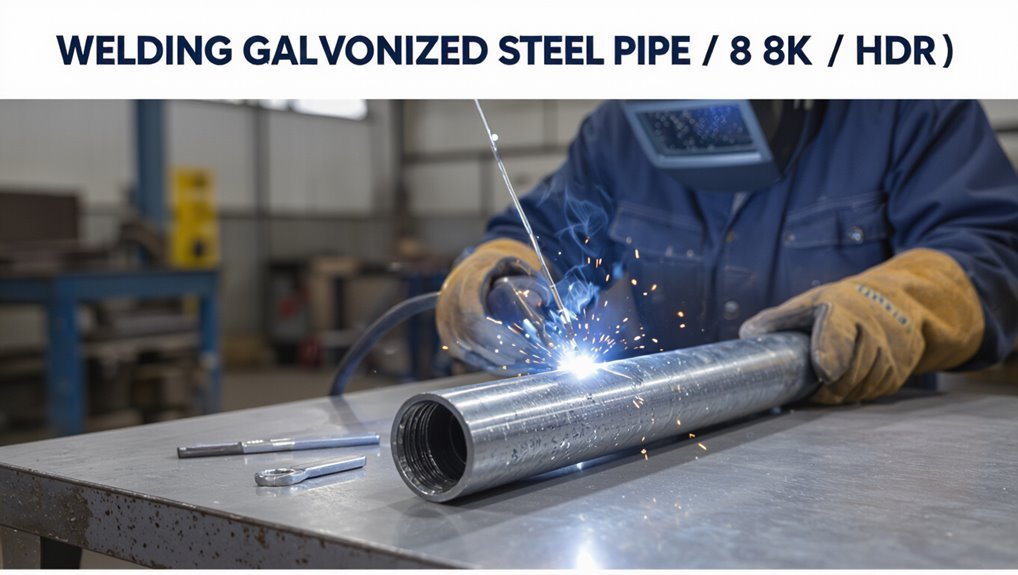
Although welding galvanized pipe is possible, it carries significant health and quality risks that require strict precautions. The short answer: yes, but only with appropriate preparation, controls, and procedures. Workers must assess whether welding is necessary or if mechanical joining or replacement with uncoated pipe is preferable.
When welding proceeds, thorough removal of the zinc coating at the joint, local ventilation or fume extraction, respiratory protection, and weld parameter adjustments mitigate problems. Post-weld cleaning and inspection verify corrosion resistance and structural integrity. Employers should document controls, train personnel, and confirm compliance with applicable safety standards before permitting work.
Why Galvanized Welding Is Risky (Zinc Fumes & Hazards)
Why is welding galvanized pipe more hazardous than welding bare steel? Zinc coating vaporizes under welding heat, producing metal oxide fumes that irritate eyes, throat, and lungs.
Short-term exposure can cause metal fume fever—flu-like symptoms, fever, nausea, and fatigue.
Chronic or high-level exposure risks respiratory damage and neurological effects.
Zinc fumes can also combine with other coatings or contaminants to form more toxic compounds.
Fine particulate dispersal increases inhalation risk for the welder and bystanders.
Adequate ventilation, local exhaust, proper respirators, and removing coating where feasible reduce exposure and mitigate these significant health hazards.
How to Tell Galvanized vs Coated Pipe
Distinguishing galvanized pipe from other coated pipe relies on a few observable and testable clues: galvanized steel typically shows a silvery-gray, spangled surface with a slightly rough texture, whereas painted or polymer-coated pipe has uniform color and smoothness.
Additional checks include scratching a discreet area — galvanized zinc will reveal a gray base metal with a crystalline pattern, while paint chips to show substrate or primer layers. A magnet adheres to both; a chemical spot test (vinegar or hydrochloric acid on a small area) produces a characteristic zinc reaction for galvanized surfaces. Manufacturer markings and mill certificates also confirm coating type.
Required PPE for Welding Galvanized Pipe
When welding galvanized pipe, appropriate personal protective equipment (PPE) is essential to protect against toxic zinc oxide fumes, molten metal splatter, ultraviolet radiation, and airborne particulates.
Welders should wear an auto-darkening welding helmet with appropriate shade, flame-resistant clothing, leather gloves, and high-top leather boots.
Respiratory protection must be a powered air-purifying respirator (PAPR) or at minimum an N95/NIOSH-rated respirator when exposures are controlled; fit testing is required.
Safety glasses with side shields under the helmet, ear protection, and a leather apron for added splash protection are recommended.
All PPE must be maintained, inspected, and used in accordance with manufacturer and OSHA guidance.
Ventilation Strategies to Remove Zinc Fumes
Effective ventilation is the primary control for removing zinc oxide fumes generated during welding of galvanized pipe, and it should be selected and applied based on source strength, workspace configuration, and worker locations. Local exhaust ventilation (LEV) captures fumes at the weld source; positioning hoods or extraction guns minimizes exposure. General dilution ventilation supplements LEV in larger areas. Airflow patterns must prevent contaminated air reaching adjacent workers. Regular maintenance and airflow verification sustain performance. Monitoring guarantees controls meet exposure limits. Training reinforces proper use.
| Strategy | Application |
|---|---|
| Local exhaust | Hood, nozzle, extraction gun |
| Dilution | Supply/exhaust fans |
| Airflow checks | Smoke test, anemometer |
| Maintenance | Filter change, leak repair |
Best Welding Processes for Galvanized Pipe
The article compares common welding methods used on galvanized pipe to identify practical strengths and safety considerations. Shielded Metal Arc, Gas Metal Arc, and Tungsten Inert Gas welding are examined for fume generation, controllability, and suitability for field or shop work.
Recommendations emphasize choosing a process that balances weld quality with effective fume control.
Shielded Metal Arc
Shielded Metal Arc Welding (SMAW) remains a common choice for joining galvanized steel pipe in field and repair work due to its portability and robust filler deposition. SMAW performs well on thicker sections and in outdoor conditions where shielding gas is impractical.
It requires strict respiratory protection and zinc fume controls; proper cleaning of the galvanized coating around the joint reduces fume generation and improves fusion. Electrode selection favors low-hydrogen, mild steel rods. Technique adjustments compensate for coating residue and prevent burn-through.
Advantages and cautions are summarized below.
- Portability and versatility
- Effective on thicker pipe
- Requires fume control and PPE
- Low-hydrogen electrodes recommended
Gas Metal Arc
Choose Gas Metal Arc Welding (GMAW) when speed, consistent weld quality, and reduced fume generation are priorities for joining galvanized steel pipe.
GMAW uses a continuously fed electrode and shielding gas to produce stable arcs and uniform beads, minimizing spatter and downtime.
Proper settings, wire selection, and travel speed reduce zinc entrapment and porosity. Localized zinc removal and ventilation remain necessary to limit exposure.
Operators benefit from easier learning curves and higher deposition rates versus stick welding.
For thin-walled pipe, pulse or spray transfer modes improve control.
Inspect welds for cracking, inclusions, and adequate fusion before finishing or coating.
Tungsten Inert Gas
Following GMAW’s advantages for speed and deposition, tungsten inert gas (TIG) welding (GTAW) offers finer control and cleaner results when joining galvanized steel pipe.
It suits thin sections and precision joints, minimizing heat input that can vaporize zinc. Operators must remove zinc coatings near the weld, use steady low amperage, and employ argon shielding to prevent oxidation. Proper ventilation remains essential to avoid zinc fume inhalation.
Recommended practices include:
- Clean and grind away zinc at the joint.
- Use filler compatible with galvanizing, like ER70S-2.
- Maintain low heat and short arc.
- Ventilate and wear appropriate respiratory protection.
Choosing Filler Metal and Electrodes
When welding galvanized steel pipe, selecting compatible filler metals and electrodes is critical to maintain joint strength and minimize zinc-related defects; the chosen consumables must match the base metal chemistry, planned welding process, and post-weld corrosion protection requirements.
Consumables commonly used include ER70S series for MIG and stick electrodes like E7018 for SMAW, providing good strength and low hydrogen. For TIG, use ER70S-2/6 wire.
Consider using deoxidized wires to reduce porosity from zinc vapor.
Match filler metal strength to base steel, avoid overmatch that increases brittleness, and select flux or coatings that tolerate zinc to reduce slag and inclusions.
Preparing the Pipe: Cleaning and Fit‑Up
With consumables selected to match the base metal and welding process, attention shifts to preparing the pipe surfaces and fit-up to prevent zinc-related defects and guarantee proper joint geometry.
Surfaces should be free of loose zinc, oil, and paint; mechanical cleaning is preferred near the weld area.
Edges must be beveled or chamfered to the specified groove angle.
Fit tolerances should allow consistent root gaps and alignment to avoid excessive heat input or burn-through.
- Wire-brush or grinder-clean 1–2 inches each side.
- Degrease with solvent; ventilate area.
- Clamp and tack to maintain root gap.
- Verify alignment and dimensions before welding.
When to Strip Galvanizing vs Weld Through It
Decisions about removing galvanizing or welding through it hinge on health and ventilation considerations, since zinc fumes can pose acute hazards without adequate extraction.
The coating’s thickness and condition should be evaluated because heavy or damaged galvanizing can interfere with weld quality and require removal.
The chosen welding process must be compatible with remaining zinc layers, as some methods tolerate thin coatings while others demand clean metal.
Health And Ventilation
Confronting the health risks of welding galvanized steel requires balancing exposure control, task urgency, and quality needs. Decisions about stripping versus welding through depend on ventilation capability and the severity of zinc fume hazards.
Use local exhaust and fresh-air supply when possible; respiratory protection is mandatory if controls are incomplete. Monitor for fume levels and limit personnel presence.
- Strip when confined spaces or poor ventilation elevate fume concentrations.
- Weld through only with proven local exhaust and respirators.
- Use fit-tested PAPR or N95 for short tasks with adequate ventilation.
- Abort if symptoms or alarms occur; ventilate and reassess.
Coating Thickness And Integrity
Frequently, the choice to strip galvanizing or weld through it hinges on coating thickness and overall integrity: thin, intact zinc layers may be tolerated for short, low-heat tack welds, whereas thick, flaky, or uneven coatings increase fume generation and inhibit weld quality, making mechanical or chemical removal the safer and more practical option.
Inspect coating for porosity, blisters, or heavy buildup. Measure thickness where possible; coatings above common hot-dip ranges or with visible degradation warrant removal. Remove only the immediate weld zone to preserve corrosion protection elsewhere. Document condition and removal method, and recoat or treat adjacent areas after welding to restore protection.
Welding Process Compatibility
Match the welding method to both the galvanized coating condition and the project’s exposure to fumes and contamination: low-heat, short-duration processes such as TIG or low-amperage MIG tack welding can sometimes be performed through thin, adherent zinc, while high-heat processes like stick (SMAW), flux-core, or heavy-duty MIG that produce deeper penetration and more spatter generally require removal of galvanizing to avoid excessive zinc fume, porosity, and poor fusion.
- Thin, intact zinc — consider low-heat TIG or low-amperage MIG; minimal prep.
- Thick or flaking zinc — strip to bare metal before welding.
- Confined spaces — always strip and ventilate; respirators required.
- Structural or pressure joints — strip and inspect for clean fusion.
Clamping and Tack‑Welding Technique
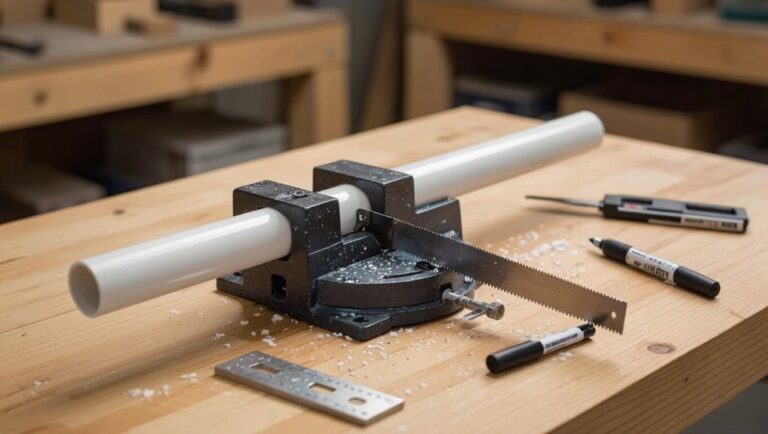
Before any continuous weld is struck, the pipe ends should be rigidly clamped and tack-welded at evenly spaced points to preserve alignment and gap consistency. The technician checks joint fit, uses parallel clamps or a vise, and applies small tack welds—short, low‑heat beads—at 90° intervals or per specified spacing. Tack placement minimizes distortion and secures root gap for consistent penetration. After cooling, tacks are inspected for adhesion and cleaned of zinc contamination before final welding. The approach reduces movement during welding and aids dimensional control while allowing adjustments prior to full weld passes.
| Tool | Tack Size | Spacing |
|---|---|---|
| Parallel clamp | 3–6 mm | 90–180 mm |
| Vise | 4–6 mm | 120–200 mm |
| Magnets | 3–5 mm | 100–150 mm |
Control Travel Speed, Heat, and Bead Shape
When welding galvanized pipe, consistent travel speed and controlled heat input are critical to achieve a uniform bead profile, minimize zinc burn‑off, and prevent excessive distortion. The welder should balance speed and amperage so the weld puddle flows smoothly without overheating adjacent coating.
Short, steady passes help shape the bead and limit spatter. Maintain a slight forehand or neutral angle to promote fusion while avoiding excessive penetration. Watch for undercut and convexity; adjust travel or heat to produce a narrow, slightly convex bead that sheds moisture and resists cracks.
- Set amperage to match filler and thickness.
- Use steady travel rhythm.
- Make short corrective passes.
- Monitor bead contour continuously.
Minimize Zinc Inclusion and Porosity
By controlling cleaning, joint fit-up, and welding parameters, zinc inclusion and porosity can be substantially reduced.
Welders should remove galvanizing from the weld area and nearby heat-affected zone by grinding or chemical stripping to expose clean base metal.
Maintain consistent root gaps and proper alignment to prevent trapped contaminants and improve gas flow.
Use appropriate shielding gas, correct amperage, and travel speed to minimize turbulence and entrapment of zinc vapors. Consider back purging where applicable.
Inspect for pinholes and inclusions during welding and address defects immediately.
Proper technique and preparation greatly lower zinc-related defects and porosity.
Cooling and Post‑Weld Handling to Avoid Cracking
Controlled slow cooling after welding helps reduce thermal gradients that can initiate cracks. Post‑weld stress relief techniques, such as properly timed heat treatment or peening, further reduce residual stresses in the joint.
Proper handling and storage—supporting the pipe, avoiding impacts, and keeping welded areas clean and dry—preserve the stress‑relieved condition until inspection or service.
Controlled Slow Cooling
Following welding, allowing galvanized steel pipe to cool slowly and uniformly is essential to reduce residual stresses and prevent hard, brittle microstructures that can cause cracking.
Controlled slow cooling minimizes thermal gradients and preserves ductility in the heat‑affected zone.
Recommended practices include reducing convective cooling, avoiding rapid quenching, and shielding welds from drafts.
Monitor temperature decline and handle joints only when near ambient to prevent distortion.
Use simple enclosures or insulating blankets for moderate parts; larger assemblies may require staged removal from heat sources.
Follow inspection after cooling to confirm weld integrity and surface condition before resuming normal service.
- Limit drafts and airflow
- Insulate weld area
- Monitor cooling rate
- Delay handling
Stress Relief Techniques
When exposed to improper cooling or rough handling after welding, galvanized steel pipe joints develop residual stresses and brittle microstructures that increase the likelihood of cracking; effective stress relief techniques combine managed thermal decay with careful post‑weld handling to preserve ductility and dimensional stability. Controlled slow cooling, optional localized tempering, and short stress‑relief heat cycles reduce hardness peaks. Mechanical support prevents distortion. Inspect for hydrogen embrittlement and allow diffusion time. Record temperatures and hold times. Gentle cleaning avoids reintroducing stresses.
| Visual cue | Action |
|---|---|
| Glow fading | Slow cooling |
| Slight warp | Support |
| Surface scale | Clean |
| Crack lines | Inspect |
Handling And Storage
In storage and during cooldown, welded galvanized pipe must be handled to minimize thermal shock, mechanical strain, and contamination that can initiate cracks.
Post‑weld practices focus on controlled cooling, secure support, and clean environments to preserve joint integrity.
Recommended measures include:
- Allow gradual cooling on non‑conductive supports to avoid rapid temperature gradients.
- Use padded cradles and straps to prevent bending or point loads during movement.
- Store indoors or under cover with humidity control to limit corrosion and zinc loss.
- Inspect and gently remove surface contaminants; avoid impact or hammering near welds.
Safe Methods to Strip Galvanizing at the Weld Zone
Prepare a clean, uncoated area around the weld by removing the zinc only within the immediate weld zone and a small margin beyond to guarantee proper fusion and inspection.
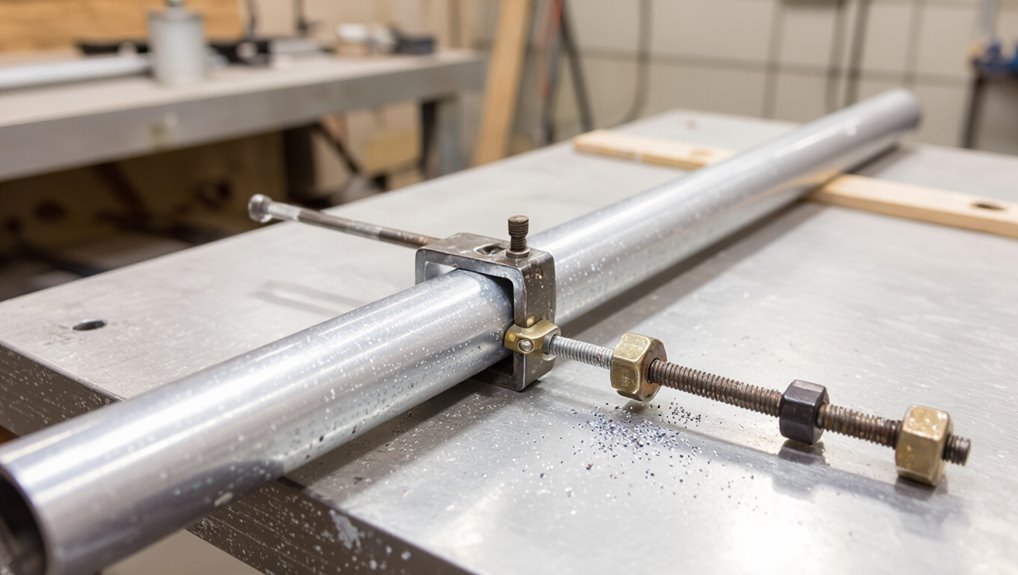
Use mechanical removal—wire wheels, flap discs, or abrasive pads—applied gently to avoid gouging the base metal.
For tight joints, employ needle scalers or hand files to reach seams.
Avoid heat-based stripping that vaporizes zinc.
Collect and ventilate zinc dust; wear respirator, gloves, and eye protection.
Clean the area with solvent to remove oils and particles.
Inspect the bare metal for bright, continuous surface free of residual coating before welding.
Restoring Corrosion Protection After Welding
After welding, the area should be thoroughly cleaned to remove slag, oxides, and contaminants that would interfere with coatings.
Once the surface is prepared, a suitable zinc-rich primer or cold galvanizing compound should be applied to restore sacrificial protection.
Where practical, full re-galvanization of the repaired section provides the most durable corrosion resistance.
Clean Area Before Coating
Following welding, the exposed bare metal and residual welding byproducts must be thoroughly cleaned to guarantee any subsequent coating can bond and restore corrosion protection effectively.
Surfaces are degreased, spatter removed, and oxidation neutralized before coating.
Cleaning assures adhesion and prevents underfilm corrosion.
- Mechanically remove weld spatter and loose scale with a wire brush or grinder.
- Degrease with a solvent approved for metal surfaces; avoid residues.
- Neutralize welding oxides using a mild acid rinse, then flush with water.
- Dry and inspect for contaminants or surface irregularities prior to applying the protective treatment.
Reapply Protective Galvanization
To restore corrosion resistance to welded galvanized pipe, the damaged area must be returned to a zinc-coated condition using methods compatible with the original galvanizing; choices include hot-dip touch-up, metallizing (thermal spray), or zinc-rich cold galvanizing paints, each selected based on environmental exposure, pipe diameter, and accessibility.
After welding and grinding, remove contaminants, apply appropriate surface prep (abrasive blast or chemical etch), then select the restoration method: hot-dip for full-immersion accessible sections, metallizing for large or field-mounted runs, or zinc-rich paint for spot repairs.
Verify coating thickness, adhesion, and continuity; document materials and cure conditions for future inspection.
Visual Inspection Checklist for Galvanized Welds
Regularly, a visual inspection checklist for galvanized welds guides inspectors through the essential surface and seam criteria that indicate weld quality and coating integrity.
It catalogs defects, evaluates coating continuity, and verifies finish uniformity without addressing advanced testing methods.
Observers note bead shape, porosity, and undercut, and confirm surrounding zinc adhesion and visible corrosion.
Documentation records locations, severity, and repair recommendations.
Safety precautions for fume control and substrate cleanliness are reaffirmed.
Typical checklist items include:
- Bead profile: uniformity and fusion
- Surface defects: porosity, cracks, spatter
- Coating condition: burnback, adhesion, discontinuities
- Adjacent area: cleanliness and corrosion signs
When to Use NDT (Dye, MPI, UT) on Galvanized Pipe
When is nondestructive testing required on galvanized pipe? NDT is mandated when code, contract, or client specifications demand verification beyond visual inspection, such as high-pressure service, critical structural applications, or buried/concealed installations.
Dye penetrant testing detects surface-breaking defects after coating removal.
Magnetic particle inspection locates near-surface cracks in ferrous pipes post-cleaning.
Ultrasonic testing assesses wall thickness, corrosion, and subsurface flaws without removing zinc when calibrated for coating effects.
Selection depends on defect type, accessibility, and acceptance criteria.
Documentation of methods, calibration, and personnel qualifications is essential to satisfy regulatory and quality assurance requirements.
Zinc Fume Exposure: Symptoms and First Aid
Occasionally, workers exposed to fumes from welding or cutting galvanized steel develop a specific acute illness called metal fume fever, caused primarily by inhaling zinc oxide particles; symptoms typically begin within a few hours and include fever, chills, headache, muscle aches, nausea, cough, and shortness of breath.
- Recognize: note onset timing, fever, malaise, respiratory irritation.
- Remove: move the affected person to fresh air immediately.
- Support: provide rest, hydration, antipyretics, and oxygen if hypoxic; monitor breathing.
- Seek care: obtain medical evaluation for severe, persistent, or recurrent symptoms; document exposure and follow follow-up instructions.
OSHA Basics and Workplace Rules to Follow
Typically, employers and workers must follow Occupational Safety and Health Administration (OSHA) standards that set minimum requirements for ventilation, personal protective equipment, training, and hazard communication when welding or cutting galvanized steel.
Employers must evaluate hazards, implement controls such as local exhaust ventilation, provide respirators when needed, and assure respirator fit testing and medical evaluation.
Written safety procedures, hazard communication for zinc coatings, and employee training on fume hazards are required.
Permit systems may apply for hot work.
Records of training and exposure monitoring must be maintained.
Compliance inspections and corrective actions help reduce legal and health risks in the workplace.
Tools and Consumables Checklist for the Job
After establishing regulatory controls and hazard management for welding galvanized steel, attention turns to assembling the specific tools and consumables that make a safe, efficient job possible. The checklist prioritizes items that control fume exposure, guarantee weld quality, and support safe handling. Essential items include proper PPE, fume extraction, and compatible filler metals. Auxiliary tools speed work and reduce rework.
- Personal protective equipment: respirator (P100/TPF), welding helmet, gloves, coveralls.
- Fume control: local exhaust hood, portable extractor, ducting.
- Consumables: zinc‑compatible electrodes/filler, flux, anti‑spatter.
- Tools: grinders, wire brushes, clamps, measuring devices.
Troubleshooting Galvanized‑Pipe Weld Defects
Diagnose weld defects on galvanized pipe by distinguishing symptoms caused by zinc contamination, improper heat input, or inadequate joint preparation.
Check for porosity: tiny holes often signal residual zinc or trapped gases; remove coating at the weld and use proper shielding.
Cracking indicates excessive heat, rapid cooling, or brittle zinc embrittlement; adjust preheat/interpass temperature and slow cooling.
Lack of fusion or undercut points to poor fit-up, wrong travel angle, or insufficient amperage; rework joint preparation and parameters.
Excessive spatter and poor bead shape reflect incorrect voltage, wire feed, or nozzle distance; fine-tune settings and maintain clean consumables.
Alternatives to Welding When It’s Unsafe
When weld defects stem from zinc contamination, overheating, or poor joint preparation to the extent that safe, reliable welding cannot be achieved, alternative joining methods should be considered.
The inspector recommends mechanical and chemical options that avoid toxic fumes and compromised metallurgy. Choices depend on pressure, alignment, corrosion resistance, and code requirements.
Common alternatives include:
- Flanged connections with gaskets for removable, sealed joints.
- Threaded fittings when pressure and size permit.
- Compression or push-fit couplings for quick, low-pressure assemblies.
- Approved adhesives or sealants for non-structural, low-temperature applications.
Conclusion
Welding galvanized pipe can be done safely when proper precautions are followed, and occasional fears about complexity shouldn’t stop competent workers from tackling the job. With adequate PPE, effective ventilation or local fume extraction, zinc removal where practical, and adherence to OSHA guidance, risks from zinc oxide are controllable. Even skeptics concerned about residual coating can rely on proven mitigation—respirators and ventilation protect health while trained welders achieve sound, code‑acceptable joints.