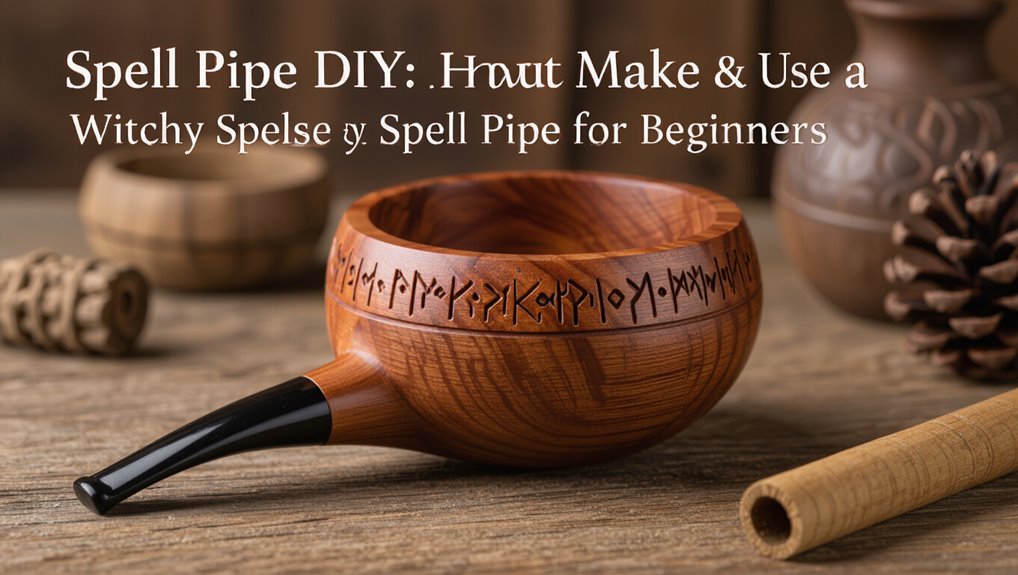
Spell Pipe DIY: How to Make & Use a Witchy Spell Pipe for Beginners
A spell pipe is a small handheld tube, crafted from materials like wood, clay, or metal, designed to help focus your breath, intention, and the energy of charged herbs or resins. For beginners, it’s recommended to use nonresinous hardwood or low-fire clay. Start by creating a steady stem and shallow bowl, then sand and seal the pipe with a food-safe oil. Once your pipe is ready, lightly charge and pack it with the corresponding botanicals. Remember to use slow breaths and gentle draws while practicing fire safety. Always inspect, clean, and ethically source your materials. Further guidance on packing, rituals, and maintenance is also available for your journey in using a spell pipe effectively.
What Is a Spell Pipe and How It’s Used
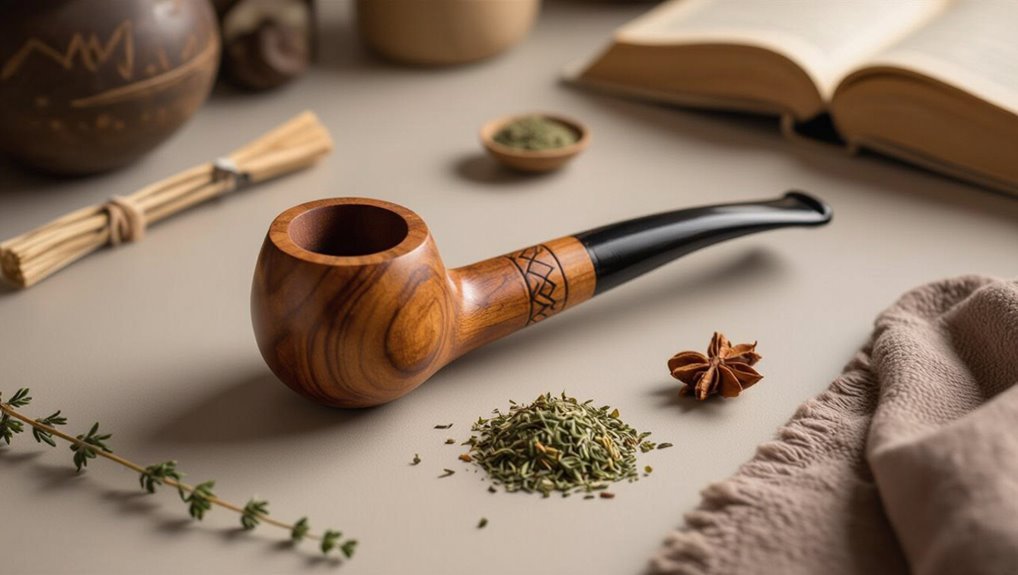
Fundamentally, a spell pipe is a simple ritual tool—a handheld tube, often made of wood, clay, or metal—used to focus intention and direct breath during spellwork.
It serves as a conduit for concentrated energy, aligning breath, visualization, and symbolic materials like herbs, resins, or paper charms.
Practitioners employ it to mark shifts, amplify spoken words, or bind intent into small offerings passed through the bore.
Design choices—size, material, decoration—reflect personal correspondences and desired outcomes.
Maintained with respect, a spell pipe becomes a portable focal point for ritual practice, adaptable across solitary or group contexts and varied magical traditions.
How to Use a Spell Pipe Safely (Overview)
Having outlined what a spell pipe is and how it functions as a focal tool, attention turns to using one with safety and care.
Practitioners should inspect the pipe for cracks, clean residue regularly, and use appropriate heat sources to prevent burns.
Work in a well-ventilated area and keep water or a fire extinguisher nearby.
Handle herbs, resins, and oils with knowledge of personal allergies and correct dosages.
Establish clear intention and respectful practice, avoiding reckless haste.
After use, cool and store the pipe safely, and cleanse energetically if desired to maintain both physical integrity and ritual clarity.
Legal and Safety Considerations for Smoking Rituals
With legal frameworks and personal safety intertwined, practitioners should be aware that smoking rituals can carry regulatory, health, and liability implications. Local laws may restrict substances, age limits, public consumption, and smoke-free zones; compliance prevents fines and legal exposure.
Health risks include respiratory irritation, allergic reactions, and smoke inhalation effects; ventilation, limiting frequency, and consulting healthcare providers reduce harm.
Private property rules and shared-space consent matter; obtaining permission and disclosing activities to housemates avoids conflict.
Liability for accidental fires or property damage necessitates precautions: fireproof dishes, extinguishers, and never leaving a flame unattended.
Ethical Sourcing and Respecting Tradition
The text notes that spell pipes originate in specific cultural traditions and that their use should reflect respect for those origins.
It advises sourcing materials in ways that avoid exploitation and environmental harm.
It recommends acknowledging and learning about traditional practices rather than appropriating or commercializing them without permission.
Respect Cultural Origins
Rooted in Indigenous craft and ceremony, a spell pipe carries cultural significance beyond its material form, so builders should acknowledge its origins and the communities who created those practices.
Practitioners are advised to learn histories respectfully, credit sources, and avoid claiming invention or exclusive rights.
Public use should honor protocols: refrain from performing sacred rites without invitation, use appropriate language, and seek guidance when uncertain.
Acknowledgement can include attribution in writing, verbal recognition during gatherings, or support for cultural preservation.
Humility, ongoing education, and deference to community leadership help prevent appropriation and foster ethical, respectful engagement.
Source Materials Ethically
When sourcing materials for a spell pipe, practitioners should prioritize ethical procurement that respects both ecosystems and cultural traditions. Materials should be chosen for sustainability, legality, and minimal harm; invasive or endangered species and illicit artifacts are avoided. Sellers with transparent origins and fair practices are preferred.
Careful documentation of material provenance supports accountability and learning without appropriating sacred items. Respectful substitution and cultivated or reclaimed resources reduce impact while honoring intention.
- Seek responsibly harvested, legally traded botanicals and woods.
- Favor artisans and fair-trade suppliers with clear provenance.
- Use cultivated, reclaimed, or synthetic alternatives when appropriate.
Acknowledge Traditional Practices
Moving from sourcing practices to the cultural contexts that give materials meaning, practitioners should actively acknowledge and honor the traditions behind specific pipes, woods, and botanical inclusions.
The maker recognizes lineage, ritual uses, and cultural protocols tied to forms and ingredients. They credit origins, avoid appropriation by learning from custodial communities, and seek permission where practices are living or sacred.
When traditions are inaccessible, they defer to respectful study, cite sources, and choose neutral alternatives.
Ethical makers prioritize relationships over novelty, ensuring craft does not commodify or erase cultural knowledge while sustaining personal integrity and communal respect.
Spell Pipe Materials: Wood, Clay, Metal
Crafting a spell pipe begins with selecting a material that balances durability, workability, and the desired aesthetic or ritual purpose. Each material carries practical and symbolic qualities: wood offers warmth and organic resonance, clay provides malleability and grounding, and metal contributes longevity and reflective energy. Consider maintenance, porosity, and how the material interacts with herbs or incense. Finish and sealing alter breathability and ritual feel. Artisan technique affects outcome: carving, firing, or forging changes texture and intent. Use respectful sourcing and basic safety when shaping or sealing pieces.
- Wood: lightweight, carvable, absorbs scent
- Clay: customizable, porous unless glazed
- Metal: durable, heat-resistant, conductive
How to Choose the Right Material for You
Choosing the right material for a spell pipe requires balancing practical needs, ritual intent, and personal preference.
The maker evaluates durability, porosity, heat resistance, and ease of carving or shaping. Wood offers warmth, organic energy, and varied grain; clay permits molding and symbolic shaping but is fragile; metal provides longevity and conductive properties yet may feel impersonal.
Consider scent retention, cleaning, and how the material interacts with herbs or smoke. Personal affinity, ethical sourcing, and planned workings guide selection: choose what resonates, supports desired energies, and fits maintenance capacity.
Test small samples before committing to a final piece.
Tools and a Safe Workspace for Pipe Making
When preparing to make a spell pipe, the maker gathers a concise set of tools and arranges a clean, well-ventilated workspace to prioritize safety and efficiency.
The area is cleared of clutter, surfaces sanitized, and lighting adjusted for detail work.
Protective gear—gloves, eye protection, and a dust mask—is kept nearby, and a small first-aid kit and fire extinguisher are accessible.
Tools are organized to minimize movement and accidental contact, with sharp implements stored securely when not in use.
Waste disposal for shards or dust is planned to prevent contamination and injury.
- Precision cutting tools and files
- Protective gear and cleaning supplies
- Stable work surface with good lighting
Basic Materials Checklist for a Beginner Spell Pipe
For a beginner assembling a spell pipe, a compact list of reliable, safe materials reduces confusion and risk: a solid stem (wood, metal, or heat-resistant polymer), a detachable bowl or chamber, natural or non-toxic sealant, fine-grit sandpaper, small drill bits or awls for airway creation, and a heatproof pad for work.
Additional items include a metal screen, food-grade silicone tubing for gasketing, a soft file for shaping, a washable cleaning brush, and heat-resistant gloves.
Optional aesthetic additions: natural cord, beeswax, and non-toxic paint or stains.
Prioritize non-toxic, heatproof components and replace any cracked or compromised parts promptly.
Simple Clay Pipe Build: Step-by-Step
With the materials checklist in hand, the maker can move on to forming a simple clay pipe using basic tools and low-fire clay.
The process emphasizes proportion: a shallow bowl, a clean draft hole, and a tapered stem.
Rolling, hollowing, and smoothing are done by hand or with a pin; patience prevents cracking.
Drying should be gradual, followed by bisque firing or air-dry finishing depending on clay.
After curing, light sanding and optional natural sealant complete the piece.
The maker is advised to test airflow and balance before ritual use, keeping aesthetics simple and functional.
- Confirm consistent wall thickness
- Ventilate during firing or sealing
- Avoid metal fittings
Easy Wooden Pipe Carving for Beginners
Begin by selecting a straight-grained, non-resinous hardwood such as cherry, pear, or maple, then mark out a compact design that balances a shallow bowl and a tapered stem for smooth airflow. The maker carves cautiously, using a coping saw, gouge, and fine files; test fit a metal bowl liner or drill bit for ventilation. Sand progressively to 400–600 grit, seal with food-safe oil, and burnish for a comfortable mouthpiece. Maintain grain direction when carving to prevent tear-out and avoid synthetic glues. Care instructions: oil periodically and inspect for cracks before each use.
| Tool | Purpose |
|---|---|
| Coping saw | Rough shape |
| Gouge | Bowl hollowing |
| Files | Stem shaping |
| Drill bit | Air channel |
| Sandpaper | Smooth finish |
Quick Upcycled Spell Pipe From Thrift Finds
A selection of thrifted pipes is examined for structural soundness and aesthetic potential before being chosen for upcycling.
Simple cleaning and a brief cleansing ritual are described to prepare the piece for safe use and energetic resetting.
Practical tips are offered to streamline the transformation from find to functional spell pipe.
Thrifted Pipe Selection
Curiosity guides the search through crowded shelves and glass cases when selecting a thrifted pipe for an upcycled spell project.
The finder observes shape, material, and wear, noting chips that add character and cracks that compromise function.
Practical considerations—bowl size, stem stability, and airflow—inform choices alongside aesthetic resonance and symbolic suitability.
Ethical sourcing and price are briefly weighed.
Cleaning feasibility and potential for safe modification determine final selection.
The decision balances practicality with imagination, aiming for an object that invites transformation without undue risk.
- Inspect for structural integrity and nonporous materials
- Favor simple shapes that accept embellishment
- Note provenance or maker marks for story
Quick Cleansing Ritual
Having chosen a thrifted pipe that balances sturdiness and story, attention turns to a quick cleansing ritual to prepare it for upcycling.
The practitioner works in neutral tones, gathering salt, white vinegar, a small bowl, and a clean cloth. Exterior grime is wiped away, then the pipe is submerged briefly in a diluted vinegar solution to lift residue and energetically reset the object.
After a rinse with clear water, it is patted dry and exposed to sunlight for a few hours or moonlight overnight.
Finally, a pinch of salt is placed inside and later removed, signaling readiness for decoration and intent-setting.
Seal and Finish Your Pipe Properly
When the pipe body is shaped and sanded smooth, attention turns to sealing and finishing to protect the wood and preserve the integrity of the fitted crystal or bowl.
A thin, food-safe oil finish (like tung or mineral oil) soaks in, stabilizes grain, and maintains tactile warmth.
For greater durability, a satin polyurethane or beeswax topcoat adds water resistance without obscuring carving. Avoid solvent-based finishes that may off-gas around inserted elements.
Allow thorough curing between coats and lightly sand with fine grit for adhesion. Final buffing enhances sheen and tactile comfort for handling during practice.
- Choose non-toxic, stable finishes
- Apply multiple thin coats
- Cure fully before use
How to Charge and Consecrate a New Spell Pipe
A new spell pipe benefits from a simple cleansing ritual to remove residual energies and prepare it for use.
The maker may then perform a clear dedication, stating the pipe’s purpose and intent aloud.
Final charging can involve focused breath, smoke, or placing the pipe in moonlight to infuse it with the chosen energy.
Cleansing Rituals
Because a new spell pipe serves as both tool and vessel, it benefits from deliberate cleansing and consecration before first use.
The practitioner removes manufacturing residue and ambient energies with focused intention, choosing methods aligned with material and tradition.
Simple, repeatable rites build a neutral foundation so subsequent workings remain clear.
Elements—smoke, water, salt, sunlight—offer practical purification; select one or combine gently.
Consecration follows cleansing: brief words, holding, and visualization bind purpose to object without elaborate ceremony.
Record the method, date, and intent for future reference to track energetic maintenance and effectiveness.
- Smoke cleansing: herbal smudging or incense
- Salt water rinse: nonporous materials only
- Solar or lunar exposure for subtle charging
Dedication And Charging
Following cleansing, the dedication and charging of a new spell pipe focuses intent into the object, transforming it from neutral tool to attuned instrument. A simple consecration ritual centers attention: set intention, hold the pipe, speak purpose aloud, and visualize energy filling it. Charge via sunlight, moonlight, breath, or a chosen sigil; repeat regularly or before major workings. Respect personal ethics and cultural origins. Record the ritual, materials, and dates in a grimoire. Consistent use strengthens resonance; occasional recharging renews efficacy.
| Method | Purpose |
|---|---|
| Sunlight | Energize |
| Moonlight | Purify |
Simple Sigils and Carvings to Add Intent
Often, practitioners inscribe simple sigils and shallow carvings on a spell pipe to focus intent and personalize its function; these marks serve as compact visual statements that translate a user’s purpose into tangible form.
Small, deliberate symbols—initials, elemental signs, or geometric shapes—anchor attention and clarify use without complex ritual. Carvings should be shallow to preserve structure and avoid splitting.
Placement matters: mouthpiece for clarity, bowl for transformation, stem for journeying. Clean lines and repetition strengthen meaning. Respect cultural origins and avoid appropriation. Maintain simplicity so the pipe remains usable and the sigils readable over time.
- Elemental glyphs for basic direction
- Personal initial or rune
- Repeated dots or lines to amplify intent
Choosing Herbs, Resins, and Fillings by Intent
When preparing a spell pipe, the selection of herbs, resins, and fillings should align directly with the desired outcome, as each botanical and compound carries specific energetic associations and smoke qualities.
Choose lavender or chamomile for calming and sleep, rosemary or bay for clarity and protection, and mugwort for divination. Frankincense and copal lift and purify; benzoin soothes and grounds.
Consider correspondences: intentions (love, healing, banishing), element alignment, and scent compatibility. Prefer small, dry, combustible pieces and avoid dense or treated materials.
Record combinations and outcomes to refine future selections and guarantee consistent energetic results.
How to Load a Spell Pipe Safely
With herbs, resins, and fillings selected for their correspondences and combustibility, the next step is assembling them in the pipe in a way that promotes even burning, clear airflow, and user safety.
The practitioner packs loosely at the bowl base, adding finer material above to avoid clogging; tamping is gentle, preventing overcompression that chokes draw or causes uneven smolder.
Moisture is checked to reduce harsh smoke.
Bowl depth is adjusted so embers remain controlled without risking overflow.
Attention to ventilation and a safe workspace minimizes inhalation risks and accidental fires.
- Pack gradations: coarse, medium, fine
- Gentle tamp only
- Check moisture and workspace ventilation
How to Light a Spell Pipe and Manage Ember
Light the packed bowl carefully, using a steady flame and slow, even draws to establish a stable ember without overheating the blend.
The practitioner watches for a faint, glowing core and avoids direct, prolonged contact with flame.
Gentle tamping redistributes heat and maintains airflow; excessive packing smothers the ember.
When relighting, use brief, targeted flames and allow cooling intervals to prevent scorching.
Ash should be brushed lightly into a tray, never inhaled.
Metal tools resist heat; wooden implements can char.
Throughout, prioritize ventilation and fire safety: keep water or an extinguisher nearby and never leave a lit pipe unattended.
Breathing and Visualization Techniques to Use
The practitioner is encouraged to begin with breath awareness basics, noting inhalation depth and exhalation length to anchor focus.
Simple guided visualization steps follow, portraying the purposeful outcome as a steady, vivid image while synchronizing breath to the scene.
Throughout, maintaining a calm rhythm and clear intention links breath, image, and the spell pipe’s use.
Breath Awareness Basics
Cultivating breath awareness grounds a spell pipe practitioner’s focus before any ritual; attention to inhalation, exhalation, and the subtle pauses between provides a reliable anchor for visualization.
The practitioner notices rhythm, depth, and temperature of breath, using neutral observation to steady the mind.
Simple counts and gentle diaphragmatic breathing reduce tension, while posture supports unobstructed flow.
Breath becomes a metronome for intent without prescribing images or narratives reserved for guided visualization.
Sensory labeling—softly noting “in” and “out”—keeps attention present and prevents drift.
- Counted breath cycles: 4–4–4 pauses
- Diaphragmatic focus: belly rise
- Sensation naming: air, warmth, stillness
Guided Visualization Steps
Beginning with a settled breath, the practitioner synchronizes slow diaphragmatic inhalations and exhalations with clear, simple images to direct intent: inhale five counts while visualizing a steady, cool silver light entering the lungs; hold two counts while the image stabilizes at the heart; exhale five counts, releasing any tension and sending that light outward through the pipe’s stem.
Eyes may be softly closed.
On subsequent breaths, the light can be colored to match purpose: green for healing, amber for protection, blue for clarity.
Each cycle reinforces focus.
If distraction arises, acknowledge it, return to the count, and resume the image.
Rhythm And Intention
Among measured inhales and exhales, practitioners pair breath with focused imagery to set a steady rhythm that aligns body and intention.
The technique emphasizes timing, tempo, and symbolic detail: slow inhales anchor presence; held breath seals intent; controlled exhales release distractions.
Visualization layers color, texture, and movement onto breath, sending purpose through the pipe’s imagined smoke.
Consistency builds resonance; brief daily practice trains responsiveness.
Attention shifts gently if intrusive thoughts arise, returning to a single visual anchor.
Ritual speech may accompany cycles, but silence is equally valid for deepening concentration and conserving energy.
- Inhale: visualize drawing luminous intent into the chest.
- Hold: concentrate on a tactile or color cue.
- Exhale: expel doubt as shadowed smoke.
Three Beginner Spells You Can Do With a Pipe
With a simple pipe, a novice can practice three safe, low‑effort rites that build focus, intention, and ritual familiarity; each uses basic supplies and clear steps so the practitioner learns process as much as outcome.
First, a grounding breath spell: inhale slowly while visualizing roots, exhale through the pipe to release tension, repeat three times.
Second, a clarity smoke spell: burn a small bundle of sage or rosemary in the bowl, walk deliberately while naming one problem and imagining it shrinking.
Third, a gratitude ember spell: light a tiny paper offering, speak one sincere thanks, let ash fall into a prepared dish.
Adapting Spells for Protection, Healing, and Divination
In adapting simple pipe rites for protection, healing, and divination, the practitioner shifts intent, materials, and pacing so each spell aligns with its purpose; protection favors strong-smelling herbs and firm visualizations, healing uses soothing scents and slow breaths, and divination invites lighter, clarifying smoke and open question-setting.
Intent framing, herb choice, and breath rhythm determine outcome: set boundaries for protection, foster restoration for healing, and cultivate receptivity for divination.
Timing and focus alter potency. Cleansing between uses prevents cross-contamination of aims. Record keeping refines methods over time.
- Choose herbs and resins that match the spell’s function.
- Adjust breath and cadence to support intent.
- Note results and tweak variables.
Combine Your Spell Pipe With Candles and Crystals
The section outlines how strategic candle placement can shape a spell pipe ritual’s energy flow and safety considerations for open flames.
It then suggests specific crystal pairings—such as clear quartz for amplification and amethyst for intuition—to complement different intentions.
Practical tips on arranging candles and crystals together for balance and focus are offered.
Candle Placement Tips
Near a spell pipe, candles should be arranged to support intention and safety: place a primary candle aligned with the practitioner’s dominant hand or the pipe’s mouthpiece to focus energy, and situate secondary candles at cardinal points to balance directional influences.
Placement emphasizes clear sightlines, stable holders, and nonflammable surfaces; maintain usable distances to prevent smoke from overwhelming breath or ember contact. Light candles in mindful sequence, noting color correspondences and timing, then extinguish safely.
Consider airflow and room layout to avoid drafts.
- Use holders that catch wax and steady flames.
- Keep an accessible extinguisher or snuffer.
- Space candles to prevent heat overlap.
Crystal Pairing Ideas
Often a few well-chosen crystals can amplify a spell pipe ritual by aligning vibrational qualities with candle intentions and breath work. The practitioner selects stones that match goals: clear quartz for clarity, amethyst for intuition, and black tourmaline for protection. Position crystals near the candle, not directly under flame, to create an energetic triangle with the pipe. Hold small stones during inhalation to anchor focus. Cleanse crystals regularly and recharge them in moonlight. A simple pairing table helps remember correspondences and mood-setting for beginner rituals.
| Candle Color | Crystal | Intention |
|---|---|---|
| White | Clear Quartz | Clarity |
| Purple | Amethyst | Intuition |
| Black | Black Tourmaline | Protection |
Cleansing Routines for Your Spell Pipe
Maintaining a clear energetic and physical state, a spell pipe benefits from regular cleansing to preserve effectiveness and prevent lingering influences from previous workings.
Cleansing can be simple: remove ash and residue, wipe the bowl, and perform an energetic reset before each use or after heavy or intense rituals.
Techniques should align with the maker’s tradition and materials — gentle methods suit porous clays, stronger for metal.
Consistency fosters reliability; document which methods work best.
Appropriate interval depends on frequency of use and intent clarity.
- Smoke cleansing with white sage or palo santo
- Salt or rice immersion for energetic draw-out
- Moonlight or sunlight charge and intention-setting
Storing and Carrying Your Pipe Respectfully
How should a pipe be stored and carried so that its function and dignity remain intact? A pipe deserves protection and intentional handling: wrap it in soft cloth, place it in a dedicated case or pouch, and keep it separate from mundane tools.
Store in a dry, ventilated spot away from direct sunlight and extreme temperatures. When transporting, secure it to prevent jostling and avoid crowded bags where it might be crushed or contaminated.
Honor significance by labeling its containment and treating removal and return as a ritual. Regular inspections guarantee integrity; respectful storage preserves both practical use and symbolic meaning.
Troubleshooting: Cracks, Poor Draw, Bad Taste
The section addresses common issues like surface cracks and airflow restrictions, outlining simple repair options and when replacement is necessary.
It also covers steps to improve draw quality, including checking stem alignment and clearing blockages.
Practical tips for maintaining taste neutrality and preventing future damage are summarized.
Cracks And Repairs
Inspecting cracks promptly helps guarantee small issues from becoming structural failures that ruin a spell pipe’s function and flavor.
A practitioner examines the bowl, stem, and mouthpiece for hairline fractures and soot tracks.
Minor ceramic or wooden cracks can be stabilized; sealants chosen for heat resistance preserve taste.
Large breaks demand professional repair or replacement to avoid contamination.
Cleaning and drying before repair guarantees adhesion and prevents odors.
After repairs, seasoning with neutral smoke cycles removes residual tastes.
Discard if repairs compromise safety.
- Use high-temperature epoxy or food-safe wood glue for small fixes.
- Sand and reseal exterior finishes to prevent moisture ingress.
- Replace when structural integrity or sanitary standards cannot be guaranteed.
Improving Draw Quality
Evaluate draw quality by systematically isolating causes—cracks, blockage, or residues—so each issue can be addressed with the correct fix.
Inspect joints and bowl for hairline fractures; seal small cracks with food-safe epoxy or replace compromised parts to prevent leaks that weaken suction.
Clear airways with a flexible brush, pipe cleaners, or compressed air; dislodge stubborn obstructions by soaking removable components in warm, soapy water.
Remove tar and buildup with isopropyl alcohol rinses and baking soda scrubs, then rinse thoroughly.
For lingering bad taste, season with mild smoke of clean herbs and allow full drying before use.
Advanced Mods: Filters, Mouthpieces, Charms
Building on basic assembly, this section explores advanced modifications—filters, mouthpieces, and charms—that refine performance, comfort, and aesthetics. Filters reduce particulate transfer and can be swapped for activated carbon, ceramic, or metal screens to suit ritual purity and draw resistance. Ergonomic mouthpieces shaped from wood, bone, or glass improve seal and lip comfort while influencing breath control. Charms suspended from the stem personalize intent, using symbols, crystals, or tiny sigils fixed with nonreactive thread or resin. Consider balance, weight, and replaceability when combining elements to maintain functionality and ritual symbolism.
- Filter material choices and trade-offs
- Mouthpiece ergonomics and fit
- Charm attachment methods
Alternatives: Use the Pipe for Incense or Vapor
After experimenting with filters, mouthpieces, and charms, attention can shift to repurposing the pipe for incense or vapor use.
The pipe adapts well: replace the bowl with a small screen or ceramic cone to hold charcoal-free incense granules or aromatic resins.
For vapor, attach a compatible atomizer or use a desktop vaporizer stem to avoid direct combustion. Use short draws and cool-down periods to protect fittings.
Clean thoroughly between uses to prevent flavor carryover. Employ neutral, non-oily bases and unscented carrier materials to preserve ritual atmosphere and maintain the pipe’s structural integrity.
Health-Safe Herb and Resin Swap Recommendations
The article notes practical swaps for safer botanical and resin choices when using a spell pipe. It highlights milder, non-toxic herbs that reduce respiratory irritation and suggests inert or food-grade resin alternatives to avoid harmful fumes. Readers are encouraged to compare ingredient safety and source purity before use.
Healthier Herb Alternatives
Why choose gentler plant and resin options when crafting a spell pipe? A focus on low-irritant, non-toxic botanicals minimizes respiratory irritation and allergic reactions while preserving ritual intent.
Selections favor mild aromas and documented safety, and users are encouraged to research interactions and source responsibly.
Practical swaps include calmer herbs and food-grade smokeables; avoid known irritants or psychoactive plants.
Consideration of flame temperature and containment reduces harmful byproducts.
Clear labeling and small test burns help assess reactions before full use.
- Chamomile instead of harsher bitter herbs for calming smoke
- Mugwort-free blends using lavender or rose petals
- Food-grade cedar chips for scent without resin risks
Resin Safety Substitutes
Practitioners often prefer safer resin and herb combinations to reduce inhalation risks while maintaining aromatic and ritual qualities.
Recommended swaps include replacing pine and copal with non-toxic alternatives like benzoin (sparingly), myrrh, or frankincense sourced pure and dust-free.
Consider herbal aromatic blends—dried rosemary, lavender, or mugwort—used alone or with small resin pieces to lower tar and irritant exposure.
Avoid treated, colored, or unknown commercial blends.
Use charcoal-free indirect heating methods (e.g., electric incense burners) to limit combustion byproducts.
Store materials dry and labeled, and test scents briefly to check for personal respiratory sensitivity before ritual use.
How to Track Results: A Simple Ritual Log
Regularly keeping a simple ritual log helps track correlations between intent, method, and outcome.
The practitioner records date, intention, materials used, steps performed, and immediate sensations.
Brief notes on environmental context—mood, weather, companions—clarify external variables.
Over weeks, patterns emerge: which herbs, pipe shapes, or phrasing align with desired shifts.
Entries stay factual, avoiding judgment, and include a concise outcome rating (e.g., 1–5).
Reviewing entries refines practice and informs adjustments.
- Date, intention, materials, steps
- Context: mood, location, external factors
- Outcome rating and brief follow-up notes
Where to Buy Materials and Local Resources
For procuring materials and finding local support, a mix of specialty shops, herbalists, and community networks offers reliable options: local smoke shops and artisanal pipe makers supply hardware and craftsmanship, herb stores and apothecaries provide botanicals and guidance on sourcing, and community centers or metaphysical shops connect practitioners to classes, meetups, and repair services. Seek vendors with transparent sourcing, ask about non-toxic finishes, and favor repairable, ethically made pieces. Farmers markets, craft fairs, and vintage shops yield unique bowls and stems. Compare prices, check return policies, and build relationships for personalized recommendations.
| Shop type | Typical item | Value |
|---|---|---|
| Smoke shop | Pipes, screens | Convenience |
| Herb shop | Dried botanicals | Authenticity |
| Artisanal maker | Custom pieces | Longevity |
Community Resources, Classes, and Mentorship
Within communities, classes and mentorship establish practical pathways for learning safe construction, maintenance, and ethical use of spell pipes.
Participants gain hands-on instruction, peer feedback, and shared rituals that emphasize consent and harm-minimization.
Local workshops and online forums complement one another, offering technique demonstrations, material sourcing tips, and troubleshooting for common issues.
Mentors provide contextual history and adapt practices for diverse traditions, while encouraging personal responsibility and record-keeping.
Responsible networks also guide legal considerations and respectful cultural engagement.
- Structured workshops for technique, safety, and tool care
- Peer critique circles for refining craftsmanship and intent
- Mentorship pairings for long-term skill development
Common Myths About Spell Pipes (Debunked)
Contrary to sensational accounts, spell pipes are practical tools shaped by craft and context rather than mystical shortcuts to power. Many myths exaggerate their agency: pipes do not act independently or guarantee outcomes.
Another common belief holds that a specific material or design is universally required; in reality effectiveness depends on intent, ritual coherence, and practitioner experience.
Some claim pipes are inherently dangerous or cursed; risks arise from misuse or cultural appropriation, not from the object itself.
Finally, prestige myths suggest elaborate objects are superior; simplicity often fosters clarity and adaptability, especially for beginners learning technique and ethical practice.
Conclusion
To conclude, the spell pipe serves as a focused tool for ritual intention, blending craft, safety, and cultural respect into a personal practice. Practitioners are encouraged to source materials ethically, keep clear logs of effects, and seek community guidance rather than relying on myths. Like a smartphone for the soul, it connects intention to action while reminding users to follow legal and safety guidelines, honoring traditions with humility and thoughtful curiosity.