Pipe Cleaners Crafts: Easy DIY Ideas for Kids & Home Decor
Pipe cleaners are versatile and essential craft supplies that can be used for a variety of DIY projects, both for kids and home decor. Originally designed for cleaning pipes, these flexible, fuzzy wires come in different types, including chenille, metallic, and glitter, and are available in various gauges for detailed designs or structural support. Basic crafting techniques involve creating coils, loops, and twisted stems, which can be used to make flowers, animals, jewelry, and garlands. For kids, larger pipe cleaners are often paired with felt accents, while adults might incorporate beads and wire into their projects. This guide offers practical tips for reinforcing creations, effective storage methods, and easy fixes to enhance your crafting experience.
What Are Pipe Cleaners? A Brief History
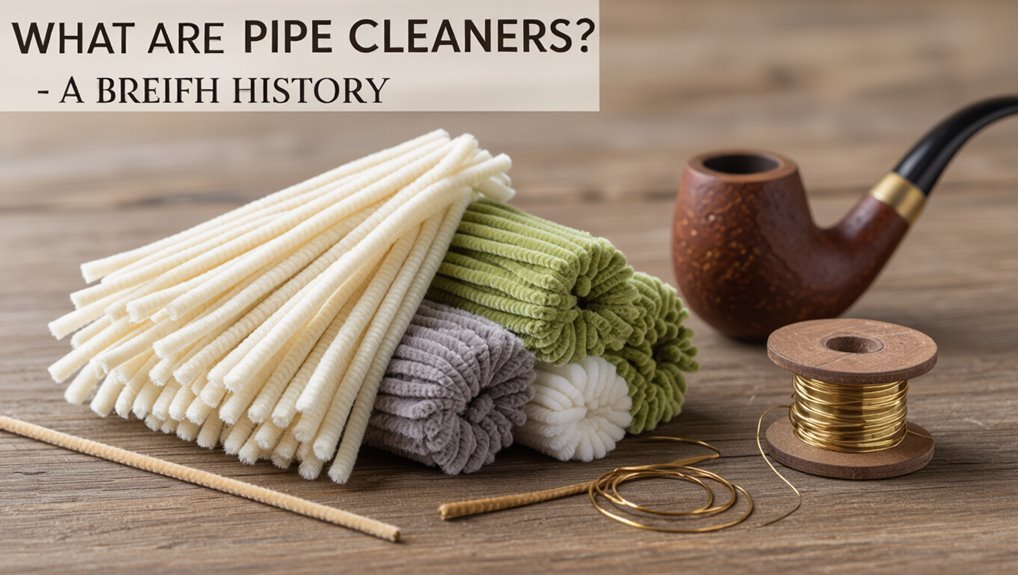
Pipe cleaners are flexible wires wrapped in short, twisted fibers, originally designed to remove soot from tobacco pipes but now widely used as a craft material and for small-scale cleaning tasks.
Invented in the 19th century alongside increased pipe smoking, early versions used horsehair and wire. Mass production introduced cotton and synthetic fibers, lowering cost and expanding availability.
Crafters and educators adopted them for modeling and teaching fine-motor skills. Their simplicity and pliability encouraged creative uses beyond cleaning.
Over time, cultural shifts away from pipe smoking left the tool repurposed, securing its place in hobbyist and classroom supplies worldwide.
Pipe Cleaner Types, Sizes, and Materials to Buy
The section compares common pipe cleaner types and textures—fuzzy chenille, metallic, glitter, and specialty finishes—and notes how surface feel affects grip and appearance.
It also outlines standard sizes and thicknesses, from thin craft stems to thick plush gauges, and explains which are best for fine detail versus structural projects.
Readers will be guided to choose combinations that match their planned techniques and durability needs.
Types And Textures
Several varieties of chenille stems differ in thickness, core, and finish, and choosing among them shapes both technique and outcome.
Different materials—cotton-wrapped wire, metallic, fuzzy polyester, and eco-friendly bamboo blends—offer distinct tactile and visual results.
Smooth metallic types gleam; soft fuzzy ones feel cozy.
Wire cores vary in flexibility and memory, affecting hold and sculpting.
Some finishes resist fraying; others accept paint or glue better.
Selection depends on desired texture, durability, and appearance for crafts or decor.
Consider mixes for contrast and layered effects to enrich projects without complicating construction.
- Warm nostalgia
- Glinting excitement
- Gentle comfort
- Tactile curiosity
- Subtle sophistication
Sizes And Thicknesses
Sizes and diameters determine what a chenille stem can reliably hold, shape, or suggest, so crafters should match thickness to task rather than assume one type fits all.
Thin stems (about 2–3 mm) suit delicate details, small coils, and children’s projects because they bend easily.
Standard stems (4–6 mm) balance flexibility and support for sculptures, wreath frames, and moderate armatures.
Thick or heavy-gauge stems (8 mm and above) provide structural integrity for larger forms and functional items like hooks.
Material matters: aluminum-core offers strength, steel-core adds rigidity, and fuzzy polyester covers affect grip and appearance; choose by project needs.
Essential Tools & Extra Supplies (Beads, Felt, Glue)
For basic pipe cleaner projects, a small set of tools and a handful of supplemental materials greatly expand possibilities: needle-nose pliers or tweezers for tight bends and trims, wire cutters for clean ends, and a ruler or template for repeatable shapes.
A modest kit lets makers focus on form and texture: beads add sparkle and weight, felt supplies soft backing or petals, glue secures nonwoven parts, and a storage box keeps tiny pieces sorted.
Durable thread or thin craft wire can reinforce joints without bulk. Proper supplies reduce frustration and raise finished quality.
- Joy from bright beads
- Comfort of soft felt
- Pride in neat joins
- Surprise at lightweight strength
- Calm from organized supplies
Simple Pipe‑Cleaner Shapes Every Beginner Should Learn
Beginners benefit from mastering a few fundamental shapes that form the basis of many pipe‑cleaner projects.
Basic spiral coils provide structure and texture, simple loop shapes create petals and eyes, and twisted stem forms serve as connectors and supports.
These three techniques together enable straightforward variations and quick prototypes.
Basic Spiral Coils
How does one turn a straight pipe cleaner into a neat, stable spiral coil? A beginner learns to wrap wire gently around a dowel or pencil, keeping even spacing and firm tension. Tighten the inner turns for stability, leave outer turns softer for flexibility. Trim excess ends and tuck tips inward to avoid snagging. Color choices and coil diameter change the mood and function: tiny tight coils become textured accents; larger open spirals serve as decorative rings. Practice produces consistent curves and predictable springiness, useful for toys, embellishments, and small structural components.
- delight
- curiosity
- satisfaction
- calm
- pride
Simple Loop Shapes
Simple loop shapes form the foundation of countless pipe‑cleaner projects, teaching control of curvature and endpoint finishing. Beginners learn to form uniform circles, ovals, teardrops and figure‑eights, practicing consistent tension and smooth bends.
Loops serve as petals, eyes, wreath sections and ornament frames; small adjustments change scale and expression. Ends are tucked, wrapped or twisted to secure joins without bulk.
Combining loops into symmetric patterns produces flowers and garlands, while asymmetric arrangements suggest leaves or abstract accents. Mastery of simple loops accelerates progress to complex assemblies, offering reliable, repeatable elements for decorative and playful creations.
Twisted Stem Forms
After mastering uniform loops, makers often move on to twisted stem forms to add structure and linear interest to projects. Twisted stems are created by wrapping two or more pipe cleaners together, varying tension and angle to produce rigidity, curl, or graceful sweep. They serve as flower stems, antennae, branch veins, or abstract accents.
Simple techniques—single twist, spiral, double-bend, split stem—build reliable vocabulary. Beginners gain control quickly, translating small adjustments into expressive lines. Practice encourages experimentation with color, thickness, and length to match scale and mood.
- Delight in a single elegant curve
- Surprise with a sudden kink
- Comfort from steady rhythm
- Pride in neat joins
- Joy in playful color contrasts
Make This Now: A 5‑Minute Pipe‑Cleaner Craft for Kids
A quick, colorful pipe‑cleaner project can be completed in about five minutes and requires only a few common materials: pipe cleaners, beads (optional), and scissors.
The craft demonstrates twisting, bending, and forming basic shapes—flowers, rings, or animal silhouettes—helping hand-eye coordination.
Instructions remain minimal: fold, twist to secure, add beads for texture, trim ends.
Finished pieces serve as wearable accessories, bookmarks, or simple decorations.
Supervision is recommended for safe scissor use and bead handling.
Variations scale complexity for older children without introducing elements aimed at toddlers or preschoolers, keeping the activity fast, satisfying, and versatile.
8 Easy Pipe‑Cleaner Crafts for Toddlers & Preschoolers
Moving from quick five‑minute projects for older kids, caregivers can adapt pipe‑cleaner crafts to suit toddlers and preschoolers by focusing on safety, larger materials, and guided play.
Simple shapes, supervised twisting, and felt or large beads minimize choking risks while encouraging fine motor skills and creativity.
Activities can become sensory experiences with soft textures and bright colors, fostering language as adults name actions and colors.
Short sessions keep attention and reduce frustration.
Finished creations make proud displays or gentle toys.
- Warm delight at a child’s first twist
- Quiet concentration during guided play
- Bright joy from colorful shapes
- Gentle pride in hanging crafts
- Calm connection between maker and caregiver
Fun Projects for Older Kids and Tweens
Explore more ambitious pipe‑cleaner projects that challenge fine motor skills and spark imaginative design for older kids and tweens. They can craft articulated animals with jointed limbs, wearable wire jewelry layered with beads, and mini sculptures that combine twisting, coiling, and weaving techniques.
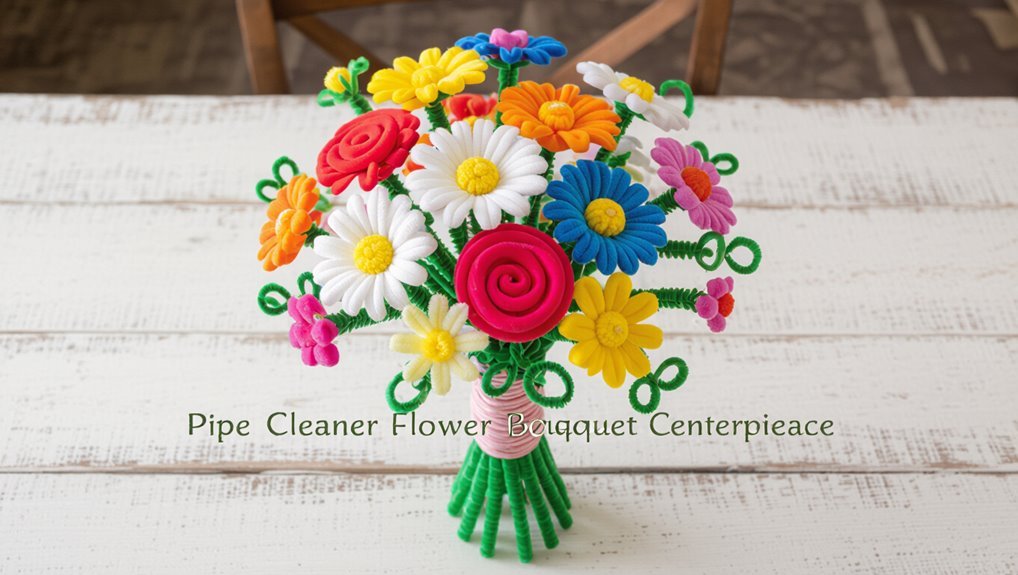
Project ideas include geometric mobiles, detailed flower bouquets with layered petals, and customizable bookmarks with integrated charms. Encourage planning sketches, color schemes, and mixed‑media accents like felt or sequins to elevate outcomes.
Emphasize patience, tool safety with pliers, and iterative problem‑solving to build confidence and foster independent creativity through progressively complex builds.
Quick Home Decor With Pipe Cleaners (Vases, Garlands, Accents)
With bright colors and a few simple twists, pipe cleaners transform everyday spaces into charming, budget‑friendly accents.
The piece outlines quick vase wraps, whimsical garlands, tiny succulent toppers, napkin ring accents, and framed wall art made solely from pipe cleaners.
Each idea requires minimal tools, folds easily for beginners, and refreshes rooms without commitment.
The tone remains practical and inspiring, highlighting speed and low cost.
Care tips mention gentle shaping and occasional dusting.
Aimed at casual decorators, these projects enable seasonal swaps and playful pops of color that lift mood and personalize corners instantly.
- Cozy warmth
- Playful surprise
- Simple pride
- Effortless refresh
- Cheerful charm
Combine Pipe Cleaners With Beads, Felt, and Wire
Combining pipe cleaners with beads, felt, and wire expands both texture and durability in simple crafts.
Examples include beaded pipe cleaner flowers for color and weight, felt-wrapped animal shapes for soft, finished surfaces, and wire-stiffened hanging ornaments for sturdiness and shape retention.
Each technique pairs a primary material with pipe cleaners to achieve distinct aesthetic and functional results.
Beaded Pipe Cleaner Flowers
Using simple materials—pipe cleaners, beads, felt, and a length of floral wire—this technique produces delicate, customizable flowers that balance structure with soft detail.
The maker threads beads onto pipe cleaner petals, secures a felt-covered center, and wraps floral wire as a stem, allowing varied shapes and sizes.
Finished blooms form lightweight bouquets, accents for wreaths, or standalone gifts.
Color choices and bead textures change mood instantly.
Durable yet flexible, these flowers withstand handling while retaining charm.
Ideal for children with supervision or adults seeking a quick craft, they combine tactile pleasure with decorative versatility.
- Joyful bursts of color
- Gentle, handcrafted warmth
- Playful tactile engagement
- Nostalgic homemade charm
- Simple, enduring beauty
Felt-Wrapped Animal Shapes
Crafted around a simple armature of pipe cleaners and floral wire, felt-wrapped animal shapes pair pliable structure with soft surfaces to create durable, tactile figures.
Small loops and twists form skeletons for bodies, legs, and tails; beads serve as eyes or decorative accents. Felt panels are cut to fit, glued or whip-stitched around frames, hiding joins and adding color.
Variations include curled tails, layered manes, and bead-studded collars. Projects suit children with supervision and crafters seeking quick gifts or shelf décor.
Tools required are scissors, fabric glue, needle and thread, and optional pliers for reinforcing wire connections.
Wire-Stiffened Hanging Ornaments
In a blend of pipe cleaners, thin floral wire, beads, and felt, wire-stiffened hanging ornaments achieve a lightweight yet sturdy form suitable for mobiles, tree decorations, or window hangings. The wire core provides shape and resilience while pipe cleaners add color and texture; beads punctuate light, and felt softens edges.
Construction is accessible: shape wire, wrap with pipe cleaners, embellish with beads, and add felt accents. Finished pieces sway with gentle motion, catching light and memory. These ornaments suit group projects, seasonal themes, or lasting keepsakes that balance craft simplicity with decorative impact.
- Warmth of handmade tradition
- Joy in tactile creation
- Nostalgia evoked by simple shapes
- Calm from soft, swaying movement
- Pride in gifting a personal token
Make Decor Last: Color, Texture & Durability Tips
Many simple choices determine how long pipe cleaner decorations will retain their color, texture, and shape.
Selecting high-quality, fade-resistant chenille reduces color loss; darker hues often show wear less.
Compact, tightly wrapped constructions resist distortion; reinforce stress points with extra wire cores rather than excessive bending.
For texture, combine different pile directions and gentle steaming to reset fuzz without crushing fibers.
Avoid prolonged sunlight exposure and high humidity when displaying; choose indoor locations with stable temperature.
Light varnish sprays can protect surfaces but test sparingly to prevent stiffness.
Regular gentle dusting preserves appearance without altering form.
Common Problems, Fixes, Where to Buy, and Storage Tips
Having covered ways to preserve color, texture, and shape, attention turns to common problems that arise with pipe cleaner projects and practical solutions, plus where to source materials and how to store finished pieces.
Fragile joins can be reinforced with glue or wire twist; faded fibers benefit from gentle dye touch-ups; rusting cores require dry, indoor display.
Buy varied colors and gauges at craft stores, online marketplaces, and dollar shops.
Store sorted by color and size in sealed bins or clear tubes, wrapped in acid-free paper for keepsakes.
- Joy when a repair restores a beloved piece
- Relief finding trusted suppliers
- Calm in ordered storage
- Pride from lasting creations
- Nostalgia preserved for years
Conclusion
Pipe cleaner crafting proves as accessible and versatile as a pocketful of bright confetti, ready to transform simple materials into playful art and home accents. Readers learn basic shapes, quick kids’ projects, and tasteful decor ideas while discovering how to combine beads, felt, and wire for stronger results. Practical tips on color, texture, durability, sourcing, and storage help preserve creations, encouraging continued exploration and confident experimentation with this cheerful, low‑cost medium.