When Were Lead Pipes Banned? Timeline & Health Risk Facts
Lead pipes were gradually banned over the course of the 20th century, with many countries phasing out new lead plumbing and solder by the late 1900s. In the U.S., federal regulations tightened through the Safe Drinking Water Act and the 1991 Lead and Copper Rule, with full removal of legacy service lines continuing into the 2000s and 2010s. The following paragraph will detail timelines, health risks, testing, and replacement options.
Were Lead Pipes Banned? Quick Answer
Were lead pipes banned? The answer is mixed: some jurisdictions forbid new lead piping, but thorough, historic bans are rare.
Regulators progressively restricted use during the 20th century; many nations outlawed lead in plumbing fittings and solder by late 20th–early 21st centuries.
Existing lead service lines often remained in place, subject to replacement programs and disclosure rules rather than immediate prohibition.
Policy varied by country, state, and municipality, creating a patchwork of requirements and timelines.
Consequently, while new lead installation became broadly prohibited over decades, complete removal of legacy pipes has been gradual and uneven.
Why Homeowners and Renters Should Care
Many homeowners and renters face a tangible health and financial risk from lead service lines and plumbing: lead-contaminated water can cause long-term developmental, neurological, and cardiovascular harm, while replacing pipes can be costly and fall unequally on occupants or property owners.
Concern is practical: occupancy affects exposure duration, vulnerable residents (children, pregnant people, elderly) face greater harm, and medical or educational costs may follow.
Financial impacts include property value, insurance, and unexpected replacement bills.
Awareness enables informed questions to landlords, buyers, and contractors; prioritizing testing, corrosion control, and budgeting reduces risk and guides equitable decision-making.
Could Your Home Have Lead Pipes?
How likely is it that a given house contains lead pipes? Age, construction era, and plumbing upgrades determine risk. Homes built before the 1950s have higher probability; many built through the 1980s may still include lead solder or fixtures. Visual checks at exposed service lines, basement pipes, and interior joints provide clues, but only testing confirms presence. Owners should review renovation records and utility maps and consider certified water testing. Replacement history and municipal notices also matter.
- Older neighborhoods correlate with higher risk
- Renovations reduce but do not eliminate uncertainty
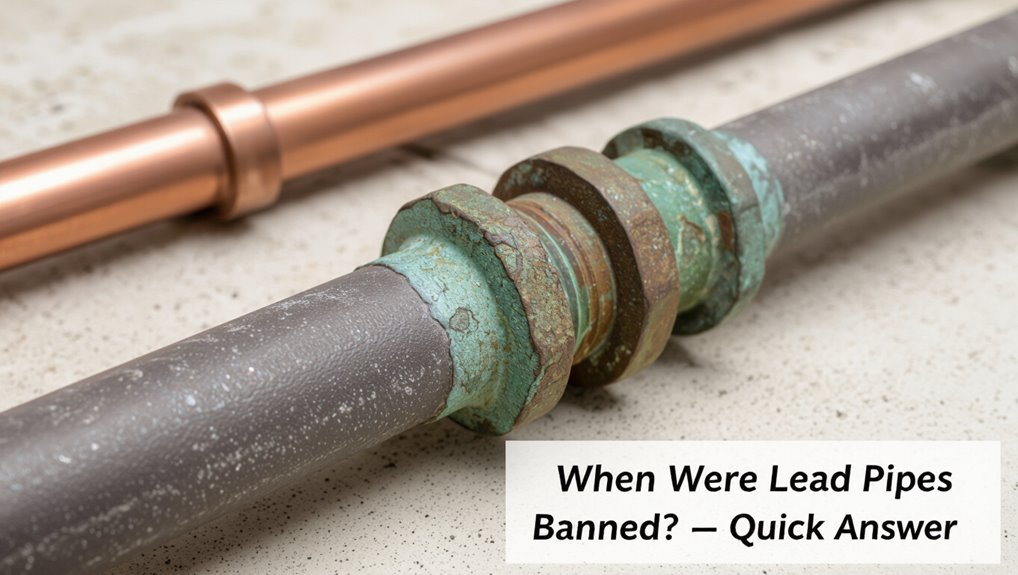
- Visible dull gray pipes may indicate lead
- Testing is definitive
Where Lead Service Lines Are Most Likely to Remain
Lead service lines are most likely to remain in older urban neighborhoods where water infrastructure has seen less recent investment.
Properties built before the 1950s often still have original plumbing materials, increasing the chance of lead.
Proximity to former industrial sites can also correlate with older water mains and service connections that were never updated.
Older Urban Neighborhoods
In older urban neighborhoods, aging infrastructure and incremental development patterns have left a higher concentration of lead service lines compared with newer areas. Residents, utilities, and regulators face concentrated replacement needs, budget constraints, and logistical challenges tied to dense streetscapes.
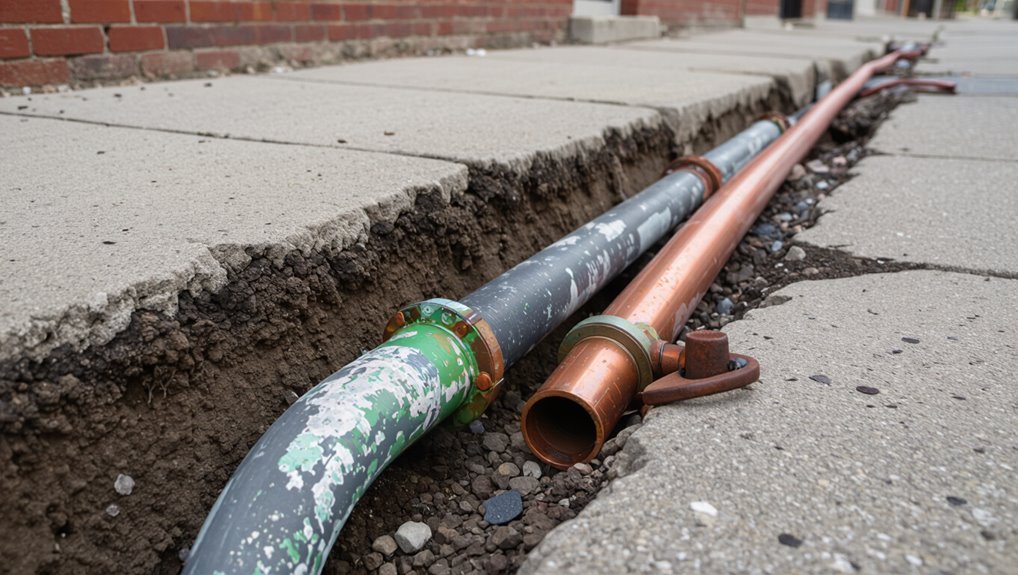
Legacy plumbing often remains beneath sidewalks and within narrow lots, complicating access and coordination. Community awareness varies, so exposure risk can persist despite broader bans.
Prioritization strategies typically target high-risk zones, equitable funding, and coordinated outreach to minimize disruption and reduce corrosion-related contamination while planning phased replacements that align with street work and utility upgrades.
- Dense housing increases replacement complexity and cost
- Public works schedules enable coordinated replacements
- Equity-focused programs prioritize vulnerable blocks
- Communication challenges affect resident participation
Properties Built Pre-1950s
Properties-built-before-1950 often retain original plumbing materials, including service lines and interior pipes made from lead or lead-containing alloys, which raises the probability of ongoing exposure in these dwellings.
Aging infrastructure, decades of mineral buildup and corrosion increase lead release into water, especially where protective scale is disturbed.
Many such properties have undergone partial renovations that replaced fixtures but left service lines intact.
Owners and tenants frequently lack documentation of pipe materials, complicating risk assessment.
Targeted inspection, simple testing of tap water, and prioritizing full service-line replacement where lead is confirmed yield the most effective reduction in exposure.
Near Former Industrial Sites
Many older neighborhoods near former industrial sites share the same plumbing age and vulnerabilities noted earlier, but the likelihood that service lines remain made of lead rises where past industrial activity shaped development and maintenance patterns.
Industrial corridors often hosted dense worker housing, aging water mains, and ad hoc repairs that left lead service lines in place. Soil contamination and demolition cycles complicate replacement priorities, while municipal focus on economic redevelopment can delay utility upgrades. Residents in these zones face higher exposure risk and may lack resources for private line replacement.
- Dense worker housing built quickly with cheap materials
- Episodic municipal investment tied to industry fortunes
- Complex liability around contaminated parcels
- Higher probability of aging mains and private leads
How to Check Your Property for Lead Plumbing
A property owner can begin by identifying visible pipe materials at the curb, in basements, and under sinks to spot possible lead plumbing.
They should inspect inside water fixtures and fittings for dull, soft metal or stamped markings that indicate lead or lead solder.
If uncertainty remains, a certified test of the tap water will confirm the presence and level of lead.
Identify Visible Pipe Materials
Homeowners and inspectors should begin by visually tracing exposed plumbing from the water meter, through the yard, and into the building to spot pipe material differences and joints that indicate lead.
Visual cues include dull gray color, soft surface with scraped shiny core, and rounded fittings or soldered seams typical of older lead piping.
Distinguish by feel and appearance from copper, PVC, galvanized steel, and brass.
Note corrosion, pitting, or white buildup that signals deterioration.
Record locations and take clear photos for professionals.
- Dull gray, soft when scratched
- Rounded joints and soldered seams
- Corrosion, pitting, white buildup
- Contrast with copper, PVC, galvanized
Inspect Inside Water Fixtures
After identifying exterior and service-line pipe materials, attention should move indoors to fixtures and fittings where lead is most likely to affect drinking water. Inspect visible faucets, shut-off valves, supply lines and older solder joints for markings such as “lead,” “LF,” or manufacturer dates pre-1986.
Remove aerators to check for corrosion or sediment buildup and examine inside cabinets and beneath sinks for discolored pipes or brass components. Note that many older brass alloys contain lead even if plated.
Document locations and photos, then prioritize replacements of suspect fixtures and fittings with certified lead-free components, keeping records for contractors.
Test Water For Lead
Testing tap water provides definitive evidence of whether plumbing is contributing lead into a household supply. A professional or certified laboratory can perform EPA-approved analyses; homeowners may use accurate home test kits as an initial screen. Samples should be first-draw (after stagnation) and flushed samples to distinguish service line sources. Interpret results against the EPA action level (15 ppb) and local guidelines; any detectable lead warrants steps to reduce exposure and contact authorities for guidance.
- Collect first-draw and flushed samples for comparison.
- Use EPA-certified labs for confirmatory testing.
- Keep records of sample dates and locations.
- Follow local reporting and remediation protocols.
Home Water Tests and Lab Testing Options
When determining whether a household plumbing system contains lead, a range of home test kits and certified laboratory analyses are available to provide reliable results; consumers should understand the differences in accuracy, sample types, cost, and turnaround time before choosing a method. Home kits offer quick screening using colorimetric strips or swabs; labs provide precise quantification via ICP-MS or AAS on first-draw or flushed samples. Certified labs follow EPA methods and report parts per billion. Selection depends on desired certainty, budget, and whether results will support remediation or regulatory action.
| Option | Typical features |
|---|---|
| Home test strips | Rapid, low-cost |
| Swab kits | Surface detection |
| Mail-in labs | Higher accuracy |
| Local certified lab | Regulatory-grade |
| EPA methods | Standardized reporting |
Blood Testing and Health Screening for Lead
Health authorities recommend targeted blood testing for young children, pregnant people, and others with elevated exposure risk from old plumbing.
Results should be reported as blood lead concentration with clear reference ranges and follow-up actions for elevated levels.
Clinicians and public health agencies are responsible for interpreting values in context of age, symptoms, and exposure history to guide treatment and prevention.
Who Should Be Tested
For communities and clinicians determining who should undergo blood testing for lead exposure, priority is given to groups at highest risk of harm or exposure. Infants, young children, pregnant people, and those living in older housing, near industrial sites, or using private wells warrant screening.
Testing may follow known contamination events, identified elevated water lead levels, or behavioral concerns like pica. Clinicians use exposure history and local prevalence to decide timing and frequency. Public health programs target vulnerable neighborhoods and offer outreach. Coordination with environmental investigation guides further testing and prevention measures.
- Young children and infants
- Pregnant people
- Residents of older housing or with lead service lines
- People using private wells
Interpreting Test Results
After identifying who should be tested, interpreting blood lead results requires comparing measured levels to age-specific reference values and considering timing of exposure.
Clinicians evaluate venous samples primarily; capillary results need confirmatory venous tests if elevated.
For children, any value above the CDC reference percentile prompts public health action; for adults, occupational and reproductive thresholds guide intervention.
Trends across serial tests distinguish recent versus past exposure.
Additional assessment includes symptoms, iron status, pregnancy, and potential exposure sources such as older housing or plumbing.
Management ranges from environmental remediation and education to chelation for markedly elevated levels under medical guidelines.
Immediate Steps to Reduce Lead in Drinking Water
In the weeks following a lead pipes ban, municipalities should prioritize immediate, low-cost actions to reduce lead exposure in drinking water. Officials inspect service connections, inventory probable lead materials, and notify residents about risks and simple precautions.
Priority is given to vulnerable facilities like schools and healthcare centers while procurement of replacement parts begins.
- Conduct targeted inspections and create a prioritized replacement schedule.
- Issue clear consumer advisories and multilingual outreach.
- Provide point-of-use testing kits and coordinate sample collection.
- Coordinate funding applications and partner with regional utilities for shared resources.
Short-Term Fixes: Flushing, Filters, and Which Filters to Trust
To reduce short-term exposure while lead service lines are removed, residents are advised to flush tap water by running cold water for several minutes before use.
Point-of-use filters certified for lead removal provide an additional safeguard, but effectiveness depends on selecting the right certification.
Regular maintenance and timely cartridge replacement are essential to keep filters working as designed.
Flush Tap Water First
When morning routines begin, homeowners should run cold tap water for several minutes before use to flush out standing water that may have leached lead from service lines or household plumbing.
This simple step reduces immediate exposure by replacing stagnant water with fresher supply from the main.
Emphasis is on cold water only, since hot water dissolves lead more readily.
Consistent flushing before drinking, cooking, or preparing infant formula lowers short-term risk while longer-term solutions are pursued.
Record flushing times and note any discoloration or metallic taste; these observations help determine whether further investigation or remediation is needed.
- Run cold water 2–5 minutes after inactivity
- Flush low-use taps longer
- Avoid hot-water use for consumption
- Monitor taste, color, and frequency
Use Certified Filters
For immediate protection while longer-term pipe replacement is arranged, certified point-of-use filters offer a practical barrier against lead at the tap. Certified models meeting NSF/ANSI Standard 53 or 58 reduce lead when used per manufacturer instructions. Selection should match the fixture and flow needs; pitchers, faucet-mounted units, and under-sink cartridges vary in capacity and maintenance. Certification labels and performance data sheets indicate tested reduction levels.
Users should run water briefly, install correctly, and avoid relying on untested or improvised devices. Filters provide short-term risk reduction but are interim measures until thorough plumbing replacement occurs.
Maintain And Replace Filters
Following short-term use of certified filters, regular maintenance and timely replacement keep those devices effective at reducing lead exposure.
The article notes filter lifespan varies by model and water quality; manufacturers’ schedules and flow reductions signal replacement.
Users should record installation dates, follow NSF/ANSI certification guidelines, and store replacements on hand.
Filters do not remove dissolved lead permanently from plumbing; they protect at point-of-use only.
Proper disposal and avoiding DIY alterations preserve performance.
Regular testing of water confirms efficacy and indicates when broader plumbing remediation is necessary.
- Track installation and replacement dates
- Follow NSF/ANSI guidelines strictly
- Monitor flow rate and taste changes
- Test water periodically
Long-Term Solutions: Replacing Service Lines and Plumbing
In addressing lead contamination at its source, replacing service lines and interior plumbing offers the most durable remedy: full removal of lead-bearing pipes eliminates the persistent risk of leaching and renders short-term treatments unnecessary.
Municipal programs prioritize phased replacement of public and private segments, guided by inventorying materials, risk assessment, and priority for vulnerable buildings.
Proper replacement uses approved materials and licensed contractors to prevent cross-contamination and maintain pressure and flow. Post-replacement flushing and testing confirm success.
Complementary infrastructure upgrades—valve, meter, and connector replacements—ensure system integrity. Long-term monitoring and recordkeeping document progress and support public transparency.
Who Pays for Lead Pipe Replacement and How to Find Help
Responsibility for replacing lead service lines typically falls to a mix of water utilities, property owners, and government programs, depending on local rules and ownership of the line.
Financial assistance may come from federal and state grants, low-interest loans, or utility-sponsored subsidy programs that reduce or cover homeowner costs.
The following section outlines who is likely to pay and how property owners can locate available funding and support.
Who Covers Replacement Costs
Many jurisdictions split the cost of replacing lead service lines among property owners, water utilities, and government programs, with exact shares depending on local laws and funding availability. Responsibility often reflects ownership: utilities usually replace the public portion; property owners handle private pipes unless ordinances shift liability.
Grants, low-interest loans, and emergency funds can reduce homeowner burden where governments intervene. Contracts and timelines are governed by municipal rules; some programs require proof of lead presence. Clear communication between utilities and property owners prevents disputes and unsafe interim practices while phased replacement plans prioritize high-risk areas.
- Ownership determines primary payment responsibility
- Utility programs may subsidize private replacements
- Local ordinances can reassign financial obligations
- Documentation and permits affect eligibility
Finding Financial Assistance
For homeowners and landlords facing lead service line replacement, identifying available financial assistance begins with understanding program types and eligibility criteria: grants, rebates, utility subsidies, low-interest loans, and targeted government funds each have different application processes, income or property requirements, and timelines.
Municipal water utilities often maintain replacement programs or cost-share arrangements; contact them first.
State environmental agencies publish funding opportunities and maps of known lead service lines.
Nonprofits and community organizations can help with applications and temporary remediation like filters.
Consult federal resources (EPA, HUD), local health departments, and licensed contractors for documentation required to secure aid.
Certification and Standards for Lead-Free Plumbing Parts
In regulating lead-free plumbing parts, certification and standardized testing establish the technical baseline manufacturers must meet to guarantee products do not introduce hazardous lead into potable water. Agencies and independent labs evaluate materials, solder, and component designs against numeric lead limits, durability, and leaching under simulated use. Compliance requires documented factory controls, traceability, and periodic retesting. Certified items carry marks from recognized programs, aiding regulators, builders, and consumers in selecting safe plumbing. Harmonized standards reduce market confusion and encourage innovation in low-lead alloys and polymers.
- Performance testing assures real-world safety
- Traceability links product to batch controls
- Third-party marks signal verified compliance
- Periodic retest prevents standard drift
U.S. Federal Bans and Key Milestones by Year
A chronological overview of U.S. federal bans and regulatory milestones outlines how national policy progressively restricted lead in plumbing and potable-water systems, pinpointing statute enactments, agency rules, and court decisions that shifted technical limits and compliance obligations.
Key milestones include the 1920s–1930s recognition of lead hazards, the 1970s Safe Drinking Water Act establishing federal authority, the 1986 Safe Drinking Water Act Amendments reducing permissible lead levels, the 1988 Lead Contamination Control Act targeting schools, the 1991 EPA Lead and Copper Rule setting monitoring and action levels, and the 2011 and 2021 revisions strengthening definitions, testing, and remediation timelines.
State-Level Policies and Important Exceptions (Examples)
Among states, policies governing lead service line replacement and plumbing materials vary widely, reflecting different statutory definitions of “lead-free,” funding priorities, timelines for removal, and exemptions for legacy systems.
States adopt phased replacement schedules, grant programs, or strict bans; some allow partial replacements when full access is impractical.
Exceptions often address historical buildings, private property ownership, and limited-budget utilities.
Legal definitions affect permissible solder and brass alloys.
- Some states fund full public-side replacements but leave private-side responsibility to homeowners.
- Historical-preservation rules can delay or modify replacement methods.
- Utilities may qualify for waivers under engineering constraints.
- Income-based assistance programs vary by state.
Europe: Major National Bans and Timelines
Policies in Europe show a different pattern from U.S. state-level approaches, with several countries adopting nationwide bans or statutory limits on lead in plumbing and setting clear timelines for removal of existing service lines. National laws phased out lead pipe installation mid-20th century in many places; later EU directives tightened allowable lead content and prompted replacement programs. Funding, priority for schools and hospitals, and target dates vary, with some countries mandating removal by 2030s. Coordination between national and local utilities accelerated replacements and monitoring for residual contamination.
| Country | Target/Action |
|---|---|
| UK | Ban, phased removal |
| Germany | Limits, subsidies |
| France | Schools prioritized |
| Sweden | Early ban, monitoring |
Canada, Australia, and Other Country Timelines
While timelines vary by province and state, Canada and Australia have moved from mid-20th-century installation bans toward coordinated replacement programs and stricter standards.
National guidelines, funding incentives, and provincial regulations accelerate removal of remaining service lines.
Other countries—New Zealand, Japan, and parts of Latin America—show staggered responses, combining utility mandates and public-health advisories.
Emphasis shifted from bans alone to testing, replacement, and corrosion control.
Equity concerns drive prioritization of vulnerable communities.
International cooperation shares best practices and technical standards for pipe materials, water chemistry, and monitoring to reduce lead exposure exhaustively.
- Funding-led replacement programs
- Corrosion control measures
- Targeted testing in at-risk areas
- Policy harmonization and guidance
Early History: Romans to the 19th Century
The use of lead for water conveyance dates back to antiquity, when Roman engineers favored lead pipes and fittings for their malleability and ease of joining, despite occasional contemporary warnings about health risks.
Throughout medieval and early modern Europe, lead persisted in cisterns, plumbing, and decorative vessels because it was affordable and workable.
Gradual empirical observations linked lead to illness, prompting some medical critiques and local restrictions by the 18th and early 19th centuries.
Industrialization increased production and use of leadware, even as scientific studies began to document chronic poisoning, setting the stage for later regulatory debate.
20th-Century Persistence: Why Lead Stayed in Modern Systems
Although awareness of lead’s health risks grew by the 19th century, its use persisted into the 20th-century water infrastructure because economic, technical, and institutional factors favored continuity. Municipalities relied on existing supply chains, skilled labor, and cheap material costs; engineers prioritized durability and malleability; regulations lagged behind emerging science; and public demand seldom pressured immediate change.
Transition obstacles included retrofit complexity, disruption to service, and limited alternatives early on. The result was gradual phase-out rather than abrupt ban, shaped by competing priorities and uneven risk perception.
- Entrenched industry practices slowed decision-making
- Cost-benefit calculations favored retention
- Technical familiarity reduced incentive to switch
- Fragmented regulation delayed coordinated action
How Replacement Policies and Funding Shaped Actual Pipe Removal
Replacement policies and funding mechanisms determined whether declarations about lead pipe removal translated into actual replacements or remained largely rhetorical.
Municipalities with clear mandates, timelines, and cost-sharing rules accelerated removal, prioritizing high-risk areas and coordinating utility, homeowner, and contractor roles. Conversely, vague policies, limited grants, and reliance on voluntary homeowner action slowed progress.
Funding sources — federal grants, low-interest loans, or ratepayer surcharges — shaped scope and equity: robust public investment enabled thorough programs, while piecemeal financing left pockets of exposure.
Administrative capacity and transparent tracking proved decisive in converting policy intent into measured reductions in lead service lines.
Common Myths About Lead Pipes : What’s True and What’s Not
How common are misconceptions about lead pipes, and which ones matter most? Many assumptions persist, distorting risk perception and policy support. Distinguishing fact from myth helps prioritize testing, replacement, and public education.
Common errors include beliefs that only very old homes have lead, that filters always solve the problem, that visible corrosion equals lead, or that brief exposure is harmless. Clarifying these points guides effective action and reduces complacency.
Key corrective notes:
- Age alone doesn’t guarantee lead; service material and fixtures matter.
- Certified filters reduce lead when used correctly and maintained.
- Corrosion isn’t a reliable indicator.
- Any exposure can be harmful, especially for children.
Conclusion
Although many countries restricted lead in plumbing during the 20th century, removal has been uneven: in the United States, an estimated 9.3 million lead service lines may still exist. That stark statistic underscores persistent exposure risks despite bans and regulations. Homeowners, renters, and policymakers alike must recognize that legal prohibition did not instantly eliminate lead plumbing; targeted inspection, funding for full service-line replacement, and public awareness remain essential to protect health.