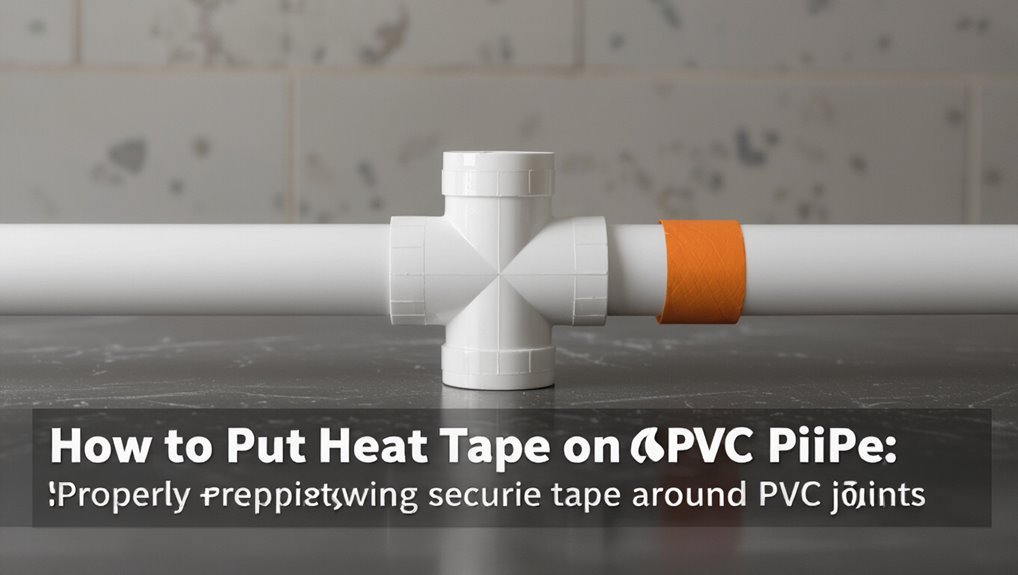
How to Put Heat Tape on PVC Pipe Safely €” Step-By-Step Guide
To safely put heat tape on PVC pipe, follow these steps: use PVC-rated, low-temperature or self-regulating heat tape that’s suitable for direct contact with plastic and matches the pipe diameter. Begin by cleaning and inspecting the PVC, replacing any damaged sections. Unroll the tape in straight or spiral runs without overlapping, and secure it according to the manufacturer’s instructions. Ensure the power is routed to a GFCI-protected supply, and check for thermostatic control or self-regulation. Conduct a warm-up test with a thermometer, and finally, insulate the tape with a compatible wrap. For further details and checks, consult a professional if needed.
Can You Safely Use Heat Tape on PVC? Short Answer & Limits
Generally, yes — heat tape can be used on PVC, but only with caution and within certain limits.
The writer notes that PVC’s maximum service temperature and susceptibility to softening require selecting low‑temperature, PVC‑compatible heat tape and following manufacturer guidance.
Direct contact with high‑output tape or overlapping runs risks deformation.
Insulation choice affects heat retention and surface temperature.
Electrical safety, secure fastening without compressing tape, and avoiding damaged or frayed sections are essential.
When uncertainty exists, consult product documentation or a qualified professional.
This concise assessment emphasizes limitations rather than procedures or specific ratings reserved for the next section.
When Heat Tape Is Appropriate for PVC: Ratings, Temps, and Code
Having established that only low‑temperature, PVC‑compatible heat tape and careful installation practices make heating PVC feasible, the next consideration is when its use meets technical and regulatory requirements.
Selection requires heat tape listed for direct contact with plastic and labeled for the pipe diameter and expected ambient temperature. Maximum surface temperatures should remain below PVC softening thresholds (typically under about 140°F/60°C), with thermostatic control or self-regulating designs recommended.
Installations in occupied, accessible spaces must follow local plumbing and electrical codes and manufacturer instructions; permits or inspections may be required.
When in doubt, consult code officials or a licensed plumber or electrician.
Required Tools & Materials for Heat Tape on PVC (What to Buy)
For a safe, code‑compliant PVC heat‑tape installation, assemble only the specific materials and tools that match the chosen heat tape’s rating and the site conditions: PVC‑rated, low‑temperature or self‑regulating heat tape sized for the pipe diameter; a thermostat or built‑in temperature control if not integral; a listed GFCI‑protected power supply and appropriate outdoor‑rated cords or junction boxes; insulation compatible with PVC (closed‑cell foam or insulation wrap rated for use over heat tape); corrosion‑resistant fasteners or approved tape for securing the heater; a thermometer or infrared gun to verify surface temperatures; electrical testing tools (voltage tester, continuity tester); and basic hand tools (wire strippers, screwdriver, utility knife, measuring tape) plus personal protective equipment such as gloves and safety glasses.
How to Prepare PVC Pipe for Heat Tape Installation
Before applying heat tape, the PVC pipe and surrounding area must be thoroughly inspected and prepared to guarantee a safe, durable installation. The pipe should be clean, dry, and free of oils, loose paint, or corrosion. Remove insulation and fittings that block access. Check for cracks, leaks, or soft spots; replace damaged sections. Confirm electrical source is accessible and ground-fault protection is planned. Measure pipe length and record positions of joints, valves, and supports. Verify ambient temperatures and exposure to moisture. Use compatible PVC cleaners and allow full drying before attaching heat tape.
| Task | Tool | Purpose |
|---|---|---|
| Clean | Solvent wipe | Remove contaminants |
| Inspect | Visual/feel | Find damage |
| Measure | Tape measure | Determine length |
| Prepare power | Outlet/GFCI | Confirm safety |
How to Wrap, Wire, Test, and Insulate Heat Tape : Step by Step
Several clear steps guide wrapping, wiring, testing, and insulating heat tape to guarantee safe, effective freeze protection for PVC pipe.
First, unroll tape along pipe, wrap in straight, snug parallel runs or spiral per manufacturer, avoiding overlap. Secure every few inches with manufacturer-approved tape.
Next, route power lead to a GFCI outlet; follow local code for grounding and conduit if required.
Before finalizing, power on and verify warm-up with a non-contact thermometer or manufacturer test method.
Finally, insulate with appropriate pipe insulation or foam, ensuring vents for thermostat sensors and labeling the line for future service.
Common Problems, Safety Checks, and When to Call a Pro
The section covers routine inspections for physical damage to heat tape and PVC, highlighting signs that compromise performance.
It also outlines key steps to prevent overheating, such as correct spacing, thermostat settings, and using appropriate insulation.
Guidance is provided on warning signs that warrant contacting a licensed electrician or plumber.
Inspect For Damage
Because heat tape can mask underlying deterioration, a careful inspection of PVC pipe and fittings is essential before installation.
The inspector should look for cracks, hairline fractures, soft spots, and signs of past freezing.
Joints and glue seams warrant close attention; any movement or gaps indicate repair or replacement.
Surface contamination like oil or dirt must be cleaned.
If structural damage, deep gouges, or nearby electrical hazards are found, installation should pause and a qualified professional consulted.
- hairline cracks visible along length
- loose or leaking joints
- soft or deformed sections
- evidence of chemical exposure
Prevent Overheating Risks
One key risk when applying heat tape to PVC is localized overheating, which can soften or melt the pipe and compromise joints.
Users should choose heat tape rated for PVC, avoid overlapping tape, and follow manufacturer power and spacing guidelines.
Install a thermostat or self-regulating tape to limit temperature.
Routinely check for discoloration, soft spots, or brittle fittings; test tape operation before freezing weather.
Make certain electrical connections remain dry and protected.
If irregular warm spots, persistent softening, or burn smells appear, stop use and consult a qualified technician to evaluate wiring, tape selection, and pipe condition.
Know When To Call
When should a homeowner stop troubleshooting and call a professional? A homeowner should call a licensed electrician or plumber if heat tape malfunctions, wiring is damaged, or PVC shows signs of melting or cracking. Persistent tripping of breakers, burning smells, or visible charring require immediate expert attention.
- Repeated breaker trips after heat tape activation
- Burn, melt, or discoloration on pipe or insulation
- Exposed or frayed electrical connections at the tape ends
- Inability to verify proper thermostat or GFCI function
Professionals assess electrical load, replace faulty tape, and make certain installations meet code, preventing fire or pipe damage.
Conclusion
Heat tape can be used on PVC only with careful adherence to ratings and safety limits. Studies show thermal-wrap misuse causes roughly 40% of residential pipe-freeze failures, underscoring proper selection, prep, and insulation. When rated for PVC and installed per manufacturer guidelines—securely wrapped, properly wired, tested, and insulated—heat tape reliably prevents freezing. Regular inspections and adherence to local code reduce risk; consult a licensed pro for complex or high-risk installations.