Is Hydro Jetting Safe for Old Pipes? Expert Tips & Risks Explained
Hydro jetting can effectively clear heavy clogs in older plumbing systems, but it does carry risks for weakened pipes. The safety of hydro jetting on older pipes depends on factors such as the pipe material, wall thickness, previous repairs, and visible corrosion. To mitigate potential damage, professionals typically conduct camera inspections, pressure testing, and use conservative nozzle settings. Cast iron, clay, and severely corroded or patched pipes are particularly vulnerable, while PVC pipes generally tolerate hydro jetting better when they are in good condition. For further assessment, consider practical evaluation steps, pressure guidelines, and instances when pipe replacement may be the safer option.
Quick Answer: Is Hydro Jetting Safe for Old Pipes?
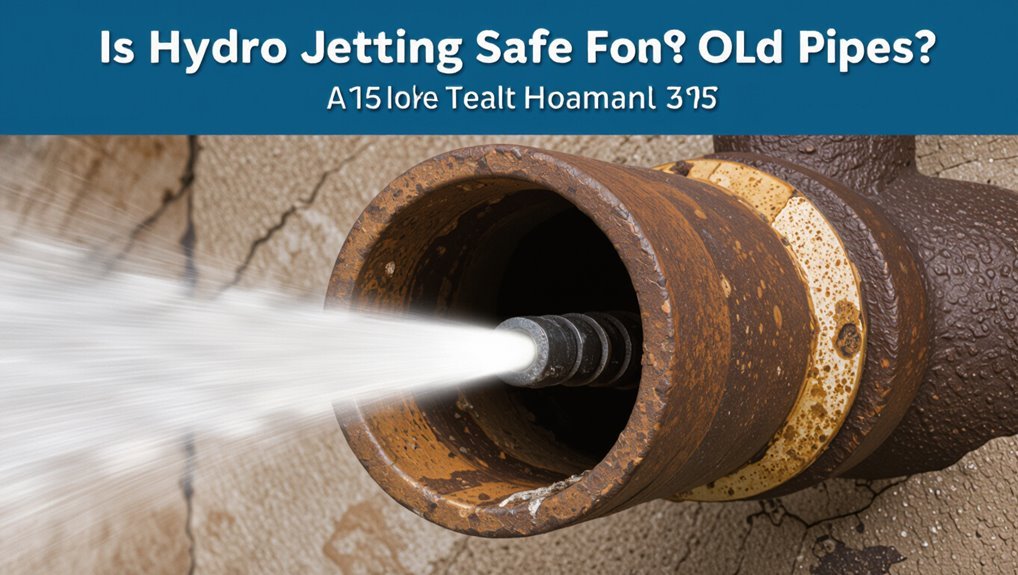
Can hydro jetting harm aging plumbing? The concise assessment: it can, but risk hinges on pipe condition, material, and past repairs.
Professionals evaluate corrosion, hairline cracks, and joint integrity before recommending high-pressure cleaning. Cast iron, clay, or severely deteriorated pipes face greater vulnerability; newer PVC and ABS tolerate the method better.
When technicians adjust pressure settings and use camera inspections, they mitigate potential damage. Homeowners benefit from documented pre-inspection and targeted, lower-pressure passes.
Ultimately, hydro jetting is a valuable tool when applied selectively after professional assessment; indiscriminate use increases the chance of harm.
How Hydro Jetting Works In Drains And Sewers
Hydro jetting cleans drains and sewers by directing a high-pressure stream of water through pipes to dislodge and flush away blockages and built-up deposits. The nozzle’s jets cut roots, grease, scale, and debris while the operator advances the hose; pressure and flow remove residue to the main line. Cameras often inspect before and after. Proper pressure selection and technique protect pipe integrity; fragile or corroded lines require assessment. Maintenance uses lower pressures; severe clogs need higher settings. Benefits include thorough cleaning and reduced repeat clogs, but risks arise if pipes are compromised or improper equipment is used.
| Component | Function |
|---|---|
| Nozzle | Focuses jets |
| Hose | Delivers water |
| Pump | Generates pressure |
| Camera | Inspects condition |
| Operator | Controls process |
Who This Guide Is For And What You’ll Learn
This guide targets homeowners, property managers, and plumbers facing persistent clogs or reduced flow in aging plumbing systems.
It explains how pipe age and material affect hydro jetting suitability and risk.
Readers will learn assessment criteria, expected outcomes, and basic safety and maintenance considerations.
Who This Guide Helps
For property owners, facility managers, and maintenance professionals responsible for aging plumbing systems, this guide explains when high-pressure water jetting is appropriate, what to expect during the process, and how to evaluate risks and costs.
It helps decision-makers assess suitability for different building types, occupancy levels, and service models.
Technicians and contractors gain concise guidance on pre-service inspections, protective measures, and documentation to support safe work.
Budget planners receive clear comparisons of short- and long-term costs versus alternatives.
Readers will learn indicators of successful cleaning, signs that further investigation or alternative methods are warranted, and practical steps for informed contracting.
Pipe Age Considerations
Many older piping systems—typically those installed more than 30 years ago—carry age-related vulnerabilities that directly affect the appropriateness and risks of high-pressure water jetting. Assessments should consider material, joint condition, and past repairs before choosing cleaning methods. Inspectors evaluate brittle cast iron, corroded galvanized steel, aging clay, and early PVC differently. The goal is to match cleaning force to pipe resilience, avoiding fractures or dislodged fittings. Owners of vintage plumbing benefit from targeted inspections and conservative pressure settings. Decisions rest on documented pipe age, visible deterioration, and professional judgment to minimize unintended damage.
| Pipe Type | Typical Concern |
|---|---|
| Cast iron | Corrosion, pitting |
| Galvanized | Internal buildup |
| Clay | Cracks at joints |
| Early PVC | Brittle sections |
What You’ll Learn
While considering pipe age and condition, the guide clarifies who benefits from hydro jetting information and which actionable topics are covered. Target readers include homeowners with aging systems, plumbers evaluating service options, property managers balancing maintenance costs, and DIYers weighing risks.
The guide summarizes safety thresholds, inspection steps, damage indicators, and decision criteria for choosing alternatives. It emphasizes practical checklists, timing recommendations, and signs that call for professional assessment.
Readers will leave with clear next steps tailored to pipe material and age, enabling confident, informed choices about cleaning methods and risk mitigation.
- Unease about damage
- Relief from clarity
- Confidence to decide
- Urgency to act
Can My Pipes Handle Hydro Jetting?
Evaluating whether a home’s pipes can withstand hydro jetting requires examining pipe material, age, condition, and previous repairs.
Older clay, cast iron, or brittle galvanized lines may be more vulnerable than modern PVC or copper; corroded, cracked, or tree-root-infested sections carry higher risk.
Continuous seams, joints, and prior patchwork influence stress tolerance.
A conservative approach favors lower pressure settings, targeted short-duration passes, and avoiding direct blasts at compromised fittings.
When major corrosion, significant hairline fractures, or unstable anchors exist, alternatives to jetting should be considered.
Decisions balance obstruction severity against potential for exacerbating existing damage.
How Plumbers Assess Pipe Condition Before Jetting
Before initiating hydro jetting, a plumber performs a visual pipe inspection to identify obvious damage, corrosion, and buildup.
They then evaluate material and age to determine susceptibility to high-pressure cleaning. If concerns arise, structural integrity tests such as camera inspections and pressure tests confirm whether jetting is safe.
Visual Pipe Inspection
Inspecting the pipeline visually is the essential first step technicians take to determine whether hydro jetting is appropriate. Technicians look for visible cracks, corrosion, sagging joints, root intrusion evidence, and significant deposits that suggest brittle or compromised sections. Lighting, mirrors, and borescopes reveal surface integrity; photos document concerns for owners. Visual cues guide whether further camera inspection or conservative cleaning is safer. Clear, objective notes help weigh benefits against risks and plan contingencies like spot repairs or lower pressures. Communication with the property owner follows, outlining observed hazards and recommended next steps.
- Shock at visible decay
- Relief at intact seams
- Urgency when roots appear
- Confidence after documentation
Material And Age
After documenting visible defects, technicians next determine the pipe material and approximate age to gauge tolerance for hydro jetting pressures. They note pipe type—cast iron, clay, PVC, copper—and estimate installation era from fittings and building records. Material informs allowable pressure and nozzle choice; age indicates embrittlement or corrosion risk. Decisions weigh replacement versus cleaning; older, fragile materials often prompt gentler methods. Documentation guides client discussion and job planning. Quick reference:
| Material | Typical Age Range | Jetting Suitability |
|---|---|---|
| Cast iron | 50–100+ yrs | Limited—use low pressure |
| Clay | 50–100+ yrs | Avoid high pressure |
| PVC/copper | 0–50 yrs | Generally suitable |
Structural Integrity Tests
Technicians perform a sequence of structural integrity tests to confirm that pipes can withstand hydro jetting pressures without failure. They visually inspect access points, use camera scopes to identify cracks or thinning walls, and measure material condition.
Pressure testing simulates jet forces at controlled levels, while dye or leak detection locates hidden breaches. Results guide decisions: proceed, reduce pressure, or opt for alternative methods. Reports note margins of safety and uncertain sections. Homeowners receive clear recommendations and risk estimates.
The aim is prevention of rupture, contamination, and costly emergency repairs, preserving system longevity and peace of mind.
- Visual inspection
- Camera scoping
- Pressure simulation
- Leak detection
Camera Inspection: What Plumbers Look For And Why It Matters
A camera threaded through old pipes reveals hidden problems that determine whether hydro jetting is appropriate, how aggressive the cleaning must be, and where repairs may be required.
Technicians inspect joint condition, cracks, corrosion, root intrusion, and mineral buildup patterns.
Video shows pipe alignment, sagging sections, and offsets that concentrate stress.
Observing debris type and attachment helps decide pressure settings and nozzle choice.
Documentation records problematic spots for targeted repairs or relining.
Clear footage reduces guesswork, prevents unnecessary damage, and informs cost estimates.
Ultimately, camera inspection guides safe, effective intervention and prioritizes repairs before recommending hydro jetting.
Signs Old Pipes Can Handle Hydro Jetting
Assessment of pipe material compatibility is the first indicator that hydro jetting may be appropriate, with cast iron, PVC, and certain modern alloys generally tolerating the process.
Technicians then evaluate structural pipe integrity—looking for cracks, corrosion, or sections weakened by mineral build-up that could fail under high-pressure flow.
A recent repair history showing well-executed patches or relining further supports suitability, whereas frequent or major past repairs caution against aggressive cleaning.
Pipe Material Compatibility
Often, older pipes can tolerate hydro jetting when their material and condition meet specific criteria indicating sufficient strength and integrity. Compatibility depends on pipe composition—cast iron and thick-walled copper resist jetting well; PVC and SDR plastics fare differently. Fragile materials like lead or thin-walled galvanized steel risk damage.
Professionals assess age, past repairs, and manufacturer ratings to confirm suitability. Correct nozzle selection and pressure tuning align technique to material limits, reducing fear of collapse. Clear communication manages homeowner expectations and safety concerns.
- Cast iron: reassuring durability and resilience
- Copper: dependable under moderate pressure
- PVC: cautiously acceptable with limits
- Galvanized/lead: alarming risk, often unsuitable
Structural Pipe Integrity
After confirming material compatibility and past repairs, attention turns to the pipe’s structural integrity to determine if hydro jetting is safe.
Visual inspections, camera scopes, and pressure tests reveal wall thickness, cracks, corrosion, joint condition, and offsets.
Pipes with uniform wall thickness, intact joints, and no active leakage generally tolerate controlled hydro jetting.
Hairline hairline surface corrosion or minor mineral buildup typically poses low risk when pressure settings are adjusted.
Severe pitting, longitudinal cracks, collapsed sections, or widespread joint separation indicate vulnerability; alternative methods are recommended.
A qualified technician should assess findings and document limits before proceeding with high-pressure cleaning.
Recent Repair History
Reviewing recent repair history helps determine whether old pipes can safely withstand hydro jetting. A concise record of patching, lining, or section replacements indicates resilience; frequent emergency fixes suggest vulnerability. Professional assessments after repairs, material upgrades, and documented leak recurrence rates inform risk. Warranty-backed work and camera inspection reports strengthen confidence. Conversely, multiple spot repairs, recurring seams failures, or undocumented fixes raise concern and recommend gentler cleaning methods.
- Recent durable repairs inspire cautious optimism.
- Recurrent fixes provoke anxiety about collapse.
- Professional documentation reassures decision-making.
- Unclear histories demand conservative approaches.
Red Flags That Mean Skip Hydro Jetting
When should hydro jetting be avoided? Signs indicating it should be skipped include visibly corroded, thin-walled, or fractured pipes identified via camera inspection.
Older clay, cast iron, or lead lines with multiple previous patches or frequent leaks are poor candidates.
Recent sewer line repairs, loose joints, or shifted connections increase rupture risk.
Sewer odors combined with soil erosion or sinkhole formation suggest unstable bedding.
If municipal codes, building history, or an experienced plumber note structural weakness, alternatives should be chosen.
Conservative, non‑abrasive methods and targeted repairs are preferred until integrity is verified.
Common Clog Problems That Require Jetting
Persistent grease and oil build-up can congeal inside old pipes, reducing flow and resisting standard snaking.
Invasive tree roots often penetrate joints and create dense blockages that require high-pressure removal.
Hard mineral and scale deposits accumulate over time, narrowing passages and necessitating abrasive jetting to restore full diameter.
Grease And Oil Build-Up
Accumulating grease and oil inside older sewer and drain lines gradually narrows the pipe interior, creating the dense, sticky deposits that resist traditional snaking. Grease builds in layers, trapping food particles and causing slow drains, foul odors, and recurring blockages. Hydro jetting can shear and flush these deposits, restoring flow when mechanical methods fail. However, brittle joints and corroded sections risk damage if pressure is mismatched. A qualified technician assesses pipe condition, adjusts pressure, and performs targeted cleaning to minimize harm. Timely intervention prevents progressive buildup and costly repairs.
- Frustration
- Relief
- Anxiety
- Confidence
Tree Root Intrusion
Tree roots exploit tiny cracks and loose joints in older sewer lines, penetrating the pipe interior and forming dense masses that restrict flow.
Technicians encounter tangled roots that anchor and widen breaches, causing recurring blockages and structural stress.
Hydro jetting can effectively slice and flush root intrusions when used with appropriate pressure settings and nozzle types, but operators must assess pipe material, depth of penetration, and nearby voids to avoid exacerbating fractures.
Complete eradication may require follow-up repairs or mechanical cutting and root treatment.
Regular inspections using cameras help determine whether jetting is suitable or if pipe replacement is the safer long-term solution.
Mineral And Scale Deposits
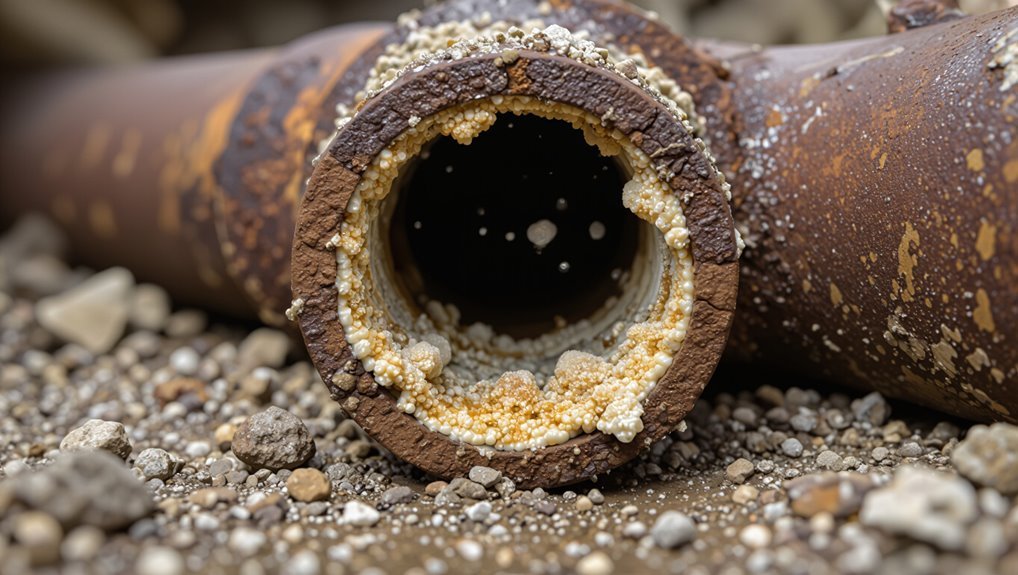
While hydro jetting can slice and flush root masses, older pipes often face another common obstruction: mineral and scale buildup. Calcium, magnesium, and iron deposits harden inside aged lines, narrowing flow and raising pressure. Hydro jetting removes entrenched scale, restoring capacity, yet aggressive pressure risks thinning fragile pipe walls. Technicians assess pipe material, thickness, and existing corrosion before choosing jet intensity. Post-cleaning, scale-prone systems often require water treatment or routine maintenance to prevent recurrence.
Emotional responses include relief at restored flow, concern over pipe integrity, and urgency to address water quality and future maintenance.
- Relief
- Concern
- Urgency
- Resolve
Typical Old-Pipe Materials And How They Respond To Pressure
When evaluating old plumbing, identifying the pipe material is the first step because different substrates—cast iron, galvanized steel, clay, and early plastics—react to hydro-jetting pressure in distinct ways.
Cast iron often tolerates high-pressure cleaning but may have hidden corrosion that weakens joints. Galvanized steel can be brittle where internal corrosion has thinned walls; aggressive jets risk dislodging flakes. Clay and terra-cotta are rigid and prone to cracking at stress points or offsets. Early PVC and ABS variants resist erosion but suffer from aged brittleness and solvent-weld deterioration. Accurate material assessment guides pressure selection, nozzle choice, and pre-inspection methods.
Risks Of Hydro Jetting For Cast Iron Pipes
In evaluating hydro-jetting for cast iron lines, the primary risk stems from hidden corrosion and weakened joints that can fail under high-pressure streams.
Cast iron may harbor thin, rusted sections and brittle connections; sudden force can crack pipes or separate fittings, causing leaks, collapses, and expensive emergency repairs.
Operators should assess wall thickness and joint integrity before proceeding and favor lower pressures or alternative methods when deterioration is evident.
- Sudden pipe fracture provoking costly disruption.
- Joint separation leading to concealed leaks.
- Mobilized rust accelerating internal damage.
- Unexpected collapse requiring full replacement.
Risks Of Hydro Jetting For Clay And Terra-Cotta Pipes
Clay and terra-cotta pipes present distinct vulnerabilities when subjected to high-pressure hydro jetting. The force can loosen or displace brittle joints, compromising alignment and sealing.
Additionally, the abrasive action of pressurized water and entrained grit can erode the inner walls, thinning the material and increasing the risk of future failure.
Fragile Joint Integrity
Exposed to repeated high-pressure streams, the mortar and interface between clay and terra-cotta pipe sections can loosen or crumble, undermining joint integrity. The risk concentrates where old seals and offset joints already show microfractures; hydro jetting can convert hidden weakness into leaks or separations. Inspection before cleaning is essential; video cameras and low-pressure testing help determine suitability. When joints are compromised, repair or sectional replacement is safer than aggressive cleaning.
Emotional consequences include service disruption, costly excavation, and loss of historic materials.
- Fear of sudden collapse
- Anxiety over repair bills
- Helplessness during failure
- Regret for irreversible damage
Abrasive Interior Erosion
Beyond compromised joints, another hazard lies along the pipe’s inner surface: abrasive interior erosion from repeated high-pressure streams.
Clay and terra-cotta rely on glazed or naturally smooth interiors that can be gradually worn by concentrated water jets. Microscopic particles, mineral deposits and grit act as abrasives, scouring thin layers and enlarging pores. Over time this reduces structural integrity, promotes leaks, and accelerates root intrusion and collapse.
Operators should assess pipe material and condition, use lower-pressure settings or alternative cleaning methods for vulnerable lines, and document pre- and post-inspection findings to justify or avoid hydro jetting in fragile systems.
Risks Of Hydro Jetting For PVC And ABS Pipes
When subjected to the high-pressure streams used in hydro jetting, PVC and ABS pipes face specific mechanical and joint-related risks that differ from those of metal or clay systems.
Brittle sections or UV-degraded runs can crack under sudden pressure spikes, and solvent-weld or push-fit joints may separate if exposed repeatedly.
Internal fittings and thin-wall drain lines are especially vulnerable.
Technicians should assess pipe age, visible damage, and previous repairs before choosing jetting.
- Fear of sudden pipe failure when pressure is misapplied.
- Frustration from hidden joint leaks revealed post-jetting.
- Anxiety over costly downstream replacements.
- Relief if pre-inspection prevents damage.
Risks Of Hydro Jetting For Galvanized Steel Pipes
While PVC and ABS carry risks tied to brittleness and joint failure, galvanized steel presents a different set of vulnerabilities under hydro jetting.
Centuries-old galvanization can be thin, pitted, or compromised by corrosion; high-pressure water can dislodge scale and expose weakened metal. Internal rust and sediment may break free, causing downstream blockages and damaging fixtures. Severe encrustation can mask hairline fractures that jetting aggravates, leading to leaks. Threaded fittings and soldered joints common in galvanized systems are also stress points.
Inspection and modest pressure settings, combined with camera assessment, reduce but do not eliminate these risks.
Risks Of Hydro Jetting For Lead And Other Obsolete Materials
Hydro jetting poses distinct hazards for pipes made of lead and other obsolete materials because their metallurgy and connections often cannot withstand high-pressure streams. Experts warn that jetting can dislodge corrosion, loosen soft solder joints, and release toxic particulates into water and air. Assessment and alternative cleaning methods are recommended.
Older fittings, flaking interiors, and unknown repairs increase risk; mitigation requires testing, containment, and careful pressure control. Homeowners and contractors should prioritize safety and regulatory compliance when obsolete materials are present.
- Fear: lead particle release endangers health.
- Anger: hidden repairs worsen outcomes.
- Anxiety: contamination risks linger.
- Resolve: test before jetting.
When Hydro Jetting Can Worsen Cracks Or Root Intrusion
After confirming the presence of lead or other fragile materials, attention must turn to structural vulnerabilities that high-pressure cleaning can aggravate.
Hydro jetting may force existing hairline cracks to expand, wash away mortar in clay joints, or pry apart offset seams in older cast iron. Roots already probing fractures can be dislodged or torn, causing deeper penetration and accelerated regrowth. Operators should rely on camera inspections to assess wall integrity before jetting and choose reduced pressure or mechanical removal when fractures or root intrusions are present. Misjudged pressure settings can convert repairable issues into costly collapses requiring excavation.
How Hair, Grease, And Scale Respond To Jets
Hydro jetting’s high-pressure streams can slice through grease and mineral scale, restoring pipe diameter and flow.
However, loose hair can become entangled on fixtures or irregularities, sometimes creating secondary clogs that require mechanical extraction. Operators assess buildup type and pipe condition beforehand to balance effective removal with the risk of hair snagging.
Hair Entanglement Risks
How do hair, grease, and mineral scale each react when subjected to high-pressure water jets? Hair can knot and snag on irregular pipe surfaces; jets may tighten tangles, creating localized plugs that resist flow. Fine strands ride currents then collect at bends.
Grease and scale change the substrate, influencing how hair adheres without discussing their removal here. Technicians note sudden backpressure and equipment strain as warning signs.
Risks include hidden entanglements that worsen with pressure, potential pipe damage from aggressive clearing, and unexpected blockages downstream. Swift inspection and cautious pressure modulation mitigate these hazards.
- Panic at sudden backups
- Frustration over recurring clogs
- Alarm at rising pressure
- Relief with careful intervention
Grease And Scale Removal
Operators observe distinct behaviors when high-pressure water jets encounter grease and mineral scale: grease softens, emulsifies, and can be swept downstream as ribbons or globules, while scale—depending on hardness and adhesion—tends to fracture, spall, or resist shear, producing fines and larger fragments.
Hair mats entwined with grease create cohesive plugs that jets can loosen but not fully disintegrate. Soft grease clears efficiently; aged, polymerized deposits may require repeated passes or chemical pretreatment.
Brittle calcium carbonate and iron oxide scale often chip away, risking downstream settling or snagging at constrictions. Technicians mitigate risks with staged pressure, flow control, and containment plans.
Pressure Ratings: PSI, Nozzle, And Flow Explained
In evaluating pressure ratings for pipe cleaning, three linked variables determine effectiveness: pounds per square inch (PSI) measures force, nozzle design directs and concentrates that force, and flow rate (gallons per minute, GPM) dictates the volume of water delivered.
Professionals balance PSI and GPM to dislodge deposits while nozzle choices—rotating, pencil, or fan—alter impact patterns.
Too much PSI or an aggressive nozzle can stress aged joints; too little leaves residue.
Understanding how these components interact helps assess risk without prescribing settings, leaving pipe-specific matching to subsequent discussion.
- Anxiety over damage
- Relief from clarity
- Confidence in choices
- Caution preserved
How Pressure Is Matched To Pipe Type And Condition
Technicians assess pipe material, age, joint type, and visible deterioration to determine appropriate hydro-jetting pressure ranges. They select lower pressures for fragile clay, cast iron with corrosion, or aged lead, while higher settings suit sturdy PVC or new ductile iron. Flow rate and nozzle choice are matched to deliver cleaning force without concentrating stress at joints or thin sections.
Historical repair methods and access points inform conservative adjustments. Incremental pressure increases monitor response; surface cracking, joint movement, or leakage prompt immediate reduction or alternative cleaning. Documentation of chosen limits guides safe, repeatable maintenance decisions.
The Technicians’ Checklist Before Starting A Jetting Job
Before starting a hydro jetting job on older lines, the technician inspects the pipe material to determine its composition and connection types.
Next, the technician assesses structural integrity, checking for cracks, corrosion, and joint stability that could be worsened by high-pressure cleaning.
These preliminary checks guide pressure settings and determine whether alternative methods are required.
Inspect Pipe Material
A quick, methodical inspection of pipe material establishes whether hydro jetting is appropriate and what pressure settings to use.
The technician notes material type—cast iron, clay, PVC, copper, or galvanised steel—checking for joints, corrosion, previous repairs, and inner surface condition.
Records guide nozzle choice and maximum psi to avoid damage.
Documentation reduces surprises and liability, ensuring safer, effective cleaning while preserving pipe lifespan.
- Identify material to set safe pressure limits.
- Note corrosion or scale that increases fragility.
- Mark repaired sections requiring gentle approach.
- Photograph findings for client transparency and records.
Assess Structural Integrity
When evaluating structural integrity, the technician systematically evaluates pipe alignment, joint stability, and surrounding support to confirm the network can tolerate hydro jetting forces.
They inspect for cracks, corrosion, root intrusion, and prior repairs that weaken walls.
Access points and cleanouts are checked for secure seals and proper fittings.
Soil conditions, bedding, and nearby loads (traffic, foundations) are reviewed for external stressors.
Any compromised segments are photographed, measured, and noted; high-risk runs may be sleeved, relined, or scheduled for alternative cleaning.
Only after documented confirmation of adequate strength does jetting proceed, with pressure limits set accordingly.
How Plumbers Prevent Blowouts, Bellies, And Joint Damage
Plumbers mitigate blowouts, bellies, and joint damage in aging pipelines by combining careful inspection, pressure control, and targeted mechanical intervention. They deploy camera scans to map weaknesses, select lower jet pressures for compromised sections, and use sectional cleaning to avoid stressing joints. Supportive measures include temporary bracing and spot-repair before full-scale cleaning. Communication with owners about risks and staged approaches reduces surprises and costlier failures.
- Visual inspections reveal hidden frailty, sparking urgency.
- Gradual pressure ramps protect brittle walls, easing fear.
- Localized tools remove clogs without widespread force, restoring confidence.
- Preemptive repairs reduce shock and long-term anxiety.
Alternatives To Hydro Jetting For Fragile Or Failing Pipes
When hydro jetting risks further damage, technicians may choose soft mechanical cleaning to remove buildup with gentle brushes and flexible rods.
For compromised pipe walls, targeted pipe relining offers a trenchless repair that restores strength without full replacement.
The selection between these methods depends on pipe material, condition, and access constraints.
Soft Mechanical Cleaning
As an alternative to high-pressure hydro jetting, soft mechanical cleaning offers a gentler approach designed for fragile or failing pipes. It uses flexible, low-torque tools—brushes, inflatable swabs, and cable-driven cutters—to remove scale and biofilm while minimizing stress on joints and old material. Technicians choose settings carefully, monitor for displacement, and combine cleaning with video inspection to confirm integrity.
Soft mechanical cleaning reduces shock, limits fragmentation, and often restores flow without invasive replacement. Considerations include clog composition, pipe age, and access; when performed prudently, it balances effectiveness with preservation.
- Relief
- Caution
- Confidence
- Hope
Targeted Pipe Relining
In situations where pipes are too fragile for aggressive cleaning, targeted pipe relining provides a minimally invasive repair that restores flow and seals defects without full replacement.
Technicians inspect lines with cameras, map damage, and install resin-saturated liners or cured-in-place pipe (CIPP) patches at precise locations.
The technique preserves original alignment, reduces excavation, and minimizes downtime.
It addresses localized corrosion, cracks, and joint leaks while maintaining structural integrity.
Limitations include access constraints, diameter restrictions, and reduced suitability for collapsed sections.
Proper material selection and experienced operators guarantee long-term performance, making relining a conservative alternative to hydro jetting for vulnerable systems.
Hydro Jetting vs. Snaking: Pros And Cons
Comparing hydro jetting and snaking reveals distinct trade-offs in effectiveness, risk, and cost for clearing old pipes. Hydro jetting delivers powerful, full‑bore cleaning that removes grease, roots, and mineral buildup; it can restore flow but may stress fragile joints.
Snaking targets localized blockages with minimal pipe disturbance, lower cost, and quicker service, yet often leaves residue and may require repeat visits. Selection depends on pipe condition, blockage type, and budget. Emotional stakes include fear of damage and relief from restored flow.
- Anxiety over hidden damage
- Relief when flow returns
- Frustration from recurring clogs
- Confidence in a tailored solution
Hydro Jetting vs. Chemical Drain Cleaners: Pros And Cons
The comparison between hydro jetting and chemical drain cleaners centers on immediate cleaning effectiveness versus long-term pipe impact.
Hydro jetting typically clears blockages thoroughly and quickly without leaving residue, while chemical cleaners offer fast but often temporary results.
Conversely, repeated chemical use can corrode older pipe materials, whereas hydro jetting, when properly applied, tends to preserve pipe integrity over time.
Immediate Cleaning Effectiveness
Often, hydro jetting clears heavy buildup and stubborn blockages more thoroughly and instantly than chemical drain cleaners, which primarily dissolve organic residues and work slower on dense scale or tree roots.
The immediate effect is visible: water flow resumes, odors drop, and commercial clogs dislodge without repeated treatments.
Chemical cleaners may seem convenient but often require time and multiple applications to match jetting’s rapid clearance.
- Relief — instant flow restoration offers palpable comfort.
- Confidence — technicians confirm clear lines on first service.
- Surprise — homeowners often underexpect the swift results.
- Caution — immediate success doesn’t guarantee unseen damage.
Long-Term Pipe Impact
Over years of use, hydro jetting and chemical drain cleaners have markedly different long-term effects on piping systems. Hydro jetting removes buildup mechanically, restoring flow and reducing repeat clogs without leaving corrosive residues; when applied by trained technicians with appropriate pressure settings, it preserves pipe interiors and prolongs service life.
Chemical cleaners dissolve deposits but can accelerate corrosion in older metal pipes, degrade seals, and harm joints, increasing leak risk over time. Repeated chemical use may necessitate earlier pipe replacement.
Hydro Jetting vs. Pipe Relining And Replacement: Pros And Cons
When comparing hydro jetting with pipe relining and full replacement, homeowners and plumbers must weigh immediate effectiveness against long-term durability and cost. Hydro jetting clears severe blockages quickly but can stress fragile joints and older materials.
Pipe relining is less invasive, extends life without excavation, yet may not address collapsed sections. Full replacement offers permanence at high expense and disruption.
Decision factors include pipe condition, budget, lifespan goals, and risk tolerance.
- Hydro jetting: fast relief, potential damage anxiety.
- Relining: minimal disruption, cautious optimism.
- Replacement: lasting security, financial strain.
- Combination: pragmatic balance, measured relief.
How To Choose A Qualified Contractor For Old-Pipe Jetting
Selecting a qualified contractor for hydro jetting of aging pipes requires evaluating technical competence, experience with older materials, and adherence to safety standards.
The contractor should demonstrate certifications, insurance, and documented training in high-pressure cleaning.
Preference goes to firms with proven inspections using cameras and records of work on cast iron, clay, or galvanized systems.
Verify references, warranty terms, and written scope that limits pressure settings appropriate for vintage plumbing.
Avoid bidders who recommend immediate aggressive blasting without diagnostic evidence.
A responsible contractor balances effective clearing with preservation, provides clear documentation, and coordinates contingency plans if deterioration is found.
Questions To Ask Your Plumber Before Authorizing Hydro Jetting
After verifying qualifications and reviewing the contractor’s experience with older materials, the next step is to compile a focused set of questions to ask before authorizing hydro jetting.
The homeowner should request specifics about inspection methods, anticipated pressure settings for brittle pipes, contingency plans if damage occurs, and references from similar aged systems.
Clear answers establish trust and manage risk.
Important documentation—written estimates, damage waivers, and warranty details—must be obtained prior to work.
Emotional reassurance comes from transparency and preparedness; thoughtful questioning reduces anxiety and empowers informed consent.
- What inspection tools will you use?
- What pressure will you set?
- What if you find damage?
- Can I see past references?
Typical Cost Ranges And What Affects Pricing For Old-Pipe Jobs
Costs for hydro jetting older piping vary widely, typically ranging from a few hundred to several thousand dollars depending on pipe material, accessibility, infestation severity, and necessary precautions for brittle systems. Pricing factors include pipe age and material, length and layout, obstruction type, access difficulty, and required pre-inspections or repairs. Technicians may add fees for camera inspection, sectional work, specialty nozzles, or slow-pressure approaches to protect fragile lines. Clear itemization helps owners compare bids and decide on alternatives when risks outweigh benefits.
| Factor | Typical Impact | Example Cost Element |
|---|---|---|
| Material/Age | High | Cast iron vs PVC |
| Accessibility | Medium | Basement vs slab |
| Severity | High | Root removal |
| Special precautions | Medium | Low-pressure runs |
Insurance, Warranties, And Liability Concerns With Hydro Jetting
Because older systems can be fragile and bids may vary widely, property owners must evaluate insurance coverage, warranty terms, and contractor liability before approving hydro jetting work.
Contractors should provide proof of general liability and workers’ compensation; verify limits cover accidental pipe damage.
Warranty scopes differ—some exclude preexisting corrosion or fragile materials.
Written agreements must state who pays for repairs if jetting causes failure.
Homeowners may seek contractors with specific pipe-age experience and indemnity clauses.
Document condition with photos and a pre-job inspection report to support claims if disputes arise.
- Fear of hidden damage
- Relief from clear coverage
- Anger at vague warranties
- Confidence in documented liability
Prep Steps For Homeowners Before A Hydro Jetting Appointment
Before scheduling a hydro jetting appointment, a homeowner should gather documentation and take specific preparations to reduce risk and speed the job: locate and photograph exposed piping and fixtures, note any known problem areas or previous repairs, clear access to cleanouts and the work area, secure pets and valuables, and compile contractor credentials and the home’s plumbing records so the technician can assess system suitability on arrival.
Additionally, shut off relevant water valves, map appliance connections, identify fragile or original materials, disclose history of collapses or root intrusion, and confirm liability coverage and written estimates before work begins.
What Happens During A Jetting Session
After the homeowner has prepared the space and shared plumbing history, the technician begins the hydro jetting session by locating the cleanout and running a camera inspection to confirm pipe condition and blockage location.
The technician then inserts a high-pressure hose and nozzle, gradually increasing pressure while monitoring flow and camera images.
Debris, grease, and roots are dislodged and flushed downstream; progress is checked frequently to avoid overpressure.
The crew clears service lines methodically, pauses to reassess when resistance appears, and documents key moments.
Equipment is withdrawn, connections secured, and the area tidied before the homeowner is briefed.
- Relief
- Trust
- Caution
- Confidence
Post-Jetting Inspection And Tests To Confirm Pipe Integrity
Following the jetting run, the technician conducts a systematic post-jetting inspection and a set of tests to verify that the pipe system is structurally sound and free of residual obstructions.
A camera inspection rechecks line condition, confirming debris removal and identifying cracks, fractures, or displaced joints.
Flow and leak tests measure throughput and detect pressure drops indicating hidden breaches.
Sonar or smoke testing locates lateral faults or leaks to soil.
If corrosion or material loss appears, samples and measurements document extent for repair decisions.
Detailed records and images are archived for comparison in future evaluations and warranty validation.
Maintenance Tips To Prolong The Life Of Old Pipes After Jetting
Regularly scheduled maintenance markedly extends the service life of aged piping once hydro-jetting has cleared buildups. A pragmatic regimen reduces recurrence, detects early corrosion, and preserves flow capacity.
Routine inspections, gentle cleaning, and targeted repairs minimize stress on joints and fittings. Operators should document conditions and follow recommended water pressure limits to avoid reintroducing damage.
Chemical treatments must be compatible with pipe materials and used sparingly. Monitor water quality and address hard-water deposits promptly.
Finally, engage qualified technicians for periodic assessments to ensure longevity and safety.
- Inspect visually and with cameras regularly
- Flush gently between services
- Use compatible treatments only
- Keep detailed maintenance logs
When To Plan For Partial Or Full Pipe Replacement Instead Of Jetting
When signs of structural failure, recurrent blockages despite proper maintenance, or incompatible material degradation appear, owners should consider planning partial or full pipe replacement instead of repeated hydro-jetting.
Replacement becomes prudent when inspections reveal cracks, bellied sections, root intrusion through compromised joints, extensive corrosion, or cast-iron or clay pipes with widespread deterioration.
Frequent relining or spot repairs may suffice for localized damage; however, pervasive structural defects, collapsed segments, or mismatched materials causing ongoing failures justify broader intervention.
Long-term cost, safety, and liability assessments favor replacement when continued jetting risks exacerbating damage or when it no longer restores reliable flow and integrity.
Practical Checklist: Is Hydro Jetting The Right Choice For Your Old Pipes?
After deciding that full or partial replacement is not yet necessary, property managers and plumbers can use a focused checklist to determine whether hydro-jetting is an appropriate next step for aging mains and laterals. Assess pipe material and age; brittle clay, cast iron with severe corrosion, or aged PVC may risk damage. Verify inspection results from camera footage for blockage type and structural defects. Confirm service pressure and nozzle suitability for the pipe diameter. Weigh cost versus expected lifespan improvement and liability concerns.
- Material and age: fragility risk
- Camera findings: blockage vs. break
- Equipment match: pressure/nozzle fit
- Cost vs. remaining life
Conclusion
A homeowner remembered an 1890s iron line like an heirloom clock—beautiful but brittle. After hydro jetting cleared years of scale, a plumber compared the pipe to that clock: function restored, but thin walls remained. Studies show high-pressure cleaning removes 95% of buildup yet doesn’t strengthen aging metal. The takeaway: hydro jetting can revive old pipes, but like winding a fragile clock, it’s a temporary renewal—handle with care and inspect for replacement.