How to Stop Slipping in the Bathtub: 12 Easy, Safe Solutions That Work
If you want to stop slipping in the bathtub, there are effective solutions you can implement right away. Bathtub slips often result from smooth surfaces, soap buildup, pooled water, and mildew, posing a significant fall risk, particularly for older adults and those with mobility challenges. To enhance safety, consider using non-slip mats, adhesive treads, rubber-backed outside mats, suction grab bars, and non-slip footwear. For long-term safety, install secure grab bars, textured surfaces or coatings, and transfer benches, and maintain a regular cleaning routine to prevent soap film buildup. Conducting simple inspections and ensuring proper installation of safety features can significantly reduce hazards. Continue reading for practical tips and recommended products.
Why Bathtubs Are Slippery and Why It Matters
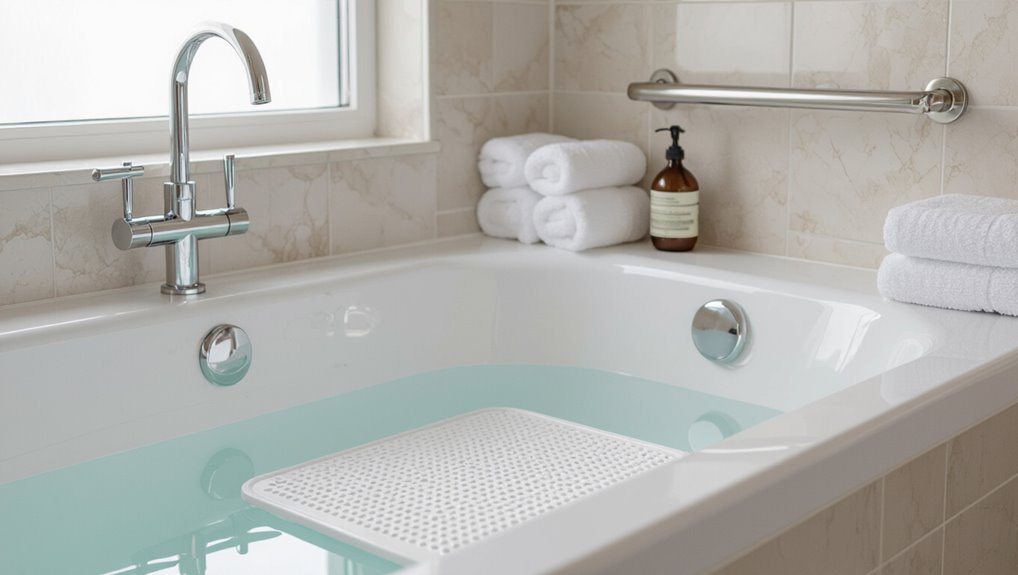
Bathtub slips commonly stem from smooth surfaces combined with soap residue, standing water, and mold buildup that reduce traction.
Such falls carry real risks—ranging from bruises to fractures—and disproportionately affect children, older adults, and people with mobility impairments.
Homeowners can assess slip risk with a few simple checks, like testing footing with a bare foot, looking for slick film or discolored grout, and noting how quickly water drains.
Common causes of bathtub slips (surface, soap residue, water, mold)
Although often overlooked, several predictable factors make the tub floor dangerously slick: worn enamel or smooth porcelain reduces grip, pooled water creates a film, soap residue and shampoo scum form slippery layers, and mold or mildew adds slick patches.
Understanding these causes frames practical measures and informs advice on how to stop slipping in the bathtub through cleaning, surface treatments, and regular maintenance.
Risks and consequences of slipping in the bathtub (injury statistics, vulnerable groups)
When a person slips in the bathtub, the consequences can range from minor bruises to life-threatening injuries, especially for older adults and others with limited mobility.
Falls in bathrooms account for a significant share of home injuries and hospitalizations; hip fractures, head trauma, and lacerations are common.
Children, pregnant people, and those with balance impairments face elevated risk and prolonged recovery times.
How to evaluate your bathtub’s slip risk (simple tests and signs)
Slipperiness results from a mix of smooth surfaces, soap residue, and water that reduce traction, so evaluating risk means looking for the conditions that create it.
Check for worn enamel, visible soap film, pooled water, and mildew.
Perform a simple barefoot balance test at various wetness levels and note how quickly feet slide.
Measure lighting, grab bar availability, and floor texture.
Quick Action: Immediate Ways to Stop Slipping Right Now
The section outlines safe temporary fixes—such as using a non-slip mat, adhesive strips, or a towel—to reduce immediate risk before permanent measures are installed.
It then describes simple techniques for steadying oneself when entering and exiting the tub, including hand placement and slow movements.
Finally, it explains warning signs after a fall that warrant calling for help or seeking medical attention.
Safe temporary fixes to use before long-term solutions
A few quick, safe measures can greatly reduce the risk of slipping in a bathtub before permanent fixes are installed.
Apply a non-slip mat or adhesive strips, make certain the tub is dry before entering, use temporary suction-cup grab bars rated for bathroom use, place a rubber-backed bath mat outside the tub, and keep soap and shampoo within arm’s reach to minimize movement and maintain stability.
How to steady yourself entering and exiting the tub
Step carefully: when entering or exiting the tub, place one hand on a secure surface or grab bar, plant a foot firmly on the tub floor before shifting weight, and move slowly to maintain three points of contact (two feet plus one hand or vice versa) until both feet are stable.
Turn toes slightly outward for balance, keep knees soft, and breathe steadily to avoid sudden movements.
When to call for help or medical attention after a fall
When should someone call for help after slipping in the tub?
If pain is severe, bleeding won’t stop, consciousness is altered, breathing is difficult, or weakness/numbness occurs, emergency services should be contacted.
For inability to stand, suspected fracture, head injury, or persistent dizziness, seek urgent medical evaluation.
If unsure, err on the side of prompt professional assessment.
12 Practical, Safe Solutions That Work
The following practical, safe options reduce slipping risk and suit different budgets and abilities.
- Non-slip strips/decals, non-slip mats, and non-slip coatings or sprays
- Grab bars and handrails with correct placement and mounting, plus transfer benches or shower chairs
- Simple installation steps, maintenance tips, and when to choose professional help
Each item focuses on stability, ease of use, and long-term safety.
1. Non-slip adhesive strips and decals
Apply durable adhesive strips or textured decals to increase traction on bathtub surfaces. They adhere directly to porcelain or fiberglass, creating grip where feet contact the tub.
Installation requires cleaning, drying, and firm pressure; many peel-and-stick options resist water and mildew.
Periodically inspect edges and replace worn pieces to maintain effectiveness and prevent peeling that could cause tripping or loss of adhesion.
2. Non-slip bath mats (rubber and textured designs)
Moving from adhesive strips that anchor to specific contact points, non-slip bath mats provide broader coverage and immediate traction across the tub floor.
They come in rubber or textured designs, often with suction cups to prevent shifting. Mats should fit the tub, drain water, resist mold, and be cleaned regularly.
Choose durable, skid-rated options and replace worn mats to maintain safety.
3. Apply non-slip coatings and sprays
Consider non-slip coatings and sprays as a versatile alternative to mats and strips: these products create a textured, low-profile surface across the tub floor that increases traction without altering aesthetics.
Applied per instructions, they bond to porcelain, acrylic, or fiberglass, resisting water and mild detergents.
Choose a commercial, slip-rated formula, guarantee proper ventilation during application, and allow full cure time before use.
4. Install grab bars and handrails (placement and mounting tips)
Alongside surface treatments, secure grab bars and handrails provide a reliable means of preventing slips by offering stable points to hold when entering, exiting, or repositioning in the tub.
Install bars at reachable heights (33–36 inches), near the faucet and along the back wall; use wall studs or solid anchors, corrosion-resistant hardware, and professional installation when needed to guarantee load-rated, secure mounting.
5. Use a bath transfer bench or shower chair
Add a bath transfer bench or shower chair to reduce the need for stepping over the tub wall and to provide a stable, seated option for bathing.
These devices allow safe transfers, minimize balance demands, and decrease fall risk.
Choose rustproof materials, non-slip feet, and adjustable height.
Confirm secure placement and test stability before use; consider models with backrests and armrests for added support.
6. Replace tub with walk-in tub or install low-threshold entry
Moving from seated bathing options, a more permanent solution is replacing the tub with a walk-in model or installing a low-threshold entry.
These modifications eliminate high-step barriers, reduce fall risk, and provide secure, accessible access.
Professional installation guarantees proper sealing, drainage, and weight support.
Consider built-in grab bars, non-slip flooring, and a comfortable seat to enhance safety and independence.
7. Anti-slip bath rugs with suction backing
Anti-slip bath rugs with suction backing provide an immediate, affordable way to reduce slipping in tubs and showers.
These mats adhere to smooth surfaces, offering textured grip underfoot and channeling water away. Users should choose mildew-resistant materials, inspect suction cups regularly, and replace worn mats.
Proper placement and cleaning maintain adhesion and hygiene, while avoiding loose edges that could create new trip hazards.
8. Choose slip-resistant bath surfaces (tile, textured acrylic)
When renovating or selecting fixtures, choosing slip-resistant surfaces such as textured ceramic tile or textured acrylic can greatly reduce fall risk by increasing traction underfoot even when wet.
Install materials rated for wet locations, prioritize low-gloss, textured finishes, and verify slip-resistance (COF) ratings.
Professional installation guarantees proper slope and grout choices to prevent pooling.
Durable, easy-to-maintain surfaces provide long-term safety gains.
9. Keep the tub clean and free of soap scum and oils
Alongside choosing textured surfaces, maintaining a clean tub surface is a straightforward, low-cost way to preserve traction.
Regular removal of soap scum, body oils, and residue prevents slick buildup. Use mild, nonabrasive cleaners or a vinegar-water solution and rinse thoroughly.
Wipe or squeegee after use, launder bath mats frequently, and address spills promptly to reduce slipping risk.
10. Use bath treads and textured adhesive mats for tubs
Install bath treads or textured adhesive mats to add immediate traction where feet contact the tub. These products adhere to the surface, reducing slips without altering tub structure.
Choose mildew-resistant, quick-drain designs and replace worn pieces promptly. Clean adhesive residue and follow manufacturer weight and temperature guidelines.
Proper placement—heel and forefoot zones—maximizes effectiveness while preserving bathing comfort and safety.
11. Proper footwear: non-slip water shoes and slippers
Choose non-slip water shoes or slippers designed for wet environments to greatly reduce the risk of slipping in and around the bathtub.
Opt for textured soles, secure fastenings, quick-drain materials and good tread depth. Guarantee proper fit and replace worn footwear promptly.
Test grip on wet surfaces before regular use. These simple items add an effective layer of protection against bath-related falls.
12. Install a handheld shower head to reduce movement
A handheld shower head reduces the need to step, twist, or reach by bringing water to the user, minimizing movement within the tub or shower stall.
Mounted on a slide bar or bracket, it allows seated bathing and targeted rinsing, lowering fall risk.
Easy to install and compatible with grab bars, adjustable-height models accommodate mobility limitations and improve safety without major remodeling.
How to Choose the Right Anti-Slip Solution for Your Bathroom
Choosing the appropriate anti-slip solution begins with evaluating household needs such as users’ age, mobility, and the specific bathtub material and shape.
Options should be weighed between temporary fixes and permanent installations while considering budget and the cost–benefit of durability and maintenance.
Finally, products should be checked for relevant safety standards and certifications to guarantee reliable performance.
Assessing needs by age, mobility, and bathtub type
Because slips and needs vary with age, balance, and tub style, selecting an anti-slip solution begins with a clear assessment of who uses the bathtub and how it’s built.
Consider age-related factors (children, adults, seniors), mobility limitations, footwear or barefoot use, and frequency of assistance.
Note tub surface, depth, slope, and drain placement to match grip, cushioning, and installation requirements.
Comparing temporary vs permanent options
With user needs and tub characteristics identified, the next decision is whether to install temporary or permanent anti-slip measures. Temporary options (mats, decals) offer quick, noninvasive traction and easy replacement. Permanent choices (textured coatings, grab bars anchored) provide durability and integration. Choose based on usage frequency, surface compatibility, and maintenance needs.
| Temporary | Permanent |
|---|---|
| Quick install | Long-lasting |
| Removable | Structural |
Budget considerations and cost vs benefit
A practical assessment of budget and expected benefits helps determine which anti-slip solution makes the most sense for a given bathroom.
Cost-effective options like adhesive strips or non-slip mats suit renters and short-term fixes.
Durable investments—textured coatings, professional treatments, or replacement floors—carry higher upfront costs but reduce long-term risk and maintenance.
Match spending to usage frequency, mobility needs, and expected lifespan.
Safety standards and certifications to look for
Standards and certifications provide measurable criteria for evaluating anti-slip products and treatments.
Look for ASTM or EN slip-resistance ratings (e.g., R-values, coefficient of friction tests) and certifications from consumer safety bodies.
For chemical treatments, verify VOC compliance and material compatibility.
Installer credentials and manufacturer warranties indicate quality control.
Choosing certified, tested options reduces risk and guarantees regulatory and performance expectations are met.
Step-by-Step Installation and Maintenance Guides
The next section provides clear, step-by-step instructions for installing adhesive strips, treads, and grab bars, including proper stud mounting for secure placement.
It also covers applying non-slip coatings with the right tools, recommended drying times, and ventilation precautions.
Finally, routine cleaning and maintenance practices are outlined to preserve surface traction and prolong effectiveness.
How to install adhesive strips and treads correctly
Begin by gathering materials, selecting non-slip adhesive strips or treads rated for wet environments, and ensuring the bathtub surface is clean and dry.
Measure and mark placement to avoid gaps. Peel backing progressively, press firmly from center outward to expel air, and hold per manufacturer instructions.
Allow full cure time before use. Inspect periodically; replace if edges lift or abrasive surface wears.
Safe installation of grab bars and proper stud mounting
After adhesive treads are in place, installing secure grab bars provides the strongest protection against slips by offering reliable handholds.
Select stainless steel bars rated for bathroom use. Locate wall studs with a detector; mark mounting points at 33–36 inches or user-preferred height.
Use long stainless screws into studs, apply sealant around flanges, and test pull strength.
Inspect periodically for looseness.
Applying non-slip coating: tools, drying times, and ventilation
Prepare a clean, dry surface and gather the correct tools—non-slip coating, primer (if recommended), a stiff brush or roller, masking tape, respirator, and a timer—before starting the application.
Apply primer if required, tape edges, spread coating evenly per manufacturer’s directions, and note recommended recoat and full cure times.
Maintain continuous ventilation during and after application until odors dissipate and coating is fully dry.
Cleaning and maintaining non-slip surfaces to retain effectiveness
Once the non-slip coating has fully cured, routine cleaning and periodic inspections keep its texture and grip reliable.
Use mild, pH-neutral cleaners and a soft brush; avoid abrasive pads, bleach, or oil-based products that break down traction. Rinse thoroughly and dry.
Check for wear, peeling, or smooth spots every month; reapply or repair damaged sections promptly to maintain safety.
Common Mistakes to Avoid When Preventing Slips
Common mistakes can undo even well-planned bathtub safety measures, so attention to placement and product choice is essential.
Mats and grab bars placed incorrectly may create new hazards, while certain cleaners leave slippery residues that reduce traction.
Temporary fixes should not substitute for permanent solutions when users are at high risk.
Wrong placement of mats and bars
Incorrect placement of bath mats and grab bars undermines their purpose, creating new hazards instead of preventing falls. Mats that bunch or sit partially outside the tub trip users; bars mounted too high, loose, or on unstable surfaces fail under load.
Proper positioning—secure, flush mats and grab bars anchored to studs at reachable heights—ensures support and minimizes unintended slipping or catching risks.
Using the wrong cleaning products that reduce traction
Many household cleaners contain oils, waxes, or conditioners that leave a thin film on tub surfaces. Using them can sharply reduce traction and increase slip risk.
One should choose cleaners labeled non‑slip or residue‑free, rinse thoroughly, and avoid polish or conditioner formulas.
Regular testing with bare feet after cleaning helps detect slipperiness so corrective rinsing or alternative products can be used promptly.
Over-reliance on temporary fixes for high-risk users
When caregivers or homeowners rely primarily on temporary measures—such as bath mats with weak suction, adhesive strips that peel, or quick-dry spray treatments—people at higher risk (older adults, those with mobility impairments, or post‑surgical patients) remain vulnerable to falls.
Durable solutions—securely installed grab bars, non‑slip tub coatings, and professional assessments—offer consistent protection; temporary fixes should supplement, not replace, lasting safety measures.
Product Recommendations and What to Look For
The following products and specifications help readers choose reliable options to reduce bathtub slips.
- Non-slip mats and decals with textured surfaces and strong suction or adhesive
- Grab bars sized for secure grip and correct mounting depth
- Non-slip coatings and kits that offer durable, water-resistant traction
| Product Type | Key Feature | Typical Size/Spec |
|---|---|---|
| Mat/Decal | Textured, high-friction surface | Fits tub floor (usually 15–24 in wide) |
| Grab Bar | Load-rated, corrosion-resistant | 12–36 in length, 1.25–1.5 in diameter |
| Coating Kit | Long-lasting, clear or tinted finish | Covers 20–60 sq ft per kit |
Top features of effective non-slip bath mats and decals
Effective non-slip bath mats and decals combine secure adhesion, textured surfaces, and durable materials to minimize fall risk in wet conditions.
Ideal products feature strong suction or peel-and-stick backing, high-traction patterns, quick-drain designs, mildew-resistant compounds, and slip-resistant testing certifications.
Size compatibility, flexible edges to prevent tripping, ease of cleaning, and replaceable components further guarantee long-term safety and hygiene in regular bathing environments.
Recommended grab bar types and sizes
Grab bars should be chosen for their mounting method, length, diameter, and load rating to match the user’s needs and the installation surface.
Recommended types include wall-mounted straight bars (12–36 inches) and angled bars for leverage.
Diameter around 1¼–1½ inches suits most hands.
Choose stainless steel or corrosion-resistant finishes.
Confirm mounting into studs or use rated anchors with at least 250–500 pound capacity.
Best non-slip coatings and application kits
Consider non-slip coatings that balance grip, durability, and ease of application: specialized bathtub kits using textured paint, clear anti-slip coatings with embedded grit, and adhesive traction strips each suit different surfaces and user needs.
Choose mildew-resistant, waterborne formulas safe for acrylic, porcelain, or fiberglass. Prefer kits with primer, clear instructions, and non-slip rating information.
Test a small area before full application.
Real-Life Scenarios and Solutions
Scenarios such as bathrooms for seniors or mobility-impaired users, households with young children, and renters with temporary needs call for different anti-slip approaches.
Each situation demands tailored solutions—prioritizing grab bars and low-threshold options for mobility issues, non-toxic kid-safe mats and decals for families, and removable, fixture-friendly products for rentals.
The following section compares practical, easy-to-install measures for these common cases.
Senior or mobility-impaired user: prioritized changes
For seniors and people with limited mobility, small changes can substantially reduce fall risk in the bathtub.
These prioritized modifications focus on improving stability, ease of entry and exit, and consistent support during bathing.
Install sturdy grab bars, a low-threshold or walk-in tub, non-slip flooring or mats, a stable transfer bench, handheld showerheads, and a shower chair.
Prioritize professional installation and regular inspection.
Families with young children: kid-safe anti-slip options
Create a child-focused routine that combines age-appropriate fixtures and simple habits to reduce slipping risks in bathtubs.
Caregivers should install non-toxic suctioned or adhesive bath mats, soft-grip faucet covers, and low-step stools.
Always supervise, keep floors dry, use non-slip bath toys, and limit soap slickness with mild wash.
Teach children safe sitting and steadying techniques during every bath.
Rental apartments and temporary solutions that don’t damage property
After addressing child-focused fixes, attention turns to renters who must protect both safety and the rental property.
Temporary non-slip mats, suction-cup strips rated for smooth surfaces, and removable adhesive pads provide traction without permanent alteration.
Shower shoes offer an immediate, renter-safe option.
Tenants should avoid damaging adhesives, document installations, and consult landlords before making semi-permanent changes to guarantee deposit protection and compliance.
Signs It’s Time to Upgrade Your Bathtub or Call a Professional
When minor fixes fail to stop slipping or the tub shows cracks, significant wear, or water damage, it may be time to contemplate an upgrade or professional help.
Homeowners should weigh hiring a licensed contractor for structural or resurfacing work or an occupational therapist when mobility and safety needs require tailored solutions.
Before work begins, clear questions about scope, licensing, references, accessibility experience, timelines, and cost estimates help guarantee the right choice.
When small fixes aren’t enough: cracks, wear, and persistent slipping
Inspect the tub for structural damage and persistent wear that small fixes can’t mask. Cracks, deep scratches, thinning enamel, or wobbling indicate compromised safety.
Surface treatments and mats may hide problems but won’t restore integrity. Consider reglazing, replacement, or professional assessment when water penetration, sharp edges, or recurring slipping persist.
Prioritize durable repairs over temporary patches to prevent injury and further deterioration.
When to hire a contractor or occupational therapist
How can one tell that small fixes are no longer sufficient and professional help is required?
Persistent falls, mobility decline, visible tub structural damage, or complicated plumbing indicate a contractor is needed.
If balance, strength, or cognitive changes increase risk, an occupational therapist should assess for adaptive equipment and safe transfer techniques.
Insurance, accessibility codes, or complex renovations also warrant professional involvement.
Questions to ask a pro before starting work
Why ask targeted questions before work begins? A homeowner should verify the pro’s licensing, insurance, references, and experience with slip-prevention projects.
Ask about scope, timeline, materials, warranties, and accessibility standards compliance. Request a written estimate, change-order policy, and safety protocols.
Clarify who will perform cleanup and whether subcontractors are used. Confirm communication preferences and payment schedule.
Quick Checklist: Preventing Slips in the Bathtub (Printable Steps)
A simple, one-page checklist helps homeowners quickly confirm key steps to reduce bathtub slips before each use.
It lists essential inspections and actions to keep baths safe, suitable for printing and posting near the bathroom.
Use the checklist every time, and update if conditions change.
- Confirm non-slip surface or mat is secure
- Verify grab bars are tight
- Remove excess soap and water pooling
Conclusion
Slipping in the bathtub is common but preventable; simple measures—non-slip mats, adhesive treads, grab bars, and routine cleaning—significantly reduce risk. Some may object that these fixes look unattractive or require effort, yet many solutions are discreet, inexpensive, and quick to install. By choosing appropriate, well-maintained products and following basic safety steps, households can protect vulnerable users and regain confidence without costly renovations or major disruption.