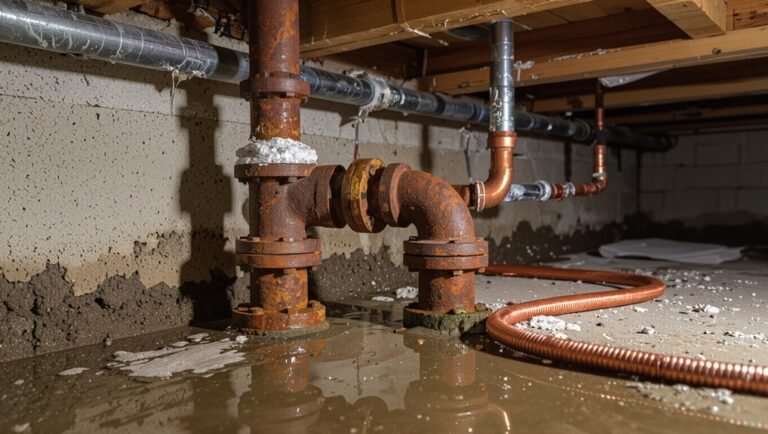
How to Clean a Residential Catch Basin: Step-by-Step Guide for Safe, Effective Maintenance
To effectively clean a residential catch basin, start by removing the grate and clearing out leaves and debris. Use gloves, boots, and eye protection, along with a shovel or wet/dry vacuum for any sludge. Rinse the basin thoroughly and check the inlet and outlet pipes, flushing them until the water flows freely. Be sure to look for any cracks or corroded frames and properly dispose of any waste. It’s advisable to follow a seasonal cleaning schedule and consult professionals for significant repairs.
What a Residential Catch Basin Is and Why Regular Cleaning Matters
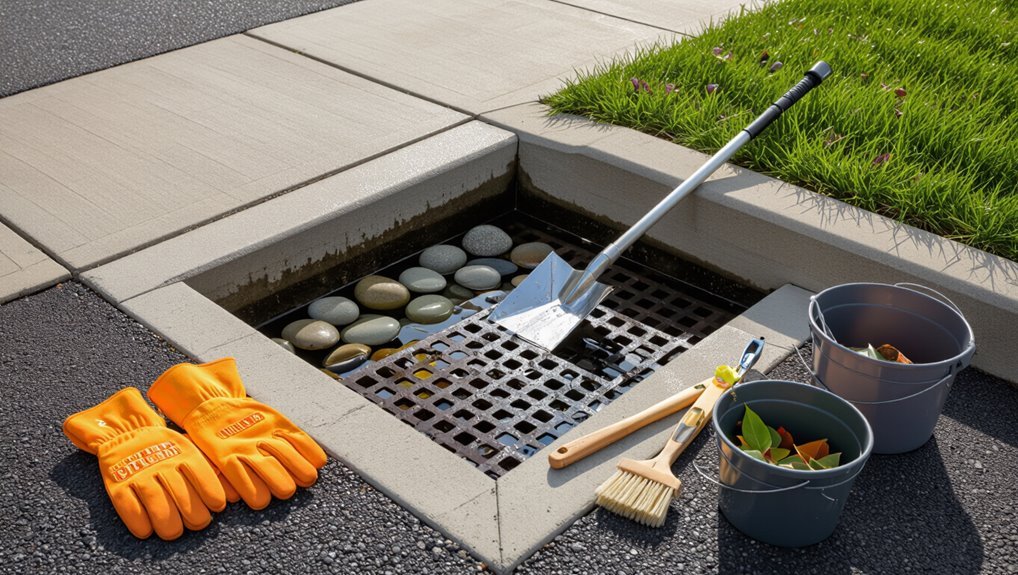
A residential catch basin is a roadside or yard inlet with a grate, sump, and outlet pipe designed to collect and direct stormwater.
When neglected, basins commonly clog with leaves, sediment, and debris, causing backups and impaired drainage.
Clogged basins increase localized flooding, property damage, pollutant runoff, and safety hazards for pedestrians and vehicles.
Definition and basic components of a catch basin
Catch basins are underground collection points installed at low spots around a property to capture stormwater, sediment, and debris before runoff enters the drainage system.
A typical unit includes a grating, sump chamber, inlet pipe, and outlet connection.
Knowing these parts helps homeowners understand how to clean a residential catch basin and perform targeted maintenance safely and effectively.
Common problems caused by neglected catch basins
Neglected catch basins quickly become clogged with leaves, sediment, and trash, leading to standing water, localized flooding, and increased erosion around a property.
Blockages also attract pests, emit odors, and degrade drainage efficiency. Structural components may corrode or settle, causing sinking grates and costly repairs.
Reduced stormwater conveyance stresses gutters and downstream systems, increasing maintenance needs and repair frequency.
Environmental, property, and safety risks of clogged basins
Regularly clogged basins transform routine runoff into a cascade of environmental, property, and safety hazards that extend beyond the immediate yard.
Stagnant water breeds mosquitoes and spreads pollutants into streams, harming wildlife and water quality.
Backup and erosion threaten foundations, landscaping, and driveways.
Blocked drains increase slip, flood, and vehicle hazards on paths and roads, raising liability and repair costs for homeowners.
How Often to Clean a Catch Basin and When to Schedule Maintenance
A seasonal maintenance schedule — typically spring and fall inspections with additional checks after heavy storms or leaf drop — provides a baseline for most residential catch basins.
Immediate cleaning should be scheduled when signs such as standing water, slow drainage, visible debris buildup, or foul odors appear.
Cleaning frequency should be adjusted for site-specific factors like proximity to trees, local weather patterns, and the basin’s location within the drainage network.
Seasonal schedule recommendations
Once to twice per year is a common baseline for catch basin cleaning, with frequency adjusted based on local conditions such as nearby vegetation, traffic volume, and seasonal debris patterns.
Spring inspections target winter sediment and thaw runoff; summer checks address leaf and landscaping debris; autumn cleanings remove falling leaves and prepare for storms.
Schedule before known heavy-rain periods and after extended dry spells.
Signs that immediate cleaning is needed
Seasonal schedules provide a baseline, but observable signs indicate when immediate cleaning is needed to prevent backups or damage.
Standing water, slow drainage during rain, unpleasant odors, visible debris accumulation, overflow at the grate, or insect breeding indicate urgent attention.
Sudden flooding near the basin or reports of sewer backups inside the property also require prompt inspection and clearing to avert structural harm.
Factors that influence cleaning frequency (location, vegetation, weather)
Because catch basin maintenance needs vary widely, cleaning frequency is determined by site-specific factors such as location, nearby vegetation, and local weather patterns.
Urban areas with heavy runoff require more frequent service than rural sites. Trees and lawns increase leaf and sediment buildup.
Regions with seasonal storms or freeze-thaw cycles need pre- and post-season inspections. High-risk sites benefit from quarterly or monthly schedules.
Tools, Materials, and Safety Equipment Needed
An inventory of required items helps guarantee safe and effective catch basin cleaning. This includes a PPE checklist, the appropriate hand and power tools for removing solids, and instruments for flow testing and inspection.
Also needed are proper disposal supplies and spill-containment materials to manage removed debris and any runoff.
Personal protective equipment (PPE) checklist
Before beginning any catch basin cleaning, a concise checklist of personal protective equipment (PPE) helps confirm worker safety and compliance.
Required items include chemical-resistant gloves, puncture-resistant boots, eye protection (goggles or face shield), a hard hat, high-visibility vest, and disposable coveralls.
Respiratory protection (N95 or respirator) is advised for odor or aerosol exposure.
Ensure proper fit, inspection, and decontamination procedures.
Hand tools and power tools for debris removal
Select tools that match the basin’s size, debris type, and access constraints to guarantee efficient, safe removal.
Manual tools include scoops, shovels, long-handled rakes, and heavy-duty brushes for compacted sediment and trash.
Power options comprise wet/dry vacuums, handheld augers, and pressure washers for stubborn buildup, used cautiously to prevent structural damage and splashing.
Secure all equipment and follow PPE protocols.
Water-flow testing and inspection tools
Verify flow performance with the right combination of tools and safety gear to accurately assess inlet capacity, detect blockages, and confirm outlet integrity.
Essential items include a portable flow meter or bucket-and-timer for discharge checks, inspection camera or borescope for internal visual assessment, extendable probe or plumber’s snake for locating obstructions, and personal protective equipment—gloves, eye protection, and waterproof boots—for safe close inspection.
Disposal supplies and spill containment
Contain appropriate disposal supplies and spill-containment materials to manage removed debris, contaminated water, and any accidental releases during catch basin maintenance.
Provide heavy-duty trash bags, sealed buckets, labeled disposal containers, absorbent pads, booms, and spill kits rated for petroleum and organic contaminants.
Include gloves, goggles, and disposable coveralls.
Guarantee secure transport, local disposal compliance, and a plan for decontamination and incident reporting.
Step-by-Step Guide to Cleaning a Residential Catch Basin
The procedure begins with preparing the site and confirming safety measures are in place.
Next, the basin is inspected and obstructions are mapped before surface debris and sediment are removed.
Finally, remaining sludge is vacuumed or hand-dug and grates, inlet/outlet pipes, and sumps are thoroughly cleaned.
Preparing the site and ensuring safety
Before any tools are brought to the site, assess the area for hazards and establish a clear work zone with visible barriers and signage.
Verify underground utility locations, stabilize footing, and confirm adequate lighting.
Equip workers with PPE—gloves, eye protection, high‑visibility vests, and boots.
Position spill containment and first‑aid supplies.
Communicate tasks, emergency procedures, and traffic control to all personnel before work begins.
Inspecting the basin and mapping obstructions
Begin by visually and physically surveying the catch basin to determine its condition, noting grate type, visible debris, water level, structural damage, and any nearby vegetation or sediment that could obstruct access.
Record inlet and outlet locations, measure opening dimensions, map blockages, identify hazardous materials or pest activity, and mark safe footing and equipment staging areas for efficient, unobstructed cleaning operations.
Removing surface debris and sediment
With obstructions mapped and hazards noted, attention shifts to removing surface debris and accumulated sediment to restore flow.
The technician clears leaves, trash, and floatables, using gloves and a rake, depositing waste into containers for disposal. Remaining fines are brushed toward the outlet for later extraction.
- Remove large debris first.
- Sift and scoop floating matter.
- Contain and label removed waste.
Vacuuming or hand-digging sediment and sludge
To remove compacted sediment and sludge, the technician assesses whether a vacuum truck or manual digging is appropriate based on basin depth, access, and sediment volume.
Vacuuming is used when material is semi-liquid and there is vehicle access, while hand-digging is chosen for shallow basins, tight spaces, or where heavy, consolidated deposits require manual loosening.
The chosen method extracts deposits, minimizes basin damage, and guarantees safe containment and disposal.
Cleaning grates, inlet/outlet pipes, and sumps
After sediment and sludge have been removed, attention shifts to the catch basin’s grates, inlet and outlet pipes, and sumps, where remaining debris and obstructions commonly reside.
Technicians remove grates, scrape and hose surfaces, inspect and clear pipe openings with rods or hand tools, and scoop trapped debris from sumps.
All removed material is contained and properly disposed of to prevent recontamination.
Flushing and flow-testing the drainage connection
Begin by introducing clean water into the basin and directing it through the drainage connection to verify unobstructed flow. This controlled flush reveals hidden blockages, verifies pipe integrity, and confirms that sediment removal restored proper drainage.
Observe flow rate, watch for backups or slow drainage, and inspect downstream discharge for debris or leakage.
Repeat until clear, documenting any persistent restrictions for further inspection.
Reassembling components and final inspection
With flow verified and any stubborn obstructions noted, reassembly proceeds methodically to restore the basin to service.
Grates, frames, and strainers are replaced in original orientation, seals inspected and repositioned, and fasteners torqued to specification.
A final visual and tactile inspection confirms correct seating and absence of debris.
Surface area is cleared; surrounding pavement is checked for runoff and stability before completion.
Methods Compared: Manual Cleaning vs. Wet-Vac vs. Professional Services
A brief comparison clarifies when a homeowner can handle a catch basin and when stronger equipment or professional help is appropriate. Manual cleaning is economical but labor-intensive and may be unsafe for complex blockages; wet-vacs and power tools speed removal but require care and proper disposal; licensed contractors are advised for persistent clogs, structural issues, or regulatory compliance. The table below summarizes key trade-offs to guide the choice.
| Method | Best for | Drawbacks |
|---|---|---|
| Manual cleaning | Small, routine debris removal | Physically demanding; limited for deep blockages |
| Wet-vac / power equipment | Larger debris, faster removal | Requires equipment skill and proper disposal |
| Professional contractor | Severe clogs, damage, or permit-required work | Higher cost but offers safety, compliance, and warranty |
Pros and cons of DIY manual cleaning
Manual removal of debris from a catch basin offers direct control and low equipment cost but carries trade-offs in time, physical demand, and safety.
Advantages include immediate assessment, selective removal, and minimal expense.
Drawbacks encompass heavy lifting, exposure to contaminants, limited reach into deep or clogged pipes, slower completion, and potential for incomplete cleaning compared with mechanized or professional methods.
When to use a wet-vac or power equipment
Consider switching to a wet-vac or powered equipment when debris is heavy, compacted, or located deep in the basin or connected piping, or when time and worker safety are priorities.
Wet-vacs speed removal of silt, sand, and standing water; powered augers or hydro jets dislodge entrenched blockages.
Operators must use appropriate PPE and follow manufacturer guidelines to avoid damage or injury.
When to hire a licensed drainage or sewer contractor
Three clear signs indicate that hiring a licensed drainage or sewer contractor is warranted: persistent or recurring backups, blockages extending beyond the visible basin into piping or the municipal connection, and situations involving contaminants, hazardous materials, or structural damage.
A contractor offers camera inspection, permits, confined-space expertise, and heavy-duty equipment for root intrusion, collapsed lines, or municipal tie-ins—ensuring compliance, safety, and durable repairs.
Proper Disposal and Environmental Considerations
Proper handling of greasy, contaminated, or otherwise hazardous waste is essential to avoid soil and water contamination.
The article outlines relevant local regulations and disposal options so readers know when to use licensed hazardous-waste haulers or approved drop-off sites.
It also highlights practices to prevent pollution during cleaning, such as using containment, absorbents, and immediate spill response.
Handling greasy, contaminated, or hazardous waste
Handle greasy, contaminated, or hazardous waste from a catch basin with strict separation, secure containment, and documented disposal to prevent environmental harm and regulatory violations.
Personnel should use appropriate PPE, absorbents, and leakproof containers labeled with contents and hazards.
Prevent cross-contamination by segregating wastes, decontaminating tools, and minimizing runoff.
Arrange transfer to licensed handlers, maintain chain-of-custody records, and dispose via approved hazardous-waste routes.
Local regulations and disposal options
Following segregation, containment, and documentation of greasy or hazardous catch basin waste, attention must turn to applicable local regulations and approved disposal routes that govern how those materials are handled off-site.
Contractors must verify permits, transport manifests, and licensed haulers; residential generators should consult municipal waste authorities.
Recycling, licensed landfill, or hazardous waste facility options depend on contaminant classification and local ordinances; noncompliance risks fines.
Preventing pollution during cleaning
How can pollution be minimized during catch basin cleaning?
Workers should contain debris and wastewater, using absorbents and temporary barriers to prevent runoff.
Collected material must be transported in sealed containers to approved disposal facilities or recycling centers.
Spills require immediate neutralization and reporting per local rules.
Routine inspections and use of best-management practices reduce contaminant release and protect waterways.
Common Problems Encountered During Cleaning and How to Fix Them
Cleaning a catch basin often reveals issues requiring specific remedies: stubborn sediment or compacted sludge may need mechanical agitation or vacuum extraction, while root intrusion and pipe blockages typically call for cutting tools or professional hydrojetting.
Inspectors should also look for structural damage such as cracked walls or deteriorated grates, which require timely repair or component replacement to prevent collapse or further infiltration.
Clear identification of each problem guides selection of the safest, most effective corrective action.
Stubborn sediment or compacted sludge solutions
When sediment has settled into dense layers or sludge has compacted at the bottom of a catch basin, standard scooping and vacuuming often prove insufficient; persistent buildup requires targeted techniques to break apart and lift the material without damaging the structure.
Use stiff-bristled brushes, manual chisels, or pressurized water jets at low angle to dislodge deposits, then vacuum or hand-collect debris and repeat until clean.
Dealing with root intrusion and pipe blockages
Inspect for root intrusion and pipe blockages promptly, as they can progressively impair drainage and damage catch basin connections.
Remove visible roots with hand tools or a root saw; avoid aggressive digging near pipes.
Use a plumber’s snake or hydro-jetting for blockages, following safety guidelines.
After clearing, apply root inhibitors or schedule professional root cutting to prevent recurrence.
Monitor regularly.
Identifying and addressing structural damage
Recognize structural damage early to prevent costly failures and compromised drainage performance; common issues include cracked or displaced grates, eroded concrete collars, corroded metal frames, collapsed sidewalls, and broken outlet pipes.
Inspect thoroughly during cleaning, document defects, and assess load-bearing capacity.
Minor cracks can be patched, frames replaced, and outlets relined; call a licensed contractor for major collapse, extensive undermining, or sanitary/sewer connections.
Maintenance Tips to Reduce Future Clogs and Extend Basin Life
Preventive maintenance combines simple landscape practices, hardware upgrades, and routine inspections to keep a catch basin functioning longer.
Trimming nearby vegetation, using guards, filters or sediment baskets, and checking for blockages monthly or after storms all reduce debris entry and buildup.
Implementing these measures systematically minimizes clogging frequency and prolongs basin lifespan.
Vegetation and landscape management practices
Manage surrounding vegetation and landscape features to limit debris entry and reduce maintenance frequency.
Trees, shrubs, and groundcover should be positioned and pruned to prevent leaf, twig, and root intrusion. Mulch and slope control reduce sediment flow.
Routine debris clearing and seasonal inspections minimize buildup.
- Prune overhanging branches regularly.
- Maintain groundcover and mulch away from basin rim.
- Inspect for invasive roots.
Installing guards, filters, and sediment baskets
After controlling nearby vegetation and grading to limit debris, implementing physical protections at the inlet provides a final line of defense against clogging.
Install removable grates, leaf guards, and coarse filters to trap large debris; use sediment baskets for finer material.
Select corrosion-resistant, appropriately sized components, secure them to prevent displacement, and plan periodic removal and cleaning to maintain flow and extend basin life.
Simple homeowner checks to perform monthly or after storms
Inspect the catch basin monthly and after major storms to catch small problems before they escalate: check the inlet for leaves and trash, look inside for sediment buildup or floating debris, verify that grates and guards are secure and undamaged, and guarantee outflow pipes are free of blockages or visible erosion.
Note trapped oil or foam, clear nearby drains, document issues, and schedule professional cleaning if needed.
When to Call a Professional and What to Expect from Service
Signs of persistent backups, foul odors, structural damage, or repeated clogs despite regular maintenance are red flags that warrant professional intervention.
Homeowners should ask contractors about inspection methods, written scope of work, cleanup procedures, warranty terms, and proof of insurance before hiring.
Expect quoted costs to vary by severity and location, with routine professional cleaning recommended annually or biannually for high-debris sites.
Red flags that require professional intervention
When routine maintenance reveals persistent slow drainage, foul odors, structural damage, standing water that doesn’t recede, or sewage backups, professional intervention is warranted; these issues indicate blockages, root intrusion, or compromised catch basin integrity that require trained assessment and equipment.
Additional red flags include visible cracks or displaced grates, repeated clogging after cleaning, contamination evidence, and unusual sinkholes nearby—conditions needing prompt licensed remediation.
Questions to ask contractors and service scope
How should a homeowner vet a contractor and define the scope of work before authorizing catch basin repairs?
Homeowners should request licenses, insurance, references, and written estimates detailing tasks, materials, timelines, permits, disposal, and warranty terms.
Ask about inspection methods, clog removal techniques, damage remediation, and post‑service reporting.
Confirm responsibilities for site restoration and contingency procedures for unexpected structural issues.
Typical costs and service frequency recommendations
A homeowner can expect catch basin service costs to vary widely—typically from a basic cleaning around $100–$300 to major repairs or replacements that can exceed $1,000—depending on basin accessibility, debris type, damage extent, and regional labor rates.
Routine inspections every 1–3 years and cleanings annually or after major storms are recommended; high-debris sites may need semiannual service.
Obtain written estimates and warranties.
Sample Cleaning Checklist for Homeowners
A concise checklist helps a homeowner move from preparation through action to follow-up when cleaning a catch basin.
- Pre-cleaning safety and prep items
- Stepwise cleaning actions to tick off
- Post-cleaning inspection and documentation items
This list frames the tasks to guarantee safety, thoroughness, and records for future maintenance.
Pre-cleaning safety and prep items
Before starting work, homeowners should confirm they have the right safety gear, tools, and a clear plan to prevent injury and minimize property damage.
Check personal protective equipment (gloves, eye protection, boots), traffic or area barriers, and a flashlight.
Inspect weather and surface conditions, have a disposal container for debris, basic hand tools, a drain plug or diversion materials, and a phone for emergencies.
Stepwise cleaning actions to tick off
With gear checked and the area secured, proceed through a concise, numbered checklist that guides each physical action from lid removal to final inspection.
1) Remove lid using proper tool.
2) Clear surface debris.
3) Scoop sediment into bucket.
4) Scrub walls and grate.
5) Flush with hose, directing flow away.
6) Replace grate and lid.
7) Dispose waste properly.
8) Clean tools.
Post-cleaning inspection and documentation items
Complete a brief post-cleaning inspection and record key details to verify the catch basin is functional and to create a useful maintenance history.
Note date, time, cleaner name, visible debris removed, sediment depth, structural damage, joint or grate issues, odors, water flow test result, and any repairs or photos.
Recommend next inspection date and attach receipts or contractor notes for reference.
Conclusion
Regular cleaning keeps a catch basin functioning like a well-tuned heart, pumping water away instead of letting it stagnate. Homeowners who follow a routine—inspecting, removing debris, checking grates and pipes, and using appropriate tools—prevent clogs and costly repairs. Simple preventive steps and timely professional help when needed extend basin life and protect property. With consistent care, the basin quietly performs its job, turning stormwater from threat into harmless passage.