
How to Fix Brown Water From Faucet: Easy DIY Checks and Solutions
If you’re dealing with brown water from your faucet, it usually indicates rust, sediment, or a disruption in your water supply. To address this issue, stop drinking the water immediately and run your cold taps briefly. Collect samples to determine if the discoloration is isolated or widespread. Check the aerators, test both hot and cold water, and flush your water heater and main line. Clean or replace any corroded fixtures, and consider using temporary filters if necessary. If the discoloration persists or has an unpleasant smell, it’s best to contact a plumber or your water utility for further testing. The following steps will guide you through diagnostics, fixes, and prevention measures.
Why Your Faucet Water Is Brown Quick Explanation and Immediate Steps
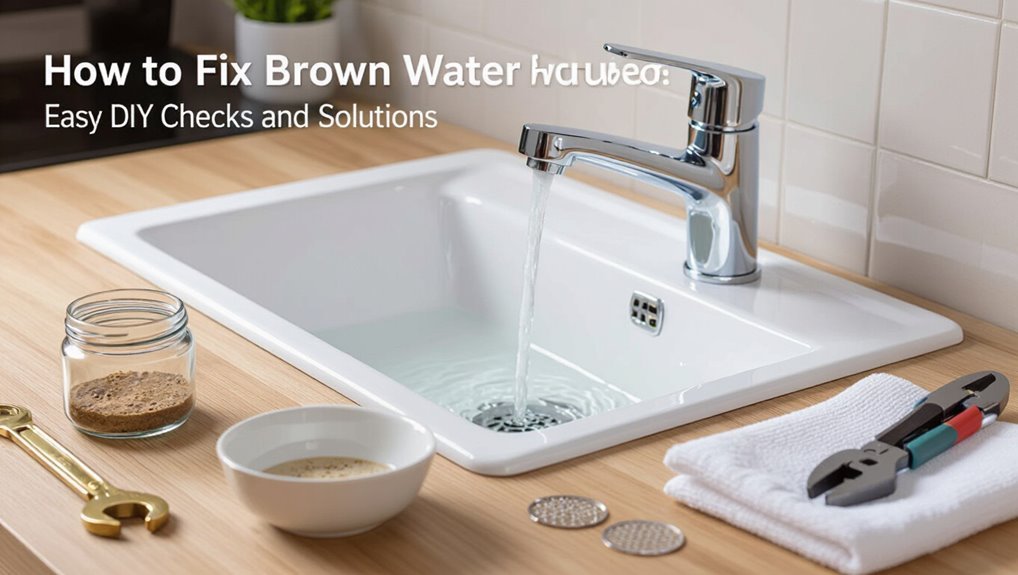
Brown water typically appears rusty, tea-colored, or cloudy and can be checked quickly by filling a clear glass and smelling for metallic or sulfur odors.
Upon discovery, occupants should avoid drinking or cooking with the water, run cold taps briefly to see if discoloration clears, and use bottled water for essential needs.
If discoloration persists, has a strong odor, or affects hot and cold lines, stop using the supply and contact a plumber or water utility immediately.
What brown water looks like and how to quickly test it
A rusty or tea-colored tint in tap water typically indicates suspended iron, manganese, or disturbed sediment in pipes; it may appear as faint discoloration, pronounced streaks, or visible particles depending on concentration and flow. Quick tests: collect sample, let settle, compare color. Practical tips for how to fix brown water from faucet follow diagnosis.
| Observation | Quick test |
|---|---|
| Faint tint | Settle 30 min |
| Particles | Filter/sample |
Immediate safety steps to take when you discover brown water
Several immediate safety steps should be followed when tap water turns brown to reduce health risks and prevent household damage.
Stop drinking or cooking with the water, and avoid bathing infants and immunocompromised people.
Run a cold-water tap briefly to check persistence, collect a sample in a clean container, note timing and affected taps, and avoid laundering or dishwasher use until clarity returns.
When to stop using the water and call a professional
If the discoloration persists after brief flushing or appears in multiple taps, household members should stop using the water for drinking, cooking, bathing vulnerable people, and appliance loads until a professional assesses the supply.
A licensed plumber or water utility should be contacted when brown water continues, odour or sediment is present, or symptoms arise. They will test, identify corrosion or contamination, and recommend repairs or boil advisories.
Common Causes of Brown Water
Brown water commonly stems from rust in aging pipes or fixtures and from sediment buildup that dislodges into household plumbing.
It can also result from disturbances to municipal mains or nearby water work, corroded water heater components, or contaminants like iron and manganese in well systems.
Identifying the specific source guides the appropriate corrective steps.
Rust in aging pipes or plumbing fixtures
Rust forming inside aging pipes or fixtures is a frequent cause of discolored tap water, occurring as iron and other metals corrode and slough off into the flow. Corrosion yields flakes and sediment that tint water brown and stain fixtures; inspection, targeted replacement, or lining can resolve problems.
| Cause | Sign | Remedy |
|---|---|---|
| Iron corrosion | Brown water | Replace pipe |
| Scale | Particles | Clean |
| Fixture rust | Stains | Replace |
Disturbance in municipal water mains or nearby water work
When municipal water mains are flushed, repaired, or otherwise disturbed, sediment and loosened mineral deposits can be swept into the distribution system, temporarily tinting tap water brown.
Crews typically advise running cold taps until clarity returns. Such events often affect multiple homes on a street, coincide with pressure changes that dislodge deposits, and resolve after a short period or following guidance from the utility provider.
Corroded water heater problems
Occasionally, discolored water originates not from the street but from the household’s own hot-water system: a corroded water heater can introduce iron and sediment into the supply, producing persistent brown or reddish tint in hot taps.
Corrosion of the tank, sacrificial anode depletion, or failing dip tubes release rust and particles.
Inspection, flushing, anode replacement, or tank replacement often resolves hot-water discoloration.
Sediment buildup in pipes and fixtures
Sediment accumulation in household plumbing and fixtures often causes brown or cloudy water at taps and showers.
Particles from pipe scale, degraded rubber, mineral deposits or dislodged debris collect in valves, aerators and fixture screens.
Flushing lines, cleaning aerators, replacing cartridges and performing targeted pipe cleaning or descaling typically restores clarity.
Regular maintenance prevents recurrence.
Well water issues and iron/manganese contamination
Private wells introduce a different set of causes for brown water than municipal plumbing debris. Groundwater can carry dissolved iron and manganese, oxidizing when exposed to air and staining fixtures.
Bacterial iron biofilms and rusty well casing or pipes worsen discoloration. Testing identifies concentrations; treatment options include aeration, filtration, ion exchange, or chlorination, depending on chemistry and bacterial presence.
Seasonal factors and hydrant flushing impacts
Many municipalities and aging distribution systems experience seasonal shifts in water appearance when temperature changes and demand patterns stir settled sediment or corrosion byproducts.
Seasonal turnover, higher summer flows, and winter pressure changes resuspend rust and manganese deposits.
Hydrant flushing temporarily mobilizes deposits to clear mains but can cause short-term brown water; advisories recommend running taps until clear and avoiding laundry during events.
Quick DIY Checks to Diagnose the Source
They begin by checking multiple taps—hot versus cold, a single fixture versus the whole house—to map the problem’s scope.
The water heater and hot water should be inspected and tested separately while observing how color and timing change after running the tap.
Additional checks include testing cold water, monitoring pressure and outdoor spigots, and using simple in-home iron/rust test kits.
Check multiple taps to determine scope (hot vs. cold, one fixture vs. whole house)
Where should testing begin to pinpoint brown water: at a single tap or multiple fixtures? Testing multiple taps clarifies scope: check hot and cold, indoors and outdoors, first-floor and upstairs fixtures. Note patterns (only cold, only one room, or whole house). Record observations and timestamps to guide next steps or when calling a plumber.
| Location | Hot/Cold | Observation |
|---|---|---|
| Kitchen sink | Cold | |
| Bathroom tub | Hot | |
| Outdoor hose | Cold | |
| Laundry | Hot | |
| Basement sink | Cold |
Inspect the water heater and test hot water separately
Begin by isolating the hot-water supply and inspecting the water heater for signs of corrosion, sediment, or recent maintenance issues that could tint hot water brown.
Drain a small sample from a hot tap into a clear container, compare color to cold water, and check the tank’s pressure relief valve, anode rod condition, and visible rust.
Note age and service history for next steps.
Observe after letting water run timing and color changes
After checking the water heater and comparing hot and cold samples, run a faucet and observe how long it takes for discoloration to appear or clear and note any changes in shade as flow continues. Record timings, color progression, and whether sediment appears. Use short trials at different fixtures to localize issues.
| Time | Color | Notes |
|---|---|---|
| 0–30s | Clear → Cloudy | Initial flush |
| 30–120s | Brown tint | Settling or line issue |
Test cold water, pressure changes, and outdoor spigots
Several quick checks can help pinpoint whether brown water comes from the main supply, household plumbing, or outdoor lines: test cold taps throughout the home (kitchen, bathroom, laundry), observe any color or pressure changes when opening or closing valves, and run outdoor spigots to see if the issue appears there as well.
Note patterns: widespread discoloration suggests supply issues; isolated taps point to internal fixtures or localized corrosion.
Simple in-home water tests for iron/rust
If discoloration appears isolated to certain taps or persists after flushing supply lines, simple in-home tests can help determine whether iron or rust is the culprit.
Residents can perform quick checks without tools:
- Collect cold water in a clear glass; orange/brown sediment indicates iron.
- Run water five minutes; persistent color suggests source pipes.
- Use a low-cost iron test strip for confirmation.
Step-by-Step DIY Fixes You Can Try Now
A series of practical, step-by-step actions can often clear brown water without calling a plumber.
These include flushing taps and the main plumbing, cleaning aerators, cartridges, and showerheads, and draining and flushing the water heater.
If corrosion persists, replacing fixtures or short pipe sections and installing point-of-use or temporary filters are straightforward next steps.
Flushing your taps and plumbing system step-by-step
Before flushing begins, the homeowner should shut off the main water supply and open all cold and hot taps to relieve pressure and isolate the section being worked on.
Next, drain remaining water by opening the lowest exterior tap, then close indoor taps.
Turn the main supply back on slowly, flushing until clear.
Repeat for upper floors and outdoor spigots, monitoring for sediment and leaks.
Clearing aerators, faucet cartridges, and showerheads
Begin by removing and inspecting each aerator, cartridge, and showerhead to locate rust, mineral scale, or loose sediment that can discolor water and reduce flow.
Soak metal parts in vinegar or a descaler, scrub with a soft brush, rinse thoroughly, and replace damaged screens or seals.
Reassemble, run water to confirm clarity and improved flow; repeat or replace fixtures if discoloration persists.
Draining and flushing the water heater
Drain and flush the water heater to remove sediment that commonly causes brown or discolored tap water and reduces heating efficiency.
Turn off power or gas, close cold-water supply, attach a hose to the drain valve, and open a nearby hot faucet.
Drain until clear, briefly flush cold water through the tank, close valves, restore supply and power, then check for improved water clarity.
Replacing corroded fixtures or short pipe sections
Inspect the exposed fixtures and short runs of pipe for rust, pitting, green-blue staining, or loose joints—signs that localized corrosion is causing discolored water. Cut power and water, remove and replace corroded valves, faucets, or short copper/galvanized sections, use proper fittings and flux, and pressure-test connections. Dispose of old parts and monitor water clarity over 24–48 hours.
| Tool | Part | Check |
|---|---|---|
| Wrench | Valve | Leak |
| Cutter | Pipe | Seal |
Using point-of-use filters and temporary filtration options
Consider point-of-use filters and temporary filtration as immediate, DIY options to reduce brown water while the underlying issue is resolved:
Install faucet-mounted carbon or sediment filters, use pitcher filters for drinking water, or connect inline hose filters for laundry.
Change cartridges per manufacturer guidance, monitor flow and discoloration, and discard initial filtered batches.
These measures provide short-term clarity but do not replace fixing source contamination.
Safe methods for cleaning sediment from well systems
Begin by shutting off power to the well pump and closing the main water valve to prevent flow while work proceeds. Inspect and flush the tank, sediment filter, and pressure tank. Backwash or replace filters, disinfect with diluted bleach, then slowly restore power and water. Test clarity and chlorine levels; repeat if needed.
| Task | Action |
|---|---|
| Inspect | Look for sediment |
| Flush | Drain and rinse |
| Disinfect | Bleach solution |
When the Problem Is Municipal or Widespread
If multiple taps or neighbors report similar discoloration, it likely indicates a municipal or widespread supply issue rather than a home plumbing problem.
The homeowner should contact the local water utility’s customer service or emergency line, provide the address, description of water color and odor, time observed, and any recent plumbing work or local events.
The utility will typically acknowledge the report, describe known causes and expected repair timelines, and advise interim precautions such as using bottled water for drinking and avoiding laundry until the supply clears.
How to confirm a municipal supply issue
How can one determine whether brown water stems from the municipal supply rather than a home plumbing issue?
Check multiple faucets (cold and hot) and outdoor spigots; if discoloration appears across locations, the source is likely external.
Compare neighbors’ water and observe timing—after main repairs or hydrant flushing discoloration often coincides.
Note persistence versus brief clouding to distinguish systemic events.
Who to contact at your water utility and what information to provide
When brown water appears across multiple taps, contact the water utility’s customer service or emergency line and be prepared to provide clear, concise details: the account or service address, the time discoloration was first noticed, which fixtures are affected (hot, cold, outdoor), a description of the color and duration, recent local events (hydrant flushing, nearby construction), and whether neighboring homes report the same issue.
Offer photos, note any health concerns, and record the representative’s name and incident number.
Typical utility responses and expected timelines
After the utility has been notified, customers can generally expect a standard set of responses and rough timeframes for municipal or widespread brown-water events.
Utilities typically acknowledge reports, investigate source and extent within hours, issue advisories if needed, schedule repairs or flushing within one to several days, and provide status updates.
Full restoration and clearance testing may take several days to a week.
Interim water-use precautions during municipal repairs
During municipal repairs, residents should limit water use to essential needs and follow utility guidance to reduce exposure to discolored water and prevent system disturbances. Boiled or bottled water is recommended for consumption. Avoid washing appliances and irrigating. Run taps briefly after clearance to flush lines. Monitor notices for boil advisories and restoration updates.
| Action | Rationale |
|---|---|
| Drink bottled/boiled | Safe consumption |
| Avoid appliances | Protect machines |
| Skip irrigation | Reduce turbidity |
| Flush briefly | Clear lines |
| Follow notices | Stay informed |
Long-Term Solutions and Upgrades
Long-term fixes focus on durable changes such as replacing aging pipes and upgrading water heaters to corrosion-resistant models.
Homewide solutions like whole-house filters, softeners, or professional well rehabilitation and iron-removal systems address persistent discoloration at the source.
Decisions should weigh expected lifespan, performance, and financing or rebate options to match budget and water-quality goals.
Replacing old pipes and plumbing materials
Replacing aging pipes and outdated plumbing materials is the most durable way to eliminate recurring brown water caused by corrosion, sediment buildup, or deteriorating fittings.
Homeowners should assess pipe types (cast iron, galvanized steel) and replace them with corrosion-resistant materials like copper or PEX.
Prioritize sections showing leaks, heavy rust, or reduced flow.
Professional inspection guarantees proper sizing, connections, and code compliance.
Installing whole-house filtration or softening systems
After addressing corroded or failing pipes, homeowners often turn to whole-house filtration or water-softening systems to prevent recurring discoloration and protect plumbing and appliances.
These systems reduce sediment, iron, and hardness that stain fixtures.
Consider options and maintenance needs:
- Sediment/iron filters for particulate removal.
- Water softeners to prevent scale and iron-related staining.
- Installation cost versus long-term savings.
Water heater replacement or corrosion-resistant upgrades
Consider upgrading the water heater or installing corrosion-resistant components when persistent brown water traces back to tank deterioration or internal rust.
Replace aging tanks, opt for stainless steel or glass-lined models, and install sacrificial anode rods or powered corrosion control.
Upgrading piping to copper or PEX and fitting corrosion-resistant fittings reduces long-term rust sources, improving water clarity and minimizing recurring brown water incidents.
Well system rehabilitation and professional iron removal options
Evaluate the well and its components as a coordinated system to address chronic brown water from iron and related contaminants.
A licensed well contractor can inspect casing, screens, and pump depth, recommend rehabilitation (surging, chlorination, redevelopment) or replacement, and specify professional iron removal: oxidizing filters, greensand, manganese greensand, or catalytic carbon with backwash systems.
Regular testing guides long-term choices.
Cost considerations and financing options
Cost is a decisive factor when choosing long-term well rehabilitation or professional iron-removal systems, as upfront equipment, installation, and permitting expenses vary widely.
Ongoing maintenance and utility costs affect lifetime value. Homeowners should compare quotes, warranties, and estimated operating costs, explore rebates, low-interest loans, and utility financing, and prioritize solutions with predictable maintenance and measurable water-quality improvements.
How to Choose a Professional Plumber or Water Treatment Specialist
When brown water persists or the source is unclear, a homeowner should determine whether a licensed plumber or a water treatment specialist is appropriate based on visible plumbing damage versus suspected contamination.
The homeowner should ask candidates about licensing, specific diagnostics they will run (pipe inspection, sediment testing, or municipal line checks), estimated costs, and timeline.
Clear written quotes should outline scope, materials, warranties, and any follow-up testing or guarantees.
Signs you need a licensed plumber vs. a specialist
How can a homeowner tell whether brown tap water requires a licensed plumber or a water-treatment specialist?
Persistent discoloration affecting only one fixture, visible pipe corrosion, or sudden pressure loss suggests a licensed plumber.
Whole-house brown water, recurring sediment after treatment, or suspected source contamination points to a water-treatment specialist.
Choose based on symptom scope: localized plumbing versus systemic water-quality issues.
Questions to ask and diagnostics to request
Which questions and tests will reveal the root cause of brown tap water?
Ask about technician certification, experience with municipal vs. private systems, and past similar cases.
Request visual inspection, pressure test, and sequential sampling (cold/hot, upstream/downstream).
Demand laboratory analysis for iron, manganese, chlorine residual, and bacterial contamination.
Confirm written diagnostic report outlining findings and recommended corrective actions.
Typical quotes, warranties, and job scope to expect
A clear, itemized quote helps homeowners compare proposals and sets expectations for scope, timeline, and cost; typical bids for brown-water remediation list inspection fees, materials (filters, softeners, replacement piping), labor hours, permits, disposal, and optional follow-up testing.
Contractors should specify warranty length for parts and labor, exclusions, start-to-finish schedule, payment milestones, and responsibilities for sampling, permit procurement, and final certification.
Preventive Maintenance to Avoid Future Brown Water
Preventive maintenance reduces the risk of recurring brown water through scheduled actions and prompt inspections.
Recommended steps include regular water heater servicing, routine flushing of household plumbing, and monitoring for corrosion indicators so issues are addressed early.
Seasonal checks and preparation before municipal works further minimize disturbance and sediment entry into the system.
Regular water heater maintenance schedule
Establishing a regular water heater maintenance schedule helps minimize sediment buildup and corrosion that can cause brown water.
Recommended actions include inspecting the anode rod annually, checking for leaks and rust, testing temperature-pressure relief valves, and noting unusual noises.
Replace the anode every 3–5 years or as needed.
Keep records of dates and findings to track trends and plan timely repairs.
Flushing guidelines for household plumbing
Flush household plumbing periodically to clear accumulated sediment, rust, and mineral deposits that can discolor water and degrade pipes. Execute targeted flushing: open lowest and highest fixtures, run cold water until clear, then repeat with each branch. Annual whole-house flush is recommended; more often if discoloration recurs.
| Task | Frequency |
|---|---|
| Main line flush | Annually |
| Water heater drain | Annually |
| Branch flush | Per occurrence |
| Fixture flush | Monthly |
Monitoring signs of corrosion and when to act
Inspect faucets, exposed pipes, and utility connections regularly for visual indicators of corrosion—flaking, reddish-brown stains, pitting, or greenish discoloration—because early detection narrows repair options and limits contamination risk.
Document findings, note progression, and test water when discoloration appears. Minor surface corrosion may be cleaned or isolated; persistent or advancing deterioration requires valve replacement, pipe sectioning, or professional inspection to prevent contamination and leaks.
Seasonal checks and preparation for municipal works
When municipal crews schedule water-main repairs or seasonal freezes approach, homeowners and building managers should implement a concise checklist of seasonal checks—verify shutoff valve operation, examine visible supply lines for rust or loose fittings, and test cold-water taps for baseline clarity—so they can minimize disturbance-related discoloration and respond quickly if brown water appears.
Document readings, flush after works, keep residents informed, and store replacement aerators.
Health and Safety Considerations
Brown or sediment-filled tap water can carry rust, loose pipe material, and microbial contaminants that pose gastrointestinal and skin irritation risks.
When discoloration occurs, residents are advised to avoid using the water for drinking, cooking, or bathing until testing or flushing confirms it is safe, and to use bottled or boiled water as an interim measure.
Extra caution is recommended for infants, the elderly, and immunocompromised individuals, who should use alternative safe water sources and consult a healthcare provider if exposure symptoms appear.
Health risks associated with rusty or sediment-filled water
Rusty or sediment-filled tap water can pose both immediate and long-term health concerns: iron itself is generally low in toxicity but high concentrations signal corrosion or pipe degradation that may release harmful metals (lead, copper) and microbial contaminants. Short-term effects include gastrointestinal upset; long-term exposure risks depend on contaminants. Testing and remediation reduce risks.
| Risk type | Possible cause | Typical symptom |
|---|---|---|
| Acute | Microbial | Diarrhea |
| Chronic | Lead/copper | Neurological issues |
| Aesthetic | Iron/sediment | Staining, taste |
Safe water use for drinking, cooking, and bathing during contamination
Following the discussion of health risks tied to rusty or sediment-filled water, guidance on safe water use addresses practical steps to reduce exposure during contamination.
Use bottled or boiled water for drinking and cooking. Avoid ingesting water of uncertain quality.
For bathing, limit immersion and prevent swallowing; use lukewarm showers and wash wounds with safe water.
Report issues to the supplier and follow advisories.
Recommendations for vulnerable populations (infants, elderly, immunocompromised)
Because infants, the elderly, and immunocompromised individuals face higher risk from contaminants, caregivers and facility managers should take extra precautions when water quality is compromised.
Provide bottled or boiled water for drinking and formula preparation, avoid tap water for wound care, use certified point-of-use filters, monitor for gastrointestinal symptoms, and consult healthcare providers.
Prioritize rapid notification and temporary relocation if contamination persists.
Useful Resources and Tools
The section lists practical resources such as home test kits, point-of-use filters, and recommended products for immediate and longer-term treatment.
It also points to EPA and state water quality standards with contacts for reporting and confirmation.
A concise checklist and sample questions for calling the utility or a contractor are provided to streamline diagnosis and next steps.
Home test kits, filters, and recommended products
Begin by identifying the likely contaminants with a reliable home test kit, then select filters and products matched to those results; accurate detection narrows choices and prevents unnecessary expense.
- Test kits: total iron, tannins, pH, chloride—choose lab-grade or EPA-recognized kits.
- Point-of-use filters: certified NSF/ANSI cartridges for iron, sediment, or chlorine.
- Whole-house options: backwashing iron filters, catalytic carbon systems, or professional-grade sediment traps.
Links to EPA/state water safety standards and reporting contacts
Reliable links to EPA and state water safety standards and to local reporting contacts give homeowners authoritative benchmarks and clear steps when brown tap water appears.
Useful resources include official standards, reporting procedures, and testing guidance.
Suggested links:
- EPA drinking water standards and guidance.
- State health department water quality pages.
- Local utility complaint/reporting contacts and submission forms.
Sample questions and checklist for utility or contractor calls
After reviewing official standards and local contacts, homeowners will likely need to call a utility or contractor. A concise checklist and targeted questions help guarantee those calls are productive.
Provide clear observations, timelines, and any sample photos.
Suggested questions and checklist:
- Describe odor, color, duration, and affected fixtures.
- Ask about recent mains work, flushing schedule, and service records.
- Request recommended tests, response time, and estimated costs.
Conclusion
Brown water at the tap is unsettling yet often simple: a startling rusty cloud can follow a few calm, clear sips. Practical DIY checks and minor repairs stand beside bigger municipal or corrosion issues, small actions against systemic failures. A quick flush, a filter swap, or a call to the utility can transform worry into routine care. Vigilance pairs with preparedness, reminding homeowners that prevention and prompt professional help together keep water reliable and safe.
