
How to Disguise a Gas Meter: Safe, Legal and Aesthetic Ideas to Hide It Without Blocking Access
Homeowners can effectively disguise a gas meter while ensuring safety and compliance with regulations. To achieve this, consider using removable screens, hinged panels, painted lattice, or strategically placed planter boxes that allow for easy access to the meter and emergency shutoff. Opt for noncombustible, ventilated materials and always verify local codes and utility guidelines before making any alterations. Keep the panels easy to remove and ensure you document any approvals. Affordable DIY options are available, while custom enclosures may require a larger budget. Continue reading for practical steps, material recommendations, and compliance tips.
What Homeowners Need to Know About Hiding a Gas Meter
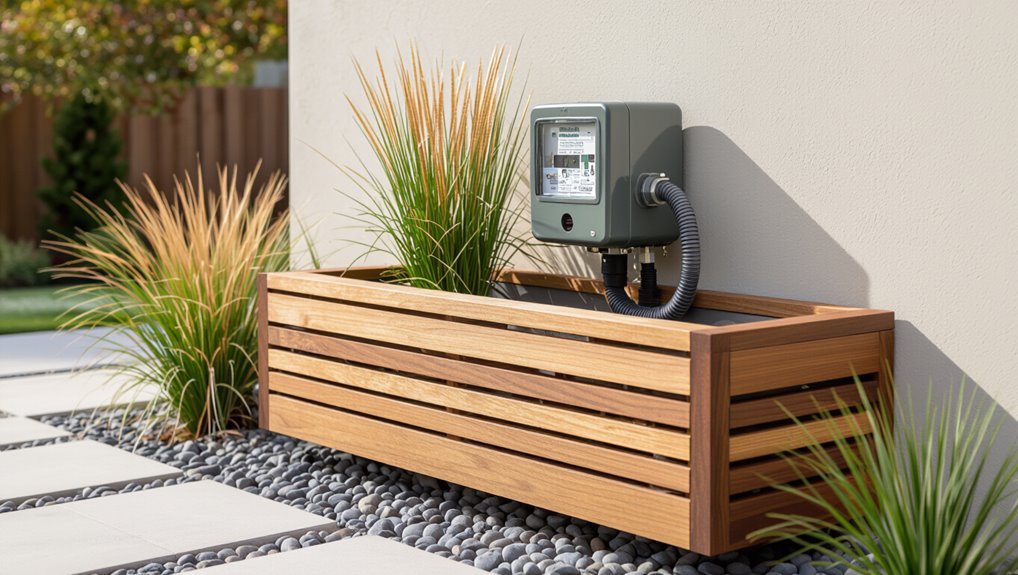
Homeowners often seek to hide gas meters for aesthetic reasons, to reduce safety hazards, or to improve resale appeal.
Before making any modifications, legal and safety considerations—such as clearance requirements and access for emergency crews—must be reviewed.
Consultation with the gas company or a licensed professional is recommended whenever altering or enclosing meter equipment.
Why people hide gas meters (aesthetic, safety, resale)
Because exposed gas meters can disrupt a property’s appearance and pose perceived risks, many residents seek ways to conceal them.
Homeowners consider how to disguise a gas meter to improve curb appeal, reduce visual clutter, and create a safer-feeling environment.
Concealment can also enhance resale value by presenting cleaner facades, addressing buyer preferences while maintaining necessary access and function.
Legal and safety considerations before making changes
While many seek to conceal gas meters to improve appearance or perceived safety, any modification must be weighed against legal, utility, and safety requirements.
Homeowners should confirm local codes, easements, and setback rules; maintain required clearances and unobstructed access for emergency shutoffs and inspections; avoid combustible materials near fittings; and document compliance to prevent liability, fines, or voided insurance.
When to consult your gas company or a licensed professional
Many situations warrant contacting the gas company or a licensed professional before attempting to conceal a meter: any work that could restrict access, alter clearances, involve structural changes, or attach materials to piping.
Homeowners should consult for code interpretation, required permits, safe setback measurements, and utility-specific restrictions.
Engage a licensed plumber or gas technician for modifications, inspections, or when uncertainty exists to guarantee compliance and safety.
Quick Practical Options to Disguise a Gas Meter Without Blocking Access
Homeowners can consider several quick, practical ways to soften the appearance of a gas meter while keeping it accessible.
Options include removable decorative screens or enclosures, lattice panels with planters, vertical gardens that leave service panels clear, and small decorative fences or picket enclosures.
Each solution balances aesthetics with the need for unobstructed access for readings and maintenance.
Removable decorative screens and enclosures
A few simple removable screens and lightweight enclosures offer an effective way to conceal a gas meter without impeding access for readings, maintenance, or emergency shutoff.
Prefabricated metal or weatherproof composite panels mounted with quick-release brackets allow unobstructed removal. Vents and cutouts preserve airflow and valve visibility.
Choose noncombustible materials, guarantee secure but tool-free access, and comply with local utility rules.
Lattice panels and planter screens for partial concealment
Lattice panels and planter screens provide a lightweight, semi-open solution for partially concealing a gas meter while maintaining visibility and airflow.
They attach to walls or freestanding frames, offering adjustable height and removable panels for service access.
Materials like rot-resistant wood or powder-coated metal resist weathering.
Small planter boxes can soften appearance without obstructing valves or gauges and allow quick removal for inspections.
Vertical garden and living wall ideas that keep meters accessible
When designed with removable panels and clear service gaps, vertical gardens and living walls can camouflage a gas meter while preserving full access for inspections and maintenance.
Modular planter boxes, hinged frames, and Velcro-secured fabric pockets allow quick removal. Choose shallow pots, noninvasive vines, and labeled access points.
Guarantee irrigation avoids fittings and follow local codes; installers should prioritize unobstructed sightlines for meter readers.
Small decorative fences and picket enclosures
Moving from living walls to simpler screen solutions, small decorative fences and picket enclosures offer a quick, tidy way to conceal a gas meter while keeping it accessible.
Constructed from rot-resistant wood, metal or composite, they provide airflow and visibility gaps, hinged or removable panels for service access, and customizable height and paint.
Confirm setbacks, clearances and local code compliance before installation.
Step-by-Step Guide to Building a Compliant Meter Cover
The section outlines precise steps for measuring required clearances and access paths to guarantee legal and safe operation.
It then covers selecting noncombustible, ventilated materials and designing a hinged or removable panel that preserves access.
Finally, it describes attaching and securing the cover without altering the meter or piping.
Measuring clearances and access requirements
Before any fabrication begins, measure the meter and surrounding space to confirm required clearances and unobstructed access for operation, inspection, and emergency shutoff.
Record horizontal and vertical distances, note pipe protrusions, valve locations, and swing directions of service components.
Verify local code minimums and allow extra gap for tools and technician movement.
Create a scaled template to guide construction and placement.
Choosing materials that meet fire and ventilation needs
Several key material properties—noncombustibility, corrosion resistance, and sufficient airflow—determine whether a meter cover will satisfy fire and ventilation requirements.
Suitable choices include metal mesh, perforated stainless steel, and fire-rated cement board. Materials should resist rust, avoid off-gassing, and permit cross-ventilation.
Fasteners and finishes must also meet local codes; verification with the utility or authority having jurisdiction is essential.
Constructing a hinged or removable panel
Begin by planning the panel layout around meter dimensions, clearance requirements, and local code constraints to guarantee safe access, adequate ventilation, and unobstructed emergency shutoff.
Measure precisely, cut corrosion-resistant panels, and frame with spaced stiles to allow airflow.
Install durable hinges or removable fasteners on the frame, align for full swing or lift-off clearance, and finish edges to prevent snags while preserving inspection access.
Attaching and securing without altering the meter or piping
After the hinged or removable panel is fitted and swung clear to confirm access and airflow, attention turns to fastening the cover so it neither touches nor alters the meter, piping, or regulators.
Mount framing to surrounding wall, not to gas hardware, using brackets or anchors set minimum clearance.
Use noncorrosive fasteners, vibration-isolating pads, and tamper-resistant screws; label for emergency access.
Material Options Compared
The author compares common sheltering materials by weighing durability, maintenance, and regulatory limits.
Treated and untreated wood differ in rot resistance and chemical concerns, while metal screens and powder-coated frames offer strength but may face code or ventilation restrictions.
Composite and PVC panels reduce upkeep and pose fewer corrosion risks, and living materials such as trellises require ongoing irrigation and growth management.
Wood (treated vs. untreated) pros and cons
Wood is a common choice for concealing a gas meter, and the decision between treated and untreated varieties hinges on durability, maintenance, and safety considerations.
Treated wood resists rot and insects, lasting longer with less upkeep but may contain chemicals.
Untreated wood is more natural and easier to repurpose but requires regular sealing or replacement.
Both must allow easy access and ventilation.
Metal screens and powder-coated frames durability and restrictions
Metal screens paired with powder-coated frames offer a durable, low-maintenance option for concealing a gas meter while maintaining required airflow and access.
Corrosion resistance and rigid structure suit outdoor exposure; finishes resist chipping and fading.
However, local codes may restrict enclosure depth, visibility for inspection, and materials near service lines.
Professional installation guarantees vents, clearance, and serviceability compliance.
Composite and PVC panels maintenance and safety
After discussing metal screens and powder-coated frames, attention turns to composite and PVC panels as alternative cladding for concealing a gas meter.
Composite offers durability and low upkeep; PVC is lightweight and inexpensive.
Both require noncombustible clearances, regular inspections for cracks or warping, and secure removable access panels.
Avoid painting with flammable coatings and guarantee ventilation around regulators per local codes.
Living materials (plants, trellis) irrigation and growth management
When choosing living materials and trellis systems to screen a gas meter, consider irrigation needs, growth habits, and maintenance access together: drought-tolerant shrubs and native vines reduce watering frequency but may require seasonal pruning to prevent encroachment on regulators.
Meanwhile, faster-growing climbers demand more frequent trimming and stronger trellis supports to control vigor.
Plan drip irrigation, root barriers, and removable panels for safe access.
Ensuring Safety and Compliance
Discussion of disguising a gas meter must prioritize minimum clearance and ventilation requirements to preserve safe operation.
It should also address the avoidance of combustible materials and nearby heat sources, clear labeling and unobstructed emergency access.
Finally, the process for documenting changes and obtaining approval from the utility company should be outlined.
Minimum clearance distances and ventilation requirements
Clearances and ventilation are critical for any gas meter concealment project to prevent accumulation of leaked gas and to allow unobstructed access for service and emergency personnel.
Local codes specify minimum horizontal and vertical clearances from doors, windows, and air intakes.
Enclosures must include permanent vents near top and bottom, maintain manufacturer clearance, and permit easy meter removal.
Confirm requirements with utility authorities.
Avoiding combustible materials and heat sources
After confirming required clearances and ventilation, attention must turn to eliminating nearby combustible materials and heat sources that could ignite leaked gas or damage equipment.
Surfaces and coverings near the meter should be noncombustible; avoid wood, fabric, mulch, and stored fuels.
Keep electrical devices, grills, heaters, and direct sunlight exposure distant.
Regular inspections guarantee nothing accumulates or is relocated too close.
Labeling and emergency access best practices
Label the meter and surrounding piping clearly and permanently with the utility’s required identification, hazard warnings, and emergency shutoff instructions so responders and occupants can act quickly; durable, weather-resistant tags or engraved plates placed at eye level and on access panels minimize misidentification.
Maintain unobstructed clearances, provide a visible access path, record lockbox or key locations, and guarantee labels contrast with backgrounds for rapid recognition.
How to document and get approval from utility companies
With identification and access measures in place, the next step is to document modifications and secure approval from the utility provider to guarantee work complies with regulations and does not create safety or service risks.
Submit plans, photos, and materials lists; request written confirmation of acceptability.
Coordinate inspections, note required clearances, and retain permits and correspondence.
Follow provider guidance for any required revisions.
Aesthetic Approaches by Home Style
Design choices for hiding a gas meter should reflect the home’s architectural style and available space.
For traditional and cottage properties, decorative enclosures and painted panels can complement period details, while modern homes benefit from minimalist screens and integrated materials.
In urban townhomes and suburban lots, compact cabinets or strategic landscaping offer practical concealment without compromising access or curb appeal.
Traditional and cottage-style meter disguises
When aiming for a traditional or cottage look, homeowners often choose meter enclosures that echo classic architectural details—shiplap panels, beadboard, or painted wood trim—to integrate the meter into the facade without drawing attention.
Designs incorporate small pitched roofs, lattice vents, and climbing-plant frames that maintain airflow and access.
Materials match siding and paint; hardware remains unobtrusive and removable for service.
Modern and minimalist concealment ideas
Although often understated, modern and minimalist concealment emphasizes clean lines, neutral materials, and unobtrusive integration so the meter reads as a deliberate, pared-back element rather than an afterthought.
Solutions favor slim metal or slatted screens, flush-mounted panels, and tonal paint coordination.
Designs prioritize ventilation and access, using simple hardware and removable sections to maintain function while preserving a restrained, contemporary facade.
Urban townhomes and small-space solutions
In dense urban townhomes where outdoor space is limited, concealment strategies for gas meters must balance visual restraint with strict functional needs.
Compact solutions include narrow vented cabinets, vertical slatted screens, and painted metal housings that match facades.
Designs prioritize airflow, meter visibility, and service access while using slim profiles and durable materials to maintain curb appeal without encroaching on walkways or entrances.
Landscaping integration for suburban properties
Moving from compact urban concealment tactics to suburban landscapes, designers can leverage plantings, hardscape, and architectural elements to integrate gas meters without compromising safety or service access.
Strategic shrub placement, low trellises, decorative fencing with hinged panels, and mulched beds guide sightlines while preserving clearance.
Durable materials and clear signage guarantee maintenance access; native, low-maintenance plantings minimize trimming near meter zones.
Cost Estimates and Timeframes
Estimated costs and typical timelines for disguising a gas meter vary widely depending on materials and complexity, with DIY projects often limited to lower-cost hides completed in a weekend.
Hiring a contractor or handyman generally increases expense but can shorten duration and guarantee code-compliant work.
Permit requirements and utility inspections can add both time and fees, so they should be confirmed before starting.
DIY cost breakdown and typical timelines
Any homeowner considering a DIY gas meter disguise should budget carefully for materials, tools, and potential professional consultations.
Typical material costs range from $30 for basic screens to $200+ for custom lattice or plants. Tools add $20–$100 if not owned.
Simple projects take a few hours; more elaborate builds and planting require one to three weekend days, allowing drying and settling time.
Hiring a contractor or handyman what to expect
When hiring a contractor or handyman to conceal a gas meter, homeowners should expect clearer timelines and higher labor costs than DIY options, along with professional assessments to guarantee safety and code compliance.
Contractors typically provide written estimates detailing materials, labor rates, and schedule.
Expect a day to several days for planning and installation depending on complexity; warranties and cleanup are commonly included.
When permits or utility inspections add time or expense
If local permits or utility inspections are required, they can extend project timelines and add fees that materially affect overall cost estimates.
Homeowners should confirm permit needs, inspection schedules, and associated costs before design or purchase.
Delays may alter contractor availability and phased work.
Budget contingencies of 10–25% for permit, inspection, or schedule-related expenses and expect added administrative coordination time.
Common Mistakes and How to Avoid Them
Common pitfalls include blocking emergency access or shutoff valves, using materials that violate codes, overplanting near ventilation, and neglecting regular maintenance checks.
Each mistake can create safety hazards or lead to costly corrections.
Guidance focuses on practical steps to prevent these issues while keeping the meter accessible and compliant.
Blocking emergency access or shutoff valves
Although aesthetic modifications can improve curb appeal, covering or crowding access to emergency shutoff valves poses serious safety and legal risks.
Obstructed valves delay responders, impede quick shutoff, and may breach regulations. Proper disguises maintain clear, unobstructed paths and visible valve markers.
Use removable panels, hinged screens, or spaced planting to guarantee immediate access while preserving appearance and compliance.
Using inappropriate materials that violate codes
When materials that do not meet local building or utility codes are used to hide a gas meter, they can create fire hazards, impede inspections, and result in fines or removal orders.
Using flammable cladding, improper fasteners, or noncode enclosures compromises safety and compliance.
Select approved, noncombustible materials, verify specifications with the utility, and obtain permits or written approval before installing any concealment.
Overplanting or obstructing ventilation
If shrubs, vines, or planters are placed too close to a gas meter or stacked against its enclosure, they can block required airflow, conceal leaks, and hinder service access.
Overplanting reduces ventilation, traps moisture, and increases corrosion risk.
Maintain clearances specified by local codes, use low-profile planting, install removable screening, and keep growth trimmed to preserve safety and unimpeded technician access.
Neglecting maintenance and checks
After addressing how vegetation and obstructions can compromise airflow and access, attention turns to routine upkeep: failing to perform regular inspections and maintenance is a common error that increases safety risks and can lead to costly repairs.
Owners should schedule periodic visual checks, clear debris, verify seals and fittings, and arrange professional servicing when recommended.
Neglect shortens equipment life and raises liability.
Real-World Examples and Before/After Ideas
Real-world setups illustrate practical ways to hide a gas meter without compromising access or safety. Images and brief descriptions show how simple elements can transform an eyesore into a cohesive part of the yard.
The following examples offer quick inspiration for replicable before-and-after results.
- Screen-and-planter combo placed a few inches in front of the meter to allow maintenance access
- Compact wooden frame with climbing plants that softens the visual impact
- Built-in fence panels designed to match existing siding for a seamless look
- Concealed meter enclosure with a matching gate and latch that maintains code-compliant clearance
- Painted lattice with hinging panel for easy service access and uniform appearance
Simple screen-and-planter combos
When fitted thoughtfully, a simple screen-and-planter combo can turn a utilitarian gas meter into an attractive, low-profile element of a yard without obstructing access or violating utility regulations.
Examples show narrow slatted screens paired with shallow trough planters for seasonal blooms, or lattice panels with evergreen pots.
Before/after photos emphasize maintained clearances, removable mounts for inspections, and coordinated colors that blend with landscaping.
Built-in fence panels that match existing siding
A cohesive approach uses built-in fence panels that replicate a home’s siding to conceal a gas meter while maintaining a seamless exterior appearance.
Panels are framed to allow a hinged or removable section for inspections and painted or clad in the same material and color as the house so the addition reads as original construction.
Examples show before-and-after photos where alignment, shadow lines and trim restore visual continuity while preserving access.
Concealed meter with matching gate and latch
Although often small in scale, a purpose-built gate and latch assembly that echoes nearby fencing or trim can transform a gas meter from an eyesore into an integrated element of the yard; matching materials, proportions, and finish create a deliberate cover that stays fully accessible through a discreetly hinged or removable section.
Examples show matching picket gates, metal frames clad in siding, and simple latches allowing easy utility access while concealing hardware.
Maintenance Checklist After Installing a Disguise
A concise maintenance checklist guarantees the disguised gas meter remains safe and functional.
It should include a routine inspection schedule, seasonal care instructions for plant-based covers, and steps for quickly removing panels to grant emergency access.
Regular entries documenting inspections and any adjustments help maintain compliance and readiness.
Routine inspection schedule
Several brief, regular checks will guarantee the disguise remains secure, unobstructed, and does not interfere with meter function or access.
Inspect monthly for signs of damage, corrosion, pests, or moisture. Verify clear access and visible shutoff labels.
Test fastenings quarterly and repair loose panels immediately. Record findings and actions in a log.
Notify utility provider promptly if any safety concerns arise.
Seasonal care for plant-based covers
Rotate seasonal tasks to match plant growth cycles and local climate, focusing on safety and unobstructed meter access.
Trim, deadhead, and remove invasive growth to prevent interference.
Adjust watering and mulch for seasonal moisture.
Stake or prune to keep clear sightlines and service clearance.
Inspect for pests, disease, and root spread; replace plants that risk enclosure or damage to meter fittings.
How to quickly remove panels for emergency access
Make certain panels are designed for swift removal so emergency responders or service technicians can access the meter without delay.
Use quick-release fasteners, labeled handholds, and concealed hinges that swing clear.
Keep tools minimal—quarter-turn screws or captive bolts.
Store instructions and spare fasteners nearby.
Test removal periodically and document access steps for household members and service personnel to prevent delays during emergencies.
Resources and Who to Contact
For guidance on disguising a gas meter, homeowners should compile a list of questions for their gas provider about clearance, access, and permitted modifications.
They can locate qualified installers and landscape professionals through utility-approved contractor lists, trade associations, or local licensing boards.
Relevant codes, standards, and further reading from the utility, local building department, and recognized standards bodies should be consulted before any work begins.
Questions to ask your gas provider
Who should be contacted when questions about relocating, enclosing, or concealing a gas meter arise?
The gas provider’s customer service or technical support should be contacted first.
Ask about permitted alterations, required clearances, inspection and permit processes, approved enclosure materials, and potential costs.
Request written approval, timelines, and any contractor qualifications.
Document all communications for compliance and safety.
How to find qualified installers and landscape professionals
When seeking qualified installers or landscape professionals to handle meter relocation, enclosures, or concealment, homeowners should prioritize contractors with verifiable gas utility experience, proper licensing, and insurance.
Check references, recent project photos, and customer reviews.
Request written estimates, timelines, and proof of permits.
Consult local utility or trade associations for recommended providers and confirm familiarity with utility coordination procedures before hiring.
Relevant codes, standards, and further reading
Although local jurisdictions and utility companies vary, homeowners should consult a concise set of authoritative documents—building and gas codes, utility-specific standards, and manufacturers’ installation instructions—before planning meter concealment or relocation. Relevant contacts include local building departments, gas utilities, and certified installers. Helpful resources:
| Resource | Purpose | Contact |
|---|---|---|
| Building code | Clearance, materials | Local building dept |
| Gas utility standards | Meter access rules | Utility customer service |
| Manufacturer guide | Installation limits | Product support |
Conclusion
Careful consideration creates confident choices: conscientious homeowners can craft clever covers that conceal clunky components while conserving clearances and complying with codes. By balancing beauty, breathability and backflow of access, proponents protect property value and public safety. Simple solutions — screen panels, painted enclosures or plantings placed with professional permission — provide practical privacy without peril. Consistent care, codes consultation and common‑sense construction culminate in compliant, classy concealment.
