
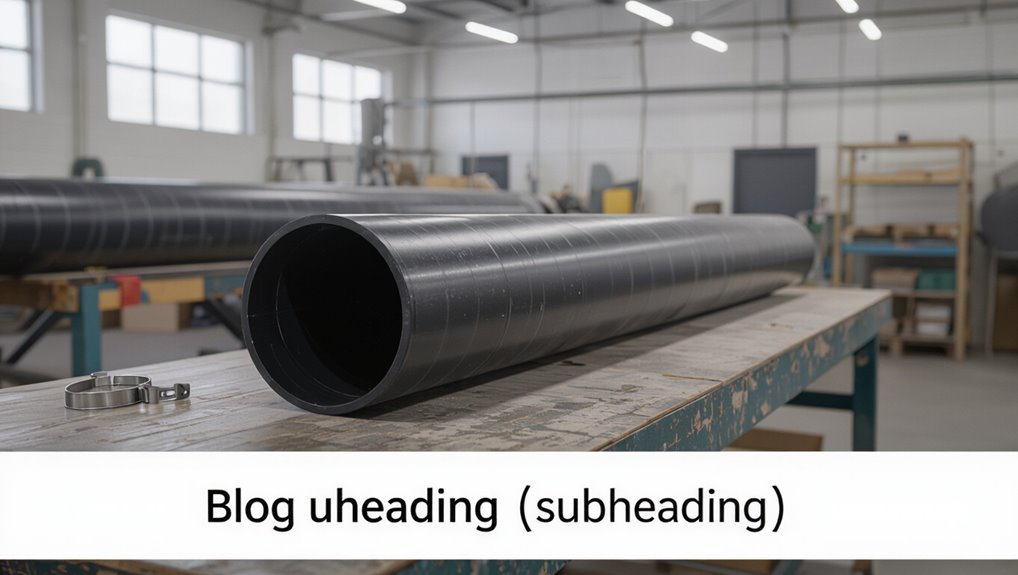
What Is an HDPE Pipe? Beginner’s Guide to Uses & Benefits
An HDPE pipe, or high-density polyethylene pipe, is a durable thermoplastic tubing commonly used for transporting potable water, gas, sewer, drainage, and various industrial applications. Its seamless, lightweight, and flexible design features a smooth inner surface that minimizes friction while resisting corrosion, chemicals, and abrasion. Available in a range of sizes from small service lines to large mains, HDPE pipes are typically joined through fusion for a leak-free connection. Their long lifespan and low maintenance requirements contribute to a lower lifecycle cost, making them a reliable choice for various piping needs.
What Does “HDPE Pipe” Mean?
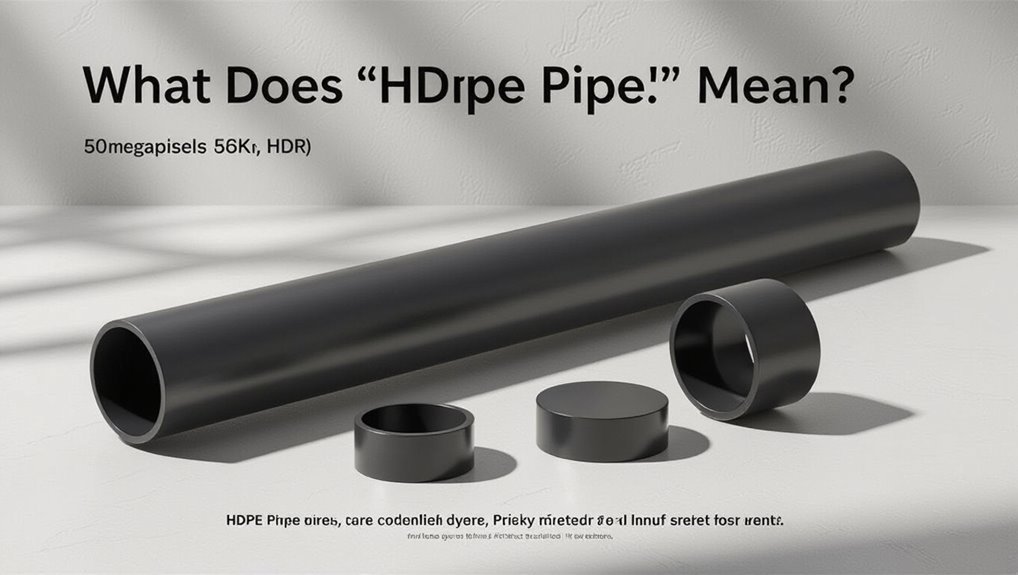
HDPE pipe refers to piping made from high-density polyethylene, a thermoplastic polymer known for its strength, chemical resistance, and flexibility. It denotes seamless, extruded tubes used for fluid and gas conveyance, produced in coils or rigid lengths with smooth inner surfaces that reduce friction. Joints employ heat fusion or mechanical fittings to create leak-resistant systems.
Typical wall options and pressure ratings suit potable water, sewer, drainage, gas distribution, and industrial lines. Longevity, corrosion resistance, and low maintenance characterize installations, while standardized sizes and codes guide selection and guarantee compatibility with existing infrastructure and regulatory requirements.
How Is HDPE Different From PVC and Metal Pipes?
HDPE is especially lighter and more flexible than PVC and metal pipes, which simplifies handling and allows for bending around obstacles.
Unlike metal, HDPE resists corrosion and many chemicals, extending service life in aggressive environments.
Compared with PVC, HDPE’s flexibility and chemical resistance make it better suited for dynamic loads and certain industrial applications.
Weight And Flexibility
Compared with PVC and metal pipes, high-density polyethylene offers a conspicuously lower weight and greater flexibility, making it easier to transport, handle, and install in confined or curved runs. Its lower mass reduces lifting equipment needs and speeds deployment, while flexibility permits bending around obstacles and reduces joint count.
Installers benefit from fewer fittings and faster trenchless techniques. Load-bearing behavior differs: HDPE distributes stresses via deformation rather than rigid resistance. Thermal expansion is higher, requiring expansion considerations. Material memory allows rebend without fracture.
Selected fusion joining preserves flexibility and continuity, distinguishing HDPE in practical field applications.
- Reduced weight lowers logistics and labor costs.
- Flexibility decreases fittings and enables curved alignments.
- Different stress response demands installation adaptation.
Corrosion And Chemical Resistance
Beyond weight and flexibility, the material’s chemical behavior and resistance to environmental degradation set it apart from PVC and metal alternatives. HDPE exhibits outstanding resistance to a wide range of acids, bases, salts, and solvents, reducing failure risk in aggressive environments.
Unlike metals, HDPE does not corrode or rust, eliminating galvanic reactions and scale buildup that impede flow. Compared with PVC, HDPE tolerates certain solvents and higher impact stresses without brittle fracture.
Seamless heat-fused joints further prevent leaks common at mechanical connections. These traits make HDPE preferred for chemical handling, sewage, and buried utilities where longevity and low maintenance matter.
How to Decide If HDPE Is Right for Your Project?
Selection of HDPE should begin with an assessment of project water requirements, including pressure, flow rates, and chemical compatibility.
Next, budget and lifecycle costs—initial material price, maintenance needs, and expected longevity—must be compared against alternatives.
Finally, installation and site conditions such as trenching constraints, jointing method suitability, and access determine practical feasibility.
Project Water Requirements
When evaluating whether HDPE is appropriate for a project, engineers first quantify the system’s water demands—peak flow, average daily use, and any seasonal or emergency surges—because these metrics determine required pipe sizes, pressure ratings, and network layout.
The assessment also considers water quality, transient pressures, and future expansion.
HDPE’s flow-smoothing inner surface and flexibility suit variable demands, while jointing methods affect allowable operating pressures.
Site-specific factors—terrain, available pumping, and redundancy needs—shape routing and contingency capacity.
Selection follows matching material performance to quantified demands, ensuring hydraulic performance and reliability without overdesign.
- Peak and sustained flow
- Pressure transients and surge control
- Quality and contamination risk
Budget And Lifecycle Costs
In evaluating whether HDPE is cost-effective for a given project, owners and engineers compare upfront capital expenses, installation labor, and long-term operating and maintenance costs against alternative materials. Budgeting includes pipe material price, fittings, jointing equipment, and permitted contingency.
Lifecycle analysis factors expected service life, corrosion resistance, leak frequency, repair complexity, and energy losses from hydraulic inefficiencies. Lower maintenance, fewer emergency repairs, and reduced replacement frequency often offset higher initial cost.
Financial models should include net present value, warranty terms, and expected downtime costs. Procurement decisions hinge on comparative total cost of ownership over the asset’s design life.
Installation And Site Conditions
Against the backdrop of soil types, trenching logistics, and traffic constraints, determining whether HDPE is appropriate begins with a clear assessment of site-specific installation conditions. The decision considers soil corrosivity, groundwater, load bearing, and required pipe flexibility. Construction access, available equipment, and jointing method preferences affect schedule and cost. Traffic management, depth, and backfill materials influence long-term performance. Permit constraints and environmental protections can favor trenchless options where HDPE excels.
- Evaluate soil mechanics, groundwater, and embedment compatibility.
- Assess access, equipment, and preferred fusion or mechanical joints.
- Review traffic loads, permits, and trenchless feasibility.
Materials Used in HDPE Pipe
Drawing from a limited set of polymers and additives, HDPE pipe construction centers on high-density polyethylene resin formulated for strength, environmental stress crack resistance, and long-term flexibility.
Common grades include PE63, PE80, and PE100, each offering increasing tensile strength and pressure ratings. Additives such as antioxidants, UV stabilizers, and processing aids enhance durability and lifespan. Colorants and traceability markers support identification and quality control.
Reinforcing options—carbon black for UV protection or mineral fillers for stiffness—are selected sparingly to preserve ductility. Jointing materials like electrofusion fittings and compatible fusion rods guarantee system integrity without altering base resin properties.
How HDPE Pipes Are Manufactured
Beginning with carefully selected resin and additives, HDPE pipe manufacturing converts raw materials into continuous, pressure-rated tubing through extrusion and downstream forming processes.
Melted polymer is forced through a die to form a smooth bore, then calibrated and cooled to stabilize dimensions.
Quality is assured by inline inspection and non-destructive testing.
Fusion joining techniques weld sections for length and integrity.
Secondary processes add corrugation, co-extrusion layers, or protective coatings where needed.
Production records document material batches, process parameters, and test results to maintain traceability and compliance with standards.
- Extrusion and calibration
- Inspection and testing
- Secondary forming and documentation
HDPE Pipe Sizes, Dimensions, and Pressure Ratings
With respect to geometry and performance, HDPE pipes are specified by outside diameter (OD), wall thickness (or standard dimension ratio, SDR), and a corresponding pressure rating expressed as a maximum working pressure at a given temperature.
Manufacturers offer OD sizes from small service lines (e.g., ¼–2 inches) to large mains (up to 63 inches or more).
SDR indicates the ratio of OD to wall thickness; lower SDR equals thicker walls and higher pressure capacity.
Pressure ratings (e.g., 80, 125, 160 psi) derive from material grade, SDR, and temperature.
Selection matches hydraulic needs, installation methods, and long-term stress considerations to assure safe operation.
How to Read HDPE Pipe Markings and Codes
The section explains how to interpret the stamped legends found along HDPE pipe lengths, showing where to find size, manufacturer, and installation information.
It clarifies SDR numbers and pressure ratings so readers can match wall thickness to allowable working pressure.
It also outlines common material and approval codes used to verify polymer type and regulatory compliance.
Reading Pipe Stamps
Many HDPE pipes include a continuous stamped legend along the length that encodes material type, size, pressure rating, manufacturing standard, and production data. The legend typically uses abbreviations (e.g., PE100), nominal diameter, manufacturing date codes, batch numbers, and standard references. Reading begins by locating the manufacturer block, then interpreting material grade and nominal size, followed by relevant standard and traceability codes. Stamps may also show temperature or application limits and certification marks. Proper interpretation guarantees correct installation and warranty validation.
- Identify manufacturer, material grade, and nominal diameter.
- Note standard references and certification symbols.
- Record date and batch for traceability.
Understanding SDR And Pressure
In reading HDPE pipe stamps, SDR (Standard Dimension Ratio) and pressure ratings form a compact code that defines wall thickness relative to diameter and the pipe’s allowable working pressure at a given temperature.
The stamp shows SDR as a number (e.g., SDR11), meaning nominal outside diameter divided by wall thickness. Lower SDR indicates thicker wall and higher pressure capacity. Pressure ratings are given in PSI or bar for a reference temperature, often 73°F (23°C).
Combined, SDR and pressure let users match pipe size to system pressure requirements. Verify markings before selection and installation to assure safe performance.
Material And Approval Codes
Marked along the pipe’s length, material and approval codes concisely convey the resin type, manufacturing standard, and regulatory certifications that determine suitability for specific applications.
Stamped markings typically include resin designation (HDPE followed by density grade or resin code), pipe size and SDR, pressure rating, production date and manufacturer ID, plus approval symbols (NSF, ISO, ASTM, AWWA) when certified for potable water, gas, or industrial use.
Interpreting these codes guarantees correct selection, installation, and compliance.
Users should cross‑reference markings with product datasheets and relevant standards to confirm compatibility and traceability.
- Resin and grade
- Size, SDR, pressure
- Certification and traceability
Why Engineers Choose HDPE Pipe
Engineers frequently specify HDPE pipe because it combines high tensile strength, chemical resistance, and long-term flexibility with low life-cycle costs, making it suited for water, gas, industrial, and trenchless applications. Engineers value its fusion-welded joints that reduce leak points, corrosion-free service that lowers maintenance, and fatigue resistance that endures dynamic loads. Design confidence grows from predictable material properties, documented standards, and proven performance in demanding installations. Risk reduction, installation speed, and sustainability align with project goals, so specification favors HDPE when durability, economy, and adaptability are priorities.
| Reliability | Economy | Longevity |
|---|---|---|
| Trust | Relief | Assurance |
Common Industries That Use HDPE Pipe
Utility networks, industrial plants, and municipal systems commonly deploy HDPE pipe because its combination of strength, flexibility, and chemical resistance meets the varied demands of water, gas, mining, and wastewater applications.
Industries often favor HDPE where durability, leak resistance, and low maintenance reduce lifecycle costs.
Typical sectors include municipal infrastructure, energy and utilities, and resource extraction.
Selection depends on pressure requirements, chemical exposure, and installation constraints.
Standards and jointing methods guide specification and inspection to assure long-term performance across environments and load conditions.
- Municipal infrastructure
- Energy and utilities
- Mining and resource extraction
HDPE Pipe for Potable Water Systems
HDPE pipe is widely specified for potable water systems because it maintains water quality through inert material properties and leak-free joints.
Its resistance to corrosion and biological growth guarantees long-term reliability and reduced maintenance.
Engineers and utilities often favor HDPE where durable, safe drinking water transport is required.
Safe Drinking Water Transport
When transporting potable water, high-density polyethylene pipe offers a corrosion-resistant, flexible, and durable conduit that meets stringent public-health standards.
It is compatible with disinfectants, resists biofilm formation when properly installed, and maintains water quality over long runs.
Installation options include heat-fused joints that minimize leak risk and buried applications that reduce contamination exposure.
Regulatory approvals and certification schemes guide material selection and pressure ratings for municipal and rural systems.
- Material compatibility guarantees no taste or odor transfer.
- Fusion welding reduces leak points and pathogen ingress.
- Pressure-rated options support varied distribution network demands.
Corrosion-Free Longevity
Corrosion-free performance is a defining advantage of high-density polyethylene pipe in potable water systems, providing decades-long service by resisting chemical attack, electrochemical degradation, and soil-borne corrosives that compromise metal alternatives.
HDPE’s inert polymer composition prevents rust, pitting, and undermining from stray currents, eliminating cathodic protection and aggressive coating needs.
Smooth, non-reactive surfaces maintain hydraulic capacity and water quality, reducing biofilm adhesion and contaminant leaching.
Durability lowers repair frequency and lifecycle costs while enabling reliable pressure retention under varied soil chemistries.
Design flexibility and proven longevity make HDPE a practical choice for long-term potable water conveyance.
HDPE Pipe for Sewer and Waste Collection
In sewer and waste collection systems, high-density polyethylene (HDPE) pipe offers a combination of flexibility, chemical resistance, and long service life that makes it well-suited for conveying domestic sewage, industrial effluent, and stormwater over both gravity and pressure mains.
Its smooth interior reduces clogging and friction losses, while fusion joints provide leak-free connections, lowering infiltration and exfiltration risks.
Durable against root intrusion and ground movement, HDPE simplifies installation in trenchless projects.
Maintenance needs are minimal, and lifecycle costs compare favorably to traditional materials.
- Reduced leakage and contamination risk
- Long-term cost efficiency
- Adaptable to varied site conditions
Why HDPE Is Used in Gas Distribution
HDPE is widely chosen for gas distribution because its inherent resistance to corrosion reduces long-term maintenance and leakage risks.
Its flexibility allows routes with fewer fittings and better accommodation of ground movement.
Heat-fused joints create continuous, high-integrity connections that minimize leak points compared with many alternative materials.
Corrosion Resistance Benefits
One key reason polyethylene pipes are preferred for gas distribution is their inherent resistance to the electrochemical and chemical processes that degrade metal pipelines; the polymer matrix does not support rusting and is impervious to many soil-borne contaminants, stray electrical currents, and common corrosive agents.
This durability reduces maintenance, extends service life, and minimizes leak risks in varied environments. Unlike metallic systems, HDPE avoids galvanic interactions and localized pitting, offering predictable performance where soils or stray currents cause rapid metal failure.
- Lower lifecycle corrosion costs
- Consistent barrier against soil chemistry
- Reduced inspection frequency
Flexibility And Joint Integrity
Because of its high ductility and low modulus, polyethylene piping negotiates ground movement and thermal expansion without compromising pipeline integrity. HDPE’s flexibility reduces stress at bends and under load, limiting fracture risk in gas distribution. Joint integrity, achieved through heat fusion and mechanical couplers, creates continuous, leak-resistant systems with fewer failure points than rigid materials. Trained installation and quality control guarantee consistent fusion strength and long-term performance. Maintenance demands are lower due to fewer joints and resilient material behavior. The table summarizes comparative attributes relevant to pipeline planning and operational reliability.
| Attribute | Benefit | Impact |
|---|---|---|
| Flexibility | Absorbs movement | Fewer breaks |
| Joints | Fusion continuity | Leak resistance |
HDPE Pipe for Irrigation and Agriculture
Durable, flexible piping has made high-density polyethylene a preferred choice for irrigation and agricultural water systems, offering resistance to corrosion, chemical exposure, and UV degradation while maintaining flow efficiency.
It supports drip, sprinkler, and mainline applications with low maintenance needs, simple fusion joins, and long service life.
Lightweight coils ease installation across fields and orchards; abrasion resistance suits buried and exposed runs.
Its non-toxic composition protects crop quality and reduces contamination risk.
Design versatility accommodates variable pressures and terrain, enabling efficient water delivery and conservation in modern agricultural practices.
- Longevity through UV and chemical resistance
- Easy fusion joining and repairs
- Compatibility with diverse irrigation methods
HDPE Pipe in Industrial Chemical Lines
How effectively can HDPE meet the demands of industrial chemical conveyance? HDPE offers strong chemical resistance to many acids, bases, and solvents, minimizing corrosion-related failures. Its smooth internal surface reduces fouling and facilitates cleaning. Flexible joints accommodate thermal expansion and vibration, lowering leak risk.
Selection requires compatibility verification for specific chemicals and temperatures; aggressive organics, aromatics, or high-temperature streams may need alternative materials or linings. Proper fittings, welding techniques, and grounding prevent electrostatic hazards. Regular inspection and adherence to industry standards guarantee reliable service life. Overall, HDPE is a cost-effective, low-maintenance option for many chemical line applications.
Why HDPE Is Chosen for Mining and Slurry Systems
While HDPE’s resistance to many corrosive chemicals and its smooth, low-friction bore suit industrial piping, those same properties make it particularly well-suited for mining and slurry systems where abrasive solids, heavy solids loading, and frequent handling cycles challenge other materials.
HDPE offers impact toughness, abrasion resistance, and flexibility that reduce failure from cyclic stresses and settling.
Its welded joints minimize leak points and simplify long runs.
Lightweight reels and fittings speed installation in remote sites.
Material selection and wall thickness are matched to slurry characteristics to optimize service life and pumping efficiency.
- Abrasion resistance
- Joint integrity
- Installation efficiency
HDPE Pipe for Cable Conduit and Telecom Ducting
HDPE pipe is commonly specified for cable conduit and telecom ducting because its smooth bore and long lengths facilitate easy cable installation and pulling.
Its material properties and joint integrity provide reliable protection from electromagnetic and physical interference.
The pipe’s resistance to corrosion, fatigue, and environmental stress guarantees long-term durability for buried and ducted cable systems.
Easy Cable Installation
For straightforward telecom and power cabling, smooth-walled polyethylene conduits provide a durable, low-friction pathway that simplifies pulling, blowing, and later upgrades.
The material’s flexibility and continuous lengths reduce joint count and obstruction, speeding installation and lowering labor.
Installers benefit from lightweight handling, corrosion resistance, and compatibility with common lubricants and cable guides.
Predictable internal diameter supports efficient air-blown fiber techniques.
Minimal maintenance and straightforward inspection further shorten lifecycle costs.
Planning accommodates future capacity with spare conduits and pull ropes.
Typical advantages include:
- Faster pulls with reduced tension and fewer snags.
- Easier blowing for long fiber runs.
- Simple access for upgrades and repairs.
Protection From Interference
When routed alongside power lines or buried near electromagnetic sources, polyethylene conduits provide a physical barrier that helps shield telecom cables from mechanical damage and reduces exposure to stray currents and signal interference.
HDPE conduits act as non-conductive sleeves, limiting coupling from nearby energized conductors and preventing grounding paths that could introduce noise.
Smooth interiors and continuous joints minimize impedance discontinuities for fiber and coax runs.
Properly spaced conduit layouts, use of inner duct separation, and bonded metallic warning tapes further mitigate electromagnetic interaction.
Installation standards and correct routing choices guarantee consistent signal integrity for sensitive communications infrastructure.
Long-Term Durability
Over decades of service life, polyethylene conduits demonstrate sustained resistance to chemical attack, abrasion, and soil movement, making them a dependable choice for telecom ducting.
Their inert material resists corrosion and biological degradation, preserving structural integrity and preventing cable damage.
Low-friction interior surfaces reduce insertion forces and minimize wear during maintenance.
Flexible jointing accommodates ground shifts, limiting stress on cables.
Maintenance needs remain low, lowering lifecycle costs.
- Expected service life exceeding 50 years under normal conditions.
- UV-stabilized options for exposed runs extend outdoor durability.
- Fusion-welded joins create continuous, leak-resistant conduits.
How HDPE Handles Underground Trenchless Installations
In trenchless underground work, HDPE pipe is favored for its flexibility, joint integrity, and resistance to corrosion and abrasion. It adapts to curved bore paths, tolerates ground movement, and welds provide leak-free continuous runs. Installation methods like horizontal directional drilling, pipe bursting, and sliplining benefit from HDPE’s low friction and impact resistance. Lifespan expectations remain high when proper bedding, pull tensions, and thermal expansion are managed. Predictable stiffness simplifies design for live loads. Inspection and maintenance are straightforward with access points and fusion records.
| Advantage | Impact |
|---|---|
| Flexibility | Easier bores |
| Fusion joints | Leak resistance |
| Low friction | Easier pull-in |
| Corrosion resistance | Long life |
| Impact resistance | Damage tolerance |
Above-Ground Applications for HDPE Pipe
Although HDPE pipe excels in underground trenchless installations for its flexibility and fusion integrity, it also performs well in numerous above-ground settings where different stresses and exposures apply. Above-ground use leverages UV-stabilized formulations, lightweight handling, and thermal movement tolerance.
Common applications include irrigation conveyance, industrial process lines, and temporary water distribution. Proper supports, expansion joints, and UV inhibitors extend service life while preventing sagging, overstress, and surface degradation.
- Irrigation and landscape distribution: rapid installation, corrosion resistance, and freeze tolerance.
- Industrial and chemical transfer: compatible with many fluids and easy to reconfigure.
- Temporary and emergency supply lines: portable, quick-deploy, and durable.
How HDPE Resists Corrosion and Biological Growth
Resisting both electrochemical attack and the colonization of microbes, HDPE relies on its nonporous, chemically inert surface and high-density crystalline structure to minimize sites for corrosion and biological growth. Its resistance reduces maintenance and prevents pitting, crevice corrosion, and biofilm anchoring in potable, wastewater, and industrial systems.
| Property | Effect |
|---|---|
| Nonporous surface | Limits microbial adhesion |
| Chemical inertness | Resists acids, alkalis, salts |
| High crystallinity | Inhibits permeation and degradation |
| Smooth interior | Reduces biofilm formation |
Combined properties yield long service life and predictable performance in diverse environments.
What Temperature Limits Affect HDPE Performance?
Temperature affects HDPE performance in several key ways, including its maximum continuous operating temperature, susceptibility to brittleness in cold weather, and the magnitude of thermal expansion.
Engineers set pressure and service limits based on the polymer’s allowable temperature range to prevent deformation or creep.
Cold conditions increase fracture risk while temperature swings require accommodation for length changes in piping runs.
Maximum Operating Temperature
HDPE’s usable temperature range is constrained by its material properties and application conditions, with long-term continuous service typically limited to about 60°C (140°F) and short-term peaks tolerated somewhat higher depending on pressure, wall thickness, and resin grade.
Performance degrades as temperature rises: hydrostatic strength falls, creep increases, and chemical resistance can diminish.
Designers must balance operating temperature, internal pressure, and safety factors; elevated temperatures often require thicker walls or higher-pressure-rated compounds.
Known service limits are established in standards and manufacturer data sheets and should guide selection and installation to avoid premature failure.
- Reduce pressure ratings as temperature increases.
- Verify resin thermal class.
- Apply manufacturer limits and safety factors.
Cold‑Weather Brittleness
Lowering service temperatures brings a different set of limits than those encountered at elevated heat: brittleness and impact resistance decline as polymer chains become less mobile.
HDPE’s ductility falls near its glass phase-change-related embrittlement range, increasing crack initiation risk under impact or flexural loads.
Manufacturer data sheets specify minimum service temperatures and impact strength retention; design must consider seasonal extremes, ground frost, and installation stresses.
Slow strain-rate testing and notch-impact tests inform allowable conditions.
Where low-temperature performance is critical, higher-density grades or formulations with improved low-temperature toughness are selected, and installation practices are adjusted to minimize stress concentrations.
Thermal Expansion Rates
Many polymer piping systems exhibit notable dimensional changes with temperature, and HDPE is no exception: its relatively high coefficient of thermal expansion causes measurable length and alignment shifts over typical service temperature ranges.
Design must account for expansion and contraction between approximately -40°C and +60°C for standard grades; higher-temperature grades extend usable range but reduce stiffness.
Thermal cycling can loosen joints or stress restraints if unaccommodated.
Proper layout, expansion loops, sliding supports, and heat-awareness during installation mitigate movement and preserve long-term performance.
- Predict: calculate expected linear change per meter for the service ΔT.
- Allowance: provide expansion joints or loops.
- Support: use slotted anchors and guides.
How UV Exposure Impacts HDPE and How to Manage It
Frequently exposed to sunlight, high-density polyethylene (HDPE) undergoes chemical and physical changes when ultraviolet (UV) radiation breaks polymer chains and alters surface pigments.
UV exposure can cause surface oxidation, chalking, loss of tensile strength, embrittlement, and color fading, reducing flexibility and impact resistance.
To manage effects, manufacturers add UV stabilizers, carbon black, or light‑absorbing additives during compounding; these extend resistance without altering core properties.
Installation practices—burying pipe, shielding with opaque covers, or applying protective coatings—minimize exposure.
Regular inspections detect surface degradation early.
Combined material selection and preventive measures preserve performance for its intended applications without addressing long‑term failure timelines.
Expected Service Life and Failure Modes for HDPE Pipe
Durability for HDPE pipe is determined by material formulation, loading conditions, environment, and installation quality; these factors together set realistic expectations for service life. Typical design life spans 50–100 years under proper conditions; accelerated aging and stress-rupture testing inform warranties and safety factors. Common failure modes include slow crack growth, environmental stress cracking, joint leakage, and mechanical damage from external loads or third-party excavation.
- Slow crack growth: long-term tensile stresses create micro-cracks that propagate under sustained load.
- Environmental stress cracking: chemical exposure or contaminants induce brittle failure.
- Mechanical damage/joints: impact, improper bedding, or poor fusion cause abrupt leaks.
How HDPE Pipe Flexibility Reduces Joint Needs
Because HDPE pipe is inherently more flexible than rigid materials like PVC or ductile iron, it can bend to follow ground contours and absorb loads without relying on frequent mechanical joints. This flexibility reduces the number of couplings, fittings, and changeover points required along a run, lowering leak and failure potential.
Fewer joints speed installation, minimize excavation and surface restoration, and reduce labor and material costs. Bending capability accommodates slight settlement and thermal movement, decreasing stress concentrations.
In systems subject to vibration or freeze–thaw cycles, reduced joint counts improve long‑term reliability and simplify maintenance needs.
Fusion Joining Methods for HDPE Pipe
The section introduces the primary fusion joining methods used with HDPE pipe: butt fusion, electrofusion, and socket fusion.
Each technique is summarized with its typical applications, equipment requirements, and joint characteristics. Comparisons will clarify when each method is preferred for pressure, field versus factory work, and repair situations.
Butt Fusion Basics
As a primary fusion joining method for HDPE pipe, butt fusion joins two pipe ends by heating their faces and pressing them together to form a continuous, homogenous joint.
Practitioners prepare pipe ends by facing and aligning them in a clamp, heat the abutting surfaces with a flat heater plate, then remove the plate and apply controlled pressure during cooling.
The resulting joint matches base material strength and resists corrosion and leakage when executed correctly.
Proper equipment, trained operators, and quality control measures (temperature, pressure, alignment, and cooling time) are essential for reliable, long-lived connections.
- Preparation
- Heating
- Fusion and cooling
Electrofusion Technique
After outlining butt fusion, attention shifts to electrofusion, a different controlled method for joining HDPE pipe using molded fittings embedded with heating elements.
Electrofusion requires clean, beveled pipe ends inserted into a prefabricated fitting containing resistive coils.
A calibrated electrofusion control unit applies a specified voltage and current profile, heating the coils to melt the fitting and adjacent pipe surfaces.
Controlled cooling under pressure forms a uniform joint with high strength and resistance to environmental stress.
This technique suits complex assemblies, repairs, and connections to non-standard fittings.
Proper alignment, surface preparation, and correct equipment settings are essential for reliable joints.
Socket Fusion Overview
In socket fusion, a heated fitting tool joins HDPE pipe by melting the outer surface of a socket fitting and the corresponding pipe end, then inserting the pipe to form a fused interface as the materials cool and solidify.
Socket fusion provides a simple, rapid method for smaller-diameter piping where alignment control and swift field assembly are priorities.
It yields strong, leak-resistant joints when temperature, heating time, and insertion depth are correctly managed.
Equipment is portable and cost-effective, but operator training and clean surfaces are essential to avoid weak bonds.
Suitable for potable water, gas, and industrial process lines.
- Controlled heating parameters
- Proper alignment and cleanliness
- Operator skill and inspection
How to Inspect Fusion Joints and Perform Quality Control
Thorough inspection of fusion joints is essential to make certain leak-free, long-lasting HDPE piping systems.
Visual checks verify clean, uniform bead formation and correct alignment; beads should be symmetric without gaps, burn marks, or intrusive contamination.
Dimensional checks confirm joint parameters match fusion reports: bead size, pipe alignment, and cooling time.
Destructive and non-destructive testing validate joint integrity — peel tests, hydrostatic pressure testing, and ultrasonic or radiographic methods where applicable.
Documentation of procedures, operator qualifications, equipment calibration, and test results secures traceability.
Immediate corrective action is required for deviations; rejected joints are reprocessed per manufacturer and code.
Mechanical Fittings and Couplers for HDPE Pipe
Mechanical fittings and couplers provide alternatives to fusion for joining HDPE pipe, with common types including compression, bolted flange, and electrofusion-style mechanical units.
Each type has specific installation steps and torque or compression requirements that must be followed to guarantee a secure connection.
Proper assembly, correct gasket selection, and routine pressure testing are essential to prevent leaks and guarantee long-term joint integrity.
Types Of Mechanical Couplers
Coupler varieties for HDPE pipe fall into distinct categories—compression, electrofusion, butt-fusion adapters, and flange adaptors—each designed for specific pressure ratings, installation methods, and alignment needs.
Mechanical couplers enable repairs, branching, and shifts to other materials without full-length fusion.
Selection depends on operating pressure, chemical exposure, and space constraints.
Manufacturer specifications guide compatibility and gasket materials where applicable.
Testing protocols and material certification often influence choice.
Common trade-offs include installation speed versus long-term resilience.
- Compression couplers: quick, non-heat connection for moderate pressures.
- Electrofusion: electrically welded joint with high integrity.
- Flange adaptors: interface to bolted systems.
Installation And Leak Prevention
When installing mechanical fittings and couplers on HDPE pipe, careful surface preparation, correct alignment, and adherence to torque and seating specifications are vital to prevent leaks and guarantee long-term performance.
Installers must remove burrs, clean contact surfaces, and chamfer pipe ends per manufacturer guidance.
Alignment tools and clamps secure mating faces remain concentric during assembly.
Use calibrated torque wrenches and follow specified bolt patterns to compress gaskets evenly.
Select compatible gasket materials and inspect seals for defects.
Pressure-test assemblies at recommended levels, monitor for creep or movement, and document installation parameters to support maintenance and warranty requirements.
How to Plan an HDPE Piping Layout for a Project
In planning an HDPE piping layout for a project, a designer must begin by defining flow requirements, pressure criteria, and long‑term operational goals to guarantee the system meets performance and regulatory needs; this initial assessment drives decisions on pipe sizes, routing, fittings, and joint methods while accounting for site constraints, future maintenance access, thermal expansion, and trenching or burial conditions.
The plan should integrate hydraulic calculations, material selection, and accessible valve and meter placement. Coordination with stakeholders, utility surveys, and contingency allowances for expansion and repair minimize disruptions and lifecycle costs.
- Hydraulic balance and sizing
- Accessibility and isolation
- Material and joint selection
Trenching, Bedding, and Support Practices for HDPE Pipe
Following layout decisions on routing, sizing, and access, attention shifts to proper trenching, bedding, and support to safeguard HDPE pipe performance and longevity. Trenches must be excavated to uniform depth with stable sidewalls, allowing continuous support. Bedding materials—sand or granular —should be placed and compacted to avoid point loads. Sidefill and backfill compaction limits deflection and maintains alignment. Support at fittings and directional changes reduces stress. Surface loads require protective cover or traffic plates. Inspection after initial backfill ensures correct embedment and cover.
| Item | Recommendation |
|---|---|
| Bedding | 4–6 inches granular/sand |
| Backfill | Layered compaction |
How to Install HDPE Using Directional Drilling
Directional drilling installation begins with careful planning of the bore path to avoid obstructions and guarantee proper entry and exit angles.
Attention to pullback procedures secures the HDPE pipe during installation and minimizes strain on joints.
Proper fusion techniques are critical for creating durable, leak-free connections once the pipe is positioned.
Planning the Bore Path
When mapping the bore path, the crew assesses surface features, subsurface utilities, soil conditions, and entry/exit constraints to establish a safe, efficient route for installing HDPE via directional drilling.
Engineers model depth, curvature, and tolerance limits to avoid conflict with existing infrastructure and to maintain boreability through variable soils. Permits and environmental sensitivities inform alignment choices.
Survey markers and subsurface utility mappings are integrated into GPS-guided drill plans. Contingency options for obstacles and dewatering are identified before mobilization.
- Clearance: preserve safe separation from utilities.
- Geotechnical: match alignment to soil strengths.
- Access: confirm equipment and emergency egress.
Pullback And Fusion
During pullback and fusion, the drill string is retracted while the HDPE pipe is simultaneously welded and drawn into the bore, requiring precise coordination between fusion technicians and drill operators.
Fusion joints are prepared, aligned, and heated using butt or electrofusion equipment to create continuous, pressure-rated seams.
Tensioning equipment controls pullback forces to prevent pipe deformation or buckling, and lubricant reduces friction through the bore.
Monitoring systems track alignment, torque, and temperature.
After installation, joints cool under controlled conditions, and nondestructive testing verifies integrity.
Proper sequencing and communication minimize risk, assure hydraulic performance, and extend pipe service life.
Backfilling and Compaction Best Practices for HDPE Pipe
With the trench excavated and the HDPE pipe properly aligned, backfilling and compaction protect the pipe, distribute loads, and restore the surrounding ground to design strength.
Best practices specify use of clean, granular bedding, staged placement, and compaction control to prevent point loads and pipe deformation. Maintain proper cover depths, observe manufacturer bedding zones, and avoid heavy equipment directly over the pipe until specified compaction is achieved. Monitor moisture content and use suitable compaction equipment for the soil type.
Record compaction tests and visual inspections to verify compliance and long-term performance.
- Select appropriate bedding and backfill materials.
- Compact in controlled lifts with testing.
- Protect pipe from construction loads.
How to Test Pressure and Leak Tightness of HDPE Systems
Before commissioning, the integrity of an HDPE piping system must be verified through controlled pressure and leak-tightness testing to guarantee safe, durable operation.
Testing begins with visual inspection and air or hydrostatic tests per applicable standards. Hydrostatic testing fills the system, applies specified test pressure, and monitors pressure decay and visible leaks for a set duration. Air tests require reduced pressures and strict safety protocols.
Joints, fittings, and valves receive focused attention.
Acceptance criteria follow project specifications and regulatory codes; any pressure loss or evidence of leakage prompts investigation, repair, and retesting until criteria are met.
Common Installation Mistakes to Avoid With HDPE Pipe
Although HDPE offers flexibility and resilience, improper installation quickly undermines its performance; common mistakes—such as poor trench preparation, incorrect jointing techniques, inadequate thermal expansion accommodation, and improper handling—are frequent causes of leaks, failures, and reduced service life.
Installers often overlook proper bedding and compaction, leading to point loads and settling. Fusion and mechanical joints require correct alignment, cleanliness, and equipment calibration.
Thermal movement must be allowed through grounding, anchors, or expansion loops. Handling and storage protocols prevent contamination and physical damage.
- Trench and bedding errors
- Faulty jointing practice
- Neglecting thermal movement
How to Repair Damaged HDPE Pipe in the Field
Mistakes during installation often reveal themselves only after service begins, making field repair skills necessary for maintaining HDPE systems. Technicians assess damage, isolate the section, depressurize, and drain the line.
Small punctures can be patched with compatible adhesive-backed repair tape or saddle clamps designed for HDPE. For larger cuts, cut out the damaged segment squarely, prepare pipe ends, and install a mechanical coupling or electrofusion/reinforcement sleeve per manufacturer instructions.
Assure proper alignment and cleanliness before joining. After repair, perform pressure testing and visual inspection for leaks. Document the repair, including materials and pressure test results, before returning the line to service.
Maintenance Tasks to Keep HDPE Systems Reliable
Regularly scheduled maintenance preserves HDPE system performance and prevents costly failures by identifying wear, damage, and degradation early.
Inspection routines should include visual checks for abrasion, UV-related surface changes, joint integrity, and signs of leakage.
Cleaning protocols remove sediment and biofilm that impede flow.
Documentation of findings enables trend tracking and informed replacement planning.
Trained personnel must perform pressure testing and valve operation exercises to verify system responsiveness.
- Inspect: visual, joint, and leak checks.
- Clean: internal flushing and debris removal.
- Test: pressure, valves, and record-keeping for trend analysis.
Cost Comparison: HDPE Versus Alternative Piping Over Time
Balancing initial capital outlay against long-term operating and replacement costs reveals the true economic advantage of HDPE compared with steel, PVC, and concrete alternatives.
HDPE often has higher upfront material costs than basic PVC but lower than specialty steel or lined concrete. Installation savings from lighter weight, fewer joint connections, and faster fusion welding reduce labor expenses.
Lower maintenance frequency, minimal corrosion-related repairs, and extended service life cut lifecycle costs versus steel and concrete. For systems with shifting soils or frequent repairs, HDPE’s flexibility and joint integrity further decrease total cost of ownership, making it competitive over multi-decade horizons.
Environmental Benefits of HDPE Pipe
In terms of environmental impact, HDPE pipe offers several measurable advantages over traditional materials: lower lifecycle greenhouse gas emissions due to its light weight and energy-efficient manufacturing, reduced risk of soil and groundwater contamination because of superior chemical resistance and fusion-welded joints, and greater longevity that lessens resource consumption from replacements.
These attributes support sustainable infrastructure by minimizing disturbance and maintenance frequency.
Key environmental benefits include:
- Lower embodied carbon per installed meter, reducing project emissions.
- Fewer leaks and spills, protecting ecosystems and drinking water supplies.
- Extended service life, postponing resource extraction and construction impacts.
Recyclability and End-of-Life Options for HDPE Pipe
HDPE pipe is widely recyclable due to its single-polymer composition and resistance to degradation, allowing recovery through established municipal and industrial recycling streams.
At end of life, pipes can be mechanically recycled into new piping, geomembranes, or consumer products, or repurposed on-site when condition permits.
When recycling is not feasible, energy recovery or secure disposal are considered, with proper sorting and contamination control influencing the chosen option.
Recyclability Of HDPE
Many HDPE pipes can be recycled, and their material properties make them one of the more straightforward plastic plumbing products to process at end of life.
The polymer resists contamination, retains mechanical properties after reprocessing, and is accepted by many municipal and industrial recyclers.
Recycling reduces landfill demand and conserves feedstock by producing reclaimed HDPE suitable for non-pressure applications and compound blending.
Collection and segregation strategies improve material value; cleanliness and alloying affect reuse potential.
Consider labeling and documenting resin identification to facilitate downstream processing and market acceptance.
- Collection efficiency
- Material cleanliness
- Resin identification and documentation
End‑Of‑Life Options
Planning for end-of-life options for HDPE pipe requires evaluating recycling, reuse, and disposal pathways to maximize material recovery and minimize environmental impact.
Stakeholders should prioritize reuse and direct reclamation: intact segments can be repurposed for irrigation, conduits, or structural applications, reducing demand for virgin material.
Mechanical recycling into pellets enables production of new pipes or noncritical products; cleaning and sorting guarantee quality.
Chemical recycling offers potential for mixed or contaminated streams but is less common.
Energy recovery is a last resort.
Proper documentation, collection systems, and compliance with local regulations facilitate responsible end-of-life management and circularity.
Standards, Codes, and Certifications for HDPE Pipe
When applied to high-density polyethylene pipe, standards, codes, and certifications define the minimum requirements for materials, dimensions, performance, testing, and installation so stakeholders can specify and verify suitability for designated applications.
Agencies and industry bodies (ASTM, ISO, AWWA, NSF) set product and test criteria; certification marks and traceability guarantee compliance; project codes reference applicable standards for safety, pressure ratings, chemical resistance, and joint integrity.
Manufacturers maintain quality systems and third-party testing to meet specifications.
End users rely on documented conformance to reduce risk and simplify procurement.
- Material and dimensional standards
- Performance and testing protocols
- Certification and traceability requirements
How to Specify HDPE Pipe for Municipal Projects
Having established the standards, testing, and certification foundations that verify material and joint performance, municipal engineers and procurement teams must next translate those requirements into project-specific HDPE pipe specifications. Specify pipe size, pressure class, SDR, material resin grade (e.g., PE4710), and required fusion or mechanical joint methods.
Define installation constraints: embedment, trenchless options, minimum bend radii, burial depth, and backfill compaction. Include required fittings, appurtenances, and corrosion/electrochemical considerations.
State delivery, handling, storage, and marking expectations. Clearly assign quality assurance responsibilities, inspection frequency, and acceptance criteria to guarantee conformity and long-term system performance.
Test Data and Product Records to Request From Suppliers
What specific test reports and product records should a municipality require to verify HDPE pipe performance and traceability? Municipal procurement should request documented proof linking material to standards and production. Essential records demonstrate physical properties, joint integrity, and origin.
- Mill certificates and material composition reports showing PE resin grade, density, melt index, and compliance with ASTM/ISO specifications.
- Hydrostatic and long‑term pressure test data, burst tests, and heat‑aging/ESCR results proving design life and performance under expected conditions.
- Traceability logs, serial/coil numbers, fusion weld records, and delivery certificates connecting installed pipe to supplied test results.
Evaluating HDPE Manufacturers and Fabricators
Selection of HDPE suppliers should begin with verification of manufacturer certification standards to guarantee materials and processes meet relevant industry and project requirements.
Equally important are confirmed fabrication capacity and typical leadtimes to match project schedules and volume needs.
Comparing certifications, production capabilities, and delivery timelines helps identify vendors that can reliably supply compliant pipe and fittings.
Manufacturer Certification Standards
When evaluating HDPE manufacturers and fabricators, certification standards serve as the primary objective measure of their capability and compliance. Certifications verify material quality, welding procedures, quality management, and regulatory conformance. Buyers rely on accredited third‑party audits to reduce risk and safeguard long‑term performance. Key credentials reflect adherence to industry codes and traceability practices that affect warranty and acceptance by engineers and authorities.
- ISO 9001 — quality management systems, consistent production controls and documentation.
- ASTM/ASME standards — material specifications, testing protocols, and dimensional tolerances.
- Third‑party accreditation (e.g., DNV, WRc) — independent verification of welding, testing, and traceability.
Fabrication Capacity & Leadtimes
In evaluating HDPE manufacturers and fabricators, production capacity and leadtimes determine whether a supplier can meet project schedules and handle volume changes without compromising quality. Evaluating documented daily, weekly and monthly output limits, shift patterns, and equipment redundancy clarifies realistic throughput. Leadtime transparency—quoting design, fabrication, inspection and delivery durations—enables accurate planning and risk mitigation.
Flexibility to prioritize urgent orders, contingency for raw-material shortages, and subcontractor dependence influence reliability. Facilities with automated welding, calibration, and testing shorten cycles and reduce variability. Buyers should request capacity reports, past performance on similar projects, and formal agreement on turnaround times to guarantee alignment.
Warranty, Liability, and Contract Terms to Negotiate
Typically, contractual terms for HDPE pipe projects allocate risk through clear warranty periods, defined liability limits, and specific remedies for defects, and these provisions should be negotiated to reflect project complexity and expected service life.
Parties should specify warranty scope (materials, workmanship, UV resistance), claim procedures, and duration tied to design life.
Indemnities must be balanced, with caps aligned to contract value and carve-outs for gross negligence.
Remedies should prioritize repair or replacement before monetary damages.
Change-order, inspection, and testing obligations reduce disputes.
- Warranty scope and duration
- Liability caps and exclusions
- Remedies and claims process
How to Estimate HDPE Material and Installation Costs
How much will HDPE pipe cost for a project depends on a few measurable factors: pipe diameter and SDR rating, material grade and UV/additive requirements, jointing method (fusion, mechanical couplers, or electrofusion), and site-specific installation conditions such as trenching depth, bedding, backfill, and traffic control.
Estimation proceeds by quantifying linear footage, selecting pipe unit prices by size and grade, and adding fittings, joints, and ancillary materials. Labor rates vary by fusion complexity and productivity; equipment rental and skilled operator time must be included. Contingencies, mobilization, traffic management, and testing/inspection costs complete the budget for realistic project pricing.
Permitting and Regulatory Issues Affecting HDPE Use
When managing projects that include HDPE pipe, regulatory compliance and permitting requirements frequently determine allowable materials, jointing methods, installation practices, and documentation needs. Authorities review specifications for pressure ratings, NSF/ANSI or other certs, and compatibility with potable water or sewer standards.
Environmental permits may restrict installation timing, trenching methods, and erosion controls. Inspection regimes require as-built drawings, fusion logs, and test records. Contractors must coordinate with utility locates and local building departments to avoid delays.
- Verify applicable codes, approvals, and certifications before procurement.
- Maintain fusion, test, and inspection documentation for inspections.
- Address environmental permit conditions proactively.
How to Handle HDPE Pipe in Cold Climates and Frost Heave
Why does frost heave pose a special challenge for buried HDPE pipelines? Frost heave lifts and shifts soil, producing differential movements that can bend, stress, or misalign flexible HDPE. Design must anticipate axial and lateral displacement through proper bedding, backfill selection, and installation below active frost depth when feasible.
Thermal contraction and stiffening at low temperatures require careful allowance for reduced ductility and incorporation of expansion loops or anchors where movement is constrained. Trench compaction, controlled moisture, and drainage mitigate ice lenses. Regular inspection and flexible jointing strategies preserve integrity.
Engineering calculations should combine local frost data, soil mechanics, and pipe properties.
Innovations and Emerging Technologies in HDPE Pipe
Embracing advances in materials science, jointing methods, and sensor integration, the HDPE pipe industry is rapidly evolving to meet higher performance, longevity, and monitoring demands.
New copolymer blends and nanoparticle additives increase toughness, UV resistance, and chemical tolerance, extending service life. Improved electrofusion and butt-fusion techniques enhance joint reliability and reduce installation time. Embedded sensors, ranging from acoustic leak detectors to fiber-optic strain monitors, enable real-time condition assessment and predictive maintenance. Smart fittings and robotic inspection tools further streamline asset management. These innovations lower lifecycle costs and support resilient infrastructure in water, gas, and industrial systems.
- Materials and additives
- Advanced fusion and fittings
- Sensing and inspection technologies
Where to Find Additional Technical Resources and Training
For professionals seeking practical guidance on HDPE pipe selection, installation, and maintenance, a range of authoritative resources and structured training programs are available from industry associations, manufacturers, and technical institutes.
Trade organizations publish standards, design manuals, and certification courses; manufacturers provide product datasheets, installation guides, and factory training; and technical colleges offer vocational programs and continuing-education workshops.
Online webinars, searchable technical libraries, and peer-reviewed journals support research and troubleshooting.
Regional utility authorities and engineering societies host seminars and case-study archives.
Practitioners should prioritize up-to-date standards, hands-on fusion training, and accredited certifications to guarantee compliant, durable HDPE pipe systems.
Conclusion
Like a river finding new routes around stones, HDPE pipe bends without breaking, carrying resources where needed with quiet resilience. The material’s flexibility, longevity, and evolving technologies make it a pragmatic tool for diverse projects, much as a well-tended path serves travelers of many purposes. In choosing or specifying HDPE, decision-makers weigh terrain, climate, regulation, and performance—seeking the best conduit for future flows and the enduring utility of engineered adaptability.
