What Is Schedule 40 Pipe? Uses, Sizes & How to Choose Right
Schedule 40 pipe is a widely used type of piping that features a standardized wall thickness, making it suitable for various applications including plumbing, drainage, and light industrial systems. It is available in materials such as PVC, CPVC, ABS, carbon steel, and stainless steel. The nominal sizes of these pipes are commercial labels, while their actual diameters and wall thicknesses adhere to ANSI/ASTM specifications. When selecting Schedule 40 pipe, considerations include the type of fluid, temperature, pressure, corrosion potential, and local building codes. This pipe is ideal for typical residential and numerous commercial needs, with heavier schedules or specialized materials recommended for more demanding applications.
What Is Schedule 40 Pipe : Quick Answer and Definition
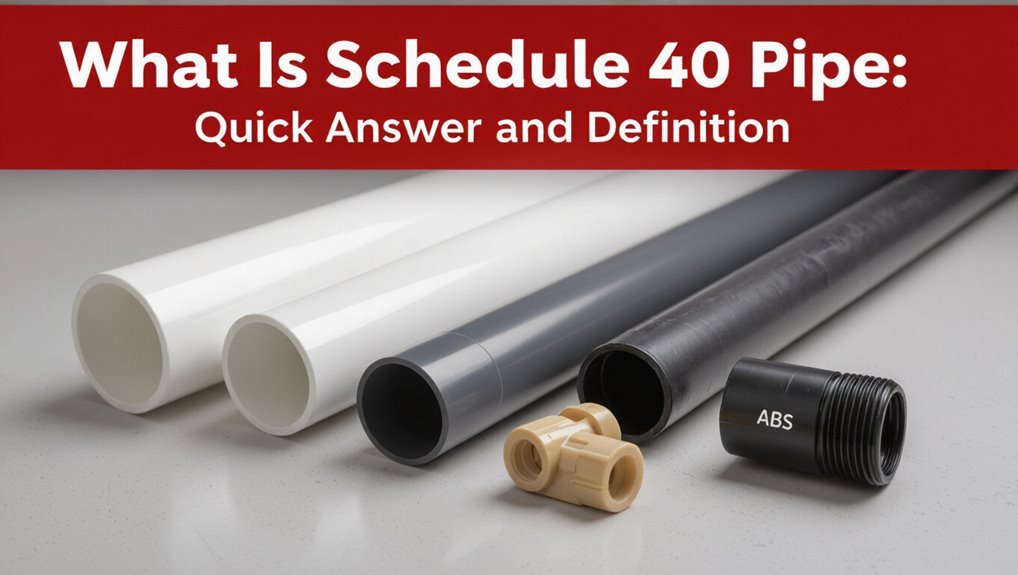
Schedule 40 pipe is a standardized classification of wall thickness for pipes, commonly used in plumbing and industrial applications.
It denotes a balance between strength and flow capacity, defined by nominal pipe size and specified wall thickness values across materials such as PVC, CPVC, and steel.
Dimensions follow ANSI/ASME and ASTM conventions, enabling interchangeability and predictable pressure ratings at given temperatures.
Identification relies on markings and size charts rather than measured outside diameter.
Selection considers material compatibility, required pressure rating, temperature, and corrosion resistance.
Schedule 40 suits general-purpose conveyance where moderate pressure and durability are needed.
When to Use Schedule 40 : Quick Decision Guide
After establishing what Schedule 40 means in relation to wall thickness, materials, and pressure behavior, the decision of when to use it hinges on the application’s pressure, temperature, chemical exposure, and mechanical demands.
Use Schedule 40 when conditions match its performance envelope: moderate internal pressures, ambient or moderately elevated temperatures, and limited exposure to aggressive solvents or corrosives.
Avoid it where high-pressure ratings, extreme temperatures, or heavy mechanical loads are expected.
Quick decision checklist:
- Suitable for domestic water, irrigation, and some HVAC lines.
- Not for high-pressure hydraulic or steam service.
- Select alternative schedules or materials when corrosion or temperature exceedances occur.
Which Materials Come as Schedule 40 (PVC, CPVC, Steel, ABS)
Several common pipe materials are produced to Schedule 40 dimensions and wall thicknesses, each offering different strength, temperature, and chemical-resistance profiles. The main options are PVC, CPVC, steel, and ABS. PVC suits cold-water and drainage; CPVC adds heat tolerance for hot water. Steel (carbon/galvanized) provides mechanical strength and higher pressure capability. ABS is lightweight and impact-resistant for drain applications. Selection depends on temperature, chemical exposure, pressure, and installation needs.
| Material | Typical Use | Key Advantage |
|---|---|---|
| PVC | Cold water/drain | Chemical resistance |
| CPVC | Hot water | Higher temp rating |
| Steel | Pressure lines | Strength/pressure |
| ABS | Drain/vent | Impact resistance |
How Schedule 40 Differs From Schedule 80 and SDR Ratings
Schedule 40 and Schedule 80 are distinguished primarily by wall thickness, with Schedule 80 featuring thicker walls for the same nominal diameter.
That thickness difference leads to higher pressure ratings for Schedule 80 compared with Schedule 40 in the same material.
Separate from schedules, SDR (standard dimension ratio) expresses the ratio of diameter to wall thickness and provides an alternate, consistent way to compare pressure capacity across pipe types.
Wall Thickness Comparison
In comparing wall thicknesses, Schedule 40 and Schedule 80 pipe are distinguished primarily by the thickness of their walls for a given nominal pipe size, which directly affects pressure capacity and weight. The comparison examines dimensional standards and SDR (Standard Dimension Ratio) concepts without repeating nominal size definitions. Key distinctions focus on wall gauge, material usage, and installation implications.
- Schedule 40: moderate wall thickness, common for general plumbing, lighter and easier to handle.
- Schedule 80: thicker wall, increased material per foot, suited where mechanical robustness or reduced deflection is desired.
- SDR: expresses diameter-to-thickness ratio, enabling cross-material comparisons.
Pressure Rating Differences
Pressure-capacity differences between Schedule 40 and Schedule 80 pipe derive primarily from their wall thicknesses and resulting hoop stress limits: thicker walls in Schedule 80 reduce stress for a given internal pressure, yielding higher allowable working pressures at the same nominal diameter.
Consequently, Schedule 80 offers higher pressure ratings for identical diameters, making it preferable where operating pressures, temperature-rated derating, or safety factors demand greater margin.
Pressure tables and material-specific allowable stresses determine exact ratings; engineers select schedule based on required working pressure, fluid type, temperature, corrosion allowance, and applicable codes. SDR comparisons are addressed separately.
SDR Versus Schedule
Having established that wall thickness drives the pressure differences between Schedule 40 and Schedule 80, attention shifts to how those schedules compare with SDR (Standard Dimension Ratio) ratings, a fundamentally different sizing system.
Schedules specify wall thickness for a given nominal pipe size; SDR expresses the ratio of pipe diameter to wall thickness, making pressure capacity a function of SDR and material strength.
Comparisons require conversion tables rather than direct equivalence.
Practical points include:
- SDR decreases as wall thickness increases, raising pressure rating.
- Schedule numbers jump nonlinearly between thicknesses.
- Material and temperature still govern allowable pressure.
Industrial Piping and Structural Uses : Limits and Differences
Distinguishing between industrial piping and structural uses of Schedule 40 pipe requires evaluating mechanical loads, safety factors, and applicable codes: industrial piping systems prioritize internal pressure containment, thermal expansion, corrosion allowance, and fluid compatibility under ASME B31 standards, whereas structural applications focus on axial, bending, and shear capacities with design guided by building and welding codes such as AISC or local structural standards.
Selection limits differ: pressure ratings, joint types, and thickness drive piping suitability; structural use assesses section properties, connection detailing, and buckling resistance.
Engineers must verify material grade, inspection regimes, and code compliance for each intended purpose.
Nominal vs. Actual Sizes: Standard Diameters for Schedule 40
The term “nominal size” for Schedule 40 pipe denotes a rounded, commercial designation (e.g., 1/2″, 1″, 2″) that does not equal the pipe’s actual inside or outside diameter; actual dimensions vary by material and wall thickness, so engineers and buyers must refer to standard dimension tables to obtain the true outside diameter (OD) and inside diameter (ID) for each nominal size.
Standard diameters follow industry conventions, with OD often fixed across materials while ID changes with wall thickness.
Key considerations include:
- Consult ASME/ASTM tables for accurate OD and ID.
- Match fittings to nominal size, not assumed ID.
- Verify dimensions for procurement and fabrication.
Wall Thickness and Pressure Ratings by Material and Size
Wall thickness for Schedule 40 pipe is defined by industry standards and varies with nominal diameter and material, directly affecting structural strength.
Corresponding pressure rating charts translate those thicknesses into allowable working pressures for different materials and temperature conditions.
The following discussion compares standard wall dimensions and pressure charts to guide appropriate material and size selection.
Wall Thickness Standards
Frequently, manufacturers and engineers refer to established thickness standards to determine how Schedule 40 pipe will perform under pressure; these standards specify the nominal wall thicknesses for each material and size, which in turn set allowable pressure ratings and safety margins.
Standards from bodies such as ASTM, ASME and ISO define dimensions and tolerances for common materials (PVC, carbon steel, stainless steel).
Compliance guarantees predictable strength, corrosion allowance, and joint compatibility.
Selection balances operating pressure, temperature, and chemical exposure against wall thickness.
Key considerations include:
- Material-specific nominal thickness tables.
- Tolerance and measurement methods.
- Corrosion/erosion allowances.
Pressure Rating Charts
In reviewing pressure rating charts, engineers rely on tabulated relationships between nominal pipe size, schedule (which determines wall thickness), material, and allowable working pressure at specific temperatures.
Charts list wall thicknesses for Schedule 40 across diameters, then convert those dimensions into pressure capacities using material allowable stresses and temperature derating factors.
Differences among PVC, carbon steel, stainless steel, and copper alloys are explicit: each material’s modulus and yield influence maximum allowable pressures.
Users must match service temperature and corrosive environment, apply safety factors, and consult relevant standards (ASTM, ASME, ANSI) to make certain selected Schedule 40 piping meets operational and code requirements.
Temperature Limits and How Heat Affects Performance
Exposed to elevated temperatures, Schedule 40 pipe materials experience changes in mechanical properties and dimensional stability that directly limit safe operating ranges. Heat reduces tensile strength, lowers yield point, and can accelerate creep in thermoplastics and metals, shrinking allowable pressure as temperature rises. Corrosion rates may increase where protective oxides break down. Designers must consult material-specific temperature derating and apply safety margins.
- Determine maximum continuous service temperature for the pipe material and fluid.
- Apply published derating factors to pressure ratings across the temperature range.
- Consider insulation, expansion allowances, and periodic inspection to manage thermal effects.
How to Read Pipe Markings to Confirm Schedule 40
Confirming a pipe as Schedule 40 begins by inspecting the stamped or printed markings along its length, which typically include the material (e.g., PVC, CPVC, steel), nominal size, schedule designation (“SCH 40” or simply “40”), and relevant standards or manufacturer codes.
Read the line sequentially: material, size (in inches), schedule, and standard (ASTM, ANSI).
Verify manufacturer and lot codes for traceability.
For unmarked or worn pipes, measure outside diameter and wall thickness and compare to Schedule 40 tables for the nominal size.
Markings and measurements together confirm Schedule 40 classification reliably.
Code, Permit, and Inspection Considerations
Code compliance and local permit requirements determine whether Schedule 40 pipe installations need formal approval before work begins.
Inspection standards—both municipal and industry-specific—govern acceptable materials, joint methods, and pressure ratings during and after installation.
Understanding permit timelines and applicable inspection criteria helps guarantee installations meet legal and safety obligations.
Permit Requirements
When installing Schedule 40 pipe, local building codes and permit processes dictate whether work requires a formal application, approved plans, and scheduled inspections; these regulations vary by jurisdiction and depend on the system type (plumbing, gas, drainage), material, and scope of work. Applicants must determine permit triggers, submit required documentation, and pay fees before commencing installation. Compliance guarantees legal occupancy, safety, and insurance validity. Typical considerations include connection type, pressure rating, and alterations to existing systems.
- Confirm local permit thresholds and required documents.
- Provide manufacturer specs and engineered plans when requested.
- Retain permit records until final approval.
Inspection Standards
In inspections of Schedule 40 pipe installations, authorities assess conformity with applicable codes, permit conditions, and manufacturer requirements to verify structural integrity, joint quality, support spacing, and system routing.
Inspectors check material markings, wall thickness, and pressure ratings against plans and code references (IPC, UPC, ASME, ASTM).
Permit closures require documented tests: hydrostatic, air, or leak tests with recorded pressures and durations.
Proper support, seismic restraints, and corrosion protection receive attention.
Deviations prompt corrective actions, reinspection, or rejection.
Accurate as-built documentation and manufacturer certificates expedite approval and guarantee long-term safety and regulatory compliance.
Chemical Compatibility and Corrosion: Choosing Material
Evaluate chemical compatibility and corrosion resistance early in material selection to guarantee long-term performance of Schedule 40 piping systems.
Selection hinges on fluid chemistry, temperature, and expected service life.
Corrosion mechanisms—uniform, galvanic, pitting, stress corrosion cracking—require different countermeasures and material choices.
Consider material-specific strengths and limits:
- Match media to materials: PVC/CPVC for many acids and bases; stainless steels for oxidizing environments; carbon steel for noncorrosive fluids with coatings.
- Account for temperature and concentration: elevated conditions can accelerate attack and change compatibility.
- Specify protective measures: linings, cathodic protection, inhibitors, or alloy upgrades to mitigate corrosion.
Cost, Availability, and When Schedule 40 Is Most Economical
Cost and local availability often determine whether Schedule 40 is the practical choice for a project.
Comparisons of material costs—such as PVC versus CPVC, steel, or copper—help identify scenarios where Schedule 40 offers the best value.
Readily stocked sizes and fittings at nearby suppliers can make Schedule 40 the most economical option when lead time and installation labor are considered.
Material Cost Comparison
When comparing materials for Schedule 40 pipe, price, supply, and appropriate performance determine overall value. A concise cost comparison balances upfront material price, expected lifespan, and installation complexity. PVC often has the lowest purchase and handling cost for nonpressurized and chemical-resistant applications. Steel carries higher material and corrosion-mitigation costs but offers superior pressure and temperature performance. CPVC and ABS occupy midrange positions with niche advantages.
- PVC: low cost, lightweight, limited temperature use.
- Steel: higher cost, durable, needs protection.
- CPVC/ABS: moderate cost, specialized benefits.
Selection favors the lowest lifecycle cost meeting operational requirements.
Local Stock Availability
In many regions, local stock levels and supplier networks determine how economically Schedule 40 pipe can be sourced and installed. Contractors and homeowners rely on nearby warehouses and plumbing suppliers to reduce lead times and freight costs; bulk availability of common diameters and fittings lowers unit price. Conversely, specialty sizes or remote locations increase procurement expense and delay.
Inventory turnover, distributor relationships, and regional demand patterns influence markup and availability. Schedule 40 is most economical where standard sizes are stocked widely and installation labor is routine. For projects requiring unusual specifications, material choice or procurement strategy may change overall cost-effectiveness.
Installation Tips: Joining, Cutting, and Support Spacing
For reliable Schedule 40 installations, proper joining, precise cutting, and correct support spacing are fundamental to system performance and longevity.
The installer should select compatible fittings and adhesives, follow manufacturer cure times, and verify solvent-weld joints for full engagement.
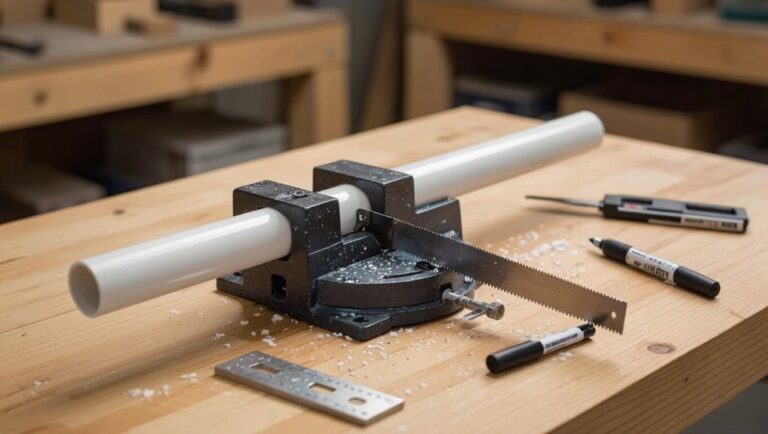
Cutting requires a square, burr-free end; chamfering guarantees proper fit and prevents sealing issues.
Support spacing must reflect pipe material, diameter, and application loads to limit deflection and thermal movement.
- Use recommended adhesives, primers, and torque for threaded or glued connections.
- Cut square, deburr, and measure twice before final assembly.
- Space supports per size and service conditions.
Common Failures and Installation Mistakes to Avoid
Proper joining, cutting, and support reduce many installation issues, but several common failures still occur that compromise Schedule 40 systems. Typical problems include solvent-weld errors, improper thread sealing, overstressed supports, corrosion where incompatible metals meet, and thermal movement left unaddressed.
| Failure mode | Impact |
|---|---|
| Poor solvent joints | Leaks, joint failure |
| Incorrect threading | Stripping, cross-threading |
| Insufficient supports | Sagging, undue stress |
| Galvanic contact | Corrosion, pitting |
| No expansion allowance | Cracking, joint separation |
Avoidance requires correct primers/adhesives, proper torque, specified hangers, dielectric fittings, and allowances for thermal expansion.
Checklist: Choosing the Right Schedule 40 Pipe for Your Project
Select the correct Schedule 40 pipe by matching material, size, pressure rating, and joining method to the application’s operating conditions and code requirements. A concise checklist helps guarantee compatibility, safety, and longevity.
- Verify fluid type, temperature, and maximum pressure against material chemical resistance and temperature limits.
- Confirm pipe size and schedule meet flow requirements and pressure drop constraints; account for fittings and effective length.
- Choose a joining method (threaded, solvent weld, brazed, welded) compatible with material, service conditions, and inspection/maintenance needs.
Document selections, reference applicable codes and standards, and plan for proper supports, corrosion protection, and testing.
Alternatives to Schedule 40 and When to Pick Them
When project conditions exceed the capabilities of Schedule 40—such as higher pressures, elevated temperatures, aggressive chemicals, or strict weight limits—engineers should consider alternatives like heavier schedules, different alloys, or composite and thin‑wall systems. Selection depends on operating pressure, temperature, corrosion resistance, weight, cost, and fabrication needs. Carbon steel schedules add strength; stainless steels resist corrosion and high heat; alloys (Inconel, duplex) suit extreme chemistry; FRP and HDPE offer lightweight, corrosion‑resistant options. Match material properties and standards to service conditions and lifecycle costs.
| Option | Strength | Corrosion Resistance |
|---|---|---|
| Heavier schedule | High | Moderate |
| Stainless steel | Moderate | High |
| FRP/HDPE | Low | High |
Conclusion
Schedule 40 pipe balances strength and affordability, yet its ubiquity masks nuance: inexpensive PVC sidles with corrosion-resistant CPVC and rugged steel, while thicker Schedule 80 waits in the wings for pressure or abuse. Practical choices hinge on fluid, temperature, and code, but simple DIY fits coexist with industrial rigor. Between economy and overengineering, Schedule 40 often hits the middle note — neither fragile novelty nor indestructible panacea, just the pragmatic default.