What Is Pipe Tape? Quick Guide to Uses, Types & How It Works
Pipe tape is a thin, PTFE-based sealant designed specifically for wrapping male pipe threads to seal microscopic gaps and prevent leaks. It not only helps lubricate threads for easier torque but also offers protection against galling and corrosion. There are different types of pipe tape: white for general plumbing, yellow or pink for gas applications, and reinforced grades for high-pressure or chemical use. The effectiveness of pipe tape relies on using the correct type, ensuring threads are clean, and wrapping in the proper direction. For practical tips on selection, application, and limitations of tape use, continue reading.
Quick Answer: Does Pipe Tape Work?
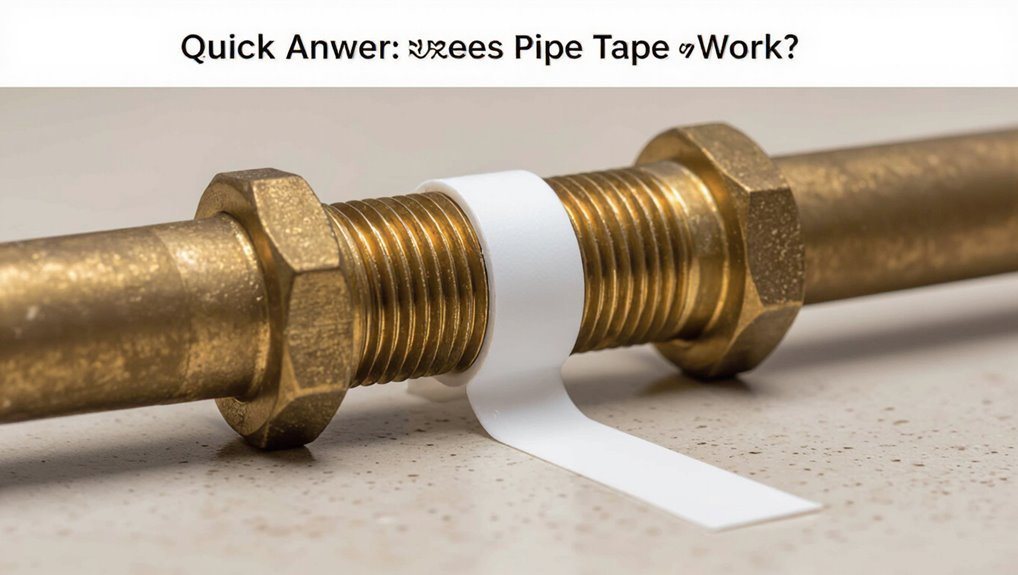
Usually, pipe tape does work for sealing threaded pipe joints: when applied correctly it fills small gaps between male and female threads to prevent leaks in water, gas, and air lines.
Evidence shows proper tape creates a tight, conforming layer that resists pressure and vibration.
Effectiveness depends on correct type (e.g., PTFE for plumbing, gas-rated variants), clean dry threads, and adequate wrap direction and overlap.
It is not a cure for damaged threads, large gaps, or improper fittings; mechanical repairs or sealants may be required.
Professionals assess application suitability, pressure ratings, and regulatory requirements before relying solely on tape.
What Is Pipe Tape and Why It Matters
Pipe tape is a thin, flexible sealing material applied to threaded pipe connections to prevent leaks and guarantee pressure integrity.
It comes in several materials and types—commonly PTFE (Teflon) for general plumbing, and thicker hemp or compressible tapes for older or gas fittings—each suited to specific applications.
Proper selection and correct application matter because the right tape maintains a reliable seal, prevents corrosion, and reduces the need for repairs.
Definition And Purpose
Used to seal threaded plumbing and gas connections, pipe tape is a thin, flexible film—commonly made of PTFE (polytetrafluoroethylene)—that fills gaps between threads to prevent leaks and resist corrosion. It creates a watertight and gas-tight barrier while enabling easier assembly and disassembly of fittings.
The tape also lubricates threads to reduce galling and guarantees consistent torque during installation. Proper application improves system reliability and safety by minimizing seepage and contamination risks.
- Seals microscopic voids between mating threads
- Reduces the need for liquid sealants
- Facilitates future maintenance and replacement
- Enhances longevity of threaded joints
Materials And Types
Among the common materials for thread-sealing tape, PTFE (polytetrafluoroethylene) dominates for its chemical resistance, low friction, and temperature tolerance, while alternative films and coatings serve niche needs such as sealing gas lines or high-pressure hydraulic fittings.
Variants differ by thickness, density, and filler content: standard white PTFE suits water and general plumbing; yellow or pink PTFE is dyed and thicker for gas applications; thicker industrial grades contain glass or metal fillers for high-pressure or abrasive environments.
Non-PTFE tapes include anaerobic, rubber-based, and silicone films designed for specific chemical compatibilities and temporary versus permanent seals.
Importance In Plumbing
As a thin, flexible sealing film wrapped around threaded fittings, pipe tape prevents leaks, eases assembly, and protects threads from galling and corrosion.
Its role in plumbing is practical and preventive: it guarantees reliable seals, reduces maintenance, and extends component life. Installers and inspectors rely on correct tape selection and application to meet system pressure and media requirements.
- Prevents fluid and gas leaks at threaded joints
- Simplifies disassembly and reassembly for repairs
- Protects threads from wear, corrosion, and seizing
- Contributes to regulatory compliance and system longevity
Proper use minimizes downtime and liability in plumbing systems.
How Pipe Tape Seals Threaded Fittings
By wrapping thin, flexible tape clockwise around male pipe threads, the tape fills surface irregularities and creates a compressible barrier that prevents fluid and gas leakage while allowing threads to engage fully.
The tape conforms to micro-grooves and gaps, increasing contact area and producing a tight mechanical fit under torque. It resists vibration and slight movement, maintaining seal integrity as connections settle.
Certain formulations add chemical incompatibility or lubrication, aiding installation and longevity.
Proper application—clean threads, correct thickness, and direction matching thread pitch—ensures the tape functions as designed without creating voids or obstructing flow paths.
How Pipe Tape Prevents Leaks on Threaded Joints
When wrapped correctly around male threads, pipe tape forms a compressible, gap-filling layer that blocks fluid and gas pathways while allowing threads to tighten fully.
It works mechanically and chemically: the tape deforms into thread crevices, increases surface contact, and resists vibration-induced loosening.
Proper application guarantees even coverage and prevents excess bunching that can impede sealing. Key contributions include:
- Filling micro-gaps to stop capillary flow.
- Providing friction that helps maintain torque and alignment.
- Acting as a secondary barrier against corrosion and metal-to-metal wear.
- Compensating for minor thread damage to restore a reliable seal.
PTFE Tape vs. Plumber’s Tape: Are They the Same?
The distinction between PTFE tape and plumber’s tape often centers on material and function: PTFE is a fluoropolymer used primarily as a thread sealant, while “plumber’s tape” can refer to PTFE or to other tapes with different properties.
Common usage differences arise from color-coding, pressure ratings, and whether the tape is designed for gas, water, or general-purpose sealing. Clarifying these aspects helps determine which tape suits a specific plumbing application.
Material And Function
How do PTFE tape and plumber’s tape differ in material and purpose? PTFE tape is thin, white, made from polytetrafluoroethylene, and designed to seal threaded pipe joints by filling gaps and providing lubrication. “Plumber’s tape” can mean PTFE or a broader set of tapes used in plumbing tasks. Differences center on composition and mechanical role rather than name alone.
- PTFE: synthetic fluoropolymer, chemical resistant, low friction.
- Plumber’s tape: ambiguous term, may include PTFE, adhesive cloth, or sealing varieties.
- Function: thread sealing versus surface adhesion or repair.
- Selection depends on material compatibility and sealing needs.
Common Usage Differences
In practice, PTFE tape and plumber’s tape are treated differently because their typical uses and user expectations diverge: PTFE tape is primarily identified as a non-adhesive, thread-sealing film for metal fittings, while “plumber’s tape” in everyday conversation can refer to PTFE or to a range of adhesive tapes (cloth, duct, sealing) used for temporary fixes, securing materials, or surface repairs.
Professionals rely on PTFE for reliable sealing of threaded pipe joints and gas lines, valuing chemical inertness and temperature tolerance. Homeowners may call various adhesive tapes “plumber’s tape” when making provisional repairs, which lack long-term sealing performance.
When to Use Pipe Tape Versus Pipe Dope
When sealing threaded pipe joints, professionals choose pipe tape or pipe dope based on thread type, pressure, and the fluid conveyed. Selection follows functional criteria: tape suits clean, metal, straight threads and low-to-medium pressures; dope suits irregular threads, higher pressures, or threaded fittings requiring lubrication and gap filling. Consider compatibility with the conveyed medium and temperature. Application speed and future disassembly also influence choice.
- Tape: quick, clean, ideal for standard metal threads
- Dope: fills voids, seals damaged threads, resists higher pressure
- Combined use: occasional for difficult seals
- Safety: match sealant to fluid and service temperature
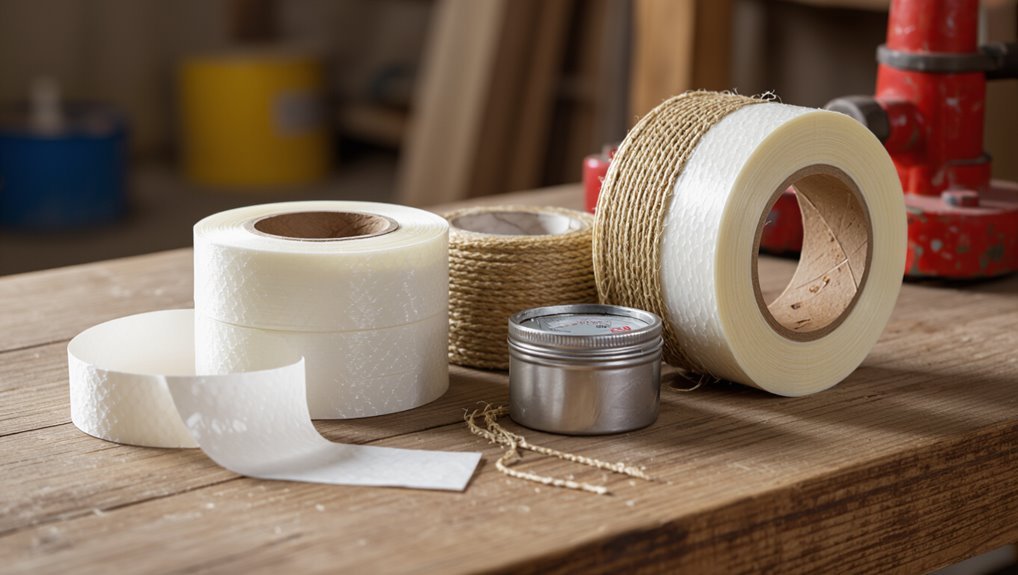
Tape Types: PTFE, Braided, Cloth, and Cloth-Plastic
Although each tape type serves the basic role of sealing or cushioning pipe joints, their materials and constructions produce distinct performance profiles.
PTFE (Teflon) tape is a thin, chemically inert film that excels at creating gas- and water-tight threads, resisting most chemicals and enabling easy disassembly.
Braided tapes consist of woven fibers, offering tensile strength and abrasion resistance for flexible connections or vibration-prone locations.
Cloth tapes provide conformability and moderate cushioning, useful for insulating or bundling non-threaded joints.
Cloth-plastic laminates combine fabric strength with a moisture-resistant plastic layer, balancing durability and weather resistance for outdoor or mild chemical exposure.
Tape Thickness and Density: How They Affect Seals
Tape thickness influences how well a tape fills irregular threads and tolerates overtightening, with thicker tapes generally providing greater gap-filling but potentially requiring more turns.
Material density affects compressibility and long-term recovery: denser materials resist deformation and maintain seal integrity under pressure, while lower-density tapes compress more easily and may creep.
Considering both compression and recovery characteristics helps select a tape that balances initial seal conformity with durable performance.
Tape Thickness Impact
A range of thicknesses and material densities in sealing tape directly influences how reliably a joint prevents leaks: thicker, denser tapes compress less under pressure and offer greater resistance to extrusion, while thinner or lower-density tapes conform more easily to irregular threads, filling gaps but risking blowout under high stress. Tape thickness impacts wrap count, torque feel, and sealing margin. Selection balances mechanical resilience with conformability for the application.
- Thicker tape: fewer wraps, higher crush resistance
- Thinner tape: more wraps, better gap filling
- Medium thickness: compromise for general plumbing
- Very thin: suited for precision fittings
Material Density Effects
Having established how thickness affects wrap count and crush resistance, attention turns to material density as a separate lever that shapes sealing performance.
Higher-density tapes compress less under clamp load, offering predictable gasket thickness and better chemical barrier properties, useful where dimensional stability and solvent resistance matter.
Lower-density, more open-cell formulations conform readily to threads and fill larger irregularities, improving initial leak prevention but offering less resistance to extrusion.
Density choices influence required wraps, torque behavior, and compatibility with joint materials.
Selection balances conformity versus permanence: specify density according to expected load, surface finish, and exposure rather than defaulting to a single grade.
Compression And Recovery
Consider how compressive behavior governs seal performance: thickness sets the initial gap fill while density controls how much of that thickness yields under clamp load and how much returns when load eases. Proper balance prevents over-compression or insufficient contact.
Thicker, low-density tapes compress easily, adapting to irregular threads but risking extrusion; thinner, high-density tapes resist deformation, preserving preload but needing precise fit. Recovery influences long-term leak prevention as cycles of pressure and temperature change clamp forces. Selection should consider expected clamp torque, thermal cycling, and mating surface finish to match compressive and recovery characteristics to application demands.
- Gap filling vs. extrusion risk
- Load-dependent deformation
- Elastic recovery after unloading
- Long-term creep and sealing integrity
Tape Wrap Direction for Threaded Fittings
Wrap the tape so it follows the thread’s pitch and rotation, moving in the same direction that the fitting will be tightened.
The tape should be applied snugly from the end of the male thread inward, overlapping each pass by about half the tape width to guarantee even coverage without excess bulk at the lead end.
Maintain light tension to conform to crests and valleys, avoiding wrinkles and gaps that compromise the seal.
For tapered threads, concentrate additional layers near the first few threads; for straight threads, use fewer wraps.
Correct wrap direction prevents unwrapping during assembly and preserves thread engagement.
How to Apply Pipe Tape to Metal Threads
Before applying tape, the metal threads should be cleaned and inspected for damage or debris.
The tape must be wrapped snugly in the correct direction and overlapped evenly to create a consistent seal.
After reassembly, the joint should be pressure-tested and checked for leaks.
Prepare Threads Properly
When applying pipe tape to metal threads, the threads should be clean, dry, and free of old sealant, corrosion, or debris to guarantee a proper seal.
Inspect threads for damage and replace fittings if threads are bent, flattened, or cracked.
Use a brush or cloth to remove scale and particles; solvents may remove oils while making certain complete evaporation.
Lightly file or re-cut damaged threads when appropriate to restore engagement.
Make certain threads are cool and dry before proceeding with tape or sealant application.
- Inspect threads visually and by touch
- Remove contaminants with brush or solvent
- Repair minor thread damage
- Confirm dryness before sealing
Wrap Tape Correctly
Begin by anchoring the tape against the thread shoulder and unspooling it toward the fitting’s end, keeping tension consistent so the tape lays flat in the thread valleys. Wrap clockwise for standard right-hand threads so tape follows the tightening direction.
Overlap each pass by about half the tape width, covering threads without building excess bulk near the shoulder. Make three to five full wraps for typical metal fittings; adjust for thread coarseness.
Smooth the tape into the threads with a finger to guarantee conformity. Tear the tape cleanly, press the tail down, and avoid wrapping over the pipe end opening.
Reassemble And Test
After the taped fitting is hand-seated, the installer tightens it with the appropriate wrench until snug, then applies the manufacturer’s recommended torque or a firm quarter- to half-turn beyond hand-tight for tapered threads.
The assembly is rechecked for alignment, support, and correct orientation.
System pressure is slowly applied while inspecting joints for leaks and seating shifts.
If no leaks appear, the connection is monitored briefly under normal operating pressure.
If a leak appears, the joint is depressurized, disassembled, tape replaced, and reassembled.
- Verify alignment and support
- Apply pressure gradually
- Inspect for seepage or bubbles
- Re-torque if needed
How to Apply Pipe Tape to Plastic Threads
How should pipe tape be applied to plastic threads to guarantee a secure, leak-free joint? The guide recommends cleaning threads, ensuring dryness and absence of debris or old sealant.
Wrap tape beginning at the first full thread, holding it flat and tensioned, moving clockwise so the tape follows the threading direction. Overlap each pass slightly without bunching; avoid covering the first couple threads near the leading edge to prevent extrusion into the bore.
Smooth tape into threads with a finger to conform to contours. For plastic fittings use PTFE tape rated for plastics or low-friction formulations to prevent overstressing threads.
How Many Wraps of Tape Are Enough?
With plastic threads properly prepared and tape applied to the first full thread, attention turns to how many wraps will produce a reliable seal without stressing the fitting.
For most plastic fittings, three to five clockwise wraps provide a balance between sealing and avoiding excess bulk. Thicker tape or damaged threads may require an extra wrap; avoid more than seven, which can prevent proper engagement. Consistent tension and smooth layering matter as much as count. Consider these guidelines:
- Standard plastic pipe: 3–5 wraps
- High-pressure or thin tape: 4–6 wraps
- Avoid exceeding 7 wraps
- Check thread engagement after wrapping
Removing Old Pipe Tape Safely
Loosening the remaining wrap carefully prevents thread damage and prepares the joint for a clean reseal.
The person uses pliers or a utility knife to lift an edge, working slowly to avoid gouging metal.
All tape fragments are peeled away, brushing threads with a soft wire brush or cloth to remove adhesive and debris.
Solvents like isopropyl alcohol dissolve residue; use them sparingly and make certain ventilation.
After cleaning, threads should be dry and inspected for cross-threading or corrosion.
Proper disposal of old tape and used cloths follows local rules.
Reassembly only proceeds once threads are fully clean and intact.
Tape Color Codes and Their Meanings
Once threads are clean and inspected, attention turns to the color-coded tapes used to indicate pipe type and application. Standards vary by region, but basic colors convey material, media, or safety information at a glance. Proper selection reduces installation errors and aids maintenance teams.
Common meanings include cautionary, potable, and specialty uses; contractors should follow local codes and job specifications. Visual coding complements labeling and documentation for clarity on site.
Typical color assignments often reflect industry conventions such as:
- White: potable water lines
- Yellow: gas or flammable lines
- Green: sewer or drain lines
- Blue: compressed air or nonpotable water
Choosing Tape for Gas Lines Versus Water Lines
Select tape based on the service requirements and regulatory standards: gas lines demand tapes rated for fuel resistance and tightness, while water lines require materials compatible with potable or nonpotable specifications.
For gas service, choose tapes specifically labeled for gas or yellow gas-rated PTFE; they prioritize chemical compatibility, low permeability, and secure thread sealing.
For water, use food-grade or approved PTFE for potable systems, and general-purpose sealants for nonpotable lines.
Consider temperature, pressure, and joint type when selecting thickness and wrap technique.
Always follow manufacturer listings and local code to guarantee appropriate performance and inspection compliance.
Using Tape on Propane and Natural Gas Lines Safely
When it comes to propane and natural gas fittings, tape is not designed to seal pipe joints and should not be used as a substitute for approved thread sealants.
Only products specifically rated for gas service and listed by applicable codes should be applied to threaded connections. Gas lines should be inspected routinely and any tape or sealant showing wear or degradation must be replaced with an approved alternative.
Not For Sealing Joints
Avoid using common pipe tapes to seal joints on propane or natural gas lines; these tapes are not designed to withstand the chemical properties, pressures, and regulatory requirements of flammable gas systems and can create hazardous leaks or fail inspection. The writer emphasizes that standard tapes lack certification and proper performance for gas service.
Instead, professionals rely on approved materials and techniques.
Key considerations include:
- Certification: only use materials explicitly rated for gas service.
- Compatibility: chemical resistance with propane and methane is essential.
- Integrity: joints must withstand system pressure without degradation.
- Inspection: installations are subject to regulatory review and testing.
Approved Thread Sealants Only
Why use only approved thread sealants on propane and natural gas connections? Approved sealants are formulated to resist gas permeation, maintain pliability, and meet safety standards; unapproved tapes can degrade, leak, or ignite. Use manufacturer-recommended products rated for LP/NG and follow application instructions. Certified sealants often carry ANSI, CGA, or local code listings. Professional installation and testing guarantee integrity without relying on general-purpose PTFE tape.
| Approved Type | Characteristic |
|---|---|
| Gas-rated PTFE | Low permeation, labeled for gas |
| Pipe dope (gas) | Long-term seal, code-listed |
| Non-approved tape | Not for use on gas lines |
Inspect And Replace Regularly
Having established that only manufacturer- and code-approved thread sealants should be used on propane and natural gas fittings, regular inspection and timely replacement of those seals preserves system safety and performance.
Periodic checks detect degradation, improper installation, or damage from vibration and temperature cycles.
Certified technicians should perform leak tests and visual inspections at recommended intervals, documenting findings and corrective actions.
Replace tape or approved sealant whenever wear, unraveling, or seepage appears, and after any disassembly.
Follow torque specs and reapply approved material per manufacturer instructions.
- Inspect fittings visually for damage or tape breakdown
- Perform leak testing after maintenance
- Replace seals when doubt exists
- Document inspections and actions
Tape Temperature Limits and Heat Resistance
Understanding a tape’s temperature limits is essential for selecting the right product for a given piping application. Tape performance varies: some PTFE and silicone-based tapes tolerate high heat, while rubber or acrylic-backed tapes soften or degrade. Users must check continuous and short-term ratings, consider ambient and pipe surface temperatures, and account for thermal cycling that can embrittle or lose adhesion. Proper selection prevents leaks, joint failure, and safety hazards. Below is a quick reference comparing common tape types and approximate temperature ranges and typical uses.
| Tape Type | Temp Range (°C) | Typical Use |
|---|---|---|
| PTFE | -200 to 260 | Thread sealing |
| Silicone | -60 to 200 | High-temp seals |
| Rubber | -40 to 80 | Low-temp gasketing |
| Acrylic | -40 to 120 | General-purpose bonding |
Chemical Compatibility: Which Fluids Suit PTFE Tape
When exposed to chemicals, PTFE tape remains one of the most chemically resistant sealants available, compatible with a broad range of acids, bases, solvents, and fuels due to its inert fluoropolymer structure; however, compatibility is not universal, so selection must consider fluid concentration, temperature, and presence of aggressive oxidizers or halogenated compounds that can attack tape additives or backing materials.
PTFE performs well with many common fluids but requires verification for specific service conditions. Typical compatibilities include:
- Strong acids and alkalis at moderate temperatures
- Hydrocarbon fuels and most solvents
- Refrigerants and many hydraulic fluids
- Aqueous solutions and salts
When Not to Use Pipe Tape: And Alternatives
Pipe tape is not appropriate for smooth, threadless fittings and should be avoided on most gas lines unless specifically rated for that application.
In those cases, alternatives such as thread sealants, anaerobic compounds, or properly matched gaskets and O-rings offer more reliable seals. The following section compares those options and explains when each is preferred.
Not For Threadless Connections
Why avoid tape on slip-fit or push-fit joints? Tape interferes with designed sealing surfaces and can prevent proper engagement, causing leaks or joint failure. Threadless connectors rely on compression, O-rings, or barbs rather than thread sealants.
- Tape can bunch and prevent full insertion, compromising the seal.
- O-ring seals may be displaced or cut by fibrous tape material.
- Push-fit fittings require clean metal/plastic contact; tape contaminants reduce grip.
- Alternative solutions include replacing damaged O-rings, using appropriate lubricants, or selecting mechanical clamps or adhesive-rated sealants specified by the manufacturer.
Avoid For Gas Lines
How should tape be treated around fuel and natural gas fittings? It should be avoided.
Standard PTFE thread seal tape is not formulated or certified for combustion gas service and can deteriorate, shred, or contaminate fittings. Using it risks leaks, regulatory noncompliance, and voided warranties.
Gas-line connections demand approved sealing methods and qualified installation to guarantee safety and pressure integrity.
Technicians follow local codes and manufacturer instructions that specify compatible materials and techniques for gas-rated threads and fittings.
Pipe tape designed for water or air should not substitute for gas-rated products or professional procedures when working with fuel or natural gas.
Alternatives For Sealing Joints
When PTFE tape is inappropriate or prohibited, installers turn to approved alternatives that guarantee seal integrity and compliance with codes. Selection depends on fluid type, pressure, temperature, and joint design.
Common options include mechanical seals, thread compounds, and gasketing materials that suit metallic and plastic fittings. Each alternative has specified application methods and safety considerations; manufacturers’ instructions and local codes determine acceptability. Proper surface preparation and torque are critical for reliable seals.
Typical choices:
- Pipe dope (thread sealant paste) for metal threads and varying service conditions
- Anaerobic sealants for pressurized metal joints
- Compression fittings with ferrules
- Elastomeric gaskets for flanges
Using Tape on Tapered (NPT) vs. Straight Threads
Although both tapered (NPT) and straight threads appear similar, their sealing behavior differs fundamentally and dictates tape use.
For tapered threads, tape fills gaps created by the taper and assists metal-to-metal metal sealing as threads tighten; PTFE tape rated for pipe use is common.
Straight threads rely on an independent sealing surface—an O-ring, washer, or gasket—so tape primarily lubricates threads and prevents galling rather than providing the primary seal. Applying tape to straight threads without a proper mating seal risks leakage.
In both cases, wrap clockwise, avoid overwrapping, and use tape compatible with the conveyed media.
Pipe Tape Best Practices for High-Pressure Systems
Addressing high-pressure systems requires stricter tape selection and disciplined application to guarantee joint integrity under sustained stress.
Practitioners should choose tapes rated for system pressure and compatible with media and temperatures.
Surface preparation, correct wrap direction, and consistent layer count are essential.
Overreliance on tape alone is avoided; inspection and torque control complement sealing.
- Select PTFE or specialized high-pressure tape certified to the system’s pressure and chemical exposure.
- Clean and dry threads; remove old sealant and debris.
- Wrap in the thread direction with uniform, tight layers; avoid excess bulk at the lead end.
- Test assemblies under controlled conditions before service.
Combining Thread Tape With Thread Sealant Paste
After discussing selection and application for high-pressure joints, attention shifts to combining thread tape with paste to maximize sealing performance.
Combining PTFE tape and thread sealant paste can enhance leak resistance by supplying both a conforming tape layer and a viscous compound that fills microgaps.
Proper technique applies tape first, wrapped downstream, followed by a thin even coat of paste over tape or on male threads before assembly.
Compatibility of materials and intended use (temperature, chemicals, pressure) determines suitability.
Excess paste should be avoided to prevent contamination; assembly torque must remain within fitting specifications to preserve thread integrity.
How Tape Works With Anaerobic and Other Sealants
Pipe tape functions primarily as a physical barrier, filling thread gaps to prevent leaks and limit fluid migration.
Its presence can affect anaerobic sealants by restricting metal-to-metal contact needed for proper curing, while some sealants are formulated to tolerate or bond around tape.
Removal and reapplication alter the thread profile and residual material, which can compromise seal integrity unless threads are cleaned and products are chosen for compatibility.
Tape As Physical Barrier
When wrapped tightly around threaded connections, tape forms a thin physical barrier that both fills minor surface irregularities and provides a backing for liquid sealants.
It prevents direct metal-to-metal contact and reduces leak paths by occupying voids along threads.
Tape also controls thread engagement depth and can act as a sacrificial layer for disassembly.
Selection of tape thickness and material tailors compression, chemical resistance, and temperature tolerance.
Practical points include:
- Provides consistent surface for applied sealants
- Reduces galling and eases torque application
- Limits micro-channels that allow leakage
- Allows predictable compression under tightening
Interaction With Anaerobic Sealants
In conjunction with anaerobic thread sealants, tape serves both as a physical spacer and as a substrate that influences cure behavior and joint performance. Tape thickness and material affect gap size, oxygen access, and contact between metal surfaces, altering anaerobic polymerization.
PTFE offers low absorption and permits sealant contact where gaps remain; fiber or hemp tapes may absorb sealant or impede metal-to-metal contact, slowing cure or reducing strength. Compatibility matters: some tapes contain lubricants or additives that inhibit adhesion.
Proper application balances tape layers and sealant volume so anaerobic products cure reliably while delivering intendedly sealing and mechanical properties.
Removal And Reapplication Effects
Following the effects of tape on anaerobic cure behavior, removal and reapplication introduce variables that alter seal integrity and curing dynamics.
Repeated handling can transfer oils and fibers, change surface roughness, and leave residual tape or sealant that interferes with full cure.
Temperature and moisture during reapplication affect polymerization rates; trapped air pockets become leak paths.
Practitioners should assess and prepare threads before reusing tape or combining with anaerobic compounds.
- Residue: adhesive remnants inhibit contact and cure.
- Surface prep: cleaning restores clamping and bonding.
- Layering: multiple tape layers change compression.
- Compatibility: confirm tape and sealant chemical interaction.
Industrial Tapes: PTFE-Filled and Anaerobic Options
Among industrial sealing options, PTFE-filled and anaerobic tapes serve distinct roles: PTFE-filled tapes provide a lubricious, chemically resistant barrier for threaded connections, while anaerobic tapes complement curing sealants by preventing fluid migration until contact cures. The former resists aggressive media and eases assembly; the latter maintains gap isolation and accelerates reliable cure in metal-to-metal threads. Selection depends on pressure, temperature, chemical compatibility, and disassembly needs. Proper application and surface cleanliness guarantee performance.
| Property | Typical Benefit |
|---|---|
| PTFE-filled | Chemical resistance, low friction |
| Anaerobic | Temporary seal, promotes cure |
Braided and Cloth Tapes: Uses and Limits
Braided tape is noted for its woven structure and flexibility, offering good conformability around irregular pipe fittings.
Cloth tape finds use in temporary repairs, abrasion protection, and insulation where moderate strength and heat resistance are required.
Both types provide useful mechanical protection but are limited by lower sealing performance and faster degradation under prolonged moisture, chemicals, or high-temperature exposure.
Braided Tape Characteristics
Cloth and woven metal tapes combine flexibility with tensile strength, making them suitable for sealing irregular thread patterns, joins with slight gaps, and connections where compression fittings are impractical.
Braided tape resists abrasion and conforms to uneven surfaces while offering moderate pressure resistance. It does not self-seal like PTFE and relies on compression and surface adhesion. Temperature tolerance varies by fiber or metal content, affecting chemical compatibility.
Typical characteristics include:
- High flexibility for complex geometries
- Good tear and abrasion resistance
- Limited tolerance for high-pressure hydraulic systems
- Variable chemical resistance depending on material composition
Selection depends on application-specific demands.
Cloth Tape Applications
Following their described properties, woven and cloth tapes find use where flexibility, abrasion resistance, and conformity matter more than absolute sealing by material alone.
They wrap irregular joints, temporary repairs, and insulation around pipes subject to movement or vibration, providing protective layering and mechanical support.
Cloth tapes dress and bundle wiring, protect surfaces during assembly, and serve as outer jackets over other sealing materials to hold them in place.
In HVAC and automotive work they reduce chafing and dampen noise.
They complement rather than replace specialized sealants, functioning as protective and stabilizing accessories in multi-component sealing solutions.
Durability And Limitations
Although woven and braided tapes offer flexibility and abrasion resistance that suit many repair and wrapping tasks, their durability is constrained by environmental exposure, mechanical wear, and the materials they cover. Performance varies with fiber type, coating, and adhesive quality; repeated flexing or sharp edges cause fraying and adhesive failure.
They resist moderate abrasion but not long-term chemical attack, high temperatures, or prolonged UV. Selection should match conditions and expected lifespan.
- Moderate abrasion resistance; poor against continuous rubbing
- Vulnerable to solvents, oils, and strong chemicals
- Adhesive degrades with heat and moisture
- Not suitable for pressure seals or high-temperature joints
How to Inspect a Taped Joint for Proper Sealing
When inspecting a taped pipe joint for proper sealing, a technician should first perform a visual check for continuous, wrinkle-free tape coverage and make certain the tape overlaps consistently along the length of the joint.
Next, tactile inspection verifies firm adhesion and absence of gaps or loose edges; gentle finger pressure along the seam confirms uniform contact.
Examine adjacent fittings and thread roots for exposed metal or contamination.
Look for discoloration, fraying, or tape delamination indicating chemical attack or age.
Finally, document findings and, if any defect is found, clean, reapply appropriate tape following manufacturer instructions, and retake the inspection.
Testing a Sealed Joint: Pressure and Leak-Check Methods
After a taped joint passes visual and tactile inspection, pressure and leak-check methods confirm integrity under operating conditions.
A controlled pressure test exposes slow leaks and verifies that tape, thread engagement, and fittings hold specified system pressure without deformation or seepage.
Common methods include air pressure decay, soap-bubble surface tests, and hydrostatic testing for liquid systems.
Safety protocols isolate sections and use appropriate gauges and relief devices.
Typical steps:
- Gradually pressurize to operating or test pressure, monitor stabilizing gauge
- Apply soap solution to suspect areas for bubble formation
- Record pressure hold over time for decay analysis
- Depressurize and inspect fittings before return to service
Troubleshooting Leaks After Applying Pipe Tape
When a joint continues to leak after tape application, the first step is to verify that the tape was applied correctly — direction, overlap, and sufficient layers.
Next, the surrounding seal components should be inspected for damage, dirt, or irregular threads that prevent a proper seal.
If defects are found, reapply tape after cleaning or replace damaged components before retesting the joint.
Check Tape Application
Why is a joint still leaking despite freshly applied pipe tape? Examination focuses on tape application technique and compatibility. The inspector verifies coverage, overlap, direction, and tape condition before concluding.
- Confirm tape wrapped in thread direction to avoid unwrapping during assembly.
- Make certain 3–6 tight, even wraps with tape covering threads without blocking port openings.
- Check for torn, dirty, or oil-contaminated tape that prevents proper sealing.
- Verify tape type matches fluid and temperature requirements (e.g., PTFE for water vs. gas-rated variants).
Proper application often resolves leaks; if persistent, proceed to component inspection and replacement.
Inspect Seal Components
In examining seal components, the inspector systematically evaluates gaskets, O-rings, washers, and mating faces for wear, distortion, or contamination that can compromise a tape-applied joint.
The procedure documents material compatibility, compression set, cuts, or embedded debris that prevent uniform contact.
Visual inspection is paired with tactile checks for pliability and spring-back; hardened or brittle seals are marked for replacement.
Fastener torque and alignment are verified to guarantee even clamping.
Corrosion or pitting on mating faces is noted and smoothed or replaced if necessary.
Records specify corrective actions and parts installed to close the troubleshooting loop.
Common Mistakes People Make With Pipe Tape
Improper application of pipe tape is a common source of leaks and wasted material. Users often misunderstand surface preparation, tape type selection, and wrapping technique, producing unreliable seals.
Common mistakes include using the wrong tape, wrapping against thread direction, overlapping inconsistently, or applying tape to damaged threads. Consequences are persistent leaks, stripped fittings, and unnecessary rework.
Best practice emphasizes correct tape for the medium, clean dry threads, tensioned neat wraps, and avoiding tape on tapered sealants-only surfaces. Awareness of these errors reduces failures and extends fitting life.
- Choosing PTFE when thread compound required
- Wrapping counter to thread twist
- Excessive layering
- Applying to damaged threads
Quick Checklist Before Finishing a Taped Connection
After correcting common tape errors and inspecting threads for damage, a brief pre-tightening checklist helps guarantee the seal will hold. The checklist verifies tape direction, layer count, coverage to the first thread, and absence of contaminants. Confirm the tape type matches the fluid and temperature, and make certain fittings align without cross-threading. Hand-tighten, then apply specified wrench turns; avoid over-torquing. Leak-test with appropriate pressure and observe for drips or seepage. If leaks appear, disassemble, clean, and reapply tape per guidelines.
| Item | Action |
|---|---|
| Tape direction | Wrap clockwise |
| Coverage | 3–5 wraps |
How to Prep Threads When Replacing Fittings
Prepare the mating surfaces by removing the old tape, sealant, and any corrosion so threads are clean and dry before installing the new fitting.
A proper prep prevents leaks and guarantees reliable torque.
Inspect threads for damage; replace fittings or use a die to chase threads if burrs exist.
Degrease with a suitable solvent and allow full evaporation.
Lightly chamfer damaged thread starts to ease engagement.
- Remove residue with a brass brush or pick.
- Verify parallel alignment and correct thread type.
- Dry-compress air to clear debris.
- Reinspect before applying new tape or sealant.
Applying Tape Neatly on Hard-to-Reach Fittings
When access is limited, wrapping tape neatly on hard-to-reach fittings requires steady control and a few technique adjustments to maintain tension and alignment.
The technician secures the tape tail with a fingertip or small clip, using one hand to steady the fitting and the other to feed tape at a slight angle.
Short, overlapping turns prevent bunching; each wrap should follow thread direction.
A pair of needle-nose pliers or a narrow wooden stick can guide tape into tight spaces.
Excess is trimmed flush to avoid loose ends.
Final inspection guarantees even coverage and no exposed thread before assembly.
Pipe Tape for HVAC Refrigerant Lines: Compatibility
Techs moving from tight-fitting tape work to refrigerant lines must also consider material compatibility and pressure ratings. Selection affects seal integrity, chemical resistance to refrigerants and lubricants, and suitability for service temperatures.
Manufacturers’ specifications and system pressures guide choices; some tapes resist refrigerant oils while others degrade.
- Use PTFE tape rated for refrigerant service where permitted.
- Avoid general-purpose tapes lacking chemical and temperature specs.
- Consider foil-backed tapes for exterior vapor barriers on insulated lines.
- Verify temperature range and pressure rating against system requirements.
Documentation and testing safeguard long-term reliability and code compliance.
Using Pipe Tape on Garden Hoses and Outdoor Fittings
Often overlooked, the choice and application of pipe tape on garden hoses and outdoor fittings directly affect leak prevention, ease of future disassembly, and resistance to outdoor conditions like UV, dirt, and temperature swings. Recommended tapes include PTFE for threaded hose connectors and specialized outdoor sealing tapes for quick repairs. Proper wrapping prevents galling and maintains hand-tight connections. Inspect and replace degraded tape seasonally. Avoid overbuilding joints that trap moisture. The table below summarizes common targets and tape choices.
| Fitting | Tape type |
|---|---|
| Brass hose bib | PTFE |
| Quick-connect | Outdoor sealing tape |
| PVC spigot | Compatible thread sealant |
Pipe Tape for DIYers: Pros and Cons
Homeowners and hobbyists weighing repair options will find pipe tape an accessible, low-cost tool with specific strengths and limits.
It suits quick thread sealing, prevents minor leaks, and often eliminates the need for immediate part replacement.
However, it is not a cure-all: poor application or wrong tape type can fail under pressure or temperature extremes.
Consider these practical points:
- Easy application for threaded fittings, requiring minimal tools.
- Inexpensive and widely available, good for temporary fixes.
- Not recommended for large structural leaks or damaged threads.
- Requires correct tape type and proper wrapping technique to be effective.
Myths About Pipe Tape : 5 Common Misconceptions
Frequently, misconceptions about pipe tape lead to misuse or failed repairs; separating fact from fiction helps users choose the right tape and apply it correctly.
Common myths include:
1) any tape works for all plumbing — different materials and pressures demand specific types;
2) thicker tape always seals better — correct wrap technique and tape compatibility matter more;
3) tape replaces thread sealant in every situation — some assemblies require paste or anaerobic sealers;
4) more layers prevent leaks — excess can prevent proper thread engagement;
5) PTFE tape cures instantly — it requires correct installation and system testing before assuming a permanent seal.
How Long a Pipe Tape Seal Typically Lasts
Typically, a properly applied pipe tape seal lasts for years, but actual longevity depends on tape type, thread fit, system pressure, temperature, and exposure to chemicals or vibration.
Factors influencing lifespan include material compatibility and installation quality.
Common expectations vary: PTFE for water systems can endure many years, while specialty tapes in high-heat or chemical service may degrade faster.
Regular inspection and maintenance extend service life. Consider reapplying tape when disassembling joints or after detecting leaks.
- Tape material and grade
- Thread condition and fit
- Operating pressure and temperature
- Mechanical vibration or movement
Environmental and Safety Issues With PTFE Tape
PTFE tape raises environmental concerns due to the persistence of fluorinated polymers and potential microplastic runoff from degraded fragments.
Safe handling practices are recommended because fibers and dust can irritate skin and respiratory systems, and loose tape can contaminate work areas.
Proper disposal and minimizing excess use help reduce both safety risks and long-term environmental impact.
Environmental Persistence
Regarding persistence in the environment, polytetrafluoroethylene (PTFE) tape is chemically inert and highly resistant to degradation, causing it to remain intact for long periods when discarded.
This persistence raises concerns about accumulation and microfiber generation from mechanical wear.
Disposal pathways, landfill longevity, and potential transport into waterways merit attention.
Recycling options are limited; thermal recycling risks problematic emissions if not properly controlled.
Alternatives with better end-of-life profiles may be considered where appropriate.
- Long-lived in landfills and soils
- Potential source of microplastic-like fragments
- Limited recycling infrastructure
- Concerns over transport to aquatic systems
Handling And Safety
Concerns about persistence and fragmentation inform safe handling and disposal practices for polytetrafluoroethylene (PTFE) thread seal tape. Users are advised to minimize waste by cutting only needed lengths and avoiding shredding or sanding, which can produce fine particles.
Wear gloves and a dust mask when manipulating degraded tape to reduce inhalation and skin contact. Collect offcuts and contaminated tape in sealed containers and consult local regulations for disposal; do not incinerate, as high temperatures can release toxic fumes.
Favor alternatives for applications where microplastic release or high-temperature exposure is likely, and document disposal actions in maintenance records.
Storage Tips to Keep Tape Usable Longer
Proper storage substantially extends the usable life of pipe-sealing tape by preventing contamination, deformation, and loss of adhesion.
The tape should be kept in a cool, dry place away from direct sunlight and heat sources.
Sealed containers or resealable bags block dust and solvents.
Avoid heavy stacking to prevent crushing rolls.
Rotate stock using older rolls first to minimize aging.
- Store at moderate temperature, ideally 10–25°C (50–77°F)
- Keep away from oils, solvents, and corrosive chemicals
- Maintain original packaging when possible to retain shape
- Label shelves with purchase or opened dates for rotation
Buying Guide: What to Look for on Tape Labels
When selecting pipe tape, the label should specify the material and compatible pipe types to guarantee proper sealing.
Temperature and pressure ratings must be checked to match the system’s operating conditions.
Tape width and thickness are also important for coverage and the number of wraps needed for a reliable joint.
Material And Compatibility
In selecting pipe tape, attention to the base material and stated compatibilities on the label determines suitability for the job. Labels identify base chemistry (PTFE, silicone, rubberized, or anaerobic) and note compatibility with pipe materials, fluids, and thread types. Match tape to metal, plastic, or composite pipe surfaces and to potable water, gas, oil, or chemical service. Avoid assumptions about universal compatibility; some formulations react with specific plastics or solvents.
- PTFE: common for metal threads; chemically inert
- Anaerobic: used with rigid fittings requiring sealant cure
- Silicone: flexible, good for temporary seals
- Rubberized: adheres well to irregular surfaces
Temperature And Pressure Ratings
Beyond matching chemistry and substrate compatibility, buyers should examine the tape’s temperature and pressure ratings printed on the label to guarantee reliable performance under service conditions.
Labels indicate minimum and maximum operating temperatures and maximum continuous pressure or burst pressure the tape can tolerate.
Selections should align with expected fluid temperature, ambient conditions, and system pressure fluctuations, including startup or surge events.
Safety margins are advisable; choose tapes rated above normal operating ranges.
For high-temperature or high-pressure applications, opt for specialized formulations and verify manufacturer test standards (e.g., ASTM) cited on the label to confirm rated performance.
Tape Width And Thickness
Regarding tape width and thickness, label information helps buyers match tape dimensions to the joint or repair area and guarantees adequate coverage and mechanical strength. Labels list nominal width (mm or inches) and thickness (microns or mils), guiding selection for pipe diameter, thread pitch and gap size.
Thicker tapes resist tearing and seal larger imperfections; narrower widths suit tight or threaded fittings. Consider layer count and compressibility when torque is applied.
- Width: choose to wrap with overlap recommended on label
- Thickness: higher for damaged threads or larger gaps
- Compatibility: material vs. joint type
- Coverage: calculate length per roll
Best Pipe Tapes for Plumbing Repairs Under $10
Often overlooked, inexpensive pipe tapes can solve most minor plumbing leaks quickly and reliably without professional help.
Recommended options under $10 include PTFE thread seal tape (white) for standard water fittings, yellow gas-rated PTFE for fuel lines (use only where appropriate), and thicker plumber’s joint tape for older, worn threads.
Flexible silicone repair tape and self-fusing butyl tape offer temporary patching for small pinholes.
Buyers should check tape thickness, wrap direction, and intended application.
Pack sizes vary; choose enough length for multiple repairs.
Proper surface prep and correct wrapping technique determine long-term performance more than price.
Key Code Differences Between Plumbing and Gas Tapes
Having reviewed the types and uses of inexpensive pipe tapes, attention shifts to regulatory distinctions that govern plumbing versus gas-rated tapes.
Codes require specific materials, approvals, and application methods to guarantee safety and compliance.
Key differences include certification bodies, allowable materials, pressure and temperature ratings, and labeling requirements.
Practitioners must follow local plumbing and gas codes, which reference national standards.
Noncompliant tape use can void inspections or create hazards.
Common distinctions are:
- Certification: approved by ANSI/ASME or equivalent for plumbing
- Gas tapes: often require yellow-marked, gas-rated PTFE
- Material compatibility listings
- Installation and labeling mandates
When to Call a Pro Instead of Using Tape Yourself
In situations involving gas lines, high-pressure systems, structural piping, or where visible corrosion or active leaks are present, a licensed professional should be engaged rather than relying on tape. A pro assesses system design, pressure ratings, material compatibility, and regulatory requirements. They can determine whether temporary sealing is acceptable or if parts require replacement, welding, or certified fittings.
For complex manifolds, concealed leaks, or recurring failures, professional diagnosis prevents safety risks and code violations. Emergency services are warranted for suspected gas, significant water intrusion, or compromised structural elements. Homeowner-applied tape is appropriate only for minor, noncritical, low-pressure temporary fixes.
How Pipe Thread Standards (NPT, BSP) Affect Tape Use
After advising when a professional is required, attention turns to how thread standards change tape selection and application.
Thread angle, taper, and sealing approach differ between NPT (tapered, sealing via interference) and BSP (parallel or tapered; BSPP often needs a sealant at the face). These distinctions guide tape choice, wrap direction, and layer count.
Consider:
- NPT: use PTFE tape for thread engagement; wrap clockwise, 3–5 layers typical.
- BSPP: tape alone may not seal; pair with a bonded washer or sealant.
- BSPT: treat like NPT for taper sealing.
- Material compatibility matters (gas, water, chemicals).
Quick Summary: Choosing the Right Pipe Tape
Why choose one tape over another? The summary advises selecting tape by application: PTFE for water and gas threads, thick yellow PTFE for gas and high-pressure joints, and plumber’s hemp or anaerobic sealants where tape is unsuitable.
Match tape density and thickness to thread type and fit—coarse threads need more wraps.
Consider temperature, chemical exposure, and pressure ratings.
For metric or BSP threads, guarantee compatibility; for NPT, use sealing tape plus proper torque.
Avoid overwrapping.
Store tapes dry and use new rolls for critical systems.
When in doubt, consult manufacturer specs or a qualified plumber.
Conclusion
A brief coincidence noted: a leaking joint once sealed with white thread tape held until a storm exposed a different failure, prompting a rediscovery of tape’s limits. Pipe tape proved reliable for many threaded connections, yet its success depends on type, thread standard and application. When uncertainty or gas lines arise, professional assessment matters. Ultimately, tape is a useful tool—convenient and effective—but not a universal substitute for correct fittings or expert judgment.