Creative PVC Pipe Uses: Easy DIY Projects & Home Hacks
PVC pipe is a cost-effective and versatile material perfect for a variety of DIY projects, including storage solutions, garden structures, furniture, and play equipment. For most applications, schedule 40 PVC is recommended, while thinner conduit can be used for lighter frames. To successfully complete your projects, you’ll need a fine-toothed saw, a deburring tool, primer, and solvent cement. Always measure twice and dry-fit your pieces before gluing. For a polished look, sand and prime the surface if you plan to paint or finish it, and use stainless fasteners for added strength. Below are more creative ideas and detailed tips for practical builds.
Best PVC Pipe Types & Sizes for DIY Projects
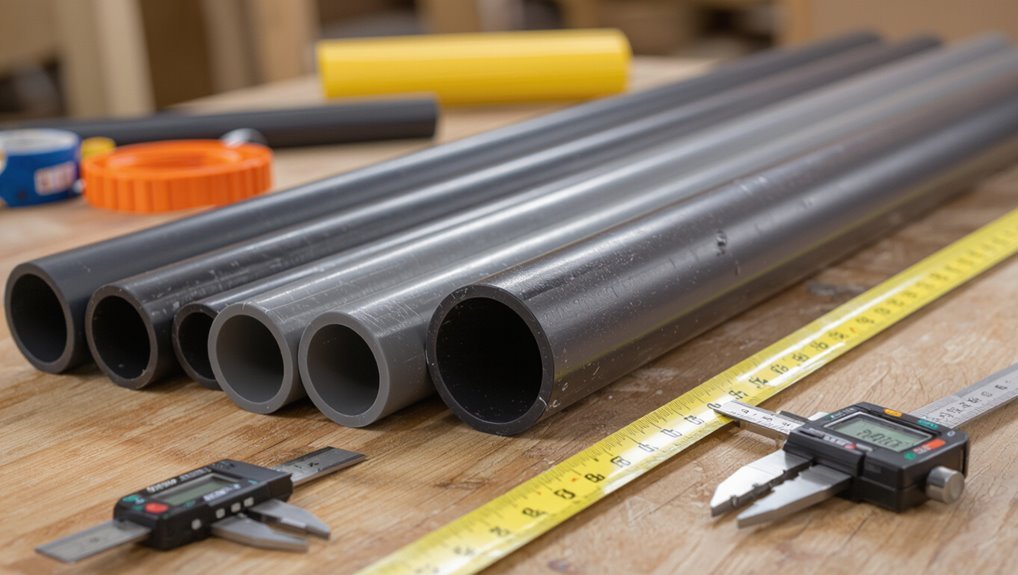
Choosing the right PVC pipe type and size is essential for successful DIY projects, because material properties and dimensions determine strength, flexibility, and compatibility with fittings.
DIYers often choose schedule 40 for general structural and drainage tasks due to its balance of strength and affordability. Schedule 80 offers thicker walls where punch resistance or pressure tolerance matters.
For lightweight, flexible needs, thin-wall or PVC conduit suits frames and craft uses. Diameter selection depends on load, intended flow (for fluid projects), or aesthetic scale; common DIY diameters range from 1/2 inch to 2 inches.
Matching fittings and pressure ratings prevents failure.
Essential Tools and Supplies for PVC Builds
A concise overview of the tools and supplies needed for PVC projects sets expectations before work begins.
Key topics include cutting and joining methods, the fasteners and adhesives that guarantee secure connections, and the safety gear and measurement tools required for accuracy and protection.
Practical recommendations and brief tips will follow to help readers prepare.
Basic Cutting And Joining
Cutting and joining PVC reliably depends on a few essential tools and supplies: a fine-toothed saw or PVC-specific cutter for clean cuts, a deburring tool or utility knife to remove burrs, measuring and marking tools for accuracy, appropriate solvent cement and primer for permanent joints, and compatible fittings and primer-cement applicators. Proper technique guarantees leak-free, aligned assemblies. Clean mating surfaces, chamfer pipe ends, dry-fit before gluing, and follow cure times. Safety gear—gloves and eye protection—protects during cutting and solvent use.
| Task | Recommended Item |
|---|---|
| Cutting | Fine-toothed saw |
| Joining | Solvent cement and primer |
Essential Fasteners And Adhesives
Select fasteners and adhesives that match PVC’s chemical properties and the project’s load, environment, and appearance requirements.
For permanent joins, PVC solvent cement chemically welds fittings and pipe; choose schedule/type-compatible cement and primer when required.
For removable or adjustable connections, use paper- or foam-backed weatherproof tape, nylon or stainless steel hose clamps, and PVC-specific threaded adapters.
Mechanical fasteners—stainless screws, carriage bolts with washers, and rivets—secure assemblies to surfaces; pre-drill to avoid cracking.
Use silicone or polyurethane sealants for exterior gaps and flexible joints.
Store adhesives per manufacturer instructions and replace aged or contaminated products to guarantee reliable bonds.
Safety Gear And Measurements
Why prioritize safety gear and precise measurements? Protective equipment and exact cuts prevent injury and guarantee fittings align. The section lists essentials for reliable, repeatable PVC projects.
| Item | Purpose |
|---|---|
| Safety glasses | Eye protection from shards |
| Gloves | Cut and chemical protection |
| Dust mask | Inhalation prevention when sanding |
| Measuring tape | Accurate length and placement |
| Marker & square | Straight, repeatable cuts |
Calibrated tools and PPE combine to reduce waste and rework. A methodical approach—measure twice, cut once, wear protection—keeps projects efficient and safe.
Cutting, Joining, and Safety Tips (Glue, Primer, PPE)
When preparing PVC for assembly, proper cutting, secure joining, and adherence to safety protocols guarantee durable results and reduce injury risk.
Accurate measurements precede straight cuts using a fine-tooth saw or PVC cutter; deburring prevents misfits.
Primer dissolves surface contaminants, and solvent cement chemically fuses joints—apply evenly and assemble quickly for full bond.
Ventilation and gloves protect from fumes and skin contact; eye protection guards against shards.
Dry-fit parts first to confirm alignment.
Allow recommended cure times before load.
Proper tools, cleanliness, and calm workflow minimize leaks, failures, and accidents.
- Measure twice, cut once
- Deburr and chamfer edges
- Use primer before cement
- Wear gloves and eye protection
- Allow full cure time
Simple Home Storage Hacks Using PVC Pipe
PVC pipe can be repurposed into a slim shoe organizer by cutting equal-length sections and mounting them vertically or at an angle to cradle footwear.
Short lengths fitted across a closet shelf provide tidy compartments for flats or sandals without taking floor space.
A larger-diameter sleeve slipped over a sagging closet rod serves as a simple reinforcer to restore straightness and prevent future bowing.
Slim Shoe Organizer
A slim shoe organizer built from cut lengths of pipe turns narrow gaps into efficient, vertical storage for flats, sandals, and sneakers. Sections of PVC are trimmed, sanded, and glued into staggered columns that fit between a wall and door or beside a closet. The design preserves shoe shape, improves airflow, and reduces clutter without bulky shelving.
Assembly requires minimal tools and can be customized to match width and height constraints. Lightweight, inexpensive materials make replacements and reconfiguration simple, and labelled rows aid quick selection.
- Customizable column spacing for different shoe widths
- Non-slip pads prevent floor scratches
- Easy wall-mount or freestanding options
- Paintable surfaces for aesthetic matching
- Modular expansion as collection grows
Closet Rod Reinforcer
Several lengths of cut PVC pipe slipped over a closet rod provide a simple, low-cost way to reinforce sagging bars and distribute weight evenly.
Cut sections slightly shorter than the closet depth, slide them onto the rod, and space evenly under heavy garment areas.
The rigid pipe reduces bending, protects finish, and creates individual garment separators when paired with small foam inserts.
For long rods, use a central support sleeve or multiple overlapping sections.
Secure ends with caps or friction-fit stoppers to prevent movement.
Installation requires only a saw and measuring tape, offering a quick, reversible upgrade to closet stability and organization.
Easy Garden Projects: Planters, Trellises, and Drip Lines
In backyard plots and balcony nooks alike, repurposed PVC pipe offers simple, budget-friendly solutions for planters, trellises, and drip irrigation.
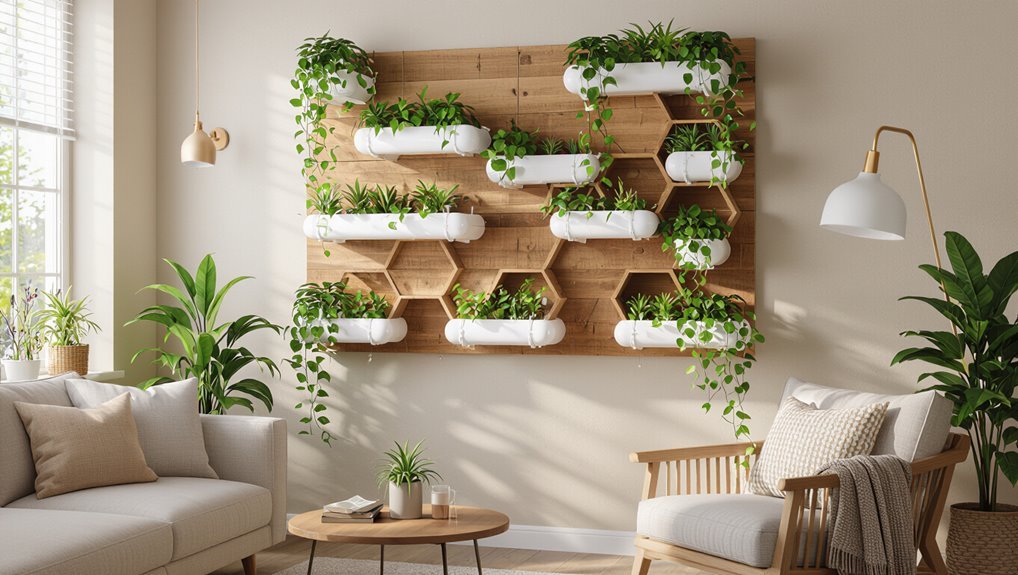
Sections of pipe become self-watering planters when capped, filled with medium, and slotted for drainage. Upright frames assembled from elbows and tees support climbing beans or peas without heavy posts. Thin-diameter runs fitted with micro-drippers create targeted drip lines that conserve water and reduce disease.
Lightweight, weatherproof, and easy to cut, PVC adapts to vertical gardens and espalier setups. Basic fittings enable modular expansions and repairs with minimal tools.
- Self-watering horizontal planters
- Modular trellis frames
- Low-pressure drip mains
- Vertical tower gardens
- Quick-connect repair fittings
Buildable PVC Furniture Projects (Shelves, Benches)
Many DIYers turn to PVC pipe for simple, lightweight furniture because its modular fittings and easy cutting make sturdy shelves and benches achievable with minimal skills. Projects use standard pipe sizes, elbow and T fittings, and plywood or fabric surfaces to create storage, seating, or display units. Lightweight frames are weather-resistant and easily disassembled for moving. Basic tools: saw, primer, cement, measuring tape. Design considerations: weight capacity, leg bracing, and non-slip feet. Maintenance is minimal; replace damaged sections without rebuilding entire piece.
| Project | Benefit |
|---|---|
| Shelf unit | Custom lengths |
| Bench | Portable seating |
| Corner shelf | Space-saving design |
PVC Play Structures and Toys for Kids
Create lightweight, customizable play structures and toys from PVC pipe that balance durability with easy modification.
Small climbers, forts, and puppet theaters can be assembled with simple connectors; modular designs allow growth and reuse as interests change.
Smooth edges and capped ends improve safety. Lightweight frames are transportable for park days or storage. Plans often use common pipe sizes and inexpensive fittings, keeping projects accessible for varied skill levels.
- Simple jungle gym with angled supports
- Foldable puppet stage with curtain rod
- Push-along wagons and balance beams
- Ball run and marble maze panels
- Portable soccer goals and ring toss stands
Finish, Paint, Weatherproof, and Troubleshoot PVC Projects
For a professional-looking, durable PVC project, finishing, painting, and weatherproofing steps are essential and straightforward: surfaces should be sanded and cleaned, compatible primers and paints applied, and joints sealed to prevent moisture intrusion and UV damage.
After sanding with fine-grit paper and wiping with solvent, a plastic-bonding primer improves adhesion.
Use exterior-grade acrylic or enamel paint formulated for plastics.
Apply sealant or silicone at joins and threaded fittings for watertightness.
For outdoor pieces, add UV-resistant coatings or wrap with shrink tubing.
Troubleshoot peeling, cracking, or leaks by identifying adhesion failure, replacing compromised sections, and redoing surface prep and sealing.
Conclusion
To summarize, PVC pipe proves a timeless resource for quick DIY solutions, from storage cubbies to garden trellises and sturdy benches. With proper tools, safe gluing, and thoughtful finishing, projects last through seasons and small mishaps. A careful builder—be they modern maker or an industrious Victorian tinkerer—can craft functional, playful, and weatherproof pieces that save space and money. Embrace experimentation, learn from errors, and enjoy practical creativity.