When Did Lead Pipes Stop Being Used? History & Health Facts
Lead pipes began to be phased out in many industrialized countries from the mid-20th century, with significant bans and replacements occurring during the 1970s and 1980s as awareness of their health risks, particularly neurotoxic effects, increased. Municipalities typically prioritized replacing lead plumbing in mains and public buildings first, while older homes were addressed in later programs. Factors such as regulatory tightening, corrosion concerns, and high-profile health outbreaks further accelerated the removal of lead pipes. The ongoing text discusses the health risks associated with lead pipes, methods for detection, and options for replacements.
Quick Answer: When Most Countries Stopped Using Lead Pipes
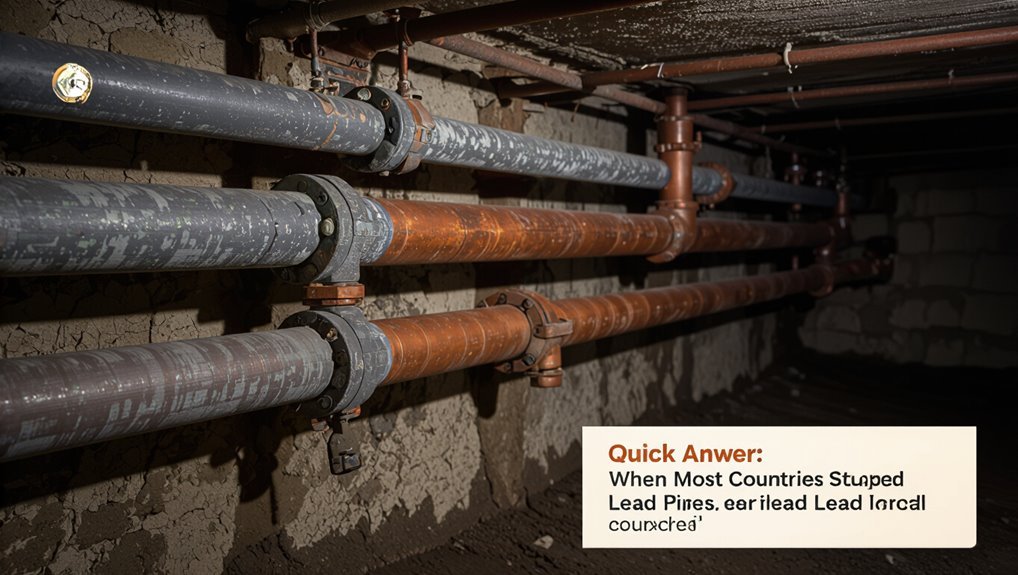
Generally, most industrialized countries phased out lead pipes between the mid‑20th century and the 1980s as scientific evidence linked lead in drinking water to cognitive and developmental harms.
Adoption timing varied: some nations moved quickly after mid‑1900s studies; others delayed until regulations tightened in the 1970s–1980s.
Replacement efforts prioritized new construction, public buildings, and major mains, while legacy plumbing in older homes persisted.
Low‑income areas often retained the highest residual risks due to slower upgrades.
International bans and standards reduced new installations; remediation, testing, and targeted replacement programs became the primary strategies to address remaining lead plumbing.
Why Cities First Banned Lead Plumbing (Drivers and Early Examples)
Rising scientific evidence of lead’s neurotoxic effects, public health crises in communities with elevated childhood blood-lead levels, and visible corrosion problems in water systems drove early municipal bans on lead plumbing. Cities reacted to documented poisoning clusters, legal pressure, and growing professional consensus favoring safer materials. Economic concerns about maintenance and liability reinforced regulatory change. Early examples often cited municipal ordinances, selective replacement programs, and plumbing codes restricting lead content.
| Driver | Example City | Action |
|---|---|---|
| Health studies | Chicago | Restricted lead solder |
| Outbreaks | New York | Banned lead service lines |
| Corrosion | Paris | Replaced fittings |
Timeline: Lead Pipe Use From Ancient Rome to the 20th Century
The chronology traces lead pipe adoption from widespread use in Roman aqueducts and household plumbing to a gradual retreat as evidence of corrosion and health risks mounted.
After centuries of intermittent use, the 19th and early 20th centuries saw growing scientific scrutiny and the start of municipal policies limiting or replacing lead service lines.
This timeline highlights technological, regulatory, and public-health factors that shifted plumbing practice away from lead.
Roman Use And Decline
How extensively did ancient engineers rely on lead for urban water systems? Roman builders used lead pipes (fistulae) widely for conduits, distribution, and private supply, valuing malleability and longevity.
Over centuries, maintenance, mineral deposits, and evolving municipal standards altered usage. Archaeological records show mixed adoption: lead in city mains and fittings, clay or wood elsewhere.
Concerns about corrosion emerged, but awareness of chronic lead poisoning remained limited. As imperial infrastructure degraded, replacements favored alternative materials locally available, reducing lead prevalence before medieval discontinuities.
- Archaeological evidence: surviving pipe fragments and inscriptions
- Functional reasons: pliability, sealability, durability
- Early signs: corrosion and scaling studies
19th–20th Century Phase-Out
Across centuries of continued use, lead plumbing began to give way during the 18th–20th centuries as scientific knowledge, public health concerns, and material innovations converged to prompt widespread replacement.
Industrialization and urban growth exposed contamination risks; epidemiological studies linked lead to illness, especially in children. Municipal reforms, building codes, and campaigns reduced new lead installations while utilities prioritized pipe replacement.
Alternatives—cast iron, galvanized steel, copper, and later plastics like PVC and PEX—offered durability and lower toxicity. Shift speed varied by region and economy; many older systems retained lead components into the 20th century, requiring targeted remediation and regulation.
Which Places Phased Out Lead Pipes (Countries, U.S. States, Dates)
Which jurisdictions moved away from lead service lines and when can be traced through a mix of national bans, state laws, and municipal replacement programs that unfolded mostly during the 20th and early 21st centuries. Many European countries phased out lead plumbing by mid‑20th century via bans and building codes; the United States saw staggered state actions, with some states mandating replacements after Flint and federal rules tightening in 2011 and 2021. Municipal programs accelerated replacements in high‑risk cities. Practical timelines vary by locality and policy.
- United Kingdom: phased bans and replacements across mid‑1900s onward
- United States: state laws, EPA rules 2011–2021, local programs
- Canada: provincial prohibitions and municipal replacements
Health Effects of Lead in Pipes and Who’s Most at Risk
Following the policy and replacement timelines that reduced lead in plumbing, attention shifts to the health consequences of residual lead exposure from service lines and household plumbing.
Lead is a neurotoxin with no known safe blood level; chronic low-dose ingestion impairs cognitive development in children, reduces IQ, and increases behavioral problems.
In adults, exposure raises cardiovascular risk, impairs renal function, and can cause reproductive harm.
Fetuses and infants are especially vulnerable due to developing nervous systems and greater absorption rates.
Socioeconomically disadvantaged communities and older housing stock disproportionately bear risk because of higher likelihood of legacy plumbing and limited resources for remediation.
Detecting Lead Pipes and Testing Your Water
Identifying lead service lines and testing household water are essential first steps for anyone concerned about lead exposure. Residents should inspect service line materials where they enter the home, check older plumbing solder and fixtures, and consult utility maps or records. Certified laboratories provide accurate water testing; follow sampling protocols like first-draw and flushed samples. Results guide risk assessment and next actions.
- Inspect visible pipes for dull gray, soft metal or “LEAD” stamping.
- Request a lead-in-water test from a state-certified lab or local health department.
- Record sample timing and methods to guarantee reliable comparisons.
Replacing Lead Pipes: Options, Costs, and Funding Programs
The section outlines typical cost ranges for partial and full service line replacements and the factors—such as pipe length, soil conditions, and contractor fees—that drive those estimates.
It compares common replacement methods (partial vs. full replacement, trenchless techniques) with respect to effectiveness, disruption, and long-term risk.
It then summarizes available funding options, including federal and state grants, low-interest loans, and utility assistance programs.
Cost Estimates And Factors
Many municipalities and homeowners confront a range of cost estimates when planning lead service line replacement, driven by pipe material, length, site conditions, labor rates, and permitting or restoration needs. Estimates typically include excavation, pipe removal, new materials, reconnection, surface restoration, and inspection. Geographic labor markets and contractor availability influence bids; urban projects often cost more than rural ones.
Funding sources—utility programs, grants, low-interest loans, and homeowner contributions—affect net outlay. Risk factors like unknown pipe routing, seasonal constraints, and need for traffic control raise contingency budgets. Transparent bids and standardized unit pricing improve comparability.
- Material and length
- Site and restoration
- Funding offsets
Replacement Methods Compared
Cost and funding considerations shape which replacement method is chosen, but method selection itself hinges on technical, regulatory, and community factors.
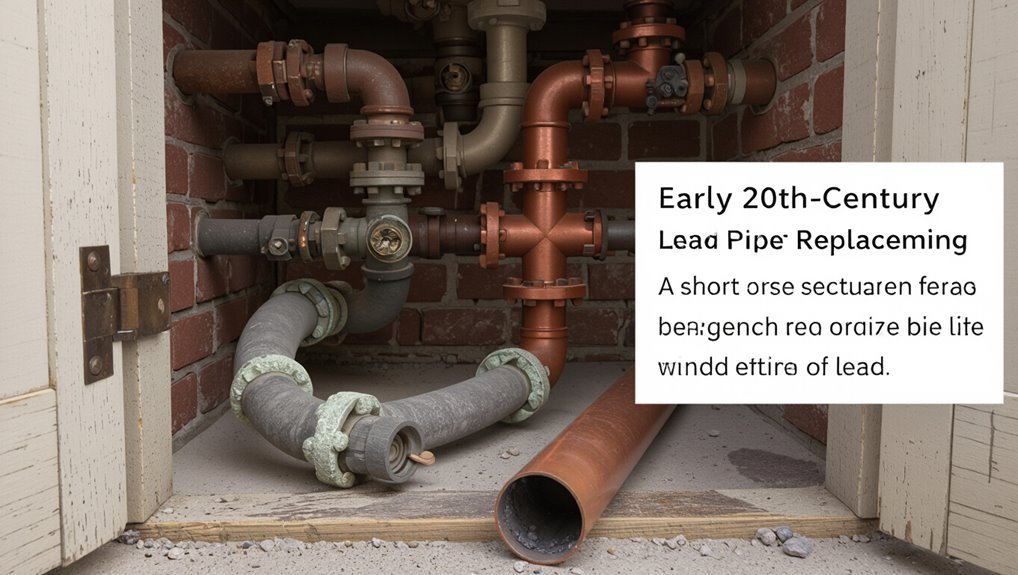
Options include full public-side replacement, partial replacements, and trenchless techniques like pipe-bursting or cured-in-place lining. Full replacement removes all lead service lines but costs more and requires coordination; partial replacement is cheaper short-term yet can temporarily increase lead release and is less favored by regulators. Trenchless methods reduce surface disruption and can lower labor expenses but may not remove all lead material. Decision-makers weigh longevity, disruption, water quality outcomes, and local permitting when selecting an approach.
Funding Programs And Grants
Across municipal, state, and federal levels, a patchwork of grants, low-interest loans, and targeted assistance programs finances lead service line replacement efforts.
Agencies prioritize health equity, leveraging American Rescue Plan, state revolving funds, and utility rate adjustments to reduce homeowner costs.
Eligibility, application timelines, and matching requirements vary; successful programs combine outreach, technical support, and clear timelines.
Coordination with local water utilities and public health departments accelerates replacements while minimizing disruptions and ensuring compliance with reporting.
- Grants targeting low-income households and disadvantaged communities
- Low-interest loans for municipalities and utilities
- Technical assistance and administrative funding for program implementation
Conclusion
Like Rome’s aqueducts that once gleamed with promise, lead pipes quietly betrayed progress. By mid-20th century many nations began replacing them, yet their echoes persist in present-day health risks and policy debates. The arc from acceptance to prohibition traces advancing science, public outcry, and regulatory change. Continued detection, remediation, and funding efforts remain essential to close the chapter on lead plumbing and protect future generations from a legacy that still lingers.