
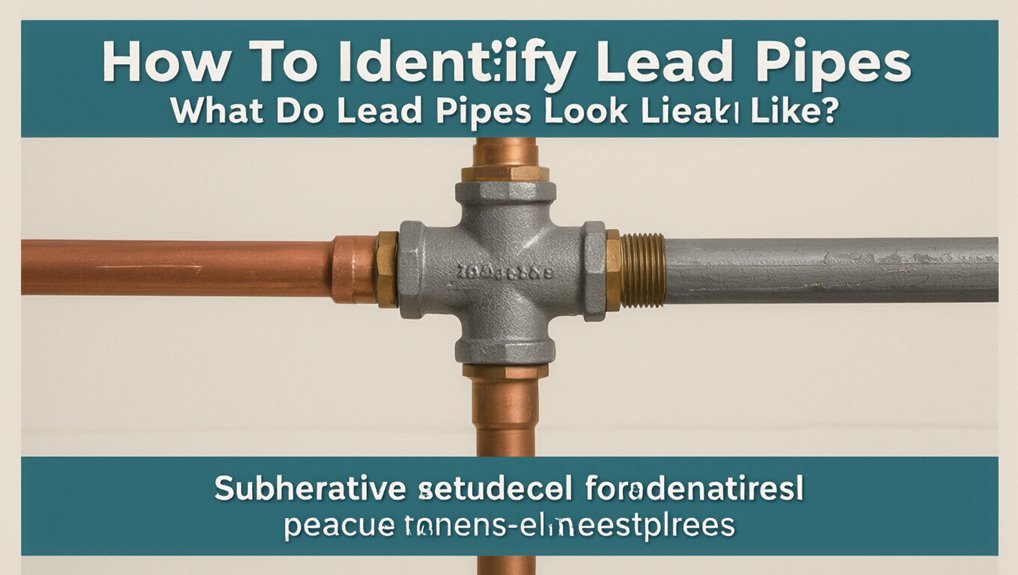
How to Identify Lead Pipes: What Do Lead Pipes Look Like?
Lead pipes look like dull, silver-gray tubing with a soft, malleable surface that easily dents. They often have a chalky white or gray corrosion that smudges when touched and feature rounded, hand-formed joints instead of sharp threads. Lead is heavy for its size, non-magnetic, and produces a muted thud when tapped. These pipes are typically found in service lines and basements built before the 1950s. For more information on testing, locations, and next steps, further details are available.
What Search Intent Guides This Guide?
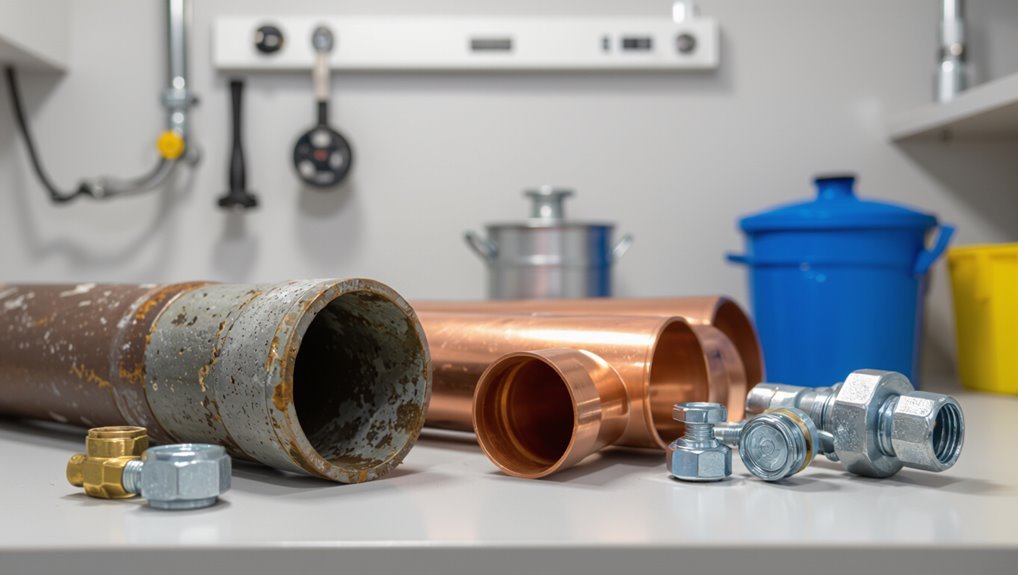
Why is someone looking for guidance on identifying lead pipes? The reader seeks practical assessment: health risk reduction, compliance with regulations, property valuation, or repair planning. Motivations include new homeowners verifying safety, tenants or landlords addressing liability, contractors preparing bids, and inspectors documenting hazards.
Searches vary from urgent (“is my water poisonous”) to procedural (“how to test pipe material”) and transactional (“hire removal service”). The guide targets those needing clear, actionable recognition criteria and next-step options without technical excess. It assumes intent to act—test, mitigate, or document—rather than mere curiosity about materials.
Quick Answer: How To Tell If A Pipe Is Lead
A quick inspection can reveal whether a pipe is likely lead by noting dull gray color, soft edges, and visible seams.
A simple magnet test—lead is nonmagnetic—helps rule out ferrous metals.
Age and location also matter, since older homes and service lines near the street are more likely to contain lead.
Visual Appearance Clues
In dim basements and behind kitchen cabinets, visual clues can quickly indicate whether a pipe is lead.
Lead pipes are dull gray with a soft, slightly corroded surface that may appear powdery or chalky.
They often have rounded, slightly bulging joints where fittings were poured rather than threaded.
Scratches reveal a malleable, silver-gray metal that deforms rather than chips.
Size tends to be about the diameter of a nickel to a quarter for older service lines.
Beware of greenish corrosion — more typical of copper — and bright shiny surfaces, which suggest modern materials rather than lead.
Magnet Test Method
Visual inspection narrows possibilities, but a simple magnet test offers a quick, objective check for lead versus iron-based pipes. Using a small magnet held against exposed pipe surfaces distinguishes ferrous materials: if the magnet sticks, the pipe contains iron or steel, not lead.
If the magnet does not adhere, the material could be lead, copper, brass, or plastic; absence of attraction is not definitive for lead. Test multiple spots, especially near joints and fittings, and avoid painted or heavily corroded areas that can impede magnetic contact.
Combine results with other identification methods before concluding the pipe material.
Age And Location Indicators
When homes were built before the mid-1950s and plumbing runs start at the street or water meter with soft, gray, easily dented pipe, there is a higher likelihood the service or interior water lines are lead.
Age and placement are primary clues: pre-1930s properties almost certainly used lead mains; 1930s–1950s buildings often mixed materials. Lead was commonly used for short interior runs to fixtures and for the full service line from curb to meter.
If visible pipe near the meter, basement entrance, or under floorboards is soft and gray, suspect lead and confirm with testing or professional inspection.
Where Lead Pipes Are Commonly Found In Homes
Older service lines at the curb and meter are a common location for lead in residences built before the mid-20th century.
Inside homes, supply pipes to sinks and toilets may be lead, especially in basements and crawl spaces where pipes are exposed. Presence of soldered fittings at joints can also indicate lead plumbing or lead-containing solder.
Older Home Service Lines
Many legacy water-service lines in homes built before the mid-20th century were made with lead or contained lead components, often running from the street meter to the house and connecting to interior plumbing. These external service lines typically sit in basements, crawlspaces, or buried between the meter and curb, exhibiting dull gray, soft metal that dents easily.
Connections to newer copper or plastic may show soldered joints, compression fittings, or brass adapters. Visible corrosion or a greenish residue can indicate lead deterioration.
Verification requires non-destructive testing or sampling by a qualified technician; visual cues alone are not definitive.
Interior Supply Pipes
Beyond the service line, lead was commonly used for interior supply pipes and fittings in homes built before the mid-20th century, running within walls, crawlspaces, basements, and under floors to deliver water to fixtures.
These pipes are soft, dull gray, and can dent or be easily scratched; cutting reveals a bright gray interior. They often have a distinct weight and feel compared with copper or plastic.
Lead plumbing may appear as continuous runs without visible seams where modern joints would be. Branches to sinks, toilets, and baths sometimes remain lead, concealed by finishes, insulation, or other materials, complicating visual detection.
Soldered Fittings Present
Look for soldered fittings where sections of pipe join, as these often indicate the presence of lead plumbing in homes built before the mid-20th century.
Soldered joints on older supply lines appear dull, gray, and malleable compared with modern solder, which is shinier and harder.
Inspect accessible areas—basements, crawlspaces, under sinks—paying attention to joints near valves and meter connections.
Corrosion at joints, a soft feel, or a distinct lead-gray residue suggest soldered lead.
Professional testing confirms composition; avoid scraping or cutting without precautions.
When lead is suspected, consult licensed plumbers for safe assessment and replacement options.
Visual Signs That Suggest A Pipe Is Lead
In older buildings, certain visible characteristics can indicate that a pipe is made of lead: dull gray color with a soft, malleable surface, rounded joints soldered rather than threaded, and a slightly roughened, flaking exterior where corrosion has occurred. Observers note uniform seam patterns, patina tones ranging from dark gray to whitish deposits, and bends formed without fittings. Familiarity with typical materials helps distinguish lead from galvanized steel, copper, or PVC.
Visual inspection should focus on uninterrupted runs, connection styles, and surface changes suggesting long-term corrosion rather than recent damage.
- uniform, rounded seams
- grayish patina with white crusting
- absence of threading
- hand-formed bends
- soldered coupling signs
Touch And Weight Cues That Hint At Lead
After noting visual indicators, tactile and weight cues provide further evidence that a pipe is lead.
A person handling a suspected lead pipe will notice a soft, slightly waxy surface that yields to fingernail pressure more than copper or steel.
Lead feels dense for its size; when lifted, sections sound and feel heavier than comparable-diameter alternatives.
Temperature conduction is also telling: lead warms slowly to the touch and may feel cool longer than other metals.
Corrosion often forms a dull, grayish patina with a powdery residue that smudges on skin, offering another tactile confirmation without examining joints.
How Lead Pipe Joints And Fittings Look Different
Often, joints and fittings on lead pipes appear hand-formed rather than machine-made, with visible hammer marks, uneven seams, and thicker, bulbous collars where sections were joined by soldering or pouring.
Observers note compressed collars, folded edges, and irregularly tapered sockets unlike modern pressed fittings.
Threads, when present, are coarse and often recut. Lead solder or poured joints can show small drip beads. Plumbing transitions to other metals sometimes use primitive collars or clamps rather than standardized adapters.
These features reflect historic fabrication and repair practices and help distinguish lead assemblies during inspection.
- Bulbous collars from poured joins
- Hammer-strike impressions
- Irregular socket depths
- Coarse or recut threads
- Primitive clamps or adapters
Color And Surface Patina Of Aged Lead Pipes
Aged lead pipes typically exhibit a dull gray surface that lacks the sheen of newer metal.
Over time a white oxidation patina often forms, appearing as chalky or powdery deposits along the pipe.
Observing these color and surface changes can help distinguish lead from other materials.
Dull Gray Surface
Typically, corroded lead pipes develop a dull gray surface that results from long-term oxidation and the formation of lead carbonates and oxides.
The matte finish differs from shiny new metal, appearing uniform yet irregular where corrosion progressed.
Visual inspection often reveals a soft, muted tone rather than metallic luster.
Tactile cues may include a slightly powdery or chalky feel without flaking heavy rust.
This appearance helps distinguish aged lead from other materials in older plumbing systems.
- Uniform matte gray color across exposed areas
- Slightly powdery residue when gently rubbed
- Smooth, rounded edges from long-term degradation
- Lacks bright metallic reflections
- Visible where protective coatings have worn away
White Oxidation Patina
After the dull gray surface develops, further chemical reactions can produce a lighter, white oxidation patina on lead pipes characterized by a powdery, chalk-like coating. This surface results from corrosion products such as lead carbonate and lead hydroxide forming under exposure to oxygen, carbon dioxide, and moisture.
The white layer often flakes or rubs off, revealing darker metal beneath, and may appear uneven where deposits accumulate. It can mask original metal luster, complicating visual identification. Observers should note texture, ease of removal, and underlying color changes; combined with other indicators, the white patina supports identification of aged lead plumbing.
How Solder, Tape, And Paint Hide Lead Pipes (What To Look For)
Concealing lead plumbing often involves common materials—solder, tape, and paint—that can mask the pipe’s true composition and complicate visual identification. These coverings can hide seams, joints, and the dull gray surface typical of lead, leading inspectors to misidentify or overlook hazardous sections. Careful scrutiny of coverings, joint shapes beneath, and adjacent hardware can reveal clues without invasive testing.
- Flaky paint hiding characteristic dull gray beneath
- Rolled or cloth tape applied over seams
- Silvery solder blobs smoothing joints
- Paint buildup near fittings obscuring edges
- Corrosion staining bleeding through coverings
Lead Vs. Copper: How To Tell The Difference
Because coverings can obscure surface clues, distinguishing lead from copper requires attention to specific physical and tactile differences rather than paint or tape alone.
Lead is dull gray, heavier, and softer; it yields to fingernail pressure and can show malleable deformation or tool marks. Copper has a reddish-brown tone when clean, feels lighter, and resists scratching.
Joint types differ: lead pipes often have poured or folded joints, while copper uses soldered or compression fittings.
Sound when tapped varies—lead gives a muted thud, copper a brighter ring.
Measuring weight and testing scratch resistance aid identification without relying on color alone.
Lead Vs. Galvanized Steel: Visual And Physical Clues
The section contrasts lead and galvanized steel using visible and tactile cues. Lead typically appears dull gray with a softer, heavier feel, while galvanized steel shows a spangled, metallic sheen and is lighter.
Magnetic attraction and relative weight provide quick, physical tests: galvanized steel is magnetic and usually lighter, whereas lead is non‑magnetic and noticeably denser.
Appearance And Color
Examining pipes visually provides the quickest initial clues for distinguishing lead from galvanized steel: lead pipe surfaces are typically dull gray with a soft, slightly malleable feel and may display faint, rounded seams where sections joined, while galvanized steel presents a harder, shinier finish with sharper edges, thread marks at fittings, and a spangled or mottled zinc coating that can flake or rust. Visual cues include color, texture, joints, and surface corrosion patterns; inspectors note subtle differences to guide further testing.
- Dull, uniform gray patina on lead
- Mottled, silvery zinc on galvanized steel
- Rounded seam impressions on lead
- Prominent threads and sharp edges on steel
- Flaking zinc or red-brown rust indicating steel
Magnetic And Weight Signs
After noting surface color and seam details, inspectors often rely on simple physical tests to distinguish lead from galvanized steel. A magnet will not stick to lead but adheres to steel; this quick check rules out ferrous materials.
Handling provides another cue: lead feels conspicuously heavier and more solid for its size due to its high density, whereas galvanized steel is lighter and may sound hollow when tapped. Careful tapping helps; lead produces a dull, dead thud, steel a sharper ring.
These tests are noninvasive and practical, but results should be confirmed by sampling or professional assessment before final identification.
Lead Vs. PVC And PEX: How To Differentiate Plastics From Lead
When evaluating household plumbing, distinguishing metal lead pipes from modern plastic lines such as PVC and PEX relies on visual and tactile cues: lead is dull gray, malleable, and often shows seams or solder marks, whereas PVC is rigid, white or gray, and smooth, and PEX is flexible, colored (commonly red, blue, or white), and seamless.
Observers should note connection types, flexibility, and surface texture to differentiate materials quickly.
- Lead often has hand-formed joints, faint crushing where bent, and a heavier feel.
- PVC uses solvent-welded or threaded fittings.
- PEX bends without kinking.
- Plastics lack solder or casting marks.
- Color and rigidity are decisive cues.
Typical Diameters And Wall Thickness Of Lead Service Lines
In typical residential and municipal applications, lead service lines most commonly range from about 3/8 inch to 1 inch in internal diameter, with outside diameters and wall thicknesses varying according to whether the line was cast, drawn, or hand-formed. Typical drawn lead tubing is thinner-walled (0.020–0.080 in), cast or hand-formed lengths can be thicker (0.080–0.150 in), and older mains sometimes display irregular wall profiles. Identifying features include uniform roundness for drawn tubes and seam marks or hammering evidence for hand-formed sections.
| Type | Typical ID | Typical Wall |
|---|---|---|
| Drawn tubing | 3/8–1 in | 0.020–0.080 in |
| Cast sections | 1/2–1 in | 0.080–0.150 in |
| Hand-formed | variable | irregular |
Where Exterior Lead Service Lines Meet The House
At the point where the exterior service line meets the property, attention often focuses on the curb stop and meter box as accessible indicators of pipe material.
Observers should note any adapter fittings where the lead line connects to copper or plastic, since those joints can reveal original materials.
Visible corrosion, pitting, or greenish discoloration near these points frequently signals lead or lead-alloy components.
Curb Stop And Meter Box
Situated where the public water main meets a property’s private plumbing, the curb stop and meter box assembly is a frequent junction point for exterior lead service lines; the curb stop (an accessible shutoff valve) and the meter box (a recessed housing) can both conceal lead pipe connections or fittings that indicate a lead service line continues toward the house.
Inspection of this area often reveals visual cues: dull gray, soft metal appearance; seams or solder joints; stamped markings; corrosion patterns differing from copper; or heavy, malleable fittings. Professionals use careful exposure and documentation before disturbing the assembly.
- dull, soft-looking pipe surface
- visible soldered joints
- absence of copper color
- localized greenish or white corrosion
- heavy, bulky fittings
Pipe Material Transition
Following inspection of the curb stop and meter box, attention turns to the point where the exterior service meets the building plumbing: the pipe material change at or just inside the foundation often reveals whether a lead service line continues into the home.
Inspectors look for a distinct joint, sleeve, or coupling where shiny copper, galvanized iron, or plastic connects to dull, soft gray pipe indicative of lead.
Lead typically has a rounded, hand-formed appearance and may be shaped into flared fittings.
Measurements, magnet tests, and photographic records assist determination.
When uncertainty remains, laboratory analysis of a cut sample provides definitive identification.
Visible Corrosion Signs
Often visible where the service enters the foundation, corrosion at the junction between exterior lead service lines and building plumbing offers clear clues to material and condition.
Observers note dull, grayish deposits, greenish-blue verdigris, or chalky white buildup near couplings and fittings.
Pitting, flaking metal, and irregular seams suggest metal degradation and possible lead presence.
Discoloration on adjacent mortar or siding can indicate prolonged leaching.
Such signs warrant further testing and professional inspection to confirm composition and risk.
- Dull, soft gray surface films
- Greenish-blue verdigris at fittings
- White, powdery crusts on joints
- Visible pitting or flaking
- Staining on nearby materials
How To Spot Lead In Old Water Meters And Shutoffs
Old meters and shutoffs can conceal lead through their dull gray appearance, soft malleable feel, and characteristic solder joints.
Inspect fittings where the meter connects to piping: lead often shows hand-formed, slightly bulbous joints rather than neat machine threads.
Tap suspicious parts; lead emits a muted thud compared with brass or steel.
Look for stamped dates and manufacturer codes—pre-1950s equipment more likely contains lead components.
Corrosion on lead appears powdery and may flake without rust’s reddish color.
When identification is uncertain, document findings and recommend testing or professional evaluation rather than attempting removal or alteration.
Indoor Plumbing Clues: Basements, Crawlspaces, And Utility Rooms
In basements, crawlspaces, and utility rooms, visible pipe markings such as stamped codes, soldered seams, or dated tags can signal pipe material.
Corroded pipe appearance—grayish-white scaling, pitting, or a soft, dull surface—is consistent with aged lead.
Observers should note these visual clues before pursuing confirmation testing.
Visible Pipe Markings
When inspecting basements, crawlspaces, or utility rooms, visible pipe markings provide clear, quick clues about a home’s plumbing materials. Labels, stamps, or embossed letters often identify metal type, manufacture date, or compliance codes; white or faded paint tags can indicate past repairs.
Plastic-sheathed pipes have printed text showing material and pressure ratings; cloth tape or wraps may hide older piping. Color bands near joints sometimes denote service lines. Photographs of markings aid later research and professional consultation. Inspectors should record serials and codes without dismantling systems and compare findings to manufacturer references.
- Stamped manufacturer names and alloy codes
- Embossed letters indicating metal type
- Printed plastic pipe text and ratings
- Painted bands or service color codes
- Tape or labels marking repairs and dates
Corroded Pipe Appearance
Corroded pipe appearance offers immediate visual evidence of underlying deterioration: rough, pitted surfaces; greenish or bluish verdigris on copper; reddish-brown flaking on iron and steel; and white, powdery deposits on galvanized surfaces. Observers should note texture, color, crusting, and nearby staining. Lead pipes often show dull, gray corrosion and soft, chalky deposits that smear when rubbed. Corrosion near joints, joints with differing metals, or deposits that reappear after cleaning indicate active corrosion. Document locations and photograph findings for professional assessment; suspect pipes require testing rather than visual diagnosis alone.
| Location | Appearance | Likely Metal |
|---|---|---|
| Basement wall | Dull gray | Possible lead |
| Crawlspace | Green/blue | Copper |
| Utility room | Rust flakes | Iron/steel |
| Near joints | White powder | Galvanized |
| Under fixtures | Staining | Mixed metals |
Outdoor Clues: Curb Stops, Meter Pits, And Sidewalks
Beneath sidewalks and near property lines, several outdoor features can reveal whether a service line is lead: curb stops, meter pits, and the configuration of sidewalk joints often align with where older lead pipes were run. Observers can use these clues to target visual inspection, excavation, or inquiry with utilities without assuming age alone. Surface signs vary by municipality and installation practice, so corroboration is advised.
- Curb stop location relative to sidewalk control joints
- Brick or concrete meter pit covers with stamped utility markings
- Disturbed or patched sidewalk seams indicating past trenching
- Galvanized or soldered fittings near shutoffs
- Short, soft pipe segments exposed at valves
Age-Based Likelihood: Which Construction Years Used Lead
Construction era is a strong predictor of lead service line presence, with homes built before 1950 most likely to have lead piping.
Midcentury construction from 1950 to 1986 presents a mixed risk as utilities and materials shifted away from lead but replacement was inconsistent.
After 1986, modern codes largely prohibited lead in service lines, making lead pipes uncommon in newer constructions.
Homes Built Before 1950
In homes built before 1950, lead water service lines and interior plumbing were commonly used because lead’s malleability and resistance to pinhole leaks made it a practical choice for that era. Such properties resulted in widespread installation of lead pipe from mains to fixtures; evidence often appears under basements, at property borders, and in soldered joints.
Visual inspection, records, and simple tests can indicate presence, but professionals confirm. Corrosion can produce a dull gray appearance, and many originals remain hidden behind walls or soil.
- Typical locations: service line from curb to house
- Soldered seams on joints
- Soft, easily scratched pipe surface
- Dull gray patina or white carbonate buildup
- Matching lead fixtures and fittings
Midcentury Construction 1950–1986
Spanning roughly 1950 to 1986, midcentury construction reflects a gradual decline in the routine use of lead for service lines and interior plumbing as alternative materials and regulations emerged.
During this era, some homes still had lead service lines, fittings, or solders, especially in areas with existing infrastructure.
Copper and galvanized steel became more common for new installations, while plastic piping began appearing late in the period.
Presence of lead varies by region, installer habits, and retrofit history.
Visual clues—soft, dull gray pipes; malleable fittings; lead solder joints—help identify possible lead components, but testing is recommended for confirmation.
Post-1986 And Modern Codes
Although lead use in plumbing fell to negligible levels after 1986 due to stricter regulations and widespread adoption of safer materials, a few legacy components and isolated exceptions can still be found in the built environment.
Modern codes virtually eliminate new lead service lines and require lead-free alloys for fittings, but inspections should remain vigilant.
Risk concentrates in older infrastructure, repair patches, and imported fixtures.
Professionals rely on records, visual cues, and testing.
Homeowners should prioritize certified replacements and corrosion control where municipal systems still pose risk.
- Code changes after 1986 banned new lead piping
- Some repair parts predate full compliance
- Imported or salvaged fittings occasionally contain lead
- Service lines replaced slowly by utilities
- Testing confirms unknown materials
Geographic Hotspots And Local Regulations To Check
Where are lead service lines most likely to be found and which local rules govern their removal?
Older urban neighborhoods, especially those developed before the 1950s, and regions with historic housing stock frequently contain lead service lines and plumbing. Municipal inventories, water utility records, and state databases often indicate hotspots.
Local regulations vary: some jurisdictions mandate utility-led replacement, cost-sharing, or full homeowner compensation; others require permit, licensed contractor use, and disposal standards for hazardous materials. Building codes, public health advisories, and grant programs differ by state and city.
Residents should consult municipal water departments and local health agencies for precise maps and legal requirements.
How To Perform A DIY Magnet Test Safely
To check whether an exposed service line or pipe fitting contains lead, a homeowner can perform a simple magnet test: dry the pipe, hold a strong refrigerator magnet against several spots along its length, and observe whether the magnet sticks.
The test relies on lead being non-magnetic; if the magnet adheres, the pipe is likely iron, steel, or galvanized. Results may be inconclusive on fittings, solder, or mixed-metal assemblies.
Use gloves to avoid cuts, avoid wet or corroded areas, and document findings with photos. When uncertain, consult a certified inspector or request a laboratory lead test.
- Wear protective gloves and eyewear
- Test multiple, cleaned locations
- Avoid painted or heavily corroded spots
- Do not disturb joints or solder
- Photograph and note magnet reactions
How To Do A Gentle Scraping Test Without Damage
The guide recommends first inspecting the pipe surface for paint, corrosion, or soft, dull metal that could indicate lead.
A coin test can be used gently to scrape a tiny, inconspicuous spot and reveal shiny metal beneath without removing protective coatings.
Any cleaning should be limited to small areas and performed with light pressure to avoid damage or contaminant release.
Inspect The Pipe Surface
With a small, firm tool and steady hand, an inspector can perform a gentle scraping test to reveal metal beneath paint or corrosion without harming the pipe.
The inspector focuses on small, inconspicuous spots, applying light pressure and short strokes to expose the base material.
Observations note color, texture, and any soft, dull gray patina typical of lead.
Care is taken to avoid deep gouges, and work proceeds methodically along fittings and joints where coatings thin.
Photographs document findings before and after.
If uncertainty remains, samples are reserved for professional analysis rather than aggressive scraping.
- Choose nonabrasive, pointed tools
- Target hidden or low-visibility areas
- Use steady, controlled motions
- Record and photograph each test site
- Stop if metal flakes or unexpected resistance appear
Use A Coin Test
Using a common coin as a light scraping implement allows an inspector to check for underlying lead without risking deep gouges or contaminating the surface.
The examiner holds the coin flat, applies gentle pressure and drags it a short distance across a small, discreet area already free of loose paint or heavy corrosion.
If the coin reveals a soft, dull gray metal beneath coatings, that suggests lead; if it uncovers bright, shiny metal or copper tones, it likely is not lead.
The test avoids penetrating deep layers; any questionable result should prompt professional sampling and laboratory confirmation.
Clean Small Areas Gently
After selecting an inconspicuous spot, an inspector gently removes loose debris and surface dust with a soft brush or cloth to expose a small area for testing.
The next step uses a blunt, nonabrasive tool—plastic scraper or wooden stick—to lightly lift surface oxidation without gouging metal. Pressure is minimal; movements are short and controlled.
If paint or heavy corrosion resists, testing is halted and professional evaluation recommended. Gloves and eye protection are worn.
Documented by photograph, the cleaned patch should be small, reversible, and limited to necessary extent to preserve pipe integrity and avoid contamination.
- Use a soft-bristled brush
- Prefer plastic or wooden scrapers
- Apply minimal, controlled pressure
- Halt if resistance or pitting appears
- Photograph and record location
Can’t Tell? When To Get Professional Testing
When uncertainty remains about a service line’s material, professional testing provides a definitive answer. Homeowners uncertain after visual checks, age research, or simple field kits should consider a qualified inspector or licensed plumber.
Professionals use established protocols, visual inspection tools, and sometimes in-situ instruments to distinguish lead from other metals safely. They evaluate accessibility, potential contamination risks, and recommend appropriate next steps—replacement, further sampling, or interim precautions.
Hiring certified professionals reduces misidentification, prevents unsafe handling, and documents findings for utilities or regulatory programs. Costs vary; obtain written estimates and confirm credentials before commissioning an inspection.
Certified Lab Testing: What Samples To Take
For certified lab testing, the tester should collect both first-draw and flushed water samples and, when possible, small swab or pipe scrapings to check for particulate lead.
Sampling must follow a clear procedure: document the fixture, record stagnation time, collect specified volumes in labeled bottles, and note any pre-sampling actions.
Proper chain-of-custody and prompt delivery to the accredited lab guarantee valid, legally defensible results.
Sample Types To Collect
Which sample types are most informative depends on the testing objectives and the regulatory criteria being applied. The laboratory selection guides sample type based on goals: detecting pipe-derived lead, evaluating flushing effectiveness, or demonstrating compliance.
Typical choices balance representativeness, ease of collection, and interpretability. Sample labeling must record volume, position, stagnation time, and date. Consistent protocols improve comparability across locations and times.
Consider including sequential draws or composite samples when appropriate; preserve chain-of-custody and follow lab instructions for preservatives and containers.
- First-draw (stagnation) samples
- Composite (multi-tap) samples
- Sequential (profile) samples
- Flushed or post-flush samples
- Hot-water versus cold-water samples
Sampling Procedure Steps
Beginning with a clear plan, the certified lab testing sampling procedure outlines step-by-step actions to guarantee representative, legally defensible samples are collected, labeled, preserved, and transported.
Personnel verify site access, identify sampling points (first-draw, flushed, composite), and document plumbing configurations.
Calibrated equipment and pre-cleaned containers are used; preservatives added when required.
Chain-of-custody forms accompany each sample, recording time, date, sampler, and conditions.
Samples are cooled or stored per protocol and delivered to the accredited laboratory within specified holding times.
Deviations are noted and justified.
Results are tied to the documented procedure to support interpretation, compliance, and potential remediation decisions.
Field Test Kits For Lead Pipe Identification: Pros And Cons
Field test kits offer a rapid, on-site method to screen plumbing and service lines for the presence of lead without requiring laboratory analysis. They enable quick decisions, lower immediate cost, and support preliminary mapping of suspect pipes, but vary in sensitivity and can yield false positives or negatives depending on surface condition and operator technique.
- Portable and fast: results within minutes for initial screening.
- Cost-effective for broad surveys but not definitive.
- Sensitivity limits: low-level contamination may be missed.
- Surface interference: corrosion, paint, or coatings affect accuracy.
- User-dependent: training reduces errors but does not replace lab confirmation.
Interpreting Test Results: What A Positive Means
How should a positive result from a field test kit be understood? A positive indicates the presence of lead at the sampled surface or water, signaling probable lead-bearing material. It is a screening outcome, not a definitive material ID. Confirmatory laboratory analysis or professional inspection is recommended before taking action. Results depend on sampling technique, kit sensitivity, and surface condition; false positives and negatives can occur. Document findings, photograph the site, and isolate affected fixtures if practical. Use the table below to summarize implications and next steps.
| Implication | Recommended Action |
|---|---|
| Probable lead presence | Arrange lab confirmation |
| Sampling error risk | Repeat test properly |
| Immediate concern | Limit use temporarily |
| Uncertain result | Consult a professional |
Health Risks Tied To Confirmed Lead Piping
Confirmed lead piping poses serious health risks because lead can leach into drinking water and enter the body through ingestion or, less commonly, inhalation of contaminated dust.
Chronic exposure accumulates in blood and tissues, impairing neurological development in children, lowering IQ and attention, and causing behavioral problems.
In adults it raises risks for hypertension, kidney damage, and reproductive harm.
Even low levels carry measurable effects; vulnerable populations face greater harm.
Risk magnitude depends on concentration, duration, and individual susceptibility.
Mitigation requires removal or replacement of lead sources and medical evaluation when exposure is confirmed.
- Neurodevelopmental impairment in children
- Cognitive decline and memory issues
- Hypertension and cardiovascular strain
- Kidney dysfunction and metabolic effects
- Reproductive and fetal risks
Short-Term Steps If You Suspect Lead Pipes In Your Home
Given the health consequences of lead in plumbing, homeowners who suspect lead pipes should act promptly to reduce exposure while arranging verification and repairs. They should use cold water for consumption, run taps for 30–60 seconds before use, avoid boiling to concentrate contaminants, and use certified filters or bottled water. Short-term actions include limiting infants’ and pregnant persons’ exposure, cleaning faucet aerators, and documenting pipe appearance for inspectors. The table outlines practical immediate steps.
| Action | Purpose | Duration |
|---|---|---|
| Run cold water | Flush standing water | 30–60s |
| Use certified filter | Remove lead particles | Until fixed |
| Use bottled water | Immediate safe water | As needed |
If Confirmed: Service Line Replacement Options
When a lead service line is verified, homeowners should promptly evaluate replacement options to eliminate the source of contamination. Options include full public-to-home replacements coordinated with utilities, contractor-led private replacements, or combined approaches shared between parties. Decisions depend on cost, permitting, timelines and local regulations.
Material choices favor copper or NSF/ANSI-certified plastic, ensuring durability and code compliance. Financing, rebates and utility programs can offset expenses. Proper disposal and documentation of removed lead materials are required to protect workers and the environment.
- Coordinate with the water utility for lead line maps and assistance
- Obtain licensed contractors and written estimates
- Select approved replacement materials
- Review local permitting and inspection requirements
- Pursue available rebates or financing programs
Interim Fixes: Partial Repairs And Approved Connector Choices
Evaluate interim fixes carefully: partial repairs and approved connector installations can reduce immediate exposure to lead but do not replace a full service-line replacement.
Interim measures focus on isolating lead portions, replacing accessible segments, and installing certified dielectric or compression connectors where regulations allow.
Work must follow local codes, use approved materials, and be performed by qualified technicians to avoid galvanic corrosion or leaks.
Homeowners should obtain written documentation of materials and warranties.
Interim fixes are temporary risk-reduction steps; they require monitoring, possible rework, and eventual complete replacement of the lead service line to eliminate long-term exposure.
How Plumbers Identify And Document Lead Pipes During Inspections
After interim measures are implemented, a formal inspection identifies remaining lead components and documents the service line condition for future replacement planning.
Technicians use visual assessment, noninvasive testing, and targeted excavation when necessary, recording materials, joint types, and corrosion.
Photographs, GPS-tagged notes, and standardized forms create a permanent record.
Results inform prioritization, permitting, and coordination with utilities.
- Visual cues: dull gray, malleable sections, stamped markings
- Mechanical tests: gentle scraping or magnet checks to distinguish metals
- Sampling: small, labeled pipe segments for lab confirmation
- Photographic log: date-stamped images of fittings and junctions
- Digital report: GIS entry and inspection checklist
Costs And Funding: Who Pays To Replace Lead Lines
Determining who pays to replace lead service lines requires balancing responsibility among utilities, property owners, and government programs, with costs influenced by line length, excavation complexity, and local labor rates.
Utilities often cover public-side replacement and may subsidize full replacement to guarantee no partial lines remain. Property owners typically bear interior or private-side costs unless assistance applies.
Grants, low-interest loans, and state or federal funding can offset expenses for low-income households or disadvantaged communities. Contracts, permits, and insurance impact final bills.
Clear cost-sharing policies and transparent billing help avoid disputes and guarantee equitable, timely replacement of hazardous lines.
Working With Your Water Utility And Local Health Department
Once cost responsibilities and available funding are understood, homeowners and community groups should engage their water utility and local health department to coordinate lead service line identification, testing, and replacement.
Collaborative steps include scheduling inspections, sharing sampling results, and confirming timelines for mitigations. Utilities can advise on safe sampling protocols; health departments interpret exposure risks and recommend medical follow‑up. Clear communication channels reduce delays and confusion. Records, permits, and notification requirements are managed jointly to protect public health. Trustworthy coordination also supports community outreach and equitable prioritization of replacements.
- Request guidance on sampling and inspection procedures
- Share test data promptly
- Confirm notification rules
- Coordinate timelines and contractors
- Seek health department risk advice
Requesting Service-Line Records From Your Utility
Where are service-line records kept, and what do they show? Utilities typically store records in municipal archives, billing systems, or GIS databases; some maintain paper maps or engineering files.
Records indicate pipe material, installation dates, ownership boundaries, and any past repairs or replacements.
To request records, submit a formal public records or customer inquiry online, by mail, or at a utility office; include address, account number, and permission if required. Expect redactions for privacy.
If records are incomplete, ask about historical inspection logs or valves indicating materials.
Retain copies of correspondence and document reference numbers for follow-up.
Signs A Contractor Is Qualified To Replace Lead Piping
After obtaining utility records or confirming gaps in documentation, homeowners should evaluate contractors for lead-service-line replacement carefully. Qualified contractors present licensing, insurance, and specific training in lead-safe practices; they provide clear written estimates, timelines, and references; they explain sampling and verification procedures post-replacement; they follow local permitting and utility coordination protocols; and they document materials and disposal methods.
- Valid contractor license and proof of liability/workers’ comp insurance
- Certification or training in lead-safe work practices
- Written, itemized estimate and project timeline
- Verifiable references and past project photos
- Permitting and coordination with local utility
Preventing Recontamination During Pipe Replacement
During pipe replacement, strict controls are required to make certain lead particles or contaminated water from re-entering the service line or household plumbing. Crews isolate work zones, use barriers and negative-pressure containment, and flush lines progressively to capture debris. Waste is managed as hazardous, tools cleaned on-site, and replacement fittings inspected before installation. Communication with occupants makes certain safe water use during and after work. Post-replacement sampling verifies contaminant removal and guides final flushing. Documentation records procedures and results for compliance and future maintenance.
| Control | Purpose | Verification |
|---|---|---|
| Isolation | Prevent flow | Visual check |
| Containment | Capture dust | Air testing |
| Waste handling | Safe disposal | Chain-of-custody |
| Flushing | Remove debris | Water testing |
| Inspection | Quality assurance | Final sign-off |
Step-By-Step Checklist To Identify And Address Lead Pipes
Beginning with an initial survey, the checklist guides a systematic inspection to identify lead service lines and in-home lead plumbing, document findings, and prioritize actions for replacement or remediation.
Inspect visible pipes at the meter, basement, and main shutoff; note dull gray, soft metal, or stamped “LEAD.” Collect water samples for lead testing where recommended. Record locations, materials, and photos. Prioritize replacements by age, occupancy of vulnerable residents, and lead levels. Coordinate with licensed contractors and utilities for proper removal. Maintain corrosion control measures and follow-up testing post-repair to confirm mitigation.
- Visual inspection checklist
- Water sampling plan
- Photographic documentation
- Replacement priority matrix
- Post-repair verification
Conclusion
Identifying lead pipes matters because exposure can harm health. One compelling statistic: the CDC estimates that about 2.5% of U.S. children aged 1–5 have blood lead levels at or above 3.5 µg/dL, underscoring the ongoing risk from lead in older plumbing. Homeowners should visually inspect, feel pipe weight and joints, request utility records, and hire qualified contractors to replace service lines and prevent recontamination, prioritizing safety and testing after any work.
