
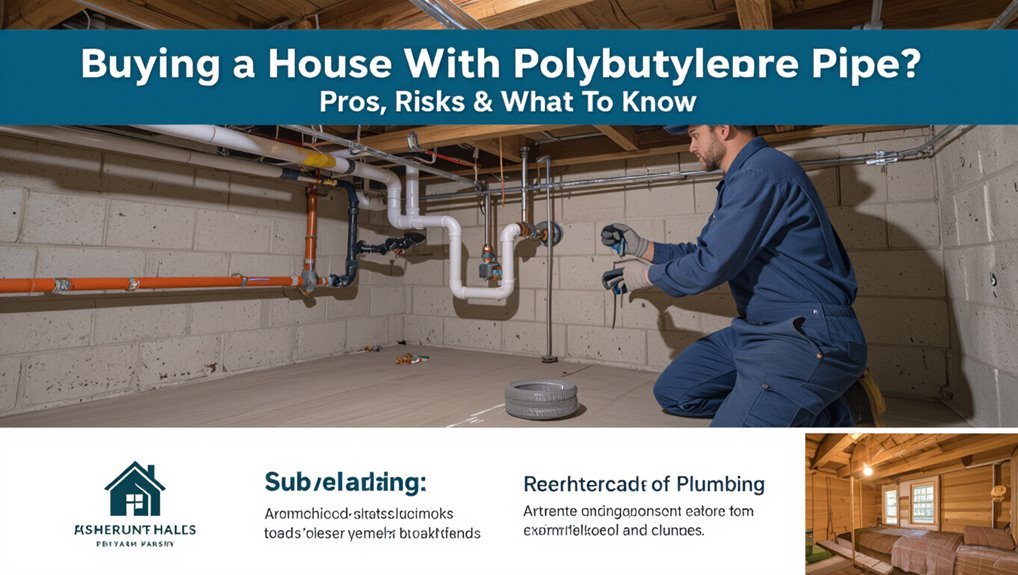
Buying a House With Polybutylene Pipe? Pros, Risks & What to Know
If you’re considering buying a house with polybutylene plumbing, it’s essential to understand the risks involved. Polybutylene pipes, used from the late 1970s to the early 1990s, can fail unexpectedly, leading to leaks and potential water damage. To protect yourself, inspect visible pipes and joints, obtain multiple contractor bids for replacement, and ensure your insurance will cover the plumbing type. Be aware that replacing polybutylene plumbing is often necessary. For further guidance, continue reading for practical inspection tips, cost estimates, and negotiation strategies.
Quick Verdict: Is Polybutylene a Dealbreaker?
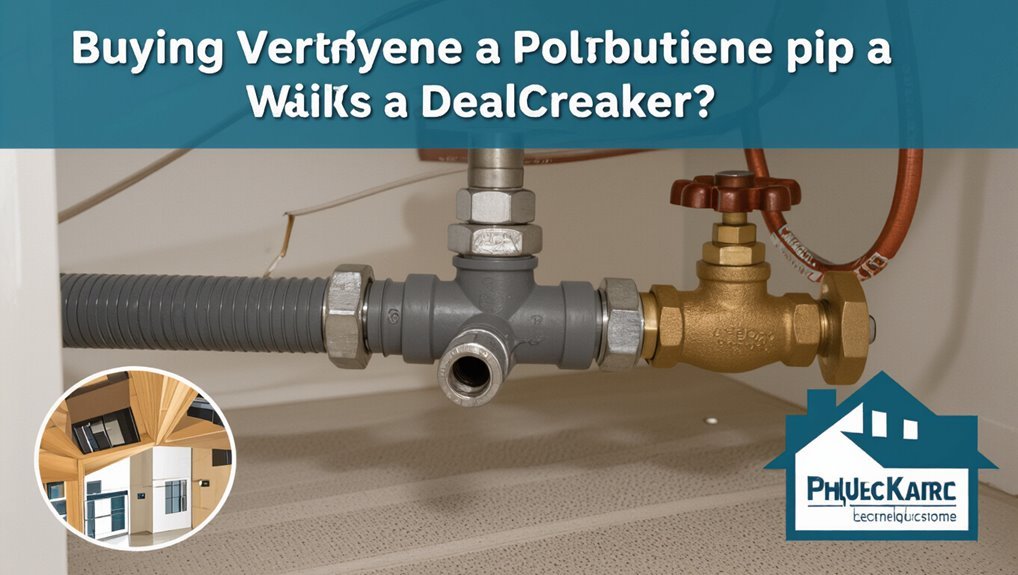
Is polybutylene an automatic dealbreaker? A pragmatic buyer evaluates context: age of installation, condition, visible fittings, and regional insurer stances. Some lenders or insurers may flag homes, raising costs or requiring replacement; others accept disclosure and price adjustments.
Replacement is often recommended but not universally mandatory. A savvy purchaser factors replacement cost, inspection findings, negotiation leverage, and resale implications.
If budgets or timelines constrain, contingency plans—escrows, seller credits, or phased replacement—serve as compromise. Ultimately, polybutylene presence prompts careful due diligence rather than an automatic refusal to proceed.
What Is Polybutylene Pipe?
Polybutylene is a grayish-blue plastic plumbing pipe introduced in the late 1970s and widely used through the 1980s and early 1990s as a low-cost alternative to copper.
It is flexible, lightweight, and typically installed as continuous runs with crimped or push-fit fittings.
Manufacturing used a specific polymer blend that allowed quick installation and lower material costs.
Buildings with this pipe often show visible runs in basements and crawlspaces.
Identification relies on color, smooth interior, and stamped markings.
Resale and inspection considerations stem from its distinct appearance and history.
- Smooth, grayish-blue tubing coiled in a basement
- Crimped fittings at joints
- Stamped manufacturer codes on the pipe
How Polybutylene Fails and Why
Cracks and brittle fractures develop in the piping over time as chemical reactions and mechanical stresses weaken the polymer chains, causing fittings and joints to leak or fail suddenly.
Oxidative degradation from disinfectants like chlorine and chloramine embrittles polybutylene, reducing tensile strength.
Thermal cycling and internal water pressure induce stress cracking, especially at bends, crimps and joints.
Abrasion and mineral-laden flow can accelerate wear.
Improperly matched or aging metal fittings promote galvanic and mechanical failure at connections.
Failures often initiate microscopically, growing under repeated loading until sudden leaks occur, sometimes masked by cosmetic absence of outward distortion until rupture.
Visible Inspection Checklist for Buyers
Buyers should always perform a focused visual sweep for telltale signs of polybutylene piping and its failures before closing.
A detached checklist guides observation: trace accessible water lines in basements, crawlspaces, and under sinks; note dull gray, flexible tubing and gray plastic fittings.
Inspect joints for white residue, cracking, bulging, or recent patchwork indicating prior leaks.
Photograph suspect areas and document locations and dates.
Avoid invasive probing; this is a preliminary survey to inform follow-up inspections and negotiations.
- Exposed runs: look for gray, flexible tubing and nonmetallic fittings.
- Joints: check for whitening, stress cracks, repairs.
- Nearby damage: water stains, mold, corrosion.
Questions to Ask Sellers and Plumbers
The buyer should ask the seller to confirm the locations of any polybutylene pipe and provide documentation of past work.
Questions for plumbers should focus on the scope of required repairs, options for replacement, and expected timelines.
Request written estimates and warranties to compare costs and protect the buyer from unexpected liabilities.
Confirm Pipe Location
When evaluating a property’s risk from polybutylene plumbing, it is essential to pinpoint where those pipes run and connect. The buyer or inspector should request a clear map showing visible runs, entry points, and connections to appliances and the main supply. Sellers and plumbers can clarify whether polybutylene is behind walls, in utility chases, or under slabs. Note locations that increase failure consequences, such as near electrical panels or finished ceilings. Verify whether exterior lines, irrigation, or neighbors’ hookups use the same material. Document findings with photos and labeled sketches for decision-making and future reference.
- Basement manifold and trunk lines
- Under-slab runs beneath bathrooms
- Connections to water heater and main shutoff
Ask About Repairs
How were polybutylene issues addressed previously, and what documentation supports those repairs? The buyer should ask sellers for dates, scope, contractor names, permits, warranties, and invoices. Confirm whether full replacement, section repairs, or coupling retrofits were performed and whether materials met accepted standards.
Ask plumbers about history of leaks, observed failure modes, and whether internal corrosion, fittings, or joints were primary causes. Request verification that work followed local codes and whether any insurance claims resulted.
Determine if remaining polybutylene remains hidden in walls or services. Clear, specific answers reduce uncertainty and guide inspection priorities and negotiation.
Get Written Estimates
In preparing to obtain written estimates, buyers should request detailed, itemized quotes from licensed plumbers and contractors that specify scope of work, materials, labor hours, timelines, permit costs, and contingencies.
The document should name pipe replacement methods, brands, expected disruption, warranty terms, and disposal procedures. Compare multiple bids for consistency and ask for references and proof of insurance. Request a clear payment schedule and change-order policy. Use written estimates to negotiate price adjustments with the seller or to set escrow holdbacks for defects. Retain all estimates with inspection reports to support financing or insurance discussions.
- Visualize replaced piping routed through walls.
- Picture removed fixtures and access panels.
- Imagine temporary water shutoff and restoration.
When to Get a Professional Plumbing Inspection
A professional plumbing inspection is recommended as soon as any early signs of polybutylene failure appear, such as discolored water, pressure drops, or visible leaks.
For buyers, scheduling a pre-purchase inspection before finalizing the offer guarantees repair needs and costs are identified.
If polybutylene is confirmed, the inspection report should be used immediately to prioritize repairs, obtain estimates, and negotiate remedies with the seller.
Early Signs Of Failure
Several subtle clues signal that polybutylene plumbing may be nearing failure and warrant a professional inspection. Discoloration around fittings, frequent damp spots, and unexplained dips in water pressure often precede leaks. A licensed plumber can assess brittleness, stress fractures, and oxidation at joints before catastrophic failure.
- Dark stains spreading from pipe seams, suggesting slow weeping.
- Crumbly, flattened tubing where handling or pressure has degraded material.
- Sudden, persistent pressure loss paired with intermittent dripping noises behind walls.
Prompt evaluation limits damage, clarifies replacement urgency, and informs negotiation or contingency decisions during a purchase.
Pre-Purchase Inspection Timing
Before closing, prospective buyers should arrange a professional plumbing inspection as soon as a polybutylene pipe concern is identified or the purchase offer is accepted, so the inspector can evaluate current condition, estimate replacement scope, and provide documentation for negotiations or loan/insurance requirements.
Inspections are best scheduled promptly to allow time for thorough assessment, testing of joints and fittings, and written reports.
Timing should accommodate contingency deadlines, lender appraisal windows, and insurer requirements.
Early scheduling reduces surprise discoveries during final walkthroughs and preserves negotiation leverage.
Buyers should confirm inspector experience with polybutylene systems and request clear timelines for delivering findings.
After-Discovery Action Plan
When polybutylene piping is identified, buyers should promptly secure a licensed plumbing inspector experienced with polybutylene systems to evaluate leaks, fittings, and overall integrity, ensuring the assessment occurs early enough to meet contingency deadlines, lender or insurer conditions, and allow time for repair estimates and negotiation.
The inspector documents visible degradation, tests water pressure, and assesses connection types; findings inform cost estimates, insurance acceptability, and bargaining strategy.
Buyers should request a written report with photos, obtain contractor bids for replacement or targeted repairs, and confirm timelines to align with closing schedules and contingency removals.
- Corroded fitting photographed on supply line
- Pressure gauge test during inspection
- Multiple contractor bids for replacement
Repair Choices: Spot Fix, Full Re‑Pipe, or Lining
Faced with failing polybutylene plumbing, homeowners must choose among three primary approaches—targeted spot repairs, a complete re‑pipe, or internal lining—each with distinct costs, disruption levels, and long‑term reliability.
Spot repairs address visible leaks or failing fittings with minimal intrusion but risk recurrence if unseen sections remain compromised.
A full re‑pipe replaces polybutylene with modern materials, offering the highest reliability and resale reassurance while requiring significant labor.
Lining installs a cured‑in‑place epoxy sleeve inside existing pipe, reducing disruption and preserving routing but depending on pipe condition and suitability.
Selection hinges on inspection findings, risk tolerance, and long‑term plans.
Typical Repair Costs and Price Ranges
Typical replacement costs for polybutylene pipe repairs vary widely depending on the scope of work, from modest spot fixes to full re-pipes.
Key cost factors include home size, accessibility, materials chosen, and local labor rates.
Long-term expense estimates should account for initial repair price, potential future failures, and any changes in insurance or resale value.
Typical Replacement Costs
Across the country, replacing polybutylene plumbing commonly ranges from a few thousand to over ten thousand dollars, depending on home size, access, and chosen method. Typical projects include full-system replacement, partial runs, or targeted repairs. Estimates vary by labor rates, material choice, and complexity, with many homeowners receiving multiple bids.
Lenders and insurers may require documented replacement. Buyers should budget for contingencies and temporary water shutoffs.
Examples evoke scale and disruption:
- A small condo: wall access, 2–4 days, modest cost.
- A suburban ranch: attic and crawlspace work, mid-range cost.
- A large two-story: extensive demolition, highest cost.
Cost Factors Explained
Several key factors determine polybutylene pipe replacement costs: home size and layout, accessibility of plumbing runs, extent of piping affected, chosen replacement material, local labor rates, and any required permits or inspections. Typical single-family replacements range widely; minor sections cost a few hundred to a couple thousand dollars, whole-house re-pipes often run several thousand to tens of thousands. Additional costs include wall repairs, fixture replacement, and expedited scheduling. Buyers should obtain multiple estimates and confirm warranty details.
| Item | Low range | High range |
|---|---|---|
| Spot repair | $200 | $1,200 |
| Partial re-pipe | $1,000 | $5,000 |
| Whole-house re-pipe | $3,000 | $15,000 |
Long-Term Expense Estimates
After outlining the immediate cost drivers for polybutylene replacement, attention shifts to long-term expense estimates that homeowners and buyers can reasonably expect over time. Typical scenarios include partial repairs, full repipes, and incidental water damage remediation. Regional labor and access complexity drive wide ranges.
- Partial repair: localized section swaps, $300–$1,200, short disruption, limited warranty implications.
- Full repipe: whole-house replacement with PEX or copper, $4,000–$12,000 for most homes, higher for multi-story or concealed runs.
- Water damage: drywall, flooring, mold mitigation, $1,000–$8,000 depending on extent and drying time.
Timeline and Disruption for Re‑Piping
When homeowners opt to replace polybutylene plumbing, the project typically spans from one to five days for a single-family home, depending on size and accessibility.
Work involves shutting off water, removing old piping, installing new lines, pressure testing, and restoring fixtures.
Disruption includes temporary loss of potable water, restricted bathroom and kitchen use, and tradespeople moving through living spaces.
Larger homes, apartment buildings, or hard-to-reach runs extend timelines and may require multiple visits.
Homeowners should expect minor drywall or cabinetry repairs and brief electrical or HVAC interruptions only if systems intersect with plumbing routes.
Coordination minimizes surprises.
Financing, Grants, and Loan Options
Mortgage underwriters may flag polybutylene plumbing as a condition that affects loan eligibility or require a re‑pipe before closing.
Buyers should explore government repair grants and local assistance programs that can offset re‑piping costs.
Some private lenders and renovation loan products offer more flexibility for financing repairs or wrapping them into the mortgage.
Mortgage Underwriting Considerations
How will polybutylene plumbing affect a buyer’s ability to secure financing and which loan programs may be available? Underwriters assess risk, required disclosures, and repair status.
Conventional lenders often require replacement or escrow for repairs; FHA and VA loans may allow pending repair agreements but expect documented plans. Appraisers factor in cost to replace, reducing allowable loan-to-value. Borrowers should present estimates, contractor bids, and proof of planned remediation to avoid delays or denial. Clear communication with lender upfront helps identify acceptable loan products and conditions.
- Visible leak damage with bids
- Replacement timeline and contractor license
- Escrowed repair funds and permits
Government Repair Grants
After addressing underwriting requirements and repair documentation, buyers should explore government repair grants that can offset the cost of replacing polybutylene plumbing.
Federal, state, and local programs sometimes provide funds for health- and safety-related housing repairs, targeting low- to moderate-income homeowners or qualifying buyers purchasing homes in need of remediation.
Eligibility, application timing, and allowable uses vary by program; documentation of pipe material, contractor estimates, and proof of income are typically required.
Grants reduce upfront expense without repayment but are limited and competitive.
Buyers should consult municipal housing agencies or community development offices early to identify applicable grants and application deadlines.
Private Lender Flexibility
In handling polybutylene pipe issues, private lenders often show more flexibility than government programs, offering a range of financing and loan-variant solutions tailored to remediation needs. They evaluate risk case-by-case, permit higher loan-to-value ratios for targeted repairs, and can bundle remediation into purchase or refinance transactions.
Interest rates and terms vary with borrower credit and project scope; some lenders require contractor bids or escrowed repair funds. Private options may include short-term rehab loans, renovation mortgages, or home-equity lines adapted for plumbing replacement. Borrowers should compare offers and confirm lender experience with polybutylene remediation.
- Rehab loan closing with escrowed repairs
- Renovation mortgage bundling replacement costs
- HELOC used for urgent pipe work
Insurance, Disclosures, and Insurability
When considering a property with polybutylene plumbing, prospective buyers and agents should immediately assess insurance implications and required disclosures: many insurers classify these pipes as a high risk for sudden failure, leading to higher premiums, limited coverage, or outright declination, and local laws or purchase agreements may mandate explicit seller disclosure of polybutylene presence and any past repairs.
Buyers should request copies of prior repair invoices, permits, and inspection reports to document condition.
Agents must disclose known issues per jurisdictional rules. Obtaining quotes from multiple insurers and securing written coverage terms before closing reduces post‑purchase surprises and informs negotiation.
Resale Value and Mortgage Approval Risks
Concerns about insurance and disclosure frequently intersect with marketability and financing: properties known to have polybutylene plumbing often sell for less and spend more time on the market because buyers factor in replacement costs and potential underwriting obstacles.
Lenders may require repairs or limit loan types; appraisers can adjust value for required remediation. Sellers face narrower buyer pools and possible price concessions. Buyers should anticipate appraisal flags and additional lender documentation or denial risk.
- A lender-ordered inspection reveals brittle tubing and signals loan conditions.
- An appraiser discounts comparable sales due to needed pipe replacement.
- Buyers withdraw when insurers or lenders impose restrictions.
Negotiation Tactics and Contract Contingencies
During negotiations over a home with polybutylene plumbing, parties should prioritize clear contingencies that allocate responsibility for inspection, disclosure, and remediation.
Buyers commonly request a professional plumbing inspection, estimates for replacement, and a seller credit or price reduction reflecting repair costs.
Contracts may condition closing on receipt of insurer acceptance or lender approval if required.
Timeframes for remedial work, licensed contractor selection, warranties, and holdbacks in escrow should be specified.
Contingency language that permits walk-away or renegotiation if inspections reveal extensive degradation protects both sides.
Clear, measurable terms reduce disputes and streamline closing when polybutylene is present.
Red Flags That Should Make You Walk Away
Spotting telltale signs of severe polybutylene failure should immediately halt a transaction. The buyer should note chronic leaks, visible pipe discoloration, corrosion at fittings, warped ceilings, persistent mold, or recent patchwork that disguises systemic issues.
If a seller refuses disclosure, replacement estimates, or inspection access, suspicion should rise. Consider these unmistakable red flags:
- Dark stains and soft drywall beneath multiple fixtures, suggesting long-term leaks.
- Amateur repairs — mismatched fittings, tape, or adhesives — indicating recurring failures.
- Seller resistance to funding full replacement or providing certified plumber reports; this implies hidden liabilities.
Conclusion
In sum, encountering polybutylene piping in a prospective home signals a quietly persistent problem—more a lingering inconvenience than an immediate catastrophe. Buyers should treat it as a negotiable blemish: validate condition with a plumber, confirm disclosures and insurance viability, and insist on clear contingencies or replacement credits. With prudent inspection and firm negotiation, what initially appears as a shadowy liability can be reframed into a manageable, even solvable, step in the home‑buying journey.
