
How to Turn Off a Heat Pump: Step-by-Step Guide for Thermostat, Unit, and Emergency Shutdown
To turn off a heat pump, start by setting the thermostat to “Off” with the fan on “Auto.” For complete power isolation, either open the outdoor unit’s service disconnect or switch off the circuit breaker. Always verify that power is off using a tester and allow time for any capacitors to discharge. In emergencies, cut the power immediately, evacuate if necessary, and tag the circuits. Always follow the manufacturer’s instructions and consult a licensed technician for repairs and safety procedures.
How to Turn Off a Heat Pump Quickly and Safely
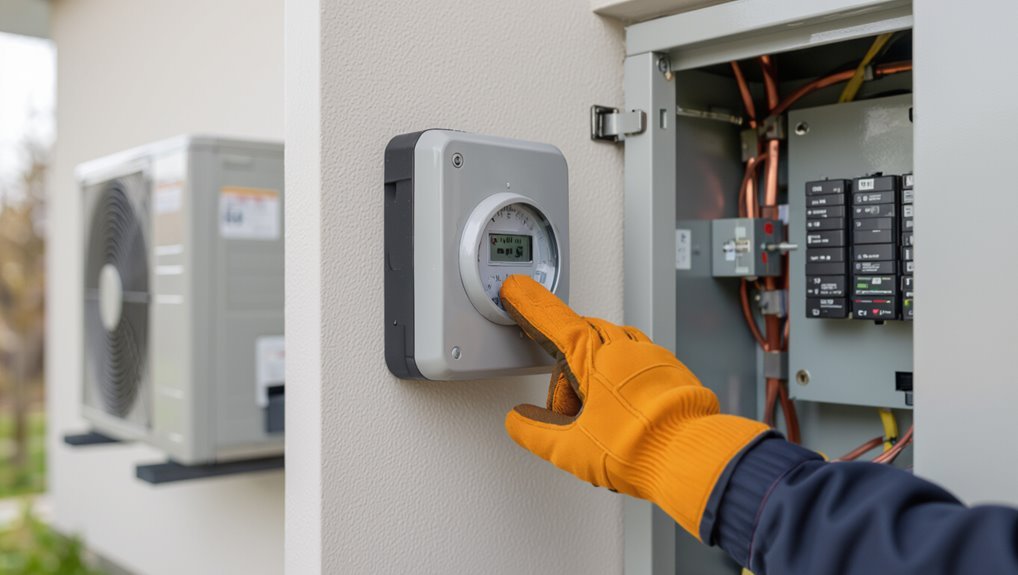
The section outlines immediate steps to stop a heat pump from the thermostat, including mode selection and system hold.
It then explains how to safely power down the outdoor unit at the disconnect and circuit breaker.
Finally, it summarizes emergency shutdown procedures for both qualified HVAC technicians and informed homeowners.
Immediate steps to shut down via thermostat
Begin by locating the thermostat and switching it to the “Off” or “Heat” setting with the fan set to “Auto”—this immediately stops the heat pump’s active heating cycle while allowing the fan to clear residual air.
Then confirm the display shows idle, raise setpoint slightly to prevent short-cycling, and wait several minutes.
Document settings and inform household members.
How to turn off heat pump.
How to power down the outdoor unit safely
Shut off power to the outdoor unit at the service disconnect or breaker before touching any components; this prevents electrical shock and stops the compressor and fan from starting unexpectedly.
Verify power is off with a noncontact tester at the unit. Wait several minutes for capacitors to discharge.
Secure the disconnect in the off position and inform household members.
Don’t attempt repairs without proper training.
Emergency shutdown procedure for HVAC professionals and homeowners
Power down a heat pump immediately when a fire, burning smell, visible smoke, refrigerant leak, or electrical arcing is suspected, following a clear sequence to protect people and equipment:
Cut power at the outdoor unit service disconnect or main breaker.
Verify absence of voltage with a noncontact tester.
Isolate any malfunctioning zone thermostats.
Evacuate occupants if hazardous fumes or flames are present.
Then secure the scene, tag circuits, call emergency services and a licensed HVAC technician.
Understanding Your Heat Pump System Before Shutdown
Before shutting down a heat pump, one should identify the basic components—indoor air handler, outdoor compressor, reversing valve, and thermostat—to know what will be affected.
It helps to note the type of control in use (programmable, smart, or manual) because each responds differently to shutdown commands.
Additionally, awareness of built-in safety features and automatic protections can prevent accidental damage or system faults during and after shutdown.
Basic components: indoor air handler, outdoor compressor, reversing valve, thermostat
A heat pump system consists of four key parts that must be understood prior to shutdown.
The indoor air handler circulates conditioned air and houses the evaporator coil and blower.
The outdoor compressor compresses refrigerant, enabling heat transfer.
The reversing valve switches between heating and cooling modes.
The thermostat controls operation and signals the system to start or stop.
Common control types: programmable, smart, manual thermostats
Thermostat types determine how users interact with and control a heat pump, ranging from simple manual dials to fully networked smart controllers.
Manual thermostats offer direct, no-frills on/off or temperature dial control.
Programmable thermostats enable scheduled temperature changes for energy savings.
Smart thermostats add remote access, learning algorithms, and integration with home automation, simplifying shutdowns or mode changes via apps or voice commands.
Safety features and automatic protections to be aware of
Control interfaces influence which safety features are accessible and how the system responds when shut down.
The heat pump includes high/low pressure cutouts, compressor lockout timers, freeze and overheat sensors, and fan interlocks.
Diagnostics, error codes, and automatic restart delays protect equipment and occupants.
Users should note which protections operate at the thermostat versus the outdoor unit and consult manuals before overriding safeguards.
Step-by-Step: Turning Off a Heat Pump Using the Thermostat
First, the technician checks the thermostat to confirm the current mode (heat, cool, or auto) and active temperature setpoint.
Next, the thermostat is switched to OFF or the HEAT/COOL selector moved to OFF in a clear step sequence, with notes that HOLD or VACATION modes may be preferred when maintaining a set setback rather than full shutdown.
Finally, the technician verifies that the compressor has entered its lockout period, the defrost cycle is inactive, and the indoor fan behavior matches the expected off or circulating state.
Confirm current operating mode and temperature settings
How can one quickly verify a heat pump’s current mode and set temperature before powering it down?
The user should view the thermostat display or app to note mode (heat, cool, auto, or emergency) and the target temperature.
Check for auxiliary/backup heat indicators, fan status, and any error codes.
Record settings if restoration is planned after shutdown.
Set thermostat to OFF or HEAT/COOL OFF (step sequence)
Begin by accessing the thermostat interface—whether a wall-mounted unit or mobile app—and locating the power or mode button.
Select OFF or choose HEAT/COOL then set to OFF, following prompts if touchscreen.
Confirm display shows OFF and ambient setpoint indicators clear.
For programmable thermostats, disable schedules or set temporary hold to prevent automatic restart.
Note any confirmation tones or icons.
Verify compressor lockout, defrost cycle, and fan behavior after shutdown
When the thermostat is set to OFF, the next step is to confirm that the heat pump’s compressor, defrost cycle, and fan respond appropriately to shutdown commands; this prevents unintended short-cycling, noisy operation, or frost-related issues.
Observe outdoor unit: compressor should stop within a minute, defrost indicators remain inactive, and the fan ceases.
If components run, consult settings or a technician.
When to use thermostat “Hold” or “Vacation” modes instead of OFF
After confirming the compressor stops and the fan and defrost remain inactive, assess whether a temporary setback is preferable to fully turning the system off.
Use Hold to maintain a single temperature during short absences, preventing freeze or overcooling.
Use Vacation to set energy-saving setbacks for extended absences while preserving frost protection and scheduled recovery, reducing wear and energy compared with full shutdown.
Step-by-Step: Shutting Down the Outdoor Unit and Indoor Components
The next steps cover shutting down the outdoor condenser and isolating indoor components with clear, safe actions.
First, locate and operate the outdoor service disconnect (switch or pull-out fuse) and turn off the indoor air handler at its breaker or fused switch.
The guidance also compares using the main circuit breaker versus dedicated HVAC breakers and explains how to safely isolate power for multi-zone or hybrid heat pump systems.
Locate and use the outdoor service disconnect (switch or pull-out fuse)
One clear step is to locate the outdoor service disconnect—either a switch mounted on the condenser housing or a pull-out fuse in a nearby weatherproof box—and shut it off to cut power to the outdoor unit.
Verify the handle is OFF or the fuse fully removed.
Wait a few minutes, then visually confirm the unit has stopped and no fans or compressors are running.
Turning off the indoor air handler at the breaker or fused switch
Locate the air handler’s power source inside the home and switch it off at the breaker or fused disconnect to prevent the indoor blower and controls from powering up while the outdoor unit is disabled.
Confirm the switch is labeled; if unlabeled, turn the corresponding breaker off and tag it.
Verify power removal by attempting to run the thermostat fan or checking for voltage at the air handler.
Shutting off power at the main circuit breaker vs. dedicated HVAC breakers
When deciding whether to shut off power at the main circuit breaker or at the dedicated HVAC breakers, technicians should prioritize isolating only the circuits that serve the heat pump to avoid disrupting other household systems.
Using dedicated HVAC breakers is preferred for targeted shutdowns; the main breaker is reserved for full-house power loss.
Verify labeling, lock out/tag out, and confirm power is off with a meter before servicing.
How to safely isolate power for multi-zone or heat pump hybrid systems
Begin by identifying each zone’s outdoor and indoor components. Then plan a sequential shutdown that isolates only the circuits serving the affected heat pump system.
Technicians confirm zone labeling, review wiring diagrams, and power down zone-specific breakers or fused disconnects in order.
Verify voltage absence with a meter, lock out/tag out affected disconnects, and communicate status before proceeding to service or complete shutdown.
Emergency and Maintenance Shutdown Procedures
Emergency shutdown is warranted if the unit emits smoke, a burning odor, or visible fluid leaks.
The recommended stop sequence is to set the thermostat to off, disconnect power at the outdoor unit, and open the main breaker.
Before restoring power, the system should be inspected for damage, fluids secured, and wiring or component faults cleared by a qualified technician.
When to perform an emergency shutdown (smoke, burning smell, fluid leaks)
How should a homeowner respond if smoke, a burning odor, or noticeable fluid leaks appear around a heat pump?
Immediate action is required: evacuate occupants, avoid inhaling fumes, and keep clear of the unit.
Do not operate switches or the thermostat.
Notify emergency services if fire or heavy smoke exists.
Contact a qualified HVAC technician for inspection and safe shutdown once the area is secure.
Emergency stop steps: thermostat, disconnect, main breaker
When a rapid shutdown is required for safety or maintenance, the recommended sequence is to first turn the thermostat to the off or “fan only” position.
Then open the outdoor unit’s service disconnect, and finally switch off the home’s main breaker for the heat pump circuit.
This order reduces risk of backfeeding, protects control electronics, and isolates power for safe inspection or repair.
After isolating power, secure disconnects and label status.
Post-shutdown safety checks before re-energizing the system
Before re-energizing the heat pump, perform a systematic set of safety checks to confirm the system and work area are secure:
inspect visible wiring and connections for damage or loose terminals;
verify panels and guards are reinstalled;
guarantee tools and debris are cleared;
check refrigerant lines for leaks;
confirm access panels are closed;
restore power only after a qualified person approves and lockout/tagout is removed.
Troubleshooting Common Shutdown Issues
The section outlines clear steps for diagnosing a heat pump that does not respond to thermostat off commands, including verifying wiring, settings, and power to the control board.
It also covers common reasons an outdoor unit continues to run after the indoor disconnect is opened, such as stuck contactors or residual capacitive charge.
Finally, it addresses causes and basic checks for a blank or unresponsive thermostat display during shutdown, like dead batteries, blown fuses, or lost communication with the system.
Unit won’t turn off via thermostat diagnosis steps
Several clear diagnostic steps can pinpoint why a heat pump refuses to shut off via the thermostat.
Verify thermostat mode, target temperature, and fan setting.
Inspect wiring at thermostat and control board for loose or shorted connections.
Check for stuck relays or contactors and evaluate thermostat logic with a simple on/off test.
Replace faulty components or consult a qualified technician if uncertainty persists.
Outdoor unit keeps running after disconnect likely causes
Many outdoor heat pump units continue running after the service disconnect is opened due to a few common electrical or control faults.
Possible causes include a welded or stuck contactor, failed relay or control board, incorrect line-side wiring bypassing the disconnect, or backfeeding from auxiliary circuits.
Inspect contactor contacts, control voltage presence, wiring continuity, and signs of overheating; consult a qualified technician for repairs.
Thermostat display blank or unresponsive during shutdown
After checking outdoor unit controls and wiring for continued operation, attention should turn to the indoor thermostat when a system fails to shut down and its display is blank or unresponsive.
Inspect power source, circuit breaker, and backup batteries.
Verify wiring connections and common (C) wire presence.
Perform a reset per manufacturer instructions.
If problems persist, recommend a professional technician to diagnose control board or transformer faults.
When to Call a Professional
If a heat pump exhibits electrical faults, suspected refrigerant leaks, or unusual compressor humming or grinding, a professional technician should be contacted promptly.
Systems with dual-fuel setups or integrated backup heat also warrant expert attention due to their added complexity.
Homeowners should seek qualified HVAC technicians and be ready to provide model numbers, symptom descriptions, recent maintenance history, and any error codes.
Electrical faults, refrigerant leaks, compressor humming or grinding
Recognize that certain issues—electrical faults, refrigerant leaks, and unusual compressor noises like humming or grinding—warrant immediate professional attention rather than DIY fixes.
Licensed technicians should inspect wiring, capacitors, and contactors; test for refrigerant loss and hazardous leaks; and diagnose compressor bearings or motor failure.
Prompt service prevents further damage, safety hazards, and costly replacements. Users should power down the unit and secure the area until help arrives.
Complex systems: dual-fuel, heat pumps with integrated backup heat
Many dual-fuel and heat pump systems with integrated backup heat combine electrical and fossil-fuel components, control algorithms, and safety interlocks that increase complexity beyond standard units.
When malfunctions involve switching between heat sources, persistent failover to backup heat, or error codes related to the backup system or control board, a licensed HVAC technician should be called to diagnose and repair the problem.
Homeowners should shut down power and avoid tampering with gas or wiring.
Finding qualified HVAC technicians and what information to provide
When should a homeowner call a professional for a heat pump issue?
A qualified HVAC technician is needed for persistent failures, strange noises, refrigerant leaks, electrical faults, or safety concerns.
Provide model, serial number, installation age, recent symptoms, error codes, and maintenance history.
Verify licensing, insurance, references, and manufacturer certification.
Request written estimates, warranties, and timeline before authorizing work.
Preventive Measures and Best Practices for Safe Shutdowns
Routine maintenance reduces the likelihood of emergency shutdowns and extends heat pump lifespan.
Clear labeling of shutdown switches and a simple homeowner checklist guarantee safe, quick power-off when needed.
Seasonal shutdown procedures and storage tips protect components during long off-seasons.
Regular maintenance to avoid emergency shutdowns
Maintain regular maintenance to reduce the risk of sudden heat pump shutdowns and extend system life.
Seasonal inspections, filter replacement, coil cleaning, and refrigerant checks prevent performance loss.
Lubricating moving parts, clearing debris around outdoor units, and verifying electrical connections reduce faults.
Schedule professional tune-ups annually and promptly address unusual noises or cycling.
Consistent upkeep minimizes emergency shutdowns and costly repairs.
Labeling shutdown switches and creating a homeowner shutdown checklist
Label all shutdown switches and controls clearly and accessibly so any occupant or technician can quickly isolate power during a fault or for maintenance.
A concise homeowner checklist should mirror labels, include contact info, and stepwise shutdown/restart actions. Place laminated copies near the thermostat and unit.
- Switch labels: bold, durable, location noted
- Checklist: numbered, minimal steps
- Contacts: technician, utility
Seasonal shutdown tips for long-term storage or off-season
Prepare the heat pump for seasonal inactivity by following a concise set of preventive steps that protect the system, conserve energy, and reduce the need for repairs when service resumes.
Drain and insulate exposed pipes, clear debris from outdoor units, disconnect external power if recommended, set thermostat to an appropriate setback, schedule professional inspection, and document service dates.
Store manuals and spare filters in a labeled, dry place.
Quick Reference: Shutdown Checklist and Safety Reminders
A concise checklist and safety reminders help guarantee a controlled, hazard-free shutdown of a heat pump.
The list below highlights visual inspections, the exact shutdown steps, and the key actions to follow when bringing the system back online.
These points serve as a quick reference for technicians and homeowners who need precise, orderly guidance.
- Inspect filters, electrical connections, and outdoor unit clearances.
- Switch off controls, isolate power, and follow manufacturer shutdown steps.
- Verify system is depressurized, restore power, and observe startup sequences.
Pre-shutdown inspection items
Before shutting down a heat pump, the technician conducts a concise inspection to confirm safe conditions and identify any issues that could worsen during inactivity.
They check for refrigerant leaks, visible corrosion, loose electrical connections, ice accumulation, and proper drainage.
Filters and coils are inspected for heavy debris.
Outdoor unit clearances and emergency shutoff accessibility are verified to prevent hazards during the shutdown period.
Step-by-step shutdown checklist
Follow the checklist steps in sequence to guarantee a safe, complete shutdown of the heat pump system.
Power off thermostat, switch to OFF mode, and note settings.
Turn off indoor and outdoor unit breakers at the main panel.
Close any service valves and isolate refrigerant lines if required.
Disconnect auxiliary power and post warning tags.
Verify system is inert before maintenance or inspection.
Re-start checklist after shutdown
Restarting the heat pump requires a systematic checklist to secure safety and reliable operation after shutdown.
Verify power source and circuit breakers, confirm thermostats and controls are set correctly, inspect outdoor unit for debris or damage, ascertain refrigerant lines and condensate drains are clear, restore power and observe startup sequence, listen for abnormal noises, monitor temperatures and pressures, and schedule professional service if irregularities persist.
Comparison of Shutdown Methods and When to Use Each
When choosing a shutdown method for a heat pump, the decision should be based on system type, season, and the reason for powering down; a quick thermostat switch may suffice for routine short-term stops, while full power isolation at the breaker or service disconnect is appropriate for maintenance, long-term storage, or safety-critical situations.
| Method | Best Use | Risk/Notes |
|---|---|---|
| Thermostat off | Short stops | Low |
| Breaker off | Maintenance | Moderate |
| Service disconnect | Long-term | Low |
| Emergency shutoff | Safety | High |
Conclusion
Like a conductor lowering an orchestra to silence, the homeowner concludes the heat pump shutdown with calm precision. Following thermostat steps, power-disconnect procedures, and emergency protocols guarantees the system rests safely until needed again. Routine maintenance and timely professional help prevent surprises, and the quick-reference checklist acts as a reliable score to follow. Thoughtful, methodical shutdowns protect equipment, occupants, and peace of mind.
