How to Tell If Your Water Heater Is Gas or Electric: 7 Simple Checks
To determine whether your water heater is gas or electric, you can follow seven straightforward checks. Look for a vent pipe or flue and a flexible gas line for gas units, or an electrical conduit and junction box for electric models. Gas heaters will have a burner access panel, pilot light window, and gas shutoff valve, while electric ones feature element access panels and dedicated breakers. Additionally, listen for burner noises or an electrical hum, and check your utility meters for usage patterns. Continue reading for detailed verification steps and important safety tips.
How to Quickly Identify Whether Your Water Heater Is Gas or Electric
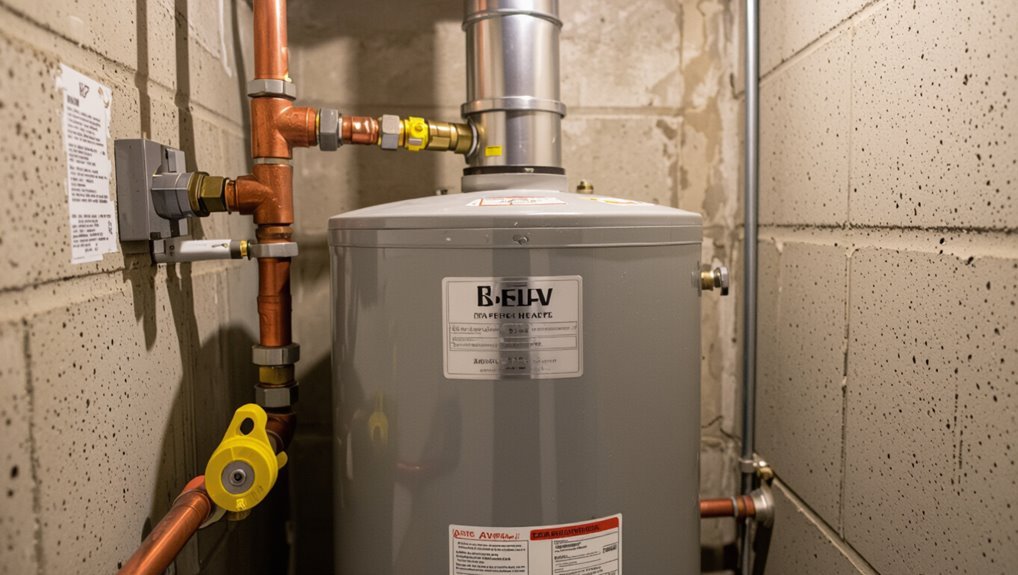
A quick visual check can tell a busy homeowner whether a water heater is gas or electric: look for a gas vent and burner access panel versus visible electrical wiring and a breaker connection.
Before inspecting, the homeowner should turn off power at the breaker for electric units or shut off the gas supply for gas units and guarantee adequate lighting and a flashlight.
Gloves and eye protection are recommended to avoid injury while examining the appliance.
One-sentence quick check for busy homeowners
Wondering which type it is? A quick check: inspect the unit’s top and look for a gas vent pipe or a flexible gas line—if present, it’s gas; if only electrical conduit or a junction box is visible, it’s electric.
This simple visual test answers how to tell if water heater is gas or electric without tools or lengthy inspection.
Tools and safety precautions before inspecting
After the quick visual check identifies whether a vent or electrical conduit is present, the next step is to gather basic tools and follow safety measures before closer inspection.
Recommended items: flashlight, voltage tester, adjustable wrench, screwdriver, work gloves, and safety glasses.
Turn off power at the breaker for electric units or gas supply valve for gas units. Keep a phone nearby and ventilate the area.
Visible Exterior Signs to Check First
A quick exterior inspection reveals key clues to whether a water heater is gas or electric.
Observers should scan the top and sides for a vent or flue, look for a power cord or electrical conduit, and check for a gas supply line with a shutoff valve.
Gas units may also display a pilot light window or a dedicated control panel.
Look for a gas vent or flue on the top or side
How can one tell if a water heater uses gas rather than electricity by simple external inspection?
A clear indicator is a vent or flue pipe exiting the top or side. Gas models need combustion exhaust; look for a metal flue collar or round pipe leading upward, often connected to a larger vent stack.
Absence of any vent suggests non-gas unit.
Check for a power cord or electrical conduit entering the unit
Where does the electricity enter the tank? Observers should scan the heater’s exterior for a visible power cord or rigid electrical conduit running into the top or side.
Electric models often have conduit connected to an access junction box; cords terminating in standard plugs indicate a smaller, plug-in unit.
Absence of wiring suggests a non-electric heater. Avoid inspecting gas fittings here.
Inspect for a gas supply line and shutoff valve
Look along the lower side or back of the tank for a metal pipe supplying gas and a nearby shutoff valve; gas water heaters typically have a rigid or flexible steel gas line (often black iron or corrugated stainless) that connects to the burner assembly and includes a valve that can be turned perpendicular to stop flow.
- Black iron or corrugated stainless pipe
- Pipe enters near tank base
- Shutoff valve adjacent to line
- Valve handle oriented to indicate off
Identify the pilot light window or control panel for gas models
After checking for a gas supply line and shutoff valve, the next obvious exterior cue is the presence of a pilot light window or a control panel assembly on the tank.
Gas heaters often have a small glass or plastic sight window near the burner access panel and a control knob or temperature dial.
Electric units lack these features and show only electrical conduit and access panels for elements.
Electrical Indicators to Confirm an Electric Heater
A clear sign of an electric water heater is a large electrical junction box or screw-access panels on the tank where wiring connects.
Electric units typically lack a flue or vent and instead have visible thermostat dials or access covers.
The energy source label and model plate will explicitly state electric or list electrical specifications—check these for definitive confirmation.
Presence of large electrical junction box and screw-access panels
Electric water heaters commonly feature a prominent rectangular electrical junction box mounted near the top and one or more screw-access panels along the tank’s side; these components are key visual cues distinguishing electric units from gas models.
The junction box houses incoming power connections, while the access panels conceal thermostats and heating elements.
Presence of conduit, cable clamps, and secured covers confirms electrical operation and service access.
Absence of venting and presence of thermostat dials
How can one quickly tell an electric water heater without peering inside? The absence of a flue or roof vent is a clear external sign: electric units lack combustion exhaust.
Additionally, visible thermostat dials or temperature adjustment panels on the tank’s exterior indicate electric elements. These controls are often labeled with high/low settings and are paired with access panels rather than gas control valves or pilot assemblies.
How to read the energy source label and model plate
When inspecting a water heater, the energy source label and model plate provide the most direct electrical indicators: look for words like “electric,” voltage ratings (typically 208/240V), amperage, and kilowatt (kW) values rather than BTU/hr or gas-specific terms.
Also note manufacturer model numbers and input/output specs; presence of elements, absence of pilot or gas line references, and listed electrical certifications confirm an electric unit.
Gas-Specific Features and How to Verify Them
Gas water heaters have distinct components that set them apart, including combustion air intakes, exhaust vents, pilot lights or electronic ignition systems, and visible gas control valves.
Observing venting paths and the presence of a pilot or ignition module helps identify a gas unit.
Simple, safe checks of the gas supply—looking for a connected gas line, listening for faint flow sounds, and inspecting valve positions—can further confirm the fuel type.
Combustion air intake and exhaust venting explained
Inspect the water heater area for distinct openings and pipes that indicate combustion air intake and exhaust venting systems; these features are present only on gas-fired units and serve to supply oxygen for combustion and to safely discharge combustion gases.
Look for a metal vent pipe rising from the top to a chimney or sidewall, and for louvered ducts or dedicated air openings supplying fresh air.
Pilot light, ignition types, and gas control valves
Several distinct ignition systems and control components identify a gas water heater: a standing pilot, intermittent pilot (spark or hot surface igniter), or direct electronic ignition, paired with a gas control valve that regulates flow and temperature.
- Visible pilot assembly or sealed ignition module
- Gas control valve with temperature dial and ON/PILOT/OFF markings
- Access panel revealing thermocouple or flame sensor
- Labels indicating pilot lighting instructions and model-specific controls
How to safely test the gas supply (visual and audible cues)
After identifying the ignition type and gas control components, the next step is to verify that fuel is actually reaching the appliance before attempting any adjustments.
Visually inspect the gas line for loose fittings, corrosion, or disconnected sections.
Listen near the gas valve and pilot assembly for a faint hiss indicating flow.
If unsure or smelling gas, evacuate, ventilate, and call the gas utility or a licensed technician immediately.
Utility Meter and Home Connections Checks
A quick inspection of utility connections can often identify the heater’s fuel source.
One method is to trace the gas line from the meter toward the appliance, while another is to check the electrical panel for a dedicated breaker or double-pole circuit labeled for a water heater.
Reviewing recent utility bills or smart-meter data can further confirm whether the household is billed for gas service or only electric use.
Tracing the gas meter to the water heater
Locate the gas meter first and visually follow the main gas line as it leaves the meter toward the house; the pipe usually runs along the exterior wall or through a buried service line and should be traced to where it enters the foundation or utility room.
Continue tracing indoor piping to the water heater, noting shutoff valves, unions, and flexible connectors to confirm a gas supply.
Checking your electrical panel for a dedicated circuit/break
One clear indicator of an electric water heater is a dedicated circuit or breaker labeled for the appliance in the home’s electrical panel. Examining the panel for a single-pole or double-pole breaker with wiring that runs directly to the water heater helps confirm an electrical supply.
Photographs, visible conduit, and wire gauge consistent with the heater’s amperage rating further support identification; absence suggests alternative fuel.
Using utility bills or smart meters to confirm fuel type
Frequently, utility bills and smart meter readouts provide a straightforward way to verify whether a water heater uses gas or electricity by showing energy consumption tied to the appliance or the household’s fuel accounts.
A dedicated gas service line or a separate natural gas bill indicates a gas-fired heater, while consistently high electricity usage spikes corresponding to hot water demand or a labeled electric-heat meter points to an electric unit.
Review billing line items, meter IDs, peak usage times, and any appliance-specific submetering.
Diagnostic Tests You Can Do Without Tools
Simple, no-tool checks can help identify a heater type: inspecting for a visible pilot light or flame points to a gas unit.
Observing how quickly water reheats after use and whether it loses heat suddenly can indicate an electric element.
Listening for occasional burner ignitions or a steady electrical hum further distinguishes gas from electric systems.
Flame/pilot observation method for gas heaters
How can observing the burner and pilot light quickly reveal whether a water heater runs on gas? A visible blue flame beneath the tank or a small steady pilot flame in an access panel indicates a gas unit.
Absence of any flame, sealed combustion chambers, or electric elements and wiring near the top suggests electric.
Check safely; do not open panels if unsure or smell gas.
Warm-up time and power loss behavior that indicate electric units
Warm-up time and behavior after a power interruption can help distinguish electric water heaters from gas models.
Electric tanks typically take longer to recover after heavy use; water heats gradually as resistive elements reach temperature.
After a brief power loss, they restart immediately when power returns but show delayed temperature recovery.
Consistent slow recovery and no ignition events point toward electric operation.
Listening for burner noises versus electrical hum
Although both gas and electric water heaters sit quietly most of the time, attentive listening can reveal clear differences: gas units produce intermittent ignition clicks, a low roaring burner, or the sound of gas flow when the pilot or main burner fires, while electric tanks emit a steady, low-frequency hum from heating elements and relays.
Listen near the unit during heat cycles; sudden bangs, rattles, or sustained hums indicate component issues.
When to Call a Professional and Safety Concerns
If a homeowner detects the smell of gas, visible corrosion, or improper venting, a professional should be contacted immediately to prevent explosion or carbon monoxide risks.
Electrical hazards such as burned wiring, repeated tripped breakers, or a heater that has no power also warrant prompt expert attention.
A qualified technician will verify and document the fuel type, make safe repairs, and provide a written assessment for records and code compliance.
Signs of gas leaks, corrosion, or venting problems
Several clear warning signs indicate a gas water heater may be unsafe and require immediate attention: a persistent rotten-egg odor, hissing or bubbling near fittings, rust flakes or heavy corrosion on the tank, visible gas-soaked soil or staining around connections, yellow or flickering pilot flame, and soot or excessive condensation near the vent.
Discovering any of these warrants evacuation, shutting off gas, and calling a licensed technician.
Electrical hazards: burnt wiring, tripped breakers, or no power
After addressing gas-related dangers, attention should turn to electrical hazards that can make a water heater unsafe or inoperative.
Burnt wiring, scorching smells, visible discoloration at connections, persistent tripped breakers, or complete power loss indicate urgent risk.
A qualified electrician should inspect and repair compromised wiring, reset or replace breakers, and confirm safe operation; homeowners must avoid DIY fixes when evidence of overheating exists.
How a pro will verify and document the fuel type
A technician will begin by visually and mechanically confirming the water heater’s fuel system: inspecting venting and flue pipes, checking for gas supply lines and shutoff valves, and verifying the presence of electrical conduit, junction boxes, or a dedicated breaker.
They may use gas detectors, multimeters, and pressure gauges, photograph findings, label components, and produce a concise report with recommendations, prioritizing safety and required repairs.
Quick Troubleshooting Based on Fuel Type
A brief troubleshooting guide separates common gas-heater issues—such as pilot light outages, thermostat problems, and burner obstructions—and lists simple checks like confirming the pilot is lit and the gas supply is on.
For electric heaters, typical faults include tripped breakers, failed heating elements, and thermostat malfunctions, with quick fixes like resetting breakers and testing elements.
These practical checks help determine whether a professional is needed.
Common gas-heater issues and simple checks
When diagnosing gas water heaters, focus on a few common faults—pilot light failure, burner obstruction, thermocouple wear, and inadequate ventilation—that account for most performance problems; simple visual and auditory checks often reveal which issue is present.
- Check for a lit pilot and steady blue flame.
- Inspect burner for soot or debris.
- Test thermocouple for proper voltage/response.
- Confirm venting is clear and unobstructed.
Common electric-heater issues and quick fixes
Diagnose electric water heaters by checking a handful of common faults—tripped breakers, failed heating elements, faulty thermostats, and loose wiring—that typically cause loss of heat or inconsistent temperatures.
Technicians or homeowners should inspect and test components safely; replace elements, reset breakers, tighten connections, or swap thermostats as indicated. If unsure, consult a qualified electrician.
- Tripped breaker
- Burnt heating element
- Faulty thermostat
- Loose wiring
Upgrading or Converting: What to Know Before Changing Fuel Type
Changing a water heater’s fuel type requires evaluating feasibility and the major installation differences, such as venting, gas lines, and electrical capacity.
The decision should weigh upfront costs and permitting requirements against expected energy efficiency and long-term operating expenses.
Homeowners are advised to compare total lifecycle costs and consult local code officials or licensed contractors before proceeding.
Feasibility and major installation differences
Evaluating whether to upgrade a water heater or convert its fuel type requires reviewing the home’s existing infrastructure, local codes, and cost-benefit tradeoffs.
Feasibility hinges on available gas lines, electrical capacity, venting options, and space for unit replacement.
Major installation differences include venting and combustion clearance for gas, higher amperage and panel upgrades for electric, and plumbing adjustments for either.
Cost comparison overview and permitting requirements
After evaluating infrastructure and installation differences—gas line availability, electrical capacity, venting, and space—the next consideration is how costs and permitting affect the decision to upgrade or convert a water heater. Upfront equipment and labor vary; permits, inspections, and specialty trades add fees. Homeowners should obtain local permit costs and contractor estimates before changing fuel type.
| Item | Typical cost impact |
|---|---|
| Equipment | Moderate–High |
| Labor | Variable |
| Permits | Low–Moderate |
| Inspections | Low |
Energy efficiency and long-term cost considerations
Efficiency often determines the true cost of a water heater over its service life.
Comparative efficiency metrics—EF, UEF, and standby losses—guide decisions when upgrading or converting fuel types. Gas models may heat faster but lose more standby energy; electric heat pumps offer higher efficiency with seasonal variation.
Owners should model lifetime energy use, maintenance, fuel price trends, and potential rebates before converting.
Checklist: 7 Simple Steps to Determine If Your Heater Is Gas or Electric
A concise checklist guides the reader through seven quick checks to identify whether a water heater runs on gas or electricity.
Each step pairs a single action with the expected result so the reader can confirm the fuel type without specialist tools.
Examples of checks include:
- Look for a vent pipe or gas line — presence indicates gas.
- Inspect the area for electrical conduit or a junction box — presence indicates electric.
- Check for a pilot light or ignition assembly — confirms gas operation.
- Read the label for voltage or BTU ratings — label details verify fuel type.
One-line action for each step with expected result
Want to quickly confirm the type of water heater on site? Inspect the tank for a vent pipe—presence indicates gas, absence suggests electric.
Check for a gas line and shutoff valve—found means gas.
Look for electrical conduit or junction box—found means electric.
Locate the pilot light or thermocouple—present on gas units.
Observe element access panels—present on electric units.
Conclusion
Determining a home’s water heater fuel type is quick with simple visual and utility checks. One striking statistic: about 48% of U.S. households rely on natural gas for home heating and water heating, underscoring how common gas units are. Homeowners who follow the seven-step checklist can confidently identify gas versus electric units, address safety concerns, and decide if professional help or conversion is warranted—minimizing risk and ensuring efficient hot water service.