How to Tell if a Backflow Preventer Is Bad: 9 Signs and Quick Diagnostic Checks
If you suspect your backflow preventer is failing, look for these key signs: visible leaks, sudden loss of downstream pressure, unusual noises, discolored or foul water, persistent test failures, stiff test cocks, corrosion or freeze damage, mineral buildup, and loose fittings. To quickly diagnose the issue, conduct a visual inspection, use a handheld pressure gauge for comparisons, listen for hissing sounds, and check the relief-port discharge on RPZs. If contamination is a concern, isolate the system immediately and contact a certified specialist for comprehensive diagnostics and repairs.
How to Recognize a Failing Backflow Preventer: Short Overview
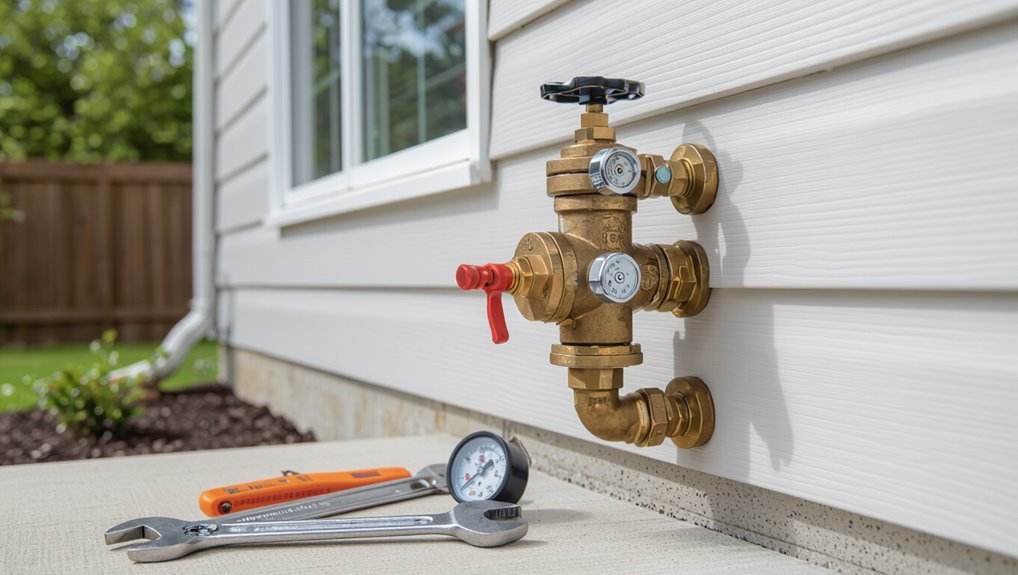
Visible leaks, sudden pressure loss, or contaminated water are immediate signs that a backflow preventer may have failed and require prompt attention.
Routine checks like inspecting for external damage and testing pressure can be done by a competent homeowner, but persistent symptoms or internal component issues warrant a professional.
When in doubt about contamination or complex repairs, contact a licensed plumber to avoid health risks and code violations.
Immediate signs that indicate urgent failure
When a backflow preventer begins failing suddenly, certain unmistakable signs demand immediate attention: strong water leaks at the unit, hissing or pounding noises during flow, sudden loss of downstream water pressure, and discolored or foul-smelling water suggesting contamination.
Observers should note that how to tell if a backflow preventer is bad includes visible leaks, unusual sounds, rapid pressure drop, and contamination indicators.
When to call a professional vs. DIY checks
After recognizing urgent failure signs—leaks, banging noises, pressure loss, or contamination—deciding whether to call a professional or perform basic checks depends on the symptom severity, user skill, and local codes.
Immediate hazards or evidence of contamination require a licensed plumber.
Homeowners may inspect visible leaks, debris, or loose fittings and shut off water, but pressure testing, internal repairs, or code-mandated inspections should be left to professionals.
What a Backflow Preventer Does and Why It Fails
A backflow preventer is a valve assembly designed to keep contaminated water from reversing into the potable supply, with common types including double check valves, reduced pressure zones (RPZ), and air gaps.
Failures typically arise from worn seals, stuck or corroded internal parts, debris buildup, or improper installation and maintenance.
Environmental factors, freezing, and water hammer further contribute to malfunction and reduced reliability.
Basic function and common types of backflow preventers
Backflow preventers are mechanical devices installed on water lines to allow flow in only one direction and to protect potable water from contamination. They accomplish this with check valves, relief valves, or air gaps depending on the design.
Common types include single-check, double-check, reduced-pressure zone (RPZ), and vacuum breakers, each suited to differing hazard levels and installation contexts.
Typical failure mechanisms and contributing factors
While different models use check valves, relief ports, or air gaps to stop reverse flow, those same components are subject to wear, blockage, and misalignment that undermine performance.
Typical failure mechanisms include valve seat erosion, spring fatigue, debris accumulation, corrosion, and gasket deterioration.
Contributing factors are water hammer, high pressure, mineral buildup, freezing, improper installation, and lack of routine inspection or maintenance.
9 Clear Signs a Backflow Preventer Is Bad
Clear signs that a backflow preventer is failing are often observable and measurable, ranging from physical leaks to performance issues.
Technicians and homeowners should watch for symptoms that indicate internal damage or contamination risk.
The most common indicators include:
- Visible leaks around the unit
- Decreased water pressure downstream
- Unusual noise during operation
Visible leaks around the unit
Any visible water escaping from the backflow preventer — drips, sprays, or steady streams — is a straightforward indicator of malfunction.
Corrosion, cracked housings, failed seals, or loose fittings often cause such leaks. Water pooling, mineral deposits, or damp insulation nearby confirm persistent leakage.
Immediate inspection and repair are advised to prevent component damage, contamination risk, and escalating failure.
Continuous monitoring documents recurrence.
Decreased water pressure downstream
Noticeable drops in water pressure downstream of a backflow preventer often signal internal blockage, failed check valves, or debris buildup restricting flow.
A technician should compare upstream and downstream pressures, inspect strainer screens, and test valve operation.
Partial valve seizure, seat damage, or trapped contaminants commonly cause reduced flow.
Prompt diagnosis prevents service interruptions and guides repair or replacement decisions.
Unusual noise during operation
Unusual noises—such as whining, grinding, banging, or continuous hissing—often indicate mechanical distress within a backflow preventer and warrant prompt investigation.
Such sounds can signal worn seals, loose internal components, trapped debris, or failing check valves. Frequency, timing, and intensity help diagnose issues.
Immediate inspection and possible isolation reduce the risk of further damage or failure; professional servicing is advised when abnormalities persist.
Water discoloration or contamination indicators
Discolored water, sediment, or sudden changes in taste or odor are strong indicators that a backflow preventer may be failing and allowing contaminants to enter the potable supply.
Visible staining, cloudiness, metallic or chemical tastes, and unexpected particulates warrant immediate isolation of the affected outlet, sampling for contamination, and inspection of the device and adjacent piping to confirm backflow or source intrusion.
Frequent or repeated test failures
Water contamination signs often prompt immediate inspection, but repeated failures during official testing provide a more objective and actionable indicator that a backflow preventer is compromised.
Multiple failed tests, especially after repairs, indicate persistent internal wear, improper assembly, or systemic installation issues.
Regulatory retests that continue to fail justify replacement or thorough overhaul to restore reliable backflow protection and compliance.
Stiff or stuck test cocks and shutoff valves
Check the operation of test cocks and shutoff valves: if they are stiff, hard to turn, or completely seized, the backflow preventer’s functionality and serviceability are compromised.
Difficulty operating these components prevents proper testing, isolation, and emergency shutoff.
Stiffness may indicate internal wear or packing failure requiring replacement or professional repair to restore reliable operation and guarantee accurate backflow prevention.
Corrosion, mineral buildup, or physical damage
Inspect for visible corrosion, mineral deposits, dents, cracks, or other physical damage on the housing, fittings, and test ports; such deterioration can impair seals, clog passages, and indicate internal failure.
Scale buildup around moving parts restricts operation, while pinhole corrosion or warped components cause leaks and pressure loss.
Significant exterior damage often correlates with internal compromise and warrants cleaning, repair, or replacement.
Backflow test gauge readings out of range
When test gauge readings fall outside established tolerances, it indicates the backflow preventer may be malfunctioning and requires immediate attention.
Abnormal pressures—such as sustained low relief valve spring pressure, failure to hold differential, or unexpected vacuum on the downstream side—point to worn seals, stuck valves, or internal bypassing.
Precise gauge readings identify pressure anomalies, guide targeted inspection, and determine whether repair, calibration, or replacement is necessary.
Failed assembly seals or missing components
Failed or missing assembly seals and components present unmistakable signs that a backflow preventer is compromised.
Visual inspection reveals torn diaphragms, degraded O-rings, broken springs, or absent cover plates. Such defects allow leakage, improper valve seating, and pressure loss.
Immediate replacement of damaged seals and reinstallation of missing parts is required to restore integrity and prevent contamination of the potable water supply.
Quick Diagnostic Checks You Can Do Safely
A few quick, safe checks can help determine whether a backflow preventer needs professional attention. The following concise steps cover a visual inspection, basic pressure readings with a handheld gauge, leak detection without special tools, simple flow/pressure comparison, and guidance on when to secure the system before proceeding.
Perform these in order and stop immediately if signs of damage, rapid pressure loss, or unsafe conditions appear.
- Start with a visual inspection checklist and simple leak tests.
- Use a handheld gauge for basic pressure checks and compare flow/pressure readings.
- Know when to stop and secure the system before attempting further diagnostics.
Visual inspection checklist
Before performing any hands-on checks, the inspector should conduct a focused visual survey to identify obvious signs of damage, leaks, or tampering that indicate further testing is needed.
Inspectors note corrosion, cracked or missing caps, weep holes with moisture, mineral buildup, loose fittings, mismatched or missing identification tags, evidence of freeze damage, and nearby debris obstructing access.
Record and photograph findings.
Basic pressure-check steps with a handheld gauge
Begin pressure checks by attaching a calibrated handheld gauge to the test cock specified for the backflow preventer model, ensuring fittings are clean and seated to prevent false readings.
Record static inlet and outlet pressures, then open and close valves per manufacturer sequence to observe differential pressure changes.
Compare readings to manufacturer tolerances; note rapid drops or abnormal differentials for professional follow-up.
How to test for leaks without special tools
After pressure checks identify abnormal readings, simple visual and tactile inspections can reveal many common leaks without special tools.
Inspect joints, housings, and test cocks for dampness or mineral deposits. Run a dry cloth along fittings while the line is pressurized to spot wetness.
Listen for hissing, feel for vibration or cold spots, and check surrounding soil or pavement for new wet areas.
Simple flow and pressure comparison method
Compare flow and pressure between the incoming supply and the protected outlet to quickly spot abnormalities indicative of a failing backflow preventer.
Measure by observing fixture performance and a simple pressure gauge if available. Note significant pressure drop, reduced flow, or intermittent surges at the outlet compared to supply.
Consistent discrepancies suggest internal valve failure or blockage and warrant professional inspection.
When to stop and secure the system before further checks
Noticing a consistent pressure drop or fluctuating outlet flow is a clear signal to stop active testing and secure the system before proceeding with any hands-on diagnostics.
The operator should isolate valves, relieve line pressure, lock out energized controls, and tag the system. Record readings and notify building maintenance or a licensed plumber.
Avoid probing or disassembly until pressure is neutralized and safety protocols are confirmed.
Interpreting Test Results and What They Mean
Test results are read primarily by comparing measured pressure differentials to the manufacturer’s specifications to determine whether valves are sealing correctly.
Specific patterns—such as a consistently high differential on the relief valve or fluctuating readings during operation—point toward particular component failures.
Intermittent anomalies that resolve after cycling often indicate transient issues, while persistent deviations typically signal permanent damage requiring repair or replacement.
Reading pressure differential results
How should the pressure differential readings be understood when evaluating a backflow preventer?
Readings indicate whether internal checks maintain required pressure separation.
Compare measured differentials to manufacturer and local code specifications.
Small deviations may suggest wear or fouling; large deviations indicate immediate service.
Record values, test port locations, and operating conditions.
Use trends across inspections to decide repair, cleaning, or replacement actions.
Common patterns that indicate specific component failure
A few recurring test-result patterns point directly to specific failed components: for example, a consistently low differential across the inlet check suggests seat wear or spring fatigue, while fluctuating readings that settle only under flow often indicate a leaking relief or bypass valve.
Persistent zero differential with no flow indicates jammed or broken check assembly; rising upstream pressure with trapped downstream pressure signals stuck relief.
Distinguishing transient issues from permanent damage
Patterns that point to specific component failures provide a baseline for further interpretation, but not every abnormal reading signals permanent damage.
Temporary causes—pressure spikes, debris, air in lines, or recent maintenance—can produce transient leaks or valve sticking.
Repeat testing after flushing and stabilizing supply distinguishes intermittent faults from wear, corrosion, or seat failure that require repair or replacement.
Temporary Fixes and Immediate Actions to Protect Water Supply
When a backflow preventer fails or shows suspect test results, immediate steps focus on isolating the system and stopping potential contamination.
This typically means executing emergency shutoff procedures, applying short-term remedies like purging and flushing affected lines, and considering temporary bypasses only when necessary.
Each temporary measure carries risks—cross-connection, pressure imbalance, or incomplete protection—so they should be used briefly and followed by professional repair or replacement.
Emergency shutoff procedures
Turn off the main supply valve immediately if a backflow preventer fails to stop reverse flow, isolating the property’s plumbing to prevent contamination of the public water system.
Then notify the utility and a licensed plumber, tag the shutoff, and document the event.
Keep water usage minimal, avoid restoring supply until authorized, and follow utility directions for safe reactivation and testing.
Short-term remedies to prevent contamination
Isolate affected fixtures and minimize water use immediately to reduce the risk of contaminants entering the supply while a permanent repair is arranged.
Apply potable water only for essential uses, cap or drain isolated lines, and flush downstream lines after isolation.
Notify occupants, post warning signs, and arrange prompt professional inspection.
Document actions taken and preserve samples if contamination is suspected.
Temporary bypass options and risks
Several short-term bypass methods can maintain basic water service while a backflow preventer is repaired, but each carries specific risks that must be weighed before implementation.
Options include temporary jumper pipes, manual isolation with alternate supply, or using certified portable backflow devices.
All increase contamination risk, violate codes if improper, and should be executed only by qualified personnel with permits, testing, and disinfection plans.
When and How to Replace or Repair a Backflow Preventer
Deciding between repair and full replacement hinges on age, extent of damage, parts availability, and local code requirements.
Typical repairs involve replacing seals, springs, and check assemblies, while full replacement may be needed for extensive corrosion or outdated models; sizing and type must match system pressure and flow specifications.
Homeowners should expect variable costs and timelines—minor repairs can be completed in hours for modest expense, whereas replacements may take a day or more and cost several times as much.
Repair vs. full replacement: decision factors
Evaluating whether to repair or fully replace a backflow preventer hinges on determining damage extent, component availability, cost-effectiveness, and long-term reliability.
Factors include age, frequency of prior failures, certification or code requirements, and hidden corrosion or contamination risk.
If repairs restore dependable function at lower lifecycle cost and meet regulations, repair is chosen; otherwise full replacement guarantees warranty, updated standards, and reduced future risk.
Typical repair steps and parts commonly replaced
After determining that repair is the preferred option based on age, cost, and code requirements, the technician proceeds through a standard sequence of diagnostic and restorative actions.
Steps include isolation, depressurization, disassembly, inspection, cleaning, and component testing.
Commonly replaced parts are seals, spring assemblies, check valves, repair kits, and test cocks.
Reassembly, leak testing, calibration, and documentation complete the process.
Choosing the right replacement type and size
When should a backflow preventer be replaced rather than repaired?
Replacement is advised for severe corrosion, recurring leaks, obsolete models lacking parts, or after failed tests indicating internal damage.
Professionals select a replacement matching system pressure, pipe size, flow rate, and required assembly type (reduced pressure, double check, or pressure vacuum breaker).
Proper material and certification guarantee code compliance and longevity.
Cost and time expectations for repair or replacement
How long will it take, and how much will it cost to repair or replace a backflow preventer?
Typically repairs take 1–3 hours; replacements require 2–6 hours depending on access and complexity.
Repair costs often range $100–$400; replacements range $300–$1,200 or more for larger assemblies.
Permit, testing, and labor vary regionally.
Obtain quotes and schedule during low-demand hours for faster service.
Testing, Certification, and Maintenance Requirements
Most jurisdictions require periodic professional testing of backflow preventers, with frequency and specifics set by local code.
A certified test typically includes pressure measurements, valve inspections, and documented pass/fail results performed by a licensed tester.
Accurate recordkeeping of tests, repairs, and certifications is essential to maintain compliance and to prove system integrity.
Frequency of professional testing and local code considerations
Because backflow preventers protect public water supplies, jurisdictions typically require regular professional testing and certification to verify devices function correctly.
Testing frequency often ranges from annual to biennial depending on local code, device type, and hazard classification.
Property owners must consult municipal regulations or water authority requirements for schedules, permitted testers, recordkeeping, and penalties for noncompliance to ascertain legal and safe operation.
What to expect during a certified backflow test
Having determined the required testing schedule and local reporting rules, property owners can anticipate a certified backflow test to follow a standardized sequence conducted by a licensed tester.
The tester visually inspects the assembly, isolates sections, connects gauges, measures pressure differentials, operates check valves, and records pass/fail results.
Any failures prompt immediate recommendations for repair or replacement and retesting per jurisdictional requirements.
Recordkeeping and documentation for compliance
When jurisdictional regulations require periodic testing and maintenance, strict recordkeeping guarantees proof of compliance and facilitates prompt responses to failures.
Records should include test dates, device serial numbers, tester credentials, measured pressures and pass/fail results, repairs performed, parts replaced, and signatures.
Retention schedules must meet local rules; organized, accessible logs streamline inspections, audits, liability defense, and maintenance planning.
Preventive Maintenance to Extend Lifespan
A clear preventive maintenance plan includes a routine inspection schedule and a concise checklist to catch wear or leaks early.
Seasonal tasks—winterizing against freezing, clearing debris in spring, and checking seals after hot months—help prevent common failures.
Attention to corrosion control, insulation, and routine cleaning reduces buildup and extends service life.
Routine inspection schedule and checklist
Routine inspections should occur at regular intervals tailored to device type, local codes, and usage intensity to catch wear and malfunctions before they escalate.
Inspectors should verify visible seals, test relief valves, check for leaks, confirm proper water pressure, and guarantee access panels and signage are intact.
Record dates, findings, corrective actions, and next inspection due date for compliance and trend tracking.
Seasonal maintenance tips
Plan seasonal maintenance around temperature shifts and usage patterns to prevent freeze damage, mineral buildup, and premature wear of backflow preventers.
Inspect valves, test operation, and replace worn seals before extreme weather. Flush lines after heavy sediment events and verify test cock integrity.
Record findings, schedule professional testing where required, and adjust maintenance frequency based on age, usage intensity, and local water quality.
Tips to prevent corrosion, freezing, and buildup
When exposed to harsh environments, backflow preventers require targeted preventive steps to resist corrosion, freezing, and mineral buildup. Regular insulation, corrosion-resistant coatings or sacrificial anodes, and periodic flushing of lines greatly reduce deterioration.
Technicians should schedule winterization, remove sediment with soft brushing, replace worn seals, apply compatible lubricants, and verify drainage. Documenting inspections and prompt repairs preserves functionality and avoids costly replacements.
Signs of Problems Specific to Different Backflow Types
Different backflow assemblies show distinct failure patterns that help pinpoint the affected type. The following table summarizes common failure modes for RPZ, DC, PVB, and SVB to guide inspection priorities. Technicians can use these cues to choose targeted tests and remedies.
| Backflow Type | Typical Failure Mode | Key Field Symptom |
|---|---|---|
| RPZ | Valve seat/relief failure | Continuous discharge from relief port |
| DC | Check valve leak or debris | Backpressure allows flow reversal |
| PVB | Diaphragm wear | Fluctuating downstream pressure |
| SVB | Spring or valve seat failure | Intermittent backflow under vacuum |
Differences in failure modes for RPZ, DC, PVB, and SVB
Several common backflow assemblies—reduced pressure zone (RPZ), double check (DC), pressure vacuum breaker (PVB), and spill-resistant vacuum breaker (SVB)—fail in distinct ways because of their differing internal designs and designed uses.
RPZs often leak past relief valves or chatter under pressure.
DCs exhibit seat or seal wear causing internal leakage.
PVBs and SVBs commonly suffer valve bonnet damage, check valve sticking, or spring failure leading to air ingress or siphon risk.
When to Hire a Licensed Backflow Specialist
When signs point to serious malfunction or routine compliance testing is due, a licensed backflow specialist should be contacted.
The homeowner should confirm the technician’s certifications and insurance, ask about experience with the specific backflow type, and request a written estimate and scope of work.
Typical services include detailed inspection, pressure and relief valve testing, repairs or parts replacement, and certification paperwork for local authorities.
Qualifications and certifications to look for
Hiring a licensed backflow specialist guarantees proper diagnosis, repair, and compliance with local codes; key qualifications include state or municipal backflow certification, plumbing licensure, and current continuing-education credentials.
Additional desirable credentials are EPA or water-authority endorsements, factory training on specific backflow models, proof of insurance, and documented testing experience.
Verification via license numbers and recent certification dates is recommended.
Questions to ask a technician before hiring
Why ask targeted questions before engaging a technician? A homeowner should verify licensing, experience with specific backflow models, insurance, and local code familiarity.
Ask about diagnostic methods, estimated costs, warranty on repairs, and parts used.
Request references and proof of recent certification.
Confirm timelines, permit handling, and whether tests will be documented for municipal records.
Typical inspection and testing services provided
After confirming a technician’s credentials and methods, homeowners should understand the specific inspection and testing services a licensed backflow specialist typically provides.
Specialists perform visual inspections, pressure and vacuum tests, valve tightness checks, and relief valve function assessments.
They document results, tag devices per local codes, recommend repairs or replacements, and submit required compliance reports to authorities, ensuring potable water protection and regulatory adherence.
Quick Reference: Immediate Steps if You Suspect Contamination
If contamination is suspected, immediate, orderly action can limit harm and preserve evidence for professionals. The following quick checklist and essential contact information help occupants act quickly and safely.
Keep these steps accessible and review them periodically.
- Shut off water supply, isolate affected fixtures, and avoid using taps until cleared.
- Record observations (smells, discoloration, time) and take photos if safe.
- Have emergency contacts ready: licensed backflow specialist, local water utility, and your building manager or emergency services.
Step-by-step emergency checklist
When contamination is suspected, follow a concise emergency checklist to minimize health risks and property damage:
- shut off affected water valves,
- stop all water use,
- isolate appliances and outdoor connections,
- and tag outlets as unsafe.
Drain faucets safely, avoid drinking or using the water, and ventilate enclosed areas.
Document visible issues with photos.
Arrange for isolation testing and professional assessment before restoring service.
Contact numbers and information to have ready
Who should be called first depends on the situation: keep a concise list of contacts and key details ready so responders can be reached without delay.
Include emergency services, local water utility, licensed backflow tester, building manager, and insurance agent.
Record names, direct phone numbers, account or meter numbers, location details, valve IDs, and preferred contact times.
Store digitally and on paper for quick access.
Visual Aids and Diagrams to Identify Parts
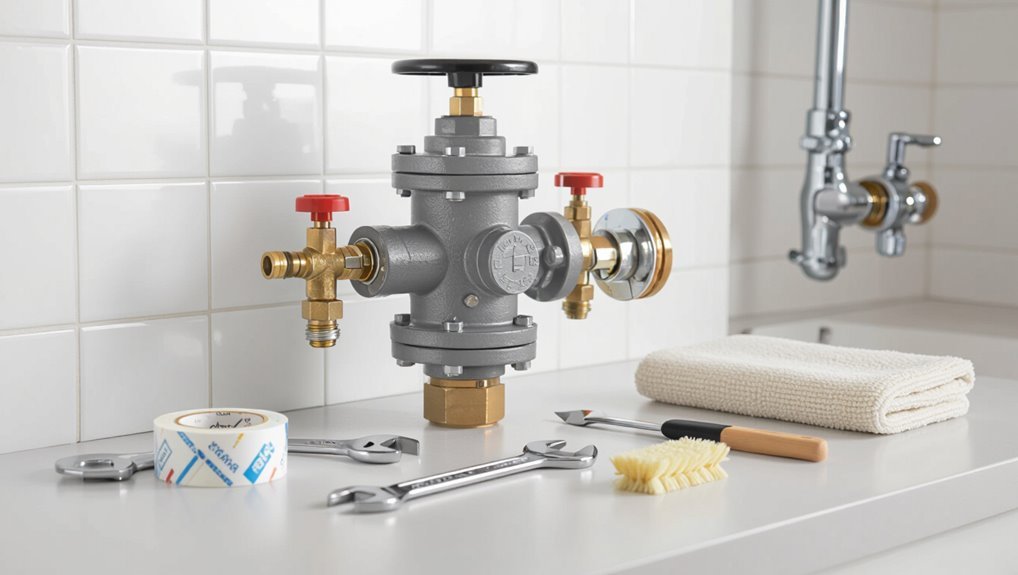
A clear, labeled diagram of common backflow preventer components helps readers match parts on their unit to the article’s troubleshooting steps.
Side-by-side before-and-after photos illustrate typical failures such as corroded check valves, worn seals, and debris buildup.
Together, these visual aids speed recognition and support accurate reporting to a plumber.
Labeled diagram of common backflow preventer components
Clear, labeled diagrams are essential for quickly recognizing the main components of a backflow preventer—such as the inlet and outlet ports, check valves, relief valve, test cocks, and shutoff valves—so technicians and homeowners can identify parts that commonly fail or require testing.
Diagrams should show flow direction, internal valve positions, component names, and test cock locations, aiding accurate inspection, communication, and targeted maintenance.
Before-and-after photos of common failures
How do visible signs distinguish a functioning backflow preventer from one that needs repair?
Comparative before-and-after photos highlight common failures: corroded valves, cracked housings, mineral buildup, and displaced seals versus clean, intact components.
Captions identify part names and failure causes.
Side-by-side images aid diagnosis, documenting deterioration stages and guiding whether cleaning, part replacement, or full unit replacement is necessary.
Conclusion
A failing backflow preventer can quietly compromise water safety; one should remember that cross-connection incidents cause an estimated 4,000 waterborne illness outbreaks annually worldwide. This statistic evokes contaminated water moving backward through plumbing, turning a single faulty valve into a public-health risk. Regular checks, awareness of the nine warning signs, and prompt testing reduce that danger. When uncertain, contact a licensed backflow specialist to confirm diagnosis and restore protection without delay.