
How to Prevent Backflow in Pipes: 7 Effective Methods Every Homeowner Should Know
To prevent backflow in pipes and protect your home’s water supply, homeowners should implement several key strategies. Installing backflow preventer valves and check valves is essential. Additionally, using air gaps at fixtures and pressure vacuum breakers for irrigation can help. For high-risk connections, consider reduced pressure zone (RPZ) devices. Regular testing, seasonal inspections, and professional certification ensure these systems function reliably. Avoid DIY alterations and cross-connections to minimize risks. For further guidance, explore practical steps, associated costs, and maintenance schedules to effectively implement these protections.
What backflow is and why homeowners should prevent it
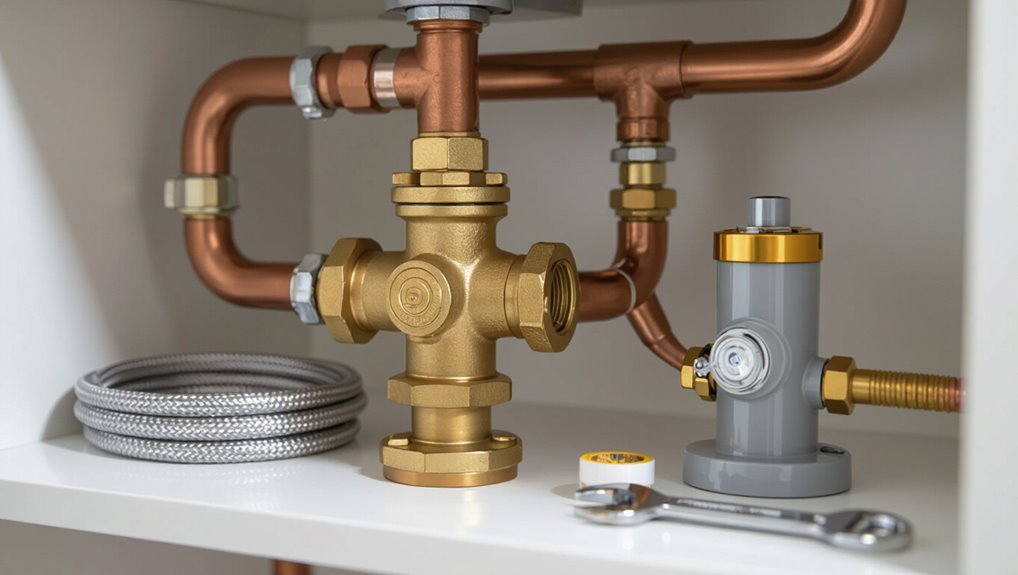
Backflow occurs when water flows in the reverse direction in a household plumbing system, allowing contaminants to enter the potable supply.
Common causes include pressure drops, cross-connections with irrigation or auxiliary systems, and faulty or absent backflow prevention devices.
Left unaddressed, backflow can create health hazards, property damage, and potential violations of local plumbing codes.
Definition of backflow in domestic plumbing
Contaminated water moving in the wrong direction through a plumbing system—known as backflow—occurs when pressure changes allow non-potable fluid to enter the potable supply.
Homeowners should prevent it because it risks health, can corrode pipes, and may violate local codes, leading to costly repairs and fines.
Definition in domestic plumbing: reversal of normal flow allowing contaminants into drinking lines; guidance on how to prevent backflow in pipes focuses on barriers and maintenance.
Common causes of backflow in homes
Several frequent situations can trigger backflow in a home’s plumbing: drops in supply pressure during main breaks or heavy demand, backpressure from pumps or heated systems, and cross-connections between potable lines and irrigation, laundry, or auxiliary tanks.
Aging or faulty valves, improper plumbing alterations, sump or booster pumps, and temporary pressure disturbances during firefighting or maintenance also create conditions that allow contaminated water to reverse into potable systems.
Health, safety, and legal risks of backflow
A reversal of normal water flow allows non-potable substances—chemicals, waste, or irrigation runoff—to enter a home’s drinking supply, posing immediate health hazards and complicating remediation.
Contaminated water risks illness, toxic exposure, and costly repairs. Cross-connection incidents can violate local codes, incur fines, and void insurance.
Proactive prevention, testing, and proper backflow prevention devices protect occupants, property, and legal compliance.
Quick overview 7 effective methods to prevent backflow
A concise survey presents seven practical methods to prevent backflow, each paired with a one-line benefit to aid quick comparison.
The overview highlights common mechanical devices, installation practices, and maintenance strategies that homeowners can apply. This summary orients readers toward the most suitable options before detailed guidance.
- Backflow preventer valve — protects potable water by stopping reverse flow
- Air gap — simple, maintenance-free separation for fixture outlets
- Check valve — automatic one-way flow control for pipelines
- Pressure vacuum breaker — prevents siphonage in outdoor systems
- Reduced pressure zone (RPZ) device — highest protection for hazardous cross-connections
Summary of each method with one-line benefit
Highlighting seven effective backflow prevention methods, this overview pairs each technique with a single-line benefit to facilitate quick comparison.
Check valves — prevent reverse flow automatically.
Air gaps — eliminate cross-connection risk.
Reduced-pressure zones — protect potable water under high hazard.
Double-check valves — add redundancy.
Pressure vacuum breakers — stop back-siphonage.
Backflow preventer assemblies — handle complex systems.
Routine testing — guarantees ongoing reliability.
Install check valves and backflow preventers
A range of check valves—spring, swing, and ball types—offer simple one-way flow control, while dedicated backflow preventers such as RPZs, reduced-pressure assemblies, and double-check valves provide higher levels of protection for specific hazards.
These devices are typically placed at service entrances, near irrigation or boiler connections, and at any point where potable water could be exposed to contaminants.
Selection and placement often require professional assessment and certified installation, though some basic check valves can be replaced by a competent DIYer with proper guidance.
Types of check valves and how they work
Check valves and backflow preventers come in several basic designs—swing, lift, ball, piston, and wafer—that each control reverse flow through different internal mechanisms.
Swing valves pivot a disc; lift valves raise a guided plug; ball valves use a sealed sphere; piston valves slide a sealing element; wafer check valves rely on spring-assisted discs.
Selection depends on flow rate, pressure, maintenance, and orientation.
Dedicated backflow prevention devices (RPZ, reduced pressure assemblies, double-check valves)
Several common dedicated backflow prevention devices—reduced pressure zone (RPZ) assemblies, reduced pressure assemblies, and double-check valves—are engineered to protect potable water by providing staged protection against backpressure and back-siphonage.
These devices use redundant check mechanisms, relief ports, and pressure differentials to block contaminants. They require proper selection, periodic testing, and maintenance to guarantee reliable operation and regulatory compliance.
Where to install them in a home plumbing system
Having outlined the function and maintenance of reduced pressure zone assemblies, double-check valves, and similar devices, the discussion now turns to their practical placement within a residential plumbing system.
Install backflow preventers at main water service entry, irrigation supply lines, and dedicated fixtures (e.g., boilers, pool fills).
Locate valves upstream of potential contamination sources, accessible for inspection and drain connections, and protected from freezing.
Professional installation vs DIY considerations
When deciding between professional installation and a do-it-yourself approach for check valves and backflow preventers, homeowners should weigh code requirements, warranty implications, and the technical complexity of the device.
Professionals guarantee compliance, correct sizing, leak-free connections, and test certifications.
DIY may suit simple valve swaps with plumbing skills, but improper installation risks contamination, fines, and voided warranties; permits and inspections matter.
Use air gaps and vented fixtures
A proper air gap is a visible, unobstructed space between a plumbing outlet and the flood level of a receiving fixture that prevents backflow.
Common locations for required air gaps include sinks, dishwashers, and hose bibs where contaminants could be drawn back into potable lines.
Regular inspection and simple maintenance—ensuring the gap remains clear, fittings are secure, and vented fixtures are functional—keeps these safeguards effective.
What constitutes a proper air gap
An air gap is the unobstructed vertical space between a water outlet and the flood level rim of a receiving fixture, sized to prevent backflow by physically separating potable water from potential contaminants.
A proper air gap equals or exceeds applicable code minimums, remains unobstructed, resists siphonage, and is maintained without adapters or fittings that reduce the clearance.
Regular inspection guarantees integrity.
Typical locations for air gaps (sinks, dishwashers, hose bibs)
Many common plumbing fixtures require an air gap or a vented configuration to protect potable water: kitchens often use sink drains and dishwasher connections with visible air gaps.
Laundry and utility sinks require vented fittings.
Outdoor hose bibs and irrigation systems need vacuum breakers or air gaps to stop contamination.
Commercial dishwashers and service sinks also mandate accessible air gap devices per code.
Inspecting and maintaining air gaps
Regular inspections of air gaps and vented fixtures guarantee they function as designed and prevent backflow contamination.
Homeowners or technicians should check for blockages, corrosion, or improper installation, measuring clearances against local codes.
Replace damaged components, clean debris, and test operation after repairs.
Document inspections and schedule routine checks, especially after plumbing work or seasonal changes, to maintain reliable backflow protection.
Install and maintain vacuum breakers
The article compares atmospheric and anti-siphon vacuum breakers, explaining how each prevents backflow under different conditions.
It recommends installing them on outdoor faucets and irrigation systems where back-siphonage risk is highest.
Routine seasonal inspection and timely replacement are emphasized to guarantee reliable operation.
Atmospheric vs anti-siphon vacuum breakers
A clear distinction exists between atmospheric and anti-siphon vacuum breakers: atmospheric vacuum breakers prevent backsiphonage by introducing air into the system at the fixture, while anti-siphon vacuum breakers incorporate a built-in check valve to block both backsiphonage and backpressure.
Atmospheric devices are simple and cost-effective but must remain above hazard level; anti-siphon units offer greater protection and can tolerate variable pressure conditions.
Best locations for vacuum breakers (outdoor faucets, irrigation systems)
Many outdoor faucets and irrigation connections require vacuum breakers to prevent contamination of the potable water supply by backsiphonage or backpressure; ideal locations include hose bibs, hose reels, automatic sprinkler manifolds, and points where irrigation systems connect to the main water line.
Additional recommended spots are outdoor utility sinks, pool fill lines, greenhouse hookups, and any low‑pressure or submerged discharge points.
Seasonal maintenance and replacement
Following the list of ideal installation points, attention now turns to routine seasonal maintenance and timely replacement of vacuum breakers to confirm continued protection against backsiphonage and backpressure.
Inspect units before freezing weather and after winter, clear debris, and test operation.
Replace corroded, leaky, or malfunctioning breakers promptly.
Record dates and component condition to schedule future checks and secure regulatory compliance.
Maintain proper piping pressure and system design
Proper piping pressure and thoughtful system design reduce the risk that pressure fluctuations will induce backflow.
Pressure regulators and pressure relief valves are essential components for maintaining stable pressures and preventing transient events.
During upgrades, plumbing layouts must be reviewed to avoid new cross-connections that could allow contaminant entry.
Role of pressure fluctuations in backflow
Although often subtle, pressure fluctuations within a piping system are a primary driver of backflow incidents and must be controlled through thoughtful design and operational practices.
Rapid drops or reversals create suction that draws contaminants inward. Proper pipe sizing, avoiding abrupt valves or pump starts, maintaining steady supply pressure, and incorporating adequate air gaps and looped routing minimize transient effects and reduce backflow risk.
Pressure regulators and pressure relief valves
Install pressure regulators and relief valves to stabilize system pressure and prevent both chronic overpressure and transient drops that can lead to backflow.
Properly sized regulators maintain steady downstream pressure; relief valves protect against sudden spikes.
Regular inspection, correct setpoints, and certified installation guarantee reliable operation.
Combined with adequate piping design, these devices reduce backflow risk by keeping pressures within safe, designated ranges.
Avoiding cross-connections during plumbing upgrades
When upgrading plumbing systems, designers and installers must identify and eliminate potential cross-connections that could allow contaminants to enter the potable water supply.
Plans should separate potable and nonpotable lines, install backflow prevention devices at risk points, maintain correct pressure relationships, and use labeled, code-compliant fittings.
Regular testing and documentation verify integrity after changes, preventing contamination and ensuring regulatory compliance.
Separate potable and non-potable systems
Common cross-connection scenarios—such as irrigation lines tied into household plumbing, pool fills connected to potable supplies, or chemical feed systems sharing valves—pose significant contamination risks.
Effective strategies include physically segregating irrigation, pool, and chemical feed lines with dedicated manifolds and backflow prevention devices.
Clear labeling and updated plumbing maps further reduce error during maintenance and emergency response.
Common cross-connection scenarios to avoid
Avoiding cross-connections requires clear separation between potable water systems and any non‑potable sources—such as irrigation lines, industrial processes, or fire suppression systems—that could introduce contaminants if backflow occurs.
Common scenarios to avoid include garden hose attachments left submerged in fertilizer tanks, direct links between potable taps and chemical feed equipment, and shared valves or fittings connecting drinking water to reclaimed or graywater systems.
Strategies for segregating irrigation, pool, and chemical feed lines
Segregating irrigation, pool, and chemical feed lines requires physical and administrative measures to keep non‑potable systems fully separate from drinking water.
Separate piping, dedicated backflow preventers sized for each service, and distinct shutoffs minimize cross‑connections.
Maintain color‑coded fixtures, locked valves, and pressure differentials to prevent siphonage.
Regular inspections, documented system boundaries, and compliance with local codes guarantee persistent separation and reduced contamination risk.
Labeling and mapping plumbing lines for safety
Clear, durable labeling and accurate system maps are essential to distinguish potable from non‑potable plumbing and to prevent accidental cross‑connections.
Homeowners should mark all pipes, valves, and outlets with color‑coded tags and permanent labels.
Updated schematic maps, kept with maintenance records, guide contractors and inspectors.
Regular verification and clear signage at service points reduce contamination risk and simplify emergency response.
Regular inspection, testing, and certification
A routine inspection schedule for backflow prevention devices—typically annual or as required by local codes—helps guarantee ongoing protection of potable water.
Testing procedures, performed with calibrated gauges and standardized protocols, must be documented and certified to confirm device functionality.
Selection of a licensed tester and careful record-keeping of certificates and repairs support compliance and rapid response to failures.
Recommended inspection schedule for backflow devices
Regular inspections and periodic testing of backflow prevention devices are essential to guarantee continued functionality and compliance. Most jurisdictions recommend initial testing upon installation, followed by annual tests and additional inspections after repairs, system modifications, or events that may compromise integrity (e.g., pressure surges or contamination incidents).
Homeowners should maintain written records, adhere to local schedules, and promptly address failed tests to prevent health risks and regulatory penalties.
How backflow testing is performed and certified
Technicians inspect backflow assemblies by visually examining components, checking for leaks or corrosion, and verifying correct valve operation using calibrated test kits that measure differential and static pressures.
Technicians will follow manufacturer procedures and local codes to document flow direction, relief valve performance, and any deviations.
Certificates record test results, repairs, and compliance status; failed devices are repaired or replaced and retested to restore certification.
Choosing a certified tester and record-keeping
Select a certified backflow tester whose credentials match local regulations and the specific assembly types on the property.
The tester should provide inspection, testing, and qualified repair or replacement recommendations.
Maintain organized records of certificates, test reports, repairs, dates, and tester contact information.
Retain documents for required periods, submit reports to authorities when mandated, and schedule recurring tests per local intervals to guarantee compliance.
Routine maintenance and homeowner checks
Homeowners can perform simple monthly and seasonal checks—inspecting visible backflow assemblies, testing shutoff valves, and monitoring for unusual pressure changes or water discoloration.
Warning signs such as leaks, stuck or corroded parts, reduced water pressure, or unexpected taste and odor may indicate a failing backflow device or a cross-connection.
If any of these issues are observed, or if testing cannot be completed safely, a licensed plumber should be contacted promptly.
Monthly and seasonal checks homeowners can perform
How often should simple inspections be performed to catch early signs of backflow risk? Homeowners should conduct monthly visual checks of hose bibs, irrigation connections, and visible valves, and perform seasonal checks before winter and after spring thaw.
Verify proper drainage, clear debris, and guarantee protective covers remain in place. Document findings and schedule professional testing or repairs when anomalies appear.
Signs of failing backflow devices or cross-connections
Several clear indicators point to failing backflow devices or hidden cross-connections and should prompt more thorough inspection or a call to a professional.
Homeowners may notice discolored, foul, or metallic-tasting water; fluctuating pressure or sputtering at taps; unexplained contamination near hose bibs, irrigation, or auxiliary lines; recurring odors; visible leaks or corrosion at valve assemblies; or unusual lawn saturation after system use.
When to call a plumber
Recognize routine maintenance tasks that a homeowner can safely perform and know when conditions require a licensed plumber.
Homeowners should inspect visible backflow preventers, test shutoff valves, and clear debris.
Contact a plumber for persistent leaks, failed backflow tests, signs of contamination, complex valve replacement, or uncertain installations.
Licensed plumbers guarantee code compliance, proper repairs, and certified testing to protect water safety.
Cost, regulations, and insurance considerations
Costs for devices, installation, and periodic testing should be outlined so homeowners can budget accurately.
| Topic | Consideration |
|---|---|
| Device cost | Varies by type and capacity |
| Installation | May require certified plumber |
| Permits | Check local codes before work |
| Insurance | May reduce liability with protection |
Local building codes and permit requirements must be confirmed prior to installation, and homeowners should notify their insurer to understand impacts on coverage and liability.
Typical costs for devices, installation, and testing
A range of factors determines typical expenses for backflow prevention: device type and size, local code requirements, site complexity, and required testing frequency.
Homeowners can expect valve costs from modest check valves to several hundred dollars for reduced-pressure assemblies.
Professional installation commonly adds labor and materials.
Annual or biannual certification tests incur technician fees and minor repair costs.
Budget for occasional replacements.
Local codes and permits to check before installation
Compliance with local codes, permit requirements, and insurance provisions is a critical step before installing backflow prevention equipment.
Homeowners should verify municipal plumbing codes, required device types, and permit processes.
Confirm inspection timelines, certified installer or tester requirements, and any mandatory maintenance schedules.
Estimate permit and inspection fees when budgeting.
Document approvals for compliance records and future resale.
How preventing backflow affects home insurance and liability
Beyond checking codes and permits, homeowners should understand how backflow prevention measures influence insurance coverage and liability exposure.
Insurers may require certified devices, inspections, or documentation to maintain coverage; failure can increase premiums or deny claims. Proper installation reduces contamination risk and legal exposure, while documented compliance can lower costs.
Budget for device, testing, and occasional updates to meet evolving regulations.
Common mistakes and pitfalls to avoid
Common errors that elevate backflow risk include well-meaning DIY alterations that compromise seals or routing.
Improper selection or placement of backflow prevention devices can leave systems vulnerable despite appearing compliant.
Skipping scheduled maintenance and required testing often allows minor faults to become significant hazards.
DIY errors that increase backflow risk
Homeowners undertaking plumbing work often unintentionally increase backflow risk through shortcuts, improper installations, or overlooked maintenance.
Common DIY errors include failing to regularly test or clean existing backflow preventers, cross-connecting potable and nonpotable lines during repairs, using improper pipe supports that stress joints, neglecting pressure-relief valve checks, and bypassing devices temporarily without proper isolation.
Each compounding mistake raises contamination likelihood.
Incorrect device selection or placement
Mistakes in device choice or placement often compound the DIY errors previously described, turning a fix into a new contamination pathway.
Installing improper backflow preventers, using wrong sizes, or placing devices in low spots that trap water undermines protection.
Incorrect orientation, bypassing required assemblies, or ignoring local code compatibility creates failure points that increase contamination risk and complicate later repairs.
Neglecting maintenance and testing requirements
Overlooking scheduled maintenance and neglecting periodic testing of backflow prevention devices allows undetected wear, debris buildup, or valve drift to create silent failure modes that compromise potable water safety.
Homeowners who skip inspections risk contamination, costly emergency repairs, and regulatory noncompliance.
Routine testing, timely repairs, and documented service schedules guarantee reliable operation, extend device lifespan, and protect household and community water supplies.
Case examples and step-by-step prevention plan
Two brief case examples illustrate how backflow prevention is applied: one for irrigation systems and one for protecting household plumbing during pressure fluctuations.
Each case highlights specific risks, chosen devices, and monitoring steps.
A concise checklist is provided so homeowners can implement all seven recommended methods in a practical sequence.
Example 1: Preventing backflow for irrigation systems
Irrigation systems present a common backflow risk when pressure fluctuations or cross-connections allow fertilizers, pesticides, or soil contaminants to be drawn into the potable water supply.
This example outlines typical failure modes and a concise, step-by-step prevention plan to safeguard water quality.
Identify sprinkler cross-connections, install a reduced-pressure zone (RPZ) or dual-check backflow preventer, schedule annual testing, maintain air gaps at hose bibs, and repair leaks promptly.
Example 2: Protecting household water during pressure fluctuations
When pressure surges or drops occur in a household plumbing system, they can draw contaminants into drinking water through weakened seals, faulty fixtures, or temporary cross-connections.
This section presents case examples of such events and a concise, actionable prevention plan to protect household water quality.
Identify vulnerable fixtures, install a pressure vacuum breaker or reduced-pressure zone device, maintain regular inspections, and secure hose bibs and appliance connections.
Checklist homeowners can follow to implement all seven methods
A practical checklist gives homeowners a clear, stepwise framework to apply all seven backflow prevention methods, translating technical measures into actionable tasks.
It begins by mapping vulnerable fixtures and ends with a maintenance schedule to guarantee long-term protection. The checklist sequences assessment, device selection, installation, testing, and upkeep into an executable plan with examples and timelines.
- Inspect fixtures and hazards
- Choose appropriate devices
- Follow installation specs
- Schedule testing and certification
- Record maintenance and revisions
Conclusion
The homeowner reads the last line and feels the house hold its breath. Months of overlooked fittings and hurried repairs could be rewritten by one decisive action—a proper backflow preventer installed, tested, and maintained. Yet the true safeguard hides in routine vigilance: annual checks, simple fixes, and knowing when to call a pro. If anything is neglected, the silent risk remains, waiting at the next pressure change to reveal itself.