How to Pump a Septic Tank Safely: Step-by-Step Guide for Homeowners
Pumping a septic tank is a crucial maintenance task that ensures your system operates efficiently and safely. To pump your septic tank safely, follow these essential steps:
- Locate and Inspect the Tank: Identify the location of your septic tank and check for any visible signs of damage or issues.
- Secure the Area: Keep the pumping area clear of obstacles and inform others about the work being done.
- Wear Personal Protective Equipment (PPE): Use gloves, masks, and goggles to protect yourself from hazardous materials.
- Ventilate the Space: Ensure proper airflow to avoid exposure to toxic gases that can accumulate in the tank.
- Open Lids Carefully: Use caution when opening the tank to prevent accidents and contamination.
- Inspect Scum and Baffles: Check the scum layer and baffles for any blockages or problems that may require attention.
- Skim Scum and Remove Sludge: Gradually remove the scum and sludge while monitoring the levels and the tank’s structural integrity.
- Store Waste Properly: Place waste in sealed containers and adhere to local disposal regulations.
- Consider Professional Help: For complex tanks or necessary repairs, hiring a professional service is advisable.
Following these steps will help you pump your septic tank safely and effectively. For detailed costs and best practices, continue reading.
What a Septic Tank Is and Why Pumping Matters
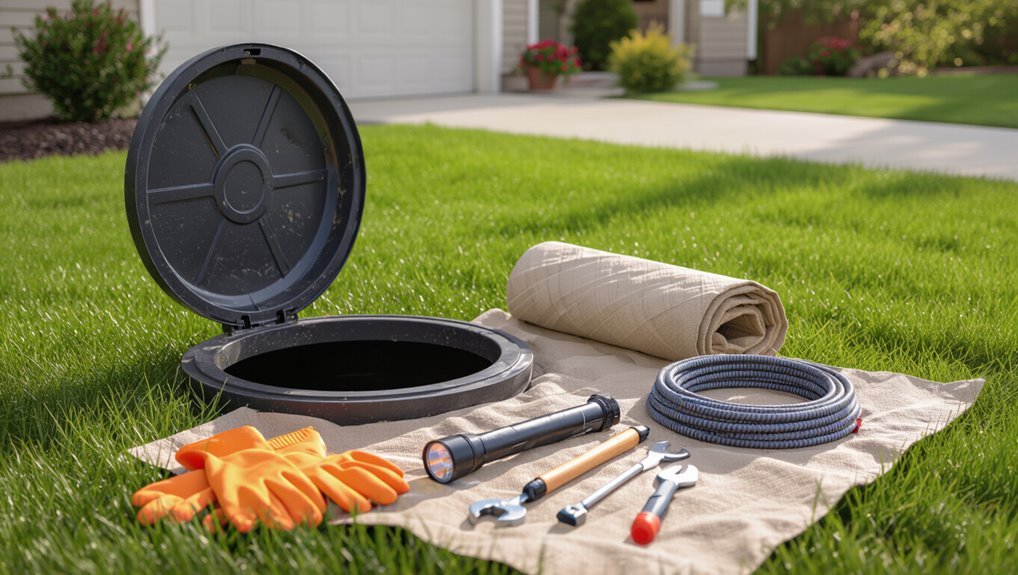
A septic tank is a buried wastewater treatment unit consisting of inlet and outlet pipes, a settling chamber, and a drainfield that together direct and separate solids from liquids.
Regular inspection and pumping are prompted by signs such as slow drains, odors, soggy ground, or sewage backups.
When pumping is delayed or done improperly, solids can clog the system, damage the drainfield, and create costly repairs or health hazards.
How septic systems work: components and flow
Septic systems are underground wastewater treatment assemblies that rely on a coordinated sequence of components — the inlet pipe, settling tank, scum and sludge layers, baffle, outlet, and drainfield — to separate solids from liquids and disperse effluent safely into the soil.
Routine maintenance, including knowing how to pump septic tank contents, prevents buildup. Solids settle, bacteria digest organics, clarified effluent exits to the drainfield for soil absorption.
Signs your septic tank needs pumping
With solids accumulating in the tank and effluent flowing out to the drainfield, homeowners should watch for clear indicators that pumping is needed.
Common signs include slow drains, gurgling pipes, sewage odors near the house or over the drainfield, sewage surfacing in yard low spots, unusually lush vegetation over the drainfield, and frequent need for toilet or drain unclogging.
Prompt inspection follows.
Risks of delayed or improper pumping
Neglecting timely pumping allows solids to build up and carry scum into the drainfield, where clogging and soil saturation can quickly follow.
Untreated accumulation raises backup risk, increases repair costs, and shortens system lifespan.
Contaminant runoff can pollute groundwater and nearby water bodies, posing health hazards.
Emergency replacements and property damage become more likely when routine maintenance is postponed or performed incorrectly.
When and How Often to Pump Your Septic Tank
Septic tank pumping frequency depends on household size, tank capacity, and water-use patterns, which together determine how quickly solids accumulate.
Common guidance ranges from every 1–3 years for small households with large tanks to annual service for large families or high water users.
Homeowners can track levels and schedule maintenance using service records, calendar reminders, or professional inspections to prevent backups.
Factors that determine pumping frequency (household size, tank size, water use)
Determine how often a septic tank needs pumping by considering three primary variables: household size (number of occupants and their habits), tank capacity, and overall water use patterns.
Higher occupant counts and heavy water use accelerate solids accumulation. Smaller tanks fill faster.
Additional factors include garbage disposal use, frequent laundry, and maintenance history.
Monitoring sludge and scum levels guides timing alongside these variables.
Typical pumping schedules by household scenarios
When household size, tank capacity, and water-use habits are combined, clear pumping intervals emerge for common living situations; small households with conservative water use typically require pumping every 3–5 years, average families every 2–3 years, and large or high-use households (including frequent laundry or garbage-disposal use) yearly or more often.
| Scenario | Suggested Interval |
|---|---|
| Small household | 3–5 years |
| Average family | 2–3 years |
| Large/high-use | 1 year |
| Vacation/seasonal | 3–4 years |
How to track and plan regular maintenance
Regularly scheduled inspections and a simple tracking system help homeowners know precisely when tank pumping is due.
Record inspection dates, pumping events, household size, and water usage. Use calendar reminders or maintenance apps to schedule future service based on tank capacity and sludge levels.
Retain receipts and technician notes. Review records annually and adjust intervals when occupancy or usage patterns change.
Preparing to Pump a Septic Tank Safely
Before pumping begins, the homeowner should confirm compliance with all relevant local regulations and obtain any required permits.
They must gather appropriate tools and personal protective equipment, locate and identify the tank access points, lids, and baffles, and plan safe access for service vehicles.
A quick inspection of odors, visible cracks, and signs of backups will help determine tank condition and whether professional assessment is needed before pumping.
Legal and local regulations to check before pumping
Which permits, notifications, and setbacks apply to a septic pumping job should be confirmed with local authorities and utility providers before work begins.
Verify required permits, disposal site approvals, and any contractor licensing.
Check setback, access, and surface-water protection rules.
Confirm notification or inspection mandates, waste transport documentation, and septic record requirements.
Noncompliance penalties and reporting obligations should be understood and documented.
Tools, equipment, and protective gear required
A concise inventory of tools, equipment, and protective gear is essential for a safe and efficient septic pumping job; this includes a calibrated vacuum truck or portable pump with appropriate hoses, spare fittings and clamps, non-sparking hand tools, grounding equipment for static control, and containment materials for incidental spills.
Additionally, personal protective equipment such as chemical-resistant gloves, splash goggles or face shield, respirator rated for hydrogen sulfide and other sewer gases, impermeable coveralls, and rubber boots is crucial.
- Pump, hoses, clamps
- PPE: gloves, goggles, respirator
- Non-sparking tools, grounding gear
- Spill containment, absorbents
Identifying tank access points, lids, and baffles
Several key access points must be located and verified before any pumping begins: the inlet and outlet lids, cleanout risers, and internal baffles.
The inspector confirms lid types, secures removable covers, and notes riser heights. Baffles are identified to avoid damage and guide suction placement.
Marking and photographing access points guarantees correct equipment positioning and safe, efficient tank entry for the pumping crew.
Assessing tank condition before pumping (smells, cracks, backups)
After locating and documenting access points, the inspector moves on to evaluate the tank’s condition for signs of failure or imminent problems.
The inspector notes odors, visible cracks or misaligned concrete, effluent surfacing, and slow-draining fixtures indicating backups. Photographs and measurements are recorded.
If structural damage, persistent sewage smells, or frequent backups exist, pumping is deferred and a professional structural or repair assessment is recommended.
Step-by-Step Guide to Pumping a Septic Tank (Homeowner Overview)
The homeowner overview outlines a clear sequence for safe septic pumping: locating and exposing the tank lid, securing the area with ventilation, and briefly inspecting the contents before work begins.
It then summarizes pumping order and best practices for removing solids and liquids to minimize disturbance and protect system function.
Finally, it covers proper handling and temporary storage of sludge and scum to prevent contamination and facilitate lawful disposal.
Step 1 Locate the tank and expose the access lid safely
Begin by confirming the septic tank’s location using property records, previous inspection notes, or a metal probe to trace the distribution box and inlet/outlet lines.
Once located, clear vegetation and debris, mark any hidden utilities, and uncover the access riser or lid carefully with hand tools.
Inspect the lid for damage, note lid type and size, and document access points for the service provider.
Step 2 Secure the area and use proper ventilation
Secure the work area by establishing a clear perimeter with cones or tape and keeping children, pets, and bystanders well away from the tank opening and equipment.
Personnel should wear PPE—gloves, eye protection, and respirators if required—and use intrinsically safe lighting.
Ventilation by natural airflow or a blower reduces gas buildup; monitor for hydrogen sulfide or methane with a gas detector before and during operations.
Step 3 Remove lid and inspect contents briefly
Lift the lid carefully and set it aside on firm ground to prevent slipping or collapse.
The operator briefly inspects the tank interior for foam, scum layer thickness, visible damage, and high water level without leaning over the opening.
If odors, unexpected debris, or structural concerns appear, the operator retreats, secures the area, and contacts a professional before proceeding with pumping.
Step 4 Pump solids and liquids: sequence and best practices
With the lid set aside and the tank briefly inspected, the operator prepares to remove solids and liquids in a controlled sequence to prevent destabilizing the system.
They begin by skimming floating scum, then withdraw settled solids from the bottom, monitoring tank level and baffles.
Pumping proceeds slowly, alternating suction points as needed, avoiding abrupt flow changes and keeping safety gear and ventilation in place.
Step 5 Sludge and scum handling and temporary storage
After pumping, the operator separates and collects removed scum and sludge into designated, leak‑proof containers or lined temporary pits to prevent runoff and odors.
Labeling each holding area and keeping storage downwind and away from water sources is essential.
Collected material is covered, secured, and monitored for leaks; temporary storage duration follows local regulations, with records kept for transport, disposal, or licensed treatment facility pickup.
Step 6 Rinse, inspect baffles and outlet tee, and replace lids
Once scum and sludge have been secured for proper handling, attention turns to cleaning and examining the tank’s internal fittings.
The tank interior is gently rinsed with low-pressure water to remove residual solids. Baffles and the outlet tee are inspected for cracks, corrosion, or blockages; damaged components are flagged for repair.
Finally, lids and access covers are reseated and secured to prevent infiltration and odor.
Step 7 Proper disposal of pumped waste and documentation
Accountability guides the final stage: properly disposing of pumped waste and documenting the service are legal and environmental obligations that protect the household and community.
Collected sludge must go to licensed disposal or treatment facilities; contractors should provide manifests, receipts, and service reports.
Homeowners should retain records, note date, volumes, and observations, and verify regulatory compliance to aid future maintenance and inspections.
When to Hire a Professional vs. DIY Pumping
The decision to hire a licensed septic professional versus attempting DIY pumping depends on task complexity, local regulations, and safety risks.
Readers should compare costs of equipment, permits, and potential liability against professional service fees, and learn how to vet providers by checking licenses, references, and insurance.
Essential questions to ask contractors include scope of work, disposal methods, price breakdown, and proof of credentials.
Tasks best left to licensed septic professionals
Recognize that routine pump-outs are only one part of septic care; certain tasks require licensed professionals because of safety, regulatory, and technical complexities.
Professionals should handle system inspections, major repairs, drainfield work, riser installations, sludge level diagnostics, and troubleshooting persistent backups or odors.
Licensed technicians carry proper equipment, permits, waste disposal procedures, and liability coverage necessary for complex or hazardous interventions.
Cost comparison: DIY vs. professional service
After noting which tasks require licensed professionals, homeowners should weigh the costs and risks of DIY pumping against hiring a service. DIY saves labor fees but adds equipment, disposal, and liability costs; professionals cost more upfront yet include safety, permits, and proper disposal. Compare options below.
| Option | Typical Cost | Key Consideration |
|---|---|---|
| DIY | $150–$600 | Equipment, time, risk |
| Professional | $300–$800 | Safety, compliance, warranty |
| Hybrid | $200–$500 | Shared tasks, reduced risk |
How to choose a reputable septic service provider
When should a homeowner opt for a professional septic service rather than attempting DIY pumping? A professional is advisable for complex systems, large tanks, safety risks, or when local regulations require certified technicians.
- Complex or unknown system layout
- Tanks over 1,000 gallons
- Presence of hazardous gases or confined-space concerns
- Required permits or inspections by local authorities
Questions to ask a septic contractor before hiring
Which questions reveal a contractor’s competence and reliability?
Ask about licensing, insurance, and local certifications; years of experience with comparable systems; references and recent job examples; specific pumping methods and disposal practices; written estimates, guarantees, and emergency response; presence of trained technicians and equipment; compliance with regulations; and warranty or cleanup policies.
Compare answers, verify references, and prefer transparent, documented responses.
Safety Hazards and How to Avoid Them
Septic tank work presents multiple hazards that require clear preventive measures. Operators must account for toxic gases and confined-space risks, structural collapse and sharp edges, environmental contamination and spill response, and appropriate personal protective equipment plus decontamination procedures.
Each risk area demands specific controls and protocols to protect workers, property, and the environment.
Toxic gases and confined-space risks: precautions
Because anaerobic decomposition produces hydrogen sulfide, methane, and carbon dioxide, entering or working near a septic tank exposes workers to toxic gases and oxygen-deficient atmospheres that can quickly incapacitate or kill.
Workers should monitor air with calibrated detectors, ventilate tanks before access, never enter alone, use supplied-air respirators when required, and maintain clear emergency communication and rescue plans to mitigate confined-space risks.
Structural collapse, sharp edges, and fall prevention
Inspect the site for unstable ground, deteriorated risers, and corroded or cracked lids before any work begins, since structural collapse, jagged edges, and unguarded openings present immediate risks of falls, lacerations, and crushing injuries.
Secure lids with rated covers, cordon off openings, wear cut-resistant gloves and boots, and use fall protection when working near edges.
Replace compromised components promptly.
Environmental contamination risks and spill response
Environmental contamination from spills and leaks can contaminate groundwater, surface water, soil, and nearby wells, posing health risks and regulatory liabilities.
Operators should avoid overfilling, secure hoses and fittings, and contain leaks with absorbents or temporary berms.
Immediate notification of authorities and licensed cleanup services is required for significant releases.
Document incidents, sample affected areas, and restore contaminated soil per local regulations.
Personal protective equipment and decontamination
Wear appropriate personal protective equipment (PPE) and follow strict decontamination procedures to minimize exposure to pathogens, toxic gases, and chemical residues during septic tank pumping.
Gloves, impermeable coveralls, boots, eye protection, and N95 or respirator are recommended.
Decontaminate tools and clothing with disinfectant, dispose of single-use items safely, and wash hands and exposed skin thoroughly.
Observe contaminated-waste disposal regulations.
Common Problems During Pumping and Solutions
Common problems encountered during septic pumping include blocked inlet or outlet pipes and excessive solids, which require troubleshooting to locate and clear the obstruction.
Damage to baffles or the tank structure often presents as unusual odors, surfacing effluent, or visible cracks and should be assessed and repaired promptly.
If overflow or backup occurs after pumping, immediate actions include stopping water use, notifying the service provider, and isolating affected drains to minimize contamination.
Blocked inlet/outlet or excessive solids: troubleshooting
When inlet or outlet pipes become clogged with rags, grease, roots, or an accumulation of solids, flow is restricted and the tank cannot function properly.
Technicians first inspect baffle condition and probe the inlet and outlet tees to determine whether blockages, displaced baffles, or sludge buildup are present.
They remove debris, vacuum excess solids, and flush lines; camera inspection confirms clearance and schedules follow-up maintenance to prevent recurrence.
Damage to baffles or tank structure: indicators and remedies
After clearing blockages and verifying flow, technicians next evaluate the integrity of the tank’s baffles and concrete shell, since physical damage can mimic or worsen the problems caused by clogs.
Cracked or collapsed baffles, spalling concrete, and displaced inlet/outlet pipes are key indicators. Recommended remedies include targeted repairs, baffle replacement, and, when structural compromise is severe, tank section replacement by licensed professionals.
Overflow or backup after pumping: immediate actions
Encountering an overflow or backup immediately after pumping signals an urgent malfunction that requires prompt containment and assessment to prevent property damage and health risks.
The operator should stop water use, cordon off affected areas, and notify the pumping crew.
Inspect access lids, inlet/outlet for blockages, and check drainfield flow.
Arrange immediate professional diagnostics and temporary waste diversion until repairs restore safe operation.
Maintenance After Pumping to Extend Tank Life
After pumping, owners should keep clear records and set regular service intervals to catch issues early and plan tank replacement when inspections indicate wear.
Conserving water and avoiding disposal of grease, wipes, and harmful chemicals will reduce solids buildup and protect biological activity.
Periodic professional inspections and cautious use of approved additives help extend tank life and indicate when replacement is necessary.
Record-keeping and scheduling next service
A simple, consistent record of pumping dates, tank condition notes, and service invoices helps guarantee timely maintenance and provides a clear history for future technicians.
Homeowners should record contractor name, tank levels, repairs, and recommendations.
Schedule the next service based on technician guidance and local regulations, set calendar reminders, and retain receipts and inspection reports to demonstrate compliance and support resale or warranty claims.
Water-use habits that reduce solids accumulation
Limiting water volume and controlling what goes down drains directly reduce the rate at which solids accumulate in a septic tank.
Household behaviors extend tank life by reducing load and solids entering the system.
- Stagger laundry and dishwashing to lower peak flow
- Fix leaks promptly to avoid continuous inflow
- Use low-flow fixtures to cut water use
- Dispose solids in trash, not drains
Products to avoid and safe additives
Many homeowners rely on additives and household products to try to extend septic system life, but some substances can harm tank function, disrupt beneficial bacteria, or contaminate drainfields.
Avoid harsh chemical cleaners, antibacterial soaps, bleach in large quantities, solvent drain cleaners, and grease.
Use only manufacturer-recommended biological additives sparingly.
Regular pumping and conservative water use remain primary, proven measures to preserve system performance.
Periodic inspections and when to replace the tank
After pumping, regular inspections help detect settling, leaks, or failing baffles before they escalate into costly failures. Homeowners should schedule a professional check every 1–3 years depending on tank size, household size, and system age.
Inspectors assess sludge/scum levels, structural integrity, inlet/outlet function, and drainfield performance.
Replace tanks exhibiting cracks, corroded metal, repeated backups, or persistent drainfield failure to prevent contamination and costly repairs.
Estimated Costs, Permits, and Environmental Considerations
Typical cost components for septic pumping and disposal include service fees, hauling, and tipping charges, which vary by tank size and region.
Local regulations may require permits and designated disposal facilities to accept septage, so verification with municipal authorities is essential.
Environmental best practices—proper disposal, avoiding drainfield contamination, and using licensed haulers—help protect groundwater and comply with laws.
Typical cost breakdown for pumping and disposal
Costs for septic pumping and waste disposal vary by region, tank size, and service complexity, but several predictable components typically determine the final price.
Line items include labor and travel, hourly or flat pumping fees, solids disposal or treatment charges, equipment rental or specialty access costs, and emergency or after-hours surcharges.
Taxes and applicable disposal facility tipping fees may also influence the total.
Permit requirements and proper disposal facilities
Often governed by local and state regulations, septic pumping and disposal require contractors to obtain permits and to use approved treatment or landfill facilities to protect public health and waterways.
Homeowners should verify contractor credentials and permit status, confirm disposal facility acceptance, and retain documentation.
Fees, inspection requirements, and recordkeeping vary by jurisdiction; noncompliance can lead to fines and mandatory corrective actions.
Environmental best practices for wastewater management
How can homeowners balance necessary maintenance with minimizing environmental impact?
Homeowners should use licensed pumpers, verify disposal sites, and secure required permits.
Budget for routine pumping, inspections, and potential repairs.
Avoid chemical additives, conserve water, and protect drainfields from compaction and runoff.
Record services and follow local regulations to prevent contamination of groundwater and surface waters, safeguarding ecosystems and public health.
Quick Checklist for Safe Septic Tank Pumping
A concise checklist helps ascertain septic tank pumping proceeds safely and efficiently. It outlines permits, hazard controls, and communication steps so tasks remain orderly and compliant.
- Verify permits, locate tank, and mark utilities.
- Confirm service provider credentials and insurance.
- Establish safe work perimeter and traffic controls.
- Ascertain proper waste disposal, documentation, and post-service inspection.
Conclusion
Regular septic maintenance preserves system function, prevents costly repairs, and protects groundwater; pumping on schedule removes solids, reduces backups, and restores proper flow. Homeowners should prepare with safety gear, follow stepwise procedures, and recognize limits to DIY work; professionals handle complex, risky, or permitted jobs. Aftercare—monitoring drains, conserving water, and scheduling inspections—prolongs tank life, guarantees compliance, and fosters environmental stewardship. Consistent attention keeps systems clean, safe, and reliable.