How to Fix a Yellow Flame on Your Gas Fireplace: Step-by-Step Troubleshooting and Safety Tips
If your gas fireplace is producing a yellow or orange flame, it indicates incomplete combustion and a potential carbon monoxide risk. To address this issue, start by turning off the fireplace and gas supply. Ensure proper ventilation, then inspect the burner ports, pilot, and air shutters for soot or blockages. Gently clean these components and realign the air inlet. After cleaning, test the fireplace to see if the flame has turned a steady blue. If the yellow flame persists, check the gas pressure or consult a qualified technician. Always follow safety protocols, maintain CO alarms, and adhere to regular maintenance schedules to prevent future issues. Continue reading for detailed step-by-step checks and tool recommendations.
Why a Yellow Flame on a Gas Fireplace Is Concerning
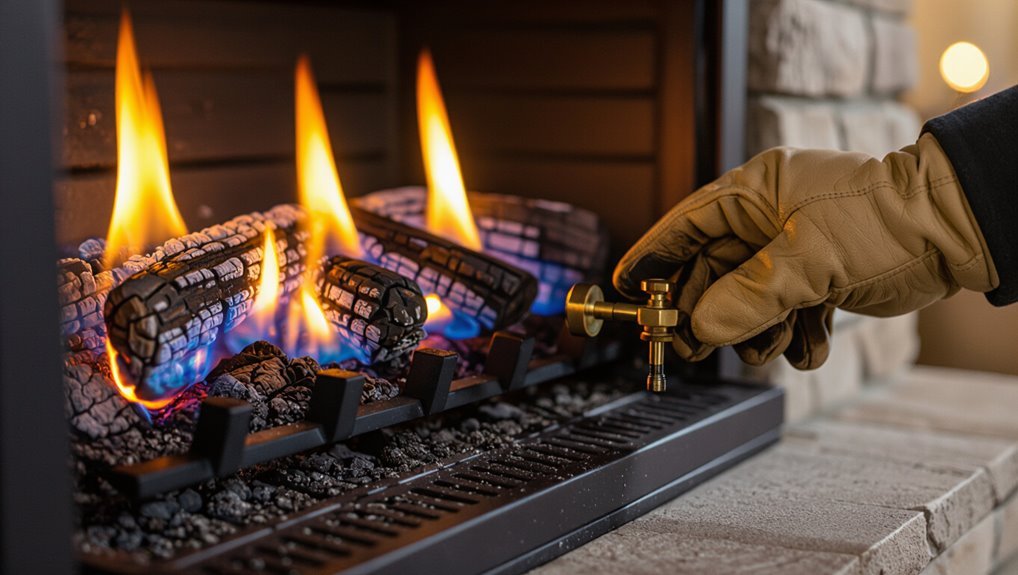
A yellow or orange flame can signal incomplete combustion and the possible production of carbon monoxide, creating a clear safety risk for occupants.
Flame color also reflects combustion quality—ideally a steady blue flame indicates efficient, clean burning while yellow suggests soot or improper air–fuel mix.
If the flame remains yellow after basic checks, the fireplace should be turned off and a qualified technician contacted.
Safety risks associated with yellow or orange flames
Yellow or orange flames in a gas fireplace indicate incomplete combustion and pose immediate and long-term hazards.
They can produce carbon monoxide, soot buildup, respiratory irritation, and fire risk from sooty deposits.
Persistent yellow flames suggest burner issues or ventilation problems; homeowners seeking how to fix yellow flame on gas fireplace should address ventilation, cleaning, and professional inspection promptly to reduce danger.
How flame color indicates combustion quality
When combustion produces a yellow or orange flame instead of the expected blue, it signals that the gas is not burning completely and oxygen supply is inadequate. This visible color shift directly reflects combustion chemistry and efficiency.
Yellow indicates soot-forming incomplete combustion and cooler flame temperatures, reducing heat output and increasing pollutant production (carbon monoxide, particulates).
Flame color therefore serves as a diagnostic indicator of burner performance and air–fuel balance.
When to stop using the fireplace and call a professional
Because a persistent orange or yellow flame signals incomplete combustion and higher carbon monoxide and soot risks, continued use of the fireplace should be reassessed immediately.
Stop using the appliance and ventilate the area if flames stay discolored after basic cleaning and burner inspection.
Contact a qualified gas technician when discoloration persists, odors occur, pilot instability appears, or carbon monoxide alarms activate.
Do not attempt complex repairs alone.
Quick Identification: Is Your Fireplace Flame Truly Yellow?
A brief visual checklist helps determine whether a flame is normal blue, has yellow tips, produces soot, or is fully yellow across the burner.
Observers are advised to note flame height, steadiness, and color patterns, and to compare against photos of proper combustion.
Simple tools and tests—such as a sooty-paper check, watching for yellow after startup, or using a handheld CO detector—can confirm whether service is needed.
Visual checklist for flame color and behavior
Although subtle variations can occur, a quick visual checklist helps determine whether a gas fireplace flame is genuinely yellow or simply exhibiting harmless flicker.
Observe overall color balance (predominantly blue with brief orange tips versus sustained yellow), steady versus dancing motion, presence of dark soot nearby, consistent yellow across burners, and changes with airflow or appliance settings.
Note duration and recurrence.
Distinguishing soot, yellow tips, and full yellow flames
With the visual checklist complete, the next step is to separate three common causes of yellow appearance: soot accumulation, brief yellow tips on otherwise blue flames, and sustained full-yellow flames.
Soot appears as black residue on logs or glass.
Yellow tips are transient and often harmless.
Full yellow flames are consistent, indicate poor combustion, and warrant immediate attention for safety and efficiency.
Tools and simple tests to assess combustion
Several simple tools and quick tests can rapidly determine whether a fireplace flame is truly yellow or simply exhibiting harmless discoloration.
A flashlight reveals hidden soot; a clear glass or mirror reflects flame color for closer inspection.
A combustion analyzer or handheld CO detector checks combustion quality and safety.
Paper-tissue and airflow checks help identify drafts or debris affecting flame appearance.
Common Causes of a Yellow Flame
A yellow flame usually signals combustion problems that stem from several identifiable sources. Common causes include restricted air supply or venting issues, clogged burner ports or pilot openings, and incorrect gas pressure or regulator faults.
Other contributors are wrong fuel or chemical residues, drafts and room air changes, or nearby combustibles affecting flame chemistry.
Insufficient air supply and venting problems
When combustion air is restricted or venting is compromised, the burner cannot draw enough oxygen to sustain a clean blue flame, causing soot-producing yellow tips and a smoky odor.
Restricted intake, blocked chimneys, closed dampers, or improper vent termination reduce draft and promote incomplete combustion.
Addressing intake louvers, clearing obstructions, and verifying vent size and path restores proper airflow and flame color.
Dirty burner ports, pilot, or gas ports
Once airflow and venting have been verified, attention should turn to the burner assembly: accumulated debris, dust, or spider webs in burner ports, pilot orifices, and gas jets can disrupt the fuel–air mix and produce yellow, sooty flames.
Regular cleaning with compressed air or a soft brush restores proper mixing.
Inspect pilots and ports periodically; replace corroded components and follow manufacturer cleaning instructions for safety.
Incorrect gas pressure or regulator issues
If gas pressure falls outside the manufacturer’s specified range or the regulator malfunctions, the burner receives an improper fuel-to-air ratio that often causes yellow, sooty flames.
Technicians check inlet pressure with a manometer, verify regulator operation, and inspect hose and valve integrity.
Correcting pressure or replacing a faulty regulator restores proper combustion, eliminating soot and improving efficiency and safety.
Use of the wrong fuel or chemical residues
Although most residential gas fireplaces are designed for a specific fuel type and clean combustion, using the wrong gas blend or introducing chemical residues onto logs, burners, or inside the firebox can produce yellow, sooty flames.
Contaminants—paint, lacquer, cleaning solvents, or residues from artificial logs—alter combustion chemistry. Cleaning or replacing affected components and restoring correct fuel type usually returns a blue flame and reduces soot buildup.
Drafts, room air changes, and nearby combustibles
Beyond fuel quality and residues, air movement around a gas fireplace has a direct effect on flame color and stability.
Drafts from open windows, doors, or HVAC registers can introduce excess oxygen or disturb the burner, causing yellowing or flicker.
Rapid room air changes and nearby combustibles altering airflow or emitting particulates should be addressed to restore steady, blue flames and guarantee safe operation.
Step-by-Step Troubleshooting Guide to Restore a Blue Flame
A clear, methodical approach helps restore a blue flame while keeping occupants safe.
First, guarantee safety by shutting off the fireplace and gas supply before any inspection.
Then proceed to inspect and clean burner ports, the pilot assembly, air shutters, vents, and grilles.
Finally, verify or adjust gas pressure and regulator settings.
Safety preparations before any inspection
Before any inspection begins, occupants should cut power to the fireplace and shut off its gas supply to eliminate ignition and leak risks.
The inspector should ventilate the room, open windows, and wear safety gloves and eye protection. A carbon monoxide detector must be active nearby.
Keep ignition sources, pets, and children clear.
Have a flashlight, wrench, and phone ready for emergencies.
Step 1 Turn off the fireplace and gas supply
Shut off the fireplace controls and close the main gas valve to guarantee no gas flows while work begins.
Confirm ignition is off and let components cool.
Verify battery-powered igniters are removed or disconnected.
Post a visible notice to prevent accidental reactivation.
Use a combustible gas detector or sniff test only after ventilation if strong odor appears; evacuate and call the gas utility for leaks.
Step 2 Inspect and clean burner ports and pilot assembly
Begin by visually examining the burner ports and pilot assembly for soot, spider webs, dust, or discoloration that can restrict gas flow and cause a yellow flame.
If contamination is present, gently clean ports with a soft brush, compressed air, or a pipe cleaner.
Remove debris from the pilot orifice carefully; avoid enlarging openings.
Reassemble and test ignition for a steady blue flame.
Step 4 Check and clean air shutters, vents, and grilles
With burner ports and the pilot assembly cleaned, attention turns to the air shutters, vents, and grilles that control the combustion air supply and exhaust flow.
The technician inspects shutters for proper opening, removes debris from vents and return grilles, and vacuums accumulated dust.
Corroded or bent components are replaced.
Properly cleaned and aligned airflow parts help restore a stable, blue flame and safe combustion.
Step 5 Verify and adjust gas pressure and regulator settings
Confirm gas pressure and regulator settings next, since incorrect pressure is a common cause of yellow, sooty flames.
A qualified technician should measure inlet and manifold pressures with proper gauges, compare to manufacturer specs, and adjust the regulator or replace it if readings are out of range.
Low or high pressure both affect combustion; corrections restore proper air–fuel ratio and blue flame color.
Step 6 Re-lighting sequence and observing flame behavior
Relight the pilot and main burners following the manufacturer’s prescribed sequence, then watch the flames through several ignition cycles to assess combustion behavior.
Observe flame color, height, stability, and any yellow tipping. Note ignition delays, popping, or sooting. Record consistent patterns across cycles.
If flames remain yellow or erratic, document findings for technician review and avoid further adjustments beyond visual assessment.
When to repeat steps and when to stop
After observing several ignition cycles and recording flame behavior, determine whether repeating earlier steps is warranted based on consistency of results and safety considerations.
If flames remain yellow or sputter, repeat cleaning, air adjustment, and vent checks once more.
If no improvement or gas odor, stop and contact a qualified technician.
Document actions and outcomes before concluding troubleshooting.
Detailed Cleaning and Maintenance Procedures
The article next outlines precise cleaning and maintenance steps to address yellow flames and guarantee safe operation.
It covers safe procedures for cleaning burners and pilot assemblies, removing soot from logs and glass, and keeping vents, chimneys, and air intakes clear.
A concise seasonal maintenance checklist summarizes tasks and recommended intervals.
Cleaning burners and pilot assemblies safely
One essential step in restoring a clean, stable flame is to safely clean the burners and pilot assembly, which removes soot, dust, and spider webs that disrupt gas flow and ignition.
Power must be off and gas closed.
Gently brush burner ports, vacuum debris, and clear pilot orifice with compressed air or a soft pick.
Reassemble, test for proper ignition and flame color.
Removing soot and residue from logs and glass
Begin by allowing the fireplace to cool completely and shutting off the gas supply before attempting any cleaning.
Remove ceramic or faux logs gently, noting placement. Wipe loose soot with a soft brush or microfiber.
Clean glass with manufacturer-approved cleaner and a non-abrasive cloth, avoiding ammonia on tempered glass.
Reassemble logs precisely. Inspect for remaining residue; repeat spot-cleaning as needed.
Reopen gas when ready.
Maintaining venting, chimney, and air intake cleanliness
Inspecting and maintaining the venting, chimney, and air intake guarantees proper draft and combustion, reduces soot buildup, and prevents dangerous carbon monoxide accumulation.
Technicians should clear obstructions, vacuum accessible vent passages, brush chimney flues, and clean intake screens.
Check seals, caps, and flashing for damage. Replace corroded components and schedule professional flue inspections when creosote, animal nests, or persistent drafts are detected.
Seasonal maintenance checklist
After ensuring vents, chimneys, and intakes are clear and functioning, attention should shift to a seasonal maintenance checklist that outlines detailed cleaning and service steps for gas fireplaces.
Regular tasks prevent yellow flames and hazards.
- Inspect burner ports and pilot; clean with soft brush.
- Vacuum logs and firebox; remove debris.
- Check seals, valves, and gaskets for wear.
- Schedule annual professional inspection and CO test.
When to Call a Professional Technician
If a persistent yellow flame, the smell of gas, or other signs of malfunction appear, a professional technician should be contacted immediately.
The technician will perform a safety inspection, test for leaks, diagnose faulty components, and propose necessary repairs or parts replacements.
Homeowners should ask about the inspection steps, estimated costs, warranty on work and parts, and whether emergency service or permits will be required.
Signs of gas leaks, persistent yellow flame, or malfunction
When a gas fireplace displays a persistent yellow flame, unusual odors, or unexplained soot buildup, these signs can indicate a dangerous gas leak or a malfunction that requires professional assessment.
Qualified technicians have the tools and expertise to diagnose combustion problems, check for leaks, and perform safe repairs that DIY efforts cannot reliably accomplish.
Other warning signs include pilot instability, dead batteries in ignition systems, and carbon monoxide detector alerts.
What to expect from a professional inspection and repair
A professional inspection typically begins with a visual assessment and safety checks: the technician will examine burner flames, pilot assembly, venting, and gas lines, test for leaks with electronic detectors, and confirm proper combustion with a CO analyzer.
Based on findings, they will recommend targeted repairs or parts replacement and provide a written estimate and safety documentation before proceeding.
Repairs may include cleaning, adjustment, or component replacement and final safety verification.
Questions to ask your service technician
How should homeowners prepare for a service visit and make the most of a technician’s expertise?
Homeowners should have symptoms, duration, and recent maintenance notes ready.
Ask which tests will be performed, whether ventilation and burner alignment are inspected, and if adjustments can be demonstrated.
Request safety recommendations, expected timelines, and documentation of findings.
Clarify follow-up steps and warranty implications.
Typical repair costs and parts that may need replacement
Costs for repairing a yellow-flaming gas fireplace vary by the fault, parts required, and labor rates, so homeowners should expect anything from a small diagnostic fee up to several hundred dollars for component replacement. Common parts include burner assemblies, pilot assemblies, and gas valves; labor often dominates costs. Typical estimates:
| Part | Typical Cost | Notes |
|---|---|---|
| Burner | $50–$250 | Cleaning or replacement |
| Pilot | $30–$150 | Ignition issues |
| Valve | $100–$400 | Safety critical |
Preventive Measures to Keep Flames Blue
Routine upkeep, including annual inspections, burner cleaning, and pilot-checks, helps prevent soot buildup and yellowing.
Ensuring adequate ventilation and following room-use practices—such as avoiding blocking vents and maintaining proper air exchange—preserves combustion quality.
Using manufacturer-recommended gas types and certified ceramic or refractory logs prevents contamination that can discolor the flame.
Regular maintenance schedule and tasks
A consistent maintenance schedule prevents the gradual buildup and wear that lead to yellow or sooty flames. Homeowners should plan twice-yearly inspections—ideally before the heating season and after heavy use—to check burner ports, pilot assembly, vents, and air shutters for blockages or misalignment.
- Clean burner ports and remove debris.
- Inspect and clean pilot assembly.
- Verify and clean air shutters.
- Replace worn gaskets and seals as needed.
Proper ventilation and room-use best practices
Proper ventilation and mindful room use are essential to maintain a clean, blue flame and prevent soot buildup. Ensuring adequate fresh air supply and minimizing contaminants reduces incomplete combustion and yellowing.
Keep doors or vents slightly open in tightly sealed rooms. Avoid smoking or heavy aerosol use nearby. Control dust and pet hair, and limit crowded, poorly ventilated gatherings to preserve combustion quality and indoor air.
Recommended fuels and logs to avoid contamination
When homeowners select fuels or decorative logs for a gas fireplace, choosing clean-burning, manufacturer-approved materials prevents contaminants that can yellow flames or produce soot.
Use only ceramic or refractory logs specified by the appliance maker; avoid driftwood, treated lumber, pine, or painted/varnished pieces.
Refrain from incense, candles, or aerosols near the firebox.
Store propane/wood substitutes in dry, sealed containers.
Troubleshooting Scenarios and Solutions
Common troubleshooting scenarios identify different causes and targeted fixes for yellow flames.
A persistent yellow flame after cleaning often points to misaligned burner parts or residual debris and can usually be corrected by realigning components and rechecking connections.
Intermittent yellow tips may result from drafts or airflow imbalances, while visible soot indicates deeper buildup that requires thorough disassembly and cleaning.
Scenario: Yellow flame after cleaning likely causes and fixes
After cleaning a gas fireplace, a sudden yellow flame often signals combustion issues rather than aesthetic residue. Soot, displaced burner ports, or a shifted pilot flame reduce oxygen and cause incomplete combustion.
Inspect and clean burner ports, realign or replace the burner and pilot assembly, verify correct gas pressure, and remove lingering cleaning residue.
If uncertain, contact a qualified technician for tuning and safety checks.
Scenario: Intermittent yellow tips drafts or airflow issues
If drafts or fluctuating airflow are present, yellow-tipped flames will often appear intermittently as the combustion air supply becomes uneven.
Check nearby open windows, vents, or exhaust fans that alter pressure.
Inspect fireplace vents, chimney cap and seals for gaps or obstructions.
Correct drafts, reseal or add baffles, and guarantee proper room ventilation.
Repeat until stable blue flames return.
Scenario: Yellow flame with soot buildup deep cleaning steps
Inspecting for soot accumulation is the first practical step when persistent yellow flames accompany visible dark deposits. Since heavy soot disrupts the air–fuel mix and hampers combustion, the technician disconnects gas, removes logs and burner components, vacuums soot with a HEPA-rated shop vac, brushes and wipes parts with approved cleaners, inspects pilot and orifices, reassembles, and tests for steady blue flames and proper airflow.
Safety Tips and Emergency Procedures
Readers are advised to watch for signs of a gas leak—such as a rotten-egg odor, hissing sounds, or dead vegetation—and to leave the area immediately if suspected.
Carbon monoxide hazards require properly placed, working CO alarms near sleeping areas and on each level of the home.
In an emergency, the gas supply should be shut off if it can be done safely, and occupants should evacuate to a safe distance before contacting emergency services.
Detecting and responding to a gas leak
Recognize the signs of a gas leak quickly: a strong sulfur- or rotten-egg odor, hissing near connections, dead houseplants, or sudden unexplained health symptoms such as headaches or nausea.
If suspected, evacuate occupants and pets immediately, avoid using electrical switches or phones indoors, shut off the appliance’s gas valve if safe, and call the gas supplier or emergency services from a safe distance.
Carbon monoxide risk and alarm placement
How dangerous is carbon monoxide (CO) from a malfunctioning gas fireplace?
Carbon monoxide is odorless, colorless and potentially lethal; incomplete combustion increases CO risk.
Install approved CO alarms on every level, outside sleeping areas and near the fireplace per manufacturer and local codes.
Test alarms monthly, replace batteries annually or as needed, and replace devices per listed end-of-life to guarantee reliable warning.
Immediate shutdown procedure and evacuation steps
If a gas fireplace shows a yellow flame or is suspected of producing carbon monoxide, shut off the appliance and the gas supply immediately.
Open windows and exterior doors to ventilate, and evacuate all occupants to fresh air outside the home.
Call emergency services and the gas company from a safe location and do not re-enter until professionals declare the area safe.
The household should account for everyone, keep clear of the structure, and await instructions.
Product and Tool Recommendations
A concise list of tools and products can help owners perform safe cleaning and basic diagnostics, including soft brushes, a vacuum with a soft-brush attachment, and a gas leak detector.
Recommended consumables and replacement parts—such as properly sized filters, vent caps, and orifices—should match the fireplace model and manufacturer specifications.
Guidance on when to repair versus replace components focuses on cost, safety risk, and the age or irreparability of parts.
Tools for safe cleaning and basic diagnostics
Several essential tools and products make cleaning and basic diagnostics of a gas fireplace safe and effective.
Protective gear, inspection tools, and basic maintenance supplies enable confident troubleshooting while minimizing risk.
- Nitrile gloves and safety goggles
- Soft-bristle brush and vacuum with crevice tool
- Manifold pressure gauge and multiprobe gas leak detector
- Non-abrasive glass cleaner and lint-free cloth
Recommended filters, vents, and replacement parts
Choose replacement filters, vents, and parts that match the fireplace’s model specifications and local building codes to confirm safe, efficient operation.
Recommend OEM or certified aftermarket filters sized per manufacturer, mesh screens and vent caps rated for gas appliances, and replacement pilot assemblies, thermocouples, and burners listed for the unit.
Include part numbers, materials, and clearances when ordering to guarantee compatibility.
When to replace versus repair components
Assess whether to replace or repair components by weighing age, failure mode, safety risk, and cost-effectiveness.
Prioritize replacement for cracked burners, corroded valves, or persistent pilot issues that compromise safety.
Repair minor obstructions, loose fittings, or soot buildup when parts are recent and inexpensive.
Consult manufacturer specs and a certified technician for warranty, compatibility, and cost comparisons before proceeding.
Summary Checklist: Steps to Diagnose and Fix a Yellow Flame
The section provides a concise checklist to help homeowners address a yellow flame quickly and maintain reliable operation over time.
It separates immediate, safety-focused actions from scheduled maintenance tasks for long-term performance.
Each item is presented as a practical step so readers can act with confidence.
Quick-action checklist for homeowners
A short, practical checklist helps homeowners quickly identify and address the most common causes of a yellow gas fireplace flame.
- Turn off gas and power; inspect vents and glass for soot or obstructions.
- Clean burner ports and pilot assembly per manufacturer guidance.
- Check air shutter or inlet for blockage; adjust for a blue flame.
- If unresolved, contact a qualified technician for safe diagnosis and repair.
Long-term maintenance checklist for reliable operation
1. Long-term maintenance guarantees reliable, blue flames and safe operation.
Routine checks prevent yellowing caused by dirt, ventilation, or gas issues.
- Annual professional inspection and combustion analysis.
- Clean burner ports, pilot, and logs every 6–12 months.
- Replace or clean air filters and verify venting is clear.
- Test carbon monoxide alarm and service gas valves promptly.
Conclusion
A homeowner, noticing a yellow flame that matched the autumn leaves outside, discovered the problem was often simple: dirt, improper air mix, or a clogged burner. Coincidentally, the quietest fixes—cleaning vents or adjusting the air shutter—restored the correct blue burn and reduced carbon monoxide risk. By following the troubleshooting steps and safety tips, the reader is reminded that small, timely maintenance can prevent larger hazards and keep the hearth safely glowing.