How to Dissolve Hair and Soap Scum in Pipes Fast: Simple DIY Methods That Work
Homeowners can quickly dissolve hair and soap scum in pipes by using a combination of mechanical methods and effective DIY solutions. Start by clearing any visible debris and then use a plunger or drain snake. Next, pour boiling water to soften the soap scum, followed by 1/2 cup of baking soda and 1 cup of hot vinegar. Cover the drain for 5–10 minutes and then flush with hot water. For stubborn organic clogs, consider using enzyme cleaners or carefully following the instructions for alkaline products. Remember to wear safety gear and ensure compatibility with your pipes. For long-term solutions, further guidance is available.
Fast Ways to Dissolve Hair and Soap Scum in Pipes
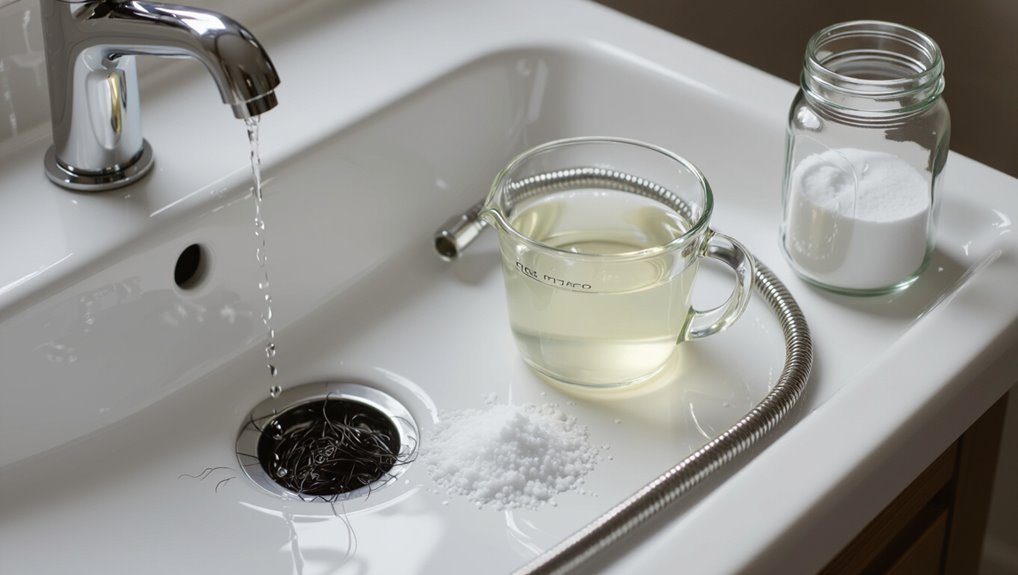
A concise overview of fast, effective DIY options—such as enzymatic additives, short-contact chemical drain cleaners, and mechanical tools like drain snakes—frames the available choices.
Guidance contrasts when a quick chemical treatment is appropriate (soft, recent clogs in durable pipes) versus when a mechanical approach is safer or more effective (stubborn, hair-heavy blockages or older/plastic plumbing).
Safety precautions and pipe compatibility should inform the selection of any rapid method.
Quick overview of effective DIY methods
Start with simple mechanical clearing—using a plunger, drain snake, or removable trap—to dislodge compacted hair and soap scum.
Then employ mild enzymatic cleaners, baking soda and vinegar rinses, or hot water flushes to break residues.
Regular brushing or screen installation prevents buildup.
These concise DIY tactics explain how to dissolve hair and soap scum in pipes quickly, safely, and with minimal tools.
When to use a fast chemical method versus a mechanical approach
When time is limited or a clog is recent and soft, a fast chemical method can rapidly dissolve hair and soap scum; conversely, when the blockage is longstanding, visible, or composed of compacted material, a mechanical approach is more reliable and less likely to damage pipes.
Chemical treatments suit slow buildup or soft clogs; mechanical tools (snake, auger, brush) suit dense, recurrent, or fibrous obstructions.
How Hair and Soap Scum Clog Pipes Simple Explanation
Hair consists mainly of keratin fibers while soap scum forms from fatty acid salts and mineral precipitates, giving both materials distinct chemical and physical properties.
In drains, fibers and sticky scum adhere to pipe walls and trap additional particles, gradually building restrictive layers that reduce flow.
Common materials like PVC, cast iron, and older galvanized pipes all collect buildup, with rough or corroded surfaces promoting faster accumulation.
What hair and soap scum are chemically and physically
Although often unseen until a blockage forms, the clogging material in household drains is a compacted mix of keratinous fibers shed from human and pet coats and insoluble fatty salts formed when soap reacts with hard-water minerals.
Hair provides a tangled physical matrix; soap scum consists mainly of calcium and magnesium stearates and other metal soaps. Together they create a porous, adherent mass resistant to simple rinsing.
How buildup forms in drains and pipes
The tangled keratin fibers and insoluble metal stearates described above act together to initiate and accelerate buildup inside drains.
Hair mats trap particles and slow flow, allowing soap scum to adhere and harden. Mineral deposits, oils, and organic debris accumulate, forming layers that reduce diameter and encourage further entrapment.
Over time bacterial biofilms bind layers into stubborn obstructions requiring mechanical or chemical removal.
Common pipe materials affected and why
Because different plumbing materials present varied surfaces and chemistry, some pipes are more prone to trapping keratin fibers and soap-derived salts than others.
Smooth PVC resists adhesion, while rough cast iron and older galvanized steel promote buildup. Copper’s patina can attract deposits; brass fittings vary.
Porous clay or concrete sewer lines accumulate grease and hair more readily, increasing blockage risk and slowing flow.
Immediate Actions to Clear a Slow or Clogged Drain
Before resorting to chemical cleaners, the article recommends simple safety steps such as wearing gloves, ensuring good ventilation, and removing standing water to reduce splash and chemical interaction.
Pouring boiling water in controlled amounts can soften soap scum and loosen hair when repeated carefully.
If that fails, manual removal with a drain snake or hooked tool is advised to physically extract the clog.
Safe first steps to take before using chemicals
Several simple checks can often resolve a slow drain without resorting to chemicals.
Inspect and remove visible debris from the stopper or strainer. Use a plunger to dislodge minor clogs, and retrieve accessible hair with a hooked tool or tweezers.
Verify that nearby vents are unobstructed and run water briefly to assess flow before considering chemical treatments.
Using boiling water effectively
Pouring boiling water down a slow drain can dissolve soap and hair residues quickly when used correctly.
The person should flush slowly in stages: pour a kettle, wait several minutes, then repeat two or three times to soften and wash away buildup.
For plastic pipes, allow water to cool briefly to prevent damage.
Follow with hot tap water to rinse remaining loosened debris.
Manual removal with a drain snake or hook
Use a drain snake or hooked wire to extract hair and soap scum lodged near the trap or just below the drain opening.
Work slowly, twisting and withdrawing to pull debris free. Inspect removed material and repeat until flow improves.
Sanitize the tool and flush the drain with hot water.
If resistance persists deeper in the pipe, consider a longer auger or professional help.
DIY Chemical Solutions That Dissolve Hair and Soap Scum
The section outlines practical DIY chemical approaches for dissolving hair and soap scum, starting with the common baking soda and vinegar reaction, including suggested ratios and step-by-step timing.
It then covers enzyme-based drain cleaners and a simple homemade enzymatic soak recipe with guidance on when and how long to apply them.
Finally, it warns about household chemicals that must never be mixed and explains the risks of dangerous reactions.
Baking soda + vinegar method ratios and process
Combine baking soda and vinegar in measured steps to create a foaming reaction that helps loosen hair and soap scum in drains without harsh chemicals.
Pour 1/2 cup baking soda into the drain, follow with 1 cup hot (not boiling) vinegar, cover for 5–10 minutes, then flush with boiling water.
Repeat weekly for maintenance or after slow drainage appears.
Enzyme-based drain cleaners when and how to use
Many enzyme-based drain cleaners employ bacteria and enzymes that specifically break down organic matter like hair and soap scum without corroding pipes.
They are best used as a preventive treatment or for mild clogs by following the manufacturer’s dosing, applying to standing or slow-moving water, allowing several hours (often overnight) for digestion, then flushing with hot water.
Use regularly, avoid mixing with harsh chemicals.
Homemade enzymatic/biological soak (recipe and timing)
Although not as fast-acting as chemical drain cleaners, a homemade enzymatic soak uses benign biological ingredients to digest hair and soap scum over several hours.
Typical recipes mix a source of enzymes (such as unflavored active dry yeast or whey), a feedstock for bacteria (a small amount of sugar), and warm water, applied to slow or standing drains and left undisturbed for 6–12 hours or overnight before flushing with hot water.
After treatment, repeat weekly until clear.
Household chemicals to avoid mixing and why
After describing benign biological soaks, attention turns to common household chemicals and why they must not be mixed.
Bleach plus ammonia yields toxic chloramines; bleach plus acids (vinegar, toilet cleaners) produces chlorine gas. Mixing different drain cleaners risks violent reactions and heat.
Solvents and oxidizers can ignite.
Advice emphasizes using single-product instructions, ventilating, and avoiding ad hoc combinations to prevent poisoning, burns, and pipe damage.
Commercial Products That Work Quickly
Commercial drain cleaners fall into three main categories—alkaline, acidic, and enzymatic—each with different speeds and suitability for dissolving hair and soap scum.
Selection should prioritize products labeled for hair and fatty buildup and indicate rapid action, while weighing material compatibility and environmental impact.
Users must follow label instructions closely and wear appropriate PPE (gloves, eye protection, and ventilation) to minimize chemical exposure.
Types of commercial drain cleaners (alkaline vs. acidic vs. enzymatic)
When a clog needs prompt attention, three main types of fast-acting drain cleaners are typically used: alkaline (caustic) formulas, acidic formulations, and enzymatic or bacterial products.
- Alkaline: dissolve hair and grease via strong bases; fast but corrosive to some pipes.
- Acidic: attack mineral buildup and organic matter; hazardous and not for all materials.
- Enzymatic: biologically break down organics slowly and safely for plumbing.
How to choose a fast-acting product for hair and soap scum
Select a product based on pipe material, clog composition, and required speed:
caustic (alkaline) cleaners act fastest on hair and grease but can damage older metal or PVC under repeated use;
acidic formulas clear mineral-forward blockages quickly but pose significant safety and material risks;
enzymatic/bacterial options are safer for pipes and septic systems but work slower and are less effective on dense hair mats.
Choose fast-acting branded gels for shallow clogs.
Safe usage guidelines and PPE recommendations
Several clear safety practices are essential before using fast-acting drain products on hair and soap scum.
Users should read labels, guarantee ventilation, and keep children and pets away.
Wear chemical-resistant gloves, eye protection, and long sleeves; avoid inhalation and skin contact.
Never mix products or use near open flames.
Have baking soda and vinegar or plenty of water on hand for neutralization.
Step-by-Step Removal Process for Stubborn Buildup
Before beginning, the area around the drain should be cleared and protected and appropriate safety gear put on.
The process proceeds in stages: an initial mechanical clearing to remove visible clogs, targeted application of a chemical treatment if needed, and a thorough flush followed by a flow test.
Guidance will also cover criteria for repeating the cycle or stopping when the buildup is resolved.
Preparing the drain and work area
A clear, well-lit workspace and the right basic tools are essential before tackling stubborn hair and soap scum in a drain.
Remove nearby items, protect surfaces with towels or plastic, ventilate the area, and assemble gloves, eye protection, a bucket, and basic hand tools.
Guarantee access to running water and a phone for emergencies; confirm good lighting and stable footing.
Step 1: Mechanical clearing
Begin by accessing the trap or strainer to expose the blockage and assess its location and composition.
Use gloves and tools—zip tool, plunger, plumber’s snake, or removable brush—to pull or dislodge hair and scum.
Work gently to avoid pipe damage, clearing visible debris into a bucket.
Reassemble and run water to verify improved flow before proceeding to any chemical treatment.
Step 2: Chemical treatment application
Proceed with chemical treatment only after confirming that mechanical clearing removed loose debris and the drain still drains poorly.
The person selects an appropriate product (enzyme cleaner for organic buildup or caustic agent for stubborn scum), follows label instructions, uses personal protective equipment, applies measured dose into the drain, allows recommended dwell time, vents the area, and avoids mixing chemicals to prevent dangerous reactions.
Step 3: Flushing and testing flow
Flush the line with hot water and observe flow to confirm whether the chemical treatment and prior mechanical work cleared the obstruction.
Run water for several minutes, checking for steady, rapid drainage and reduced gurgling.
Inspect nearby fixtures for leaks.
If flow is improved, finish by flushing with cold water to clear residues and reinstall covers.
Record results for future reference.
When to repeat and when to stop
When should the treatment be repeated and when should work stop depends on observable performance and safety limits: if water drains steadily with no backups, gurgling, or odor after the prescribed flushing and a camera or visual inspection shows clear passage, further chemical or mechanical action is unnecessary.
If partial flow returns, slow drainage persists, or recurring blockage appears within 24–72 hours, a single safe repeat of the chosen method is justified. However, if multiple repeats fail, corrosion, pipe damage, or deeper obstructions are likely and professional assessment is required.
If symptoms persist after one repeat, stop DIY attempts. Note signs of leakage, strong chemical smells, or metal pitting. Call a licensed plumber for CCTV inspection and targeted repairs to avoid worsening damage or voiding warranties.
Preventive Measures to Reduce Future Hair and Soap Scum Buildup
Practical prevention focuses on simple daily habits that reduce the amount of hair and soap entering drains.
Installing and regularly cleaning drain strainers captures debris before it accumulates.
Complementary periodic DIY maintenance routines, such as hot-water flushes and mild enzyme treatments, help keep pipes clear over time.
Simple daily habits to minimize buildup
Adopting a few straightforward daily habits can greatly reduce hair and soap scum buildup before it becomes a problem.
Regularly rinsing surfaces, wiping down shower walls and faucets after use, using less greasy soaps or body washes, and removing visible hair from drains after each use prevents accumulation.
Small, consistent actions reduce blockages, extend pipe life, and limit the need for harsh chemical cleaning.
Installing and maintaining drain strainers
Several simple drain strainers can dramatically cut hair and soap scum entry into pipes by capturing debris before it moves down the drain.
Types include mesh, silicone, and basket models sized for sinks, tubs, and showers.
Proper installation guarantees a snug fit; occasional inspection and debris removal keep strainers effective.
Replacing damaged strainers prevents bypass and prolongs pipe cleanliness.
Periodic DIY maintenance routines
Establish a simple, regular maintenance routine to keep hair and soap scum from accumulating in drains:
- weekly removal of visible debris from strainers,
- monthly flushing with hot water,
- and quarterly use of an enzyme-based or mild alkaline cleaner to break down buildup.
Periodic mechanical checks with a drain snake, prompt cleaning of shower walls and fixtures, and keeping soaps and conditioners minimal prevent recurrence and extend pipe life.
Troubleshooting Common Problems
If a drain remains slow after attempting treatments, the next steps include repeating mechanical clearing, checking adjacent fixtures, and testing with a plumbing auger.
Persistent resistance, sewage odors, or multiple slow drains suggest the clog sits deeper in the plumbing system. In those cases, or if home remedies fail, a professional plumber should be contacted to inspect and resolve the issue.
Drain still slow after treatments next steps
When a drain remains slow after typical hair and soap-scum treatments, further diagnostic and mechanical steps become necessary to identify persistent blockages or underlying plumbing issues.
Inspect accessible traps and clean debris, use a hand auger or drain snake to reach deeper, and test flow incrementally.
If resistance persists, consult a licensed plumber for camera inspection and safe resolution beyond DIY scope.
Signs the clog is deeper in the plumbing system
Although superficial blockages often respond to plunging and snaking, clues that a clog lies deeper in the plumbing system include multiple fixtures backing up simultaneously, slow drainage that worsens after heavy use, gurgling sounds from traps, sewage odors, and clean-water backups.
These symptoms indicate obstruction beyond the accessible trap or individual branch line and usually require inspection with a camera or professional intervention.
Persistent localized wet spots, repeated quick re-clogs, and unusual pressure changes also signal deeper issues.
When to call a professional plumber
Signs that a clog is deeper in the system often indicate the limits of DIY fixes and signal the point to call a professional plumber.
A plumber should be contacted when multiple fixtures back up, persistent odors, slow drains after repeated treatments, or recurring clogs occur.
Also call for visible sewage, water damage, or failed snake attempts; professionals have tools and expertise to diagnose and repair safely.
Safety, Environmental, and Pipe-Compatibility Considerations
Care should be taken when selecting drain treatments because highly corrosive chemicals can damage metal pipes, seals, and fixtures over time.
The environmental consequences of chemical cleaners, including aquatic toxicity and wastewater contamination, warrant consideration of less harmful alternatives.
Proper neutralization and disposal of residual chemicals, along with manufacturer guidance, minimize risks to plumbing and the environment.
Risks of corrosive chemicals to pipes and fixtures
Discusses the risks of using highly corrosive chemicals in drains and on fixtures, emphasizing that effectiveness against hair and soap scum can come with material damage, hazardous fumes, and environmental harm.
Such agents can pit or weaken metal pipes, degrade PVC seals, and strip finishes on faucets.
Repeated use shortens fixture lifespan, increases leak risk, and poses inhalation and contact hazards requiring ventilation and protective gear.
Environmental impact of chemical drain cleaners
Beyond immediate damage to plumbing and fixtures, chemical drain cleaners carry broader environmental and public-health implications.
Their reactive ingredients can persist in wastewater, harming aquatic life and disrupting ecosystems.
Volatile fumes and residues pose inhalation and skin risks for sewer workers and residents.
Chemical mixtures can interfere with municipal treatment processes, increasing treatment costs and creating hazardous byproducts that require specialized handling.
Safe disposal and neutralization tips
When neutralizing and disposing of drain-cleaning residues, prioritize methods that protect people, plumbing, and the environment:
contain spills, dilute reactive chemicals with plenty of cold water only when the product label permits, and never mix different cleaners.
Wear gloves and eye protection, ventilate, and use designated containers.
Neutralize acids with baking soda, alkalis with vinegar, then flush per label.
Dispose at hazardous-waste sites if unsure.
Comparison of Methods for Speed, Safety, Cost, and Effectiveness
The following brief comparison highlights speed, safety, cost, and overall effectiveness across common approaches to clearing hair and soap scum. Below is a concise table summarizing fastest methods, most environmentally friendly options, and best value for recurring maintenance to guide selection. Readers can use this as a quick reference before choosing a specific technique.
| Category | Top pick |
|---|---|
| Fastest methods ranked | Mechanical snaking and enzyme foams |
| Most environmentally friendly options | Enzyme cleaners and baking soda + vinegar |
| Best value for recurring maintenance | Enzyme-based maintenance treatments |
Fastest methods ranked
Speed matters most in emergency clogs, so this section ranks common treatments—mechanical clearing, enzyme/biological cleaners, chemical drain cleaners, and hot water/household mixtures—by how quickly they restore flow.
Mechanical clearing (plungers, augers) is fastest for immediate removal.
Chemical cleaners act fast but carry risks.
Hot water/household mixes work moderately for fresh buildup.
Enzymes take longest but continue working over time.
Most environmentally friendly options
Several approaches reduce environmental impact while addressing hair and soap scum in pipes, and they can be compared across speed, safety, cost, and effectiveness to guide choices.
Enzymatic cleaners score high for safety and biodegradability but act slower; baking soda plus vinegar is low-cost and safe yet moderately effective.
Mechanical methods (snake, brush) are immediate, chemical-free, and cost-effective but require effort and proper technique.
Best value for recurring maintenance
When recurring maintenance is the priority, evaluating methods by speed, safety, cost, and long-term effectiveness reveals which options deliver the best value:
Regular mechanical cleaning (drain snakes, hair-catching strainers) paired with occasional enzyme treatments balances fast results, low risk, and modest expense.
Avoid harsh chemical drain cleaners for routine use; they’re cheaper short-term but risky and damaging over time.
Practical Maintenance Schedule and Checklist
A concise maintenance schedule helps prevent clogs and prolongs pipe life by assigning simple tasks at regular intervals. Recommended routines include weekly, monthly, and seasonal actions along with a short checklist of essential products and tools to keep on hand.
The following list highlights the core items and frequencies for routine care.
- Weekly: hair catchers, quick hot-water flush, and remove visible debris.
- Monthly: enzyme cleaner or mild chemical treatment, inspect pop-up stoppers, and test water flow.
- Seasonal: deeper mechanical cleaning, check trap seals and vents, and restock replacement parts and protective gear.
Weekly, monthly, and seasonal tasks
To keep drains flowing and prevent buildup from becoming stubborn blockages, establish a concise maintenance schedule that assigns specific weekly, monthly, and seasonal tasks.
Weekly: clear visible hair, run hot water, use a drain screen.
Monthly: flush with a baking soda and vinegar cycle, inspect traps, remove minor clogs with a drain snake.
Seasonally: deep-clean P-traps, check venting, schedule professional inspection if recurring issues appear.
Products and tools to keep on hand
Several essential items guarantee quick response to hair and soap scum buildup: a fine-mesh drain screen, a hand-held drain snake or zip-it tool, a bottle brush for trap cleaning, a box of baking soda and a bottle of white vinegar for periodic flushes, a plunger sized for sinks, and a pair of nitrile gloves.
Also keep adjustable pliers, a flashlight, replacement washers, plumber’s tape, enzyme drain cleaner, and a small waste bin for removed debris.
Real-Life Scenarios and Recommended Solutions
The article presents common real-life clog situations and concise remedial steps.
It outlines a targeted plan of action for a bathroom sink prone to hair accumulation, a focused treatment for shower drains clogged by dense soap scum, and combined tactics for tubs with both hair and grease buildup.
Each scenario pairs simple preventive measures with practical removal techniques tailored to the specific blockage.
Bathroom sink with frequent hair clogs plan of action
Addressing frequent hair clogs in a bathroom sink requires a practical, stepwise plan that balances immediate fixes with preventive measures.
Begin with manual removal and a plunger, then clear the P-trap for stubborn blockages.
Use enzyme drain cleaners periodically, avoid harsh chemicals, and install a screen to catch hair.
Schedule regular cleaning and educate users to minimize shedding and product buildup.
Shower drain with heavy soap scum targeted approach
Multiple real-life scenarios show shower drains clogged by dense, greasy soap scum that traps hair and dirt, reducing flow and creating odors.
A targeted approach combines mechanical removal, periodic enzymatic treatments, and adjusted bathing habits (lighter soaps, rinsing after use) to restore and maintain drainage without harsh chemicals.
Regular scraping, nylon drain screens, monthly enzyme soaks, and occasional hot-water flushing prevent recurrence and odor buildup.
Bathtub drain with combined hair and grease buildup
Often clogged bathtub drains result from a compacted mix of hair, body oils, and soap residue forming a sticky, grease-laden mat that traps additional debris and slows drainage.
A recommended solution combines mechanical removal (pluck or snake) with enzymatic or mild alkaline cleaners to dissolve oils.
Follow with hot water flushes and routine enzyme maintenance to prevent recurrence; avoid harsh caustics on older pipes.
Conclusion
In conclusion, the guide distills fast, practical ways to dissolve hair and soap scum in pipes, balancing quick fixes with longer-term prevention. Readers learn immediate actions, DIY and commercial options, and safety considerations so they can act without delay. When choosing a method, one size rarely fits all; matching speed, cost, and pipe compatibility avoids new problems. With routine maintenance and informed choices, clogs can be kept at bay, easy as pie.