How to Fix Short Cycling AC: 9 Troubleshooting Steps to Stop Constant Cycling
Direct Answer to Fix Short Cycling AC:
Short cycling occurs when your air conditioner frequently turns on and off before completing its cooling cycle, leading to energy waste and increased wear on components. To resolve this issue, start by checking and replacing clogged filters, ensuring proper thermostat placement and calibration, and inspecting for refrigerant leaks. Additionally, clean the evaporator and condenser coils, test safety switches and sensors, and evaluate the system’s sizing. Power-cycling the unit may help, but for refrigerant, compressor, or electrical problems, it’s best to consult a licensed HVAC technician. This guide will also cover costs, prevention tips, and detailed troubleshooting steps.
What Short Cycling Is and Why It Matters
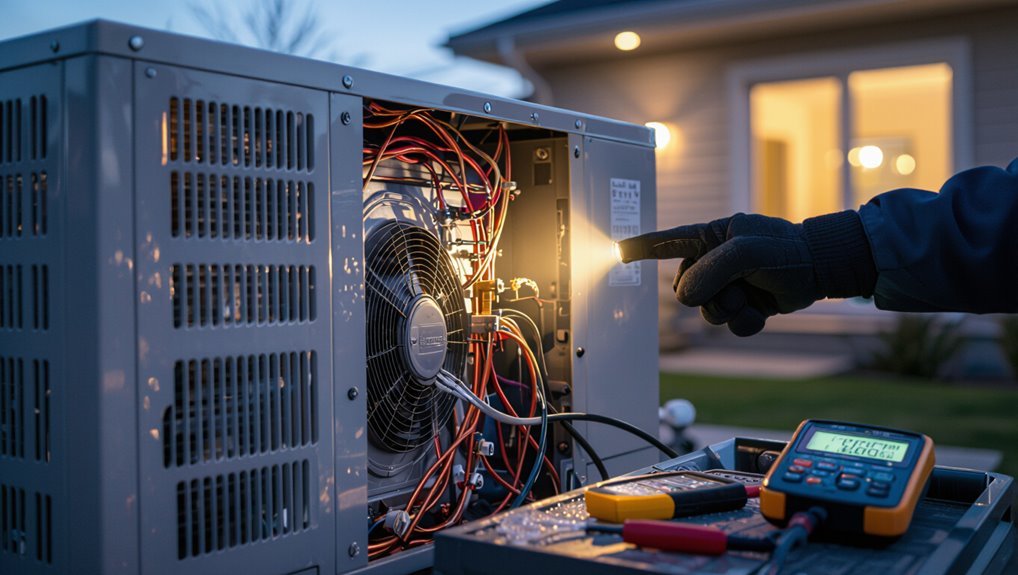
Short cycling occurs when an air conditioning unit turns on and off repeatedly before completing a normal cooling cycle.
Common signs include frequent short run times, wide temperature swings, and unusual noises or increased energy bills.
If left unaddressed, short cycling can cause premature equipment wear, higher operating costs, and potential system failure.
Definition of short cycling in AC systems
A short cycling air conditioner repeatedly turns on and off before completing a normal cooling cycle, running for only a few minutes at a time instead of sustaining operation until the thermostat setpoint is reached.
This malfunction reduces comfort, increases wear, raises energy bills, and shortens component life.
Understanding the definition is essential when learning how to fix short cycling AC and prioritize targeted diagnostic steps.
Common signs that your air conditioner is short cycling
Having established what short cycling is and why it harms an HVAC system, the next focus is recognizing its telltale signs.
Frequent on/off cycles, especially within 10–15 minutes; inadequate cooling despite repeated starts; unusually high utility bills; audible short bursts from the compressor; rapid thermostat fluctuations; and visible ice buildup on coils.
Noting these indicators prompts timely diagnostics and corrective action.
Risks and consequences of ignoring short cycling
Ignore recurring short cycling at a system’s peril: continued rapid on/off cycles accelerate wear on the compressor and related components, reduce cooling efficiency, raise energy bills, and increase the likelihood of costly failures that can require premature replacement.
Ignoring it also shortens equipment lifespan, strains electrical circuits, promotes refrigerant and oil imbalances, and undermines comfort and indoor air quality, creating larger repair bills and downtime.
Quick Diagnosis: How to Confirm Your AC Is Short Cycling
A homeowner can start by watching the system and noting whether the compressor and fan cycle on and off several times within an hour, which often indicates short cycling.
They should record precise run and off durations over a few cooling cycles—use a stopwatch or phone timer to log times for later comparison.
For more accuracy, a clamp meter, temperature sensors, or a simple data logger can help confirm frequent cycling and identify underlying issues.
Simple checks to observe cycling frequency
How can one tell if an air conditioner is short cycling?
Observe condenser fan and compressor starts: frequent on/off within 5–15 minutes suggests short cycling.
Listen for repeated startup noises and note abrupt temperature swings in the conditioned space.
Check thermostat display for rapid changes, verify outdoor unit cycles independently of setpoint adjustments, and guarantee no regular schedule or external control is causing the pattern.
When to record run and off times
When should run and off times be recorded to confirm short cycling?
Record immediately after the system starts cooling and during steady conditions, noting consecutive cycles over 30–60 minutes.
Log each compressor on and off timestamp, ambient indoor temperature, and thermostat setting.
Compare average run time versus off time; repeated short runs under 8–10 minutes indicate short cycling and warrant further diagnosis.
Tools and equipment to help diagnose short cycling
Several basic tools and a few specialized instruments make confirming short cycling faster and more reliable.
Technicians use compact diagnostics to log cycles, measure voltages, and verify refrigerant and airflow.
Common items include:
- Multimeter for voltage, continuity, and capacitor checks
- Thermometer or infrared gun for temperature split and coil readings
- Stopwatch or cycle logger to record run/off intervals accurately
9-Step Troubleshooting Sequence to Fix Short Cycling
The following nine-step troubleshooting sequence guides a systematic check of common causes of short cycling.
It begins with basic airflow and thermostat issues—checking and replacing a dirty air filter, confirming thermostat placement and settings, and verifying thermostat calibration and wiring.
The sequence then progresses to refrigeration and coil concerns by examining refrigerant levels for leaks and cleaning evaporator and condenser coils.
Step 1 Check and replace a dirty air filter
Inspect the air filter visually and by touch to determine if dust, lint, or debris has restricted airflow.
A clogged filter forces the system to cycle more frequently, reducing efficiency and stressing components.
Replace disposable filters or clean reusable ones per manufacturer guidance.
After servicing, monitor runtime; improved continuous operation indicates the filter was the likely cause of short cycling.
Step 2 Inspect thermostat placement and settings
With the air filter addressed, attention turns to the thermostat’s placement and settings to rule out false temperature readings that trigger short cycling.
Verify the thermostat is mounted on an interior wall away from sunlight, drafts, appliances, or vents.
Confirm mode, fan, and temperature setpoints are appropriate and that programmable schedules or setback functions are not causing frequent on/off cycles.
Step 3 Verify thermostat calibration and wiring
Before proceeding to more complex repairs, confirm the thermostat is accurately reading temperature and that its wiring connections are secure and properly labeled. Incorrect calibration or loose/incorrectly paired wires commonly cause rapid cycling by miscommunicating with the HVAC control board.
Test calibration with a reliable thermometer, adjust settings if needed, tighten or relabel terminal connections, and replace damaged thermostats or wiring to restore stable control.
Step 4 Examine refrigerant levels and signs of leaks
Next, the technician checks refrigerant charge and searches for leaks, since low or leaking refrigerant commonly causes short cycling by triggering pressure-related safety switches or degrading heat transfer.
They measure system pressures and superheat/subcooling, inspect service ports, fittings, and visible tubing for oil stains, use electronic leak detectors or UV dye as needed, and document findings before recommending recharge or repair.
Step 5 Clean evaporator and condenser coils
Inspect the evaporator and condenser coils for dirt, debris, and corrosion, since restricted airflow and poor heat transfer from fouled coils are common causes of short cycling.
Clean coils using a soft brush, coil cleaner, and low-pressure water rinse; avoid bending fins.
Guarantee panels and drains are replaced and unobstructed.
Scheduling professional coil service is recommended if corrosion, heavy buildup, or leaks are present.
Step 6 Ensure proper airflow: vents, ducts, and blower motor
Verify that airflow through the system is unobstructed by checking vents, return grilles, ductwork, and the blower motor, since restricted airflow is a leading cause of short cycling.
Inspect and clear blockages, replace dirty filters, tighten loose duct connections, and confirm the blower motor spins freely at correct speed.
Measure static pressure if available and restore balanced supply and return flow to reduce cycling.
Step 7 Test and troubleshoot the compressor and contactor
With airflow confirmed, attention shifts to the compressor and contactor, components that directly control refrigerant flow and the system’s on/off cycling.
Inspect the contactor for pitting, burning, or stuck contacts and test coil voltage during a call.
Measure compressor amp draw and compare to nameplate specifications; abnormal readings suggest motor issues or internal shorting.
Replace faulty parts and retest cycling.
Step 8 Assess and replace faulty safety switches and sensors
Begin by examining the system’s safety switches and sensors, since a single faulty device can trigger repeated shutoffs even when airflow and refrigeration appear normal.
Inspect float switches, high-pressure and low-pressure cutouts, and discharge temperature sensors for corrosion, loose wiring, or erratic readings.
Replace malfunctioning components with manufacturer-approved parts, then recalibrate or test operation to confirm cycling stops.
Step 9 Check for oversized or incorrectly sized equipment
Consider whether the air conditioner itself is the cause: oversized or incorrectly sized equipment can short cycle because it cools the space too quickly, never running long enough to complete normal dehumidification and stable refrigerant cycles.
A professional load calculation identifies proper capacity. If oversized, replacement or system modifications (zoning, variable-speed equipment, or airflow adjustments) restore run times, humidity control, and efficiency.
When to Call a Professional HVAC Technician
Certain short-cycling causes—such as refrigerant leaks, compressor failure, or electrical faults—require a licensed HVAC technician for safe, code-compliant repairs.
The technician will perform a systematic diagnosis, explain findings and recommended fixes, and provide cost and timeline estimates.
Homeowners should be ready to describe symptom history, recent changes or maintenance, and ask about warranties, permits, and estimated repair steps.
Problems that require licensed intervention
When short cycling persists despite basic troubleshooting, it indicates issues that exceed homeowner skills and tools and require a licensed HVAC technician.
Problems needing licensed intervention include refrigerant leaks, compressor failure, electrical faults, control board or sensor malfunctions, and blocked or damaged condenser coils needing specialized equipment.
Attempting repairs without certification risks further damage, safety hazards, and voided warranties; call a qualified professional.
What to expect from a professional diagnosis and repair
Callouts and tests performed by a licensed HVAC technician follow a systematic process: inspection of airflow and refrigerant levels, electrical and control diagnostics, compressor and motor evaluation, and examination of the condenser and evaporator for blockages or damage.
The technician provides a clear diagnosis, documents findings, explains required repairs or parts, gives cost and timeline estimates, and implements safety-compliant repairs or recommends replacement when warranted.
Questions to ask and information to provide the technician
After the technician outlines findings and recommended actions, homeowners should be prepared with specific questions and relevant information to guarantee an efficient visit.
Relevant details aid diagnosis and authorize repairs. Ask about expected causes, required parts, and warranties. Provide clear system history and recent changes.
- Model/serial number and age
- Symptom timeline and thermostat settings
- Recent maintenance or modifications
Cost Estimates for Common Repairs
Typical price ranges for common fixes—replacement filters, thermostat swaps, refrigerant recharge, and compressor repairs—vary widely depending on parts and labor.
Costs are influenced by unit type, system age, geographic location, and whether warranties or emergency services apply.
The following section outlines ballpark figures and the main factors that can raise or lower final invoices.
Typical price ranges: filters, thermostats, refrigerant, compressor
Repair costs for short-cycling air conditioners vary widely depending on the failed component and labor rates, but common fixes—filters, thermostats, refrigerant recharges, and compressors—fall into recognizable price bands that help homeowners budget for service.
Basic filter replacement: $10–$75.
Thermostat replacement: $100–$400.
Refrigerant recharge: $150–$450.
Compressor replacement: $800–$2,500, depending on system size and complexity.
Factors that influence repair costs
Those broad price ranges provide a starting point, but actual costs depend on several factors that influence labor and parts pricing. Technicians, warranty status, part availability, and system complexity each alter estimates. Travel fees and emergency service raise labor. Seasonal demand and diagnostic time further affect totals.
| Factor | Impact |
|---|---|
| Technician skill | Higher labor |
| Parts availability | Delays/costs |
Preventive Measures to Stop Short Cycling from Returning
A clear preventive approach begins with a concise maintenance checklist covering filter changes, coil cleaning, refrigerant checks, and airflow inspections.
A recommended schedule for homeowners—monthly basic checks, quarterly professional inspections, and annual thorough service—helps catch issues early.
Strategic upgrades such as smart thermostats, zoning systems, and ensuring proper unit sizing further reduce the likelihood of recurrence.
Regular maintenance checklist
Regular inspections and seasonal servicing form the backbone of a preventive maintenance checklist to keep short cycling from returning.
A concise checklist focuses on system health, airflow, controls, and clean components. Routine tasks reduce failures and detect issues early:
- Check and replace filters; inspect ducts for obstructions.
- Verify thermostat calibration and wiring.
- Clean coils, drain lines, and outdoor unit debris.
Recommended maintenance schedule for homeowners
Building on routine inspections and seasonal servicing, a homeowner-friendly maintenance schedule breaks tasks into quarterly, biannual, and annual actions to prevent short cycling from returning.
Quarterly: check filters, clear debris, verify thermostat batteries.
Biannual: clean coils, inspect refrigerant lines, tighten electrical connections.
Annual: professional tune-up, system performance test, duct inspection and sealing.
Record dates and findings for trend tracking.
Upgrades that reduce recurrence (smart thermostats, zoning, proper sizing)
Several targeted upgrades can greatly lower the chance of short cycling returning: installing a smart thermostat to optimize run cycles, adding zoning to balance load and reduce rapid on/off demand, and guaranteeing the system is properly sized for the home.
These measures stabilize temperature control, reduce unnecessary starts, and improve efficiency.
Professional assessment guarantees correct zoning design and accurate load calculations to prevent recurrence.
Troubleshooting Scenarios and Solutions
The article presents three common troubleshooting scenarios and concise remedies to address each.
First, it examines short cycling that occurs only on very hot days, outlining probable causes such as undersized equipment, insufficient airflow, or overheating safety limits and corresponding fixes.
Next, it covers units that cycle immediately after startup and intermittent cycling with electrical noise, pairing likely diagnoses—thermostat faults, refrigerant issues, loose wiring, or failing control boards—with targeted corrective actions.
Scenario: AC short cycles only on very hot days likely causes and fixes
When an air conditioner begins to short cycle only during extreme heat, it indicates the system is struggling under peak load conditions rather than failing continuously.
Diagnosing this pattern narrows likely causes to issues that manifest under high demand, such as refrigerant problems, airflow restrictions, or an inadequately sized or failing compressor.
Technicians should check refrigerant charge, condenser airflow, dirty coils, refrigerant lines, thermostat placement, and consider capacity shortfall or overheating compressor.
Scenario: Unit cycles immediately after startup likely causes and fixes
Diagnose immediately cycling units by focusing on causes that interrupt normal run time right at startup: shorted or stuck relays and contactors, faulty start capacitors or motors, rapid pressure trips from safety switches (high/low refrigerant pressure or float switches), blocked condensate drains, or incorrect thermostat wiring/settings.
Inspect electrical contacts, test capacitors and motor amperage, check pressure switches and refrigerant levels, clear drains, and verify thermostat configuration.
Replace faulty components.
Scenario: Intermittent cycling with electrical noise likely causes and fixes
Investigate intermittent cycling accompanied by electrical noise as a likely sign of unstable control signals, failing relays/contactors, or intermittent power quality issues.
Check control board connections, grounding, and signal wiring for corrosion or loose terminals.
Listen for buzzing contactors; replace if pitted.
Test supply voltage for drops or transients and install surge protection or line conditioning.
Verify thermostat wiring and swap to isolate controller faults.
Energy and Comfort Impact of Fixing Short Cycling
Fixing short cycling directly improves system efficiency, reducing energy consumption and lowering utility bills.
It also stabilizes indoor temperatures, enhancing occupant comfort by preventing rapid on-off temperature swings.
Additionally, addressing the issue reduces wear on components, extending equipment lifespan and decreasing maintenance costs.
How resolving short cycling improves efficiency and lowers bills
Resolving short cycling restores a system’s ability to run longer, more consistent cooling or heating cycles, which reduces energy wasted during frequent startups and stabilizes indoor temperatures.
As a result, utility bills typically decline and occupant comfort improves. Reduced cycling also lowers compressor and fan runtime peaks, improving seasonal energy efficiency ratios and cutting monthly consumption.
Predictable operation enables more accurate thermostat setbacks and billing savings.
Effect on indoor comfort and equipment lifespan
Improved comfort and prolonged equipment life result when an air conditioning system operates through full, steady cycles rather than stopping and starting frequently.
Consistent runtimes stabilize indoor temperatures, reduce humidity swings, and improve air distribution.
Reduced mechanical stress lowers compressor and fan wear, extending component lifespan and decreasing repair frequency.
Quick Reference Checklist for Homeowners
Homeowners should first take immediate, safe steps when short cycling is noticed, such as checking the thermostat settings, clearing debris from outdoor units, and power-cycling the system.
They should also record key details before calling a technician: equipment model and serial numbers, a concise list of symptoms, and the timing and frequency of short cycles.
Having this checklist on hand speeds diagnosis and reduces unnecessary service time.
Immediate actions to take if you notice short cycling
Act quickly when an air conditioner begins short cycling: first check the thermostat settings and battery, then inspect the outdoor unit for airflow obstructions, and confirm the air filter is clean—these simple steps can often identify or temporarily mitigate the problem before calling a professional.
Recommended immediate actions:
- Power-cycle the system at the breaker for 5 minutes.
- Clear debris around the condenser.
- Replace or clean the return filter promptly.
Information to record before contacting a pro (model, symptoms, timings)
Before contacting a technician, gather clear details about the system and the problem so the service call is efficient and diagnostic steps can begin immediately.
Note make, model, and serial number; thermostat type and settings; observed symptoms (short cycles, noises, odors); cycle durations and time of day; recent maintenance or changes; ambient temperature and humidity; any error codes or blinking lights.
Conclusion
After reading a guide on stopping an air conditioner’s exhausting habit of short cycling, the homeowner is left oddly relieved: the machine that dramatically refused to behave simply wanted routine care, a stuck sensor, or a clogged filter. Ironically, what felt like a mechanical conspiracy boiled down to small fixes and sensible maintenance. The cooling chaos quiets not with heroics but with basic attention—an anticlimactic, practical victory over needless interruptions and higher bills.