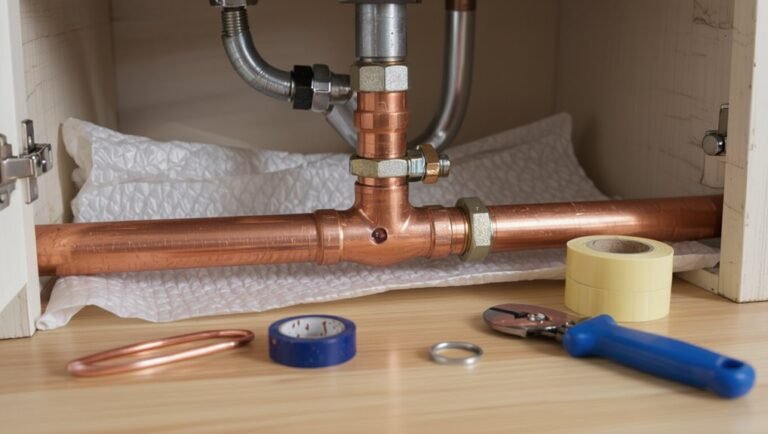
How to Check Hot Water Temperature at Home: Simple Methods for Accurate Results
To check the hot water temperature at home, use a digital probe thermometer, kitchen thermometer, or infrared gun. Simply run the hot tap for 1–2 minutes to clear any cooled water, then measure the temperature at the faucet or showerhead. For accurate results, ensure the probe is submerged in the water flow without touching metal and wait for the reading to stabilize. For verifying the heater’s performance, check the temperature at the outlet after 30–60 minutes of standby. Keep the readings in line with the recommended safety guideline of 120°F, and refer to further information for tools, timing, adjustments, and safety precautions.
How to Quickly Check Your Hot Water Temperature at Home
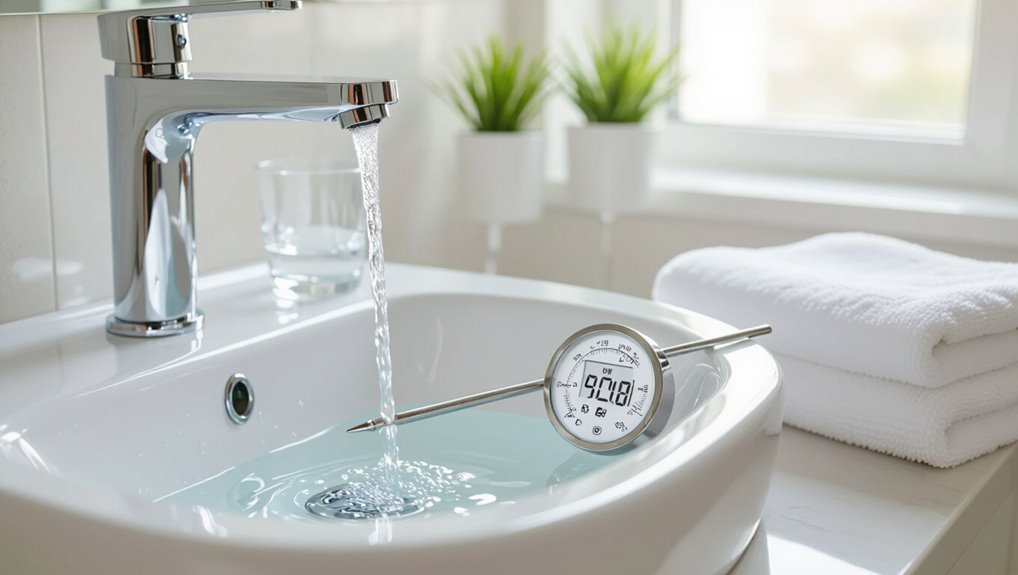
Homeowners should know that safe hot water temperatures vary by use: about 120°F (49°C) for general household use and lower for infants or those at risk of scalding.
A simple quick check is to run the hot tap for a minute and measure with a kitchen or instant-read thermometer placed under the flow. Recording this immediate reading helps confirm the water heater’s setting and identify when adjustments are needed.
What safe hot water temperatures look like for different uses
Because different tasks require different levels of heat, recognizing safe hot water temperatures for specific uses helps prevent burns and guarantees effective cleaning.
Recommendations:
- 120°F (49°C) for household taps to limit scald risk;
- 140°F (60°C) for sanitizing dishes and laundry where needed;
- 100–110°F (38–43°C) for bathing infants or elderly.
For guidance on how to check hot water temperature, use a thermometer.
One-sentence quick method to get an immediate reading
Run the hot tap for a minute, hold a digital instant-read thermometer probe under the stream, and read the temperature to get an immediate and reliable hot water measurement.
This quick method provides an accurate reading within seconds, requires minimal equipment, and reduces guesswork.
Confirm the probe is submerged without touching fixtures, avoid splashing, and interpret results against safety guidelines for bathing, dishwashing, or sanitizing.
Tools You Can Use to Measure Hot Water Temperature
A range of tools can assess hot water temperature, each with trade-offs in accuracy and convenience. Common options include kitchen or meat thermometers, infrared devices, and digital probe thermometers.
Plumbing fixtures like thermostatic mixing valves and water heater gauges provide built-in readings.
Smartphone apps and DIY sensors are available but require a reliability checklist before trusting their results.
Kitchen or meat thermometer pros and cons
Several common kitchen or meat thermometers can double as quick tools for checking hot tap water, offering fast readings and easy availability.
Pros: affordable, simple to use, accurate when fully immersed to probe tip, and widely accessible.
Cons: many aren’t rated for continuous immersion, probes may warp in very hot water, response time varies, and calibration can drift without checks.
Infrared thermometer when it works and limitations
Infrared thermometers measure surface temperature from a distance by detecting emitted infrared radiation, making them fast and contactless tools for evaluating hot tap water when used correctly.
They work well for measuring exposed metal fixtures, water surface, and flow when emissivity is appropriate and reflections are minimal.
Limitations include inability to read submerged temperature, emissivity errors, reflections, and narrow spot size at distance.
Digital probe thermometer accuracy and best practices
Use a digital probe thermometer to get direct, reliable readings of hot water temperature by inserting the probe into a steady stream or a collected sample.
Calibrate periodically, confirm the probe tip is fully submerged without touching metal, and wait for the reading to stabilize.
Prefer food-grade or waterproof probes with suitable temperature range and fast response for accurate, repeatable measurements.
Thermostatic mixing valve and built-in water heater gauges
Although often overlooked, thermostatic mixing valves (TMVs) and built-in water heater gauges provide convenient, on-site ways to monitor and control hot water temperature.
TMVs blend hot and cold water to a set delivery temperature at fixtures, while integrated gauges or thermostats on heaters indicate storage or outlet temperature.
These devices offer immediate readings and stable outputs, aiding safety, scald prevention, and quick verification during maintenance or system adjustments.
Smartphone apps and DIY sensors reliability checklist
How reliable are smartphone apps and DIY sensors for checking hot water temperature at home? Users should verify calibration, sensor placement, and response time.
Cross-check readings with a calibrated thermometer, inspect for waterproofing and battery or connectivity issues, and review app update history and user feedback.
Avoid relying on a single low-cost device for safety-critical measurements without confirmation.
Step-by-Step Methods to Measure Hot Water Temperature
The following concise procedures outline common ways to verify hot water temperature around the home.
- Measure at the tap with a digital probe
- Measure from the showerhead
- Use an infrared thermometer correctly
- Check temperature at the water heater outlet and tank
Each method offers different accuracy and access considerations that will be explained next.
Measure at the tap with a digital probe
Place a digital probe thermometer directly in the flow at the faucet to obtain an immediate, accurate reading of hot water temperature.
Guarantee the probe tip is centered in the stream without touching metal. Run water until steady temperature, read display, and note degrees.
Repeat for different faucets if needed. Sanitize probe before and after use and follow manufacturer calibration guidance.
Measure from the showerhead
After checking a sink faucet, a showerhead offers a convenient spot to verify hot water temperature under typical household flow conditions.
Turn the shower to full hot, let it run until stable, then collect water in a metal cup or directly place a thermometer probe into the steady stream.
Record the temperature, note any fluctuation, and compare with safety and comfort guidelines.
Use an infrared thermometer correctly
Several quick steps confirm accurate readings when using an infrared thermometer on hot water: Aim at a steady stream or pooled surface, maintain the recommended distance, and make certain the device’s emissivity is set for water (about 0.95).
Avoid measuring through steam or splashes. Wait for the reading to stabilize and record the temperature.
Clean and recalibrate the sensor periodically for reliability.
Check temperature at the water heater outlet and tank
Inspecting the water heater outlet and tank provides the most direct and reliable indication of the system’s set temperature and any deviations caused by thermostat settings or mixing valves.
Measure at the hot outlet with a calibrated probe thermometer, allow flow until stable, then record.
Check the tank surface near the thermostat for consistency and note discrepancies indicating thermostat miscalibration, sediment, or bypass valve issues.
Where and When to Test for Accurate Results
Testing at the water heater and at individual faucets yields different information: the heater shows set temperature while faucets reveal delivered temperature after heat loss.
Measurements are most reliable after the system has been in steady use or following a long standby period, depending on whether the goal is operational or standby temperature.
Pipe length and recirculation systems can raise or lower faucet readings, so locations along the distribution line should be considered when comparing results.
Testing at the faucet vs. at the heater what each shows
Where should temperature be measured to get a meaningful reading: directly at the water heater or at the faucet?
Measuring at the heater shows setpoint and tank output; it reflects the appliance’s performance.
Measuring at the faucet shows delivered temperature after piping, mixing valves, and heat loss.
Both readings are useful: heater for adjustment and safety, faucet for real-world user exposure and troubleshooting.
Best time to test after running water or after standby periods
After noting whether readings were taken at the heater or the faucet, timing becomes the next determinant of accuracy: temperatures vary considerably immediately after a run, during continuous flow, and after periods of inactivity.
Measurements should be taken after steady flow of one to two minutes to clear cooled pipe water, and again after a longer standby (30–60 minutes) to assess tank recovery and thermostat stability.
How pipe length and recirculation systems affect readings
Because heat loss accumulates along pipe runs and recirculation systems actively mix water, measurement location and system layout directly shape temperature readings; longer pipes will show cooler temperatures at fixtures than at the heater.
Meanwhile, recirculation loops can keep distal outlets closer to tank temperature even after brief standby.
Test near the heater for baseline, at farthest fixtures for user experience, and after typical usage patterns.
Interpreting Your Temperature Readings
Temperature readings are compared against scald-risk thresholds to identify unsafe levels and determine whether adjustments are needed.
Recommended settings for storage tanks and tankless heaters are noted to balance safety with performance, while special consideration is given to appliances and mixed-use scenarios like dishwashers and showers that alter delivered temperatures.
Interpreting results should guide whether to lower setpoints, install tempering valves, or accept higher source temperatures when downstream mixing provides protection.
Which temperatures indicate scald risk
When a water thermometer registers specific values, those numbers directly indicate the likelihood and speed of scald injury: Temperatures above 120°F (49°C) increase risk; at 140°F (60°C) severe third‑degree burns can occur within seconds.
Water between 110–120°F causes burns more slowly, while below 110°F risk is substantially lower.
Consider vulnerable users—children, elderly, or disabled—who sustain injuries faster.
Recommended settings for tanks and tankless heaters
Having established how specific readings correlate with scald risk, the next step is to interpret those numbers for practical heater settings.
For storage tanks, a common recommendation is 120°F (49°C) to balance safety and bacterial control.
Tankless units should be set to delivered-output temperatures around 120°F, with thermostatic mixing valves where higher storage or system pressures require additional scald protection.
Adjusting expectations for mixed-usage scenarios (dishwasher, shower)
Because residential hot water must serve multiple fixtures at once, a single thermometer reading can mislead about actual delivery at the point of use.
Temperatures fluctuate when appliances and taps operate simultaneously; dishwashers draw large volumes briefly, showers require steady flow.
Interpret readings as situational: test during typical combined use, note drops, and prioritize point-of-use safety or adjust supply settings accordingly.
How to Adjust Your Water Heater for Desired Temperature
Instructions cover basic steps for changing thermostats on electric and gas water heaters, plus guidance on setting thermostatic mixing valves to reduce scald risk.
Clear, safe procedures and correct temperature targets are emphasized, with warnings about when adjustments can be handled by a homeowner.
The text also specifies conditions that require a professional service call for complex repairs or electrical and gas work.
Changing thermostat on electric and gas water heaters (basic steps)
Adjusting the thermostat on an electric or gas water heater lets homeowners set a safe, comfortable hot-water temperature while conserving energy.
For electric units, cut power, remove access panel, use a screwdriver to adjust thermostat to desired setting, replace panel and restore power.
For gas units, turn gas to pilot, adjust control knob to chosen temperature, then relight and verify with a thermometer.
Setting thermostatic mixing valves to prevent scalding
When a household requires precise control to prevent scalding while maintaining adequate flow, a thermostatic mixing valve (TMV) blends hot and cold water to deliver a stable outlet temperature.
Proper setting of the TMV guarantees safety for children, elderly, and disabled occupants without forcing the water heater itself to run at lower, less efficient temperatures.
Adjust the TMV per manufacturer instructions, verify outlet temperature with a thermometer, and lock the setting.
When to call a professional for adjustments or repairs
If temperature fluctuations, persistent cold spots, leaking components, unusual noises, or signs of corrosion appear after basic troubleshooting, a qualified technician should be contacted to assess and, if necessary, adjust or repair the water heater.
Professionals diagnose thermostat, element, valve, and tank issues safely, perform pressure and temperature relief checks, replace faulty parts, and guarantee compliance with codes, reducing risk of scalding, leaks, or inefficiency.
Common Problems That Affect Temperature Accuracy and How to Fix Them
Common sources of temperature error include inaccurate thermometer readings, sediment buildup in the tank, faulty thermostats, and failing heating elements.
Plumbing issues such as cross-connections or malfunctioning mixing valves can also cause unexpected temperature changes at fixtures.
Each problem has specific diagnostic steps and fixes that should be addressed to restore reliable hot water temperature.
Inaccurate thermometer readings troubleshooting
Diagnose inaccurate thermometer readings by systematically checking the device and its environment for common error sources.
Verify sensor calibration against a known reference, replace depleted batteries, and inspect for visible damage or corrosion.
Ascertain proper immersion depth and avoid contact with vessel sides.
Allow thermal equilibration time, remove air bubbles, and confirm probe placement away from direct tap flow to reduce measurement bias.
Sediment buildup, faulty thermostats, and heating element issues
After verifying thermometer accuracy and measurement technique, attention should turn to the water heater itself, where sediment buildup, failing thermostats, and worn heating elements are frequent causes of temperature inconsistency.
Flush tanks to remove sediment, test thermostats with a multimeter and recalibrate or replace if out of spec, and inspect heating elements for continuity, replacing corroded or weak elements to restore stable temperatures.
Cross-connection and mixing valve failures
Cross-connections and failing mixing valves can produce inconsistent or unexpectedly cool hot water by allowing cold supply to intrude into the hot line or by misregulating the blend at fixtures.
Identifying backflow, shared piping errors, or a stuck thermostatic valve requires testing at multiple outlets.
Repair options include isolating cross-connections, replacing faulty mixing valves, or hiring a plumber to guarantee proper check valves and safe temperatures.
Safety Tips and Regulations
This section outlines practical precautions and local code guidance to reduce burn risk when checking hot water temperature.
It highlights measures for homes with children or elderly occupants, typical municipal limits for water heater settings, and recommended thermostat targets.
Safe handling techniques for measuring very hot water, including using tools and protective gear, are also covered.
Preventing scalds in homes with children and elderly
Because children and older adults are more susceptible to burns, homeowners should prioritize measures that control water temperature and reduce scald risk.
Install thermostatic mixing valves or anti-scald devices on taps and showers, use faucet covers and non-slip mats, supervise bath times, set hot water systems conservatively, label hot faucets, and test water before use.
Regular maintenance guarantees consistent protection.
Local code recommendations and typical temperature limits
After outlining measures for households with vulnerable occupants, attention shifts to regulatory guidance that defines acceptable hot water temperatures and installation practices.
Local codes commonly recommend 120°F (49°C) for domestic hot water to reduce scald risk, while permitting higher settings for dishwashers or commercial use with tempering valves.
Codes also require anti-scald devices, proper labeling, and routine maintenance to guarantee compliance.
Safe handling when measuring very hot water
Handle hot water measurements with caution: use insulated gloves, long-handled tools, and calibrated thermometers to minimize burn risk and avoid splashes.
Maintain a stable workspace, secure containers, and clear drains. Warn household members and keep children away.
Record readings quickly to limit exposure. Follow local regulations for maximum delivery temperatures and label fixtures where temperatures exceed safe thresholds.
Quick Maintenance Checks to Keep Temperatures Stable
Routine maintenance helps preserve consistent hot water temperatures and prevent failures.
Simple checks include flushing the tank and inspecting for corrosion, testing the pressure relief valve and thermostat function, and noting signs that equipment is nearing the end of its service life.
Replacing an older or unreliable heater promptly can avoid temperature swings and safety risks.
Flushing the tank and routine inspections
Flush the tank annually and perform brief inspections every few months to prevent sediment buildup and catch early signs of wear.
Owners should drain a few gallons until clear, inspect anode rods, fittings, and visible corrosion, and guarantee drip pans and vents are unobstructed.
Promptly address leaks or unusual noises and schedule professional service for persistent issues to maintain heater efficiency and consistent water temperature.
Testing pressure relief valves and thermostats
After draining and inspecting the tank, homeowners should confirm the operation of the temperature and pressure safety systems that directly affect water temperature and safety.
Test the temperature-pressure relief (TPR) valve by lifting its lever to guarantee smooth flow and reseating.
Check thermostat settings and responsiveness with a thermometer at a faucet.
Note irregularities and schedule professional service for leaks or inconsistent control.
When to replace aging equipment
A homeowner should monitor signs of aging in water-heating equipment to determine when replacement will better preserve temperature stability and safety.
Corrosion, repeated repairs, decreased recovery rate, sediment buildup, leaking tanks, and inconsistent thermostat response indicate declining performance.
When efficiency drops or safety devices fail, replacement reduces scald risk and energy waste.
Consult a professional for evaluation and proper sizing before replacing equipment.
Comparison Table of Measurement Methods
A concise comparison helps readers choose a suitable method based on accuracy, cost, ease of use, and best use case. The table below summarizes key trade-offs among common measurement approaches. This overview primes a brief discussion of when each method is most appropriate.
| Method | Quick summary |
|---|---|
| Digital probe thermometer — High accuracy, moderate cost, simple to use; best for precise checks | Infrared thermometer — Moderate accuracy, low contact, quicker readings; best for surface/fast checks |
| Thermometer strips — Low accuracy, very low cost, easiest to use; best for rough estimates | Instant-read kitchen thermometer — High accuracy, moderate cost, requires contact; best for routine household checks |
Accuracy, cost, ease of use, and best use case
Several common methods exist for measuring hot water temperature, each differing in accuracy, cost, ease of use, and ideal applications.
Thermometers:
- digital probes = high accuracy, moderate cost, simple, best for precise readings.
- Infrared = noncontact, quick, variable accuracy, higher cost, good for safety checks.
- Test strips = low cost, low accuracy, very easy, suitable for rough estimates.
Useful Quick-Reference Temperature Targets
A concise set of target temperatures helps homeowners match water settings to common uses and spot problems quickly.
Recommended ranges and quick actions for out-of-range readings are listed below for easy reference:
- Shower: 100–120°F (38–49°C)
- Sink: 100–120°F (38–49°C)
- Dishwasher: 120–140°F (49–60°C)
- Laundry: 120–140°F (49–60°C) — if readings are extreme, shut off heater and check thermostat or call a professional
Shower, sink, dishwasher, laundry recommended ranges
For routine household tasks, specific temperature bands help balance comfort, safety, and cleaning effectiveness:
Showers 100–110°F (38–43°C) for comfort and scald prevention;
bathroom sinks 90–105°F (32–40°C);
kitchen sinks 120°F (49°C) for effective grease removal (use caution);
dishwashers 120–150°F (49–66°C) depending on sanitizing cycle;
laundry 120–140°F (49–60°C) for sanitizing versus fabric care.
Emergency actions for extreme high or low readings
Act immediately when water temperatures fall well outside recommended ranges: if readings exceed 120°F (49°C) at fixtures used by children, elderly, or disabled persons, shut off the hot water supply to that outlet, lower the water heater thermostat to 120°F (49°C) or less, and test taps after adjustment.
If the heater shows temperatures above 140°F (60°C) or the thermostat fails to respond, turn off the heater and contact a qualified technician.
Follow-up steps include isolating affected outlets, advising occupants to avoid use, draining a small amount to verify cooler flow, and arranging prompt professional inspection for thermostatic or element faults.
Conclusion
Like a gardener who tests soil before planting, the homeowner measures hot water to guarantee a safe, healthy outcome. The thermometer becomes a trowel, revealing whether warmth will nurture or scald. By checking at the right spots and interpreting readings, the household cultivates comfort and safety, adjusting valves and performing simple maintenance. Regular testing, like tending beds, keeps risks low and domestic life flourishing—steady, predictable warmth that supports everyday routines.