
How Do I Stop My Hot Water Pipes From Knocking: 7 Simple Fixes to Silence Pipe Noise
To stop knocking in your hot water pipes, address issues like thermal expansion, water hammer, or loose supports. You can secure straps and hangers, add cushioning or insulation, install water hammer arrestors, replace worn valves or an old expansion tank, and flush lines to remove sediment. Additionally, check the water pressure and heater temperature. Most fixes are quick and inexpensive; however, if the problem persists or if there are leaks, it’s best to consult a professional. For detailed guidance on step-by-step fixes and necessary tools, refer to a plumber when needed.
Why hot water pipes knock and rattling sounds occur
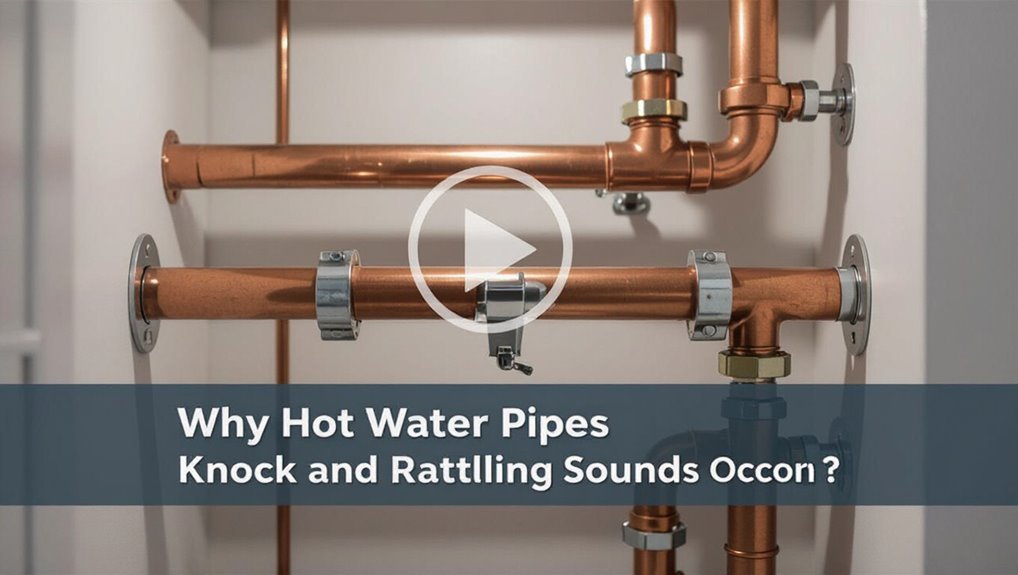
Hot water pipes knock and rattle for a few predictable reasons.
Thermal expansion causes pipes to shift against framing or hangers as they heat, and sudden valve closures (water hammer) produce brief, sharp impacts in the line.
Loose supports or nearby vibrating elements transmit and amplify these sounds, which are most noticeable near boilers, branch tees, and where pipes pass through studs or joists.
How thermal expansion causes knocking in hot water pipes
When water is heated, the metal or plastic pipe that carries it expands slightly in length and diameter; that movement can produce knocking or rattling when the pipe shifts against supports or rubs past fittings.
Thermal expansion causes repeating taps as constrained pipe ends or tight clamps release and catch.
Homeowners searching how do i stop my hot water pipes from knocking should check for loose supports, allow movement, or add cushioning.
Water hammer and its role in sudden knocking noises
Introduce the concept of water hammer as a hydraulic shock that occurs when flowing water is forced to stop or change direction abruptly, sending a pressure wave through the pipe network.
This transient pressure spike produces sharp, repeating knocks when valves or appliances close quickly. Common triggers include fast-closing faucets or solenoid valves; diagnosing involves listening near fixtures and checking for pressure irregularities and air chamber failure.
Loose pipes, supports, and vibration transmission
Walls, joists, and hangers that fail to secure piping allow thermal expansion and flow-induced vibration to translate into audible knocks and rattles.
Loose straps, worn clamps, and gaps at supports permit lateral movement and metal-to-wood or metal-to-metal impact.
Vibration transmits along continuous runs, amplifying noise through cavities.
Properly spaced, cushioned supports and tight connections reduce movement and dissipate vibrational energy.
Common locations and scenarios where knocking is most noticeable
Where are the knocks most likely to be heard?
In basements, crawlspaces, and utility rooms where exposed runs lack clamps; inside wall cavities near bathrooms and kitchens when pipes shift against framing; near boilers, water heaters, and pump assemblies during startup or pressure changes; at fixture valves and elbows where flow acceleration or trapped steam occurs.
Nighttime and quiet hours make noises more noticeable.
Quick solutions to silence knocking hot water pipes
A range of simple fixes can often stop knocking hot water pipes quickly and without major plumbing work.
Effective immediate actions include:
- Tighten or add pipe straps and hangers
- Add cushioning between pipes and framing (insulation or foam)
- Secure loose valves and fittings
- Install or adjust a water hammer arrestor
- Replace worn or faulty check valves and fast-closing fixtures
These steps offer practical starting points before calling a professional.
Tighten or add pipe straps and hangers
Inspecting and securing loose supports often stops pipe knocking quickly.
Technicians should check runs for loose straps or missing hangers and tighten existing fasteners.
Install additional straps every 4–6 feet for horizontal runs and nearer supports for vertical sections.
Use metal or approved plastic hangers sized to the pipe to prevent sway and maintain alignment, reducing movement-induced noises.
Add cushioning between pipes and framing (insulation or foam)
Wrap pipes with foam or friction tape to isolate them from wood framing and stop impact noise.
Install closed-cell foam sleeves or adhesive-backed strips where pipes contact joists, studs, or nail plates.
Guarantee continuous coverage at bends and through holes; use pipe insulation for thermal protection and vibration damping.
Compressible rubber or polyethylene products absorb movement, reducing intermittent knocking without altering plumbing.
Secure loose valves and fittings
Tighten loose valves and fittings to eliminate the small movements that cause knocking in hot water lines.
Inspect exposed valves, unions and coupling nuts for play, then use appropriate tools to snug—but not overtighten—threads and packing nuts.
Replace worn washers or valve stems if necessary.
Secure nearby mounting brackets to prevent transmitted movement and recheck after several hot-water cycles.
Install or adjust a water hammer arrestor
Add or adjust a water hammer arrestor to absorb the shock when a valve closes, preventing the sudden pressure spike that causes knocking in hot water lines.
A correctly sized arrestor installed near quick-closing fixtures cushions hydraulic shock, stopping banging.
Inspect for air-charged or piston-type units, replace water-logged devices, and mount securely to plumbing to guarantee proper function and eliminate residual noise.
Replace worn or faulty check valves and fast-closing fixtures
Inspecting and replacing worn check valves and fast-closing fixtures is a direct way to stop the abrupt pressure changes that cause knocking in hot water pipes.
Faulty check valves allow reverse flow and water hammer; worn rapid-shut faucets or toilet fill valves trigger sudden stops.
Replacing these components with correctly sized, compatible, or slow-closing models restores steady flow and eliminates repetitive impact noise.
Flush and descale hot water lines and the water heater
Flush and descale hot water lines and the water heater to remove mineral buildup that narrows passages and disrupts flow, which often causes knocking.
Periodic flushing clears sediment from tanks and mains; vinegar or commercial descalers dissolve scale in pipes and showerheads.
Professional power flushing or tankless system maintenance restores proper flow.
Regular descaling reduces turbulence, improves efficiency, and minimizes recurring pipe noise.
Adjust water heater temperature and pressure settings
Lowering or fine-tuning the water heater’s temperature and pressure often eliminates knocking by reducing rapid thermal expansion and turbulent flow in pipes.
Set temperature to 120°F (49°C) and verify pressure stays within 40–60 psi. Adjust the pressure-reducing valve and thermostat gradually, then test fixtures.
If knocking persists, consult a plumber to check expansion tanks, relief valves, and pipe supports for mechanical causes.
Step-by-step troubleshooting checklist for noisy hot water pipes
A concise checklist guides the homeowner through safely observing and pinpointing where the knocking originates, then inspecting pipe supports, hangers, and any contact points that might transmit noise.
It directs simple tests for water hammer using fixtures and appliances and outlines checks of the water heater and expansion tank for pressure- or component-related causes.
The checklist concludes with clear diagnostic signs that indicate when professional plumbing help is warranted.
How to safely observe and locate the noise source
Begin by shutting off appliances and closing nearby faucets to create a quiet environment for diagnosis.
Listen at fixtures, valves, and exposed runs while a helper briefly activates the hot water. Note timing, pitch, and location changes during flow start, steady, and stop.
Use a mechanic’s stethoscope or wooden stick to pinpoint vibrations through surfaces, marking suspected segments for later inspection.
Inspecting pipe supports, hangers, and contact points
Inspectors should examine each support, hanger, and contact point along the hot-water run for looseness, missing insulation, metal-to-metal contact, and signs of wear or corrosion.
They note spaced intervals, guarantee clamps are secure but not overtightened, verify tubing clearances where pipes pass framing, replace degraded rubber or insulation sleeves, and document locations needing repair or supplemental cushioning to prevent future noise and abrasion.
Testing for water hammer with appliances and fixtures
Start by isolating likely sources of water hammer and methodically recreating the conditions that produce the knocking.
Turn off all fixtures, then operate one appliance or valve at a time—dishwasher, washing machine, shower, faucet—while listening near hot-water runs.
Note when knocks occur: on valve shutoff, pump cycle, or sudden flow changes.
Record timing and repeatability to identify the offending fixture or appliance.
Checking the water heater and expansion tank for issues
One clear next step is to examine the water heater and its expansion tank, since pressure fluctuations and failing components there are common sources of knocking in hot-water lines.
Inspect for loose mounting straps, corrosion, leaking connections and sediment buildup in the tank.
Check expansion tank air charge with a tire gauge and guarantee the isolation valve is open.
Tighten fittings and flush if needed.
When to call a plumber: diagnostic signs that need professional help
If tightening fittings, flushing the tank, and checking the expansion tank air charge do not stop the knocking, or if signs of damage appear around the water heater, it is time to seek professional help.
Call a plumber when noises persist, when leaks, corrosion, or rust are visible, when pressure fluctuations occur, when relief valve discharges, or when unfamiliar odors or overheating appear.
Prompt diagnosis prevents failure.
Materials, tools, and parts you’ll need
A concise list of basic hand tools—adjustable wrench, pipe wrench, screwdriver set, tape measure, and plumber’s tape—helps tackle most DIY noise issues.
Common replacement parts and accessories such as pipe clamps, insulation sleeve, check valves, and replacement sections of pipe should be on hand.
Guidance on when to use copper versus PEX repairs or replacements will clarify suitability, cost, and ease of installation for each situation.
List of basic tools for DIY fixes
Several essential tools and materials are required for basic DIY fixes to stop hot water pipes from knocking.
A concise kit enables secure fastening, minor adjustments, and soundproofing.
Typical items include:
- Adjustable wrench
- Pipe strap or hanger
- Foam pipe insulation
- Screwdriver set
- Pipe clamps and cushioning tape
These cover most simple repairs without addressing replacement parts.
Common replacement parts and accessories
Common replacement parts and accessories for stopping hot water pipes from knocking include pipe hangers and straps, isolation clips, cushioned clamps, replacement sections of copper or PEX, and expansion joints or loop kits.
These items, paired with foam insulation and pipe wrap, address loose supports, metal-on-metal contact, and thermal movement.
- Pipe hangers and straps
- Isolation clips
- Cushioned clamps
- Expansion joints/loop kits
- Foam insulation and pipe wrap
When to choose copper vs PEX repairs or replacements
Decide between copper and PEX by weighing durability, installation complexity, and compatibility with the existing system:
Copper offers long-term rigidity and high-temperature tolerance but requires soldering, fittings, and corrosion checks.
On the other hand, PEX is flexible, faster to install with crimp or push-fit fittings, and better at absorbing thermal movement—so the choice determines the specific materials, tools, and spare parts needed for a knock-related repair or replacement.
Copper needs tube cutter, flux, solder, torch, sandpaper, fittings, clamps;
PEX needs cutter, crimp or cinch tool, rings, push-fit adapters, supports, insulation, and expansion allowances.
How to install selected fixes (step-by-step guides)
The following step-by-step instructions cover four common fixes: securing and cushioning pipes, installing a water hammer arrestor on hot water lines, replacing a faulty check valve or pressure-reducing valve, and flushing lines and the water heater to remove sediment.
Each procedure includes safety precautions, required tools, and clear sequential steps for typical residential systems. Readers should confirm local codes and consider a qualified plumber for complex or unfamiliar tasks.
Properly securing pipes with straps and adding cushioning
Begin by locating the sections of hot water pipe that move or strike framing when valves open. Then plan strap placement at regular intervals and near any hangers or junctions.
Measure, cut straps to fit, and install using screws into framing; avoid overtightening.
Add rubber or foam cushioning between pipe and strap or framing to dampen impact and vibration.
Recheck after system run for residual movement.
Installing a water hammer arrestor on hot water lines
Install a water hammer arrestor on hot water lines to absorb pressure spikes that cause knocking and protect fittings and valves.
Turn off water, drain the affected section, and relieve pressure.
Select an arrestor sized for the pipe, cut and deburr the line, then solder, sweat, or use push-fit connections per manufacturer instructions.
Restore water, check for leaks, and test by running fixtures.
Replacing a faulty check valve or pressure-reducing valve
After fitting a water hammer arrestor, persistent knocking may indicate a failing check valve or pressure-reducing valve (PRV) that needs replacement.
Shut main water and isolate hot supply, relieve pressure at a faucet, then remove the old valve.
Match specifications, install the new valve with proper orientation and thread sealant, tighten securely, restore water, check for leaks and confirm knocking has stopped.
Flushing lines and the water heater to remove sediment
Flush the hot-water system to remove sediment that can cause knocking, reduced flow, and premature corrosion.
Isolate power/gas and water to the heater, attach a hose to the drain valve, open a hot faucet upstairs, and slowly drain until clear.
Close the valve, refill, purge air, restore power/gas, and test.
Repeat annually or when noise returns.
Preventive measures to avoid future knocking
Preventing future knocking focuses on correct installation, regular maintenance, and pressure control.
Recommended pipe support spacing and secure mounting practices reduce movement that causes noise.
A routine inspection schedule for heaters and valves, plus managing system pressure and thermal expansion with an appropriately sized expansion tank, keeps the system stable.
Recommended pipe support spacing and installation best practices
Several simple yet essential installation practices greatly reduce the risk of hot water pipes knocking: support pipes at regular intervals with appropriate clamps or hangers, allow for thermal expansion with slip joints or expansion loops, isolate pipes from rigid structural members using rubber-lined supports, and avoid long unsupported horizontal runs or tight bends that concentrate movement.
Follow manufacturer spacing: copper ~6–8 ft horizontal, 8–10 ft vertical; heavier pipes require closer supports.
Routine maintenance schedule for water heaters and valves
A regular maintenance schedule keeps water heaters and associated valves operating quietly and reduces the chance of future pipe knocking by identifying scale buildup, failing components, and pressure issues early.
Recommended tasks include annual flushing to remove sediment, biannual valve inspection and lubrication, replacing worn pressure-relief and check valves as needed, testing thermostats and burners, and documenting service dates to guarantee timely follow-up and consistent performance.
Managing system pressure and thermal expansion with expansion tanks
Many plumbing systems rely on expansion tanks to absorb the increase in water volume and pressure that occurs as water heats, preventing pressure spikes that can cause pipes to knock.
Properly sized tanks, installed near the water heater, reduce thermal expansion stress.
Regular inspection for bladder integrity and correct precharge pressure guarantees continued protection, preventing recurring knocking and reducing strain on valves and fittings.
Signs repairs might be more extensive or costly
If knocking persists after standard DIY fixes, it can indicate underlying issues such as damaged supports, warped pipes, or hidden mineral buildup that require professional diagnosis.
Repeated failures or extensive corrosion may necessitate partial or full pipe replacement or rerouting, which increases labor and material costs.
Major repairs also trigger safety and code considerations—permitting, proper materials, and licensed workmanship—that can further affect scope and expense.
Persistent knocking after DIY fixes: possible causes
When knocking persists despite common DIY measures, it often signals underlying issues that simple fixes cannot resolve.
Causes may include loose or corroded valves, worn expansion joints, thermal shock from rapid temperature changes, trapped steam in older systems, or hidden sediment and scale restricting flow.
Persistent noise often indicates professional diagnostics are needed to identify and prioritize targeted mechanical repairs.
When pipe replacement or rerouting becomes necessary
Persistent knocking that resists standard fixes often points to deeper infrastructure problems that may require pipe replacement or rerouting.
Indications include widespread corrosion, repeated joint failures, brittle or undersized piping, extensive mineral buildup, or chronic water hammer despite arrestors.
When noise coincides with leaks, structural damage, or system modernization needs, homeowners should expect more extensive, costlier interventions beyond simple clamps or insulation.
Safety and code considerations for major repairs
Assess safety and code requirements early, since major hot water pipe repairs can trigger building-code compliance, permit needs, and safety upgrades that considerably increase scope and cost.
A qualified plumber should inspect for seismic restraints, backflow prevention, pressure-relief devices, and accessible shutoffs.
Complex routing, concealed wall work, or boiler modifications often require permits, inspections, and licensed contractors, all raising time and expense.
Cost and time estimates for common fixes
Typical fixes for knocking hot water pipes vary widely in cost and time depending on whether a homeowner tackles them or hires a professional. The table below provides representative DIY vs. professional cost ranges and estimated completion times for three common repairs. This quick comparison helps set realistic expectations before deciding on a course of action.
| Repair | Cost & Time (DIY vs Pro) |
|---|---|
| Secure loose pipes | $0–$30; 15–45 min (DIY) vs $75–$150; 30–60 min (Pro) |
| Replace valve or fitting | $10–$50; 30–90 min (DIY) vs $100–$300; 45–120 min (Pro) |
| Install pipe insulation/sleeves | $5–$40; 20–60 min (DIY) vs $50–$150; 30–90 min (Pro) |
Typical DIY vs professional cost ranges
When homeowners tackle knocking hot water pipes, choices range from quick, low-cost DIY fixes to more expensive professional repairs.
Simple remedies like tightening loose straps, adding insulation, or bleeding air from the system typically take 30–90 minutes and cost under $50 in materials.
On the other hand, hiring a plumber for tasks such as adjusting pipe hangers, replacing faulty expansion tanks, or reconfiguring pipe runs commonly runs $150–$800 and can take one to several hours depending on access and complexity.
DIY saves labor costs but risks missed issues; professionals offer diagnostics, warranty, and safer outcomes at higher rates.
Estimated time to complete each repair type
After weighing DIY versus professional routes, a clear picture of time requirements helps homeowners plan the work and disruptions.
Simple fixes—tightening loose straps, insulating exposed pipes—typically take 30–90 minutes.
Replacing valves or adding air chambers usually requires 1–3 hours.
Complex jobs—re-piping sections or correcting boiler settings—can take half a day to a full day, longer if permits or parts are needed.
Real-world examples and short case scenarios
Three concise case examples illustrate common causes and fixes for hot water pipe knocking.
One describes loose straps in an attic tightened to stop banging.
Another covers resolving water hammer after adding a dishwasher by installing an arrestor.
A third shows noise eliminated by replacing a failing expansion tank.
These scenarios clarify likely symptoms, remedies, and expected outcomes.
Case: fixing knocking caused by loose straps in an attic
A homeowner climbed into the attic and traced the rhythmic banging to a section of hot water pipe riding on a single loose strap.
They secured the pipe with additional cushioned straps at proper intervals, added rubber padding where metal contacted framing, and tightened connections.
After testing multiple hot-water cycles, the knocking stopped.
The fix was simple, inexpensive, and required basic tools.
Case: resolving water hammer after adding a dishwasher
Many homeowners find that once common causes like loose straps are fixed, a new source of knocking can emerge after installing appliances—most often a dishwasher that introduces sudden valve closures and pressure surges.
A homeowner discovered loud bangs post-installation; adding an air chamber and a water hammer arrestor near the dishwasher, plus slightly reducing supply pressure, eliminated shocks and restored quiet without replacing plumbing.
Case: noise eliminated by replacing a failing expansion tank
Noticing intermittent bangs and a faint metallic pinging, the homeowner traced the noise to the water heater area and found the system’s expansion tank visibly rusted and waterlogged.
Replacing the failing tank immediately stopped the pressure surges and eliminated the knocking.
A post-replacement check showed stable static and dynamic pressures, no further pipe vibration, and restored thermal expansion control—quiet plumbing and avoided stress on fittings.
Practical tips to keep plumbing quiet long-term
Practical long-term quieting focuses on simple routines, durable upgrades, and smart contractor questions to prevent recurring pipe knocking.
Homeowners can follow quick checks, consider noise-reducing materials, and vet plumbers with targeted queries. Useful starting points include:
- Inspect visible pipes for loose straps or contact points
- Bleed trapped air via faucets after system work
- Install pipe insulation or sound-damping clamps
- Upgrade noisy valves and add water hammer arrestors
- Ask plumbers about experience, warranty, and diagnostic approach
Quick daily checks homeowners can do
When homeowners run hot water, a few quick daily checks can catch the early signs of knocking before it escalates:
listen for new bangs, note when noise occurs, inspect visible pipes for movement or loose straps, feel for excessive vibration, check faucets and valves for sudden shocks, and confirm water pressure appears steady.
Record observations and address changes promptly or schedule a professional inspection.
Materials and upgrades that reduce noise permanently
Several effective materials and targeted upgrades can eliminate hot-water pipe knocking at its source: replacing sections of rigid piping with PEX or flexible copper reduces water hammer, installing a properly sized water hammer arrestor or air chamber provides cushion for pressure spikes, adding pipe insulation and secure strap supports cuts vibration and movement, and fitting pressure-reducing valves or thermostatic mixing valves stabilizes flow and temperature swings.
Additional durable solutions include isolating noisy runs with flexible connectors and replacing worn valves or outdated expansion tanks to prevent recurrent shocks.
Questions to ask a plumber before hiring
What should a homeowner ask to guarantee a plumber will stop hot-water pipe knocking for good?
Ask about experience diagnosing water hammer and loose pipes, preferred repair methods, parts and materials used, warranty on labor and parts, permit and code compliance, timeline, and references for similar jobs.
Request a written estimate and clear post-repair testing to confirm noise elimination.
Conclusion
Silence returns as if the house had been granted a miracle; no more metallic percussion announcing every shower. The plumber becomes a quiet hero, the pipes transformed from drum kits to gentle veins of warmth. Small fixes stop the racket, clamps and cushions performing stage magic; when needed, larger repairs step in like heavy hitters. In the end, a calm settles—no knocking, no rattling—only the soft, steady whisper of water doing its modest, reliable work.