How to Clear Toilet Pipes Fast: Proven DIY Methods to Unclog and Prevent Clogs
To clear toilet pipes quickly, follow these proven DIY steps: first, shut off the water supply and put on gloves. Use a flange plunger with firm thrusts to dislodge the clog. If that doesn’t work, try a toilet auger or pour hot water mixed with dish soap, then flush with a bucket. For tougher blockages, a wet/dry vacuum or enzymatic cleaner can be effective. However, if you still experience backups or foul odors, it’s best to consult a professional plumber. Continue reading for detailed methods, diagnosis tips, and prevention strategies.
Fast Solutions to Unclog Toilet Pipes Right Now
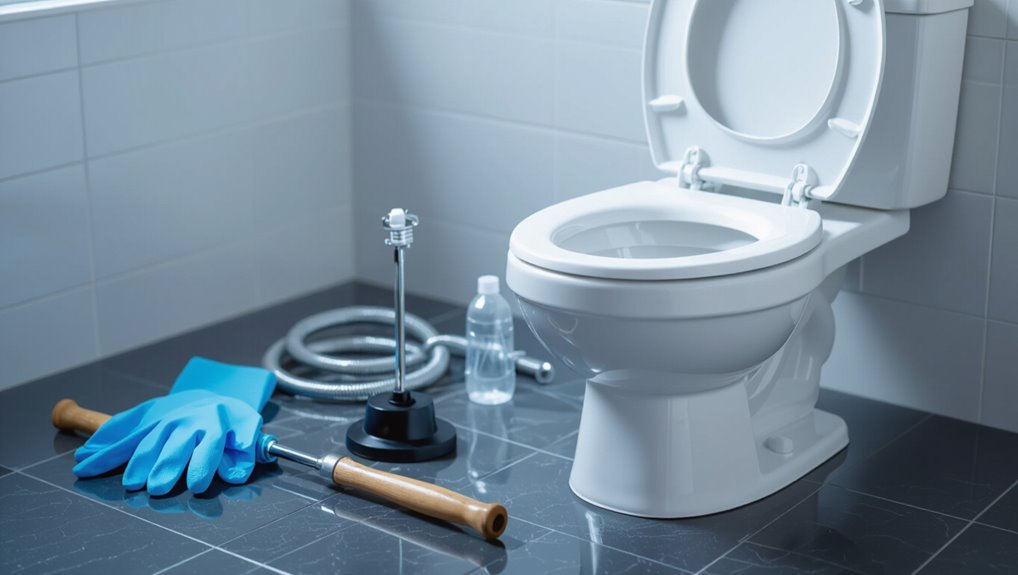
Before attempting any rapid fixes, a brief safety and preparation checklist should be reviewed to reduce injury and contamination risk.
Next, the most effective first-aid unclog methods that can be attempted in under 15 minutes are outlined for immediate action.
Guidance is then provided on clear stopping points and when a professional plumber must be called.
Immediate safety and preparation checklist
A quick safety and preparation checklist helps guarantee effective, accident-free work when addressing a clogged toilet.
It reminds users how to clear toilet pipes safely: turn off water supply, ventilate the room, wear gloves and eye protection, lay absorbent towels, position a bucket, and keep phone nearby.
Confirm tools on hand and avoid chemical mixing before proceeding.
Quick first-aid unclog methods to try (under 15 minutes)
Act promptly with simple, low-risk techniques that often clear toilet blockages in under 15 minutes:
- Use a plunger: seal, plunge firmly, repeat until flow returns.
- Try a toilet auger: feed, crank gently to break the obstruction.
- Hot water and dish soap: pour, wait a few minutes, flush cautiously.
- Bucket flush: add several gallons quickly to force a pass-through.
When to stop and call a professional
If the quick methods fail or the toilet shows signs of worsening—repeated backups, gurgling drains, slow draining in other fixtures, sewage smell, or water rising toward the rim—stop attempting more DIY fixes and call a professional.
A plumber can diagnose deep blockages, broken seals, venting issues, or sewer-line problems. Continued DIY efforts risk damage, overflow, and costly repairs; prompt professional assessment prevents escalation.
Step-by-step DIY Methods to Clear Toilet Pipes
The following section presents concise, step-by-step DIY methods for clearing toilet pipes, covering proper plunger technique, use of a toilet (closet) auger, and safe alternatives to a plumbing snake.
It also explains how to set up a wet/dry vacuum and when to apply the hot water plus dish soap method, including limits and precautions.
Clear instructions and common mistakes are highlighted to help readers choose and execute the right approach.
Plunger technique: tools, technique, and common mistakes
Begin with the right plunger: a flange (toilet) plunger creates a better seal for dislodging clogs than a cup plunger, and a long, grippy handle improves control.
Position plunger to cover hole fully, push gently to expel air, then use firm, steady pumps.
Maintain seal, avoid excessive force that can damage porcelain or worsen blockage, and clean tool after use.
Toilet auger (closet auger) use: step-by-step guide
Reach for a toilet auger when a plunger fails to clear a stubborn clog: this curved, flexible cable is designed to navigate the toilet trap without damaging porcelain or seals.
Insert the rubber bell into the bowl, keep the auger shaft centered, crank the handle clockwise to feed the cable until resistance is felt, break or hook debris, retract while reversing direction, flush to confirm clearance, clean and sanitize the tool.
DIY plumbing snake alternatives and how to use them
Several simple household items can substitute for a plumbing snake when a clog resists a plunger: a wire coat hanger, a plastic bottle, a wet-dry vacuum, a chemical-free enzyme solution, or a drain-friendly baking soda and vinegar treatment.
Straighten and form a small hook with the hanger to fish debris; fashion a bottle trap to push blockages; apply enzyme or baking soda/vinegar and wait per instructions.
Wet/dry vacuum method: setup and precautions
A wet/dry vacuum can clear stubborn toilet clogs by creating strong suction to dislodge or extract blockages; proper setup and precautions are essential to avoid damage, spills, and health risks.
Use a vacuum rated for wet use, remove excess water first, seal hose to bowl with a towel or adapter, wear gloves and eye protection, run briefly, and disinfect equipment and surrounding surfaces afterward.
Hot water and dish soap method: correct procedure and limits
One simple, commonly used technique combines hot (but not boiling) water with dish soap to soften and lubricate obstructions so they can pass through the trap and down the drain.
Pour a generous squirt of dish soap into the bowl, follow with several liters of hot water from waist height, wait 10–20 minutes, then flush.
Not effective for solid blockages or damaged pipes.
Baking soda and vinegar method: safe usage and effectiveness
Combine baking soda and vinegar carefully to create a fizzing reaction that can help loosen minor clogs and neutralize odors in toilet traps.
Use about one cup baking soda followed by one to two cups vinegar. Allow 15–30 minutes, then flush with hot (not boiling) water.
Effective for organic residue and slow drains; not reliable for solid obstructions or damaged pipes.
Enzyme drain cleaners vs. chemical cleaners: how to choose
Following the baking soda and vinegar approach, the choice between enzyme-based and chemical drain cleaners depends on clog type, urgency, and pipe material.
Enzyme cleaners digest organic buildup gradually, are safe for pipes and septic systems, but require hours or days.
Chemical cleaners act fast on organic and some inorganic clogs yet can harm pipes, seals, and the environment; use sparingly and follow label instructions.
Tools and Materials You Need for Fast Toilet Unclogging
A brief review of the right tools and materials speeds up unclogging and reduces damage risk. The discussion separates must-have basics, optional gear for stubborn blockages, and product recommendations with clear warnings about what to avoid. Proper selection improves success and safety.
- Plunger, toilet auger (snake), rubber gloves, and basic bucket
- Wet/dry vacuum, closet auger, enzyme cleaners, and drain camera
- Enzyme-based cleaners and mechanical tools recommended
- Avoid caustic chemical drain cleaners, abrasive tools, and improvised metal hooks
Essential tools for every household
Every household should keep a small kit of reliable tools and materials to clear common toilet clogs quickly: a quality flange plunger, a toilet auger (snake), rubber gloves, a bucket, coarse cleaning brush, and enzyme-based drain cleaner for maintenance rather than emergency use.
Additional essentials include a flashlight, adjustable wrench for tank access, spare closet bolts, and disinfectant wipes to clean surfaces after unclogging.
Optional tools for tough clogs
When a standard plunger and snake can’t restore flow, homeowners may turn to optional, more specialized tools designed for stubborn blockages. These include high‑pressure water bladders, drain augers with power attachments, toilet-specific sectional snakes, and wet/dry vacuums with appropriate hoses.
Protective gear, extension gloves, and plastic guards help prevent damage and contamination while applying greater force or reach to clear deep obstructions.
Recommended product types and what to avoid
Choose reliable, purpose-built products over quick fixes: a heavy-duty flange plunger, a toilet-specific auger (sectional or closet auger), and a high‑quality wet/dry vacuum with toilet‑compatible attachments are recommended for fast, effective unclogging.
Prefer sturdy gloves, eye protection, biodegradable enzymatic cleaners, and chemical-resistant hoses.
Avoid bleach mixes, caustic drain gels in toilets, flimsy plungers, and improvised tools that can damage porcelain or seals.
Diagnosing the Cause of the Clog
The technician first checks whether the issue is confined to the toilet or affects multiple fixtures, which distinguishes a local clog from a main sewer blockage.
Visual and tactile cues—excess toilet paper, hygiene products, or lodged objects—help identify common obstruction types.
If multiple drains back up or gurgling occurs, the cause may instead be venting problems or a failing septic system.
Signs of local toilet clog vs. main sewer line blockage
How can one tell whether a stubborn toilet is blocked locally or the problem lies in the main sewer line?
Local clogs typically affect a single fixture: water backs up only in that toilet, plunging or augering clears it, and other drains function normally.
Main sewer blockages cause multiple fixtures to back up, gurgling noises, slow drains housewide, and sewage odors—often requiring professional intervention.
How to identify common obstruction types (paper, hygiene products, foreign objects)
When diagnosing a toilet clog, distinguishing among toilet paper build-up, hygiene products, and foreign objects relies on specific clues:
Soft, diffuse blockage often indicates excess paper;
stringy, tangled resistance or visible fragments suggests sanitary products;
hard, irregular obstruction, sudden single-event stoppage, or audible thud point to toys, utensils, or debris.
Inspect bowl, use flashlight, and probe gently with a snake to confirm type.
When a clog is caused by venting or septic issues
If blockage persists despite a clear trap and drain, attention should shift to venting and septic system problems, which often mimic ordinary clogs but originate beyond the bowl.
Signs include slow draining toilets house-wide, gurgling, sewage odors, or backups after heavy use.
Inspect roof vent for obstructions and check septic scum layer or recent pumping history; consult a plumber or septic technician for diagnosis.
Preventing Future Toilet Clogs
Preventing future toilet clogs begins with simple daily habits that limit what enters the bowl and encourage prompt flushing.
Choosing appropriate products—biodegradable toilet paper, avoiding wipes and grease—reduces buildup and chemical damage.
A straightforward maintenance schedule with periodic inspections and quick fixes keeps pipes clear and detects problems early.
Daily habits to reduce clogs
Small, consistent changes to daily bathroom routines considerably lower the risk of toilet clogs by reducing the amount and type of material entering the drain.
For example, using only toilet paper designed to dissolve quickly, avoiding flushing wipes or feminine hygiene products, and keeping a waste bin within reach for other disposables prevents blockages before they start.
- Flush only appropriate waste.
- Limit paper per flush.
- Inspect for slow drains.
- Schedule quick maintenance.
Proper products to use and avoid in toilets
Choose products for toilets with care: only toilet paper labeled septic-safe or quick-dissolve should be flushed, while wipes (even those labeled flushable), cotton swabs, feminine hygiene products, and paper towels must be disposed of in the trash.
Use liquid or low-residue cleaners and enzyme-based treatments sparingly. Avoid grease, coffee grounds, hair, and excessive paper.
Prefer minimal, biodegradable soaps and avoid chemical overloads that harm plumbing.
Maintenance schedule and simple inspections
When should routine checks occur and what should they cover?
Monthly quick inspections assess flush performance, water level, tank components, and bowl condition.
Quarterly deeper checks examine supply lines, seals, and visible trapway buildup.
Annually inspect vents and consider professional camera inspection if recurring issues arise.
Record findings, address minor issues promptly, and replace worn parts to prevent clogs and leaks.
Troubleshooting Tough or Recurring Clogs
When basic plunging and chemical methods fail, the next steps involve systematic escalation: try a closet auger, inspect and clear the toilet trap, and check the flange for obstructions or damage.
Clear descriptions of how to access the trap and flange help determine whether the clog is internal or in the drain line.
If repeated blockages occur, sewage backup, slow drains throughout the house, or damage to the flange signal the need for a professional plumber or rooter.
Progressive steps when basic methods fail
If basic plunging and enzyme treatments fail to clear a toilet, proceed with a structured escalation: assess blockage severity by observing water level and flush response.
Try a closet auger for deep obstructions.
Apply buffered chemical cleaners only as directed and never combined with other agents.
Inspect the trap and vent for recurring issues before considering professional assistance.
Document attempts, avoid pipe-damaging tools, and schedule a plumber if unresolved.
How to check and clear the toilet trap and flange
Inspect the trap and flange to pinpoint persistent clogs that resist plunging and augering.
Remove the toilet to access the trap seal and flange bolts if blockage persists.
Inspect for obstructions, mineral buildup, or broken flange pieces.
Clear debris with a coat hanger or small hand auger, clean surfaces, replace wax ring and bolts, reseat the toilet, and test for proper flow.
Signs a professional plumber or rooter is required
Several clear indicators show that a homeowner should call a professional plumber or rooter for toilet clogs: repeated backups despite standard remedies, sewage odors or slow drains throughout the house, gurgling sounds from multiple fixtures, visible sewage at cleanouts or floor drains, or signs of tree-root intrusion and pipe collapse.
Professionals provide camera inspections, hydro-jetting, trenchless repairs, and permits for major sewer line replacement.
Safety, Hygiene, and Environmental Considerations
The section outlines necessary personal protective measures and straightforward cleanup steps to minimize exposure when clearing toilet pipes.
It also assesses the environmental risks of common drain chemicals and recommends safer alternatives.
Finally, it covers proper disposal methods for removed debris and contaminated water to protect household plumbing and local waterways.
Personal protective measures and cleanup tips
When handling clogged toilet pipes, wear waterproof gloves and eye protection to prevent contact with contaminated water and splashes.
Use a mask and impermeable clothing if fumes or sewage exposure is possible.
Contain spills with absorbent pads, disinfect surfaces with appropriate cleaners, and launder or discard contaminated textiles.
Dispose of waste per local regulations and wash hands thoroughly after completing cleanup.
Environmental impact of drain chemicals and safer alternatives
Chemical drain cleaners, often containing strong acids, alkalis, or oxidizers, can harm aquatic life, corrode plumbing, and disrupt wastewater treatment processes when flushed into sewer systems.
Safer alternatives include enzymatic or bacterial cleaners, biodegradable surfactants, manual clearing tools, and hot water with mild detergent.
These options reduce chemical load, protect infrastructure, and pose lower risks to household occupants and municipal ecosystems.
Proper disposal of removed debris and contaminated water
Following safer unclogging methods, attention must turn to disposing of removed debris and contaminated rinse water to protect health and the environment.
Collected solids should be bagged securely, double-bagged if soiled, and placed in regular trash where local rules permit.
Contaminated rinse water must not enter storm drains; disinfect with bleach following label instructions and flush to sanitary sewer or contact local waste services for guidance.
Comparison of Common Unclogging Methods
A concise comparison helps readers weigh effectiveness, cost, speed, and safety when choosing an unclogging method for toilet pipes. The table below summarizes typical options on those criteria for quick reference. Subsequent text will expand on trade-offs and practical recommendations.
| Method | Quick Summary |
|---|---|
| Plunger | Low cost, fast, safe for most clogs |
| Chemical drain cleaner | Often effective on organic clogs, moderate cost, safety concerns |
Effectiveness, cost, speed, and safety comparison
When evaluating unclogging methods for toilets, effectiveness, cost, speed, and safety provide the clearest criteria for choosing among plungers, augers, enzymatic cleaners, chemical drain cleaners, and professional services.
Each option balances trade-offs between how reliably it clears different blockages, upfront and long-term expense, time-to-resolution, and potential risks to plumbing or health.
Plungers are cheap, fast, and safe for minor clogs. Augers handle tougher blockages affordably but are slower.
Enzymatic cleaners are safe and preventive yet slow. Chemical cleaners act quickly but risk pipe damage and health hazards.
Professionals guarantee results at higher cost and time.
Quick Reference: Fast Unclog Checklist
The checklist presents a concise response plan for addressing toilet clogs quickly and safely.
It outlines the immediate step sequence, when to call emergency contacts, and notes on checking warranties or insurance before proceeding.
The list below offers the essential actions to follow at a glance.
- Cut water supply, assess severity, and attempt basic clearing methods.
- Use appropriate tools and protective gear; avoid chemical mixes.
- Contact a licensed plumber or emergency service if blockage persists or leaks occur.
- Review appliance warranties and home insurance coverage before paying for major repairs.
Step sequence for a fast response
Start by evaluating the clog quickly and choosing the fastest safe method available—plunger, drain snake, or enzyme cleaner—based on severity and risk of overflow.
Isolate water supply, protect flooring, and don gloves and eye protection.
Attempt gentle plunging cycles, then test flush. If unresolved, use a snake in measured passes or apply enzymes per instructions.
Clean and sanitize tools and area.
Emergency contacts and warranty/insurance notes
If the quick methods fail or there is a risk of overflow or sewer backup, consult a prepared list of emergency contacts and warranty/insurance details before further action.
Include plumber, utility, and emergency numbers, plus municipality sewer hotline.
Note appliance and fixture warranties, coverage limits, and claim procedures.
Photograph damage, retain receipts, and record service dates to expedite claims and professional response.
Conclusion
The article concludes that prompt, informed action resolves most toilet clogs: simple tools and correct techniques quickly restore function while preventive habits reduce recurrence. Investigating a popular DIY theory—pouring hot (not boiling) water plus dish soap—reveals it reliably softens waste and clears partial blockages when combined with plunging. For stubborn or unusual obstructions, diagnostic steps and cautious professional help are advised. This practical, evidence-aligned approach helps readers trust and enjoy the guidance.