How to Remove PVC Primer Stain: Fast, Safe Methods That Work
To effectively remove PVC primer stains, act quickly by blotting the stain with a lint-free cloth and warm, soapy water or a dilute pH-neutral detergent. For fresh stains, you can also use isopropyl alcohol or acetone on a hidden area to test for compatibility. If the primer has dried, use stronger solvents or commercial removers, and consider careful sanding while wearing personal protective equipment (PPE). Always clean your tools immediately and ensure proper ventilation in the area. For specific surface cleaning methods, safety tips, and troubleshooting advice, continue reading.
What PVC Primer Is and Why Its Stains Matter
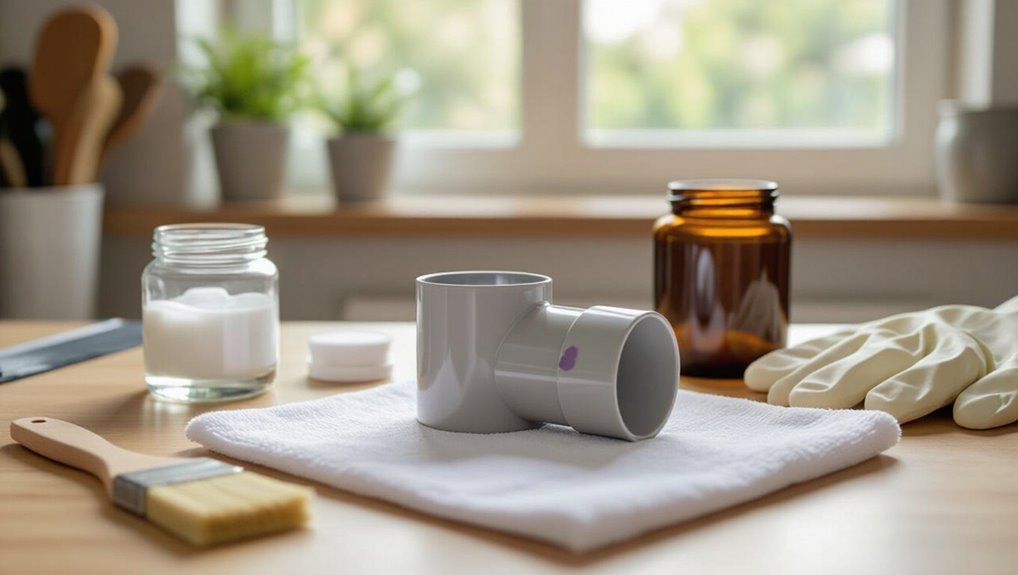
PVC primer is a solvent-based chemical that softens and cleans PVC and similar plastics to promote a strong solvent weld.
It can stain PVC pipe, vinyl, painted surfaces, skin, and tools when oversprayed or dripped. Left untreated, these stains can cause visible discoloration, interfere with proper bonding, and in some cases damage the surface finish.
What PVC primer is made of and how it works
A clear, solvent-based liquid designed to soften and prepare plastic pipe surfaces, PVC primer chemically alters the top layer of polyvinyl chloride so solvent cements can form a strong weld.
Composed of ketones, esters, and chlorinated hydrocarbons, it dissolves polymers, leaving a tacky surface. Its aggressive solvents explain stain persistence and inform safe approaches for how to remove pvc primer stain.
Surfaces commonly affected by primer stains (PVC, vinyl, painted surfaces, skin, tools)
Because primer’s aggressive solvents attack polymer surfaces, a range of materials can show persistent discoloration, softening, or residue after contact.
PVC piping and vinyl trim often blister or whiten; painted surfaces may craze or strip finish.
Skin sustains irritation and staining; tools and gloves accumulate gummy, solvent-welded residue.
Porous substrates trap primer, complicating removal and requiring different cleaning approaches.
Risks of leaving primer stains (discoloration, bond issues, surface damage)
This solvent-based primer chemically softens and slightly dissolves polymer surfaces to promote solvent welding.
Left unaddressed, primer stains cause permanent discoloration, whitening, or dull patches on PVC and vinyl. They can impair subsequent adhesives or coatings by altering surface energy, creating weak bonds or uneven adhesion.
Prolonged exposure may embrittle or craze plastics, risking cracks and accelerated material failure.
Quick, Safe Ways to Remove Fresh PVC Primer Stains
When fresh PVC primer spills, the recommended immediate actions are to blot excess product and ventilate the area to reduce fumes.
The safest initial removal method is to use soap, warm water, and gentle mechanical agitation with a cloth or soft brush to lift residue without damaging surfaces.
For persistent fresh stains, isopropyl alcohol or acetone may be applied sparingly and with caution, testing an inconspicuous spot first and ensuring adequate ventilation and protective gloves.
Immediate steps to take after a spill
Act promptly to limit staining and solvent spread after a PVC primer spill by containing the area and blotting excess with a clean, lint-free cloth.
Ventilate the space and don gloves to protect skin.
Protect unaffected surfaces with absorbent barriers.
Dispose of contaminated materials in sealed, labeled bags.
Note location and time of spill for cleanup records and, if large, notify appropriate authorities or maintenance.
Using soap, water, and mechanical agitation safely
After containing the spill and removing excess solvent, attention shifts to using mild soap, water, and gentle mechanical agitation to lift fresh PVC primer from non-porous surfaces.
Apply a dilute, pH-neutral detergent with a soft cloth or sponge, working outward from the stain. Rinse frequently, blot dry, and avoid abrasive pads that can damage finishes.
Repeat until residue clears.
Using isopropyl alcohol or acetone for fresh stains when and how
Reach for isopropyl alcohol (70–99%) or acetone only on fresh PVC primer stains and on surfaces known to tolerate solvents; these quick-evaporating solvents can dissolve primer before it cures but can also dull, soften, or strip some finishes and plastics.
Test in an inconspicuous spot, apply with a soft cloth, blot gently, rinse with water, and ventilate; repeat sparingly until residue lifts.
Methods for Removing Dried or Set PVC Primer Stains
When primer has fully dried or set, removal typically requires stronger measures than for fresh stains.
Options include solvent-based treatments (acetone, MEK, lacquer thinner) used with strict safety precautions, commercial PVC primer removers and paint strippers formulated for PVC, or mechanical methods such as careful scraping, sanding, or controlled heat application.
Each approach carries risks to the underlying material and finishes, so selection should balance effectiveness with techniques to avoid damage.
Solvent-based removal: acetone, MEK, and lacquer thinner precautions and technique
Apply solvent carefully: strong solvents such as acetone, methyl ethyl ketone (MEK), and lacquer thinner can dissolve cured PVC primer but pose fire, health, and surface-damage risks.
Work outdoors or in ventilated areas, wear gloves, eye protection, and a respirator.
Test an inconspicuous spot, apply with a cloth, blot—don’t rub—allow brief dwell, then rinse with soapy water and dry.
Using commercial PVC primer removers and paint strippers
Consider commercial PVC primer removers and paint strippers as formulated alternatives for lifting dried or set primer that resist household solvents.
They offer engineered solvents, thickeners, and dwell time for safer, more effective softening. Follow label safety, test on scrap, and neutralize residue.
- Choose PVC-compatible products
- Work in ventilated area
- Use gloves and eye protection
- Rinse or wipe thoroughly
Mechanical removal: scraping, sanding, and heat guns when to use and how to avoid damage
Mechanical methods—scraping, sanding, and targeted heat—provide effective options for removing dried or set PVC primer stains where solvents are ineffective or undesirable.
Use plastic scrapers and fine-grit sanding to minimize surface damage; keep sanding light and with the grain.
Apply a heat gun at low settings, holding it moving and at distance to soften primer without warping PVC.
Test in an inconspicuous area first.
Surface-Specific Removal Techniques
The following section addresses tailored approaches for removing PVC primer from varied surfaces while minimizing harm.
It covers safe techniques for PVC pipe and fittings, painted walls and drywall, fabrics and upholstery, skin and nails, and tools or brushes.
Practical precautions and recommended products for each surface type are highlighted.
Removing primer from PVC pipe and fittings without damaging material
When removing PVC primer from pipe and fittings without harming the material, select methods that dissolve or lift the stain while preserving the plastic’s integrity and solvent-welded joints.
Use isopropyl alcohol or mild citrus-based cleaners applied gently with a soft cloth; avoid acetone or aggressive scrubbing near joints.
Test in an inconspicuous spot, work slowly, and rinse thoroughly with water after removal.
Removing primer from painted surfaces and drywall
Address painted surfaces and drywall with methods that remove primer residue without stripping underlying paint or damaging paper-faced gypsum:
Use mild solvent pads (isopropyl or Goo Gone) tested in inconspicuous areas, gently rub; for drywall, soft sponge and soapy water first.
Avoid abrasive pads.
If residue persists, apply minimal acetone with cotton swab, immediate blotting, then touch-up paint if finish dulls.
Removing primer from fabric and upholstery
Treat fabric and upholstery with care, evaluating the primer type and fabric label before attempting removal.
Blot fresh primer gently with a clean cloth; avoid rubbing.
Test any solvent (mild dish soap, isopropyl alcohol diluted, or commercial upholstery cleaner) on an inconspicuous area.
Apply sparingly, blotting until lift occurs, then rinse and air dry.
For delicate or persistent stains, consult a professional cleaner.
Removing primer from skin and nails safely
Remove PVC primer from skin and nails promptly and gently to minimize irritation and staining.
Use soap and warm water with gentle scrubbing; a soft nail brush helps lift residue.
If stubborn, apply small amounts of rubbing alcohol or acetone briefly, then wash immediately and moisturize.
Avoid harsh scrubbing or prolonged solvent exposure.
Seek medical advice for persistent redness, blistering, or allergic reactions.
Removing primer from tools and brushes
When PVC primer contacts tools and brushes, prompt cleaning prevents hardening and preserves tool performance; fresh primer washes out with warm soapy water and a firm brush, while dried residue requires solvent—such as acetone or PVC cement cleaner—used sparingly and with proper ventilation, followed by thorough rinsing and drying to prevent corrosion or bristle damage.
For stubborn deposits, soak briefly, then comb bristles and inspect ferrules for trapped residue.
Safety Precautions and Protective Measures
Before attempting primer removal, the reader should equip appropriate personal protective equipment—chemical-resistant gloves, safety goggles, and a respirator rated for solvent vapors.
Work in a well-ventilated area and keep ignition sources away, as many solvents are flammable.
Collect and dispose of used solvents, rags, and contaminated materials according to local hazardous-waste guidelines to protect people and the environment.
Personal protective equipment: gloves, goggles, respirators
Wear appropriate personal protective equipment—chemical-resistant gloves, safety goggles, and a respirator—whenever handling or attempting to remove PVC primer, as the solvent vapors and skin contact can cause irritation and respiratory harm.
Gloves should be nitrile or neoprene, goggles must seal against splashes, and a respirator with organic vapor cartridges is recommended.
Inspect and replace PPE if damaged or contaminated.
Ventilation and fire-safety when using solvents
Because solvent vapors are both toxic and highly flammable, adequate ventilation and strict fire-safety measures are essential during PVC primer removal to prevent inhalation hazards and ignition.
Work outdoors or in well-ventilated areas, use exhaust fans or open windows, restrict sparks and open flames, ground metal containers, store solvents in approved safety cans, and keep a fire extinguisher rated for chemical fires nearby.
Environmental disposal and cleanup of solvent waste
After addressing ventilation and fire-safety, attention should turn to proper cleanup and disposal of solvent residues to protect people and the environment.
Collect waste in clearly labeled, sealed containers; never pour solvents down drains or into soil.
Use absorbents for spills, store waste in a cool ventilated area, and follow local hazardous-waste regulations for transport and disposal through authorized facilities.
Testing and Preventing Future Stains
Before attempting full-scale removal, a small test of the chosen method should be performed on an inconspicuous area to confirm effectiveness and surface compatibility.
To prevent future stains, practitioners are advised to set up a controlled workspace, use masking materials, and handle containers to minimize spills.
Applying primer with steady, measured strokes and only the needed amount reduces drips and excess buildup.
How to test a removal method on an inconspicuous area
How should one verify that a chosen removal method is safe for the surface?
Select a hidden spot (underside, inside joint). Apply the product sparingly with a cotton swab, wait the recommended dwell time, then blot and inspect for discoloration, softening, or finish damage.
If unchanged after drying, proceed cautiously on the visible stain; if altered, test alternative methods.
Best practices to avoid primer spills (masking, workspace setup)
Plan and prepare the workspace to minimize PVC primer spills by containing the work area, protecting nearby surfaces, and organizing tools for controlled application.
Use drop cloths, disposable paper or plastic sheeting, and painter’s tape to mask edges.
Elevate and isolate fittings on a stable bench.
Keep solvent wipes, absorbent pads, and a sealed waste container nearby.
Maintain good lighting and steady posture.
Proper application techniques to minimize excess primer
With the workspace secured and surfaces masked, attention shifts to application technique to reduce excess PVC primer and the need for future cleanup.
Operators should apply primer sparingly, using small brushes or applicator wands, working in controlled strokes.
Allow appropriate dwell time, avoid pooling, and rotate fittings rather than overbrushing.
Test on scrap PVC to confirm coverage before proceeding to final joints.
Troubleshooting Common Problems
If solvent treatment fails to remove PVC primer stains, the guide outlines next steps for persistent discoloration and substrate assessment.
It then explains surface restoration options such as repainting, refinishing, or patching to address damage caused by the primer or removal process.
Finally, criteria for when to consult a professional for stubborn stains or structural concerns are provided.
When stains persist after solvent treatment
When stains remain after repeated solvent applications, they typically indicate deeper absorption, chemical bonding, or surface damage that solvents alone cannot reverse.
In such cases, evaluate substrate porosity, primer composition, and exposure time.
Consider controlled mechanical removal, professional-grade cleaners, or targeted bleaching for color correction.
Test methods on an inconspicuous area, document results, and stop if material integrity or color contrast worsens.
Surface damage restoration tips (repainting, refinishing, patching)
After solvent attempts and deeper-cleaning measures fail or cause surface etching, restoration shifts to corrective repairs such as repainting, refinishing, or patching to restore appearance and protect the substrate.
Assess damage, sand feathered edges, use compatible primers and paints or matching refinishing products, fill gouges with appropriate patch compounds, cure fully, then topcoat.
Test a small area for adhesion and color match before full application.
When to consult a professional
How severe is the damage and how confident is the homeowner in repair techniques?
If stains penetrate material, coatings are compromised, or structural integrity is questionable, a professional should be consulted.
Also seek help when stains resist recommended solvents, when working on valuable or historic items, or when adhesives, heat, or chemical exposure pose safety risks.
Professionals guarantee correct repair and prevent further harm.
Comparison of Removal Methods by Effectiveness and Risk
A concise comparison of common removal methods helps readers balance effectiveness against surface compatibility and safety. The quick-reference table below summarizes typical outcomes and warnings to guide method selection. The following overview highlights key trade-offs for practical decision-making.
| Method | Effectiveness | Surface Suitability |
|---|---|---|
| Solvent wipe | High on fresh stains; moderate on set stains | PVC and nonporous plastics; may soften some finishes |
| Mechanical abrasion | Moderate to high depending on grit | Durable plastics and metals; not for thin or decorative coatings |
| Chemical strippers | High but variable; can leave residue | Heavy-duty use on robust materials; avoid delicate plastics |
Quick-reference table: Method vs. Effectiveness vs. Surface Suitability vs. Safety Concerns
Summarizes key removal options at a glance, comparing effectiveness, which surfaces they suit, and major safety considerations. The table below contrasts three common methods, their success on different materials, and primary risks or precautions required for safe use.
| Method | Effectiveness | Safety Concerns |
|---|---|---|
| Isopropyl alcohol | Moderate on hard nonporous | Flammable, ventilation |
| Acetone | High on PVC/glass | Very flammable, can damage plastics |
| Mechanical (scrape) | Variable on paint/porous | Risk of scratching, wear PPE |
Step-by-Step Guide: Removing PVC Primer from a PVC Pipe
A concise, safety-first checklist lists required materials and personal protective equipment before work begins.
The procedure then moves through preparing the area and protecting nearby surfaces, applying the selected solvent and allowing dwell time, agitating to lift primer, and removing residue.
Finally, the pipe is thoroughly cleaned, rinsed, and inspected for remaining stain or damage.
Materials and safety checklist
Before beginning work, gather protective gear and cleaning materials to guarantee safety and effectiveness: chemical-resistant gloves, eye protection, a respirator rated for organic vapors, non-abrasive cloths, cotton swabs, isopropyl alcohol or acetone (verify compatibility with the pipe and local regulations), a soft-bristled brush, and disposable rags or absorbent pads for spills.
Confirm ventilation, read product SDS, have a waste container, and a first-aid kit nearby.
Step 1: Prepare the area and protect surfaces
Clear and controlled workspace setup reduces contamination and protects surfaces from solvent and primer residue.
The technician clears the area, removes valuables, and guarantees good ventilation. Surrounding floors and fixtures receive drop cloths or plastic sheeting; nearby materials are covered or removed. Tape edges to secure protection.
Personal protective equipment is donned before any work begins, and a fire extinguisher is kept accessible.
Step 2: Apply chosen solvent and wait
Apply the selected solvent evenly to the stained area, using a cloth, brush, or appropriate applicator so the primer is fully saturated without pooling.
Allow the solvent to dwell per product instructions, typically 5–15 minutes, in a well-ventilated space.
Monitor solvent action; if evaporation occurs, reapply sparingly.
Avoid heat sources and open flames while waiting for the primer to soften.
Step 4: Agitate and remove residue
Using a soft-bristled brush or a non-abrasive scouring pad, the technician gently agitates the softened primer to lift it from the PVC surface without scratching.
Work in small sections, applying light pressure and short strokes. Blot lifted residue with a clean, lint-free cloth.
Repeat agitation and blotting until visible primer is removed, taking care not to overwork or damage the pipe’s finish.
Step 5: Clean, rinse, and inspect
Once agitation has lifted the bulk of the primer, the technician rinses the area thoroughly with clean water to remove loosened residue and any solvent traces.
Then the surface is wiped with a lint-free cloth, allowed to air dry, and inspected under good light for remaining stains or damage.
If residue persists, the technician repeats targeted cleaning and documents the result before reassembling.
Practical Tips and Common Mistakes to Avoid
A brief set of practical tips and common mistakes helps guarantee PVC primer is removed efficiently and without causing permanent harm.
Key points to take into account include speed, safety, and avoiding actions that can damage the pipe or surrounding materials:
- Work in a well-ventilated area and wear gloves and eye protection.
- Test solvents on a small, hidden area before full application.
- Avoid excessive rubbing or abrasive tools that can gouge the PVC.
- Do not mix chemicals or apply high heat, which can warp or weaken the pipe.
Tips for faster, safer removal
Move deliberately but efficiently when tackling PVC primer stains to reduce chemical exposure and speed removal.
Wear gloves, eye protection, and a respirator if ventilation is poor.
Test cleaners on an inconspicuous spot. Use small amounts, work outward from the stain, and blot rather than rub.
Dispose of contaminated materials safely and air the area thoroughly after cleaning.
Common errors that cause permanent damage
Several common mistakes can turn a salvageable PVC surface into a permanently marred one: using abrasive tools, applying undiluted solvents, and delaying treatment until the primer has fully cured.
Avoid these errors to preserve finish and integrity.
- Scrubbing with steel wool or harsh pads
- Pouring straight solvent onto plastic
- Leaving primer to harden overnight
- Rinsing inadequately after cleaning
Conclusion
PVC primer stains, though stubborn, respond to prompt, appropriate treatment; about 80% of household primer marks can be removed if addressed within 24 hours. The guide’s methods balance speed and safety, offering solvent, abrasive, and heat approaches tailored to surface type. Practitioners are urged to prioritize ventilation, skin protection, and small-test patches. With care and correct technique, most PVC primer blemishes become manageable without damaging the underlying material.