How Do You Clean Nickel Faucets Without Damaging the Finish?
To clean nickel faucets without damaging the finish, use gentle, nonabrasive methods. Regularly wipe the faucet with a soft microfiber cloth and warm water. For tougher stains, a mix of mild dish soap or a 1:1 solution of distilled water and white vinegar is effective against grease and light mineral deposits. Always rinse thoroughly and dry immediately to prevent spots. Avoid using ammonia, bleach, scouring pads, or steel wool, and test any cleaner on a hidden area first. Following the manufacturer’s care instructions will also help maintain your warranty.
What Works Best for Cleaning Nickel Faucets Without Damaging the Finish
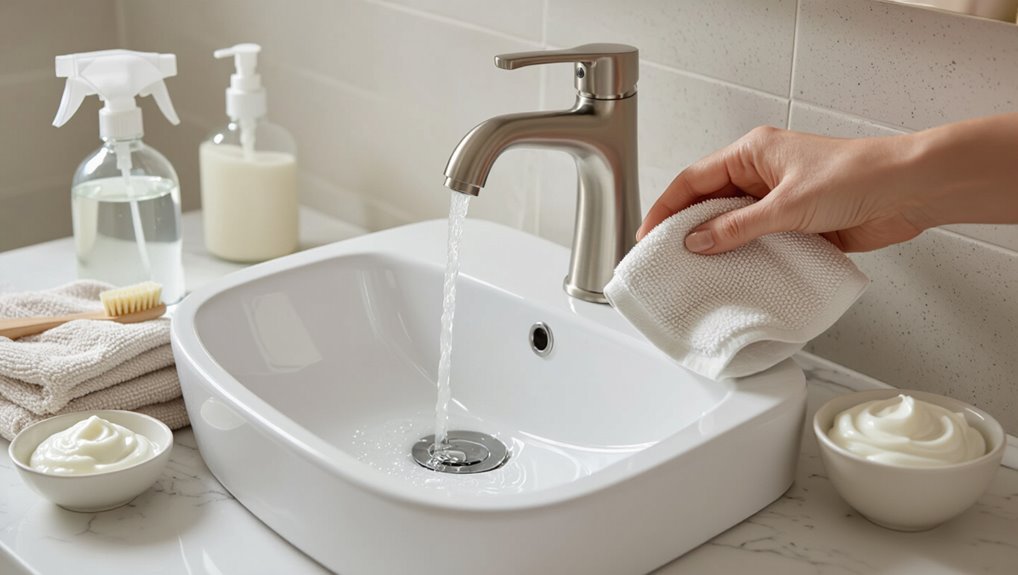
A concise set of methods separates gentle daily care from stronger treatments that risk harming nickel finishes.
For routine maintenance, mild soap and a soft cloth remove residue without abrasion, while targeted soak-and-scrub approaches address stubborn mineral buildup.
Guidance on recognizing when damage risks warrant a professional repair or refinishing completes the comparison.
Quick safe method for everyday cleaning
For everyday care, wipe nickel faucets daily with a soft microfiber cloth dampened with warm water to remove fingerprints and light grime without abrading the finish.
When wondering how do you clean nickel faucets, use gentle circular motions, dry immediately to prevent water spots, and avoid abrasive pads or harsh cleaners.
Occasional mild dish soap is acceptable for slightly oily residue.
Best deep-clean method for stubborn buildup
Begin by mixing a gentle, non-abrasive cleaning solution—warm water with a few drops of mild dish soap—or a 50/50 white vinegar-and-water solution for mineral deposits, and test it on an inconspicuous spot.
Apply with a soft cloth or toothbrush, let sit a few minutes, rinse thoroughly, then dry with a microfiber cloth.
Repeat for persistent spots; avoid abrasive pads or harsh chemicals.
When to call a professional
While many routine stains and mineral deposits can be addressed with gentle household solutions, homeowners should consider professional help when stubborn buildup resists safe cleaning.
The faucet shows signs of corrosion or pitting, the finish is peeling or flaking, or the fixture has significant scratches that risk further damage.
A professional can assess finish integrity, recommend restoration or replacement, and use appropriate tools and chemicals safely.
Understanding Nickel Faucet Finishes and Why Cleaning Matters
Nickel faucets come in several finishes—polished, satin/brushed, and plated—each with distinct appearances and surface properties.
Cleaners and abrasion affect these finishes differently, with harsher chemicals or scrubbing risking visible damage on polished and plated surfaces while satin finishes may better hide minor wear.
Improper cleaning commonly leads to tarnish, pitting, or loss of a protective coating, shortening the faucet’s lifespan and altering its look.
Types of nickel finishes (polished nickel, satin/brushed nickel, plated nickel)
Finishes on nickel faucets fall into distinct categories—polished, satin (or brushed), and plated—each with different appearances, durability, and cleaning needs.
Polished nickel is glossy and reflective. Satin/brushed nickel shows a muted, textured look that hides fingerprints. Plated nickel involves a thin metallic coating applied over a base metal, varying in thickness and resilience.
Proper identification guides maintenance choices.
How different finishes react to cleaners and abrasion
Because each surface is manufactured and finished differently, cleaners and abrasive actions produce distinct effects on polished, satin/brushed, and plated nickel; understanding those differences prevents damage and preserves appearance.
Polished nickel tolerates gentle nonabrasive cleaners but shows scratches easily. Satin/brushed hides fine abrasions yet resists harsh polishes. Plated nickel requires the mildest care to avoid wearing the thin decorative layer.
Common problems caused by improper cleaning (tarnish, pitting, loss of protective coating)
Improper cleaning can quickly degrade nickel faucets, producing visible and structural damage that shortens their lifespan.
Harsh chemicals and abrasive pads strip protective coatings, exposing soft metal to oxidation and causing tarnish.
Corrosive residue creates pitting and micro‑etching, accelerating wear and trapping grime.
Once finishes are compromised, restoration is difficult and costly, often requiring replating or complete replacement.
Materials and Cleaners Safe for Nickel Faucets
Recommended gentle cleaners for nickel faucets include mild soap, a few drops of dishwashing liquid, or a diluted white vinegar solution.
Safe tools are limited to soft microfiber cloths, nonabrasive sponges, and soft-bristle brushes.
Abrasive pads, strong acids, ammonia, bleach, and harsh commercial descalers should be avoided.
Recommended gentle cleaning products (mild soap, dishwashing liquid, white vinegar in dilution)
Use gentle, pH-neutral cleaners and simple household ingredients to protect nickel finishes while removing grime.
A mild liquid soap or dishwashing detergent diluted in warm water safely lifts dirt and oils.
For mineral deposits, a solution of white vinegar diluted half-and-half with water may be applied briefly, then rinsed thoroughly.
Avoid acids at full strength and abrasive chemicals that strip protective coatings.
Safe tools and cloths (microfiber, soft sponge, soft-bristle brush)
Select soft, nonabrasive tools to preserve nickel finishes while cleaning. Microfiber cloths lift dirt and dry without scratching; use gentle, lint-free swipes.
A soft sponge with a nonabrasive side handles soapy residue. For crevices, employ a soft-bristle brush—natural or nylon—used lightly to dislodge grime.
Rinse tools frequently and pat dry to prevent water spots and mineral buildup on the finish.
Products and tools to avoid (abrasive pads, harsh acids, ammonia, bleach, commercial descalers with harsh chemicals)
Avoid abrasive tools and harsh chemicals that can etch, dull, or strip nickel finishes; scrubbers like steel wool, scouring pads, and cleaners containing strong acids, ammonia, or bleach are especially damaging.
Commercial descalers with aggressive formulations and powdered cleaners should be avoided.
Abrasive pads, metal brushes, and untested DIY mixtures risk permanent harm; instead choose mild, pH-neutral cleaners and soft applicators.
Step-by-Step Cleaning Process for Nickel Faucets
A concise routine guarantees nickel faucets stay bright and functional while avoiding damage. Key steps include preparation, regular wipe-downs, targeted weekly cleaning, stain removal, and thorough rinsing and drying:
- Turn off water and cover the drain; daily wipe-downs prevent buildup.
- Weekly gentle clean with a mild solution; remove water spots and fingerprints safely.
- Rinse thoroughly and dry to prevent water marks.
Preparation: turn off water and cover drain
Begin by shutting off the water supply to the faucet and placing a sink strainer or towel over the drain.
Ascertain valves under the sink are fully closed to prevent accidental flow.
Remove loose items from the surrounding area.
Gather soft cloths, mild cleaner, and a small bowl.
Verify the faucet is dry before proceeding to avoid diluted solutions and minimize runoff into the drain.
Daily wipe-down routine
Several times a day, the faucet should be wiped with a soft, dry microfiber cloth to remove water spots and light residue before they set.
The cloth should be used gently along the metal’s grain, avoiding abrasive motion.
After wiping, inspect for mineral specks and immediately blot any remaining dampness.
This simple routine preserves finish and reduces need for deeper cleaning interventions.
Weekly gentle clean with mild solution
Perform a weekly gentle clean using a mild, pH-neutral solution to remove buildup without harming the nickel finish.
Mix a few drops of dish soap with warm water, dampen a soft microfiber cloth, and wipe all fixture surfaces.
Rinse with a clean damp cloth, then buff dry to prevent residue.
Avoid abrasive pads, strong chemicals, and prolonged soaking to preserve the finish.
Removing water spots and fingerprints safely
When water spots and fingerprints mar a nickel faucet, a targeted, gentle routine removes them without risking the finish. The cleaner should work methodically from top to bottom, using soft materials and mild solutions to lift residues rather than abrasive action.
Lightly dampen a microfiber cloth with diluted dish soap or white vinegar solution. Gently wipe affected areas, then buff with a dry cloth to restore subtle luster.
Rinsing and drying to prevent water marks
After removing spots and fingerprints, rinsing and thorough drying prevent new water marks from forming and preserve the finish.
Cold water removes residue; a gentle flow avoids splash. Wipe immediately with a soft microfiber cloth, following contours to collect droplets.
For tight areas use a damp cotton swab then dry. Finish with a light buffing stroke to restore uniform sheen and repel future spotting.
Removing Specific Stains and Buildups
Removing specific stains and buildups on nickel faucets requires targeted methods that preserve the finish.
Techniques vary for hard water deposits, mineral scale and limescale, soap scum, and tarnish or dark spots to avoid abrasive damage.
The following guidance outlines safe, effective options for each type of residue.
Removing hard water deposits without harming finish
Tackle hard water deposits on nickel faucets with gentle, pH-neutral methods to protect the finish while restoring shine.
A soft cloth dampened with diluted dish soap removes light residue; for stubborn spots, use a 1:1 mixture of distilled water and white vinegar applied briefly with a microfiber pad, rinsed immediately and dried.
Avoid abrasive pads, bleach, and prolonged acidic exposure.
Tackling mineral scale and limescale safely
Having addressed general hard-water residue and safe spot treatments, attention shifts to thicker mineral scale and limescale that can accumulate around aerators, base seams, and faucet joints.
Remove removable parts, soak in a dilute vinegar solution briefly, and gently scrub with a soft-bristled brush or wooden toothpick.
Rinse thoroughly, dry immediately, and avoid prolonged acid exposure to preserve nickel’s protective coating.
Cleaning soap scum and grime
For soap scum and greasy grime, apply a gentle, pH-neutral cleaner or a mild vinegar-and-water solution to break down film without harming the nickel finish.
Let it sit briefly, then agitate with a soft cloth or nonabrasive sponge and rinse thoroughly, drying immediately to prevent water spots or dulling.
Repeat only as needed, avoiding abrasive pads and acidic concentrates that can abrade or discolor.
Handling tarnish and dark spots
After removing soap scum and surface grime, attention turns to tarnish and dark spots, which are chemical changes or localized deposits that require different treatments.
Gentle methods include a paste of baking soda and water applied briefly, or diluted white vinegar on a soft cloth for stubborn mineral stains.
Rinse thoroughly and dry. Avoid abrasive pads or acidic concentrates that etch the nickel finish.
Restoring Shine and Protecting the Finish
Attention turns to restoring luster and safeguarding the nickel surface through appropriate polishing techniques, careful use of protective coatings or waxes, and reapplication of any manufacturer-recommended finishes.
Recommended polishing methods use non-abrasive, pH-neutral cleaners and soft cloths to avoid scratching or stripping the finish.
Guidance will also cover which coatings or waxes are safe, which to avoid, and how to reapply factory or endorsed finishes to maintain warranty and appearance.
Polishing methods safe for nickel finishes
Polishers and gentle abrasives designed for metal finishes can restore nickel’s luster without damaging its protective coating when chosen and used correctly.
Use non-abrasive cream or microfiber-applied metal polish, working with the grain in light circular motions. Test on an inconspicuous area first.
Rinse thoroughly and dry with a soft cloth to remove residue and prevent streaking or buildup.
Using protective coatings or waxes (what’s safe and what to avoid)
Apply a clear protective coating sparingly to extend nickel’s shine and guard against water spots and mild tarnish.
Use microcrystalline waxes or silicone-free, non-abrasive sealants labeled safe for metal finishes.
Avoid ammonia, bleach, solvent-based polishes, and abrasive paste waxes that can dull or strip plating.
Test any product on an inconspicuous area first and follow manufacturer care guidelines.
Reapplying manufacturer-recommended finishes
After using a protective wax or sealant, a homeowner should follow the manufacturer’s guidance when the original factory finish needs revitalizing. Reapplying a recommended finish restores shine and reinforces protection without risking damage from incompatible products.
The manufacturer’s instructions specify approved products, application methods, drying times, and maintenance intervals. Strict adherence preserves warranty, color match, and longevity while minimizing chemical interactions that could dull or etch nickel finishes.
Common Cleaning Mistakes That Damage Nickel Faucets
Common cleaning missteps can strip or stain nickel finishes, so understanding hazardous products and recovery options is essential.
- Avoid abrasive pads, bleach, and acidic cleaners that etch or discolor nickel.
- Test any cleaner on an inconspicuous area first.
- If the finish is already damaged, consider professional refinishing or gentle polishing and protective coating options.
Examples of damaging products and practices
Many well-intentioned cleaning choices can harm nickel finishes: abrasive pads, acidic cleaners, bleach, and harsh chemical soakings all accelerate tarnish, scratches, or coating loss.
Steel wool, scouring powders, oven cleaners, undiluted vinegar, and ammonia-based products are common offenders. High-pressure scrubbing, prolonged soaking, and abrasive brushes remove protective layers; chlorinated sanitizers and abrasive toothpaste likewise dull or etch the surface.
How to test cleaners on an inconspicuous area
Given the number of cleaners and techniques that can damage nickel finishes, users should always test any product or method on an inconspicuous spot before treating visible areas.
Apply a small amount, wait the manufacturer’s recommended dwell time, then rinse and dry.
Inspect for discoloration, dulling, or texture change under varied light. If no adverse effects appear after 24 hours, proceed cautiously.
What to do if finish is already damaged
Address damaged nickel finishes promptly to prevent further deterioration and restore appearance where possible.
Inspect for scratches, discoloration, or pitting. Clean gently with mild soap and water, then dry.
For minor scratches, use a nonabrasive polishing compound recommended for nickel.
Severely compromised finishes may require professional refinishing or replacement.
Avoid harsh chemicals and abrasive pads that worsen damage.
Maintenance Schedule and Practical Tips
A clear maintenance schedule helps preserve nickel finishes and prevent corrosion over time.
Recommended routines include light cleaning after use, weekly wipe-downs to reduce mineral buildup, and a seasonal or annual deep maintenance checklist for aerator cleaning, seal inspection, and gentle polish.
Practical daily habits—such as drying splashes and avoiding abrasive cleaners—minimize the need for intensive repairs.
Recommended cleaning frequency for longevity
Regularly maintaining nickel faucets preserves finish and function while preventing buildup that leads to corrosion or staining.
A gentle wipe once weekly removes surface residues; a soft deep clean monthly addresses mineral deposits using manufacturer-approved cleaners.
For high-use or hard-water environments, increase deep cleaning to every two weeks.
Immediate spot cleaning after spills prevents etching and prolongs fixture life.
Quick daily habits to minimize buildup
Several simple daily habits can greatly reduce mineral and soap buildup on nickel faucets.
After use, a soft microfiber cloth is wiped across fixtures to remove water droplets and soap residue.
Keeping surrounding sinks clear of toothpaste and soap scum prevents transfer.
Promptly rinsing and drying areas exposed to hard water minimizes spotting.
These brief routines preserve finish and lessen need for intensive cleaning.
Seasonal or annual deep maintenance checklist
When seasons change, homeowners should perform a focused deep-maintenance check on nickel faucets to prevent long-term damage and preserve finish integrity.
Inspect aerators and remove mineral buildup; soak in vinegar if needed. Clean supply lines and check for leaks.
Test cartridge and replace worn seals. Reapply manufacturer-approved polish or protective wax sparingly.
Document date and actions for future reference.
Comparative Care Notes for Nickel vs. Other Faucet Materials
Nickel faucets require different care than chrome, brass, or stainless options, with distinct cleaning difficulty and product compatibility factors. The table below summarizes key contrasts in cleaning ease and finish vulnerability to guide material-specific choices. Readers are encouraged to take into account these practical differences when planning maintenance and product use.
| Aspect | Nickel vs. Other Materials |
|---|---|
| Cleaning difficulty & product compatibility | Nickel often tolerates mild, non-abrasive cleaners; chrome and stainless are generally more forgiving, while brass may need specialized polishes. |
| Longevity & finish vulnerability | Nickel finishes resist corrosion but can show scratches or wear from harsh chemicals faster than stainless, while plated finishes on other metals vary in durability. |
Cleaning difficulty and product compatibility comparison
Many homeowners find that cleaning nickel faucets requires a gentler approach than wiping down chrome or stainless steel, because nickel’s finish—whether polished, satin, or brushed—reacts differently to common cleaners.
Mild soap, water, and microfiber cloths are safest. Harsh abrasives, acidic cleaners, and bleach can damage patina or sealants.
Compatibility varies; always test cleaners on an inconspicuous spot before regular use.
Longevity and finish vulnerability comparison
Although finishes vary in resilience, brushed and satin nickel typically hide wear better than polished nickel. However, they remain more vulnerable to acidic cleaners and abrasive pads than chrome or stainless steel.
Nickel requires gentler maintenance to preserve patina; mild soap, soft cloths, and periodic waxing extend life.
Chrome and stainless tolerate harsher agents and scrubbing, offering greater longevity with lower maintenance risk.
Sources and Manufacturer Guidance
Readers are advised to consult the faucet manufacturer’s care instructions, typically found in the product manual or on the maker’s website, before cleaning.
Specific guidance will identify approved cleaning agents and methods to preserve finish and function.
Using unapproved chemicals or abrasive techniques may void the warranty, so pairing chosen cleaners with the warranty terms is recommended.
How to find and follow your faucet maker’s care instructions
Where can owners reliably find care instructions for a nickel faucet, and why should those manufacturer guidelines be prioritized over generic advice?
Owners should consult the faucet maker’s user manual, official website product page, or customer service.
Manufacturer guidance specifies approved cleaners, recommended frequencies, and technique to protect proprietary finishes.
Follow model-specific directions to avoid improper products or methods that could harm finish integrity or void support options.
When manufacturer warranty could be affected by cleaning products
Many manufacturers explicitly state that using unapproved cleaning agents—such as acidic cleaners, abrasive pads, or bleach-based solutions—can void a faucet’s finish warranty.
Consumers should consult product literature and manufacturer websites for approved cleaners and documented procedures.
Retain proof of purchase and cleaning receipts if warranty claims arise.
When in doubt, contact customer support for written guidance to avoid denial of coverage due to improper maintenance.
Conclusion
In summary, gentle cleaning with mild soap, warm water, and a soft cloth preserves nickel finishes while preventing dulling or scratching. Even stubborn water spots respond to diluted vinegar applied briefly and rinsed immediately, so readers needn’t fear all acids—controlled use is safe. Visualize a soft microfiber wiped in slow circular motions restoring warm metal gleam; consistent, light maintenance, not harsh scrubbing, guarantees lasting beauty and finish integrity.