What Is a Perforated Pipe? Uses, Types & DIY Drain Solutions
A perforated pipe is a type of tubing with evenly spaced holes or slots that is specifically designed to collect and convey subsurface water. It is commonly used in drainage systems such as French drains, foundation drains, and trench drains to redirect groundwater away from areas like foundations and soggy yards. These pipes are typically made from materials like PVC, corrugated plastic, concrete, or metal, and come with various perforation patterns to suit different installation requirements. This guide will provide you with essential information on selecting, installing, and troubleshooting perforated pipes for effective drainage solutions.
What Is a Perforated Pipe?
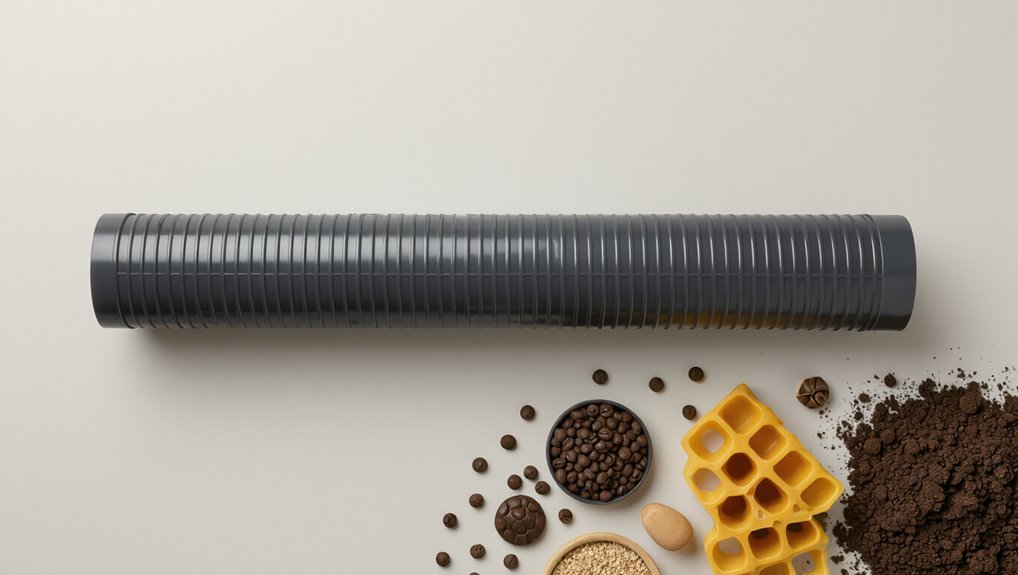
As a drainage component, a perforated pipe is a length of tubing—commonly made from PVC, HDPE, or corrugated plastic—sold with regularly spaced holes or slots along its surface to collect and convey groundwater.
It functions as an inlet within subsurface drainage systems, installed in trenches surrounded by aggregate and fabric to filter sediment and prevent clogging.
Sizes, perforation patterns, and wall stiffness vary to suit yard, foundation, agricultural, and roadside applications.
Manufacturers offer smooth or corrugated profiles and differing diameters for flow capacity.
Proper selection balances expected flow, soil type, installation depth, and longevity requirements.
How Perforated Pipe Works
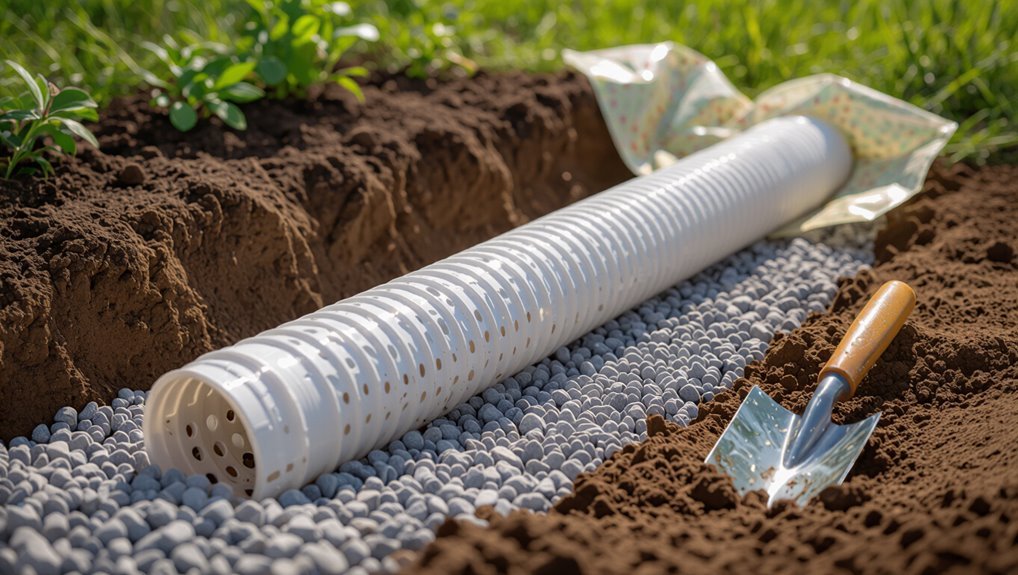
Typically installed within a gravel-filled trench and wrapped in filter fabric, a perforated pipe collects groundwater through its holes or slots and conveys it away by gravity or a slight slope.
Water enters the pipe, flows along its interior, and exits at a discharge point or into a soakaway.
Soil and fabric act as preliminary filters, preventing sediment entry while allowing water passage.
Proper slope, pipe size, and perforation pattern determine capacity and prevent backups.
- Inflow through perforations
- Internal conduit flow
- Filtration by fabric and aggregate
- Discharge or infiltration management
Why Use Perforated Pipe for Drainage
Having outlined how a perforated pipe collects and conveys groundwater, attention turns to why it is chosen for drainage projects.
It offers efficient subsurface water interception, reducing soil saturation and surface pooling. The perforations allow distributed infiltration while directing flow away from foundations, slopes, and landscapes.
Flexibility in layout supports contour following and varied installation depths. When combined with gravel and geotextile, it improves filtration and longevity.
Installation can be cost-effective and adaptable for residential, agricultural, and commercial sites.
Common Materials: PVC, Corrugated Plastic, Concrete, Metal
Among the common materials used for perforated pipe—PVC, corrugated plastic, concrete, and metal—each offers distinct strengths and trade-offs in durability, cost, and installation flexibility. Choices depend on application, soil conditions, expected lifespan, and budget.
Typical considerations include weight, corrosion resistance, and ease of connection. Common options:
- PVC: lightweight, smooth interior, chemical-resistant, easy to cut and glue.
- Corrugated plastic: flexible, cheap, ideal for contouring, less durable under heavy loads.
- Concrete: extremely durable, heavy, suited for long-term trench installations and high loads.
- Metal (galvanized/steel): strong, susceptible to corrosion unless treated, good for specialized uses.
Perforation Patterns and Their Effects
How and where holes are placed in a perforated pipe determines flow behavior, filtration, and longevity.
Patterns—linear, staggered, circumferential, or clustered—alter intake distribution and hydraulic efficiency.
Larger, fewer holes increase capacity but admit more sediment; smaller, numerous holes improve filtration yet risk clogging more uniformly.
Slot versus round perforations change velocity profiles and resist blockage differently.
Orientation relative to bedding affects lateral capture and sediment settling.
Hole spacing and density influence structural strength and erosion susceptibility.
Engineers select patterns to balance desired drainage rate, filtration needs, maintenance frequency, and material limits for specific site conditions.
Pipe Size: Flow Capacity and Clog Risk
Pipe diameter directly influences flow capacity, with larger pipes conveying greater volumes at lower velocity.
Smaller-diameter perforated pipes increase the risk of clogging from sediment and roots because reduced cross-section and slower flushing make blockages more likely.
Consideration of expected debris load and required discharge should guide the choice of pipe size to balance capacity and maintenance needs.
Pipe Diameter Versus Flow
Why does diameter matter so much for perforated drains? Larger diameters increase cross‑sectional area exponentially, boosting flow capacity and lowering velocity for the same volume. Diameter choice balances drainage needs, burial depth, and soil type. Proper sizing reduces backup risk without relying solely on slope.
- Larger pipe: higher volumetric flow, slower internal velocity
- Smaller pipe: less soil displacement, quicker self‑scour at higher velocities
- Multiple smaller pipes: distributed flow, potential maintenance tradeoffs
- Material and perforation pattern interact with diameter to determine effective hydraulic performance
Sizing should match expected peak inflow and maintenance capabilities.
Small Pipes And Clogs
In tight installations, small perforated drains concentrate flow and raise the risk of clogging because reduced cross‑section and closer perforation spacing more readily trap silt, roots, and debris.
Designers must balance desired infiltration with maintenance realities: narrower pipes convey less volume, increase velocity only marginally, and clog faster than larger alternatives.
Frequent inspection, larger aggregate surrounds, geotextile filters, and occasional flushing mitigate buildup.
For root-prone soils, chemically treated or root-resistant materials help.
Where space allows, upsizing diameter or using multiple parallel lines extends service life and reduces downtime compared with a single undersized perforated run.
Perforated vs Solid Pipe: Choosing by Use Case
Choosing between perforated and solid pipe depends primarily on whether the goal is localized drainage or uninterrupted conveyance of water.
Perforated pipe is suited for collecting and dispersing groundwater with attention to reduced flow rates and routine checks for sediment buildup, while solid pipe is preferred where high flow capacity and tight containment are required.
Installation and maintenance differ accordingly: perforated systems need proper bedding, filtration fabric, and occasional flushing, whereas solid runs emphasize secure joints and access for clearing blockages.
Drainage Versus Conveyance
When evaluating pipe options for a landscape or building project, the key distinction lies in whether the goal is to collect and disperse groundwater or to transport clear water from one point to another. A perforated pipe collects and relieves saturated soil, dispersing water into surrounding media; a solid pipe conveys water efficiently along a defined route to drains or outlets. Selection depends on desired interaction with the ground, maintenance access, and susceptibility to clogging.
Considerations include installation depth, backfill material, and outlet management.
- Perforated: collects, relieves hydrostatic pressure
- Solid: conveys, prevents infiltration
- Maintenance: perforated often harder to clear
- Site: soil permeability guides choice
Flow Rate Considerations
For drainage design, flow rate considerations hinge on whether the system must collect subsurface water through soil infiltration or convey clear runoff along a defined route. Perforated pipe reduces peak conveyance capacity because inflow occurs along length and depends on surrounding permeability; it excels where distributed collection and attenuation are desired. Solid pipe maximizes uninterrupted conveyance and suits predictable high-volume runoff. Selection balances expected inflow rates, slope, pipe diameter, and soil infiltration. Below is a quick comparison.
| Feature | Perforated Pipe | Solid Pipe |
|---|---|---|
| Primary role | Collection/attenuation | Conveyance |
| Capacity predictability | Variable | High |
| Best use case | Subsurface drainage | Stormwater conveyance |
Installation And Maintenance
In evaluating installation and maintenance, the decision between perforated and solid pipe hinges on site conditions, intended purpose, and long-term access needs.
Perforated pipe suits drainage trenches, leach fields, and subsurface water dispersion but requires clean bedding, filter fabric, and periodic inspection for siltation.
Solid pipe excels for conveyance, pressure systems, and exposed runs with simpler installation and fewer clog concerns.
Maintenance plans differ: inspection frequency, flushing, and accessibility.
Consider lifecycle costs, root intrusion, and freeze protection when choosing.
- Installation complexity and bedding requirements
- Expected debris and sediment loads
- Access for inspection and repair
- Long-term replacement and cost implications
French Drains Explained
How does a French drain manage water so effectively?
A French drain channels subsurface water away from foundations and saturated areas using a perforated pipe set in a gravel trench. Water enters the gravel, flows into the pipe through holes, and is conveyed to a safe outlet or dry well.
Filter fabric prevents sediment clogging while slope guarantees gravity-driven flow.
Properly sized pipe, adequate trench depth, and maintenance access reduce backups.
French drains suit groundwater control around basements, retaining walls, and driveways. They complement surface grading but are distinct from shallow swales or landscape low-spot solutions.
Landscape Projects for Perforated Pipe (Swales, Low Spots)
When integrated into swales and shallow low spots, perforated pipe provides a discreet, effective way to relieve standing water by capturing surface runoff and conveying it to a safe discharge point or infiltration zone. Installed below grade in gravel trenches, it reduces erosion, prevents soggy turf, and supports healthier plantings without visible drains.
Proper slope, filter fabric, and outlet placement guarantee reliable performance.
Typical landscape applications include:
- Channeling roof and yard runoff through gently sloped swales
- Drying seasonal depressions to revive lawn and flower beds
- Integrating with rain gardens for distributed infiltration
- Connecting to storm drains or daylighted outlets for controlled release
Foundation and Basement Waterproofing With Perforated Pipe
Moving from surface drainage to building foundations, perforated pipe plays a central role in keeping basements dry by intercepting groundwater before it reaches the footing. Installed alongside footings or within a trench behind foundation walls, it channels water to a sump or outlet, reducing hydrostatic pressure and seepage. Proper bedding, filter fabric, and gravel improve performance and prevent clogging. Regular inspection and accessible cleanouts extend system life. Perforated pipe complements exterior drainage membranes and interior sump systems but does not replace required waterproofing membranes or structural repairs.
| Component | Purpose | Typical Material |
|---|---|---|
| Pipe | Collect water | HDPE/PVC |
| Gravel | Drainage bed | Crushed stone |
| Fabric | Filter | Geotextile |
| Slope | Conveyance | 1%–2% |
| Outlet | Discharge | Sump/Storm sewer |
Planning a DIY Drain: Slope, Length, Outlet
Planning a DIY drain requires attention to three key factors: maintaining a proper pipe slope to guarantee gravity flow, accounting for run length to prevent clogging and loss of capacity, and selecting an appropriate outlet type for the site’s discharge needs.
Calculating the slope (typically 1–2% for lateral drains) and measuring total run length determine whether additional fall or a sump is necessary. The chosen outlet—yard drain, storm sewer tie-in, or dry well—must match local codes and the system’s expected flow.
Proper Pipe Slope
For a DIY drain, getting the pipe slope right is essential: too steep and water outruns the gravel and causes erosion, too flat and sediment will settle and block flow.
Proper gradient ensures consistent drainage, prevents clogging, and protects surrounding soil.
A gentle, steady grade balances velocity and filtration.
Typical recommendations are given as percentages and inches per foot for ease of installation.
Consider outlet elevation and local frost lines when setting slope.
Check alignment with a level or laser.
Routine inspection after storms verifies performance.
- Aim for 1% (1/8–1/4 in/ft) for most gravel drains
- Avoid >5% to prevent erosion
- Maintain uniform gradient
- Regrade if pooling appears
Run Length Considerations
When determining run length for a DIY drain, consider how distance interacts with slope, soil type, and outlet capacity: longer runs require more attention to maintaining consistent gradient, preventing clogging from sediment, and accommodating changes in elevation or soil permeability. The installer should plan segments, access points, and cleanouts proportionally to length; select pipe diameter and filter fabric that mitigate clogging risk; and evaluate trench depth to preserve slope while avoiding frost lines or utility conflicts.
| Item | Consideration |
|---|---|
| Length | Affects hydraulic friction |
| Slope | Must remain uniform |
| Soil | Permeability varies |
| Access | Cleanouts reduce maintenance |
Choosing The Outlet Type
Which outlet best suits the site depends on discharge volume, destination, and maintenance access: a gravity outlet to daylight suits consistent downhill slopes, a sump or pump-out is needed for low spots or uphill discharges, and permeable soakaway beds work where soil infiltration is adequate.
Selecting an outlet requires evaluating peak flow, legal discharge restrictions, and ease of clearing.
Match pipe size and end treatment to expected debris and sediment.
Consider inspection points and access for flushing.
Choose corrosion- and UV-resistant materials for exposed terminals.
- gravity outlet: low maintenance, needs fall
- sump/pump: handles uphill/runoff peaks
- soakaway: needs permeable soil
- discharge to storm: permits required
Choosing the Right Perforated Pipe for Your Project
In selecting a perforated pipe, assess site conditions, drainage goals, and material compatibility to guarantee performance and longevity. Choose pipe material—PVC, corrugated polyethylene, or metal—based on soil chemistry, load, and expected lifespan.
Match diameter and perforation pattern to flow rates and sediment load; larger diameters and more open area suit high-volume or coarse-grained runoff. Consider wall thickness and structural rating where burial depth or traffic applies.
Opt for factory-slotted or punched designs that resist clogging for the application. Balance cost against durability and maintenance needs, and select fittings and connectors that maintain system integrity.
Tools and Materials Checklist for a DIY Drain
A concise list of essential tools and the required materials helps guarantee a DIY drain project proceeds smoothly.
The tools include basics like a shovel, utility knife, pipe cutter, and measuring tape, while materials cover perforated pipe, geotextile fabric, gravel, and fittings.
Clear preparation reduces on-site delays and costly mistakes.
Essential Tools List
For a successful DIY perforated pipe drain, gather a concise set of tools and materials tailored to the job: perforated pipe (PVC or corrugated), pipe fittings and couplers, geotextile fabric, gravel, a shovel, trenching bar or spade, level, tape measure, utility knife, PVC primer and cement (if using PVC), flexible hose or end caps, landscape fabric pins, gloves, and safety glasses.
Additional recommended items guarantee accuracy, safety, and durability. Essential hand and safety tools should be prioritized, with a few specialty items for tight sites or long runs.
- Wheelbarrow for material transport
- Tamper for compacting bedding
- Saw (PVC or reciprocating)
- Marker and string line
Required Materials Overview
Gathering the right materials guarantees a durable, effective perforated-pipe drain tailored to site conditions and anticipated flow capacity. The checklist includes perforated pipe (PVC or corrugated), solid pipe for outlets, geotextile fabric to prevent clogging, and clean aggregate (washed gravel) for bedding and backfill. Add pipe connectors, couplings, end caps, and adhesive or solvent cement for PVC joints. Include a catch basin or inlet grate where surface collection is needed.
Optional items: trench drain liner, inspection ports, and a filter sock. Appropriate safety gear—gloves, eye protection, and a dust mask—completes the list.
Installing a Backyard French Drain With Perforated Pipe : Step-by-Step
When tackling a backyard sogginess problem, installing a French drain with perforated pipe provides a reliable, long-term solution that redirects subsurface water away from foundations and low spots.
A concise step-by-step: mark the route, dig a trench with proper slope (1% minimum), lay landscape fabric, add gravel base, position the perforated pipe with holes down, cover with gravel, fold fabric over, and finish with soil and turf. Inspect outlets and add catch basins where needed. Maintain by flushing and checking for sediment.
Key considerations:
- Correct slope and outlet location
- Proper pipe orientation
- Adequate gravel filtration
- Fabric to prevent clogging
Foundation Drains Without Digging: Options and Limits
Without excavating, several strategies can mitigate foundation water issues, though each carries clear limitations.
Surface grading redirects runoff away from foundations but requires sufficient yard slope and may be impractical on small lots.
Gutters and downspout extensions reduce concentrated flow yet depend on regular maintenance and adequate discharge points.
Interior solutions like perimeter sump pumps and sub-slab drainage relieve basement water but do not stop external hydrostatic pressure and require professional installation.
Waterproof coatings and sealants block minor seepage but are ineffective against significant groundwater.
Each non-excavation option offers partial relief; combined approaches often yield the best practical outcome.
Preventing Clogs: Fabric, Gravel, and End Caps
A nonwoven fabric filter layer is placed around the perforated pipe to block soil and fines while allowing water to pass.
A surrounding bed of graded gravel supports the pipe, promotes drainage, and further reduces sediment migration.
End caps or sealed terminations prevent entry of debris and direct flow toward designated outlets.
Fabric Filter Layer
The fabric filter layer sits between the surrounding soil and the gravel-packed perforated pipe, preventing fine particles from entering the gravel and clogging the system while allowing water to pass freely.
It stabilizes the trench, extends pipe service life, and simplifies maintenance by keeping sediment out.
Selection favors geotextiles rated for permeability and tensile strength; overlaps and secure fastening reduce bypass.
Installation requires clean, wrinkle-free placement directly against the gravel and careful backfill to avoid tears.
Key considerations include:
- Permeability rating appropriate for soil fines
- UV resistance for exposed sections
- Puncture and tear strength
- Compatibility with local soil chemistry
Gravel Surrounding Bed
Following placement of the fabric filter layer, attention turns to the gravel surrounding bed that cushions the perforated pipe and promotes efficient drainage.
A well-graded, angular gravel mix creates voids for water flow while resisting compaction. Gravel depth typically ranges from 3 to 6 inches above the pipe, with larger stone beneath to stabilize bedding.
The gravel layer distributes loads, prevents soil migration into pipe holes, and facilitates rapid lateral movement of water toward perforations.
Placement should be uniform, avoiding sharp stones that could damage pipe. Periodic surface inspection and maintaining surrounding soil grades help preserve long-term function.
End Cap Sealing
Make certain secure end cap sealing to prevent soil, gravel, and fabric from entering perforated pipe ends, which are frequent clog points in drainage systems. The end cap protects flow, maintains sediment barriers, and prolongs system life. Proper selection and installation reduce maintenance and backflow. Inspect caps for fit, material compatibility, and signs of displacement after settlement or freeze–thaw cycles.
Consider removable caps for access and permanent seals where access is unnecessary. Employ geotextile overlaps and compacted gravel to support caps and prevent gaps.
- Use snug, threaded or snap-fit caps
- Match cap material to pipe type
- Overlap fabric onto cap by several inches
- Check annually for displacement
Inspecting, Maintaining, and Troubleshooting Drains
Inspectors should routinely evaluate perforated pipe drain systems for flow restriction, displacement, and root intrusion to guarantee long-term performance. Routine checks include visual inspection of cleanouts, flow tests after rain, and camera surveys when blockages persist. Clearing sediment and roots with mechanical augers or hydro-jetting restores capacity. Repair displaced sections and replace crushed or severely corroded pipe. Document findings and schedule follow-up inspections. Early detection prevents widespread failure and costly repairs.
| Symptom | Likely Cause | Action |
|---|---|---|
| Slow drainage | Sediment buildup | Flush or jet |
| Backflow | Clog downstream | Camera inspect |
| Surface pooling | Pipe collapse | Excavate/replace |
| Odor | Organic decay | Clean/filter |
Cost Estimates and Budget-Friendly Alternatives
After addressing inspection findings and repairs, budget planning becomes the next priority for managing perforated pipe systems.
Cost estimates vary by pipe material, length, bedding, and labor; DIY projects reduce expenses but require time and basic tools. Consider long-term savings from proper installation versus cheap fixes that may fail.
- Compare materials: PVC, corrugated, and ADS for upfront and lifecycle costs.
- Factor excavation, geotextile, and gravel into estimates, not just pipe price.
- Use refurbished or surplus pipe where code allows to lower material costs.
- Prioritize preventative maintenance to avoid costly replacements later.
When to Call a Pro: Warning Signs and Permits
When should a professional be contacted for perforated pipe issues? A professional is advised when persistent pooling, foul odors, sinking ground, or recurring backups occur despite basic DIY cleaning.
Rapidly worsening problems, visible pipe collapse, or contaminated water require immediate expertise. Professionals assess correct slope, soil conditions, and pipe integrity; they perform camera inspections, locate utilities, and recommend replacements or rerouting.
Permit requirements vary by jurisdiction; licensed contractors guarantee compliance for excavation, disposal, and connection to municipal systems. Hiring a qualified contractor reduces risk of improper repairs, code violations, and costly rework, preserving property value and long-term drainage performance.
Conclusion
Perforated pipe systems quietly shoulder water away like the unseen roots of a tree, keeping yards and foundations safe. When installed with proper materials, gravel, and filter fabric, they provide reliable, low-maintenance drainage for many situations. Regular inspections and simple repairs prevent most problems; however, persistent backups, structural collapse, or complex slopes call for professional assessment. Thoughtful planning and occasional upkeep guarantee these small channels protect property and peace of mind for years.