What Is SCH 80 Pipe? Strong, Thick PVC & CPVC Pipe Guide
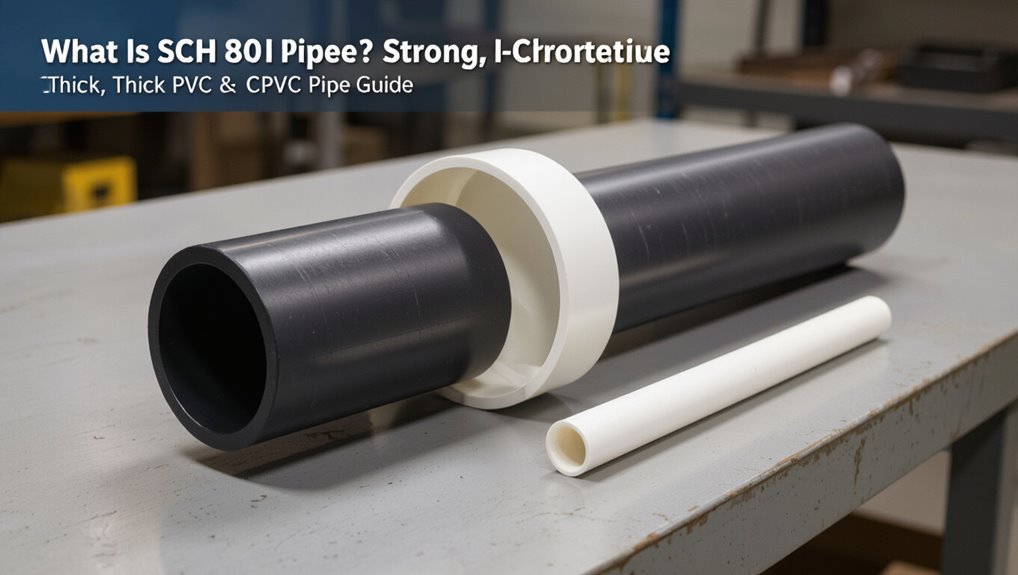
SCH‑80 pipe is a thicker-walled variant of PVC/CPVC designed for applications requiring higher internal pressures and enhanced mechanical strength. It maintains the same outside diameter as standard schedules but features thicker walls, which reduces the internal bore while increasing burst and working pressures. This type of pipe is commonly used in industrial settings, high-temperature environments, and corrosive applications, offering better resistance to water hammer, abrasion, and mechanical damage compared to SCH‑40. When choosing SCH‑80 pipe, it’s essential to consider material compatibility, temperature derating, and the appropriate fittings. Further sections will provide detailed guidance on sizing, installation, and testing.
What SCH‑80 Pipe Is : Quick Answer and When to Use It
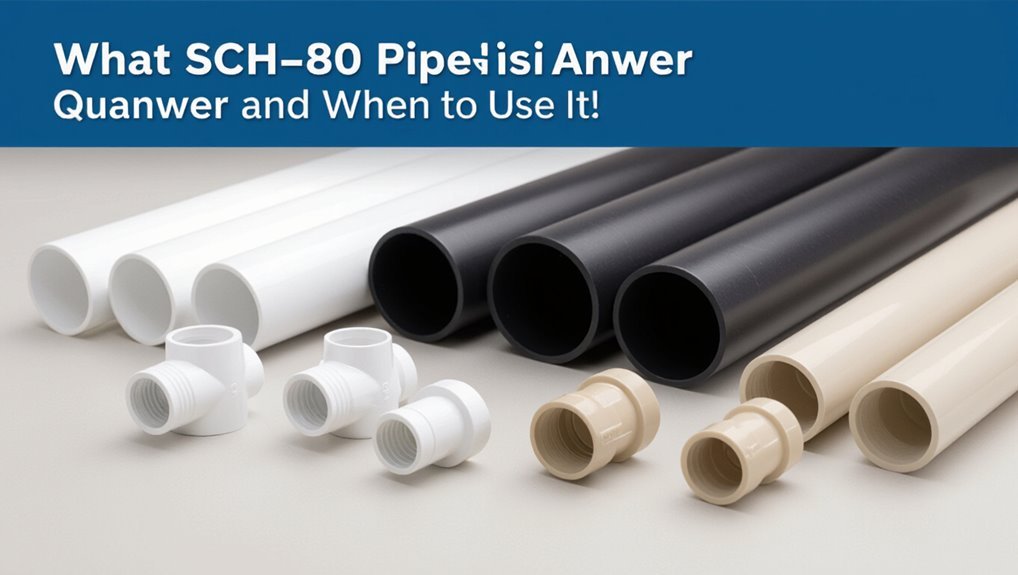
SCH‑80 (Schedule 80) pipe is a standardized, heavier‑walled variant of common pipe sizing that provides greater internal pressure capacity and mechanical strength than Schedule 40; it is made in materials such as PVC, CPVC, steel, and stainless steel and is selected when higher pressure, increased durability, or stricter safety margins are required, for example in pressurized industrial systems, high‑temperature service, or where mechanical loading and impact resistance are significant concerns.
It serves applications requiring smaller diameters with higher pressure ratings, corrosive or abrasive service, and installations exposed to mechanical damage.
Selection balances pressure, temperature, chemical compatibility, and cost.
SCH‑80 vs SCH‑40: PVC and CPVC Differences
When comparing Schedule 80 and Schedule 40 in PVC and CPVC, the key differences are wall thickness, pressure rating, and resulting weight and stiffness: Schedule 80 has thicker walls and higher pressure capacity at the same nominal diameter, while Schedule 40 is lighter and more economical for lower‑pressure applications.
Schedule 80 components suit industrial, high‑pressure, or longer span runs where mechanical strength and reduced deflection matter.
Schedule 40 is common in residential plumbing and drainage where pressures and mechanical demands are lower.
Chemical compatibility, temperature limits, and installation method remain governed by material (PVC vs CPVC) rather than schedule selection.
Sizing & Fittings for SCH‑80: OD, ID, and Compatibility
Sizing and fittings for SCH‑80 require attention to both outside diameter (OD) and inside diameter (ID) because wall thickness changes affect flow capacity and connection methods.
Compatibility issues arise when matching SCH‑80 components to fittings designed for different schedules or materials, as identical nominal sizes can have differing ODs or IDs.
Proper selection and verification of fitting type, socket/tru‑type dimensions, and pressure ratings prevent leaks and mechanical failures.
OD vs ID Differences
In pipe selection, the distinction between outside diameter (OD) and inside diameter (ID) determines wall thickness, flow capacity, and which fittings will properly mate with SCH‑80 components. SCH‑80 maintains standard OD for a given nominal size while increasing wall thickness, reducing ID compared with lighter schedules. Designers must account for reduced flow area, head loss, and pressure limits when choosing SCH‑80. Measuring OD guarantees compatibility with many fittings; measuring ID verifies flow calculations. The table summarizes key contrasts and practical checks.
| Aspect | Consideration |
|---|---|
| OD consistency | Matches nominal size |
| ID reduction | Less flow area |
| Wall thickness | Increased |
| Design checks | Measure both before specifying |
Fitting Compatibility Issues
Having established how SCH‑80 increases wall thickness and reduces ID compared with lighter schedules, attention turns to how those dimensional changes affect fittings and joint selection.
SCH‑80 pipes share nominal OD with other schedules up to certain sizes, yet smaller ID alters flow and socket depths. Standard PVC/CPVC fittings labeled for SCH‑80 guarantee proper fit; using SCH‑40 fittings risks shallow sockets or loose solvent welds. Threaded adapters require matching OD and thread form; tapered threads may need sealant. Moving between schedules mandates reducers or specialized couplings. Engineers must verify manufacturer ratings, pressure class, and joint compatibility before assembly.
Wall Thickness and Pressure Ratings for SCH‑80 Pipe
For SCH‑80 pipe, wall thickness is standardized and directly governs the pipe’s pressure-bearing capacity: thicker walls yield higher allowable working pressures at a given temperature and material. SCH‑80’s increased wall compared with SCH‑40 raises burst and working pressure ratings for PVC and CPVC, influencing selection for higher-pressure applications. Pressure tables correlate nominal size, wall thickness, and material to allowable working pressure; designers reference these when specifying systems.
Factors such as joint type and manufacturing quality also affect practical limits.
- Nominal size dictates required wall thickness for SCH‑80
- Material (PVC vs CPVC) alters pressure values
- Joint method impacts system strength
- Standards provide rated working pressures
Temperature Limits and Thermal Performance
Wall thickness and material selection determine SCH‑80 pipe’s pressure capabilities, but those ratings change with temperature because polymer strength and stiffness decline as heat rises.
SCH‑80 pipe exhibits reduced allowable pressure at elevated temperatures; manufacturers provide temperature-derating charts showing percent reduction per temperature increment.
Thermal expansion and contraction require calculation for run length and anchoring to avoid stress and joint failure.
Long exposures to temperatures near the polymer’s maximum continuous service temperature accelerate creep and stress relaxation, shortening service life.
Conversely, low temperatures can increase brittleness and susceptibility to impact damage.
Proper design uses derating, expansion control, and suitable temperature limits.
SCH‑80 Materials: PVC vs CPVC – Uses and Limits
In comparing Schedule 80 PVC and CPVC, material chemistry dictates their typical applications and temperature limits: PVC (polyvinyl chloride) is widely used for cold- and room-temperature water, drainage, and many chemical services up to roughly 140°F (60°C), while CPVC (chlorinated polyvinyl chloride) offers higher heat resistance—useful for hot water and higher-temperature chemical lines—usually rated to about 200°F (93°C).
Selection emphasizes service temperature, chemical compatibility, and pressure rating. Advantages and constraints include:
- PVC: economical, good chemical resistance, limited high-temperature strength.
- CPVC: higher temperature capability, costlier, better hot-water durability.
- Both: brittle at low temperatures.
- Install factors: fittings, adhesives, codes.
Typical Applications and Industries Using SCH‑80
SCH‑80 pipe is commonly specified for chemical processing lines where higher pressure ratings and increased wall thickness improve resistance to corrosive fluids and mechanical damage.
It is also used in high‑pressure water systems that require reliable containment and minimal deflection under sustained loads.
Engineers and maintenance teams often choose SCH‑80 when system conditions exceed the limits of lighter schedules.
Chemical Processing Lines
For corrosive and high-pressure chemical processing lines, Schedule 80 pipe is frequently specified because its thicker walls provide greater mechanical strength and improved resistance to permeation and localized corrosion. It is used where chemical compatibility, long service life, and predictable failure modes are required. Designers select SCH‑80 for concentrated acids, solvents, and process streams where temperature and pressure exceed lighter schedules.
Advantages include easier joint integrity, reduced deflection, and lower leak risk in buried or exposed runs. Typical considerations include chemical resistance charts, thermal limits, and joint methods.
- Concentrated acid transport
- Solvent recovery lines
- Corrosive waste containment
- Corrosion‑resistant distribution runs
High‑Pressure Water Systems
Among high‑pressure water systems, Schedule 80 pipe is chosen where thicker walls are needed to withstand sustained high working pressures, mechanical impact, and erosive flow conditions. Typical uses include high-pressure washdown lines, municipal booster mains, reverse‑osmosis feed lines, and industrial cooling circuits. Industries favoring SCH‑80 include municipal water, manufacturing, food processing, and marine applications. Its durability reduces failure risk from water hammer and particulate abrasion. Selection should consider temperature limits, chemical exposure, and joint integrity. Proper installation and periodic inspection guarantee long service life under demanding hydraulic conditions.
| Application | Industry |
|---|---|
| High‑pressure washdown | Food processing |
| Booster mains | Municipal water |
| RO feed lines | Manufacturing |
| Cooling circuits | Marine |
Chemical Resistance and Corrosion Behavior of SCH‑80
When exposed to corrosive environments, Schedule 80 pipes demonstrate varied chemical resistance depending on material composition, temperature, and concentration of the attacking agent.
Performance differences between PVC and CPVC influence selection for acids, alkalis, solvents, and oxidizers.
Service temperature reduces resistance; higher temperatures accelerate degradation.
Compatibility charts and manufacturer data guide choices; immersion, concentration, and dynamic flow affect lifespan.
Inspection and chemical sampling detect early changes without discussing testing protocols.
- PVC resists many bases and salts but is limited with strong solvents.
- CPVC tolerates higher temperatures and many acids better than PVC.
- Stress cracking can occur with incompatible chemicals.
- Coatings offer localized protection.
Safety, Codes, and Pressure Testing for SCH‑80
Having reviewed chemical resistance and corrosion behavior, the discussion shifts to safety, compliance, and pressure testing practices that govern SCH‑80 piping installations. Personnel must follow applicable plumbing, mechanical, and fire codes; temperature and pressure ratings determine allowable service. Pressure testing protocols (hydrostatic, pneumatic) require calibrated gauges, controlled rates, and documented hold times. Safety precautions include protecting joints, venting lines, and using proper PPE. Regular inspection schedules and traceability of materials support long‑term integrity.
| Test Type | Typical Pressure | Required Documentation |
|---|---|---|
| Hydrostatic | 1.5× working | Test record |
| Pneumatic | Lower, controlled | Safety plan |
| Visual | N/A | Inspection log |
Installation & Solvent‑Welding Best Practices
The section outlines concrete steps for surface preparation, including cleaning, scoring, and drying to guarantee a contaminant-free joint.
It then covers correct solvent application—amount, contact time, and even coverage—to promote proper fusion.
Finally, it describes precise joint assembly technique, alignment, and hold times needed for consistent, leak‑free connections.
Surface Preparation Steps
Before solvent welding, surfaces must be clean, dry, and free of oils, dirt, and oxidation to guarantee a reliable chemical bond. The installer inspects cut ends for square, smooth faces and removes burrs or flash with a deburring tool. A clean rag and appropriate cleaner remove contaminants; drying prevents solvent dilution. Fit components dry to verify alignment and gap; mark orientation. Follow manufacturer guidance for recommended tolerance and temperature limits. Proper preparation reduces joint failures and eases application.
Key steps include:
- Deburr and chamfer pipe ends
- Wipe with approved cleaner
- Verify dry, dust-free surfaces
- Dry-fit and mark alignment
Proper Solvent Application
With steady, even strokes, the installer applies solvent to both the pipe and fitting surfaces to guarantee complete wetting without overapplication. The solvent is brushed circumferentially on the pipe end and inside the fitting, reaching the joint interface and avoiding pools. Application rate matches manufacturer guidance; thin, uniform coats promote rapid solvent action and predictable softening.
Different solvents and pipe materials require adjusted dwell times before assembly. Excess solvent is blotted, not wiped, to prevent contamination. Work proceeds in manageable sections to maintain wet solvent. Proper ventilation and PPE reduce inhalation and skin exposure during application.
Joint Assembly Technique
In careful, decisive movements, the installer aligns and assembles solvent‑welded SCH 80 joints so that pipe and fitting meet squarely, at the correct depth, and without rotation that could disturb the solvent film.
The technique emphasizes clean cuts, chamfered ends, consistent primer and cement application, and a firm, timed push to guarantee a full, uniform fillet.
Excess cement is removed promptly; joints are held undisturbed during initial set. Proper ventilation and temperature awareness reduce cure variability.
Inspection confirms alignment, depth, and fillet integrity before pressure testing.
- Clean, square cuts
- Controlled primer/cement
- Single, firm insertion
- Hold until set
Cost, Availability, Common Mistakes, and Supplier Comparison
Regarding cost and availability, SCH 80 pipe typically carries a higher price than thinner schedules due to increased material and manufacturing requirements, but regional market factors, order volume, and alloy choice (carbon steel, stainless, PVC) can shift its relative cost markedly.
Buyers often face longer lead times for specialty sizes and coatings; bulk purchases lower unit cost.
Common mistakes include incorrect pressure rating assumptions, mismatched fittings, improper solvent welding or welding technique, and neglecting thermal expansion.
Supplier comparison should weigh certification, inventory depth, delivery speed, technical support, and warranty rather than price alone to reduce lifecycle risk.
Conclusion
To summarize, the guide clarifies that SCH‑80 is a thicker, stronger PVC/CPVC pipe choice suited for higher pressure or temperature needs; users should note sizing nuances, fittings compatibility, and solvent‑welding technique. Attention to chemical resistance, code compliance, and testing prevents failures. Installers are advised to weigh cost and availability against application demands. Like a seasoned cartographer consulting a sextant, the informed specifier navigates choices confidently to guarantee a durable, code‑compliant system.