Best Solder for Copper Pipe: Guide to Lead-Free Plumbing Options
When it comes to soldering copper plumbing, the best lead-free options are tin-silver (Sn-Ag) and tin-copper (Sn-Cu) solders. These choices ensure strong joints and comply with most potable water requirements when used with approved flux and certified alloys. While tin-zinc solder is a lower-temperature alternative, it is less commonly used for drinking lines. Always verify local code acceptance and NSF/ANSI certification for potable water, and remember to use non-corrosive flux, apply proper heating techniques, and clean joints after soldering. For further guidance on selection, preparation, and techniques, continue reading.
Quick Answer: Best Lead‑Free Solder Choices for Copper Plumbing
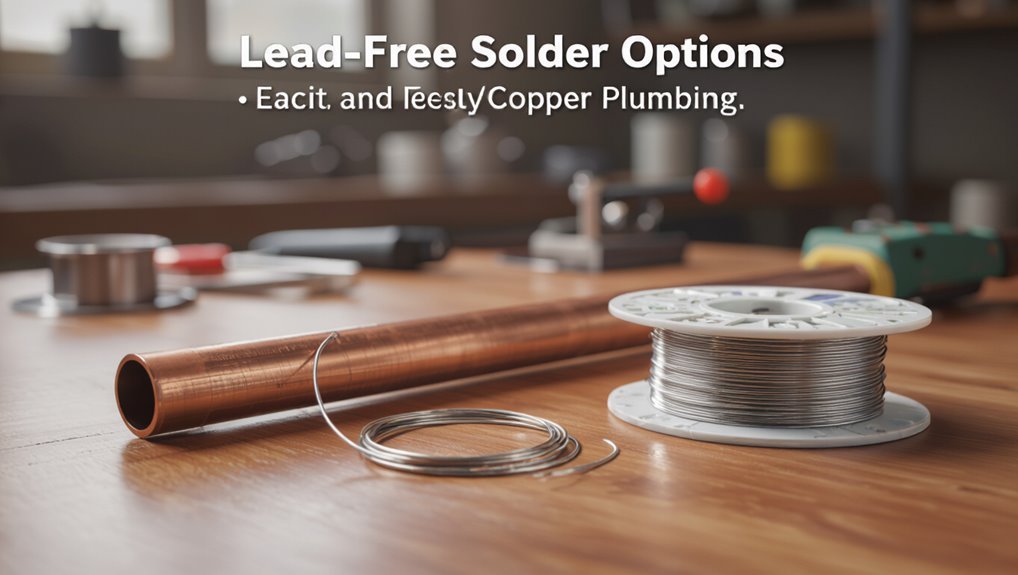
For copper plumbing, the best lead‑free solder options are typically tin‑silver (Sn‑Ag) and tin‑copper (Sn‑Cu) alloys, with some tin‑zinc (Sn‑Zn) formulations used for low‑temperature jobs; these provide reliable joints without the health risks of lead and meet most plumbing codes when used with appropriate flux and technique.
Sn‑Ag offers strong, reliable joints and good wetting at standard soldering temperatures.
Sn‑Cu is cost‑effective and commonly used for potable water pipe.
Sn‑Zn melts lower, useful where heat damage is a concern but requires compatible flux and care to avoid brittle joints or corrosion in certain environments.
Codes & Potable‑Water Safety Checks Before You Buy
Why check local codes and potable‑water approvals before buying solder? Local plumbing codes and utility requirements determine allowable materials, certification marks (e.g., NSF/ANSI 61), and lead-content limits.
Certified products list compatible uses and pressure/temperature ratings; unapproved solder can lead to failed inspections, required rework, or health risks.
Buyers should verify manufacturer documentation, regional acceptance, and any installer licensing provisions. When sourcing solder, confirm batch traceability and approvals for potable systems.
Retail descriptions may omit restrictions; consult code books or authorities having jurisdiction for definitive guidance before purchase to guarantee compliance and safe drinking‑water connections.
Which Alloy to Use: Tin‑Silver, Tin‑Copper, or Tin‑Zinc (Decision Matrix)
Which solder alloy best matches a copper plumbing job depends on joint type, service conditions, and regulatory limits. The decision matrix below contrasts tin‑silver, tin‑copper, and tin‑zinc by strength, corrosion resistance, melting range, and potable‑water suitability to guide selection without covering flux or cleaning.
| Alloy | Strength/Use | Potable‑water suitability |
|---|---|---|
| Tin‑Silver | Higher strength; good for mechanical stress | Often acceptable; check code |
| Tin‑Copper | Moderate strength; traditional plumbing | Widely accepted for potable water |
| Tin‑Zinc | Lower melting point; easy flow | Limited; zinc concerns in some codes |
Flux and Cleaning Steps for Lead‑Free Copper Joints
For lead-free copper joints, proper flux selection is critical to make certain wetting and corrosion-free bonds without damaging the alloy.
Surface cleaning and preparation—removal of oxides, oils, and residues—must precede flux application to guarantee consistent capillary action.
The following section outlines appropriate flux types and step-by-step cleaning procedures for reliable, code-compliant joints.
Proper Flux Selection
When joining lead‑free copper pipe, selecting the correct flux and following proper cleaning steps guarantees reliable capillary flow and strong, corrosion‑resistant joints.
Proper flux selection prioritizes water‑washable, rosin‑based or non‑corrosive synthetic formulations rated for potable water and compatible with lead‑free solder alloys. Choose a flux labeled NSF/ANSI 61 or equivalent for plumbing use. Avoid acid core or plumbing‑unsafe fluxes that can etch copper or promote corrosion. Apply sparingly to mating surfaces to aid solder flow without pooling. Confirm manufacturer guidance for temperature ranges and alloy compatibility, and remove residual flux per local codes to prevent long‑term deterioration.
Cleaning And Preparation
Before soldering lead‑free copper joints, surfaces must be thoroughly cleaned and flux applied correctly to guarantee strong, leak‑free connections. The installer removes oxidation with a brush or emery cloth, deburrs tube ends, and fits parts dry to confirm correct engagement. Flux is brushed evenly, avoiding excess that can trap debris. Heat is applied to the fitting, not the solder, allowing solder to flow by capillary action. After cooling, excess flux is wiped away to prevent corrosion. Inspect joints for full fillets and test under pressure before insulation or concealment.
| Step | Tool | Purpose |
|---|---|---|
| 1 | Emery cloth | Clean oxide |
| 2 | Reamer | Deburr |
| 3 | Brush | Apply flux |
| 4 | Fit check | verify engagement |
| 5 | Wipe | Remove residue |
Heat Control: Temperatures and Torch Technique for Reliable Joints
Effective heat control is the foundation of reliable soldered joints, requiring consistent application of the right temperature and deliberate torch technique to guarantee proper flow and adhesion.
The practitioner heats the fitting, not the solder, watching flux soften and solder draw by capillary action.
Even heating prevents cold joints and burnt flux; overheating can degrade alloys and seal.
Maintain a steady flame, move it smoothly around the joint, and pause to allow heat equalization.
Use temperature indicators or temperature-sensitive flux when needed.
Protect nearby components and ventilate.
- Heat the fitting evenly, not the solder
- Aim for visible flux flow before applying solder
- Keep flame size moderate
- Rotate torch for uniform heating
- Allow joint to cool undisturbed
Soft‑Solder vs. Brazing : When to Choose Each for Copper Pipe
Choose the appropriate joining method for copper pipe by matching service needs to the metallurgical and temperature differences between soft‑soldering and brazing.
Soft‑solder uses low‑melting tin‑based alloys (typically under 450°F), suitable for indoor potable water, low‑pressure systems, and delicate components; it requires less heat, is faster, and reduces flux burn risk.
Brazing employs higher‑temperature silver or copper‑phosphorus alloys (above 840°F), producing stronger, more corrosion‑resistant joints for HVAC, refrigeration, or buried/pressurized lines.
Brazing demands better joint fit, more heat control, and often inert or fluxed atmospheres.
Choose by required strength, temperature exposure, and service environment.
Troubleshooting: Fixing Cold Joints, Pitting, and Leaks
After selecting the proper joining method, attention must turn to common field problems that compromise copper-pipe integrity: cold joints, pitting, and leaks. The inspector diagnoses symptoms: dull joints, corrosion pits, or persistent drips. Remediation prioritizes safety and longevity—reheat and reflow cold joints, replace pitted sections, and isolate leaks. Cleanliness, correct flux, and proper solder alloy prevent recurrence. When corrosion suggests water chemistry issues, recommend treatment or material change. For extensive damage, replace fittings or re-pipe. Document repairs and pressure-test to confirm integrity before returning system to service.
- Diagnose before repairing
- Make certain surfaces are clean and fluxed
- Use correct temperature and solder
- Replace badly pitted sections
- Pressure-test after repair
Conclusion
Choosing the correct corrosion‑resistant, code‑compliant composition can calm concerns and conserve continuity in copper connections. Careful cleaning, correct flux, and controlled heat create consistent capillary contact and credible seals. Select silver‑boosted or tin‑copper blends for strength, tin‑zinc for economy, and reserve brazing for high‑heat demands. Prevent pitting and patch leaks promptly; practice proper prep, precise placement, and patient cooling to preserve potable performance, prolong pipe life, and protect plumbing peace.