What Is PERT Pipe? Benefits, Uses & Installation Guide
PERT pipe, or raised-temperature polyethylene tubing, is specifically designed for both hot and cold water applications, as well as hydronic and radiant heating systems. It surpasses certain types of PEX in temperature resistance, offers enhanced flexibility in low temperatures, and boasts excellent creep resistance and longevity. For installation, common fittings and crimp or compression joints are utilized, adhering to pressure-testing and support spacing standards. With the right barrier options for boilers, PERT pipes can operate efficiently at temperatures up to 95°C. For further details on selection, sizing, connections, and troubleshooting, continue reading.
What Is PERT Pipe and How It Differs From PEX
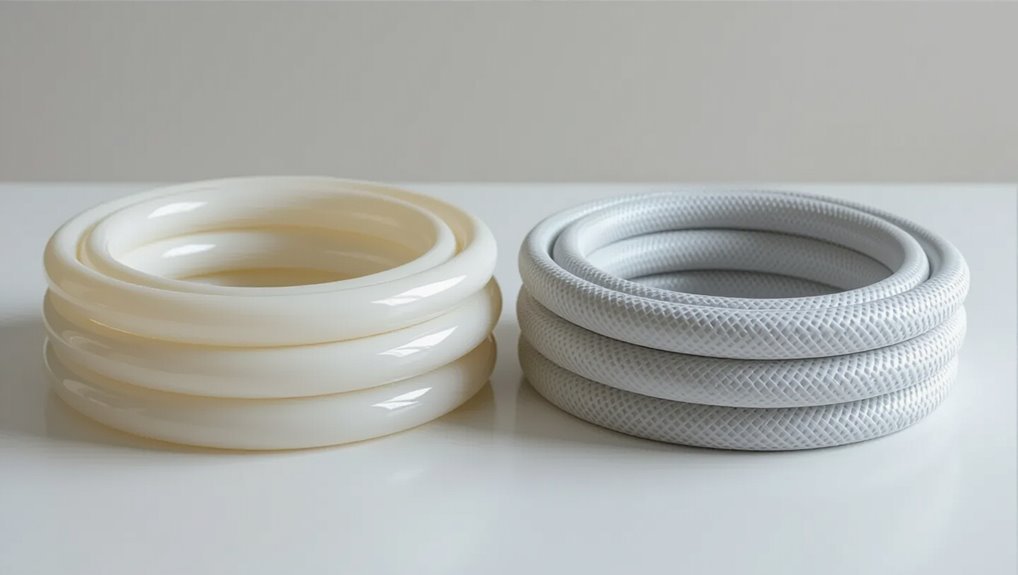
Compared with traditional PEX, PERT (Polyethylene of Raised Temperature resistance) is a newer thermoplastic engineered for improved flexibility and higher long-term heat resistance; it maintains dimensional stability under repeated thermal cycling and offers lower stiffness at low temperatures.
PERT’s molecular structure yields enhanced creep resistance and improved toughness, allowing thinner walls or tighter bending radii while retaining pressure-rating performance.
Compared to various PEX types, PERT often shows faster thermal recovery and reduced microcracking under stress.
Compatibility with common fittings and oxygen-barrier options aligns installation practices, though performance distinctions influence selection for radiant heating, domestic hot water, and retrofit applications.
How PERT Pipe Is Made
Production begins with careful selection of high-quality polyethylene resins and stabilizers tailored for PERT’s required temperature and pressure resistance.
The material is formed by controlled extrusion and multilayering processes that build the pipe’s structural and barrier layers.
Finished pipes undergo rapid cooling and systematic quality testing, including dimensional checks and pressure trials, before packaging.
Raw Material Selection
In selecting raw materials for PERT (Polyethylene of Raised Temperature resistance) pipe, manufacturers prioritize polymer formulations and additives that deliver high thermal stability, long-term hydrostatic strength, and resistance to oxidative degradation.
Raw material selection emphasizes controlled molecular weight distribution, stabilized polymer grades, and compatible compatibilizers for multilayer systems.
Fillers and pigments are chosen for neutrality and processing stability.
Antioxidants and UV stabilizers are specified at performance-based concentrations to avoid migration.
Reinforcement or barrier materials are evaluated for adhesion and chemical compatibility without compromising flexibility.
- Polymer grade and MWD control
- Antioxidant/UV package
- Fillers and pigments
- Compatibilizers and barriers
Extrusion And Layering
Having selected stabilized polymer grades and compatible additives, manufacturers shape PERT pipe through controlled extrusion and multilayer assembly processes that lock in the material performance specified earlier.
Melted polymer is fed to precision extruders where temperature, pressure and shear are regulated to preserve molecular orientation and avoid degradation.
Single or co-extrusion dies form accurate diameters and wall thicknesses.
For multilayer constructions, adhesive tie-layers or barrier polymers are applied in-line to combine oxygen resistance, mechanical strength and diffusion control.
Continuous dimensional monitoring and inline trimming integrate layers into a unified tubular structure ready for downstream cooling and finishing.
Cooling And Quality-Testing
Following extrusion and multilayer assembly, the newly formed PERT pipe undergoes controlled cooling and rigorous quality testing to stabilize dimensions and verify performance. Cooling is staged to prevent internal stresses and preserve layer adhesion. Automated gauges confirm diameter, roundness, and wall thickness. Hydrostatic and burst tests validate pressure resistance; thermal aging samples assess long-term performance.
Visual inspections and ultrasonic scans detect delaminations or voids. Traceability records link batch parameters to test results for quality control. Corrective actions adjust cooling rates or extrusion settings when deviations occur, ensuring consistent mechanical properties and service life before packaging and shipment.
- Dimensional control
- Pressure testing
- Non‑destructive inspection
- Traceability
Performance: Temperature Range, Flexibility, and Lifespan
How does PERT pipe perform across different conditions? PERT demonstrates a broad operational temperature range, retained flexibility at low temperatures, and long service life when installed correctly. It resists thermal cycling and maintains dimensional stability; mechanical fatigue resistance supports repeated pressure fluctuations. Expected lifespan often exceeds 50 years under normal use and proper water chemistry. Flexibility eases routing in constrained spaces and reduces fittings. The following table summarizes key performance attributes:
| Attribute | Typical Range/Value | Benefit |
|---|---|---|
| Temperature range | -20°C to 95°C | Versatile use |
| Flexibility | High | Fewer joints |
| Lifespan | 50+ years | Longevity |
Common Uses: Potable Water, Hydronics, and Radiant Floors
The combination of wide temperature tolerance, retained flexibility, and long service life makes PERT well-suited for a range of common applications.
It reliably carries potable water, resisting taste and odor transfer while meeting plumbing pressure requirements. In hydronic systems PERT handles circulating heated or cooled water with minimal thermal expansion and low pumping losses. For radiant-floor heating, PERT’s flexibility simplifies layout and maintains long-term performance under repeated thermal cycling. Installers value its ease of routing and secure fittings. Proper insulation and oxygen barrier options expand suitability for boiler-connected systems and mixed-material installations.
- Potable water distribution
- Hydronic heating loops
- Radiant floor systems
- Boiler-compatible assemblies
When to Choose PERT vs PEX, PVC, or Copper
Frequently, selection between PERT, PEX, PVC, or copper hinges on project priorities such as temperature range, flexibility, chemical resistance, cost, and installation speed.
PERT suits projects needing higher temperature tolerance and easier bending than PVC, with competitive cost and good chemical resistance for potable and hydronic systems.
PEX offers proven flexibility and wide fittings availability, ideal for retrofit and complex layouts.
PVC is appropriate for cold water and drainage where rigidity and low cost matter.
Copper remains preferable for longevity, antimicrobial properties, and high-temperature resilience despite higher material and labor costs.
Compatibility with fittings and local codes also guides choice.
Sizing, Flow Capacity, and Pressure Ratings
Selection of PERT pipe diameter is guided by required flow rates and allowable velocity to guarantee efficient delivery without excessive noise or wear.
Calculating pressure drop over runs and fittings determines whether a larger diameter or additional pumps are needed to maintain service pressure.
Manufacturers’ pressure ratings at operating temperature set the safe working limits and must be checked against the calculated system pressures.
Pipe Diameter Selection
How large should a PERT pipe be to deliver the required flow without excessive pressure loss? Selection balances flow rate, system pressure rating, temperature, and fixture/unit demand. Nominal diameter must match expected peak flow while maintaining allowable velocity ranges and not exceeding pipe pressure-class at operating temperature. Material thermal expansion and fitting equivalent lengths influence practical sizing. Manufacturers’ charts and local codes guide minimum sizes for specific uses (domestic hot/cold, radiant heating, chilled systems). Consider future capacity and ease of installation when upsizing. Verify compatibility with fittings, manifolds, and support spacing.
- Match flow to nominal diameter.
- Respect pressure-temperature ratings.
- Limit fluid velocity.
- Assure component compatibility.
Pressure Drop Calculations
After finalizing pipe diameter, attention shifts to calculating pressure drop to confirm that chosen sizes deliver required flows within system pressure limits. Calculations use fluid velocity, length, fittings, and roughness to estimate head loss; manufacturers’ charts and the Darcy-Weisbach or Hazen-Williams formulas provide methods. Results verify pump capacity, allowable pressure ratings, and acceptable velocity to prevent noise or erosion. Safety margins accommodate temperature effects on PERT material and joint fittings. If pressure loss exceeds limits, upsizing or rerouting reduces drop. The table summarizes typical factors considered during pressure-drop evaluation.
| Factor | Typical consideration |
|---|---|
| Length | Straight run meters/feet |
| Fittings | Equivalent length additions |
| Fluid | Viscosity, temperature, density |
Fittings and Connection Methods for PERT
When joining PERT piping, reliable fittings and connection methods are essential to preserve flexibility, pressure integrity, and longevity; common options include compression fittings, push-fit connectors, crimp rings with fittings, and electrofusion joints, each chosen for compatibility with PERT material, system pressure, installation speed, and service access.
Selection depends on permanence, leak resistance, and thermal cycling behavior. Properly sized O-rings, insertion depth stops, and material-matched fittings mitigate stress.
Installation technique affects warranty and performance. Inspection and pressure testing confirm integrity before concealment.
- Compression fittings: removable, good for repairs.
- Push-fit: fast, tool-free, limited temperatures.
- Crimp rings: permanent, high pressure.
- Electrofusion: robust, fusion-bonded joints.
Tools and Materials Checklist
The section lists the hand tools essential for cutting, deburring, and joining PERT pipe, such as pipe cutters, reamers, and crimping tools. It also inventories common fittings and adapters required for typical installations.
Required safety gear—gloves, eye protection, and masks—are specified to guarantee safe handling and installation.
Essential Hand Tools
For practical PERT pipe work, a compact set of reliable hand tools covers the majority of cutting, fitting, joining, and measuring tasks. The selection prioritizes safety, accuracy, and efficiency: clean cuts, secure connections, consistent bends, and leak-free tests. Tools chosen should suit PERT’s flexibility and polymer composition, reducing damage and ensuring proper assembly. Durable, ergonomic items speed installation and simplify maintenance while minimizing waste.
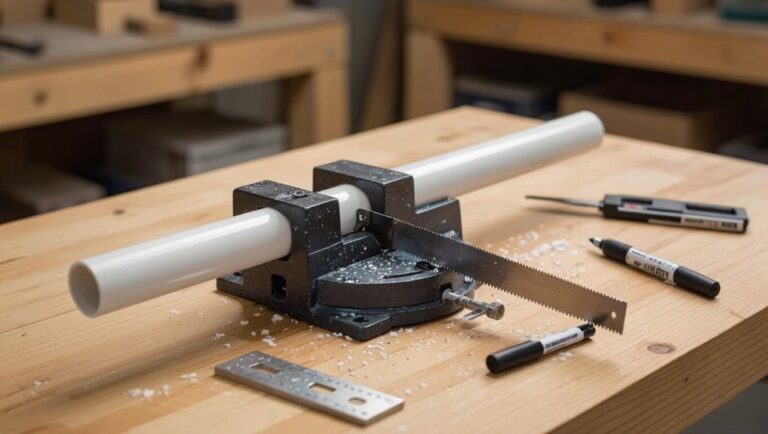
- Pipe cutter (plastic-specific) for clean, square ends.
- Deburring tool to remove burrs and chamfer edges.
- Adjustable wrench and compression spanner for fittings.
- Tape measure and permanent marker for layout.
Pipe Fittings Inventory
Alongside basic hand tools, a compact inventory of fittings and consumables guarantees PERT systems are installed quickly, reliably, and without unexpected trips for parts. The list focuses on common connectors, adapters, and spare items: elbows, tees, couplers, and manifold fittings; compression rings and olive inserts; mounting clips and insulation tape; plus a few spare valves and end caps. Stocking sizes matching pipe diameters (16, 20, 26 mm) avoids delays. Consumables include PTFE tape and compatible joint lubricant. Regularly review inventory after projects to replenish low items and record frequently used parts for future ordering.
| Fitting | Typical Use |
|---|---|
| Elbow (90°) | Change direction |
| Tee | Branch lines |
| Coupler | Extend runs |
| End cap | Seal termination |
Safety Gear Required
A brief review of the parts inventory should be followed by a checklist of safety gear to guarantee installers are protected while working with PERT systems.
Personnel should wear protective equipment suited to cutting, joining, and handling pipes and fittings. Gear reduces injury, contamination, and heat exposure risks during crimping or soldering tasks. Inspect equipment before use, replace damaged items, and store properly between jobs.
Compliance with local regulations and manufacturer recommendations is essential.
- Cut-resistant gloves and general-purpose work gloves
- Safety glasses or face shield with side protection
- Hearing protection (earmuffs or plugs)
- Heat-resistant gloves and apron for thermal joining
Quick Installation Overview (What to Expect)
Curious what the actual installation day looks like? A crew arrives with materials, tools, and plan, assesses access and existing plumbing, then isolates the affected system.
Surfaces are protected and work areas cleared. Pipe lengths are measured, cut, deburred, and fitted; connections use press, compression, or fusion methods as appropriate.
Support spacing, routing, and slope are verified. Pressure tests and visual inspections confirm integrity.
Cleanup and documentation follow, with remnants removed and work areas restored. The homeowner receives basic orientation and any care recommendations.
Typical residential jobs complete within hours; larger projects require phased scheduling.
Potable Water: Step‑by‑Step Installation
For potable water installations, the crew follows a strict sequence that guarantees code compliance, water quality, and long-term reliability.
After planning, they lay out pipe runs, verify material approvals, and size loops for pressure and flow.
Connections use approved fittings and heat fusion or mechanical joints per spec.
Testing includes chlorination, pressure testing at specified PSI, and bacteriological sampling.
Insulation and labeling prevent contamination and facilitate maintenance.
Final inspections confirm backflow prevention, accessible shutoffs, and proper documentation for warranties and codes.
- Planning and layout
- Approved connections
- Disinfection and testing
- Inspection and documentation
Underfloor Heating: Installation Steps
Having completed potable-water routing and verification, the crew shifts focus to underfloor heating, where PERT pipe layout, fastening, and manifold connections follow a different set of priorities: heat distribution uniformity, floor construction compatibility, and system responsiveness. The team plans loop spacing, verifies subfloor insulation, secures pipes to the chosen system, and tests pressure before screed or flooring. Manifold placement, zoning, and flow balancing are set to match thermal design. Final commissioning confirms return temperatures and actuator function.
| Step | Purpose |
|---|---|
| Layout | Uniform heat |
| Insulation | Prevent loss |
| Manifold | Zone control |
| Test | Leak/flow check |
Bending, Securing, and Protecting PERT Runs
When routing PERT runs through prepared subfloors, installers must bend, fasten, and shield the pipe with methods that preserve its integrity and guarantee consistent heat distribution; careful attention to bend radii, anchoring intervals, and protective barriers prevents kinks, movement during screeding, and damage from construction traffic.
Installers use gentle curves, secure clips, and temporary supports to maintain layout before and during screed placement.
Protective plates or boards guard against point loads, and expansion loops accommodate thermal growth.
Documentation of fixing centers and bend limits aids future maintenance.
- Respect minimum bend radii.
- Fix at specified intervals.
- Use sacrificial protection over runs.
- Provide expansion allowance.
Common Installation Mistakes and Troubleshooting
After ensuring correct bend radii, secure fixings, and adequate protection, installers commonly encounter a predictable set of errors that compromise PERT systems’ performance and longevity.
Typical issues include improperly prepared pipe ends causing poor fusion or compression fittings, overtightened clamps creating stress points, and insufficient slope or unsupported long runs leading to water pooling and noise.
Cross-connection mistakes and incorrect valve orientation cause functional failures.
Troubleshooting focuses on leak isolation, pressure testing, and verifying joint integrity; replacing dubious fittings; correcting unsupported spans; and confirming system flushing to remove debris.
Documentation of fixes and adherence to manufacturer protocols prevents recurrence.
Maintenance, Lifespan, Warranty, Cost, and Where to Buy
Routine maintenance recommendations, expected service life under typical conditions, and reliable purchase locations are outlined to help owners plan and budget effectively.
Guidance includes simple inspection steps and indicators that suggest replacement may be needed. Information on expected lifespan and where to buy PERT pipe from reputable suppliers follows.
Maintenance Tips
Covering maintenance, expected lifespan, warranty considerations, cost factors, and purchasing options, this section provides practical guidance for keeping PERT pipe systems reliable and economical.
Routine inspections for leaks, support integrity, and insulation condition prevent failures.
Use approved fittings and avoid chemical exposure.
Follow manufacturer flushing and pressure-test recommendations before commissioning.
Keep records for warranty claims; register products and retain receipts.
Compare lifecycle cost, not just purchase price, when selecting suppliers.
Buy from reputable distributors who provide certification and compatibility documentation.
- Inspect regularly and document findings.
- Use compatible fittings and materials.
- Maintain manufacturer-recommended testing schedules.
- Purchase certified products with clear warranty terms.
Expected Lifespan
Over a typical service life, PERT (Polyethylene of Raised Temperature resistance) piping is designed to remain functional for 25–50 years when installed and maintained according to manufacturer guidelines.
Actual longevity depends on operating temperatures, pressure cycles, water quality, UV exposure, and mechanical stress. Routine inspections, proper insulation, and prompt repair of leaks extend service life.
Manufacturers commonly offer warranties varying by application and region; users should register installations and retain proof of purchase to validate claims.
Initial material and labor costs are moderate; lifecycle cost benefits arise from low maintenance and reduced failure rates compared with some alternative materials.
Purchase Locations
Having considered factors that influence PERT pipe lifespan and upkeep, attention turns to where to purchase materials and how warranty, maintenance expectations, and cost affect buying decisions. Buyers should weigh supplier reputation, warranty terms, and documented maintenance schedules. Prices vary by diameter, wall thickness, and certification; bulk purchases reduce unit cost. Certified distributors and plumbing wholesalers offer technical support; online marketplaces provide comparison shopping but require verification of certifications. Contractors often source through trade channels for warranty compliance. Long-term value depends on installation quality, warranty coverage, and available local support.
- Compare warranties and certification.
- Verify local technical support.
- Assess total lifecycle cost.
- Prefer accredited suppliers.
Conclusion
PERT pipe emerges as a pragmatic choice: its flexible form and heat tolerance suit potable water, hydronics, and radiant floors, yet its quiet endurance mirrors faint coincidences—pipes laid beside old copper, both carrying warmth and memory. When installed with care, PERT quietly outlives expectations; when ignored, small errors echo. Hence the material’s practical benefits and occasional overlaps with other systems invite installers to notice how modest choices quietly shape everyday comfort.