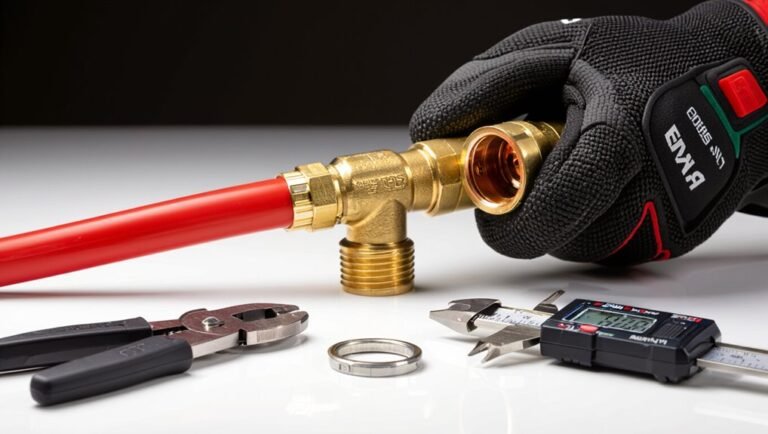
What Does a Pipe Fitter Do? Job Duties, Skills & Career Guide
A pipe fitter is responsible for installing, assembling, testing, and repairing piping systems that transport water, steam, gas, and chemicals. They interpret blueprints to plan installations, measure and cut pipes, and utilize techniques such as threading, bending, and fitting components. Additionally, pipe fitters perform welding, brazing, or mechanical joining, install supports, conduct pressure and leak tests, troubleshoot issues, and document their work while adhering to safety codes and permits. For more information on required skills, certifications, and typical job tasks, continue reading.
What a Pipe Fitter Does (Quick Overview)
A pipe fitter installs, assembles, and repairs piping systems that carry water, steam, gas, and chemical substances in industrial, commercial, and residential settings.
They interpret blueprints and specifications to plan pipe runs, select materials, and determine needed supports and clearances. Tasks include cutting, threading, bending, welding, and joining pipe; installing valves, fittings, and fixtures; pressure testing and leak detection; and performing routine maintenance and emergency repairs.
They follow safety protocols, use hand and power tools, and coordinate with contractors, engineers, and inspectors.
Precision, mechanical aptitude, and familiarity with codes and materials guarantee system integrity and reliable operation.
Quick Answer: Is Pipe Fitting Right for You?
For someone who enjoys hands‑on work, solving practical problems, and working with tools and blueprints, pipe fitting can be a good fit. It suits individuals who prefer tangible results, mechanical thinking, and collaboration on technical projects.
Physical stamina, steady hands, spatial reasoning, and comfort with measurements and safety protocols are important. Those who value apprenticeships, on‑the‑job learning, and certifications will find clear advancement paths.
If routine site noise, variable schedules, and work that may involve confined spaces or heights are unwelcome, pipe fitting may be less suitable. Overall, it aligns best with practical, safety‑minded, skilled tradespeople.
Typical Workplaces for Pipe Fitters
Many pipe fitters who appreciate hands-on problem solving find themselves working across a range of settings where their skills are applied to install, maintain, and repair piping systems.
Typical workplaces include construction sites for commercial and residential buildings, industrial plants such as chemical, petrochemical, and power facilities, and manufacturing factories.
They also work in shipyards, offshore platforms, hospitals, and municipal utilities handling water and sewage systems.
Some are employed by mechanical contractors, maintenance departments, or pipe fabrication shops.
Work environments vary from indoor controlled conditions to outdoor, confined, and elevated spaces, often requiring adherence to strict safety and regulatory standards.
Daily On-the-Job Tasks for Pipe Fitters
Typically, a pipe fitter begins the workday reviewing plans, checking materials, and coordinating tasks with supervisors and trades to guarantee installations proceed safely and on schedule.
Throughout the day the fitter measures, cuts, threads, and fits pipe sections, fabricates supports and brackets, and installs valves, flanges, and specialty components.
Routine duties include aligning joints, securing fasteners, welding or soldering connections, and applying sealants or insulation.
The fitter tests systems for leaks and pressure integrity, troubleshoots malfunctions, and documents work performed.
Safety checks, tool maintenance, and cleanup conclude shifts, ensuring readiness for subsequent assignments.
How Pipe Fitters Read and Use Blueprints
When confronted with a new job packet, a pipe fitter first interprets the blueprint’s symbols, dimensions, and notes to convert paper plans into a practical layout on-site. The fitter cross-references isometrics, plan views, and schedules to identify pipe runs, elevations, and component types. Critical attention is paid to material specifications, weld symbols, and accessibility notes. Coordination with trades and engineers resolves clashes or clarifies routing. Documentation of markups and revisions guarantees installation matches design intent. Familiarity with scale, legend, and section cuts enables accurate interpretation without performing measurements here.
| Sheet Type | Key Feature | Typical Use |
|---|---|---|
| Isometric | 3D routing | Fabrication |
| Plan | Layout | Coordination |
| Schedule | Parts list | Procurement |
Measuring and Layout Techniques for Piping Systems
In preparing a run of pipe, the fitter establishes reference lines, bench marks, and offsets to translate the drawing into exact field positions. Measurements follow sequences: overall run, segment lengths, center-to-center distances, and allowances for fittings and welds.
Slope and elevation are verified with level or laser, ensuring drainage or pitch specifications. Templates and mock-ups confirm complex intersections and branch takeoffs.
Precise marking minimizes rework; tolerances are recorded and communicated. Fitters cross-check dimensions against isometrics and coordinate with trades for obstructions.
Accurate layout preserves system integrity, streamlines installation, and reduces material waste.
Tools Every Journeyman Pipe Fitter Uses
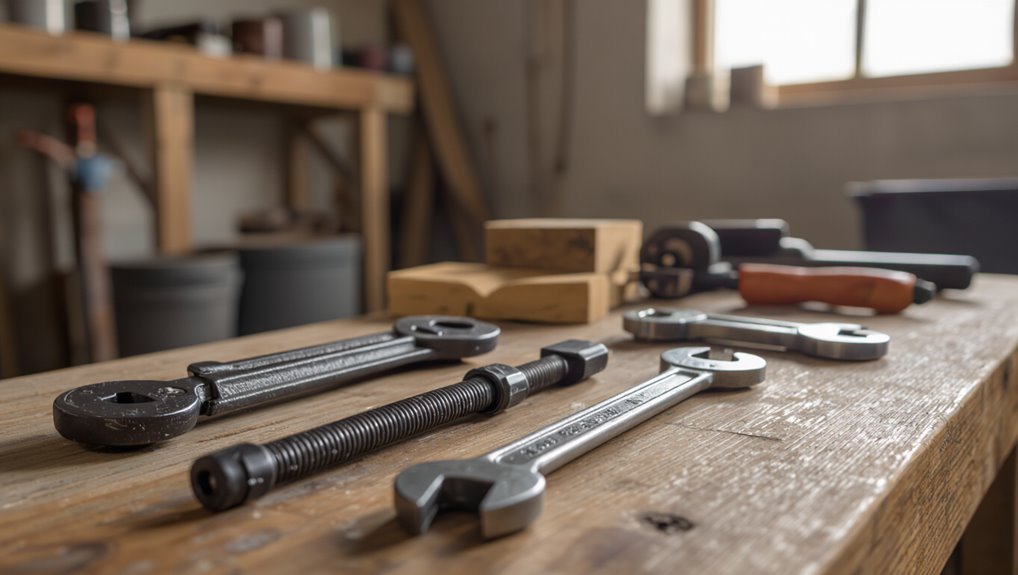
The journeyman pipe fitter relies on a core set of hand tools—wrenches, pipe cutters, threaders, and levels—for routine installation and maintenance tasks.
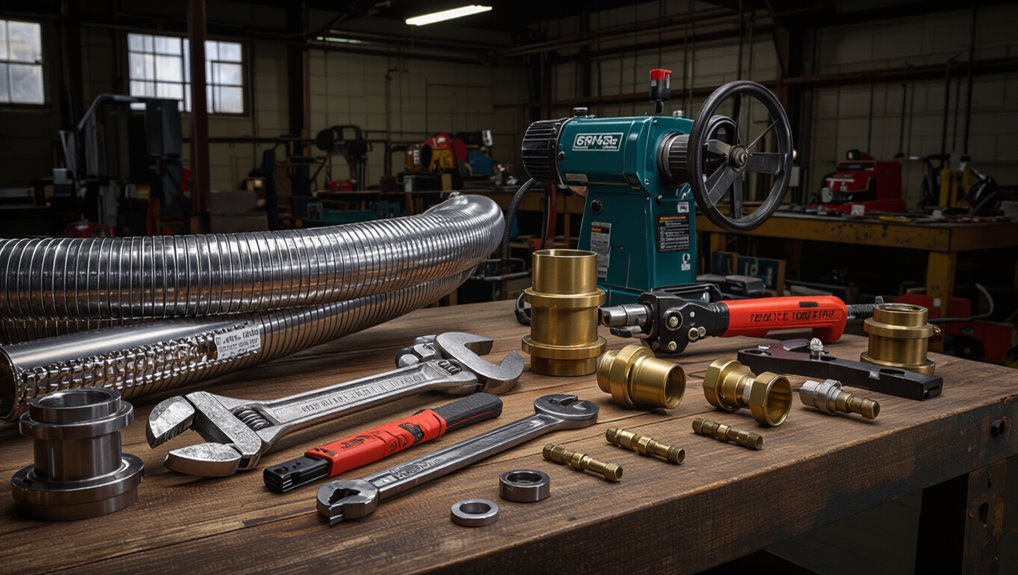
Beyond basic hand tools, specialized fabrication equipment such as pipe benders, bevelers, and welding rigs enable precise shaping and joining of piping components. A clear distinction between essential hand tools and specialty machinery underpins efficiency and quality in piping work.
Essential Hand Tools
Which tools distinguish a skilled journeyman pipe fitter from an apprentice are readily apparent at job sites and in toolboxes: precision wrenches, pipe cutters, reamers, flaring and swaging tools, threaders, hammers, files, levels, and measuring instruments form a core set used daily to fit, align, join, and finish pipe work. Essential hand tools enable accurate cuts, clean threads, secure fittings, and safe assembly. Familiarity speeds work and reduces errors. Typical items include adjustable and torque wrenches, ratchet pipe cutters, deburring tools, mallets, and spirit levels. A concise reference:
| Wrenches | Cutters | Measuring |
|---|---|---|
| Files | Reamers | Hammers |
Specialty Fabrication Equipment
Mastery of specialty fabrication equipment separates journeyman pipe fitters from less experienced workers, enabling complex bends, precise bevels, and repeatable joints that hand tools cannot achieve.
These professionals rely on pipe benders, hydraulic and CNC machines, orbital welders, and automatic bevelers to shape, align, and prepare pipe for high-integrity systems.
Cutting stations, band saws, and plasma cutters provide consistent, square ends while roller dies and mandrels prevent ovality during forming.
Tube end formers, Flaring tools, and swaging machines accommodate fittings and transitions.
Proper selection, setup, calibration, and maintenance of this equipment ensures efficiency, accuracy, and code-compliant fabrication.
Materials Pipe Fitters Commonly Work With
Pipe fitters regularly handle a range of metals such as carbon steel, stainless steel, and copper, each chosen for its strength, corrosion resistance, and suitability for specific systems.
They also work with plastics and composite materials like PVC, CPVC, and fiberglass-reinforced pipe when chemical compatibility, weight, or cost dictate.
Understanding the properties and joining methods for these materials is essential to proper installation and long-term performance.
Common Metals Used
Among the metals pipe fitters commonly work with, carbon steel, stainless steel, copper, and brass are the most prevalent due to their strength, corrosion resistance, and suitability for welding or joining.
Carbon steel is favored for high-pressure systems and structural runs; it is economical and widely available.
Stainless steel is selected where corrosion resistance and hygiene matter, such as food, pharmaceutical, and chemical systems.
Copper is common in plumbing and refrigeration for its thermal conductivity and ease of soldering.
Brass, an alloy of copper and zinc, is used for fittings and valves for machinability and corrosion resistance.
Other alloys address specific service conditions.
Plastics And Composites
In many modern installations, plastics and composite materials offer pipe fitters lightweight, corrosion-resistant alternatives to metal that suit chemical, wastewater, and low-pressure fluid systems.
Pipe fitters select PVC, CPVC, HDPE, PP, fiberglass-reinforced plastics (FRP), and reinforced thermoset pipes based on pressure, temperature, chemical compatibility, and regulatory codes.
Joining methods include solvent welding, heat fusion, mechanical couplers, and specialty adhesives; technicians must follow manufacturer procedures to make certain seals and alignments.
Advantages include reduced maintenance and electrical non-conductivity; limitations involve lower temperature tolerance and different expansion rates.
Proper tooling, inspection, and testing practice make certain long-term system integrity and code compliance.
Cutting, Threading, and Bending Pipe Properly
When preparing fittings and runs, cutting, threading, and bending must be executed with accurate measurement, proper tools, and adherence to safety standards; each operation affects alignment, seal integrity, and flow performance.
The pipe fitter assesses material type, wall thickness, and required tolerances before marking cut lines.
Cutting uses saws or torches appropriate to pipe composition, followed by deburring to guarantee mating surfaces.
Threading requires correct dies or machines, thread compound selection, and verification of pitch and depth.
Bending employs calibrated rollers or induction methods to maintain radius and prevent collapse, with frequent inspection during shaping.
- Measure twice, cut once
- Select tooling by material
- Deburr for sealing surfaces
- Verify thread pitch and engagement
- Inspect bends for ovality
Welding and Joining Methods Pipe Fitters Must Know
Across pressure classes and materials, pipe fitters must master a range of welding and joining methods—fusion, brazing, soldering, mechanical couplings, and specialty joints—each chosen for compatibility with pipe material, service conditions, and code requirements.
They must understand SMAW, TIG, MIG, and flux-cored techniques for steels and alloys, plus procedures for stainless, copper, and plastic joining.
Knowledge of weld symbols, joint design, preheat/postweld heat treatment, and nondestructive examination guarantees integrity.
Proper filler selection, welding parameters, and cleanliness prevent defects.
Mechanical connections—flanges, grooved couplings, compression fittings—require torque, gasket, and alignment control to meet pressure and safety standards.
Installing Industrial and Commercial Piping Systems
The section on installing industrial and commercial piping systems addresses coordination of system layout with other trades, equipment locations, and access requirements.
It also emphasizes the necessity of pressure-rated welds that meet specifications and testing standards.
Practical guidance covers sequencing and inspection checkpoints to guarantee system integrity and code compliance.
System Layout Coordination
In coordinating system layout, a pipe fitter aligns design drawings, spatial constraints, and equipment interfaces to make certain piping routes are functional, maintainable, and code-compliant.
The fitter reviews plans, verifies clearances, coordinates with trades, and sequences runs to prevent clashes and allow access for future inspection and repair.
Material selection, support locations, and routing prioritize operational efficiency and safety.
Documentation of deviations and as-built conditions informs maintenance teams and owner representatives.
Communication with engineers and contractors resolves constructability issues before installation begins.
- Verify clearances and access
- Coordinate with mechanical and electrical trades
- Document as-built changes
- Locate supports and anchors
- Sequence installations
Pressure-Rated Welds
When joining pressure-rated piping, welds must meet specified metallurgical, dimensional, and nondestructive testing requirements to guarantee integrity under design pressures and temperatures.
A pipe fitter interprets welding procedure specifications (WPS), material traceability, and joint preparation to make certain correct filler metal, preheat, and interpass temperatures.
Fit-up control, weld pass sequence, and root integrity are monitored to prevent defects.
After welding, visual and NDT methods—radiography, ultrasonic, dye penetrant, or magnetic particle—verify soundness.
Documentation of heat numbers, procedure qualification records, and inspection reports supports code compliance.
Proper technique and recordkeeping reduce failure risk and maintain system safety and longevity.
Assembling and Installing Pipe Supports and Hangers
With measured layout and proper hardware, assembling and installing pipe supports and hangers guarantees piping remains secure, aligned, and protected from undue stress.
A pipe fitter evaluates load, thermal movement, and vibration, then selects materials and spacing to meet code and system requirements.
Installation includes anchoring to structure, leveling, and adjusting for expansion while preventing point loads.
Documentation and tagging assures future maintenance.
Coordination with other trades avoids clashes and preserves access.
- Assess load, span, and thermal expansion
- Select hanger type and material
- Layout and mark attachment points
- Secure anchors and adjust elevations
- Inspect and document installations
Pressure Testing and Leak Detection Procedures
The section outlines standard pressure test procedures for verifying system integrity, including hydrostatic and pneumatic tests with specified hold times and safety precautions.
It also covers common leak detection methods such as soap solution, ultrasonic testing, and tracer gas techniques.
Emphasis is placed on accurate documentation and adherence to codes and manufacturer recommendations.
Pressure Test Procedures
Before initiating a pressure test, the installer confirms system isolation, verifies test medium compatibility, and reviews applicable codes and drawings to guarantee safe, valid results.
The procedure sequences controlled pressurization, monitored hold periods, and stepwise depressurization while recording pressures and temperatures.
Equipment selection, gauge calibration, and safety relief arrangements are documented.
Test witnesses and permits are managed per regulations.
Any pressure decay triggers documented investigation and repair iterations followed by retest.
Completion includes certification, as-built notes, and client handover.
- Verify venting and drainage
- Select calibrated instruments
- Apply gradual pressure ramps
- Maintain required hold durations
- Record and archive results
Leak Detection Methods
Following completion of pressure tests and documentation, attention turns to leak detection methods that confirm integrity and locate failures efficiently.
Technicians employ visual inspection, soap solution, ultrasonic detectors, and electronic leak locators to identify escaping gas or fluid.
Tracer gases like helium or hydrogen enhance sensitivity in confined systems.
Vacuum box and bubble testing suit external welds and joints.
Acoustic methods pinpoint intermittent leaks in noisy environments.
Findings are recorded, prioritized, and addressed via repair, replacement, or re-weld.
Post-repair retesting verifies resolution.
Safety protocols, ventilation, and isolation remain mandatory throughout to protect personnel and prevent secondary incidents.
Insulating and Protecting Pipework From Corrosion
In industrial and commercial systems, effective insulation and corrosion protection extend service life, improve thermal performance, and reduce maintenance costs. Pipe fitters select materials and apply methods to prevent thermal loss and electrochemical degradation. They evaluate environmental exposure, fluid properties, and mechanical stresses to specify insulation thickness, cladding, coatings, and cathodic protection.
Proper installation and joints prevent moisture ingress and thermal bridging. Regular inspections and maintenance schedules detect coating failures before leak initiation. Documentation of materials and methods supports long-term asset management and regulatory compliance.
- Material selection (mineral wool, foam, elastomeric)
- Protective cladding application
- Surface preparation and coating
- Cathodic protection systems
- Inspection and maintenance planning
Troubleshooting Common Piping Problems
Many common piping problems—leaks, blockages, corrosion, noise, and pressure fluctuations—have identifiable causes and systematic remedies.
A pipe fitter inspects joints, valves, and fittings to locate leaks, using pressure tests and visual checks.
Blockages are diagnosed by flow measurements and removed with mechanical snaking, flushing, or targeted disassembly.
Corrosion assessment guides repair or replacement and selection of compatible materials and coatings.
Noise and vibration issues are traced to flow velocity, loose supports, or entrained air; correcting alignment, adding anchors, or adjusting flow resolves them.
Pressure irregularities prompt valve tuning, pump evaluation, or detection of hidden leaks or obstructions.
Safety Rules and PPE for Pipe Fitting Work
Troubleshooting piping faults often exposes hazards—sharp burrs, pressurized fluids, toxic residues, and unstable supports—so pipe fitters must adhere to strict safety rules and wear appropriate personal protective equipment (PPE).
Work practices prioritize hazard assessment, lockout/tagout, ventilation, and communication. PPE selection matches task risks: gloves for cuts and chemicals, eye and face protection for sparks and splashes, hearing protection in noisy areas, respiratory protection where particulates or fumes exist, and protective footwear for impact and puncture hazards.
Regular inspection, proper fit, and maintenance of equipment are required. Training reinforces safe procedures and emergency response.
- Hazard assessment before starting
- Lockout/tagout compliance
- Task-matched PPE selection
- Routine equipment inspection
- Emergency response training
Codes, Standards, and Regulations to Follow
The guide outlines the importance of adhering to local building codes to ensure structural integrity and permit compliance.
It emphasizes conformity with industry safety standards to protect workers and maintain consistent workmanship.
It also notes environmental compliance rules that govern waste handling, emissions, and hazardous materials.
Local Building Codes
Local building codes establish the mandatory requirements pipe fitters must follow for materials, installation, testing, and permitting within a jurisdiction. These codes dictate allowable pipe types, joint methods, clearances, and pressure ratings, and they determine when inspections and permits are required.
Compliance guarantees legal occupancy, prevents costly rework, and aligns work with municipal enforcement. Pipe fitters consult local code books, coordinate with inspectors, and document installations to demonstrate conformity.
Awareness of amendments and local ordinances is essential, especially for historic buildings or special occupancy classifications.
- Approved materials and fittings
- Required permits and inspections
- Minimum clearances and access
- Pressure and temperature ratings
- Documentation and recordkeeping
Industry Safety Standards
Grounded in consensus codes and regulatory mandates, industry safety standards define the technical and procedural requirements pipe fitters must follow to guarantee safe, compliant installations. These standards encompass material specifications, pressure ratings, joining methods, testing protocols, and protective measures for confined spaces and hot work.
Familiarity with ASME, ANSI, NFPA, OSHA, and local amendments safeguards proper system design, fabrication, inspection, and documentation. Compliance reduces accident risk, liability, and rework while facilitating inspections and certifications.
Employers and tradespeople must maintain up-to-date knowledge, implement written procedures, provide required training, and document adherence throughout project lifecycles to meet mandatory obligations.
Environmental Compliance Rules
Within regulatory frameworks and industry best practices, environmental compliance rules set the legal and technical boundaries pipe fitters must observe to prevent pollution, protect ecosystems, and manage waste responsibly.
Pipe fitters interpret permits, follow spill prevention plans, and apply containment measures during installation, maintenance, and decommissioning.
Documentation, training, and coordination with environmental officers guarantee adherence to emissions limits, hazardous materials handling, and stormwater controls.
Regular inspections and corrective actions reduce liability and support sustainable operations.
- Clean Air Act and local air quality permits
- Clean Water Act and discharge limitations
- RCRA hazardous waste protocols
- OSHA environmental guidance crossover
- Facility-specific environmental management systems
Essential Technical Skills for Pipe Fitters
For pipe fitters, mastery of core technical skills—reading blueprints, precision measuring, cutting and threading pipe, and understanding welding and fitting techniques—is fundamental to performing safe, efficient installations and repairs.
Competence includes knowledge of materials (steel, copper, PVC), pressure ratings and compatibility, and familiarity with codes and schematics.
Proficiency with tools—pipe benders, cutters, threaders, grinders—and nondestructive testing methods guarantees integrity.
Accurate layout and alignment prevent stress and leaks.
Ability to select appropriate seals, flanges, supports, and anchors maintains system performance.
Continuous calibration of instruments and adherence to inspection protocols minimize rework and extend service life.
Important Soft Skills for On‑Site Success
On-site success for pipe fitters depends as much on soft skills as technical ability.
Clear communication under pressure guarantees safety and keeps tasks coordinated when schedules compress or unexpected issues arise.
Adaptability to site changes allows workers to adjust methods, tools, and priorities without losing productivity.
Communication Under Pressure
Facing tight deadlines, noisy environments, and unexpected problems, a pipe fitter must communicate clearly and calmly to keep teams coordinated and safety intact. Effective communication under pressure prioritizes concise instructions, firm but respectful tone, and verification that messages are understood.
Nonverbal signals, hand signals, and standardized phrases reduce misinterpretation when noise levels rise. Listening for concerns and confirming counts or measurements prevents errors. Documentation and brief verbal handoffs preserve continuity between shifts.
- Use clear, short commands
- Employ standardized site signals
- Confirm receipt and understanding
- Listen for and address safety concerns
- Record critical decisions immediately
Adaptability To Site Changes
Clear communication under pressure often exposes unexpected changes that require quick adjustments; adaptability to site changes means a pipe fitter can shift plans without losing safety or quality. A resilient worker evaluates new constraints, reprioritizes tasks, and modifies layouts or materials while maintaining code compliance. Rapid problem-solving, calm decision-making, and collaboration with supervisors keep projects on schedule. Learning from each variation improves future responses. Flexibility reduces downtime, prevents rework, and preserves team morale. The following table outlines core actions and outcomes.
| Action | Outcome |
|---|---|
| Reassess plan | Reduced risk |
| Swap materials | Maintain schedule |
| Reroute piping | Preserve integrity |
| Communicate change | Align team |
| Document steps | Aid recovery |
How to Train: Apprenticeships vs Trade School
When choosing how to train as a pipe fitter, prospective entrants must weigh apprenticeships against trade school programs based on learning style, timeline, and career goals.
Apprenticeships combine paid on-the-job instruction with classroom modules, emphasizing hands-on skills, mentorship, and industry networking.
Trade schools offer concentrated technical coursework, quicker completion, and foundational theory useful for fast entry or later specialization.
Candidates should consider cost, duration, employer connections, and preferred learning environment when deciding. Trade school may suit those seeking structured schedules; apprenticeships favor experiential learners aiming for long-term employer relationships and progressive wage increases.
- Hands-on experience
- Classroom theory
- Time to completion
- Cost and funding
- Employer connections
Certifications and Licenses That Boost Your Career
Often, pipe fitters boost their employability and earning potential by obtaining certifications and licenses that validate specialized skills and compliance with codes. Industry-recognized credentials include welding certifications (e.g., ASME, AWS), HVAC and refrigeration certifications, and backflow prevention or medical gas endorsements.
State or local journeyman and master plumber/pipe fitter licenses permit independent contracting and higher pay. Safety certifications (OSHA, confined space, CPR) and NDT qualifications improve site readiness.
Specialty certificates for high-pressure, steam, or nuclear systems open niche markets. Maintaining credentials requires continuing education and recertification, demonstrating ongoing competence and adherence to evolving standards.
Entry‑Level Roles and How to Get Hired
How does an aspiring pipe fitter break into the trade? Entry‑level roles typically include helper, apprentice, and junior installer positions.
Employers seek reliable candidates with basic shop skills, safety awareness, and willingness to learn. Networking with local unions, contractors, and vocational schools increases opportunities.
Preparation focuses on hands‑on experience, punctuality, and demonstrated safety mindset rather than polished portfolios.
- Pursue apprenticeships through unions or trade schools
- Gain basic tool and blueprint familiarity via short courses
- Obtain OSHA or basic safety cards
- Volunteer for on‑site helper shifts to build references
- Attend trade job fairs and union orientations
Building a Resume and Portfolio as a Pipe Fitter
After securing initial hands‑on experience as a helper or apprentice, a candidate should assemble a concise resume and practical portfolio that reflect skill growth and reliability.
The resume highlights certifications, safety training, tools proficiency, pipe materials familiarity, and measurable accomplishments—project types, scopes, and timelines.
The portfolio contains clear photos of completed work, labeled drawings, weld stamps, pressure test results, and supervisor references.
Include brief project descriptions emphasizing problem solving, code compliance, and teamwork.
Keep formatting clean, use industry terminology, and quantify outcomes where possible.
Maintain digital and printed versions for interviews, union applications, and contractor bids.
Career Ladder: Helper to Journeyman to Master
Progressing from helper to journeyman and ultimately to master in pipe fitting follows a structured combination of on-the-job experience, formal training, and demonstrated competency.
The helper gains basic skills, assists tradespeople, and learns safety and tools.
The journeyman completes an apprenticeship, performs installations and repairs independently, and passes credentialing where required.
Advancement to master demands extensive field experience, leadership, project planning, code knowledge, and often certification.
Masters supervise crews, estimate jobs, and mentor apprentices.
Career progression typically blends hours worked, classroom instruction, evaluations, and exams, rewarding technical competence, reliability, and professional development.
- Entry-level hands-on training
- Apprenticeship milestones
- Credentialing exams
- Supervisory responsibilities
- Mentorship and teaching
Specialties Within Pipe Fitting (Steam, HVAC, Plumbing)
Having outlined the stages from helper to master, attention shifts to the main specialties within pipe fitting—steam, HVAC, and plumbing—each demanding distinct skills, codes, and tools.
Steam specialists handle high-pressure systems, condensate management, and ASME-related welding and testing.
HVAC fitters focus on refrigerant lines, air handlers, duct interfaces, and system balancing, requiring knowledge of mechanical codes and pressure controls.
Plumbing specialists install potable water, drainage, and gas piping, emphasizing sanitary codes, slope, and fixture connections.
Cross-specialty competence improves versatility, but certifications, safety protocols, and familiarity with specialty fittings, valves, and testing methods define proficiency in each area.
Working With Other Trades on Projects
Effective project delivery often depends on a pipe fitter’s ability to coordinate work schedules with other trades to prevent delays.
Clear, timely communication with electricians is essential to guarantee safe, compatible routing and connections.
Proper sequencing of trades’ activities minimizes rework and maintains steady progress on the jobsite.
Coordinating Work Schedules
When projects involve multiple trades, coordinating work schedules guarantees sequential tasks align, reduces downtime, and prevents conflicts at shared workspaces.
The pipe fitter reviews project timelines, sequences pipe installation around other scopes, and adjusts crew assignments to maintain progress. Prioritization of critical-path activities and contingency planning mitigates delays.
Regular scheduling reviews with general contractors and subcontractors synchronize access, material deliveries, and inspections. Documentation of agreed windows and responsibilities supports accountability and dispute avoidance.
- Establishes sequence of pipework relative to other trades
- Aligns crew shifts with site access
- Confirms delivery and storage timing
- Schedules inspections and permits
- Plans contingency work
Communicating With Electricians
How should pipe fitters and electricians coordinate to guarantee safe, efficient installation of systems that intersect?
Pipe fitters and electricians exchange drawings, confirm clearances, and verify mounting points where conduit, supports, and piping converge.
They establish agreed labeling for circuits and fluid lines, discuss lockout/tagout needs, and identify equipment requiring combined access.
Regular short meetings and walkdowns resolve clashes before installation.
Each trade documents changes and updates site plans, ensuring permits and inspections reflect revisions.
Clear, timely communication minimizes rework, prevents damage to installed systems, and upholds safety protocols when mechanical and electrical runs share space or support structures.
Sequencing Trades Activities
In tightly scheduled construction work, sequencing trades activities determines the order and timing of tasks to prevent delays, clashes, and rework.
A pipe fitter coordinates with carpenters, electricians, HVAC, and plumbers to align access, elevations, and handoffs.
Effective sequencing uses plans, schedules, and site meetings to resolve dependencies, prioritize critical-path piping, and minimize interference.
Documentation and clear tag systems reduce misplacement and rework.
Risk assessments anticipate conflicts and inform contingency sequencing.
- Review construction schedule and critical-path items
- Coordinate access, scaffolding, and shutdown windows
- Sequence rough-in before finishes
- Use tags, drawings, and sign-offs
- Hold regular cross-trade briefings
Typical Pay Ranges and Salary Factors
Across regions and sectors, pipe fitter pay varies widely due to experience, certifications, industry, and geographic cost of living.
Entry-level technicians typically earn hourly wages near local trade minimums, while journeypersons command higher rates reflecting skill and safety training.
Specialized work—high-pressure systems, refrigeration, or hazardous environments—attract premium pay.
Union membership often raises base wages and benefits.
Overtime, shift differentials, and project bonuses boost total compensation.
Apprenticeship progression and certifications (e.g., welding, ASME) materially increase earnings.
Employers in oil, petrochemical, and utility sectors generally pay more than residential or light commercial contractors, influencing career choices.
Job Outlook and Demand for Pipe Fitters
Faced with steady demand from construction, energy, and industrial maintenance sectors, the outlook for pipe fitters remains solid through the coming decade. Employment growth is driven by infrastructure upgrades, plant expansions, and routine system replacements. Retirement of experienced tradespeople creates openings for trained entrants. Technological changes require upskilling but do not eliminate core mechanical tasks. Apprenticeship completion and certification improve employability and wage prospects. Short-term fluctuations follow economic cycles and project pipelines, yet long-term fundamentals support steady hiring.
- Continued demand for skilled installation and repair
- Replacement needs due to retirements
- Growth tied to capital projects
- Importance of certifications
- Upskilling for new technologies
How Location and Industry Affect Opportunities
Geographic setting and industry type shape where pipe fitters find the most work, with urban areas often offering steady construction and maintenance jobs while rural regions may focus on agriculture, mining, or energy projects.
Employers in different sectors favor specialized credentials, so certifications for medical gas, HVAC, or industrial piping can open specific opportunities.
Awareness of local demand and required industry certifications helps candidates target training and job searches effectively.
Urban Vs. Rural Demand
In cities with dense construction and industrial activity, demand for pipe fitters tends to be higher and more specialized, while rural areas often offer steadier, generalist work tied to agriculture, small-scale utilities, and occasional infrastructure projects.
Urban roles frequently require familiarity with complex systems, tighter timelines, and collaboration on large crews; rural positions emphasize versatility, independent problem-solving, and travel between dispersed sites.
Compensation, overtime, and union presence vary by locale, as do equipment needs and exposure to regulatory inspections.
Career progression can follow divergent paths depending on local project types and employer scale.
- Specialized technical systems
- Project intensity and pace
- Travel and site dispersion
- Pay and unionization
- Equipment and tooling needs
Industry-Specific Certifications
Why do certain certifications matter more in one setting than another? Industry-specific credentials align a pipe fitter’s qualifications with local demand and regulatory environments.
In petrochemical plants, refinery or hazardous-material endorsements increase employability; in hospitals and labs, medical gas certification is essential.
Regional codes and union agreements may mandate certifications for public projects or high-pressure systems. Employers value specialization when it reduces training time and liability.
Conversely, general commercial credentials suffice in many residential or small-scale construction roles. Strategic certification choices consequently shape career trajectories, hourly rates, and mobility between urban centers, rural areas, and distinct industry sectors.
Common Challenges and How to Overcome Them
Often, pipe fitters face recurring challenges that combine technical complexity, tight schedules, and safety demands. They must balance accuracy with speed, interpret imperfect plans, and coordinate with trades while maintaining compliance. Effective strategies emphasize planning, communication, and continual skill refinement to reduce errors and delays.
- Prioritize pre-job inspections and material verification to prevent rework.
- Use clear shop drawings and confirm dimensions before cutting or welding.
- Implement strict PPE and lockout procedures to minimize incidents.
- Coordinate daily with supervisors and other trades to resolve conflicts early.
- Pursue targeted training and mentorship to address skill gaps and evolving codes.
New Tools & Tech for Pipe Fitters (Laser, Apps)
Increasingly, pipe fitters rely on laser alignment tools, digital measuring devices, and mobile apps to boost accuracy and speed on the job. Laser levels and beam scanners enable precise alignment of long runs and complex joints, reducing rework.
Digital calipers, ultrasonic thickness gauges, and Bluetooth-enabled torque wrenches streamline measurements and documentation. Mobile apps provide on-site access to blueprints, piping codes, material lists, and calculation utilities, while cloud sync aids team coordination.
Augmented reality overlays and 3D modeling simplify fit checks in tight spaces. These technologies emphasize efficiency, traceability, and safer, more predictable installations.
Continuing Education and Skill‑Building Options
Maintaining and expanding technical skills through continuing education keeps pipe fitters competent with evolving codes, materials, and technologies.
Employers, unions, and trade schools offer short courses on new materials, advanced welding processes, and system troubleshooting.
Online modules and manufacturer training supply flexible, product‑specific instruction.
Mentoring and cross‑training broaden practical experience while certifications validate competence for promotion and bidding.
Structured learning supports career mobility without addressing physical conditioning or injury prevention.
- Formal apprenticeship upgrades
- Manufacturer certification programs
- Online technical courses and webinars
- Cross‑trade mentoring and shadowing
- Code and standards update workshops
Physical Health: Injury Prevention & Conditioning
Continuing technical training is complemented by attention to physical health, since pipe fitting requires repeated lifting, awkward postures, and fine motor control under time pressure. Pipe fitters benefit from targeted conditioning: core strength, shoulder stability, grip endurance, and cardiovascular fitness reduce fatigue and injury risk.
Ergonomic practices—proper lifting mechanics, tool positioning, and use of supports—minimize strain. Regular stretching, mobility work, and restorative sleep aid recovery.
Routine health monitoring and prompt reporting of aches prevent chronic issues. Employers and workers share responsibility: safety programs, fitted personal protective equipment, and access to physiotherapy or occupational health services reinforce longevity in the trade.
Tips for Succeeding on Your First Pipe Fitting Job
A successful first day on a pipe fitting job begins with arriving prepared onsite, equipped with the right tools, plans, and a clear understanding of assignments.
Consistent, concise communication with supervisors and coworkers helps prevent mistakes and keeps work coordinated.
Strict adherence to safety procedures protects both the worker and the team while establishing professional credibility.
Arrive Prepared Onsite
Before stepping onto the site, the new pipe fitter should confirm logistics, review the day’s scope, and assemble required tools and PPE so that the first shift proceeds without delay.
The fitter arrives with organized documentation, verified permits, and a mental checklist of tasks. Prioritizing safety equipment, calibrated tools, and material lists reduces downtime. Awareness of site entry procedures and designated staging areas guarantees compliance. Preparedness demonstrates professionalism and supports efficient workflow, allowing the fitter to focus on technical tasks and quality outcomes from shift start.
- PPE: hard hat, gloves, eye protection
- Tool kit: cutters, threaders, wrenches
- Materials checklist
- Permits and drawings
- Site access credentials
Maintain Clear Communication
While technical skill guarantees tasks are completed correctly, clear communication keeps the team coordinated and safe on a pipe fitting job.
The new pipe fitter should use concise, direct language when relaying measurements, material needs, or status updates. Repeat critical instructions and confirm understanding with brief readbacks.
Use standardized hand signals and radio protocols when noise or distance impedes speech.
Document changes to plans and share them promptly with supervisors and trades.
Speak up about uncertainties or potential clashes rather than assuming.
Consistent, calm communication reduces errors, prevents delays, and builds trust among crew members and contractors.
Prioritize Safety Procedures
Clear, consistent communication naturally supports the next priority: strict adherence to safety procedures.
A new pipe fitter benefits from treating rules as routine, mastering PPE, and recognizing hazards before they escalate.
Supervisors expect compliance, documentation, and swift reporting of deviations.
Focusing on predictable, documented steps reduces risk and builds trust among crews.
Continuous learning—through briefings, toolbox talks, and incident reviews—reinforces safe habits.
Practical vigilance outweighs haste; safety preserves productivity.
- Wear appropriate PPE at all times
- Verify lockout/tagout before work
- Inspect tools and fittings routinely
- Follow confined-space protocols strictly
- Report near-misses and unsafe conditions immediately
Common Mistakes New Pipe Fitters Make
In the early stages of their careers, new pipe fitters often repeat a handful of predictable mistakes that slow progress and risk safety; these include poor measurement habits, inadequate preparation, and overreliance on assumptions instead of verification.
Common errors include imprecise cutting and fitting, neglecting to deburr or clean joints, and skipping mock-ups or dry assemblies. Newcomers may misinterpret drawings, select incorrect materials, or misuse tools.
Time management and communication lapses cause delays and rework. Failure to follow safety checks or document modifications compounds risk.
Awareness, mentorship, disciplined measurement, and checklist use reduce errors and build competence.
When to Start a Pipe Fitting Business and Next Steps
When a pipe fitter has accumulated consistent field experience, a reliable set of trade skills, and a modest backlog of contacts, it becomes realistic to contemplate starting a business; the decision should hinge on readiness in competence, capital, and market demand rather than on a fixed timeline.
Consider validating demand, estimating startup costs, and securing necessary certifications and insurance. Build a simple business plan, test pricing on small contracts, and save a contingency fund.
Network deliberately, maintain quality documentation, and prepare for administrative duties that replace some hands-on time.
- Validate local market demand
- Calculate realistic startup costs
- Obtain licenses and insurance
- Pilot small contracts
- Establish bookkeeping systems
Conclusion
A pipe fitter stands at the threshold of countless pathways—tools in hand, plans folded, muscles honed. The work ahead can lead to steady craftsmanship, unexpected challenges, or the leap into entrepreneurship. Each project tests skill, patience, and judgment; each misread blueprint or precise weld can alter a career’s course. For those who persist, rewards await—but the next choice, made in the hum of a busy shop or the hush of a night shift, will reveal what comes next.