How to Unclog a Storm Drain Pipe Fast: DIY Steps to Clear Blockages Safely
To quickly unclog a storm drain, start by removing visible debris and lifting the grate. Ensure you’re wearing gloves, goggles, and boots for safety. Use a high-pressure hose or nozzle to flush the inlet and dislodge any sediment. If that doesn’t work, carefully insert a drain snake or motorized auger, then vacuum up the loosened material with a wet/dry shop vac. Avoid using harsh chemicals or entering the pipes. For issues involving roots, sewage, or structural damage, it’s best to call a professional. Continue reading for detailed step-by-step techniques and additional safety tips.
How to Unclog a Storm Drain Pipe Fast
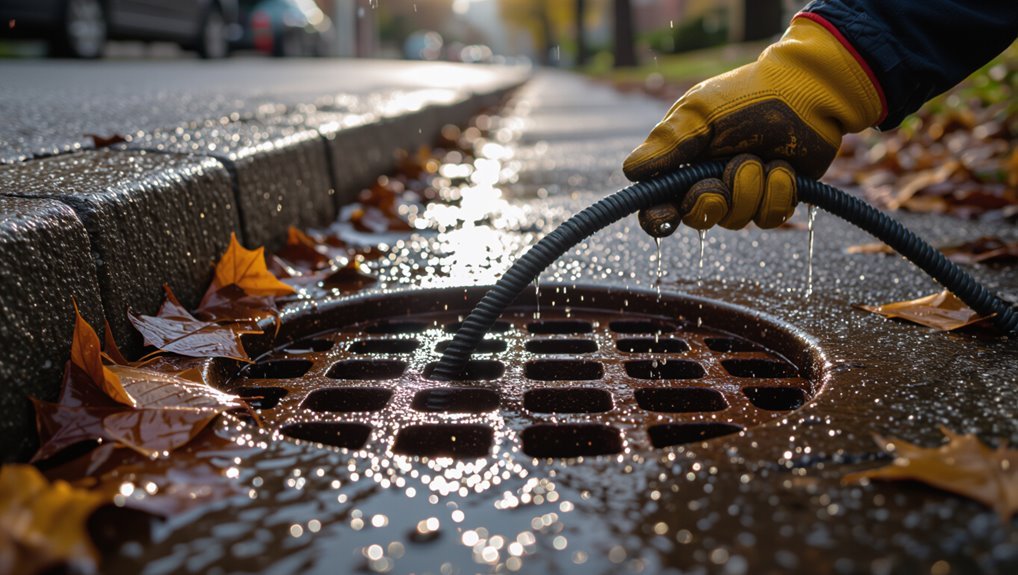
The quickest safe approach is to clear surface debris, use a garden hose with high-pressure nozzle, and employ a drain snake for deeper blockages.
If water is backing up into homes, emits foul odors, or the blockage resists these measures, a professional should be contacted immediately.
Emergency attention is also warranted after signs of structural damage or repeated clogs.
One-sentence summary of the fastest safe method
Use a high-pressure water jet or a motorized drain auger to quickly dislodge and flush debris from a storm drain while minimizing damage to the pipe and surrounding infrastructure.
This method, central to how to unclog storm drain pipe guidance, rapidly clears sediment, leaves, and small obstructions.
It requires appropriate safety gear and is efficient for routine blockages without resorting to corrosive chemicals or excessive manual excavation.
When to call a professional immediately
When should a professional be called immediately? A professional is required if flooding threatens structures, sewage is present, pipes are damaged or collapsed, multiple drains back up simultaneously, or DIY attempts fail after safe efforts.
Emergency situations—electrical hazards, hazardous materials, or risk to public safety—also demand immediate expert intervention.
Prompt professional assessment prevents further damage and guarantees compliant repairs.
Basic Understanding What Is a Storm Drain and Why Clogs Happen
A residential storm drain system typically includes gutters, downspouts, curb inlets, pipes, and an outlet to a municipal system or drainage ditch.
Blockages commonly occur from leaves, sediment, tree roots, trash, and grease that accumulate and restrict flow.
If left untreated, clogs can cause localized flooding, structural and landscape damage, and water quality problems that harm the environment.
Components of a typical residential storm drain system
Although often overlooked, a typical residential storm drain system consists of gutters and downspouts, surface inlets or grates, catch basins, underground pipes, and an outfall or connection to the municipal storm network or a detention area.
These components channel runoff from roofs, driveways, and landscaping, guide flow through sediment traps and junctions, and discharge to streets, sewers, retention ponds, or natural waterways.
Common causes of blockages (leaves, sediment, roots, trash, grease)
Storm drains commonly clog because various types of debris accumulate at inlets and along pipe runs, interrupting flow and reducing conveyance capacity.
Typical blockage sources include organic and human-made materials that restrict passage and degrade pipes.
- Leaves and yard waste
- Sediment and silt buildup
- Tree roots intruding joints
- Trash, grease, and litter compacting
Risks of ignoring a clogged storm drain (flooding, property damage, environmental harm)
Neglecting a clogged storm drain can quickly escalate from a minor inconvenience to serious consequences for property, infrastructure, and ecosystems.
Blocked drains cause localized flooding, damaging homes, basements, roads, and foundations. Prolonged backups erode infrastructure and increase repair costs.
Contaminants trapped in standing water harm wildlife and pollute waterways. Ignoring clogs raises public safety risks and amplifies long-term environmental and economic impacts.
Safety Precautions and Tools Needed
Before beginning work on a clogged storm drain, the author recommends assembling appropriate personal protective equipment—gloves, eye protection, waterproof boots, and a mask—and confirming vaccinations and tetanus status where relevant.
Basic tools for a quick DIY clear-out include a heavy-duty plunger, a manual or power drain snake/auger, a high-pressure hose nozzle, a wet/dry vacuum, and a biodegradable degreaser.
If lines are deep, reinforced, or require power equipment, two-person handling or hiring professional-grade gear and technicians should be considered.
Personal protective equipment (PPE) checklist
Personal protective equipment is essential when working on a clogged storm drain to guard against physical injury, contamination, and chemical exposure.
A concise PPE checklist helps guarantee safety and hygiene during DIY clearing tasks.
- Nitrile gloves for chemical and biohazard protection
- Safety goggles or face shield
- Waterproof boots with non-slip soles
- High-visibility vest and durable work clothes
Tools and materials for fast DIY unclogging (plunger, drain snake/auger, high-pressure hose/nozzle, wet/dry vacuum, biodegradable degreaser)
A compact set of tools and materials can swiftly clear most storm drain blockages while minimizing risk.
Essential items include a stiff plunger, a hand drain snake/auger, a high-pressure hose nozzle, and a wet/dry vacuum.
Add a biodegradable degreaser for organic buildup and basic hand tools.
Inspect gear for damage and keep PPE nearby.
- Plunger
- Drain snake/auger
- High-pressure nozzle
- Wet/dry vacuum
When equipment requires two people or professional-grade gear
After basic tools have been checked and used, some situations demand two operators or professional-grade equipment for safety and effectiveness.
Deep clogs, long runs, heavy debris, or pressurized water jets require coordinated handling and training. One person should not attempt large electric pumps, hydraulic cutters, or truck-mounted jetters alone.
Hire professionals or work in pairs with proper PPE, communication, and emergency plans.
Quick-Action Step-by-Step: Fastest Safe Method to Clear a Storm Drain
The following quick-action steps guide a rapid, safe approach: assess the grate, surface flow, and visible debris; remove surface material and lift the grate with proper tools; and employ a high-pressure water jet or pressure nozzle using recommended pressures and technique.
If flushing fails, a drain snake or auger should be fed cautiously to the obstruction depth indicated by resistance, then retract while turning.
Finish by using a wet/dry vacuum to extract loosened material and confirm restored flow.
Step 1 Rapid assessment (check grate, surface flow, visible debris)
Begin by visually inspecting the grate, nearby surface flow, and any visible debris to gauge clog severity and immediate hazards.
The assessor notes water pooling, odor, and obstructions without touching. Record risks, callouts, and next actions.
Prioritize safety and escalation if hazards present.
- Water level and flow rate
- Visible trash and sediment
- Signs of oil or biohazard
- Structural damage indicators
Step 2 Remove surface debris and grate safely
Lift the grate only after confirming scene safety and wearing appropriate PPE (gloves, eye protection, high-visibility gear); this minimizes injury and prevents contaminant exposure while allowing access to surface debris.
Using a hook or grate key, lift steadily. Remove leaves, trash, and sediment into a rated container.
Inspect edges and hinge for damage. Replace grate securely before resuming traffic control.
Step 3 Use a high-pressure water jet or pressure nozzle to flush the pipe (technique and pressure guidelines)
Start the high-pressure water jet only after confirming the grate is securely replaced and the work zone remains traffic-controlled; this minimizes risk from sudden water surge and debris ejection.
Use a directional nozzle at 2,000–3,500 psi for municipal drains, beginning downstream and working upstream with pulsed bursts.
Maintain firm footing, wear eye/face protection, and stop if resistance or backups occur; reassess before repeating.
Step 4 Follow with a drain snake/auger if flushing doesn’t clear the obstruction (how to use, how far to feed)
If high-pressure flushing fails to clear the obstruction, switch to a drain snake or auger to mechanically break up or retrieve the blockage; feed the cable slowly through the grate, rotating the handle or engaging the motorized feed only when the line is straight and unobstructed.
Advance cautiously, feeling for resistance; when resistance stops, retract slightly and repeat. Do not force past strong jams; reposition and try different angles.
Step 5 Finish with a wet/dry vacuum to extract loosened material (technique tips)
Attach a wet/dry vacuum to the grate and create a tight seal so suction can efficiently pull out loosened debris; using a short, rigid hose and a foam or rubber adapter improves contact and prevents air leaks.
Operate on high for brief bursts, sweep the hose across the opening, periodically check and empty the collection canister, and avoid prolonged continuous use to prevent motor overheating.
Step 6 Re-test flow and reassemble grate
With loosened debris removed by short bursts of vacuuming, the technician immediately checks flow by pouring a measured bucket of water into the grate and observing the drain’s response.
If water drains quickly and evenly, remaining residue is skimmed and the grate secured with original fasteners or replacements.
Final inspection guarantees no wobble, proper alignment, and clear surface runoff before site cleanup and tool sanitization.
Alternative Methods and Tools (If Fast Method Fails)
If the quick method does not clear the blockage, alternative approaches include targeted chemical or biological cleaners—favoring biodegradable formulas over corrosive chemicals—to break down organic buildup.
A sewer camera inspection can confirm clog location and condition before and after treatment, guiding whether simple products suffice or heavier intervention is needed.
For severe or persistent obstructions, contractors may use hydro-jetting or professional augers; expect higher cost and greater force appropriate for compacted debris, roots, or collapsed sections.
Chemical and biological options (safe biodegradable products vs. harsh chemicals)
When mechanical clearing fails to restore flow, chemical and biological treatments offer alternative ways to break down organic blockages or dissolve buildup within a storm drain pipe. Biodegradable enzyme products safely digest organics over time; harsh caustics act fast but risk pipes and environment. Choose biodegradable for routine maintenance; reserve strong chemicals for severe, professional-handled clogs.
| Type | Speed | Environmental risk |
|---|---|---|
| Enzymes | Slow | Low |
| Biological bacteria | Moderate | Low |
Using a sewer camera inspection before/after (benefits and when to use)
After chemical or biological treatments fail to restore reliable flow, a sewer camera inspection provides a precise assessment of the blockage and pipe condition before committing to further action.
Technicians can locate debris, roots, collapses, and offsets, gauge severity, and document damage for repairs or insurance.
Use before major excavation or costly equipment; repeat after clearing to confirm success and identify residual issues.
Hydro-jetting and professional augers what to expect and approximate situations requiring them
Call in specialized equipment for persistent or complex blockages: hydro-jetting and professional augers are common next steps when simpler methods fail.
Hydro-jetting uses high-pressure water to remove sediment, roots, and grease; it suits large-diameter mains and heavy buildup.
Professional augers mechanically cut through roots or compacted debris, ideal for localized obstructions.
Both require trained operators and can prevent repeat blockages when applied correctly.
Troubleshooting Common Blockage Types
The section outlines targeted steps for clearing leaf and sediment clogs, including flushing and mechanical removal.
It also compares strategies for removing trash and tangled debris, temporary root intrusion fixes versus when to call a professional, and approaches for treating grease and oil buildups with solvents or enzymatic products.
Readers are guided to match the chosen method to the blockage type and severity.
Leaf and sediment clogs targeted steps
Begin by evaluating the inlet area to determine whether leaves and fine sediment are the primary cause of reduced flow. Visual inspection and gentle probing will reveal surface mats, trapped debris, and loose silt that respond to targeted removal.
Remove surface leaves by hand or rake, then flush loose silt with directional water jets.
Collect and dispose of waste, then recheck flow and repeat localized flushing as needed.
Trash and debris entanglement removal strategies
After clearing loose leaves and silt, attention should shift to larger trash and tangled debris that can snag on grates or within the pipe body.
Use gloved hands and long-reach grabbers to extract plastics, branches, and textile tangles.
Cut or untwist stubborn knots with snips.
Flush remaining small fragments with a strong water jet, then reinstall grates and inspect for remaining obstructions.
Root intrusions temporary fixes vs. professional solutions
Addressing root intrusions requires distinguishing between temporary, do-it-yourself measures that clear obvious growth and professional interventions that restore pipe integrity.
Homeowners can cut back visible roots and use a mechanical auger to remove intrusions temporarily.
Persistent or recurring infiltration, cracked or collapsed pipes, and deep root networks demand camera inspection, root cutting with power equipment, pipe lining or replacement by licensed contractors.
Grease and oil buildups solvents and enzymatic treatments
While roots physically infiltrate and damage pipes, grease and oil create soft, adhesive blockages that accumulate gradually and respond differently to treatment.
Solvent degreasers can dissolve deposits but risk pipe material damage and environmental harm; use biodegradable, low-toxicity options sparingly.
Enzymatic treatments—lipase-based—break down fats safely over days; combine mechanical flushing with enzymes for best results and regular maintenance.
Mistakes to Avoid
The guide warns against dangerous practices such as entering drainage pipes or applying excessive water pressure, which can cause injury or structural damage.
It also advises limiting the use of harsh chemicals because of their harm to the environment and downstream ecosystems.
Finally, it stresses that persistent symptoms should not be ignored, since they may indicate wider system failure requiring professional assessment.
Dangerous practices (entering drainage pipes, using improper pressure)
Avoiding hazardous shortcuts is essential when dealing with storm drain clogs; entering drainage pipes or using excessive pressure can cause injury, equipment damage, and further blockages.
Individuals should not crawl into confined drains due to collapse, toxic gases, and entrapment risks.
Likewise, using improper high-pressure tools may rupture pipe joints or compact debris.
Call professionals for confined-space entry or specialized pressure equipment.
Overuse of harsh chemicals and environmental impacts
Because strong chemical drain cleaners break down organic matter indiscriminately, their repeated use can harm downstream ecosystems and municipal treatment systems.
Persistent toxins kill beneficial microbes, contaminate waterways, and bioaccumulate in wildlife.
Corrosive residues also damage pipes and infrastructure, increasing repair costs.
Safer alternatives—mechanical removal, enzymatic treatments, and routine debris prevention—limit environmental harm while maintaining drain function.
Ignoring signs of larger system failure
When subtle signs—repeated backups, unusually foul odors, or shifting pavement near inlets—are dismissed as minor nuisances, they can mask failing mains, collapsed sections, or overloaded stormwater systems that require professional intervention.
Ignoring these warnings delays critical assessment, worsens damage, increases repair costs, and creates safety hazards.
Promptly reporting persistent or widespread issues to municipal authorities or licensed contractors prevents escalation and protects infrastructure.
Prevention and Best Practices
Preventive measures and clear best practices dramatically reduce the likelihood of storm drain blockages.
A regular maintenance schedule with a quick-check checklist, appropriate guards or leaf screens, and strategic landscaping and grading can limit debris entry and flow overload.
Seasonal tasks—especially fall leaf management and spring inspections—help maintain system function year-round.
Regular maintenance schedule and quick-check checklist
A simple, consistent maintenance schedule reduces the likelihood of blockages and extends the life of storm drain pipes.
Inspections should be seasonal and after major storms; prompt debris removal prevents buildup. Record findings and actions for trends and repairs.
Use this quick-check checklist:
- Inspect grates and openings.
- Remove visible debris.
- Check flow during a test runoff.
- Note damage or needed repairs.
Installing guards, filters, and leaf screens (types and benefits)
Install guards, filters, and leaf screens to block debris at entry points and reduce maintenance frequency.
Mesh grates, basket filters, and hinged leaf screens fit varied drains; stainless or UV-stable plastics resist corrosion. Properly sized devices capture leaves, sediment, and trash while allowing flow.
Routine inspection prevents clogging of the guard itself. Selection balances capacity, ease of cleaning, and local debris types.
Landscaping and grading tips to reduce storm drain load
By shaping slopes and choosing plantings that slow and absorb runoff, property owners can markedly reduce the volume and velocity of water reaching storm drains.
Strategic grading directs flow toward rain gardens, bioswales, or permeable surfaces. Native, deep‑rooted vegetation increases infiltration and stabilizes soil.
Avoid hard, compacted surfaces; install mulch and contours to detain stormwater and minimize debris transport into drains.
Seasonal maintenance tasks (fall leaf management, spring inspections)
When leaves fall and winter approaches, regular seasonal maintenance prevents clogs and reduces stormwater damage. Homeowners rake and remove debris from gutters, grates, and curb inlets; install leaf guards; and schedule professional clearing before freeze.
In spring, inspect pipes, joints, and downstream flow for sediment or root intrusion, flush lines if needed, and document issues for timely repairs to maintain proper drainage.
When to Call a Professional
Persistent backups, foul odors, repeated clogs after DIY attempts, or visible pipe damage indicate the need for professional drain cleaning or repair.
A qualified service typically offers inspection (often with a camera), targeted cleaning such as hydro-jetting, and assessment for repair or replacement.
Homeowners should ask about warranties, methods, and insurance, and compare itemized quotes, credentials, and references before hiring.
Signs you need professional drain cleaning or repair
How can a homeowner tell if a slow or clogged storm drain requires professional attention?
Persistent backups after multiple DIY attempts, foul sewage odors, water pooling that threatens structures, repeated or worsening clogs, visible sinkholes or erosion near the drain, and signs of pipe damage (cracks, collapse) indicate professional assessment.
Safety concerns or complex underground issues also warrant calling a licensed plumber or drain specialist.
What to expect from a pro service (inspection, hydro-jetting, pipe repair/replacement)
After recognizing signs that DIY fixes have failed or that a drain problem poses structural or safety risks, a homeowner should understand what professional services typically involve.
Professionals generally provide:
- Video inspection to locate and assess blockages or damage.
- Hydro-jetting to clear heavy sediment and roots.
- Targeted repairs such as patching or relining.
- Full pipe replacement when deterioration or collapse is extensive.
Questions to ask and how to compare service quotes
When should a homeowner call a professional? A homeowner should ask about licensing, insurance, experience with storm drains, specific methods (camera inspection, hydro-jetting), estimated timeline, warranty, disposal of debris, and an itemized quote.
Compare bids by scope, materials, guarantees, response time, and total cost.
Prioritize clear contracts, references, and safety protocols before hiring.
Quick Reference Cheat Sheet
A concise cheat sheet summarizes immediate steps to clear a blockage, a checklist of required tools and PPE for DIY responders, and criteria for when to contact professionals.
It lists fast-action measures such as surface debris removal, temporary diversion, and safe inspection procedures.
It also provides emergency contacts and clear thresholds for escalating to licensed services.
Fast-action checklist for immediate unclogging
Start by evaluating visible signs of blockage—standing water, slow flow, debris buildup at grates—then follow a compact, prioritized sequence to clear the obstruction safely and quickly.
- Inspect grate and remove loose surface debris.
- Attempt flushing with directional water flow.
- Use mechanical agitation to dislodge compacted material.
- Recheck flow; repeat flushing and agitation until drain clears.
Tool and PPE checklist for DIY responders
Having completed the quick-action steps to clear visible blockages, the DIY responder should next assemble a compact, task-focused set of tools and personal protective equipment to work safely and efficiently at the storm drain.
- Heavy gloves, waterproof boots, eye protection, high-visibility vest.
- Drain rod set, hand auger, grabber hook.
- Stiff-bristled brush, bucket, trash bags.
- Flashlight, respirator (if odor/dust), first-aid kit.
Emergency contact and professional thresholds
If visible hazards, foul odors, persistent backups, or evidence of sewage intrusion are present, the DIY responder should stop work and contact the appropriate authorities immediately; otherwise use the following quick-reference thresholds to determine when to call a licensed plumber, public works, or emergency services.
- Repeated clog after basic clearing — call licensed plumber.
- Multiple drains affected or street flooding — contact public works.
- Structural damage or sinkholes — emergency services.
- Hazardous materials or strong sewage odor — emergency response.
Conclusion
In the end, the drained storm sings as if saved a city: a single unclogging act becomes heroic, transforming puddles into rivers of resolve. The reader, armed with simple tools and sharper caution, steps back while infrastructure breathes easier. It is a small job with outsized consequence—proof that timely attention to gutters and grates prevents tempests from nesting in quiet streets, and that ordinary care can feel like municipal heroism.