How to Use Zep Root Killer Safely and Effectively: Step-by-Step Guide
How to Use Zep Root Killer Safely and Effectively: Step-by-Step Guide
Zep Root Killer is an effective solution for eliminating roots in sewer and drain lines, particularly for minor intrusions. To use it safely and effectively, follow these steps: First, inspect your lines and repair any leaks. Always wear personal protective equipment (PPE). Mix the product according to the label instructions, then apply it through a cleanout or drain opening, ensuring it does not contact desirable plants or concrete. Allow the recommended contact time for optimal results. You should see root decay over several days to weeks, and repeat the application as needed for persistent growth. For further instructions on application, safety precautions, and alternative methods, continue reading.
What Zep Root Killer Is and When to Use It
Zep Root Killer is a chemical formulation containing active ingredients that break down or kill root tissue to clear pipe obstructions. It is typically used for roots from trees and shrubs that invade sewer or drain lines and for slow or recurring clogs caused by root intrusion. Professional help is recommended for large-scale root masses, frequent re-growth, damaged mains, or when excavation and pipe repair may be required.
Active ingredients and how they work
The product relies primarily on dichlobenil and copper sulfate as its active agents: dichlobenil acts as a preemergent herbicide that inhibits cell division in root tissues, while copper sulfate disrupts cellular metabolism and accelerates decomposition of severed roots.
These chemicals penetrate exposed root masses, suppress regrowth, and promote decay. For guidance on application rates and safety, consult label instructions on how to use Zep Root Killer.
Types of root problems it treats (tree roots, shrubs, clogging)
Homeowners and maintenance professionals encounter several distinct root issues—surface-rooted trees, deep shrub root systems, and roots invading sewer lines or drain pipes—that require different treatment approaches.
Zep Root Killer targets roots growing into pipes and small lateral feeders near foundations; larger structural tree roots and extensive shrub networks may respond slowly or require repeated applications.
Assessment of root size and location informs product use.
Situations when Zep Root Killer is appropriate vs when to call a professional
Evaluating whether roots are confined to pipes, small lateral feeders, or are part of a large structural network guides appropriate responses; for small, accessible intrusions into sewer lines or near foundation drains, a chemical root eliminator can be a practical first step.
Use Zep for minor clogs, recurring small root nibbling, or maintenance.
Call a professional for major structural invasion, repeated failures, collapsed pipes, or when excavation, camera inspection, or mechanical cutting is needed.
Safety Precautions Before You Start
Before beginning, users should don appropriate personal protective equipment such as gloves, eye protection, and a respirator if indicated by the product label.
They must also secure the area from children, pets, and nearby water sources to prevent accidental exposure or contamination.
Finally, the label and any applicable local regulations should be read and followed to guarantee legal and safe use.
Required personal protective equipment (PPE)
Because Zep Root Killer contains strong chemical agents, appropriate personal protective equipment (PPE) is essential to prevent skin contact, inhalation, and eye exposure.
Use chemical-resistant gloves, safety goggles or a face shield, and long-sleeved clothing. A respirator with suitable cartridges is recommended for confined spaces or poor ventilation.
Wear closed-toe shoes and avoid porous fabrics; remove contaminated clothing promptly and wash exposed skin thoroughly.
Environmental and property considerations (pets, children, water sources)
When evaluating where to apply Zep Root Killer, consider the proximity of children, pets, landscaping, and water sources and restrict access until treated areas are fully dry and any runoff is contained.
Remove toys, pet bowls, and vegetation from the area. Cover or divert drains and protect wells, ponds, and irrigation intakes.
Notify household members and post temporary barriers until safe.
Legal and label compliance (reading the label, local regulations)
Although reading and following the product label is legally required and essential for safe use, users should also verify local ordinances and permit requirements that may restrict application or disposal.
The label provides active ingredient, concentration, PPE, mixing, application rates, and disposal instructions.
Confirm municipal bans, required notifications, stormwater restrictions, and licensed applicator rules.
Keep documentation of compliance and follow recordkeeping mandates.
Tools and Materials Needed
The section outlines the Zep Root Killer product variants and recommended quantities for common sewer and drain sizes.
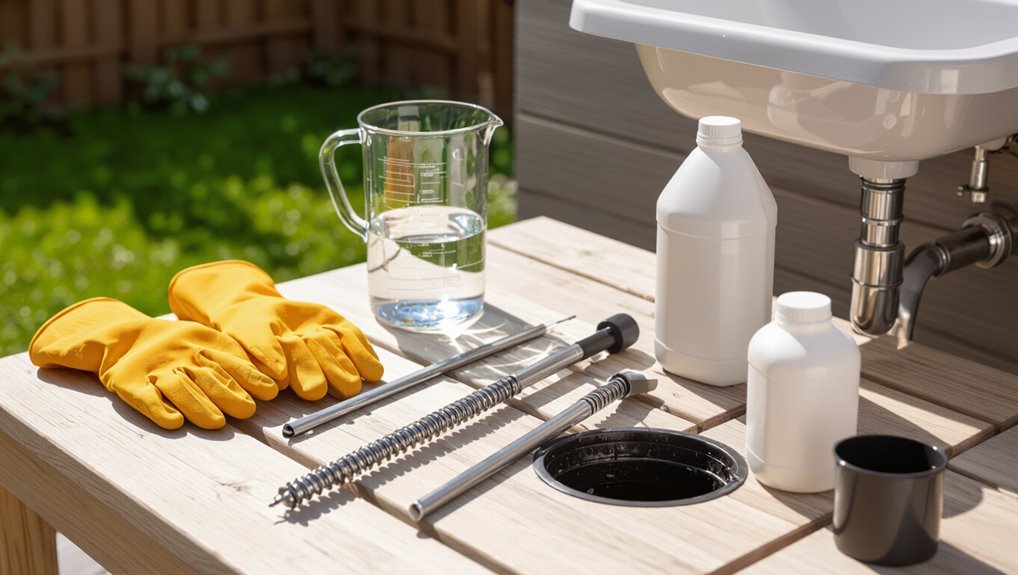
It also lists supplementary tools—chemical-resistant gloves, applicators, measuring cups, and temporary signage—to guarantee correct application.
Finally, it covers disposal materials and spill-cleanup supplies such as absorbent pads, sealed waste containers, and appropriate neutralizers.
Product variants and recommended quantities
Zep Root Killer is available in several formulations—liquid concentrate, ready-to-use spray, and foaming gel—each suited to different blockages and pipe types; professionals typically use concentrate for widespread root infestations, ready-to-use for spot treatments, and foam for penetrating lateral lines.
Typical quantities: one 1-gallon concentrate treats multiple small jobs (dilute per label), 32–128 oz RTU for single spots, and one 16–32 oz foam can per lateral.
Supplementary tools (gloves, applicators, measuring cups, signage)
Gather necessary supplementary tools before application begins to guarantee safety, dosage accuracy, and clear worksite communication.
Use chemical-resistant gloves and eye protection; select applicators (syringes, pour spouts, or root foaming devices) compatible with the product.
Measure concentrates with graduated cups or calibrated dispensers.
Post visible signage to warn others and mark treated drains.
Maintain tools clean and dedicated to root killer use only.
Disposal materials and spill cleanup supplies
Prepare a compact spill kit and clearly labeled disposal containers to handle leftover product, rinsates, and accidental releases.
Include absorbent pads, inert absorbent (kitty litter or commercial granules), sealed plastic bags, a stiff brush, disposable scoops, and chemical-resistant disposal drums.
Add neutralizing agents if recommended by the label, waste manifests, and a waterproof marker.
Store kits near work areas and inspect before each use.
Step-by-Step Application Process
The step-by-step application outlines preparing the treatment area, measuring and mixing Zep Root Killer safely, and selecting the proper delivery method for sewer lines and drains.
It also covers application techniques for walkways, septic systems, and lawns, followed by post-application procedures and cleanup.
Clear adherence to each step guarantees effective root control and minimizes risk to people and property.
Preparing the treatment area
Before applying Zep Root Killer, inspect the treatment area for leaks, standing water, and access points to the sewer or drain line to confirm safe, effective contact with roots.
Clear debris, remove loose items, and make sure vents or nearby drains are closed.
Post warning signs, limit foot traffic, and keep children and pets away.
Verify adequate lighting and stable footing before proceeding.
Mixing and measuring the product safely
Measure carefully: mix Zep Root Killer only according to the label instructions, using calibrated measuring tools and clean containers to guarantee correct concentration.
Wear appropriate PPE—gloves, goggles, and protective clothing—while preparing solutions.
Add product to water, not water to product, to reduce splashing.
Label mixed solution with concentration and time.
Prepare only needed amounts and dispose of unused mixture per label directions.
Correct application methods for sewer lines and drains
Begin by confirming that flow has been stopped and any standing water is reduced to the extent possible.
Apply measured Zep Root Killer directly into cleanout access or uncovered drain opening using a funnel or dosing device.
Allow contact time per label, avoid disturbance, then flush as instructed.
Repeat only if regrowth occurs, following ventilation and safety precautions.
Correct application methods for walkways, septic systems, and lawn areas
Confirm that pedestrian traffic is halted and any surface moisture is minimized, then apply Zep Root Killer only to exposed cracks or soil near roots using a calibrated pourer or dosing hose, keeping the product off concrete surfaces and away from desirable plants.
For septic inlets, dose directly into access points per label rates.
For lawns, target root zones sparingly, avoiding broadcast application and irrigation immediately after dosing.
Post-application steps and cleanup
After application, allow the treated areas to sit undisturbed for the contact time specified on the Zep Root Killer label.
Then inspect surfaces and surrounding vegetation for any accidental overspray or spills.
Remove contaminated debris, rinse hard surfaces with water per label, and collect rinse water for proper disposal if required.
Wash gloves and exposed skin, launder clothing separately, and store product securely.
Timing, Frequency, and Expected Results
The timeline for root death and the clearing of debris typically spans days to weeks depending on severity and flow.
Reapplication is usually recommended at manufacturer intervals or if regrowth appears, with specific guidance on frequency provided on the product label.
Clear indicators of success include reduced backups and fewer root fragments, while persistent obstructions, odors, or new growth suggest treatment failure.
How long until roots die and debris clears
How long before roots die and the line clears depends on root type, infestation severity, and whether mechanical snaking was performed first; typically, soft feeder roots begin to die within 24–72 hours while tougher woody roots may take up to 7–14 days to break down.
After die-off, fragments and slime may flush over days to weeks; persistent debris may require follow-up snaking to fully clear flow.
Recommended reapplication intervals
Timing for reapplication of Zep Root Killer depends on initial infestation severity and sewer conditions; light infestations often require a single dose with monitoring, while moderate to heavy root intrusion typically benefits from a follow-up treatment after 2–4 weeks.
Subsequent intervals depend on recurrence risk: inspect after one month, then every 3–6 months for preventative maintenance.
Always follow label directions and local regulations.
Signs of successful treatment vs signs of failure
Following recommended reapplication intervals helps set expectations for when results should appear and what to monitor.
Successful treatment shows gradual reduction in slow drains, diminished odors, and less frequent backups within days to weeks; roots brown and weaken.
Failure is indicated by persistent blockages, recurring odor, visible root regrowth, or no change after two recommended applications, signaling need for professional inspection or mechanical removal.
Troubleshooting Common Problems
If contact with skin, eyes, or inhalation occurs, the instructions advise immediate flushing and seeking medical attention as specified on the label.
Persistent root regrowth may require repeat treatments or alternative methods and should prompt reassessment of application technique and drainage conditions.
In some cases the product can exacerbate clogs by loosening debris or dead roots, necessitating mechanical removal or professional service.
What to do if the product contacts skin, eyes, or is inhaled
Treat skin, eye, or inhalation exposure to Zep Root Killer as a potential hazard and respond immediately with appropriate first-aid measures.
For skin, remove contaminated clothing and rinse thoroughly with water for 15 minutes.
For eyes, flush with water for 15 minutes and seek medical attention.
If inhaled, move to fresh air; if symptoms persist, obtain medical care and bring product label.
Managing persistent root regrowth
Persistent root regrowth after using Zep Root Killer indicates remaining viable root fragments, reinvasion from nearby systems, or inadequate product contact; resolve it by inspecting the line for missed lateral roots, repeating treatment to reach active roots, and addressing upstream sources or physical blockages that shelter regrowth.
Use targeted repeat applications per label, flush lines afterward, monitor performance, and schedule periodic inspections to confirm eradication and prevent recurrence.
When it may worsen clogs or require mechanical removal
Following inspection and repeat treatments for regrowth, there are situations where Zep Root Killer can make blockages worse or fail without mechanical removal.
Chemical action may soften roots, causing fragments to dislodge and accumulate downstream, tightening traps or tees.
Heavily encrusted roots, foreign objects, severe pipe collapse, or root masses beyond product reach require mechanical cutting, hydro-jetting, or professional excavation for reliable resolution.
Alternatives and Complementary Methods
Consideration of alternatives and complementary methods can help when Zep Root Killer is unsuitable or insufficient.
Mechanical root removal and professional excavation offer immediate physical solutions, while other chemical options carry differing efficacies and safety profiles.
Preventive landscaping and root barriers provide longer-term protection against recurrence.
Mechanical root removal and professional excavation
When chemical treatments are unsuitable or roots must be removed entirely, mechanical excavation and professional root cutting provide direct, reliable solutions.
These methods range from hand digging and saw-cutting to trenchers and hydraulic excavators operated by qualified contractors, each selected based on root size, soil conditions, and proximity to structures.
Mechanical approaches minimize repeat chemical use, allow inspection of damaged infrastructure, and require permits, safety measures, and restoration planning.
Other chemical options and their pros/cons
Explore other chemical options as targeted adjuncts to mechanical removal or as alternatives when excavation is impractical; these include potassium hydroxide-based root killers, glyphosate formulations, copper sulfate (root-killing) products, and foaming sewer line treatments. Each has tradeoffs: efficacy, pipe/material compatibility, environmental risk, and legal restrictions. Choose based on situation and follow label directions.
| Option | Key consideration |
|---|---|
| KOH | Fast, corrosive |
| Copper sulfate | Toxic, limited use |
Preventive landscaping and root barriers
Many homeowners and managers find that proactive landscaping and installed root barriers greatly reduce root intrusion risks before they require chemical or mechanical intervention.
Strategic tree placement, selecting low-invasive species, maintaining root pruning zones, and installing physical barriers (plastic, metal, or composite) along sewer lines and foundations limit growth toward structures.
Regular inspection and professional installation guarantee barriers remain effective and minimize ecosystem disruption.
Tips to Prevent Future Root Intrusion
A proactive approach combines routine maintenance of drains and sewers with smart landscaping to reduce the risk of root intrusion.
Guidance on planting distances and which species to avoid near pipes helps limit future problems.
Regular inspections and simple monitoring techniques enable early detection before damage escalates.
Routine maintenance schedule for drains and sewers
How often should drains and sewers be inspected and treated to keep roots from returning? Routine inspections every 6–12 months with targeted Zep Root Killer treatments after mechanical clearing prevent recurrence.
Record dates, note problem areas, and schedule follow-ups based on root regrowth speed. Consistent maintenance preserves flow, reduces emergency calls, and protects infrastructure.
- Relief from surprise backups
- Confidence in system reliability
- Pride in proactive care
- Security against costly repairs
Planting guidelines and species to avoid near pipes
Because roots seek water and stability, homeowners and landscapers should plan vegetation locations with underground pipes in mind.
Select shallow-rooted ornamental plants and grasses for areas above utilities. Maintain a safe planting distance from sewer and drain lines—avoid trees and aggressive shrubs (willow, poplar, maple, birch, elm, oak, and some fruit trees).
Use root barriers and consult utility maps before planting.
Early detection techniques and monitoring
When should homeowners and maintenance crews begin watching for root intrusion? Regular inspections should start at installation or when trees/shrubs mature nearby.
Look for slow drains, gurgling, wet spots, sinkage, or root fragments in cleanouts. Use camera inspections annually or after symptoms.
Maintain a monitoring log, trim offending roots, and schedule preventive treatments to reduce future infiltration and costly repairs.
Environmental and Disposal Considerations
The section addresses proper handling and disposal of unused product and empty containers to prevent contamination.
It also covers measures to minimize environmental impact near waterways and garden areas.
Procedures for reporting and containing spills or accidental releases are outlined to protect people and wildlife.
Safe disposal of unused product and containers
Proper disposal of unused Zep Root Killer and its containers minimizes environmental harm and complies with local regulations.
Unused product should never be poured down drains, onto soil, or into storm sewers.
Store original labels and follow municipal hazardous waste guidelines for drop-off or collection.
Triple-rinse empty containers per label instructions when allowed, then recycle or dispose as directed by local authorities.
Minimizing environmental impact near waterways and gardens
Following proper disposal practices helps reduce broader contamination risks, particularly near sensitive areas like waterways and gardens.
Users should avoid applying product within setback distances of streams, ponds, irrigation lines and garden beds.
Contain and remove runoff, use spot treatments only, and store chemicals securely.
Dispose of rinsate and containers per label and local regulations to prevent soil and aquatic harm.
Reporting spills and accidental releases
Report spills and accidental releases immediately to minimize environmental harm and regulatory liability.
The user must isolate the area, prevent run-off, and contain the product using absorbent materials.
Notify local authorities and follow label and safety data sheet reporting instructions.
Collect contaminated materials for approved disposal, document the incident, and cooperate with emergency responders to guarantee proper cleanup and compliance with applicable regulations.
When to Call a Professional
If persistent backups, recurring root intrusion after treatment, unusual odors, or visible line damage occur, the issue likely exceeds do-it-yourself remedies.
In such cases, a professional root-removal service can provide camera inspection, mechanical cutting or hydro-jetting, and safe disposal of residues.
Homeowners should ask about inspection methods, treatment options, guarantees, and verify licenses, insurance, and local plumbing credentials.
Signs the problem is beyond do-it-yourself treatment
When should a homeowner move from DIY root-control to professional help?
Persistent blockages after multiple treatments, sewage backups, repeated tree-root intrusions, collapse or major cracks in pipes, extensive yard or structural damage, or lack of accessible cleanouts indicate limits of consumer products.
In such cases, licensed plumbers or tree specialists should assess containment, perform diagnostics, and recommend repair or removal beyond Zep Root Killer’s scope.
What to expect from a professional root-removal service
Several situations warrant calling a professional root-removal service: persistent or recurring blockages, visible pipe damage, sewage backups, or roots that penetrate main lines.
A contractor will inspect with cameras, assess extent, recommend mechanical cutting, chemical treatment, or pipe repair/replacement, provide cost and timeline estimates, and perform safe disposal.
Expect post-service recommendations to prevent recurrence.
Questions to ask and credentials to check
What should a homeowner ask before hiring a root-removal contractor?
The homeowner should request licensing, proof of insurance, references, and written estimates.
Ask about experience with sewer-root issues, methods used, permits, and cleanup procedures.
Verify certifications, manufacturer training, and local regulatory compliance.
Confirm warranties, guarantees, disposal practices, and a clear timeline before signing any contract.
Conclusion
Used as directed, Zep Root Killer offers a fast, effective way to clear small invasions without disruptive excavation. Even skeptics worried about chemical harm can picture safely pouring a measured dose into a dry drain, letting natural enzymes break soft roots overnight while wearing gloves and ventilating the area. With precautions, proper timing, and sensible disposal, it resolves minor clogs and buys time before considering mechanical removal or professional inspection.