How to Treat a Septic Tank With Yeast: Safe Steps to Improve Breakdown and Reduce Odors
To treat a septic tank effectively with yeast, you can use food-grade yeast (Saccharomyces cerevisiae) to enhance the breakdown of organic matter and minimize odors. Begin by dissolving 1–2 cups of active dry yeast in warm, dechlorinated water. Introduce this mixture into your septic system through a toilet or access point during periods of low water usage. For ongoing maintenance, administer small doses weekly or monthly. Avoid using yeast after chemical treatments or if there are mechanical issues with the system. For additional guidance on dosing, monitoring, and potential risks, consult a professional.
How Yeast Affects Septic Tanks and Why People Use It
Yeast are single-celled fungi that can interact with the native microbial community in a septic tank by producing enzymes and competing for nutrients, potentially influencing the rate of organic matter breakdown.
Baker’s yeast, brewer’s yeast, and proprietary commercial enzyme products differ in species, enzyme profiles, and viable cell counts, which affects their suitability and effectiveness in wastewater environments.
The scientific rationale for adding yeast rests on supplying additional enzymatic activity or fermentative processes to accelerate decomposition, though efficacy depends on strain, dose, and existing tank conditions.
What yeast is and how it interacts with septic microbes
A microscopic fungus commonly found in kitchens and breweries, baker’s yeast (Saccharomyces cerevisiae) provides a concentrated source of simple sugars and enzymes that can alter microbial activity in a septic tank.
It ferments carbohydrates, releasing byproducts and stimulating heterotrophic bacteria that degrade organic matter; understanding this interaction helps homeowners decide how to treat septic tank with yeast cautiously to avoid oxygen depletion or microbial imbalance.
Differences between baker’s yeast, brewer’s yeast, and commercial enzyme products
While all three products introduce biological agents that influence decomposition, baker’s yeast, brewer’s yeast, and commercial enzyme formulations differ in composition, activity, and proposed use.
Baker’s yeast (Saccharomyces cerevisiae) is an active sugar-fermenter, inexpensive and widely available.
Brewer’s yeast may include strains with different nutrient profiles.
Commercial enzyme products contain targeted hydrolases and additives, often standardized for wastewater applications and marketed for consistent performance.
Scientific basis for using yeast to boost breakdown of organic matter
Introduce biological and biochemical mechanisms that could accelerate organic matter breakdown in septic systems, focusing on how added Saccharomyces strains interact with native microbial communities and substrate chemistry.
Yeast may secrete hydrolytic enzymes, ferment simple sugars, and alter redox conditions, potentially stimulating heterotrophic bacteria.
Evidence is limited; effects depend on dosage, retention time, temperature, and existing microbial ecology.
Quick Recommendation: Should You Use Yeast in Your Septic Tank?
A brief recommendation weighs the potential benefits of adding yeast—such as aiding digestion of organic matter in low-activity systems—against situations where it may be ineffective or counterproductive, like in already balanced or chemically treated tanks.
It also notes circumstances to avoid yeast, including systems with recent professional treatment, advanced septic problems, or restrictive local regulations.
Safety and regulatory considerations, including municipal rules and the risk of disrupting established microbial communities, should guide any decision.
Situations where yeast can help
When might adding yeast to a septic tank be beneficial?
Yeast can aid in systems showing mild organic buildup, slow bacterial activity due to low kitchen waste, or temporary odor issues after heavy usage.
It may assist during routine maintenance to boost fermentation and support natural microbes.
It is not a fix for mechanical failures, severe sludge accumulation, or major system problems.
When to avoid adding yeast
Although yeast can help mild organic buildup or temporary odor issues, there are clear situations where its use is inadvisable.
Avoid adding yeast when plumbing problems, persistent backups, or mechanical failures exist, or when the tank is already overdosed with biologics.
Refrain if recent professional treatment occurred, during active chemical disinfection, or when unknown contaminants (solvents, antibiotics, high chloride) may inhibit microbes or worsen system imbalance.
Safety and regulatory considerations
Because septic systems are both public-health assets and regulated infrastructure, users should weigh safety and legal factors before introducing yeast. Minor home remedies may be harmless in many jurisdictions, but local regulations, the system’s design, and potential impacts on wastewater treatment plants determine whether adding live cultures is appropriate.
Consultation with local authorities, reviewing permit conditions, and prioritizing proven septic maintenance over unverified additives is advised.
Materials and Tools Needed to Treat a Septic Tank with Yeast
The section lists the specific types and typical dosages of yeast commonly used for septic treatment, such as active dry and baker’s yeast and recommended packet or gram amounts.
It also identifies necessary supplies—clean water for activation, measuring spoons or scales, and basic protective gear like gloves and goggles.
Finally, it notes optional complementary products, including septic-safe bacterial additives and pH adjusters, and when they might be considered.
Types and amounts of yeast to consider
Selecting an appropriate yeast type and dosing amount is essential for effective septic tank treatment; commonly used options include active dry yeast, instant (rapid-rise) yeast, and brewers’ or nutritional yeast, each differing in live cell count and activity.
Typical dosing ranges from one to four packets (7–28 grams) per 1,000 gallons monthly; choose higher activity yeast for quicker results and larger systems.
Additional supplies (water, measuring tools, protective gear)
When preparing to dose a septic tank with yeast, gather a few simple but essential supplies: potable water for dissolving yeast, a graduated measuring spoon or scale for accurate dosing, a clean bucket or container for mixing, and basic protective gear such as nitrile gloves and safety glasses to prevent skin and eye contact.
Also include a long-handled stirring tool, paper towels, and a small flashlight for inspection.
Optional: complementary products (septic-safe bacteria additives, pH adjusters)
A few complementary products can enhance yeast treatments by supporting microbial balance and ideal tank conditions.
Septic-safe bacterial additives can replenish beneficial microbes after shocks, while pH adjusters correct acidity to optimize enzyme activity.
Use only products labeled septic-safe, follow manufacturer dosing, and avoid chemical cleaners that harm microbes.
Consult a professional for severe imbalances or persistent odors.
Step-by-Step Procedure to Add Yeast Safely
The following steps outline preparing a yeast solution, choosing the best timing and conditions for application, and introducing the mixture into the septic system via a toilet, cleanout, or access point.
Guidance will include recommended initial dosages and a simple follow-up maintenance schedule.
Safety tips and brief precautions for handling and applying the solution will be noted.
Preparing the yeast solution
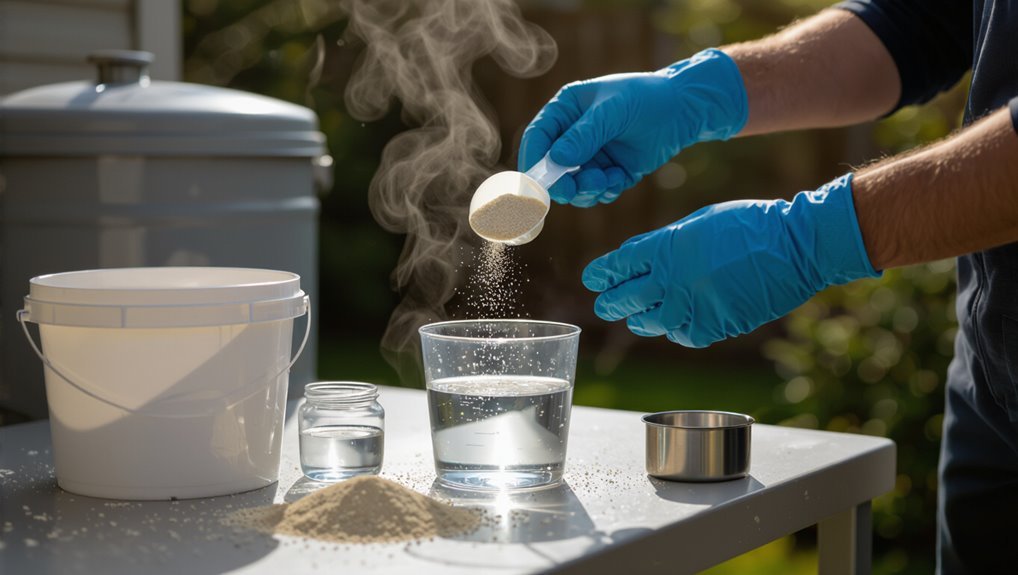
Prior to adding yeast to a septic system, gather ingredients and equipment: food-grade baker’s or brewer’s yeast, warm non-chlorinated water (about 100–110°F / 37–43°C), a clean container, and a stirring utensil.
Measure recommended yeast quantity, pour into water, stir until dissolved, and let activate 5–10 minutes.
Inspect for foaming, gently remix, then transfer solution to a secure pouring vessel for system application.
Best times and conditions to apply yeast
Following activation, attention shifts to timing and conditions for adding the yeast solution to the septic system.
Applications are best during moderate temperatures (50–85°F) when microbial activity is high. Avoid extreme heat, freezing, or heavy rain events.
Apply after low household water use periods to prevent dilution.
Repeat monthly or quarterly depending on tank size and odor/activity observations, following safety guidelines.
How to introduce yeast into the septic system (toilet, cleanout, or access point)
Begin by identifying a suitable access point—typically the toilet, a 2-inch cleanout, or the septic tank riser—based on ease of access and homeowner comfort.
Prepare yeast in warm water, dissolve fully, then slowly pour near the chosen entry to minimize splashing.
Flush once if using a toilet.
Close cleanout caps securely and document the date and method used for future reference.
Dosage schedule for initial treatment and follow-up maintenance
When establishing a dosing schedule, start with an initial shock dose to quickly boost microbial activity.
Then shift to a lower, regular maintenance dose; this approach guarantees rapid seeding of beneficial organisms while preventing nutrient overload.
Apply one to two cups of active dry yeast dissolved in warm water for initial treatment, then one tablespoon weekly or one cup monthly for maintenance, adjusting by tank size.
Monitoring and Measuring Effectiveness
After treatment, observable signs such as reduced odors and faster wastewater clearing indicate improved biological breakdown.
Regular checks of scum and sludge levels, along with measurements of drainage performance and soakaway behavior, provide objective data on progress.
If little improvement appears after a few weeks or conditions worsen, repeat applications or alternative remediation should be considered.
Signs of improved breakdown and reduced odors
Several observable changes indicate that yeast treatment is aiding septic system digestion and odor control.
Reduced foul smells around the tank and drainfield, fresher indoor plumbing odors, and fewer episodes of strong hydrogen sulfide scent are signs.
Wastewater may appear clearer with less surface scum and diminished bubbling or gurgling noises.
Consistent odor reduction over weeks suggests effective microbial activity and stabilization.
How to track changes in scum, sludge levels, and drainage performance
Regular monitoring of scum and sludge levels, along with drainage performance, provides objective evidence of whether yeast treatments are improving septic system function.
Inspectors record scum depth, sludge depth, and effluent clarity at set intervals, noting drainfield absorption rates and fixture flow.
Photographs, simple measurements with a probe, and a log help quantify trends, detect worsening, and guide decisions without immediately resorting to professional intervention.
When to repeat treatment or switch strategies
Tracking scum and sludge trends, along with drainfield performance, establishes a baseline for judging treatment outcomes and informs timing decisions.
If yeast applications produce measurable reductions in solids and improved drainage within one to three months, repeat at maintenance intervals.
Lack of improvement after two treatments or worsening signs warrants professional inspection and alternative interventions such as mechanical pumping, targeted enzymes, or system repairs.
Potential Problems, Risks, and How to Avoid Them
The use of yeast in a septic tank carries specific risks that warrant careful attention, including overfeeding that can cause scum floatation or pipe blockages.
Chemical interactions with household cleaners and antibacterial products may reduce yeast effectiveness or harm microbial balance.
Additionally, improper application can affect the drainfield, violate local regulations, or pose environmental hazards, so adherence to dosage guidance and local rules is essential.
Risks of overfeeding yeast and causing floatation or blockages
Overfeeding yeast can disrupt septic system balance, producing excessive gas and biomass that may cause scum layer flotation or clog pipes and the drain field.
Excess biomass and CO2 can lift solids into outflow, reducing settlement and increasing blockage risk.
Users should follow recommended dosing, space applications, monitor tank performance, and consult professionals if persistent foaming, slow drains, or odors indicate system stress.
Interactions with household chemicals and antibacterial products
After discussing dosing limits to prevent foaming and blockages, attention turns to how household chemicals and antibacterial products can undermine yeast treatments in septic systems.
Harsh cleaners, bleach, and antibacterial soaps reduce yeast and beneficial bacteria, limiting breakdown and increasing odors.
To avoid interference, minimize use of strong disinfectants, dilute wastes, space yeast applications apart from heavy cleaning, and choose septic-safe alternatives.
Environmental and septic system risks (drainfield impact, local regulation)
Although yeast can aid digestion within a septic tank, improper or excessive use carries environmental and system risks that warrant careful consideration.
Misapplied yeast may alter microbial balance, increasing solids that clog drainfields or accelerate anaerobic conditions producing odors and groundwater contamination.
Users should follow manufacturer guidance, consult local regulations, avoid overuse, and monitor system performance; professional inspection is recommended for persistent problems.
Comparison of Yeast vs. Commercial Septic Treatments
A concise comparison helps readers weigh yeast against commercial septic treatments across cost, effectiveness, ease of use, and safety. The table below summarizes key differences to prompt informed choices. Further discussion will examine trade-offs and practical implications.
| Aspect | Yeast vs. Commercial Treatments |
|---|---|
| Cost | Yeast: low; Commercial: higher |
| Effectiveness | Yeast: variable; Commercial: more consistent |
| Ease of use | Yeast: simple DIY; Commercial: often packaged instructions |
| Safety | Yeast: generally safe; Commercial: chemical risks |
| When to choose | Yeast: preventative/maintenance; Commercial: heavy buildup or specific pathogens |
Cost, effectiveness, ease of use, and safety comparison
Several factors determine whether yeast or commercial septic treatments are the better choice for a given homeowner: cost, biological effectiveness, ease of application, and safety for people, plumbing, and the environment.
Yeast is inexpensive, easy to add, and supports some microbial activity but offers limited, inconsistent results.
Commercial products cost more, are formulated for targeted breakdown, often more reliable, and usually include safety guidance and plumbing-compatible formulations.
Common Mistakes and Troubleshooting
Common mistakes and troubleshooting steps are summarized to help users apply yeast treatments effectively and address common failures. The following points highlight typical errors and immediate actions to take when problems arise. Brief guidance follows for selecting yeast, dosing, timing, and responding to persistent odors or slow drains.
- Using the wrong yeast strain or incorrect dosage that reduces treatment effectiveness.
- Treating too frequently or applying yeast when the system is stressed (e.g., after heavy water use).
- Flushing harsh chemicals or excessive grease that inhibit yeast and bacterial activity.
- If odors or slow drains persist, inspect for blockages, check tank levels, and consider professional inspection before increasing treatment.
Mistake: Using wrong yeast type or wrong dosage
Many septic system problems stem from selecting the incorrect yeast strain or applying an improper dose.
Using baker’s or brewer’s yeast indiscriminately can be ineffective; specialized strains or bacterial additives are often required.
Overdosing can disrupt microbial balance, cause foam, or accelerate scum migration.
Underdosing yields no benefit.
Follow product instructions, consult manufacturers, and prefer measured, evidence-based treatments.
Mistake: Treating too frequently or at wrong system condition
After selecting the correct yeast and dose, timing and system condition become the next frequent sources of error.
Treating too often can disrupt microbial balance, flushing nutrients before they act.
Applying yeast during heavy wastewater flow, recent chemical use, or when tank access is compromised reduces effectiveness and risks washout.
Follow recommended intervals and treat only under stable, low-flow conditions for best results.
Troubleshooting: What to do if odors or slow drains persist
What steps should be taken when odors or slow drains persist despite yeast treatment?
The user should first verify dosing and wait time, then inspect for clogs, grease accumulation, or excessive water use.
If problems continue, schedule professional pumping and bacterial analysis.
Avoid adding more yeast; instead correct mechanical issues, repair damaged drainfields, and follow expert recommendations to restore proper septic function.
Maintenance Plan Incorporating Yeast Treatments
A maintenance plan should specify recommended yeast dosing frequency with adjustments for seasonal usage and temperature variations.
It should also describe how yeast treatments fit alongside scheduled pumping and household practices that reduce system load.
A concise long-term monitoring checklist can track treatment dates, effluent quality indicators, and signs that professional service is needed.
Recommended frequency and seasonal adjustments
Typically, homeowners should apply yeast treatments to a septic tank on a predictable schedule—monthly during normal use, biweekly during heavy household occupancy, and every 6–8 weeks in seasonal properties—to maintain active bacterial balance without overloading the system.
Frequency may be reduced during cold months when microbial activity slows; increase slightly after events causing high waste load.
Monitor odors and effluent clarity to adjust timing.
Combining yeast with regular pumping and good household practices
Integrate yeast dosing into a broader maintenance plan that includes scheduled professional pumping and consistent household practices to protect system function and extend time between service calls.
Coordinate yeast applications with pump schedules, limit water and chemical loads, avoid flushing solids or grease, and minimize antibacterial products.
Document treatments and service dates, and adjust yeast frequency based on professional recommendations and observed system performance.
Long-term monitoring checklist
When implementing yeast treatments as part of ongoing septic care, the long-term monitoring checklist should define clear, measurable indicators of system health, scheduled checkpoints, and responsible parties to guarantee consistent oversight.
Include weekly odor and drain performance logs, monthly yeast dosing records, quarterly sludge depth and scum layer inspections, annual professional inspections and pumping schedules, and protocols for documenting corrective actions and communicating findings to homeowners.
Additional Resources and When to Call a Professional
The section outlines clear signs—persistent backups, strong odors, soggy drainfield, or unusually rapid solids buildup—that warrant professional inspection or pumping.
It suggests concise questions to pose to a septic technician about licensing, inspection scope, pump frequency, and treatment compatibility.
It also points readers to manufacturer datasheets, local health department guidelines, and certified waste management resources for reliable product information and regulations.
Signs that require professional inspection or pumping
Certain warning signs indicate that a septic system needs prompt professional inspection or pumping rather than DIY remedies like yeast treatments.
Persistent sewage backups, slow drains throughout the property, foul odors near the tank or drainfield, unusually lush or soggy lawn areas, visible effluent, or repeated system alarms warrant immediate attention.
Ignoring these signs risks contamination, costly repairs, and health hazards.
Questions to ask a septic technician
Which questions should a homeowner have ready before the technician arrives?
Ask about inspection findings, required repairs versus maintenance, estimated costs, and recommended pumping frequency.
Inquire whether biological treatments like yeast are appropriate, any risks or contraindications, and expected timeline for odor or performance improvements.
Request written estimates, warranty details, and technician credentials or licensing.
Where to find reliable product information and local regulations
A homeowner armed with specific questions can also benefit from knowing where to verify product claims and understand local rules before purchasing or applying treatments.
Reliable sources include manufacturer data sheets, EPA guidance, state health or environmental agency websites, and university extension publications. Local permitting offices clarify restrictions.
For unclear situations or persistent problems, consulting a licensed septic professional guarantees compliance and safe, effective treatment choices.
Conclusion
To sum up, using yeast to support septic systems can be a modest, low-cost adjunct to regular maintenance, offering some enhancement of organic breakdown and odor reduction when applied correctly. Like a small key easing a stubborn lock, yeast may help microbial processes but is not a cure-all; routine pumping, conservative water use, and professional inspections remain essential. Homeowners should weigh benefits, follow safe application steps, and consult experts for persistent problems.