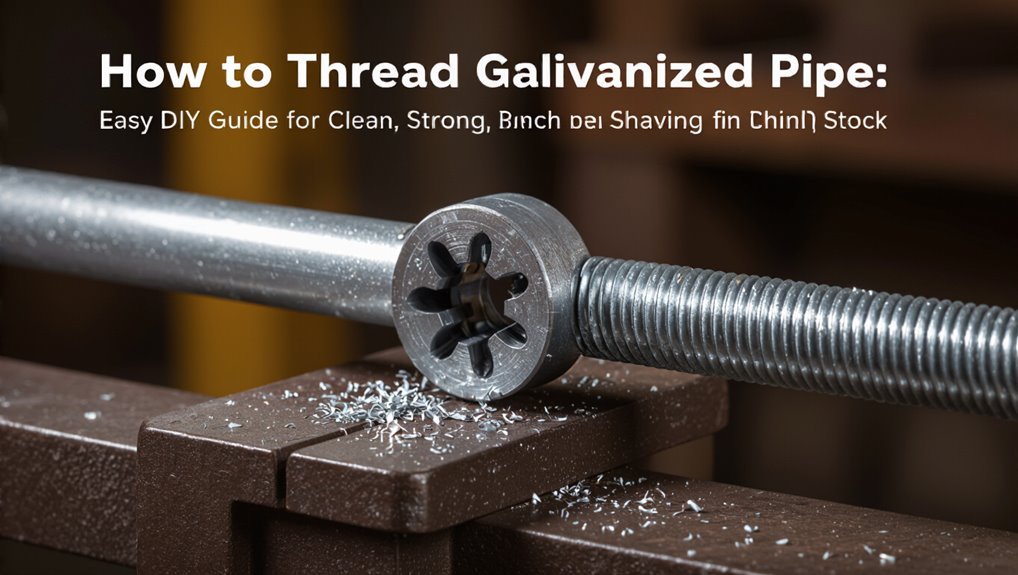
How to Thread Galvanized Pipe: Easy DIY Guide for Clean, Strong Threads
Threading galvanized pipe is a straightforward process that requires the right tools and technique to ensure clean, strong threads. Begin by cutting the pipe end square, deburring it, and lightly chamfering the edge. Secure the pipe in a soft-jawed vise, then use a properly sized die or die head, aligning it squarely. Apply cutting oil and advance the die with even pressure, periodically backing off to remove chips. Once finished, clean the threads, inspect them, and apply a touch-coat to restore the zinc. Follow these steps for effective preparation, safety measures, and tips to prevent corrosion.
Quick Overview: Threading Galvanized Pipe (What to Expect)
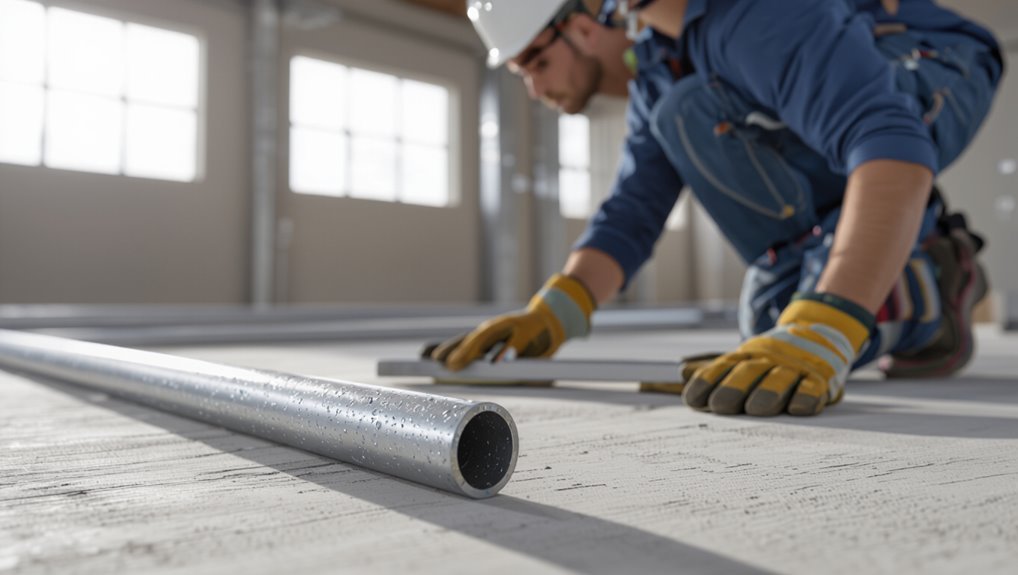
Threading galvanized pipe involves cutting helical grooves on the pipe end so it can join with threaded fittings, and it typically requires prior cleaning, accurate measurements, and the right tools—die heads or pipe threading machines, cutting oil, and secure pipe supports.
The process usually begins with measuring and marking thread length, deburring the cut pipe, and clamping it firmly. Proper lubrication reduces tool wear and improves finish.
Threading proceeds steadily to avoid chatter; finished threads are checked with gauges or fittings for fit. Thread cutting speed, tool sharpness, and consistent pressure determine thread quality and alignment.
Safety First: PPE and Galvanized‑Pipe Hazards
Always prioritize personal protective equipment and hazard awareness when working with galvanized pipe, because the zinc coating and cutting processes introduce specific risks—metallic dust, sharp edges, hot chips, and potential zinc oxide fumes—that demand eye protection, cut-resistant gloves, respiratory protection, and hearing protection as appropriate. The worker should inspect tools, ventilate the workspace, and avoid inhaling dust from grinding or threading. Proper PPE minimizes injury and long-term exposure. Clear signage and disposal of shavings reduce contamination. Emotional clarity reinforces caution: respect the material, prepare, and protect.
| Wear | Risk | Feeling |
|---|---|---|
| Goggles | Eye injury | Alert |
| Gloves | Cuts | Secure |
| Mask | Fumes | Reassured |
Should You DIY or Hire a Pro?
Choosing between DIY and hiring a professional depends on the operator’s threading experience and comfort with pipe‑fitting tools.
A brief cost comparison should weigh tool purchase or rental and time against a contractor’s labor rates.
Consideration of risks, permits, and potential liability often tips the balance toward a licensed pro for complex or pressurized systems.
Skill Level Required
How difficult is threading galvanized pipe for a homeowner with basic tools? A moderate level of mechanical skill, patience, and attention to safety is required. Basic familiarity with hand tools, proper measurement, and tap-and-die or pipe threading equipment makes DIY feasible for straightforward jobs. Complex or pressurized systems, awkward locations, or code-sensitive installations favor hiring a professional. Confidence with cutting, deburring, and applying thread sealant predicts success; uncertainty about sealing, alignment, or leak testing suggests pro assistance.
| Skill Needed | Recommendation |
|---|---|
| Basic tools familiarity | DIY possible |
| Plumbing codes/pressure | Hire pro |
| Tight spaces/complex runs | Hire pro |
Cost Comparison
Deciding whether to DIY or hire a professional for threading galvanized pipe hinges on a straightforward cost–benefit calculation: compare material and tool expenses, time investment, and the value of guaranteed workmanship against the hourly rates, permit and inspection costs, and liability protection provided by a licensed plumber.
DIY saves labor charges but may require purchasing a threader, dies, cutting oil, and safety gear; amortize tool cost across future projects.
A pro adds predictable expenses but reduces rework, guarantees code-compliant fittings, and speeds completion.
For occasional jobs with limited complexity DIY often wins; complex or time-sensitive work favors hiring.
Risk And Liability
What are the stakes when threading galvanized pipe without professional oversight? The choice affects safety, code compliance, and potential property damage. Improper threads can leak, corrode, or fail under pressure.
Liability shifts to the homeowner if unlicensed work causes injury or violates local codes; insurance claims may be denied. Professionals carry licenses, warranties, and insurance that mitigate risk.
DIY saves money but increases exposure to repair costs, fines, and legal responsibility.
- Safety hazards: leaks, bursts, contamination.
- Code and permit violations: fines, required rework.
- Insurance implications: denied claims, uncovered damages.
- Financial trade-off: upfront savings vs long-term costs.
Tools and Materials You Need
The next section lists the essential tools required for threading galvanized pipe and the specific materials that should be on hand.
It outlines hand and power tools, cutting and threading equipment, and safety gear.
It also specifies pipe types, fittings, thread sealants, and replacement parts needed to complete the job.
Essential Tools Needed
One set of reliable tools and materials is essential before attempting to thread galvanized pipe. The focus is on safe, durable tools that guarantee accurate cuts, consistent threads, and secure fittings.
Selection prioritizes compatibility with pipe diameter, corrosion resistance, and ease of maintenance. Personal protective equipment is assumed but not listed here to avoid overlap with later material specifics.
Proper tool condition and calibration reduce rework and leaks. The following core tools form the foundation for successful threading operations:
- Pipe vise or bench vise with pipe jaws
- Manual or powered pipe threader with correct dies
- Pipe cutter or heavy-duty tubing cutter
- Torque wrench or spanner set
Required Materials List
Having established the necessary tools, attention turns to the specific materials required to thread galvanized pipe correctly and reliably. Materials must guarantee clean cuts, durable threads, and safe handling. The list below outlines essential consumables and parts, emphasizing quality and compatibility for leak-free connections.
| Material | Purpose |
|---|---|
| Galvanized pipe stock | Base material to thread |
| Cutting oil / lubricant | Reduces heat, preserves galvanizing |
| Pipe dope or PTFE tape | Guarantees airtight, watertight seal |
| Replacement dies or fittings | Match thread size and standard |
Select corrosion-resistant, correctly sized items to achieve lasting results.
Measure Pipe and Choose Thread Size/Pitch
Before cutting or threading, measure the pipe carefully to determine its nominal diameter and thread pitch so compatible fittings can be selected. A caliper or ruler confirms outside diameter; refer to nominal size charts since pipe OD differs from nominal.
Identify thread form (NPT for tapered pipe threads) and count threads per inch (TPI) with a gauge or compare to a known sample. Match fittings by nominal size and TPI, and note tapered vs. straight threads to assure sealing method.
- Measure OD with calipers.
- Consult nominal size chart.
- Determine TPI with a gauge.
- Verify thread form (tapered/straight).
Cut Square and Deburr ID and OD
The pipe should be cut square to guarantee accurate threads and proper sealing.
After cutting, the inside bore must be deburred smoothly to prevent thread damage and flow obstruction.
Finally, the outside edges are chamfered or filed to remove sharp burrs and guarantee a clean thread start.
Cut Square First
When preparing galvanized pipe for threading, cutting square is the foundational step that guarantees accurate threads and proper fittings.
The pipe is measured, marked, and secured in a vise; a square cut prevents misalignment, leaks, and uneven engagement of fittings.
Using a proper saw or pipe cutter, the operator makes certain the blade is perpendicular to the pipe axis and advances steadily to avoid burrs or deformation.
After cutting, the end face should be inspected for flatness and concentricity before threading begins.
- Measure and mark precisely.
- Secure pipe firmly.
- Cut perpendicular to axis.
- Inspect end face for flatness.
Deburr Inside Smoothly
With the cut face confirmed flat and square, attention shifts to removing burrs from the pipe’s inner diameter as well as the outer edge to guarantee proper thread engagement and sealing.
The operator uses a round file, deburring tool, or chamfer cutter to remove sharp lips and metal shards inside the bore, working gently to preserve wall thickness. Swarf is cleared frequently to prevent re-scoring.
A light chamfer of about 15–30 degrees at the ID entrance eases die alignment. After deburring, the interior is wiped clean and inspected with a flashlight to confirm a smooth, continuous edge ready for threading.
Deburr Outside Edges
Gently file and deburr the outer edges of the cut pipe to remove sharp burrs and thin metal lips that can impede die travel or damage fittings. The operator inspects the square cut, then uses a mill file or deburring tool to chamfer the OD slightly and clear any raised metal. A light, even stroke prevents removing too much material, preserving thread engagement.
After external deburring, the exterior is checked for nicks and flattened areas; corrections are made with fine sanding. Clean the pipe of filings before threading to avoid contamination and assure smooth die alignment.
- Check cut square and concentricity
- File OD chamfer 15–30°
- Remove raised burrs evenly
- Brush and wipe filings clean
Ream the End to Remove Zinc and Prevent Cracking
Ream the pipe end to remove the fragile zinc layer and smooth the bore before threading. A tapered reamer or round file removes loose galvanizing and sharp edges inside the pipe, reducing the risk of brittle zinc fragments cracking during die engagement.
Work evenly around the circumference, using light, controlled strokes until the bore is uniform and free of flaking material. Blow out debris and inspect for remaining irregularities.
Proper reaming guarantees consistent thread depth and prevents contamination of cutting tools. Wear gloves and eye protection; collect removed zinc for proper disposal to avoid environmental contamination.
Set the Vise and Align the Pipe
The operator secures the pipe in the vise with firm, even pressure to prevent slipping during threading.
The pipe is then aligned so the die will cut true along the length, ensuring square threads.
Protective padding or soft jaws are used where needed to preserve the galvanized finish.
Secure Pipe In Vise
Clamp the pipe firmly in the vise with the designated threading end protruding and the section to be cut or joined supported.
The operator verifies jaws are clean and padded to protect galvanized coating, positions pipe horizontally, and tightens incrementally to avoid distortion.
Vise height aligns with workbench to allow comfortable die operation.
A final tug confirms secure seating before cutting or threading begins.
- Use soft-jaw inserts or leather to prevent marring.
- Keep at least two pipe diameters exposed for threading.
- Make certain pipe is level and cannot roll.
- Recheck tightness after initial tool pressure.
Align Pipe With Die
Before threading begins, align the pipe so the die head will engage squarely with the end of the pipe. Position the clamped pipe so its axis is parallel to the bench and centered in the vise jaws. Raise or lower the vise handle, or adjust jaw spacers, until the pipe end sits level with the die’s entry. Sight along the pipe toward the die to confirm coaxial alignment; small deviations cause crooked threads. Lock the vise firmly to prevent rotation. Recheck alignment after a light trial engagement by hand, ensuring the die starts evenly before applying full cutting pressure.
Protect Pipe Finish
When protecting the pipe finish, the vise jaws are padded and the pipe positioned so the clamping pressure grips solidly without crushing or gouging the galvanized coating. The operator uses soft jaw covers or leather strips, centers the pipe horizontally, and checks alignment with the die to prevent misthreading.
Clamping torque is moderate — enough to stop rotation but not deform the tube. Final inspection verifies the coating is intact and the pipe remains straight before threading begins.
- Use padded jaws or clamps
- Center pipe in vise
- Apply moderate, even pressure
- Inspect finish and alignment
Threading Step‑by‑Step With a Die Head or Hand Die
Start by securing the pipe in a vise with soft jaws or protective pads to prevent marring, leaving the end exposed for threading.
Apply cutting oil to the area and choose the correct die for pipe diameter.
Align the die head or hand die square to the pipe, engage slowly to start threads straight.
Turn steadily, maintaining even pressure; back off periodically to clear chips and reapply oil.
For a die head, follow the tool’s feed and stop procedure; for a hand die, use the handle for controlled rotation.
Finish by cleaning chips and inspecting threads for uniform depth and alignment.
Cutting Tapered NPT vs Straight Threads
In comparing tapered NPT threads to straight (parallel) threads, the key distinctions are thread geometry, sealing method, and application. The cutter choice and setup differ: tapered threads require precise taper angle and progressive cutting to maintain seal; straight threads need uniform depth and often rely on gaskets or O-rings. Material buildup, pitch, and fit tolerance influence tool wear and thread strength. Selection depends on whether a pressure-tight metal-to-metal seal is desired (tapered) or a mechanical alignment/joint is required (parallel). Proper measurement and die selection prevent leaks or misfit during assembly.
- Taper angle and fit
- Sealing method
- Tooling technique
- Application intent
Clean, Inspect, and Seal Finished Threads
After cutting threads—whether tapered NPT for a metal-to-metal seal or straight threads for a gasketed connection—the next step is to clean, inspect, and seal the finished threads to guarantee reliable assembly and leak prevention.
Remove metal shavings and oil using a stiff brush and solvent, then dry thoroughly.
Inspect threads for burrs, incomplete cuts, or deformation under good light; minor burs are stoned smooth, damaged threads must be recut.
Apply appropriate sealant: pipe dope for tapered NPT, PTFE tape wrapped clockwise, or anti-seize where dissimilar metals meet.
Recheck fit before final assembly to confirm proper engagement and alignment.
Common Problems and Fixes (Chatter, Cross‑Threading)
Common problems when threading galvanized pipe include chatter, cross-threading, uneven cuts, and tool slippage, each of which can compromise fit and cause leaks.
Diagnosis relies on visual inspection and feel; remedies focus on setup, technique, and sharpening.
Apply steady feed, proper lubricant, and rigid clamping.
Replace damaged dies; back off and re-cut shallowly if misalignment occurs.
Light touch avoids delamination of galvanizing.
- Verify rigid pipe support and correct die alignment to prevent chatter.
- Stop and re-align at first sign of cross-threading; re-cut if necessary.
- Sharpen or replace dies to fix uneven cuts.
- Use proper lubrication to reduce slippage and wear.
How Threading Affects Galvanizing and Corrosion
When a thread is cut into galvanized pipe, the protective zinc layer is locally removed and the bare steel substrate is exposed, creating a small but significant corrosion risk at the joint; the severity depends on the extent of zinc loss, the quality of subsequent protective measures (such as zinc-rich compound, galvanizing repair paste, or mechanical protection), and service conditions like moisture, salinity, and stray electrical currents.
Threading concentrates stress and can create crevices where moisture accumulates, accelerating galvanic attack. Proper cleaning, prompt application of zinc-based touch-up, and avoiding dissimilar metal contact mitigate corrosion. Thread fit and sealant choice also influence long-term durability.
Maintenance and When to Replace Fittings
Corrosion risks at threaded joints make regular inspection and maintenance of galvanized fittings important to preserve system integrity and prevent leaks.
Routine checks should focus on thread condition, zinc coating loss, visible rust, and signs of fatigue.
Clean threads with a wire brush, apply compatible sealant sparingly, and retighten joints to manufacturer torque where specified.
Replace fittings if threads are distorted, pitting exposes base metal, leaks recur after sealing, or structural cracks appear.
Record inspections and replacement dates to track lifecycle and prioritize preventive replacements before failures occur.
- Inspect threads and coating
- Clean and reseal as needed
- Retighten to spec
- Replace on damage or leaks
Conclusion
In closing, the guide asserts that properly threaded galvanized pipe yields durable, leak‑free joints while preserving much of the protective coating. Investigating the theory that heating or excessive cutting removes galvanizing and speeds corrosion confirms partial truth: careless threading can breach the zinc layer, but correct technique, proper tools, and sealing practices largely prevent accelerated rust. With routine inspection and timely replacement, threaded galvanized systems remain a reliable DIY solution for many projects.