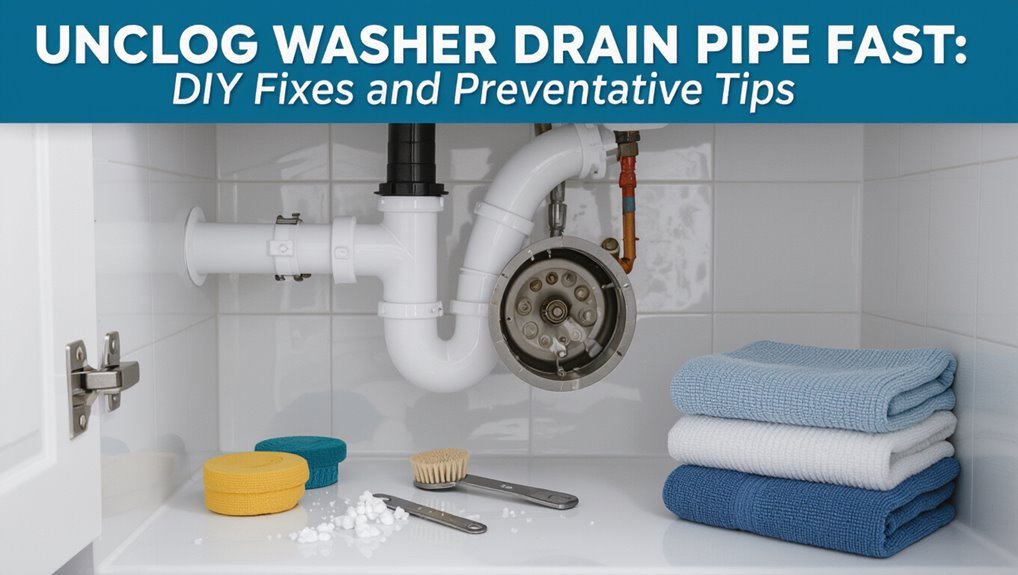
Unclog Washer Drain Pipe Fast: DIY Fixes & Preventative Tips
To quickly unclog your washer drain pipe, start by cutting power and shutting off the water supply. Remove the drain hose and check for visible lint or debris. Use a cup plunger on the standpipe, a short hand snake, or a wet/dry vacuum to remove any blockages. After clearing the obstruction, flush the pipe with very hot water and an enzyme cleaner. If you find any damaged hoses or clamps, replace them, and then run a short test cycle to ensure everything is working properly. To prevent future clogs, consider installing simple filters and performing monthly maintenance.
Quick Answer: Unclog a Washer Drain in 5 Fast Steps
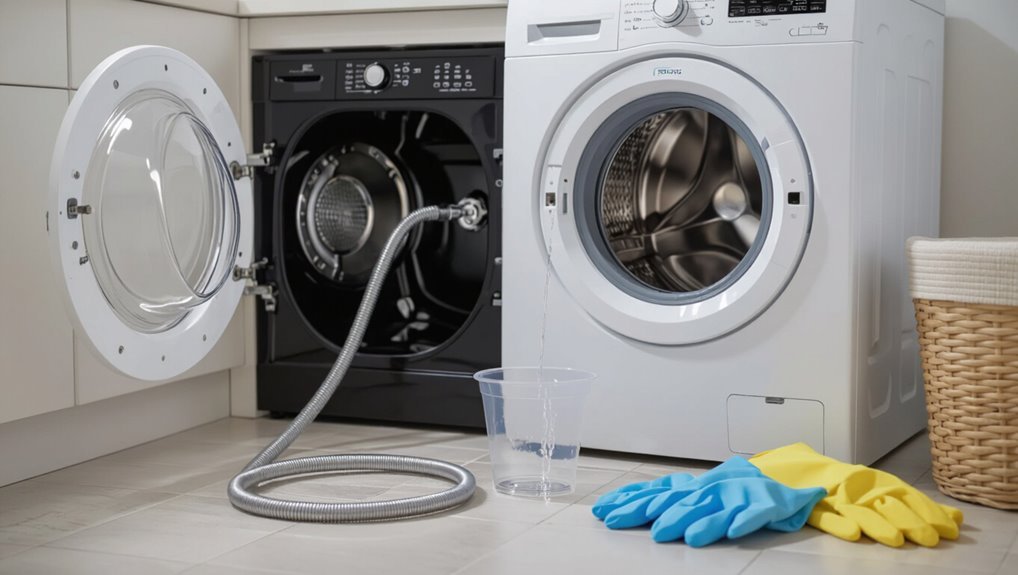
With a clogged washer drain, follow five clear steps to restore flow quickly: turn off the washer and disconnect power, remove the drain hose and check for visible blockages, use a plumber’s snake or wire coat hanger to clear the pipe, flush the line with hot water and a biodegradable enzyme cleaner, then reassemble and test for proper drainage. The user should wear gloves and eye protection.
If debris is reachable, remove it by hand or with pliers. Persistent clogs may require repeating the snake and flush sequence.
After successful drainage, inspect hoses for damage and secure connections to prevent recurrence.
Emergency Unclog Cheat‑Sheet
After the five-step quick fix, a compact emergency cheat-sheet helps someone act faster when a washer drain blocks unexpectedly.
Keep essential tools ready: bucket, pliers, wet/dry vacuum, drain snake, rubber gloves, and flashlight.
Shut off water and power first.
Remove visible lint and debris from trap or hose; use pliers for clamps.
Try a short snake or vacuum suction to clear shallow clogs.
If water remains, bail into a bucket to reduce weight before further disassembly.
Note odors, backups, or slow drainage for later diagnosis.
If resistance persists or leaks appear, stop and call a professional.
Know the Signs of a Clogged Washer Drain
Recognize common signs early to prevent a small blockage from becoming a major repair. Visual and auditory cues indicate drainage trouble: slow emptying, water pooling in the drum or laundry sink, and gurgling or sputtering noises during drain cycles. Residual dampness or persistent odors after a cycle also point to trapped debris. Inspect visible hoses and the standpipe for wetness and backup stains; note any repeated cycle failures or error codes tied to draining.
Early detection speeds correction and reduces appliance strain.
- Slow or incomplete drainage
- Gurgling noises and odors
- Water pooling or backups
Safety First: Turn Off Power and Water to the Washer
Before attempting any work on the drain, the power to the washer should be switched off at the outlet or breaker to prevent electrical hazards.
The water supply valves—both hot and cold—must also be turned off to stop flow and reduce the risk of flooding.
These simple precautions protect both the person performing the repair and the appliance.
Turn Off Power
Cut the power and water to the washer to prevent shocks, shorts, or flooding while working on the drain.
The technician first isolates electrical supply: unplugging the machine or switching off its dedicated breaker at the panel.
Confirm power is off by attempting to start a cycle briefly or using a noncontact voltage tester on the cord and outlet.
Remove jewelry and wear dry, insulated gloves when handling connections.
Leave the breaker off until repairs complete and the area is dry.
- Unplug or flip breaker for the washer.
- Verify power is absent with a tester.
- Use insulated gloves and keep area dry.
Shut Off Water
Shut off the washer’s water supply at the nearest valve to prevent flooding and reduce pressure in the drain lines. The person guarantees both hot and cold valves are closed, then tests by running a short cycle to confirm no inlet flow. After water is secured, a quick visual check for leaks around hoses and fittings follows. Turning off water minimizes mess and protects tools and surfaces during the unclog. Power remains off as previously advised. The following table summarizes simple checks before proceeding:
| Item | Action | Purpose |
|---|---|---|
| Valves | Close | Stop water |
| Cycle | Test | Confirm closure |
| Hoses | Inspect | Spot leaks |
| Power | Off | Ensure safety |
Tools & Supplies for a Fast DIY Fix
A concise kit of essential hand tools, a few common replacement parts, and basic safety gear enables a fast DIY washer drain repair.
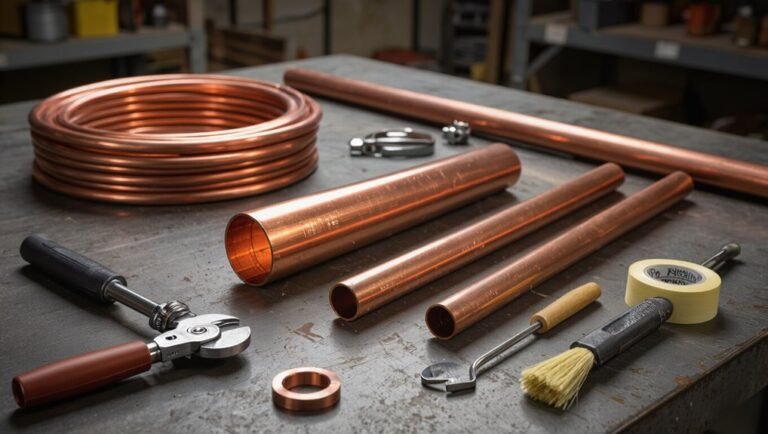
Typical hand tools include pliers, adjustable wrench, screwdriver set, and a drain snake or auger.
Replacement hoses, clamps, a small bucket, gloves, and eye protection should be on hand before starting.
Essential Hand Tools
Gathering the right hand tools before starting a washer drain unclog saves time and prevents unnecessary trips to the store. A compact, practical set speeds diagnosis and clearing without specialty gear.
Essential choices prioritize access, grip, and gentle manipulation to avoid pipe damage. Safety items minimize exposure to debris and cleaning chemicals. Tools should be clean and functioning to streamline work and reduce accidental spills or stripped fittings.
- Adjustable wrench and channel-lock pliers for loosening hose clamps and fittings.
- Drain snake or hand auger (small-diameter) for removing blockages.
- Work gloves and safety glasses to protect hands and eyes.
Replacement Parts Needed
Several small replacement parts and consumables can turn a stalled washer drain job into a quick DIY fix: common hose clamps, a short length of flexible drain hose, and a spare rubber gasket or washer for the hose connection should be on hand, plus plumber’s tape and a small tube of plumber’s-grade sealant for threaded fittings.
Also include a replacement trap or P-trap segment, a selection of drain spigots or adapters to match varying outlet sizes, and a few zip ties for temporary holds.
Replace corroded hose ends, worn seals, and stripped fittings promptly to prevent repeat clogs and leaks.
Safety Gear Checklist
Personal-protection gear and basic hand tools form the foundation of a safe, efficient washer drain repair.
The checklist emphasizes PPE and practical tools: gloves to protect skin from contaminants and chemicals; safety glasses to prevent splashes; and a mask if mold or strong cleaners are present.
Hand tools include adjustable pliers, basin wrench, and a manual auger for blockages.
A flashlight and bucket help manage leaks.
Proper footwear and knee pads reduce injury risk when working in tight spaces.
Inspect items before starting; replace damaged gear to maintain safety and efficiency.
- Gloves, safety glasses, mask
- Adjustable pliers, basin wrench, auger
- Flashlight, bucket, knee pads
Access the Washer Hose and Standpipe Safely
Before touching any fittings, make sure the power to the washer is off and the water supply valves are closed to prevent electrical hazard and unexpected flow.
The technician visually inspects the hose route and standpipe, noting clamps, kinks, or corrosion.
Gloves and eye protection are worn; a towel and bucket are placed to catch residual water.
The drain hose is carefully detached from the washer and the standpipe, supporting both ends to avoid sudden drops.
If the hose is stiff or brittle, a replacement is prepared rather than forcing removal.
Clear access to the standpipe opening is confirmed before proceeding.
Try a Plunger on the Standpipe
A plunger suited to the standpipe—ideally a cup-style plunger with a firm rubber lip—gives the best seal for washer drain clogs.
The user should position the plunger over the standpipe, create a tight seal, and use short, forceful thrusts rather than slow pumps to dislodge blockages.
Proper technique and a well-fitted tool often clear the obstruction without disassembly.
Proper Plunger Selection
For effective standpipe clearing, selecting the right plunger is critical: a broad-rimmed cup plunger creates a better seal on the vertical pipe than a narrow sink plunger, while a flange-style toilet plunger can be adapted if the standpipe diameter and lip permit. The user should choose a plunger that matches standpipe size and material to avoid damage. Soft rubber conforms to plastic pipes; rigid designs risk cracking.
Hygiene and grip matter: longer handles offer control, and a watertight cup preserves suction. Evaluate condition—discard warped or torn plungers before attempting any clearing.
- Match cup diameter to standpipe opening.
- Prefer soft, flexible rubber cups.
- Check handle length and cup integrity.
Effective Plunging Technique
Positioning the plunger squarely over the standpipe opening guarantees a tight seal and maximizes suction.
The person places the plunger vertically, ensuring the rubber lip fully contacts the pipe rim, and adds water to cover the plunger cup if needed.
With controlled, firm strokes, they push down then pull up sharply, maintaining the seal and avoiding lateral movement that breaks suction.
After 15–20 strokes, they pause and check for water drainage.
If progress is limited, repeating cycles or combining with a drain snake may help.
They clean the plunger and surrounding area after a successful clear.
Remove and Snake the Washer Drain Hose
Begin by disconnecting the washer from power and water supply to prevent hazards and leaks. The hose is detached from the machine and standpipe or utility sink; residual water is drained into a bucket.
Inspect the hose for kinks, crushed sections, or visible blockages. Use a flexible coat hanger or small brush to push through soft clogs from the machine end, working gently to avoid damage. Flush the hose with water after dislodging debris.
Reattach securely, checking clamps and orientation to prevent siphoning. Run a short rinse cycle to confirm free flow and no leaks.
- Inspect hose condition
- Clear soft blockages
- Flush and test
Use a Drain Snake or Hand Auger Effectively
With the hose cleared and reattached, attention shifts to the standpipe or utility sink where the blockage often persists; a drain snake or hand auger can reach obstructions farther down the line that flushing and hose cleaning cannot. The operator feeds the cable slowly, rotates the handle, and advances until resistance is felt. Break up or hook debris, then retract while cleaning off the cable. Repeat until flow returns. Clean and lubricate the tool before storage. Use personal protective equipment and avoid forcing the snake to prevent pipe damage.
| Tool Type | Best Use | Tip |
|---|---|---|
| Hand auger | Short runs | Rotate steadily |
| Drain snake | Deeper clogs | Straighten cable |
| Drum auger | Stubborn block | Use incremental feed |
When to Use a Wet/Dry Vacuum on the Washer Drain
When surface water remains after disconnecting the washer hose and manual methods (snaking, flushing) have failed to clear an obstruction, a wet/dry vacuum becomes a useful next step; it is most effective for pulling out loose debris and residual standing water from the standpipe or utility sink before resorting to more invasive measures.
The tool excels when the blockage is near the trap entrance or when lint, small clothing fibers, and sediment accumulate. Use a wide nozzle, seal around the hose with a rag, and vacuum in short bursts to avoid splashing or clogging the vacuum filter.
- Inspect first for visible debris.
- Use low suction test runs.
- Empty and clean vacuum promptly.
Flush a Washer Drain With Hot Water and Detergent
Frequently, flushing a washer drain with hot water and detergent is an effective, low-effort method to dissolve soap scum, break up greasy residues, and flush away loose lint that ordinary cold rinses miss.
To perform this, heat water until very hot but not boiling, pour steadily into the drain while running a cycle that uses water flow or manually agitating the drain pipe by flexing hoses.
Add a measured amount of liquid detergent to help emulsify oils.
Allow the hot detergent solution to sit for several minutes, then flush with additional hot water.
Repeat once if buildup persists; avoid caustic chemicals.
Use Enzyme Cleaners: When They Help and How Long to Wait
In cases where organic matter—hair, food particles, or biodegradable detergent buildup—contributes to a washer drain blockage, enzyme cleaners can be an effective, low-risk option because they target proteins, starches, and fats without harsh chemicals.
The product should match drain use, applied per label, and given time to work; typically a 4–12 hour dwell is recommended, with longer overnight treatments for stubborn buildup.
Avoid immediate flushing with caustics or mechanical probing first.
Repeat treatments weekly for persistent organic films, then monthly as preventive maintenance.
- Choose laundry-safe enzyme formula.
- Allow 4–12 hours (or overnight).
- Repeat as needed, then monthly.
Clear Clogs at the P‑Trap or Floor‑Drain Access
After enzyme treatments fail to clear a washer drain, attention should shift to accessible trap and floor‑drain points where solid debris and lint commonly accumulate.
A cleanout or P‑trap can be exposed by removing the access panel or unscrewing the trap coupling; place a bucket, loosen fittings, and extract visible buildup with gloves and a hand auger or plumber’s snake.
Flush with hot water to confirm flow.
For floor drains, remove the grate, skim debris, and use a snake through the cleanout.
Reassemble fittings, check for leaks, and run a short wash cycle to verify proper drainage.
Inspect and Clear the Washer Pump and Filter
Check the washer pump and its filter for trapped objects and damage, because a blocked or failing pump often prevents drainage even when drain lines are clear.
Power off and unplug the machine, access the pump cover (usually front or bottom), drain residual water into a shallow pan, then remove the filter cap.
Remove lint, coins, and debris, inspect impeller and housing for cracks or obstruction, and test the impeller’s free movement.
Reassemble, restore power, and run a short drain cycle to confirm flow.
- Remove debris and check impeller for damage.
- Inspect seals and hoses for leaks.
- Replace faulty filters or pumps promptly.
Signs the Clog Needs a Plumber (Cost & Time)
When the washer continues to drain slowly despite basic cleaning, professional service should be considered.
Frequent repeat clogs can make DIY fixes more expensive over time than a single plumber visit. Evaluating the cost and time trade-off helps decide when to call a professional.
Persistent Slow Drain
Persistent slow drainage, characterized by water that takes noticeably longer than usual to clear or leaves a small standing pool after a cycle, often signals a clog beyond simple DIY fixes.
A technician may be required when basic cleaning, plunging, or household drain cleaners fail repeatedly. Professional assessment identifies deep blockages, damaged trap or venting issues, or partial pipe collapse requiring repair.
- Plumbing inspection: camera diagnostics reveal location and severity.
- Time expectation: a straightforward visit can take one to two hours; complex repairs longer.
- Cost factors: access difficulty, parts, and labor determine final price.
Recurring Blockage Costs
Frequently, recurring washer drain blockages indicate problems that will cost more in time and money than a simple one-off unclog.
Repeated clogs often signal damaged pipes, collapsed trap, improper venting, or buildup deep in the line.
Each temporary DIY fix consumes time and risks worsening the issue. A professional inspection can identify source, estimate repair versus replacement, and prevent repeated service calls.
Typical plumber visits range widely; expect diagnostic fees, labor, and parts—for example, snaking, camera inspection, or pipe repair.
Weigh cumulative DIY hours and recurring callouts against a one-time professional solution to avoid higher long-term expenses.
Prevent Clogs With Smarter Laundry Habits
Adopting smarter laundry habits reduces the buildup that leads to washer drain clogs. A practical routine limits lint, debris, and residue before they reach plumbing.
Sorting by fabric, using appropriate detergent amounts, and checking pockets cut down solids. Regularly cleaning the drum and door seals removes trapped fibers and soap scum.
Periodic runs with hot water and a vinegar rinse dissolve mild residue. Avoid overloading machines to guarantee proper drainage and agitation.
Small behavioral changes lower maintenance needs and prolong appliance life.
- Sort fabrics and empty pockets
- Measure detergent precisely
- Run occasional hot-water vinegar cycles
Install Lint Traps and Washer Hose Filters
The section outlines common lint trap options—inline screens, mesh bags, and magnetic lint catchers—and their effectiveness at capturing fibers before they enter the drain.
It also explains basic washer hose filter installation steps, including where to place the filter, how to secure fittings, and when to replace or clean it.
Practical comparisons help readers choose the right combination for their machine and plumbing.
Lint Trap Options
Lint-trap options range from simple inline screens to more elaborate external filter boxes that capture fibers before they enter the drain system. Choices balance capture efficiency, maintenance frequency, and installation complexity.
Low-profile mesh screens fit inside existing hoses; clip-on external baskets sit at the outlet and collect lint for easy removal; larger inline canisters offer finer filtration but require periodic disassembly.
Selection depends on washer model, drain layout, and desired cleaning cadence. Proper placement prevents most lint buildup in drain pipes, reducing clog risk while preserving flow. Consider accessibility for routine cleaning when choosing a trap.
- Inline mesh screens
- Clip-on outlet baskets
- External canister filters
Hose Filter Installation
Hose-filter installation begins by selecting a compatible screen or canister sized to match the washer’s outlet and drain hose diameter, then preparing the hose ends and fittings for a secure, leak-free connection.
The filter mounts inline between machine and drain hose or attaches at the drain standpipe, secured with clamps or threaded fittings. Position the screen where lint accumulates yet remains accessible.
Test for leaks and proper flow after reassembly. Clean or replace filters regularly to prevent buildup and slow drainage.
Properly installed filters reduce clogs and protect plumbing, extending washer performance with minimal maintenance.
Monthly and Seasonal Washer Maintenance Checklist
Regularly scheduled checks keep a washing machine reliable and prevent small issues from becoming costly repairs.
A concise monthly and seasonal checklist targets hoses, filters, seals, and drum cleanliness without venturing into troubleshooting slow drains or odors.
Inspect hoses for cracks or bulges; tighten or replace as needed.
Clean lint traps and accessible filters to maintain flow.
Wipe door seals and gasket folds to prevent mold.
Run an empty hot cycle with washer cleaner quarterly.
Verify drain connections and clamp security seasonally.
Maintain records of dates and actions to track wear and plan timely replacements.
- Inspect hoses and clamps
- Clean filters and drum
- Wipe seals and record maintenance
Troubleshooting: Slow Drain, Backups, and Bad Smells
After completing routine hose, filter, and seal checks, attention shifts to diagnosing slow drains, backups, and persistent odors that routine maintenance may not catch.
Inspect the drain hose for kinks and remove visible lint or debris. Verify proper hose elevation and secure connections to prevent siphoning or backflow.
Run a wash cycle with hot water and vinegar to dissolve soap scum; follow with baking soda to neutralize odors.
If water pools in the tub, check the pump and its impeller for obstructions. Persistent backups or foul smells after these steps indicate deeper blockages in the house trap or main drain.
Cost & Time: DIY Fixes vs Hiring a Plumber
How much time and money should one expect to spend resolving a washer drain issue depends on the problem’s location and severity.
Simple clogs often take 30–60 minutes and cost under $20 for tools or cleaners; traps or short blockages might take 1–3 hours.
Deep blockages, collapsed pipes, or access behind walls can require professional assessment, 2–6 hours, and $150–$600 or more.
Weigh risks: DIY saves money but may miss hidden damage; plumbers charge for diagnosis and guarantee work.
- Minor clog: low cost, short time.
- Moderate: moderate cost, some skill.
- Major: high cost, professional recommended.
Quick Reference: Step‑By‑Step Emergency Workflow
Following the cost-and-time considerations, a compact emergency workflow gives clear, prioritized actions for immediate response to a clogged washer drain.
First, stop the washer, unplug it, and turn off water supply to prevent overflow.
Next, remove standing water with a bucket and towels to reduce mess.
Inspect the drain hose connections and trap for visible blockages; loosen clamps and detach hose if safe.
Use a plunger or hand auger to clear the pipe; avoid harsh chemicals.
Reassemble, restore power and water, run a short drain cycle to verify flow.
If issue persists, contact a plumber promptly.
Conclusion
Like a neighbor who once used a broom to divert floodwater, a timely nudge can keep a washer drain from becoming a torrent. One study found quick DIY fixes clear simple clogs 70% of the time, showing small actions often prevent big repairs. By learning signs, shutting off power and water, and following a few steady steps, homeowners can treat blockages like puddles—manageable if caught early, avoided with routine care.