How to Tell if Your Furnace Is Leaking Carbon Monoxide: Signs, Tests, and What to Do
If you suspect your furnace is leaking carbon monoxide (CO), look for key signs such as yellow or flickering flames, soot around vents, unusual smells or sounds, and symptoms like headache or dizziness that improve when you go outside. To ensure your safety, use certified CO detectors and portable meters. If you detect any issues, evacuate immediately and contact emergency services and a qualified HVAC professional for combustion testing and a heat-exchanger inspection. For further details on testing methods, detector placement, and repair tips, continue reading.
What to do immediately if you suspect your furnace is leaking carbon monoxide
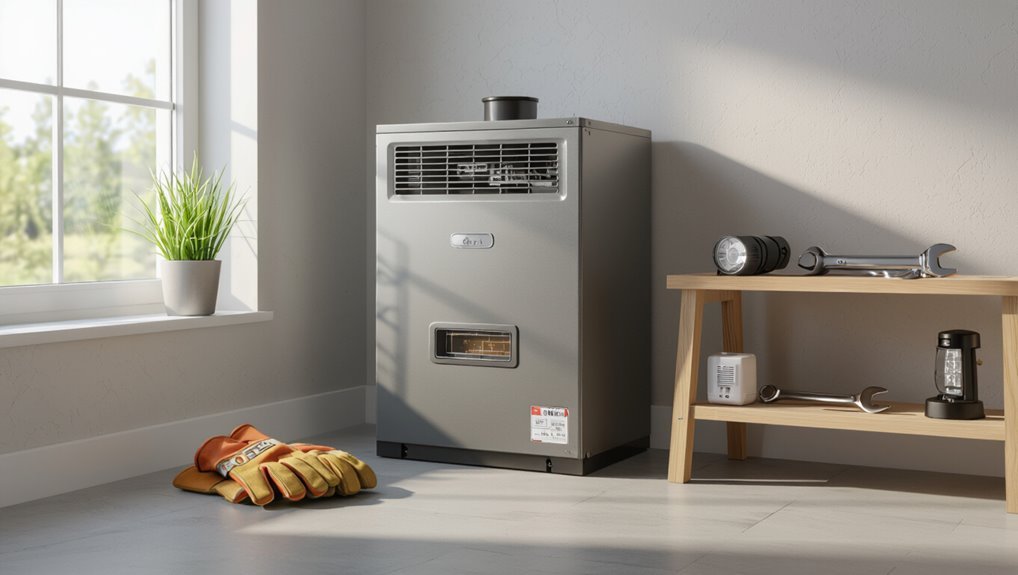
If carbon monoxide is suspected, the occupant should evacuate the home immediately and move to fresh air, then call emergency services if anyone is symptomatic or levels are unknown.
In the first ten minutes they should shut off the furnace if it can be done safely, open doors and windows, and avoid re-entering until cleared.
While waiting for responders, people should stay outside upwind, keep pets with them, and warn neighbors if applicable.
Steps to take in the first 10 minutes
Within the first ten minutes after suspecting a furnace CO leak, occupants should evacuate the building immediately and call emergency services from a safe distance; the priority is to remove people and pets from exposure and alert professionals who can assess and mitigate the hazard.
Then, from outside, shut off the furnace if safe, ventilate entrances briefly, note symptoms, and inform responders about signs of how to tell if furnace is leaking carbon monoxide.
When to call emergency services
When should emergency services be contacted after a suspected furnace carbon monoxide leak?
Emergency services should be called immediately if anyone experiences severe symptoms (loss of consciousness, difficulty breathing, chest pain, seizures), if multiple household members are affected, or if CO detector alarms persist.
Provide location, number of people affected, symptoms, and any known source.
Follow dispatcher instructions and evacuate if directed.
Temporary safety measures while waiting for help
At the first sign of a suspected furnace carbon monoxide leak—alarm sounding, headache, dizziness, nausea, or unusual soot—occupants should leave the building immediately, moving to fresh air upwind and far enough away to avoid residual fumes.
Once outside, call emergency services, keep others away, do not re-enter, ventilate only if safe and trained, and alert neighbors and first responders about the situation.
Quick answer can a furnace leak carbon monoxide and how dangerous is it?
A furnace with a cracked heat exchanger or blocked venting can release carbon monoxide, creating low to life-threatening risk depending on concentration and exposure time.
Symptoms from a furnace-related leak often begin with headache, nausea, dizziness, and fatigue, and can progress to confusion, loss of consciousness, or death at high levels.
Prompt detection and evacuation are critical because even moderate, prolonged exposure can cause serious harm.
Simple explanation of risk levels
Can a furnace leak carbon monoxide, and how dangerous would that be?
A leaking furnace can emit CO; risk depends on concentration and exposure duration.
Low levels cause gradual harm over hours to days; moderate levels can incapacitate within hours; high concentrations can be rapidly fatal.
Factors include ventilation, appliance condition, and time spent indoors.
Immediate action reduces risk.
Typical symptoms of carbon monoxide poisoning from a furnace
How quickly symptoms appear depends on carbon monoxide (CO) concentration and individual vulnerability: early signs include headache, dizziness, nausea, fatigue, and flu-like malaise. With higher exposure or prolonged leakage, confusion, shortness of breath, chest pain, impaired coordination, and loss of consciousness can occur. Vulnerable groups—children, elderly, pregnant people, and those with heart or respiratory conditions—face greater risk and faster worsening.
How carbon monoxide is produced by furnaces
Furnaces produce carbon monoxide when fuel burns incompletely, a condition tied to combustion chemistry and oxygen availability.
Faulty components such as cracked heat exchangers, blocked flues, or malfunctioning burners can allow CO to form or escape into living spaces.
Poor venting, neglected maintenance, and fuel-quality or supply problems all increase the likelihood of elevated CO production.
Combustion basics and incomplete combustion
Combustion in residential heating systems is a chemical reaction that converts fuel—usually natural gas, propane, or oil—into heat by combining it with oxygen. When that reaction is complete, the byproducts are primarily carbon dioxide and water vapor.
Incomplete combustion occurs when oxygen is limited or temperature is low, producing carbon monoxide. Faulty mixing, poor draft, or flame instability promote CO formation, posing health risks.
Common furnace components that can cause CO leaks
Inspecting a furnace for carbon monoxide risks requires attention to several specific components whose failure or deterioration can create conditions for CO formation and leakage.
Cracked heat exchanger, faulty burners, blocked or damaged flue, malfunctioning draft inducer, and deteriorated gaskets or seals are common culprits.
Ignition system faults and improper flame characteristics also contribute, warranting routine inspection and timely replacement.
Factors that increase CO production (venting, maintenance, fuel issues)
Recognize that carbon monoxide forms when fuel does not burn fully, and several controllable factors—restricted venting, poor maintenance, and fuel-related issues—significantly raise that risk.
Blocked chimneys, clogged flues, or incorrect draft cause backpressure. Neglected burners, cracked heat exchangers, and dirty filters degrade combustion.
Using improper or contaminated fuel alters flame chemistry. Regular inspection, cleaning, and correct fuel prevent elevated CO production.
Common signs that your furnace might be leaking carbon monoxide
Signs of a furnace leak can appear as physical symptoms in people and pets—headaches, nausea, dizziness, or sudden illness—especially when symptoms improve outside the home.
Visible and audible clues include soot buildup, a yellow or flickering flame, abnormal pilot light behavior, unusual odors, and unfamiliar sounds from the furnace.
These indicators often follow seasonal or situational patterns, such as worsening during cold snaps, after system maintenance, or when vents are blocked.
Physical symptoms in people and pets
How can occupants tell if a furnace is producing dangerous carbon monoxide?
Occupants may experience headache, dizziness, nausea, weakness, confusion, or flu‑like symptoms that improve outdoors.
Pets can show lethargy, vomiting, difficulty breathing, disorientation, or collapse.
Children and elderly are more vulnerable.
Multiple household members with similar unexplained symptoms, especially overnight or upon waking, increase suspicion of CO exposure.
Home and appliance warning signs (soot, yellow flame, pilot light behavior)
While physical symptoms in people and pets can indicate carbon monoxide exposure, observable clues around the home and furnace often provide earlier or corroborating evidence of a malfunction.
Accumulated black soot on burners, vents, or near the furnace, persistently yellow or lazy burner flames instead of steady blue, and irregular pilot light behavior—flickering, difficulty staying lit, or discoloration—warrant immediate inspection and professional servicing.
Odor and sound indicators
What can sounds and smells reveal about a furnace’s safety? Unusual odors—faint rotten egg or chemical smells—can indicate fuel leaks or incomplete combustion producing carbon monoxide.
Hissing, popping, or continuous clicking from burners or vents may signal malfunctions affecting exhaust flow.
Any persistent odd smell or unfamiliar noise warrants immediate ventilation, evacuation, and professional inspection or CO detector verification to guarantee safety.
Seasonal and situational patterns to notice
When heating demand rises or vents are blocked during particular times of year, patterns emerge that can signal a carbon monoxide leak from a furnace: symptoms such as occupants developing headaches or nausea primarily during winter, alarms that trip only when the system runs, or neighbors reporting similar symptoms after shared ventilation changes all point to a seasonal or situational source rather than isolated illness.
Monitor timing, weather, and appliance use.
How to test for carbon monoxide in your home
Testing for carbon monoxide begins with a properly placed, well-maintained detector—selecting the right type (plug-in, battery, or digital) and following manufacturer maintenance recommendations is essential.
For more precise readings, portable CO meters or professional-grade detectors can pinpoint concentrations and sources.
If persistent alarms, unusual readings, or any suspicion of furnace-related CO exists, a qualified technician should perform formal testing or a combustion analysis.
Using a carbon monoxide detector: placement, types, and maintenance
A carbon monoxide detector is the primary, reliable tool for identifying dangerous CO levels in a home, but its effectiveness depends on choosing the right type, installing it in the proper locations, and following a regular maintenance routine.
Select UL-listed residential units, place one on each floor and near sleeping areas, avoid kitchens/baths, test monthly, replace batteries annually, and replace units every 5–7 years.
Portable CO meters and professional-grade detectors
Portable CO meters and professional-grade detectors offer more precise, immediate readings than residential alarms, making them useful for spot checks and diagnostic work.
Trained users deploy handheld meters to measure ppm levels near vents, flues, and appliances. Professional units calibrate regularly, log data, and often include electrochemical sensors.
They aid in confirming suspected leaks but require correct use and interpretation.
When to request professional CO testing or combustion analysis
Handheld meters and professional-grade detectors can identify suspect readings, but certain situations call for formal CO testing or a combustion analysis by a certified technician.
Request professional testing when persistent low-level readings occur, occupants report symptoms, recent furnace service was missed, visible soot or yellow flames appear, or after appliance replacement.
Technicians perform calibrated measurements, spillage checks, and efficiency assessments to pinpoint leaks and recommend repairs.
Diagnosing furnace problems that cause CO leaks
A basic visual inspection by a homeowner can reveal obvious issues such as soot buildup, rust, loose panels, or blocked vents that warrant further attention.
A qualified technician will perform more definitive diagnostics—flue and vent inspections, combustion analysis, and pressure tests—to measure draft and detect leaks.
Common repair findings include a cracked heat exchanger, obstructed venting, or improper draft that allow combustion gases to enter living spaces.
Visual inspections homeowners can safely perform
Several simple visual checks can help a homeowner identify signs that a furnace might be producing carbon monoxide:
Inspect for soot or black streaks around the burner and flue connection.
Look for rust or corrosion on vent pipes and seams.
Verify that the combustion chamber door seals properly and shows no warping or gaps.
Confirm the exhaust vent outlet is free of obstructions like nests, snow, or debris.
Check for disconnected or damaged venting, loose panels, and unusual staining on nearby walls or ceilings; note any lingering soot odor.
Diagnostic checks a technician will run (flue inspection, combustion analysis, pressure tests)
Technicians perform targeted diagnostic checks—including a flue inspection, combustion analysis, and pressure tests—to pinpoint whether a furnace is producing or allowing carbon monoxide to escape.
They inspect vent integrity and draft, measure CO, O2, and combustion efficiency with analyzers, and perform static and dynamic pressure differentials to detect backdrafting or leaks.
Results guide safe remediation and ventilation decisions.
Common repair findings (cracked heat exchanger, blocked vent, improper draft)
Following diagnostic checks such as flue inspection and combustion analysis, common repair findings reveal the specific failures that allow carbon monoxide to enter living spaces.
Technicians often discover cracked heat exchangers permitting combustion gases into the air handler, blocked or collapsed vents causing exhaust buildup, and improper draft from flue misalignment or pressure imbalances.
Each condition demands prompt repair or replacement to eliminate CO hazards.
Repairs, replacement, and costs
When carbon monoxide issues are traced to specific components, technicians typically repair or replace parts such as heat exchangers, burners, or venting sections depending on severity and cost-effectiveness.
Full furnace replacement is recommended when repairs are unsafe, recurrent, or cost nearly as much as a new, more efficient unit.
Costs vary widely by repair type, unit age, labor, warranties, and required permits or code upgrades, all of which should be clarified before work begins.
Typical repair options and when they’re sufficient
Several common fixes address furnace-related carbon monoxide leaks without full replacement: sealing cracked heat exchangers when damage is minor, replacing faulty flue or venting components, repairing or replacing burners and ignition systems, and correcting airflow issues caused by clogged filters or blocked return vents.
Technicians assess age, extent of corrosion, repair cost versus value, and safety margins to determine sufficiency, documenting tests and recommending follow-up monitoring.
When furnace replacement is recommended
If repair costs, safety concerns, or the furnace’s remaining service life indicate diminishing returns, replacement is advised.
Replacement is recommended when persistent CO leaks recur after repairs, combustion chamber or heat exchanger cracks exist, parts are obsolete, or efficiency and reliability are severely degraded.
Prioritize certified inspections, documented safety failures, and units beyond typical lifespan to mitigate ongoing CO hazards and liability.
Estimated cost ranges and factors that affect price
Repair and replacement costs for furnaces vary widely depending on the issue’s severity, unit age, and local labor rates.
Typical repairs range from $150–$1,200 (controls, heat exchangers, or ignition systems).
Full replacements often cost $2,500–$8,000 including installation.
Additional factors influencing price include fuel type, efficiency rating, accessibility, required ductwork, and emergency service premiums.
Warranty, permits, and code considerations
Warranty coverage, local permitting, and code compliance substantially affect the true cost and approach to furnace repairs or replacements.
Warranties may cover parts or labor but often require certified installers and registration.
Permits and inspections add fees and time; failing to obtain them risks fines and voided warranties.
Compliance with current codes guarantees safety and resale value; always verify contractor credentials and permit status before work.
Preventing carbon monoxide leaks from your furnace
A regular maintenance schedule, typically annual professional inspections with mid-season filter checks, is recommended to keep furnaces operating safely.
Homeowners can perform simple, safe tasks such as replacing filters, keeping vents clear, and visually checking flue connections.
Upgrades like sealed-combustion or direct-vent systems and newer high-efficiency models further reduce the risk of carbon monoxide entry.
Recommended maintenance schedule
Because routine upkeep reduces the risk of combustion issues, homeowners should follow a clear maintenance schedule for their furnace to help prevent carbon monoxide leaks.
Annual professional inspections and tune-ups before heating season, filter replacement every 1–3 months, and immediate service for unusual odors or performance changes are recommended.
Records of service and prompt repairs guarantee safe operation and early detection of potential leaks.
DIY maintenance tasks homeowners can do safely
Several simple, safe tasks can help homeowners reduce the risk of carbon monoxide leaks from a furnace.
Regularly replace or clean filters, keep vents and flues clear of debris, check and tighten visible electrical connections, inspect heat exchanger areas for soot or corrosion, guarantee adequate combustion air by keeping nearby areas unobstructed, and test battery-powered CO detectors monthly.
Upgrades that reduce CO risk (sealed combustion, direct venting, newer models)
After homeowners complete basic upkeep like filter changes and vent clearing, upgrading the furnace can further lower carbon monoxide risk.
Sealed-combustion and direct-vent systems isolate combustion air and exhaust, preventing indoor CO entry.
Replacing old units with modern, high-efficiency models adds safer ignition, improved heat exchangers, and built-in CO safeguards.
Professional installation and annual inspections guarantee these upgrades perform reliably.
Carbon monoxide detector buying and placement guide
A clear guide helps homeowners choose and place carbon monoxide detectors to protect against furnace leaks.
Recommended points include:
- Features to look for (digital readout, battery backup, certification)
- Best locations and number of units to install
- Testing, calibration, and replacement intervals
Regular maintenance and proper placement are essential for reliable detection.
Features to look for (digital readout, battery backup, certification)
When choosing a carbon monoxide detector, prioritizing specific features can greatly improve safety and usability.
Look for a clear digital readout showing ppm levels, a reliable battery backup or sealed long-life battery to guarantee operation during outages, and certification by recognized testing labs (e.g., UL).
Additional useful features include memory of peak readings, loud alarm, and end-of-life indicators for timely replacement.
Best locations to install detectors and number recommended
Having selected detectors with the right features, attention turns to where and how many to install for effective coverage.
Place detectors outside each sleeping area, on every floor including basements, and near attached garages.
Mount units at knee height for fuel-burning appliance sources or per manufacturer guidance for wall/ceiling placement.
Recommend one per bedroom and at least one on each level, more for larger homes.
Testing, calibration, and replacement intervals
Regular testing and timely replacement guarantee carbon monoxide detectors remain reliable over their service life.
Weekly button tests confirm alarms function; monthly visual inspections check for dust or damage.
Follow manufacturer calibration schedules for electrochemical sensors; photoelectric types rarely require calibration.
Replace units every 5–7 years or per label.
Keep fresh batteries annually or when low-battery chirps occur.
What to tell emergency responders and HVAC technicians
When contacting emergency responders or an HVAC technician, the homeowner should provide concise details on symptoms experienced, recent carbon monoxide detector readings, and any recent furnace problems or maintenance.
They should also be prepared to ask the technician specific safety questions, such as whether the unit is safe to operate, what caused the leak, and what immediate repairs or shutdown procedures are recommended.
Clear, factual information and targeted questions help responders and technicians assess risk and prioritize actions quickly.
Key information to have ready (symptoms, detector readings, recent furnace issues)
If occupants show symptoms such as headaches, dizziness, nausea, confusion, or loss of consciousness, and CO detector readings are elevated or fluctuating, responders and technicians need concise, specific details on arrival.
Provide occupant count and symptom onset times, peak and current detector ppm and alarm history, recent furnace malfunctions, maintenance records, fuel type, venting or exhaust issues, recent work or smells, and whether windows/doors were opened.
Questions to ask the technician about safety and repairs
How should responders and technicians be guided on arrival to prioritize occupant safety and diagnose a suspected CO leak?
The homeowner should state symptoms, detector readings, recent maintenance, appliance history, and any ventilation changes.
Ask the technician:
Is the unit safe to operate?
What caused the CO?
Were combustion and exhaust systems inspected?
What repairs, timelines, costs, and post-repair testing guarantee safety?
Real-world scenarios and case examples
Several household incidents are summarized to show common causes of furnace-related carbon monoxide leaks, such as blocked vents, cracked heat exchangers, and improper venting after DIY repairs.
Each case contrasts outcomes where alarms or prompt symptoms led occupants to evacuate and receive treatment versus delayed detection that resulted in more severe health effects or property damage.
These examples illustrate how timely recognition and action can change the course of an incident.
Typical household scenarios that led to CO leaks
What common household patterns actually precede carbon monoxide leaks? Residents described neglected annual furnace inspections, blocked chimney flues from debris or nests, DIY repairs bypassing safety controls, and restricted ventilation after weatherproofing. Older appliances with cracked heat exchangers, prolonged use of auxiliary combustion devices indoors, and postponed venting repairs also featured. Each scenario combined mechanical wear with human oversight, increasing leak risk.
How timely detection changed outcomes
Timely detection of carbon monoxide often shifted outcomes from tragedy to recovery: in multiple cases, early alarms, prompt medical evaluation, or routine maintenance interventions prevented fatalities, limited injuries, and reduced property damage.
Reports describe families evacuated after detector alerts, workers treated for mild poisoning following workplace sensor readings, and homeowners discovering cracked heat exchangers during inspections—each example illustrating how swift recognition enabled effective mitigation and recovery.
Checklist: Immediate actions, testing steps, and prevention tasks
Begin by treating any suspected furnace carbon monoxide leak as an urgent safety issue: evacuate occupants, move to fresh air immediately, and call emergency services if anyone is dizzy, nauseous, or unconscious.
Then follow a concise checklist:
- Ventilate, shut off appliance, and leave premises.
- Use a CO detector and obtain professional combustion testing.
- Schedule furnace inspection, repair cracks, and install/maintain alarms.
Conclusion
When a furnace whispers invisible danger, action must follow the hush: evacuate, call emergency services, and seek professional HVAC help. The facts—carbon monoxide’s colorless, odorless threat—demand respect, not panic; detectors and routine maintenance are lifelines. Remembering past tragedies can sharpen vigilance, turning fear into resolve. By treating symptoms seriously, testing promptly, and fixing issues without delay, households protect life and restore the quiet confidence that a safe home deserves.