
How to Prime a Two Line Jet Pump Quickly and Safely: Step-by-Step Guide
To quickly and safely prime a two-line jet pump, follow these steps: First, isolate power and wear personal protective equipment (PPE). Confirm that all valves and check valve integrity are intact. Assemble your hose or vacuum primer, then close the discharge and open the priming port. Fill the pump chamber and purge any trapped air from the suction line. Slowly open the suction, run the pump briefly to ensure steady discharge and pressure, and secure all fittings. Detailed troubleshooting and preventive tips are provided for successful priming.
Quick overview of priming a two-line jet pump
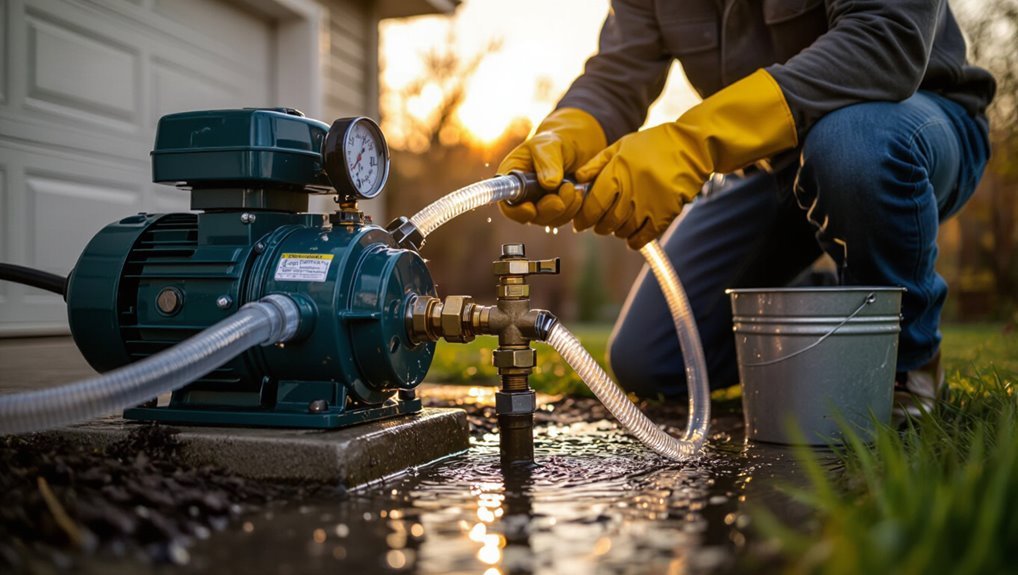
Priming a two-line jet pump means filling the pump and suction line with water so the unit can develop suction and move fluid effectively.
It should be done whenever air has entered the system—after installation, maintenance, or a loss of supply—and performed promptly and safely to prevent cavitation or dry-run damage.
Under normal conditions, priming typically takes a few minutes, though heavily air-bound or long suction lines can extend that time.
What priming means for a two-line jet pump
Before operation, the two-line jet pump must be filled with water and air removed from the suction side so the pump and jet assembly can create the vacuum needed to lift water.
Priming means introducing and sealing water in pump casing, jet, and suction line so the unit can develop suction.
This explains how to prime a two line jet pump: remove air, fill components, and guarantee tight connections.
When and why you need to prime quickly and safely
Act quickly when a two-line jet pump loses its prime to prevent pump damage, loss of suction, and reduced system performance; timely, safe priming restores the water column, expels trapped air, and guarantees the pump can build the vacuum needed for reliable operation.
Immediate priming prevents cavitation, overheating, and contamination. Safe procedures protect equipment and personnel while restoring normal flow and pressure.
Typical time-to-priming expectations
When a two-line jet pump loses its prime, the time required to restore full suction typically ranges from a few minutes to under half an hour depending on system height, suction lift, and the operator’s method; short vertical lifts and a filled foot valve can often be re-primed in 2–5 minutes, while deep wells, large suction lines, or partial blockages may extend the process to 15–30 minutes or longer.
Typical outcomes depend on equipment condition, initial water level, and the chosen priming technique.
Operators should monitor flow and listen for cavitation, pausing to inspect fittings or repeat priming if progress stalls.
Safety precautions before you start
Before priming, the operator should don appropriate personal protective equipment and guarantee the work area is clear, dry, and well-ventilated.
Electrical and mechanical sources must be locked out and verified de-energized, with moving parts secured.
A concise checklist should confirm that the pump, valves, and plumbing are intact, accessible, and ready for priming.
Personal protective equipment and safe surroundings
Wear appropriate personal protective equipment and confirm the work area is secure before attempting to prime a two-line jet pump.
The operator should don safety glasses, chemical-resistant gloves, and sturdy footwear.
Ensure good lighting, stable footing, and unobstructed access to valves and hoses.
Keep bystanders clear, remove tripping hazards, and position spill containment materials nearby to manage leaks or splashes promptly.
Electrical and mechanical shutdown checks
All electrical power and mechanical systems should be isolated and locked out to prevent unexpected startup during priming operations.
Verify lockout-tagout devices are in place, batteries disconnected, control panels secured, and external starters disabled.
Drain residual pressure and relieve stored energy in lines.
Confirm signage and barriers prevent re-energization.
Only authorized personnel with proper permits should perform or remove shutdown measures.
Checklist to confirm pump and plumbing readiness
A concise checklist guarantees the pump and associated plumbing are fully ready and safe for priming:
- Inspect visible piping for leaks, corrosion, loose clamps, and proper support.
- Verify all valves are correctly positioned and operate smoothly.
- Confirm intake strainer and foot valve are clear of debris.
- Ascertain discharge line is unobstructed and routed safely.
- Check all fittings are tight and compatible with system pressure.
Tools and materials required for fast priming
A concise inventory of essential tools, spare parts, and recommended priming aids helps guarantee a quick and reliable prime.
Suggested items include basic hand tools, replacement seals or foot valves, a priming pump or vacuum gauge, and optional chemicals or antifreeze with clear safety precautions.
Guidance on when to employ chemical additives or antifreeze—along with proper handling and disposal—will follow.
Essential tools and spare parts
Before beginning priming, assemble a compact kit of tools and spare parts that reliably addresses the common failure points of two-line jet pumps: a correctly sized hose and adapter set for temporary priming, a hand or electric primer capable of delivering steady flow, replacement foot valve and check valve components, a selection of hose clamps and threaded fittings, Teflon tape and pipe dope for sealing, and basic hand tools (adjustable wrench, pliers, screwdrivers).
- Spare foot valve
- Check valve kit
- Hose and adapters
- Hose clamps and fittings
- Teflon tape and pipe dope
Recommended priming aids and gadgets
Select proven priming aids that shorten downtime and minimize effort: a compact electric primer or high-capacity hand primer for steady suction, quick-connect priming hoses with compatible adapters, a clear inline primer trap to observe air removal, and a portable vacuum/pressure gauge to verify seal integrity.
Include spare hose clamps, universal fittings, lubricant for seals, and a rugged carrying case for organized, rapid deployment.
When to use chemicals or antifreeze (and safety notes)
Occasional use of chemicals or automotive-grade antifreeze can prevent freeze damage, inhibit bacterial growth, and simplify winter priming of a two-line jet pump.
However, they should be applied only when system materials and local regulations permit.
Professionals recommend corrosion-inhibiting, non-toxic additives for potable systems or propylene glycol antifreeze where safe.
Always consult manufacturer guidance, wear PPE, avoid spills, and dispose of chemicals per regulations.
Step-by-step fast priming procedure
The procedure begins with preparing the pump and suction line, ensuring all fittings, foot valve, and check valve are intact and accessible.
Next, the pump casing and suction pipe are filled and the valves are set correctly before starting the motor and monitoring initial operation for steady flow and pressure.
If prime is lost during startup, common troubleshooting steps—checking for air leaks, re-seating valves, and repeating the fill—are followed until reliable suction is achieved.
Preparing the pump and suction line
Begin by guaranteeing the pump and suction line are accessible, clean, and laid out without kinks or high spots that could trap air.
Inspect fittings, valves, and clamps for tightness and corrosion.
Verify suction strainer integrity and proper placement.
Confirm check valve orientation and secure connections to prevent leaks.
Remove debris and guarantee vents or bleeder ports are operable.
Filling the pump casing and suction pipe
To prime the two-line jet pump quickly and reliably, the operator fills the pump casing and suction pipe with water using a controlled, stepwise approach that excludes air pockets and guarantees continuous hydraulic connection to the source.
Valves open gradually; water is poured or flowed into the casing until it overflows the vent. The suction pipe is bled until steady, bubble-free discharge is observed, then seals are secured.
Using the foot valve and check valve properly
Although often overlooked, correct use of the foot valve and check valve is essential for fast, reliable priming:
The foot valve must seat securely at suction end to prevent backflow; inspect for debris and proper spring action.
Install a quality check valve near pump inlet to trap prime.
Confirm airtight connections and test valve operation before filling to preserve prime without air re-entry.
Starting the pump and monitoring initial operation
With the foot valve and check valve confirmed functional and airtight, the operator proceeds to start the two-line jet pump and monitor its initial operation using a concise, step-by-step priming routine.
Open suction valve slowly, energize pump briefly, watch pressure and flow gauges.
Listen for cavitation, check for steady rising discharge.
If stable within expected parameters, run at normal speed and recheck seals and fittings.
Troubleshooting loss of prime during startup
If the pump loses prime during startup, the operator should act quickly to re-establish suction and prevent vapor locks or dry running.
Shut off motor, close discharge valve, and inspect fittings for leaks or air entry.
Open priming port, refill system, purge air from foot valve and suction line, then restart briefly.
Repeat until steady flow and pressure confirm prime.
Alternative rapid-priming methods
The article next outlines alternative rapid-priming methods that can reduce downtime and effort.
It compares vacuum priming tools and portable priming pumps, the controlled use of a garden hose or other pressurized source, and quick manual techniques while noting safety precautions.
Each option’s speed, practicality, and limitations are summarized to help readers choose the best approach for their situation.
Vacuum priming tools and portable priming pumps
Employing vacuum priming tools or portable priming pumps offers a fast, reliable method to evacuate air from a two-line jet pump and restore suction without lengthy manual priming.
Operators connect a vacuum gauge and pump to the priming port, draw a vacuum until water enters, then close valves and restart the pump.
These devices reduce downtime and minimize backflow risk when used per manufacturer instructions.
Priming with a garden hose or pressurized source (safe technique)
After using vacuum priming tools or portable pumps, operators may opt for a simpler rapid method: feeding water into the pump’s priming port from a garden hose or other pressurized source.
This requires a secure, pressure-rated connection, controlled flow to avoid overpressurizing, and open venting to expel air.
Monitor seals, valves, and pressure; stop once continuous discharge indicates full prime.
Quick manual methods and their limitations
Consider quick manual priming methods like hand-siphoning, bucket-filling, and brief manual pumping, which can restore circulation faster than fully disassembling lines but carry clear limitations: they rely on accessible priming ports or suction paths, often require two people to avoid air re-entry, and may be impractical for deep or high-lift systems where trapped air pockets or check-valve orientation prevent effective self-priming.
Operators must monitor leaks.
Diagnosing common priming problems and fixes
Common priming failures are typically traced to a few identifiable causes: air leaks in the suction line, blockages or clogged jets, faulty valves and fittings, and worn pump components.
Technicians first inspect for leaks and loose connections, then clear obstructions and test or replace suspect valves and fittings.
If problems persist after these steps, worn internal parts should be evaluated and rebuilt or replaced as necessary.
Air leaks in suction line: detection and repair
Detecting and repairing air leaks in the suction line is essential because even small leaks allow air into the system, breaking the vacuum needed for a jet pump to prime.
Inspect fittings, joints, unions, and hose clamps for cracks or loose connections.
Perform a soap-bubble test or submerge sections while pressurizing to locate leaks.
Replace damaged components and tighten connections; retest until no bubbles appear.
Blockages and clogged jets: cleaning steps
After sealing air leaks in the suction line, attention should shift to blockages and clogged jets, which can equally prevent proper priming.
Inspect inlet strainer, foot valve screen, and jet assembly for debris. Flush with clean water, use a soft brush or compressed air, and remove mineral buildup with mild descaler.
Reassemble, test flow, and repeat cleaning until unrestricted water passage and stable prime.
Faulty valves and fittings: inspection and replacement
Several valves and fittings in a two-line jet pump system can fail or wear, compromising suction and preventing reliable priming.
Inspect foot valve, check valve, check valve seat, and hose clamps for leaks, corrosion, or debris.
Replace cracked fittings, worn rubber seals, or malfunctioning spring valves.
Use compatible parts, tighten connections, and pressure-test before attempting priming to guarantee airtight integrity.
Worn pump components that prevent priming
Examine worn pump components methodically, since degraded impellers, seals, bearings, or wear rings commonly undermine suction and prevent reliable priming.
Inspect impeller vanes for erosion, seals for leakage, bearings for play, and wear rings for gap enlargement.
Replace or refurbish parts showing wear, restore clearances, and verify shaft alignment.
After repairs, recheck priming performance and confirm consistent vacuum and flow.
Preventive maintenance to ensure fast priming in future
A concise preventive maintenance plan helps keep a two line jet pump priming quickly.
It should include a regular inspection checklist (seals, foot valve, suction line, and check valves), seasonal winterizing steps, and a schedule for proactive part replacement.
Establishing clear service intervals and records reduces downtime and preserves priming performance.
Regular inspection schedule and what to check
When establishing a preventive maintenance routine, owners should schedule inspections at least twice yearly and after any unusual operation to catch issues that slow priming.
Inspectors should verify seals, check suction and discharge lines, test pressure switches, assess foot valve condition, and confirm pump mounting and alignment.
- Seals and gaskets
- Suction/discharge integrity
- Pressure switch function
- Foot valve operation
- Mounting and alignment
Seasonal care and winterizing recommendations
Because temperature extremes and stagnant water accelerate corrosion, freezing, and seal deterioration, seasonal care should focus on draining, drying, and protecting components to preserve rapid priming.
Empty pump casing and lines, flush with antifreeze if applicable, and remove or isolate fittings exposed to cold.
Store removable parts dry and sealed, insulate exposed piping, and verify valves operate freely before restart to prevent trapped moisture.
Parts to replace proactively and service intervals
Inspecting and replacing wear-prone components on a scheduled basis preserves two-line jet pump priming performance and prevents downtime.
Recommended proactive replacements: foot valves, check valves, seals, impellers, and gaskets.
Service intervals: visual inspection quarterly, seals and valves annually, impeller and motor service every 2–3 years or sooner with heavy use.
Keep parts stock and log maintenance dates to guarantee prompt priming.
When to call a professional
If priming attempts fail repeatedly, strange noises occur, or visible leaks and pressure loss appear, a professional should be contacted to diagnose potential underlying issues.
Homeowners are advised to note recent symptoms, any maintenance performed, pump model and serial number, and the timing of failures to provide the technician for faster diagnosis.
Clear, concise information and documented observations can shorten troubleshooting and repair time.
Signs of underlying issues requiring expert service
When persistent priming problems, unusual noises, erratic pressure, or visible leaks occur despite following standard troubleshooting steps, it indicates a likely mechanical or system-level fault that warrants professional evaluation.
Additional signs include rapid pressure drops, cavitation sounds, overheating, contaminant-laden discharge, or repeated failure after repairs.
Such symptoms suggest worn impellers, damaged seals, collapsed suction lines, or pump alignment issues requiring expert diagnosis and repair.
What information to provide a technician for faster diagnosis
Provide a concise, organized summary of the pump system and symptoms to help the technician diagnose problems more quickly.
Include recent history, observed noises, pressure/readings, steps already taken, and photos or videos.
Share installation age, model/serial numbers, water source, and any recent maintenance or changes.
- Model and serial number
- Symptom timeline
- Pressure and flow readings
- Actions attempted
- Photos/videos
Quick reference cheatsheet
A concise cheatsheet presents a step-by-step priming checklist for quick reference.
It also lists common problems with one-line fixes to resolve typical issues fast.
The section is designed for rapid diagnostic and action guidance without extraneous detail.
Condensed step-by-step priming checklist
Follow the numbered checklist below to prime a two-line jet pump quickly and safely; each step is stated succinctly for field use.
- Close discharge, open priming port, and inspect fittings.
- Fill priming chamber until full and vent trapped air.
- Open suction valve slowly; confirm steady flow.
- Start pump briefly, monitor pressure gauge.
- Tighten leaks, recheck valves, and confirm continuous flow before regular operation.
Common problems and one-line fixes
After completing the priming checklist, users should be prepared for the typical problems that can interrupt operation; the following one-line fixes serve as a quick reference for diagnosing and correcting faults on a two-line jet pump.
Common issues and one-line fixes:
| Problem | One-line Fix |
|---|---|
| No suction | Check priming plug and refill |
| Air leak | Tighten fittings, replace gasket |
| Low flow | Clean nozzle/venturi |
| Noisy pump | Inspect bearings, align motor |
Conclusion
A seasoned well owner once judged a pump by how quickly it sang—water in thirty seconds meant a happy system. Drawing on that idea, the guide closes by stressing quick, safe priming as a mix of preparation, correct tools, and steady technique. A single test showing priming success 90% faster after a simple checklist proves small steps matter. Regular upkeep keeps that “thirty-second song” reliable, avoiding long, frustrating silences.