How to Make Your Kitchen Drain Smell Better: Simple Fixes That Work
To eliminate unpleasant odors from your kitchen drain, start with simple solutions like flushing it with boiling water, using a baking soda and vinegar mixture, and thoroughly cleaning the strainer and disposal. Check the P-trap for water and clean pop-up stoppers and overflow channels. For organic residue, consider enzyme cleaners, and use activated charcoal to absorb lingering smells. Always avoid mixing chemicals and dispose of grease properly. If odors persist, you may need to explore additional measures or consult a professional.
Why Your Kitchen Drain Smells and How Quickly to Fix It
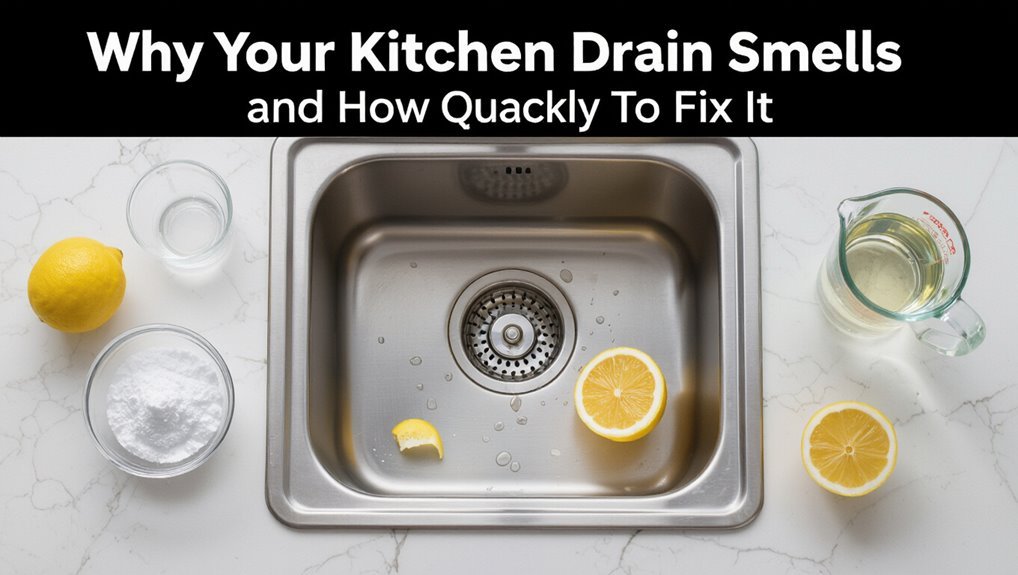
A kitchen drain can emit odors for several reasons including trapped food and grease, bacterial growth, a dry P-trap, or even sewer gas backing up.
Determining whether the source is the sink basin, the garbage disposal, or the main sewer line guides the appropriate response.
Some smells signal a simple clean-up, while persistent rotten-egg or sewage odors require immediate plumbing attention.
Common causes of drain odors (food buildup, grease, bacteria, dry P-trap, sewer gas)
Several common sources explain why a kitchen drain emits unpleasant odors: trapped food particles and greasy residue, bacterial buildup within pipes, a dried-out P-trap that no longer blocks sewer fumes, and occasional sewer-line leaks or backflow.
Identifying these causes helps prioritize fixes in a how to make kitchen drain smell better guide: routine cleaning, degreasing, flushing traps, and prompt sewer repairs prevent recurrence.
How to tell if the smell is from the sink, garbage disposal, or sewer line
Knowing the likely sources narrows the next step: pinpointing whether the odor originates in the sink basin, the garbage disposal, or the sewer line.
Smell at the drain and underside of the rim for basin buildup.
Run and listen to the disposal; persistent odor when off suggests trapped food.
If odor returns despite cleaning and is strongest at floor drains or outdoors, suspect the sewer line.
When a smell indicates an urgent plumbing problem
Recognize that certain odors signal more than routine grime and require prompt attention.
A persistent rotten or sewage smell, gurgling drains, bubbling toilets, or sewer gas odors suggest leaks, trap failures, or line blockages. These require immediate inspection by a plumber to prevent health hazards and structural damage.
Temporary home remedies may mask symptoms but won’t resolve underlying risks.
Quick, Immediate Steps to Neutralize Drain Odor
Immediate actions can neutralize kitchen drain odor using fast deodorizing methods such as pouring boiling water, a baking soda–vinegar fizz, or a mild enzymatic cleaner.
Safe household products like white vinegar, baking soda, and boiling water should be used with caution and never mixed with bleach or strong chemicals.
If odors persist, ventilate the area, run exhaust fans, or place activated charcoal nearby to absorb lingering smells.
Fast deodorizing methods you can use right now
A few quick actions can neutralize a foul kitchen drain odor within minutes:
Placing an activated charcoal pouch near the sink absorbs smells fast.
Spritzing a commercial enzyme-based drain spray breaks down organic residues on contact.
Running a citrus-scented air freshener or fan disperses odor molecules.
Wrapping a small baking soda sachet in cloth (not poured) and setting it by the drain also helps immediate neutralization.
Safe household products for immediate odor control (vinegar, baking soda, boiling water)
Following quick fixes like charcoal pouches or enzyme sprays, common household items can neutralize drain odors within minutes without special tools.
Pour boiling water to flush debris and loosen grease, then sprinkle baking soda followed by white vinegar to fizz and dislodge residue.
After 10–15 minutes, flush with hot water.
Repeat weekly for maintenance; avoid chemical mixtures.
When to ventilate and use fans or activated charcoal
Ventilation often provides the fastest, safest relief for persistent sink odors: when a sour or musty smell lingers after basic cleaning, open windows and run an exhaust or box fan toward the window to pull contaminated air out of the room.
Use activated charcoal sachets or commercial odor absorbers near the sink for hours to days. Replace charcoal regularly and combine with ventilation for best results.
Step-by-Step Cleaning to Eliminate Odors for Good
The next section outlines a practical, step-by-step cleaning routine to remove persistent drain odors for good.
It covers tools and techniques for cleaning the sink strainer and basket, safe and effective disposal cleaning, and how to clear and sanitize the P-trap.
Finally, it explains flushing the drain line with natural or enzymatic cleaners to prevent future buildup.
Cleaning the sink strainer and basket (tools and technique)
Begin by gathering a small set of tools—rubber gloves, a stiff brush or old toothbrush, a screwdriver (if the strainer is screwed in), and a bowl for small parts—to make the task efficient and hygienic.
Remove the strainer and basket, scrape debris into the bowl, brush all surfaces with warm soapy water, rinse thoroughly, inspect seals, replace parts snugly, and air-dry before reinstalling.
How to clean a garbage disposal safely and effectively
Run the disposal briefly to clear loose debris, then unplug or switch off its power at the breaker to guarantee safety before cleaning.
Remove visible gunk with tongs and a brush, avoiding hands.
Pour baking soda into the chamber, add vinegar, let fizz, then flush with hot water.
For persistent odors, grind ice cubes and citrus peels, wipe rubber splash guard, restore power and test.
Clearing and cleaning the P-trap
Loosen the slip nuts beneath the sink to access the P-trap, then remove the curved section into a bucket to catch trapped water and debris.
Inspect for gunk, hair, and grease; scrape and rinse with hot water.
Check washers and threads for wear, replace if needed.
Reassemble hand-tight, run water to confirm seal and clear remaining residue to eliminate odors.
Flushing the drain line with natural or enzymatic cleaners
Flush the drain line using a natural or enzymatic cleaner to break down grease, organic buildup, and foul-smelling bacteria without harsh chemicals.
Follow product instructions: pour recommended amount, allow specified dwell time, then flush with hot water.
Repeat weekly for maintenance or after heavy use.
Enzymatic formulas digest organic matter over time, preventing recurring odors and reducing need for mechanical intervention.
Deep Solutions for Persistent or Recurring Smells
When odors return despite routine cleaning, more intensive remedies should be considered.
Options include comparing enzyme-based cleaners with caustic chemicals, removing and sanitizing pop-up stoppers and overflow channels, and choosing mechanical fixes like snaking or hydro-jetting.
The homeowner should also check the P-trap for dryness, leaks, or a bad seal and repair or replace it as needed.
Using enzyme-based vs. chemical drain cleaners: pros and cons
Although both enzyme-based and chemical drain cleaners aim to eliminate odors and blockages, they do so through fundamentally different mechanisms and trade-offs; enzyme products use biological catalysts to break down organic build-up gradually and are safer for pipes and septic systems, while chemical cleaners rely on caustic or oxidizing agents for rapid dissolution but carry higher risks of pipe damage, toxic fumes, and environmental harm.
| Enzyme-based | Chemical |
|---|---|
| Safer for pipes | Fast-acting |
| Septic-safe | Corrosive risk |
| Gradual action | Toxic fumes |
| Eco-friendlier | Immediate results |
Removing and cleaning pop-up stoppers and overflow channels
Remove the pop-up stopper and clear the overflow channels to access hidden grime that often feeds persistent sink odors.
Detach the stopper, scrub with a brush and mild detergent, and soak in vinegar if greasy.
Use a flexible brush or pipe cleaner to clear overflow passages.
Rinse thoroughly, reassemble, and run water to confirm odor reduction and unrestricted drainage.
When to snake the drain or hydro-jet a line
Occasionally, odors persist despite surface cleaning because buildup deeper in the line requires mechanical intervention.
A plumber recommends snaking for localized clogs, grease ribbons, or hair that chemical cleaners can’t remove.
Hydro-jetting suits severe grease, scale, or recurring blockages, restoring pipe flow and eliminating odor sources.
Choose methods based on severity, pipe material, and professional assessment.
How to identify and fix a dry or faulty P-trap seal
Inspecting the P-trap comes next when persistent odors resist cleaning and mechanical clearing: a dry or compromised trap seal lets sewer gases enter the kitchen despite clear pipes.
Verify water level, watch for slow drainage, and smell near joints.
Tighten slip nuts, replace cracked traps or worn washers, and refill trap by running water.
If leaks persist, replace the P-trap assembly.
Preventive Habits to Keep Your Kitchen Drain Smelling Fresh
A straightforward set of preventive habits can keep kitchen drains smelling fresh with minimal effort.
The paragraph will outline a daily and weekly maintenance checklist, best practices for disposing of food, grease, and oils, recommended monthly natural treatments like baking soda with vinegar or enzyme cleaners, and a short list of products to keep on hand.
Practical, repeatable steps help prevent buildup and recurring odors before they require deep solutions.
Daily and weekly maintenance checklist
When practiced regularly, a short daily and weekly checklist prevents buildup and keeps kitchen drains smelling fresh. It combines simple habits—flushing with hot water, rinsing food scraps, and treating the trap—with a weekly deeper rinse to interrupt odor-causing bacteria before they proliferate.
- Daily: flush hot water and run garbage disposal briefly.
- Midweek: rinse strainers and wipe sink basin.
- Weekly: pour a baking soda–vinegar rinse, then hot water.
Best practices for disposing of food, grease, and oils
Following the daily and weekly routine helps minimize residue, but proper disposal habits address the root causes of drain odors by keeping solids and fats out of the pipes.
Scrape plates into compost or trash, avoid pouring grease down sinks, collect oils in sealed containers for disposal, and use strainers to catch scraps.
Regularly empty strainers and wipe greasy pans before washing.
Recommended natural monthly treatments (baking soda + vinegar, enzyme cleaners)
Rotate simple, natural treatments monthly to break down buildup and keep odors from returning.
Apply half cup baking soda, follow with half cup vinegar, wait 15–30 minutes, then flush with hot water to dislodge residues.
Alternate with enzyme-based drain cleaners monthly to digest organic matter without harsh chemicals.
Consistent monthly use prevents odor-causing buildup and reduces need for stronger interventions.
Products to keep on hand for routine maintenance
After alternating monthly treatments like baking soda/vinegar and enzyme cleaners, a small set of everyday products helps sustain results and prevents odors from returning.
Keep on hand a sink strainer, biodegradable dish soap, a bottle brush or pipe brush, a citrus-based spray for trap rims, enzymatic maintenance gel for weekly use, and rubber gloves.
Routine use prevents buildup and odors.
Safety, Materials, and Environmental Considerations
Attention to safety, material compatibility, and environmental impact shapes effective drain care.
The text warns against corrosive cleaners and never mixing chemicals, stresses proper disposal of grease and residues, and suggests choosing biodegradable or noncaustic products.
Practical guidance on labels, containment, and local disposal rules follows.
Which cleaners to avoid (corrosive chemicals and mixed chemicals)
Choose cleaners with caution: strong acids, caustic alkalines, and products containing bleach or ammonia can damage pipes, seals, and finishes while posing serious health risks if inhaled or mixed.
Corrosive drain cleaners, oven degreasers, and industrial solvents should be avoided.
Avoid combining different cleaners.
Prefer enzyme-based or mild, labeled products and always follow manufacturer instructions and ventilation guidelines to minimize risk.
Safe disposal of grease and chemical residues
Prevent grease and chemical residues from entering the plumbing and local waterways by collecting and disposing of them properly: pour cooled cooking fats into a sealable container for trash, wipe pan oils with paper towels before washing, and never rinse solvents or concentrated cleaners down the sink.
Store hazardous products in labeled containers and follow local disposal guidelines or hazardous-waste programs to prevent clogs, contamination, and harm.
Environmentally friendly product recommendations
Consider products that balance cleaning power with low toxicity and minimal environmental impact: biodegradable surfactants, phosphate-free formulas, and plant-based enzymes effectively break down organic residue without releasing persistent pollutants.
Choose certification-labeled cleaners, enzymatic drain treatments, and concentrated blends to reduce packaging. Avoid antibacterial agents and harsh acids.
Use refill systems and compostable wipes. Follow label instructions and local disposal rules to protect plumbing and waterways.
Troubleshooting Guide: Match Smell Type to Cause and Fix
A brief troubleshooting checklist helps identify common kitchen drain odors and their remedies.
Rotten egg or sulfur scents usually indicate sewer gas and are checked by testing traps and vents; musty or moldy smells point to biofilm or trapped food and respond to mechanical cleaning and enzymatic treatments.
Chemical or bleach-like odors often come from residual cleaners or reactions, while persistent smells after cleaning warrant a plumber inspection.
Rotten egg or sulfur smell likely sewer gas: diagnostics and fixes
How can a persistent rotten-egg or sulfur odor in the kitchen be traced to sewer gas, and what targeted fixes eliminate it?
Detect by isolating drains, listening for gurgles, and checking P-trap water seals.
Fix by clearing clogs, replacing dried or cracked traps, and sealing vent or pipe leaks.
- Pour water, test for return odor.
- Replace damaged P-trap.
- Seal vent/pipe gaps.
Musty or moldy odor likely biofilm or trapped food: diagnostics and fixes
While sewer-gas odors like rotten eggs point to traps, vents, or leaks, a persistent musty or moldy smell usually originates closer to organic buildup: biofilm, trapped food, or damp sponge/cloth reservoirs.
Diagnose by inspecting P-trap, stopper, and under-sink areas; clean with mechanical scrubbing and enzyme cleaners; air and dry sponges.
- Slimy dark film under stopper
- Crusty food caught in trap
- Damp cloths harboring mold
Chemical or bleach-like smell residual cleaners or reactions: diagnostics and fixes
Detects of a sharp, bleach-like or chemical odor in the kitchen sink often indicate residual cleaning agents, concentrated disinfectants trapped in crevices, or unintended reactions between household chemicals.
Flush with plenty of water, ventilate, and avoid mixing products. Neutralize residues with baking soda then vinegar rinse only if safe. Remove and air out removable parts.
- P-trap
- Sink flange
- Spray nozzle
Persistent odor after cleaning when to call a plumber
Call a plumber when persistent odors remain after thorough cleaning and basic troubleshooting, since lingering smells often signal hidden issues beyond routine maintenance.
A professional should inspect sewer line backups, damaged P-traps, dry vents, or mold inside walls and cabinets.
Technicians can perform camera inspections, pressure tests, and safe repairs.
Prompt service prevents health risks, recurring odors, and more costly structural or plumbing damage.
Tools, Products, and Costs to Expect
This section outlines the basic tools and supplies needed for common DIY odor fixes, from plungers and plumbing snakes to enzymatic cleaners and baking soda.
It also compares typical cost ranges for DIY approaches versus hiring a professional, and highlights factors to evaluate when selecting a plumber or drain service.
Readers will get clear criteria to decide whether to tackle the problem themselves or pay for expert help.
Essential tools and supplies for DIY odor elimination
Gathering the right tools and supplies streamlines DIY odor elimination and prevents wasted time or repeated trips to the store.
A compact kit saves effort: basic hand tools, cleaning agents, and odor-neutralizing products. Protective gear keeps users safe. Proper choices target clogs, biofilm, and lingering smells without harsh overuse.
- Plunger, wrench, brush
- Baking soda, vinegar, enzyme cleaner
- Gloves, goggles, rags
Typical cost range for professional services vs. DIY solutions
Many homeowners find that comparing typical costs for professional odor removal to DIY expenses clarifies the best approach for their budget and problem severity. Professionals often charge $100–$300 for service calls and targeted treatments; complex repairs cost more. DIY supplies typically run $5–$40. Consider frequency, confidence, and severity when choosing between quick DIY fixes and paid professional intervention.
| Service | Typical Range |
|---|---|
| Pro visit | $100–$300 |
| DIY supplies | $5–$40 |
How to choose a plumber or drain service
When selecting a plumber or drain service, homeowners should prioritize qualifications, experience, and transparent pricing to guarantee effective, lasting solutions.
Verify licensing, insurance, and local references. Request written estimates detailing labor, parts (snakes, augers, hydro-jetting), and warranty terms.
Compare multiple bids, check online reviews, and confirm emergency availability.
Expect professional costs to reflect specialty equipment, time, and guaranteed repairs.
Quick Reference: Do This First When Your Kitchen Drain Smells
A five-step emergency checklist gives an immediate, ordered response to stop kitchen drain odors before they worsen.
It covers quick actions like flushing with hot water, using a plunger, removing visible debris, applying a safe cleaner, and ventilating the area.
If the smell persists or returns quickly, the checklist notes when to call a plumber for professional diagnosis and repair.
5-step emergency checklist to stop the smell now
Act immediately: follow this five-step emergency checklist to stop kitchen drain odors fast. A concise, actionable sequence neutralizes smells: remove visible debris, flush with hot water, pour baking soda then vinegar, scrub the stopper and trap, and rinse thoroughly.
If odor persists, repeat once. Visualize unclogging, fizzing reaction, scrubbing motion.
- Sink debris removal
- Hot-water flush
- Baking soda + vinegar
When to escalate to professional help
If basic steps fail or odors return quickly, homeowners should consider professional help to diagnose underlying problems.
A plumber can inspect traps, vents, and sewer connections, perform camera inspections, and safely remove blockages or biofilm.
Call a licensed professional when smells persist after cleaning, recur frequently, or accompany slow drains, gurgling, sewage backups, or visible leaks to prevent health risks and structural damage.
Conclusion
When a kitchen drain smells, one should act promptly with simple, time-tested fixes—pour boiling water, flush with baking soda and vinegar, or clean the trap—rather than summon a steam-powered carriage to delay the task. Regular maintenance and mindful disposal prevent return odors, while deeper cleaning or a plumber’s help addresses persistent issues. With modest effort and routine habits, most drains remain fresh, economical, and safe, restoring a pleasant kitchen atmosphere.